
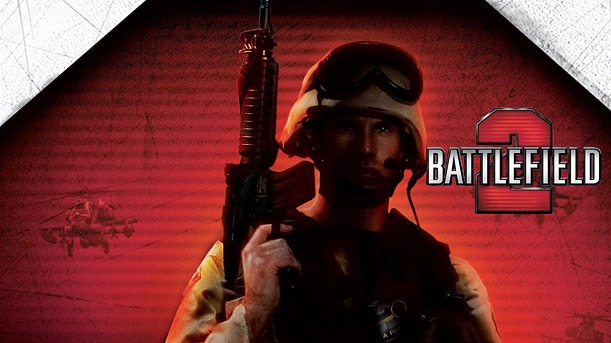
📅 Game released: 2005
Battlefield 2 (2005) is a modern-military first-person shooter where six-player squads, Commander Mode, infantry classes, and ground and air vehicles turn Conquest into a contest of teamwork and territory. This PC guide explains official download availability for the retired release, lawful installation of owned copies, community multiplayer, offline bots, original system requirements, and compatibility considerations.
 By Editor Zero — independently researched, edited, and maintained.
Last updated: 14 November 2026
Last reviewed: 14 November 2026
Table of Contents
- Quick Facts
- Official PC Stores, Download & Installation
- Battlefield 2 (2005) Review
- Pros & Cons
- PC System Requirements
- Frequently Asked Questions
- Similar Games
Battlefield 2 (2005) Quick Facts
- Game: Battlefield 2 / Battlefield 2: Complete Collection
- Developer: Digital Illusions CE (DICE); DICE Canada (Special Forces expansion)
- Publisher: EA Games / Electronic Arts
- Genre: First Person Shooter (FPS), Multiplayer
- Release: June 21, 2005 (North America); June 24, 2005 (Europe) — Windows PC
- Platforms: Windows PC
- Expansions / Content: Battlefield 2: Special Forces, Euro Force, Armored Fury, and Battlefield 2: Complete Collection
- Official online services: EA/GameSpy account, ranking, and discovery services retired June 30, 2014
- Steam Deck: Unsupported (Valve rating for the historical Steam release; no longer sold on Steam)
- Engine: Refractor 2
- Community: BF2Hub, Battlefield 2 Reddit community, Steam Discussions (legacy release)
- PC modding: Official Battlefield 2 Editor; ModDB maps, utilities, and total conversions
- Metacritic score: 91/100 (Windows PC)
- IGN score: 8.9/10 (original PC review)
- Steam user reception: Very Positive overall (historical Steam release; no longer sold)
Official PC Store Status, Download & Installation
👇 Use the notes below to understand Battlefield 2 (2005)’s official PC availability, ownership, and lawful installation options without relying on unofficial game copies.
- Official purchase status: Battlefield 2 is no longer offered as a normal new purchase through the EA app, Steam, Epic Games Store, GOG, or Microsoft Store. This guide does not provide copyrighted game files or links to unofficial sellers.
- Historical Steam release: Battlefield 2: Complete Collection was previously sold on Steam (app 24860), but the store listing is no longer a new-purchase option. Players who own that Steam version should check their existing library rather than expecting a new Steam license.
- Owned retail copies: If you have legitimate CD/DVD media or Battlefield 2: Complete Collection, keep the discs, product key, and proof of purchase. A legacy retail key is not a supported method of creating a new Steam or EA app entitlement.
- Legacy EA ownership: Older Origin purchases may not appear normally in the EA app. If you previously purchased a digital edition, check your account history and contact EA Help with proof of ownership; do not assume a retail key will transfer.
- Retail installation and patches: Install from your owned media and check the game’s version. For versions earlier than 1.41, BF2Hub documents installing the legacy 1.41 patch before the 1.50 update; its patching guide explains the order. The final official update removes the old disc check and adds proper widescreen support. Back up a working installation before changes.
- Official online services: EA retired Battlefield 2’s GameSpy-backed accounts, ranked services, and official server discovery on June 30, 2014. The original online login is no longer supported.
- Offline and LAN play: A lawfully installed copy can still run single-player bot matches and local-network multiplayer without EA’s retired online backend; original bot maps are more limited than the larger online layouts.
- Community multiplayer: BF2Hub provides independent community accounts, ranking replacements, and server discovery for compatible installations. It requires Battlefield 2 version 1.50; it is not an EA service. Review the privacy and security implications of third-party clients before installing them.
- Complete Collection and add-ons: The historical Complete Collection includes the base game, Special Forces, Euro Force, and Armored Fury. The official final Battlefield 2 update includes Euro Force and Armored Fury in the base game; Special Forces remains separate expansion content.
- Mods and standalone projects: Battlefield 2 supports community maps and modifications through its legacy editor. Project Reality: BF2 is now a separate standalone community game and does not require your original Battlefield 2 installation. For mods that do depend on the original game, verify the project’s own installation instructions.
- Steam Deck and Linux: Valve rates the retired Steam app Unsupported on Steam Deck. Community compatibility efforts do not provide official EA/DICE support, and neither an old PC key nor a mod launcher grants a Steam Deck-compatible purchase.

Battlefield 2 (2005) Review
A demanding combined-arms shooter where one disciplined squad can outweigh a dozen lone wolves.
What makes Battlefield 2 interesting is not simply the size of its maps or the number of vehicles fighting over them. It is the way almost everything depends on someone else doing their job. Infantry need transport and cover, tanks need Engineers, aircraft need teammates watching anti-air positions, and squads need a leader who knows when staying alive matters more than scoring another kill. DICE built its 2005 modern-warfare shooter around those relationships, giving ordinary Conquest matches a surprisingly strategic character.
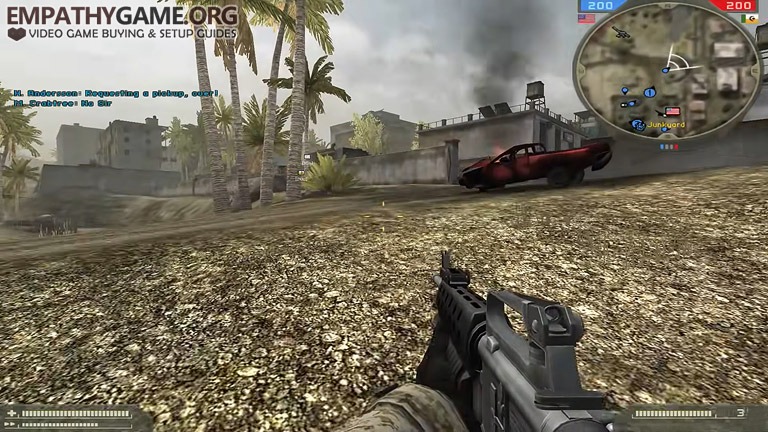
That design comes with friction. Weapon accuracy takes patience to understand, expert pilots can dominate poorly organised teams, and crowded infantry routes sometimes become a storm of grenades rather than a contest of good positioning. The interface and movement also feel unmistakably old. Yet removing those rough edges would not automatically produce a better version of the same experience. Battlefield 2 asks players to think about territory, information and their place in a larger team, which remains a compelling alternative to shooters built primarily around individual momentum.
Conquest Makes Six Players Matter
Conquest has an uncomplicated objective: capture control points and drain the enemy’s tickets. Taking a flag means little if the squad cannot defend it, while a seemingly minor position can become valuable because of the new route or spawn opportunity it opens. Territory is useful, not merely counted. A successful attack changes where the next fight can happen.
The six-player squad system gives that idea its shape. Squad members can respawn on a surviving squad leader, turning one person’s position into a resource for the other five. A leader who stays behind cover while teammates push a compound can sustain an assault through repeated casualties. If that same leader runs into the first firefight and dies, the team may lose its forward foothold. It is an unusually effective way of rewarding caution without making everyone play cautiously.
Strike at Karkand demonstrates the difference. The natural pressure builds around its streets and front-line flags, where infantry can spend a long time trading ground without truly advancing. A coordinated squad that moves around the obvious fight and establishes a presence at a rear control point can force defenders to abandon an apparently secure line. It requires players to move toward the same goal, a Medic to keep the attack functioning and a leader who understands the value of survival.
The class system can also produce clever recoveries in the middle of a failed push. If a squad leader and the Medics go down, another soldier may be able to pick up a dropped Medic kit and make the revive that preserves the forward spawn. It captures the appeal: equipment, revives, spawning and map control are connected. A useful decision is not always the one that earns the most kills.
Gunplay Rewards Restraint More Than Constant Movement
Battlefield 2’s shooting takes adjustment, particularly for anyone used to the clearer weapon feedback of newer Battlefield games. Stance, movement and sustained fire affect accuracy enough that keeping the crosshair on a distant target is not always sufficient. Firing longer does not necessarily improve the odds. Often the better choice is to stop, settle into position and use shorter bursts, even when the weapon seems capable of much more.
Support weapons reveal this particularly well. A light machine gun feels awkward when treated like an assault rifle, but going prone and controlling the firing rhythm allows it to hold a street or open approach convincingly. The MEC RPK-74 rewards that more deliberate role. The class becomes valuable not because it can endlessly spray bullets, but because the player has chosen where to fight before pulling the trigger.
The USMC M16A2 introduces a different kind of discipline. Its semi-automatic and three-round-burst options encourage measured shots rather than automatic fire, especially at medium range. The M4 carbine carried by Spec Ops offers more flexibility in closer encounters, although its accuracy also suffers when bursts are extended too far. These distinctions give weapons recognisable habits. Learning a rifle includes knowing the situations in which its most aggressive firing option works against you.
Missed shots can resemble unreliable hit detection when the relationship between movement, stance and spread is not yet clear. Once those rules are understood, the shooting feels more intentional, even if the animations and feedback remain less precise than modern standards. It rewards preparation as much as reflexes, which suits the broader emphasis on position and teamwork.
Karkand’s narrow routes can turn into explosive chokepoints when repeated grenades meet a steady supply of ammunition from Support players. A tense struggle built around revives, cover and carefully timed pushes then loses much of its character. The game’s classes are most interesting when they solve different problems together, not when the battlefield is reduced to repeating the same attack into a crowded street.
Vehicles Give the Maps Their Personality
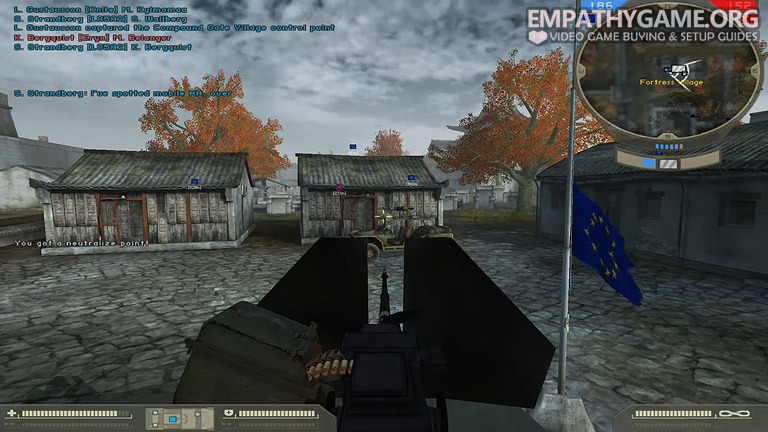
Vehicles do more than increase the spectacle. They change which parts of a map are dangerous, which objectives can be reached quickly and which classes the team suddenly needs. A tank can control an exposed road until an Anti-Tank squad, enemy armour or aircraft responds. An attack helicopter can keep infantry away from a flag, but its freedom depends partly on whether friendly soldiers can suppress nearby anti-air threats. Engineers become important because repairing one well-positioned vehicle may contribute more than sending another soldier into the same firefight.
Wake Island makes that relationship particularly visible. A capable attack-helicopter crew can help a ground squad break through on one side of the island, but the aircraft becomes easier to use when teammates contest enemy air power and threatening defensive positions. The helicopter supports the advance; control of the ground, in turn, gives the helicopter room to operate. Neither part of the attack is truly independent.
Gulf of Oman places more emphasis on movement. Transport helicopters can carry soldiers over exposed approaches and deposit them around beach or inland flags, turning the journey itself into a tactical decision. A pilot repeatedly delivering squads to the right objective may have a greater effect on the round than someone chasing impressive personal statistics. Logistical work becomes genuinely offensive.
The drawback is how unevenly vehicle skill can affect a match. Experienced jet and helicopter pilots can impose themselves on large areas of the map, while beginners face demanding controls and little margin for mistakes. Counters exist, but they rely on players recognising threats and cooperating. Without that response, enemy air power can seem less like an opposing player and more like a permanent condition of the map.
Commander Mode Connects Strategy to the Ground Fight
Commander Mode gives Battlefield 2 a layer that few of its successors have reproduced in quite the same way. One player sees the battle from above, issues orders, scans for enemies, positions UAV reconnaissance, delivers supply crates and calls artillery. The real design is in how that information reaches the soldiers who can act on it.
A UAV revealing enemies around a flag does not take the objective; it helps a squad choose a safer approach. A supply crate matters when defenders need ammunition or repairs to hold their position. Artillery can create the opening for a ground assault, but its usefulness depends on timing and coordination rather than the number of casualties it produces. Squad leaders connect the two levels of play, passing information and direction between their members and the Commander.
Important Commander assets exist as vulnerable objects on the map. A Spec Ops soldier can slip into enemy territory and disable artillery or surveillance equipment with C4. Engineers can repair those assets, making a successful sabotage temporary unless the attacking team exploits the disruption. A trip behind enemy lines therefore has a strategic purpose beyond surprising isolated opponents. It interferes with the information and support the other side depends on.
The system also exposes the limitations of teamwork more plainly than most shooters. A capable Commander cannot force squads to follow orders, while cooperative squad leaders receive little value from badly placed reconnaissance or mistimed artillery. When both sides of the relationship work, even a public match can develop a sense of direction. When they do not, the impressive strategic tools become background noise to several disconnected fights.
Progression Was Designed for the Long Haul
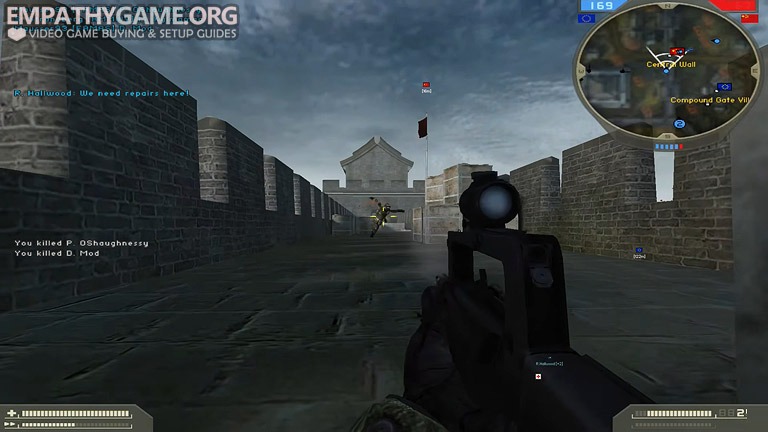
Battlefield 2’s original ranking system treated a player’s profile more like a military service record than a short seasonal reward track. Captures, revives, repairs and resupply contributed alongside combat performance. Promotions brought weapon unlocks, and rank also mattered when several applicants wanted the Commander role. Badges, medals and ribbons rewarded commitment to particular activities, often across substantial amounts of playtime.
That structure gave quieter roles a sense of lasting recognition. Someone who specialised in armour, aircraft, Medic or Support duties could build a profile around those contributions rather than always chasing the highest kill count. The rewards were slow enough to make individual milestones feel significant. They could also be punishingly slow. Anyone seeking regular unlocks may find the old requirements excessive.
The more interesting achievement is not the grind itself. It is that Battlefield 2 connected its long-term incentives to the actions that kept a team alive and its flags secure. Supporting others was not simply the generous thing to do; it was recognised as meaningful play.
Sound and Scale Still Sell the Battlefield
Battlefield 2 has no conventional story campaign or central character to follow. Its USMC, PLA and Middle Eastern Coalition factions provide the outline of a fictional conflict, but the memorable stories come from the changing situation on each map. A contested flag, a missing squad leader or the sudden appearance of armour can give a routine match its own narrative without scripted missions telling everyone what should happen next.
Sound is a large part of that effect. A jet may be heard crossing the battlefield before anyone sees it. Helicopter rotors suggest trouble overhead, armour announces its approach from the next street, and artillery forces soldiers to reconsider whether their cover is really safe. Explosions blur vision and muffle hearing. These sounds reveal threats beyond the narrow view of a weapon.
The graphics are visibly from the mid-2000s. Models and terrain lack modern detail, distant scenery uses obvious compromises, and environmental destruction is limited. Yet the wider visual design still serves the action. Broad sightlines make vehicles readable, distinctive silhouettes help identify threats, and the scale leaves room for several fights to overlap. A tank advancing along a road while a jet passes overhead and Medics revive their squad behind a wall is more convincing battlefield drama than many scripted spectacles.
The Old Design Still Asks for Patience
The age shows most clearly in the parts of Battlefield 2 that modern games have taught players to take for granted. Menus and key bindings feel cumbersome, movement and interface feedback can be stiff, and the game offers little gentle introduction to its more demanding roles. Learning to fly is one challenge; learning where a useful pilot should actually go is another. Squad leadership and Commander Mode also demand map knowledge the game barely teaches.
Offline bot matches provide room to learn layouts, practice aircraft and experiment with class equipment, but they reveal only part of the design. Bots cannot recreate the feints, improvised flanks and coordinated rescues that make human Conquest interesting. Even against people, a team that does not communicate can make the systems feel strangely empty. Battlefield 2 is built for cooperation, yet it cannot guarantee that cooperation will happen. That tension is both one of its biggest weaknesses and the reason its best rounds remain so distinctive.
Final Verdict
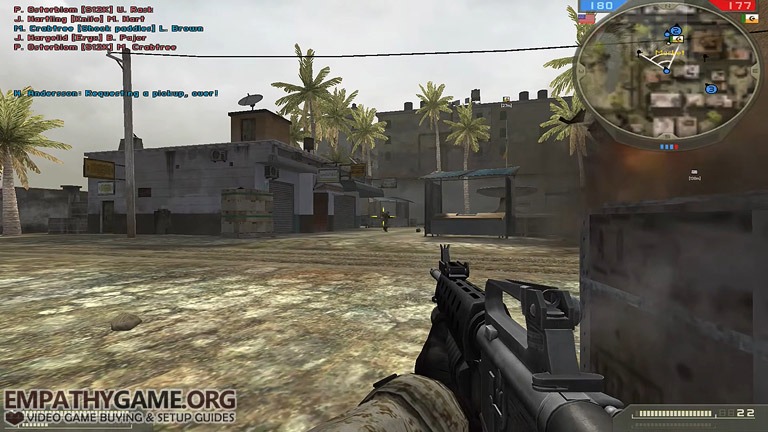
Battlefield 2 understands something that remains easy for team-based shooters to overlook: cooperation becomes meaningful when the rules make players depend on it. A surviving squad leader keeps an attack alive, a Medic protects that opportunity, an Engineer preserves valuable armour, and a Commander can help the right people reach the right flag. The most satisfying victories are not always the result of better shooting. Sometimes they come from a handful of players recognising what the rest of the team needs.
There are substantial compromises. Weapon spread takes practice, grenade-saturated chokepoints can drain the fun from infantry combat, veteran pilots may overwhelm disorganised opposition, and both the interface and progression show their age. Someone looking for a narrative campaign, immediately comfortable controls or consistently balanced individual encounters has good reasons to prefer something else.
For players who enjoy reading the battlefield and mastering specialised roles together, Battlefield 2 remains distinctive. Its most impressive feature is not the size of a 64-player battle. It is how much difference six organised players can make within one.
Battlefield 2 (2005) Pros & Cons
- Pro: Landmark combined-arms design mixes infantry, armor, helicopters, jets, transport vehicles, and control-point battles on maps built for different player counts
- Pro: Squad leaders, Commander Mode, spotting, revives, resupply, repairs, and class roles create unusually strong teamwork for a classic multiplayer FPS
- Pro: Offline bot matches preserve the fundamental Battlefield 2 loop even after the official online infrastructure was retired
- Pro: Special Forces plus the Euro Force and Armored Fury content give legitimate Complete Collection owners a substantial pool of maps, factions, equipment, and vehicles
- Pro: The official Battlefield 2 Editor helped create one of PC gaming’s most durable mod scenes, including major total conversions and expanded single-player projects
- Con: Battlefield 2 is no longer sold through normal official PC storefronts, making legitimate new ownership difficult
- Con: EA’s original online accounts, ranking, and official server browser are shut down; internet multiplayer now relies on independent community services
- Con: The original Windows XP-era build can require compatibility work on modern PCs, and EA does not provide a modern remaster or native 64-bit version
- Con: The historical Steam release is discontinued and rated Unsupported on Steam Deck; there is no modern cross-play, cloud-save, or cross-progression ecosystem
Battlefield 2 (2005) PC System Requirements
ORIGINAL EA/DICE WINDOWS PC REQUIREMENTS:
The specifications below come from the original Battlefield 2 readme and retail-era PC requirements. They describe the Windows XP-era release and should not be treated as a guarantee of modern Windows compatibility.
MINIMUM:
OS: Windows XP, 32-bit
CPU: 1.7 GHz processor
RAM: 512 MB
GPU: NVIDIA GeForce FX 5700, ATI Radeon 8500, or ATI Radeon 9500 with 128 MB video memory
DirectX: DirectX 9.0c
Storage: Approximately 2.3 GB available space for the base game, plus space for saved games and DirectX installation files
Optical Drive: 8x CD/DVD drive for retail-media installation, depending on the edition
RECOMMENDED:
OS: Windows XP, 32-bit
CPU: 2.4 GHz processor
RAM: 1 GB
GPU: Supported graphics card with at least 256 MB video memory; the original readme did not specify one exact recommended GPU model
DirectX: DirectX 9.0c
Storage: Approximately 2.3 GB available space for the base game, with additional space needed for expansions, updates, mods, and saved data
Optical Drive: 8x CD/DVD drive for retail-media installation, depending on the edition
Additional PC Performance and Setup Notes
- The original requirements target Windows XP-era hardware. Meeting them does not guarantee trouble-free installation or launch behavior on Windows 10 or Windows 11.
- DICE’s final official PC update added Windows Vista support, proper widescreen support, and increased memory addressing.
- For an owned retail copy, standard Windows compatibility settings may help with installation or launch problems, but neither EA nor Valve guarantees operation on a modern Windows system.
- Use legitimate retail media, your own backups, Microsoft-provided legacy DirectX components, and normal Windows compatibility tools before considering third-party fixes. Avoid replacing the game executable with files from untrusted sources.
- Community multiplayer backends, launchers, ranking services, and server browsers are separate from EA’s retired infrastructure. Keep clean backups before installing community clients or switching between multiplayer services.
- Back up profiles, configuration files, custom maps, and mod folders before changing a working installation, especially when combining older total conversions with a Complete Collection setup.
Official Trailer
Note: This archived upload preserves an official Battlefield 2 trailer showing infantry combat, tanks, helicopters, jets, and the large-scale combined-arms battles that defined the PC release, while the written guide adds delisting, server-status, ownership, compatibility, requirements, and modding context.
Frequently Asked Questions
Can Battlefield 2 still be played online? Yes, through independent community services such as BF2Hub, which provide their own accounts and server discovery. EA’s original GameSpy services are permanently retired, and the number of available players depends on the community server.
Can you still buy or download Battlefield 2 through Steam or the EA app? Not as a normal new purchase. Battlefield 2 previously had a Steam release, but Steam and the EA app no longer sell new copies; existing owners should check their historical library or account entitlement.
Can an original Battlefield 2 disc key be redeemed on Steam or the EA app? There is no supported conversion from a normal retail CD/DVD key to a new Steam or EA app license. Keep your legitimate installation media, key, and proof of purchase.
What does BF2Hub require? BF2Hub needs a valid Battlefield 2 installation updated to version 1.50. Its official community patching instructions explain why older retail installations usually need 1.41 installed first.
Can Battlefield 2 be played offline against bots? Yes. The original game includes single-player Conquest-style battles against AI, without an offline story campaign or any dependency on EA’s retired online account services.
Can you use bots on the original 32-player and 64-player maps? Vanilla offline mode primarily uses the smaller map layouts. Larger bot matches and expanded map support generally require community single-player mods, which can behave differently from the original multiplayer game.
Does Battlefield 2 have LAN co-op or split-screen? It supports LAN multiplayer and cooperative matches with AI on compatible installations, but not split-screen on one PC. Each local player needs a separate computer and compatible installation.
How do squad leaders and spawning work? A squad holds up to six players. As long as its leader survives, teammates can use that leader as a forward spawn point, which makes protecting the leader an important tactical decision.
What can the Commander do in Battlefield 2? One Commander per team can issue squad orders and use the strategic map for UAV reconnaissance, artillery, supply drops, and other support assets. Good coordination often matters more than the Commander’s individual kill count.
What classes can you choose in Battlefield 2? The original seven kits are Assault, Anti-Tank, Engineer, Medic, Special Ops, Support, and Sniper. Medic is an accessible starting point for learning squad revives, while Engineer and Anti-Tank introduce the vehicle side of combat.
Does Battlefield 2 still support 64-player battles? The original PC game supports up to 64 players on appropriate multiplayer maps and servers. Community servers may use this format, but their actual population is not guaranteed.
Is Battlefield 2 the same as Battlefield 2: Modern Combat? No. Battlefield 2 is the original Windows PC combined-arms game; Modern Combat is a separate console release, not a port that can be used as a PC copy.
What is included in Battlefield 2: Complete Collection? The historical package combines the base game, Special Forces, Euro Force, and Armored Fury. Special Forces adds its own missions, factions, maps, and equipment; the final official base-game update incorporated the two booster packs.
Does Battlefield 2 run on Windows 10 or Windows 11? Some legitimately owned installations can run with legacy patches and compatibility adjustments, but it was designed for much older Windows systems. BF2Hub lists modern Windows support for its community client; that does not guarantee compatibility for every disc edition or mod.
Does Battlefield 2 support modern widescreen monitors? Yes, the final official update added proper widescreen support. A patched original installation is preferable to an unpatched retail build, though modern ultrawide arrangements may still need additional testing.
What is Battlefield 2’s Steam Deck rating? Valve rates the game’s historical Steam app Unsupported. The fact that it is no longer sold on Steam does not mean it never had a Steam release or compatibility classification.
Can Battlefield 2 be modded? Yes. The Battlefield 2 Editor and established mod communities support new maps, altered gameplay, and total conversions. Keep a clean game backup, and check individual mod requirements rather than mixing incompatible launchers and versions.
Is Project Reality a Battlefield 2 mod that requires the original game? Project Reality started as a Battlefield 2 modification but is now a standalone community project. Its official installation page says an original Battlefield 2 installation is not required.
How is Forgotten Hope 2 different from Project Reality? Forgotten Hope 2 concentrates on historical World War II warfare. Its long-standing official download site documents Battlefield 2-compatible installation, while Project Reality uses a separate standalone installer.
Still have questions? Check the Battlefield 2 Reddit community, legacy Steam Discussions, BF2Hub support, or the EA Battlefield forums for game-specific community information and legacy support discussions.
Sources & References
Key availability, multiplayer, Steam metadata, and technical details were checked against the following official and established sources:
- EA Online Service Updates — confirms the permanent shutdown of Battlefield 2 PC online services
- BF2Hub Support and Patching Guide — community replacement services, supported installation, and patch order
- SteamDB: Battlefield 2 — historical Steam release, review reception metadata, and Valve’s Steam Deck status
- PCGamingWiki: Battlefield 2 — legacy PC requirements, game engine, availability, and compatibility information
- Project Reality Downloads — confirms that its standalone community game does not require the original Battlefield 2 installation
- Forgotten Hope 2 Downloads — verifies original Battlefield 2-compatible mod installation
- Metacritic: Battlefield 2 for PC — verifies the original release’s aggregated professional review score
Similar Games Like Battlefield 2 (2005)
- Battlefield 3
- Battlefield 4
- Battlefield 1942
- Battlefield: Bad Company 2
- Call of Duty 4: Modern Warfare
- Call of Duty: Modern Warfare 2
Found something worth playing through DecideGame?
DecideGame.com is an independent gaming project run by Editor Zero. If this guide helped you discover a game, solve a problem, or find useful information, you can support DecideGame.com and help keep new and updated game guides coming.
DecideGame — PC Game Guides, Reviews & Setup Help