
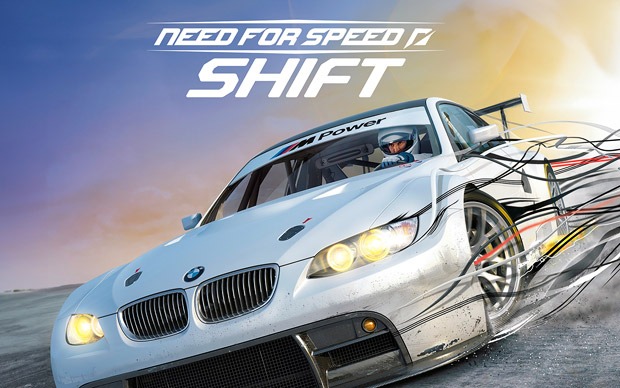
📅 Game released: 2009
Need for Speed: Shift exchanges street chases for cockpit-focused circuit racing, rewarding precision, bold overtakes, car tuning, and controlled speed across licensed tracks. This PC guide explains the game’s official download status, how existing owners can reinstall legitimate copies, what its original system requirements mean on newer Windows PCs, and where Steam Deck, LAN, controller, and modding limitations matter.
 By Editor Zero — independently researched, edited, and maintained.
Last updated: 14 November 2026
Last reviewed: 14 November 2026
Table of Contents
- Quick Facts
- Official PC Stores, Download & Installation
- Need for Speed Shift Review
- Pros & Cons
- PC System Requirements
- Frequently Asked Questions
- Similar Games
Need for Speed: Shift Quick Facts
- Game: Need for Speed: Shift / Need for Speed SHIFT
- Developer: Slightly Mad Studios (Windows PC and main console versions)
- Publisher: Electronic Arts
- Genre: Racing, Driving Simulation, simcade circuit racing
- Release: September 15, 2009 (first release, North America, including Windows PC); September 17, 2009 in continental Europe
- PC Content: Base game plus the five classic cars added through the official Team Racing PC update; EA-hosted Team Racing is no longer available
- Platforms: Windows PC, PS3, Xbox 360, PSP; separate iOS, Android, and legacy mobile adaptations
- Steam Deck: Playable for existing Steam owners; some menus and text entry need touchscreen, virtual keyboard, or a community controller layout
- Engine: Madness Engine (identified in PCGamingWiki technical documentation; not prominently specified in EA’s current support material)
- Modes: Single-player career and Quick Race; official internet multiplayer retired; LAN racing supported by the updated Windows version
- Community: EA limited-support help, Steam Discussions, Need for Speed Reddit Community
- PC modding: Nexus Mods for Need for Speed: Shift lists unofficial graphics, handling, and compatibility modifications; no Steam Workshop or official toolkit
- Metacritic score: 83/100 (Windows PC)
- IGN score: 9/10 (original 2009 release review)
- Steam user reception: Mostly Positive overall (existing Steam app; no longer sold to new buyers)
Official PC Store Status, Download & Installation
👇 Use the notes below to check Need for Speed: Shift’s official PC download status, reinstall a legitimately owned copy, and avoid unverified game files or activation keys.
- Delisted status: Electronic Arts removed Need for Speed: Shift from digital storefronts, so there is no normal first-party PC store where a new customer can purchase a fresh digital license.
- Existing Steam owners: The Steam app is retired from sale but still exists in Valve’s database and support system. If the game is already attached to your Steam account, use your Steam Library and Steam Support rather than searching for replacement game files elsewhere.
- Legacy EA ownership: Players who previously registered an EA Store or Origin entitlement should check the EA app library under the same EA account. Legacy entitlement or activation problems should be handled through EA Help because recognition can depend on the original license and account history.
- Retail copies: Original Windows retail releases used legacy product activation and SecuROM technology. A second-hand disc or unused-looking key should not be assumed to activate successfully, so avoid purchasing old keys unless their legitimacy and activation status are clear.
- Offline play: EA retired the game’s official internet services, but the single-player career, Quick Race, vehicle progression, tuning, and other offline features remain the main usable parts of the PC version.
- LAN multiplayer: An official PC update added LAN support, allowing compatible computers on the same local network to race without relying on EA’s retired public matchmaking servers.
- PC bonus content: The Team Racing content added five classic cars to the PC version. Its internet-based Team Racing functionality depended on services that are no longer available.
- Console-only DLC: The Ferrari Racing Pack was Xbox 360-exclusive, while the Exotic Racing Series was released for consoles rather than as normal official PC DLC. Do not expect those packages to appear in a legitimate Windows purchase.
- Steam Deck: Existing Steam owners have a Playable rating. The game can run through SteamOS, but some menus, controller prompts, and text-entry screens may require touchscreen, the on-screen keyboard, or a different controller layout.
- Mod compatibility: Community patches and overhaul mods can help with an aging PC release, but they are unofficial. Back up saves and configuration files first, avoid combining incompatible modifications, and restore clean game files when troubleshooting.
 Open Need for Speed Shift on Steam Support
 Open Official EA Help for Need for Speed Shift

Need for Speed: Shift Review
A ferocious cockpit racer caught between racing discipline and Need for Speed chaos.

Need for Speed: Shift makes an unusual demand of its audience: forget the police chases and open-world cruising, learn to drive with some restraint, then enjoy how dramatically the game reacts whenever that restraint fails. Its world consists of closed circuits, braking points, racing lines, and a career built around driving better rather than escaping trouble. Yet it has no interest in feeling like a quiet, clinical simulator. The camera pitches forward under braking, vision blurs during hard acceleration, crashes strike with a disorienting thump, and opponents are not above trading paint through a corner.
This tension gives Shift much of its character. It asks for earlier braking and smoother inputs than the more arcade-focused Need for Speed games, but a powerful rear-wheel-drive car can still feel ready to turn one careless throttle movement into a spin. Drivers looking for precise simulation may find the handling exaggerated; those expecting effortless arcade racing may be surprised by how much concentration a clean lap requires. The interesting space lies between them, where the game makes ordinary circuit racing feel unusually physical.
Handling Lives Between Discipline and Drama

The opening Trial of Fire explains the approach better than a long tutorial could. A flying lap evaluates your driving and recommends a difficulty and handling setup. From there, assists such as ABS, traction control, and stability management can be adjusted. That matters because Shift is not asking every player to become the same kind of driver. The Perfect Line helps establish braking points and corner approaches; reducing assists makes weight transfer, throttle sensitivity, and steering corrections harder to ignore.
In a normal circuit race, the cars have enough movement to make even familiar corners demand attention. Brake too late and the front tires can lose their willingness to turn, sending the car wide. Apply power too eagerly in a strong rear-wheel-drive machine and the rear may rotate before a correction is ready. A curb or an opponent’s door can unsettle the chassis just as the car starts to settle into the ideal line. This is not the detailed tire behavior of a dedicated simulator, but it creates an understandable relationship between a rushed input and a messy consequence.
Speed makes those decisions less forgiving. A lower-tier road car leaves room to rescue a poor approach; faster machinery gives the driver much less time to recognize the same mistake. Laguna Seca’s Corkscrew rewards a confident braking point more than a brave last-second lunge, while the Nordschleife demands concentration across a far longer sequence of corners. The challenge is not always raw difficulty. It is the growing awareness that a good rhythm can disappear with one impatient input.
There is a contradiction in the way Shift rewards that discipline. Precision points recognize clean overtakes, racing lines, and mastered corners, while Aggression points reward contact, blocking, spins, and forceful driving. Both approaches can be entertaining, but they do not always coexist comfortably. An AI opponent leaning into a turn can spoil the careful line the game has spent several laps encouraging you to learn. The rival drivers give races energy, though their willingness to make contact sometimes turns a clean-driving challenge into a struggle against the field.
The Cockpit Is the Real Star

The handling may sit uneasily between arcade racing and simulation, but the cockpit presentation knows exactly what it wants to achieve. Acceleration draws the viewpoint backward, hard braking pitches it toward the windshield, and a serious impact shakes and desaturates the image before focus returns. None of this is subtle, and it is not supposed to be. Shift communicates speed through disturbed vision and movement rather than trusting the speedometer to do all the work. It makes the driver seem like someone occupying the car, not just a camera attached to it.
Sound is just as important to that illusion. Engines take priority in the mix, with tire scrub and collision noise adding clues about what the car is doing. The McLaren F1, for example, sounds appropriately unruly at speed, reinforcing the impression that the machinery is pushing against the limits of the cockpit around it. External views remain usable and can make certain corners easier to read. But that clarity comes at a cost: outside the car, Shift is a lively circuit racer; inside it, every braking mistake and nearby opponent feels more immediate.
A racing wheel can deepen that connection, although the mechanics do not always match the presentation’s confidence. H-pattern shifters and manual clutches can reveal awkwardness during quick downshifts, especially when braking hard and trying to blip the throttle in a powerful rear-drive car. That is a meaningful distinction for players who care about mechanical accuracy. Shift is better at communicating the pressure of racing than reproducing every part of the driver’s work with equal fidelity.
Career Progression Rewards How You Drive
There is no conventional protagonist or dramatic story campaign. Instead, the Driver Profile gives the career its identity. Precision and Aggression points record how events are approached, while Stars open higher tiers and ultimately the NFS Live World Tour. Profile Points also build Driver Level and unlock rewards. It is a useful arrangement because finishing first is important without being the only sign that something has been accomplished.
Mastering corners, reaching Profile Point targets, and completing event-specific objectives can contribute Stars even when every available goal has not been cleared. That flexibility is more valuable than it first appears. A player who finds drifting frustrating can leave many of those objectives unfinished, progress through circuit races, and return later if completing the career matters. Shift gives drivers room to specialize without making one disliked discipline a permanent barrier.
The garage makes that progression feel connected to the driving itself. Quick Tuning provides accessible adjustments to steering, gearing, balance, and downforce, while Advanced Tuning offers more detailed control. The real satisfaction is not simply having sliders available. It comes from realizing that a difficult car may need a different setup, a different driving approach, or a little of both. A vehicle that initially seems too nervous to trust can become more predictable once its behavior is understood.
Works Conversions extend the idea. Eligible cars need to be developed through their normal upgrades before becoming more specialized race machines, so an earlier purchase need not become irrelevant as new tiers open. That is one of Shift’s more thoughtful decisions. It encourages attachment through familiarity rather than constant replacement: the car changes, but so does the driver’s understanding of where it will brake, turn, and lose grip.
Event Variety Helps, but Drifting Breaks the Rhythm
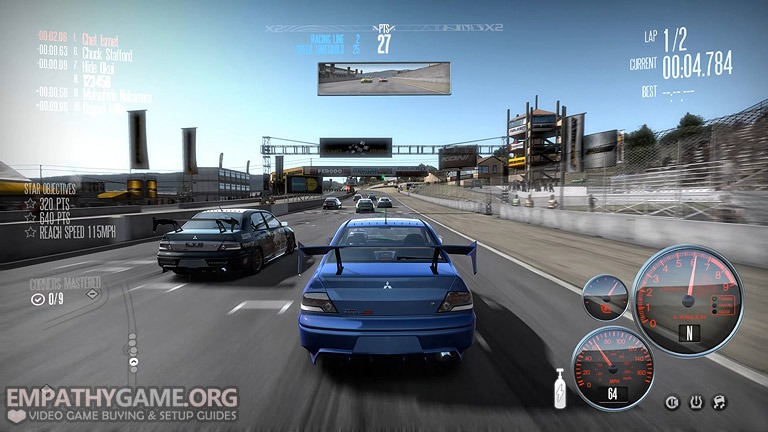
The career mixes standard races with time attacks, eliminations, manufacturer events, head-to-head contests, and drifting. Silverstone, Donington, Laguna Seca, Spa, and the Nordschleife provide recognizable circuits alongside fictional and street-style venues. Restrictions on eligible cars also encourage more variety in the garage. This structure helps, particularly when a familiar circuit feels different in a car with another balance of power, grip, and braking performance.
Drifting is where that coherence weakens. The cars break traction much more readily than in ordinary races, so the habits developed through circuit events suddenly seem less dependable. Counter-steering and measured throttle inputs can produce controlled slides, but reaching that point often means learning how to manage an exaggerated tendency to rotate. On a Silverstone drift layout, a little extra throttle can demand a surprisingly large correction, and correcting too far may send the car swinging back in the opposite direction.
The issue is not that drifting takes practice. Circuit racing can also be demanding, but its challenge usually follows the handling principles the game has already taught. Drift events feel closer to learning a separate set of rules. Fortunately, the Star system does not require every objective to be completed, so the weakest discipline does not have to dominate the career. That freedom makes the inconsistency easier to accept, even if it does not make the drifting itself more convincing.
A Broad Career Cannot Completely Avoid Repetition
Shift offers plenty of cars, objectives, restrictions, and track variants, but the underlying career structure becomes familiar. Themed competitions still rely on variations of the same racing formats, and later tiers increase speed and performance more than they introduce fundamentally different challenges. The NFS Live World Tour gives progress a destination, though there is no cast of rivals or story-driven spectacle to create momentum between events. Whether that matters depends on what keeps someone racing.
For drivers motivated by improvement, there is still a reason to return. Higher difficulties, fewer assists, unfinished Stars, mastered corners, badges, tuning experiments, and Works builds make old events worth reconsidering. Removing the racing line from a known circuit can change the whole approach to braking; switching to a faster car can make previously comfortable corners intimidating again. The track has not changed, but the driver’s relationship with it has. That is a more convincing source of replayability than a long checklist by itself.
Still, a few missed opportunities become more apparent over time. The replay system is merely functional despite how spectacular the cockpit presentation can be, and the mixture of real circuits, variants, and fictional venues is not the same as a vast collection of famous tracks. Anyone primarily interested in collecting every car or completing every event may begin to notice the repetition. Players who enjoy correcting the same small mistakes across successive laps are more likely to find lasting value in it.
Final Verdict
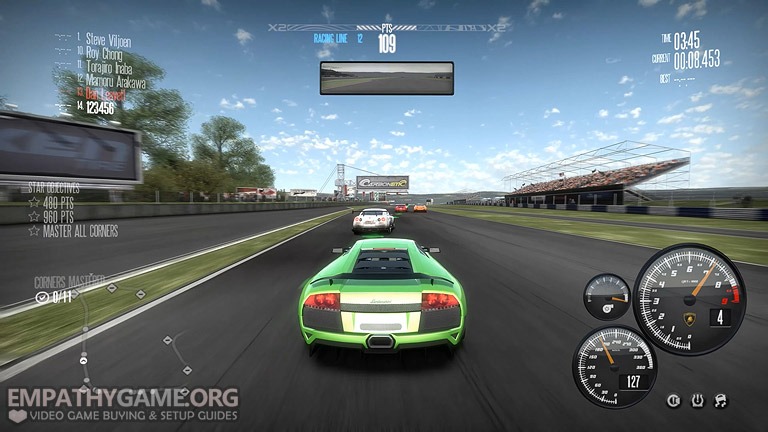
Need for Speed: Shift is most convincing when its camera, sound, track design, and restless cars make a single corner feel like something that has to be earned. The physics are less rigorous than the cockpit suggests, but that does not make the sense of speed any less effective. The game understands that a racing experience can feel intense without simulating every mechanical detail perfectly.
Its inconsistencies remain noticeable. The Precision and Aggression systems do not always encourage compatible behavior, opponents can interfere with cleaner racing, drifting feels separate from the better circuit handling, and the career eventually revisits familiar ideas. Some wheel users will also find the transmission behavior less convincing than the presentation around it.
For someone who wants forgiving arcade racing, Shift may ask for too much patience. For a dedicated sim racer, it may offer too much theatrical feedback and not enough mechanical precision. Between those audiences, it finds a worthwhile identity: accessible enough to learn, demanding enough to reward smoother driving, and unusually good at making speed feel physical. The cockpit is not simply the most exciting view. It is the clearest explanation of what this particular Need for Speed was trying to achieve.
Need for Speed: Shift Pros & Cons
- Pro: Exceptionally immersive cockpit presentation combines camera movement, engine sound, vibration, speed effects, and crash feedback to make fast laps feel unusually physical
- Pro: Simcade handling bridges accessible Need for Speed controls and more demanding circuit-racing concepts such as braking points, racing lines, tuning, assists, and car setup
- Pro: Career progression, Driver Profile, stars, Precision and Aggression scoring, licensed circuits, and more than 65 cars provide substantial single-player variety
- Pro: Vehicle upgrades, tuning, Works-style conversions, different event disciplines, and multiple driving assists give casual and more experienced racing players room to adjust the experience
- Pro: Modding resources, LAN support, modest original hardware demands, and a Playable Steam Deck rating give existing PC owners several ways to keep the game usable
- Con: No official digital storefront currently sells a new PC license, making legitimate access much less straightforward for anyone who did not already own the game
- Con: Official internet multiplayer, matchmaking, leaderboards, and the online component of Team Racing have been permanently retired
- Con: Legacy activation technology, old Windows assumptions, older controller mappings, and compatibility quirks can require more troubleshooting than a modern PC racer
- Con: Drift handling and parts of the career structure can feel less refined than the circuit racing, especially for players expecting either a pure simulator or the open-world street-racing style of other Need for Speed games
Need for Speed: Shift PC System Requirements
These are the archived Windows PC requirements for the original 2009 release, not a guarantee of full compatibility with Windows 10 or Windows 11. Steam Support lists Windows Vista Service Pack 2; some older retail-era materials listed Service Pack 1. EA did not publish a complete recommended hardware tier in the surviving Steam specification, so only independently documented higher-memory values are shown below.
MINIMUM:
OS: Windows XP Service Pack 3 / Windows Vista Service Pack 2 / Windows 7
CPU: Intel Core 2 Duo 1.6 GHz or faster / AMD Athlon X2 3800+ or faster
RAM: 1 GB (Windows XP) / 1.5 GB (Windows Vista / Windows 7)
GPU: DirectX 9.0c graphics card with Pixel Shader 3.0 support and 256 MB video memory; ATI Radeon X1800 XT or NVIDIA GeForce 7800 GT class
DirectX: DirectX 9.0c
Storage: 6 GB available space
Sound: DirectX 9.0c-compatible sound card
Input: Keyboard and mouse; supported USB steering wheel or dual-analog gamepad optional
DVD Drive: 8x DVD-ROM for the original disc edition
Internet: Original PC release used online authentication and registration for online features; EA-hosted internet multiplayer has since ended
RECOMMENDED — PARTIAL ARCHIVED VALUES:
RAM: 2 GB (Windows XP) / 3 GB (Windows Vista / Windows 7)
GPU: 512 MB video memory with Pixel Shader 3.0 support
CPU: A complete publisher-recommended CPU specification cannot be confirmed from the surviving official listing
Storage: No separate higher recommended capacity is published in the surviving official listing
Additional PC Performance and Setup Notes
- The original requirements predate Windows 10 and Windows 11, so modern Windows operation varies by installation, graphics driver, and original ownership/activation method; it is not guaranteed by the archived specifications.
- For a legitimate PC installation that stutters, loads unusually slowly, or crashes at launch, begin with clean unmodified files and conservative display settings. Windows compatibility options may help some configurations, but no single workaround is universal.
- If display settings repeatedly reset, first try a conventional supported refresh rate and check whether the game can write to its Documents configuration folder.
- Valve rates the Steam version Playable on Steam Deck, but some actions still need touchscreen, manual keyboard input, or a community control layout. This applies to an existing Steam entitlement, not new purchases.
- Save data is normally under
%USERPROFILE%\Documents\NFS SHIFT\, with profiles in subfolders. Back up the folder before installing community patches or editing settings. The original Steam version does not provide native Steam Cloud save synchronization. - Racing-wheel profiles were designed for hardware from the original release period; newer wheels may need manual button, steering, and force-feedback mapping. Test the unmodified game before applying unofficial profiles or overhauls.
Official Trailer
Note: Electronic Arts’ official launch trailer focuses on Need for Speed Shift’s cockpit perspective, high-speed circuit racing, licensed performance cars, aggressive close racing, and track atmosphere, while this guide adds the present PC delisting status, legitimate existing-owner installation guidance, Steam Deck support, requirements, mods, and legacy setup considerations.
Frequently Asked Questions
Can you still buy or officially download Need for Speed Shift on PC?
No new digital PC purchase is offered through EA or Steam. If Shift is already registered to your Steam account, check your Library for installation; owners of older EA entitlements can check the EA app under the original account, although recognition and activation depend on that license’s history.
Is Need for Speed Shift an arcade racer or a simulator?
It is a simcade circuit racer. Braking points, assists, racing lines, weight transfer, and tuning matter more than in street-oriented Need for Speed titles, but its handling and dramatic cockpit effects are less strictly realistic than a dedicated simulator.
Is Need for Speed Shift open world?
No. Its career uses selectable races and licensed or fictional circuits, not a connected free-roaming city.
What is the difference between Stars, Profile Points, and Driver Level?
Stars primarily unlock later career events and tiers. Profile Points are earned for how you drive, including Precision and Aggression actions, and contribute to Driver Level rewards rather than replacing Stars as the main career gate.
Can you skip drift races and still progress through the career?
Yes. The career offers enough alternative Star-earning objectives that you do not need to complete every drift event to open later competitions. Completionists can return for missed Stars and badges.
What driving assists and racing line should beginners use?
The opening Trial of Fire suggests a suitable setup. Leaving ABS, traction control, and the colored Perfect Line enabled while learning braking points is a sensible starting approach; reduce or disable them gradually as your control improves.
What does Works Conversion do?
Eligible upgraded cars can receive a costly Works Conversion that develops them into more specialized racing machines. It is an option for selected vehicles rather than an upgrade available on every car.
Should you use Quick Tuning or Advanced Tuning?
Quick Tuning makes broad handling changes approachable, while Advanced Tuning gives more detailed control over settings such as suspension, tire pressures, gearing, and drivetrain balance. Start with Quick Tuning unless you can identify a specific handling issue worth adjusting more precisely.
Why are drift events harder than ordinary races?
Drift events emphasize sustaining controlled slides and can feel much more eager to break traction than normal circuit racing. Smooth throttle control and counter-steering matter more than simply entering corners quickly or holding the handbrake.
Does the game have mechanical damage?
Yes. Depending on the selected damage setting, crashes can affect more than appearance, including how the car steers or performs. Players who prefer less punishment can use the lighter damage options.
Are the official servers still online, and can you race over LAN?
EA retired the original internet multiplayer and related online services. The updated Windows version supports LAN racing between compatible computers on the same local network, but the PC version does not include same-screen split-screen multiplayer.
Does Need for Speed Shift support controllers and racing wheels on PC?
Yes. The original PC release supports dual-analog gamepads and steering wheels, though newer controllers and wheels can require manual mappings or sensitivity adjustments because their hardware profiles were not available in 2009.
Does Need for Speed Shift work on Windows 10 and Windows 11?
Some legitimate PC installations do, but neither operating system was included in the game’s original official requirements. Older DRM, graphics settings, and controller profiles can complicate installation or play, so compatibility is not guaranteed on every system.
Does Need for Speed Shift work on Steam Deck?
Valve rates the Steam version Playable for existing owners. Gameplay can work through SteamOS, but certain menus, button prompts, and text fields require extra touchscreen, keyboard, or controller-layout interaction.
Can Need for Speed Shift be modded?
Yes. Unofficial handling, visual, interface, and community-fix mods exist, but there is no official toolkit or Steam Workshop integration. Back up your game profile and use mods that explicitly support your installed version.
Does Need for Speed Shift use Steam Cloud for career saves?
No native Steam Cloud synchronization is documented for this version. Windows saves and configuration files are normally located under %USERPROFILE%\Documents\NFS SHIFT\; make a backup before changing your installation.
Still have questions? Check the Need for Speed Shift Steam Discussions, Need for Speed Reddit community, or EA’s limited-support help for further assistance.
Sources & References
Key release, ownership, technical and support details were checked against the following sources:
- Electronic Arts — older Need for Speed titles announcement — official digital-sale withdrawal and internet-service retirement.
- Steam Support — Need for Speed: SHIFT — original PC requirements, release information, and account-based support.
- SteamDB — Need for Speed: SHIFT — retired Steam app status, historic user reception, and Steam Deck compatibility metadata.
- PCGamingWiki — Need for Speed: Shift — legacy DRM, PC patches, LAN, Madness Engine, save locations, and technical caveats.
- Electronic Arts — Team Racing content announcement — five additional classic cars and the retired online team mode.
- Electronic Arts — Exotic Racing Series announcement — confirmation that the pack was for PS3 and Xbox 360 rather than an official PC DLC release.
- Metacritic — Need for Speed: Shift — original PC critic-review aggregate and reception context.
Similar Games Like Need for Speed: Shift



Found something worth playing through DecideGame?
DecideGame.com is an independent gaming project run by Editor Zero. If this guide helped you discover a game, solve a problem, or find useful information, you can support DecideGame.com and help keep new and updated game guides coming.
DecideGame — PC Game Guides, Reviews & Setup Help