
📅 Game released: 2015
Project CARS is a circuit-racing simulation built around real motorsport disciplines, dynamic weather, qualifying, pit strategy, and detailed car tuning rather than car-unlock grinding. This PC guide explains the official Steam download status for existing owners, Game of the Year Edition content, VR, Steam Deck, multiplayer, system requirements, and practical setup.
 By Editor Zero — independently researched, edited, and maintained.
Last updated: 14 November 2026
Last reviewed: 14 November 2026
Table of Contents
- Quick Facts
- Official PC Stores, Download & Installation
- Project CARS Review
- Pros & Cons
- PC System Requirements
- Frequently Asked Questions
- Similar Games
Project CARS Quick Facts
- Game: Project CARS / Project CARS: Game of the Year Edition
- Developer: Slightly Mad Studios
- Publisher: Bandai Namco Entertainment at launch; current Steam metadata credits Codemasters, Slightly Mad Studios, and Electronic Arts
- Genre: Racing, Driving Simulation, Multiplayer
- Release: May 6, 2015 (Windows PC; first official release)
- Platforms: Windows PC, PS4, Xbox One
- GOTY Edition: 125 cars, 35 unique locations, 100+ track layouts, 60+ community liveries, Nürburgring combined layout, and exclusive Pagani vehicles
- Steam Deck: Playable for existing Steam owners; some text is small and keyboard entry can require manual invocation
- VR: Seated PC VR support, including Oculus Rift and HTC Vive through their legacy PC VR runtimes
- Engine: Madness Engine
- Modes: Single-player career, Time Trial and custom racing; online multiplayer is a legacy-service feature
- Community: Steam Discussions, Project CARS Reddit Community
- PC modding: Unofficial manual mods and tools; no official Steam Workshop integration is listed
- Metacritic score: 83/100 (Windows PC)
- IGN score: 8.9/10 (original game)
- Steam user reception: Mostly Positive (overall; original Steam app retired from sale)
Official PC Stores, Download & Installation
👇 Use the notes below to understand Project CARS’ official Steam availability, existing-owner download and installation options, and the limits created by its delisting.
- Steam status: Project CARS is no longer sold through Steam, although its official product page, Community Hub, achievements, discussions, and ownership records remain available.
- Existing owners: Players who already have Project CARS in their Steam library retain the entitlement and can download or reinstall it from that account without purchasing another copy, provided the original entitlement remains on the account.
- GOTY Edition: The Game of the Year package expands the original release to 125 cars, 35 unique locations, more than 100 layouts, 60+ community liveries, the Nürburgring combined configuration, and additional Pagani vehicles.
- DLC ownership: Digital add-ons were removed from normal sale with the game, so content already attached to an account can still be used, but missing DLC cannot be added through the standard Steam storefront.
- EA Play: EA officially lists Project CARS among titles removed from the EA Play catalogue; an EA Play subscription is not a current PC access route.
- Steam requirement: The Windows entitlement uses Steam and the product page lists a Project CARS third-party EULA; Steam does not list a separate EA App launcher requirement for this version.
- Save backups: Steam Auto-Cloud is not configured for Project CARS, so copy important local profile and save data before reinstalling Windows, replacing a drive, or moving the game to another PC.
- Steam Deck: Valve rates the Steam version Playable. Default controller functionality and performance meet the compatibility test, while small interface text and manual on-screen-keyboard invocation remain the main caveats.
- VR support: The PC build supports seated virtual-reality racing through Oculus Rift and HTC Vive/SteamVR-era support; newer headsets may depend on compatibility provided by their SteamVR or Oculus runtime.
- Multiplayer: Online racing remained available after the delisting announcement, but Project CARS is now a legacy title, so online availability and the number of active public lobbies should not be treated as guaranteed.
- New buyers: No verified official PC purchase option remains, so third-party listings should not be treated as equivalent to an active Steam or publisher storefront.


Project CARS Review
A demanding motorsport sandbox where preparation, car knowledge, and changing conditions matter more than unlocking the next reward.
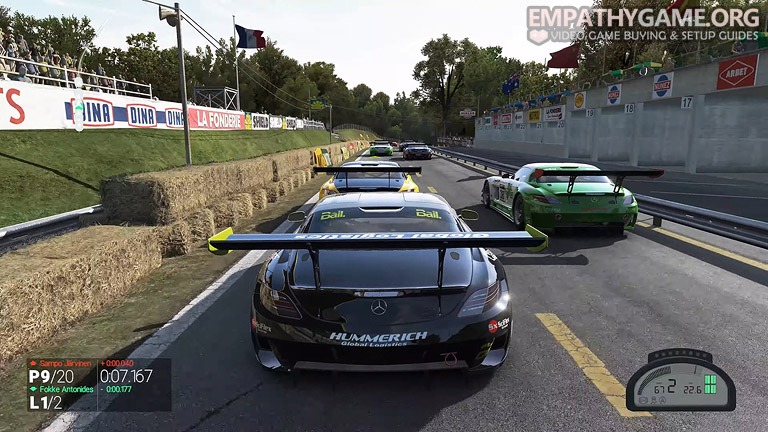
Project CARS is built around a question that many racing games avoid: what if becoming a better driver were the main progression system? Slightly Mad Studios opens up a broad selection of motorsport disciplines, then leaves the satisfaction of improvement largely in the driver’s hands. There is no expensive car to grind toward before racing begins. Instead, the challenge is to understand what a particular machine needs from you, whether that means gentler throttle input, earlier braking, or a more considered setup.
That approach places Project CARS between accessible console racing and more demanding simulation. Adjustable assists, AI difficulty, short events, and controller support make it approachable, but they cannot replace patience with tyres, braking points, and race-weekend preparation. A practice session can reveal that a car dislikes a kerb or becomes unstable when the weather changes. The game is at its best when such discoveries feel useful later. Its weakness is that it does not always teach those lessons clearly, and erratic AI can undermine the care it asks of the driver.
Race Weekends Turn Preparation Into Progress
The career’s calendar gives racing a rhythm that a simple list of events would struggle to achieve. Championships are made up of weekends, with practice and qualifying turning the race itself into the final part of a larger process. That structure matters because it encourages a different response to failure. Rather than immediately restarting after a poor first lap, there is a reason to learn the circuit before the result is at stake.
Qualifying captures this particularly well. Leaving the pits on cold tyres means an opening lap may be better spent building grip than attacking every corner. Once the tyres are ready, a clean lap has real value: run wide and the time can be invalidated, leaving you further down the grid. Practice is where braking markers, gearing, differential settings, tyre pressures, and suspension adjustments can be explored without every mistake costing a race. You can skip these sessions, but doing so also skips much of the career’s personality.
Invitational events sit within the same calendar, alongside contracts and championships, making the career feel like participation in a motorsport season rather than a collection of arcade challenges. It is a restrained structure, with little of the narrative spectacle associated with some racing games. Yet that restraint makes sense here. The drama comes from preparing for a race and then seeing how much of that preparation survives the opening corners.
Different Disciplines Demand Different Habits
Vehicle variety would mean much less if every class felt like a faster or slower version of the same car. Project CARS generally avoids that. Karts are light, immediate, and nervous. Touring cars carry more weight and call for a different rhythm through slower turns. GT machinery rewards measured braking and throttle application over longer stints, while open-wheel cars with substantial downforce can invite more commitment through fast corners. Changing disciplines is not just a change of scenery; it often requires abandoning habits that worked perfectly well in the previous championship.
Consider the Lotus 98T on the Nürburgring Nordschleife. Its enormous turbocharged power meets a circuit where elevation, camber, and corner radius rarely stay predictable for long. Knowing where the next turn goes is only half the problem. The other half is deciding when the rear tyres can safely accept more power. A modern high-downforce car presents a different puzzle: it can feel more secure as aerodynamic grip increases with speed, so excessive caution through a fast bend may actually remove some of the stability the driver was relying on.
These contrasts are a stronger argument for the handling model than a claim that every car is perfectly simulated. Some vehicles are easier to read and trust than others, and the physics will not convince every simulation enthusiast equally. What matters is that the classes encourage distinct ways of driving. Mastering a GT car does not automatically make an older Formula machine feel familiar, and that willingness to make the player relearn is part of the appeal.
Weather Changes the Race Rather Than Just the View
Dynamic weather has genuine value because it can overturn decisions that seemed sensible in practice. A setup that felt planted on a dry circuit may become difficult to manage once rain reduces grip. Braking points move, throttle application needs more care, and a tyre choice that was comfortable a few laps ago may no longer make sense. The interesting decision is not simply whether rain looks convincing. It is whether the pace lost by staying out outweighs the time needed to pit, and whether the car remains predictable enough to reach the pits.
Sonoma Raceway illustrates how quickly the character of a lap can change. In wet conditions, the familiar dry racing line may be less dependable, while spray from traffic makes braking references harder to judge. Longer races bring the systems together more convincingly: tyre wear, fuel consumption, damage, and pit strategy all begin to affect what would otherwise be a straightforward contest of speed. A short sprint may reward aggression. An endurance-style event asks whether that aggression remains sensible after the conditions have changed.
The day/night cycle develops the same idea in another direction. At a circuit such as Le Mans, fading daylight creates atmosphere, but it also changes the information available to the driver. Headlights become more important, familiar landmarks can be harder to identify, and corners learned in daylight require greater concentration. Project CARS makes these transitions memorable because the spectacle has consequences beyond the screen looking different.
Freedom Replaces the Traditional Garage Grind
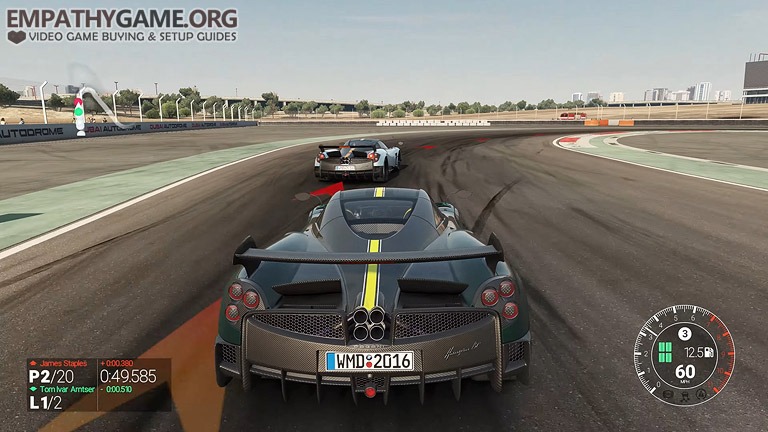
One of the game’s more unusual decisions is what it refuses to turn into a reward. Cars and circuits are broadly accessible without earning money to purchase them. Career advancement comes through contracts, championships, accolades, invitations, and longer-term objectives, not the size of a personal garage. You can start near the bottom of the racing ladder and climb, or enter an advanced discipline without first proving yourself in karts.
This freedom changes how experimentation feels. There is no economic penalty for spending an afternoon in a GT car, switching to a prototype, and then trying an unfamiliar circuit. If a class does not appeal, you are not trapped in it until enough credits accumulate. For players interested in driving itself, that is more respectful of their time than an unlock system pretending that access to a car is an achievement.
It also creates a very real motivational gap. The career can feel strangely intangible to someone who enjoys buying upgrades, watching a garage grow, or transforming an ordinary road car into a competitive machine. Tuning here is about adapting an existing race car rather than building it through an upgrade tree. The rewards are quieter: a tenth gained through a corner, a difficult championship survived, another discipline finally understood. If those improvements do not feel satisfying, there is little collection-based progression to take their place.
Deep Setup and Force Feedback Reward Commitment
Car setup gives drivers ways to investigate problems rather than merely endure them. Tyre pressures, gearing, brake balance, differential settings, suspension, and aerodynamics can all influence how a car responds. The challenge is knowing which adjustment addresses each symptom. Project CARS offers explanations, but not always the guidance a newcomer needs to connect an unstable corner exit or reluctant turn-in with a sensible change in the garage. The tools are meaningful; the teaching around them is less convincing.
Force feedback has a similar learning curve. With a suitable steering wheel, bumps, kerb strikes, steering load, and changes in grip can provide more information than a gamepad easily communicates. But the system is configurable enough that an unsuitable initial setting can make the same wheel feel numb, excessively heavy, or noisy. Distinguishing overall force from the detail of road texture becomes part of understanding the simulation. The reward for getting it right is a clearer sense of what the tyres and chassis are doing.
A controller remains a workable option, especially with assists, but the fastest and most nervous cars expose its limitations. A small correction that feels natural through a steering wheel has to be squeezed into the short travel of an analogue stick. That can make precise placement difficult just when the car is least forgiving. Controllers are accommodated, but delicate driving still favours more precise input.
The AI Can Undermine Otherwise Serious Racing
Project CARS asks the player to approach racing with discipline, which makes its inconsistent opponents particularly noticeable. At their best, AI drivers can hold a line, defend a position, and create the pressure that makes a clean overtake satisfying. At their worst, they brake awkwardly, hesitate when a position should be contested, bunch traffic together, or make contact that feels out of place in an otherwise serious race.
Differences in AI pace between events can be just as disruptive. A difficulty setting that produces a close contest in one championship may allow an easy lead in another. That makes the value of practice harder to judge: was the improvement earned through better driving, or was the opposition simply less competitive this time? There is no rewind system to soften a costly incident, either. If an avoidable collision ruins a long event, the result must be accepted or the session restarted.
The frustration is not that every race should be predictable. Racing needs uncertainty. It is that the uncertainty should emerge mainly from competing drivers, changing conditions, and decisions made under pressure. When the AI behaves oddly, the relationship between preparation and outcome becomes less convincing. In a game so interested in teaching through consequences, it matters whether those consequences feel deserved.
Presentation Makes Speed Feel Physical
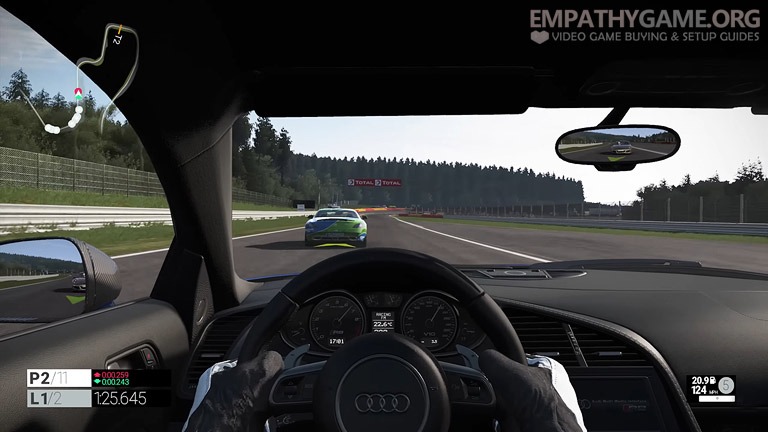
The cockpit is where the presentation makes its strongest case. Detailed interiors, helmet-style camera options, engine audio, changing light, rain, and trackside movement reinforce the sensation of carrying speed through a real space. Engine character changes between cars and under load, while kerbs and variations in the road surface contribute to what the steering communicates. These details are effective because they help convey what driving the car demands, not just how the car looks.
A wet evening race can make a familiar circuit feel unfamiliar through reflections, spray, headlights, and reduced visibility. The camera, audio, and steering feedback are particularly persuasive when a high-speed corner leaves little room for hesitation. Not every interface or presentation choice is elegant, but the important information usually takes over once the session begins. Attention returns to the circuit, the changing grip, and the next braking point.
Replayability Comes From Mastery, Not Collection
Replayability grows naturally from the progression philosophy. Career championships, practice, Time Trial, custom races, different vehicle classes, weather, and adjustable assists offer challenges without requiring an artificial earning cycle. Historic Goals give the career longer ambitions, such as advancing through tiers, defending titles, and succeeding across more than one discipline. Their value depends less on a reward screen than on whether the driver enjoys measuring improvement.
Custom races are especially important because they give the driving model room to work. The same circuit can become a different challenge when the car class changes, the race lasts longer, rain arrives, or tyre wear and damage matter more. Tougher opponents can add pressure, although the AI’s uneven behaviour remains a limitation. Multiplayer draws on the same flexible structure: the machinery and session rules determine the competition instead of a separate economy deciding what participants are allowed to drive.
There is a clear divide in who will find that compelling. Someone who treats a lap time as a problem worth solving can return to the same track repeatedly and still have a worthwhile goal. Someone looking for fresh unlocks, elaborate upgrades, or narrative milestones may exhaust the appeal of the career far sooner. Project CARS does not disguise this difference. It trusts the act of driving to provide most of the reason to keep playing.
Final Verdict
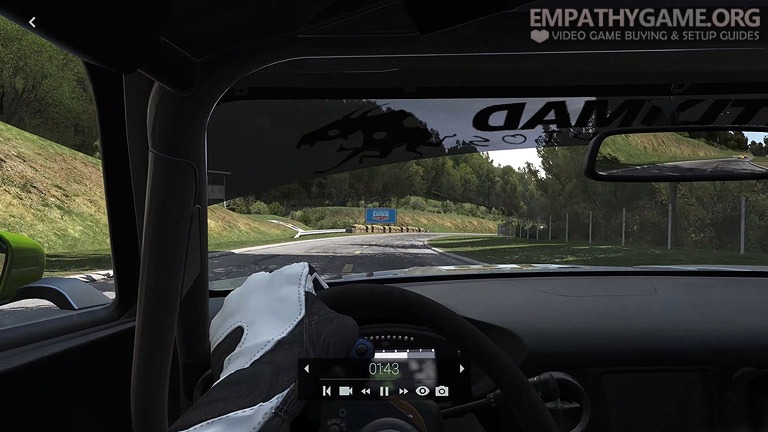
Project CARS works best when preparation changes the outcome of a race. Practice makes unfamiliar corners readable, qualifying rewards precision, tuning offers potential answers to handling problems, and dynamic weather can make yesterday’s solution unsuitable halfway through an event. The spread of karts, touring cars, GT machinery, prototypes, and open-wheel racers matters because each discipline calls for a different set of habits, not just more speed.
That commitment also exposes the game’s rough edges. Setup and force-feedback options can be opaque, a controller is less comfortable in nervous machinery, and uneven AI sometimes disrupts the careful racing the other systems encourage. The lack of garage-based progression is equally divisive. It removes unnecessary grinding for those eager to drive, but gives collectors and upgrade-focused players less to work toward.
For someone who finds satisfaction in learning braking points, reading changing grip, or understanding why a familiar car behaves differently after dark, Project CARS is a substantial motorsport sandbox. It is not always consistent. Still, its finest reward is convincing precisely because the game does not hand it over: the next clean, quick lap feels valuable because the driver has learned something.
Project CARS Pros & Cons
- Pro: Broad motorsport disciplines reward distinct braking, steering, and racing strategies across karts, touring cars, GT cars, prototypes, and open-wheel machines
- Pro: Dynamic weather, tire behavior, qualifying, pit stops, and tuning make race preparation meaningful
- Pro: The Game of the Year Edition expands the car and circuit selection for players who own it
- Pro: Detailed cockpit views, force feedback, telemetry, and official PC VR suit dedicated racing setups
- Pro: Steam Deck Playable support provides a portable option for existing Steam owners
- Con: New buyers cannot purchase the original PC game through the normal official Steam storefront
- Con: Missing digital DLC can no longer be added through the standard Steam store
- Con: Inconsistent AI racecraft and a steep setup learning curve can undermine the racing experience
- Con: Older peripheral and VR support may need manual configuration; local career saves warrant backups
Project CARS PC System Requirements
The following are the published Windows PC requirements for the original Project CARS release, not a modern performance guarantee.
MINIMUM:
OS: Windows Vista / Windows 7 with latest Service Packs
CPU: 2.66 GHz Intel Core 2 Quad Q8400 / 3.0 GHz AMD Phenom II X4 940
RAM: 4 GB
GPU: NVIDIA GeForce GTX 260 / ATI Radeon HD 5770
DirectX: Version 9.0
Storage: 25 GB available space
Network: Broadband Internet connection
Sound Card: DirectX-compatible sound card
RECOMMENDED:
OS: Windows 7 with latest Service Packs
CPU: 3.5 GHz Intel Core i7 3700 / 4.0 GHz AMD FX-8350
RAM: 8 GB
GPU: NVIDIA GT 600 series / AMD Radeon HD 7000 series
DirectX: Version 11
Storage: 25 GB available space
Network: Broadband Internet connection
Sound Card: DirectX-compatible sound card
Additional PC Performance and Setup Notes
- These are legacy game specifications. The modern Steam client requires Windows 10 or newer, so existing owners should use a supported modern Windows installation rather than treating the original Windows Vista / 7 listing as current Steam client guidance.
- Steam Auto-Cloud is not configured for this app. Before a clean Windows installation or PC transfer, manually back up career/profile data under your Steam
userdatadirectory for app ID234630, including itslocalfolder. - Also back up configuration data in the
Project CARSfolder under your user Documents directory, especially car setups and input configuration. - Valve rates the game Playable on Steam Deck. Some interface text is small, and typing may require opening the on-screen keyboard manually.
- PC VR support was developed for Oculus Rift and HTC Vive/SteamVR-era setups. Newer headsets may rely on compatibility provided by the headset software and VR runtime.
- After changing a racing wheel or pedals, calibrate steering, pedal range, button mapping, and force feedback inside the game instead of assuming a previous device profile will transfer.
- If an existing Steam installation develops missing-file or startup issues, verify the installed game files in Steam before reinstalling.
Official Trailer
Note: This official BANDAI NAMCO Europe Game of the Year Edition trailer highlights the expanded car and circuit roster and the mature Project CARS package, while the written guide adds Steam delisting, existing-owner download access, Steam Deck, VR, requirements, save backups, and modern PC setup guidance.
Frequently Asked Questions
Can you still buy or download Project CARS on Steam?
The original game is no longer sold on Steam. Existing owners can still find it in their libraries and download or reinstall it from their accounts. A visible Steam store page does not mean new purchases are available.
What happens to the Game of the Year Edition and DLC I already own?
Content already attached to a Steam account remains part of that account’s entitlement. The Game of the Year Edition includes the expanded car and track selection; missing retired add-ons cannot normally be purchased through the Steam storefront.
Do you have to begin career mode with karts?
No. Career mode offers a choice of entry tiers. Starting with karts creates a longer journey through championships, but experienced drivers can begin in higher disciplines.
Do you have to buy or unlock cars and tracks?
No. The main roster is available for custom racing without a currency grind. Career progression comes from contracts, championships, invitations, and goals rather than buying cars or upgrades.
Is Project CARS more of a simulator than an arcade racer?
Yes. Tire grip, braking, damage, fuel use, setup, and changing weather strongly influence races. Adjustable assists and opponent difficulty can make those systems easier to learn.
Is a racing wheel required, or can you use a controller?
A controller works, especially with tuned sensitivity and assists. A force-feedback wheel provides finer steering input and makes grip changes easier to interpret, particularly in demanding cars.
What if Project CARS does not recognize a newer racing wheel or pedals?
Confirm Windows detects the hardware, then select a suitable preset or custom-wheel configuration in the game. Reassign steering, pedals, and buttons, calibrate their travel, and check Steam Input if the controls conflict.
Does Project CARS have a mid-race rewind feature?
No. There is no flashback-style rewind during a race. A costly mistake must be recovered from on track or the session restarted.
How much do dynamic weather, tire wear, and pit stops matter?
Their importance depends on race settings and length. Rain changes grip and braking points, while longer races give tire choice, fuel, damage, and pit timing a larger strategic role.
Does Project CARS support multiplayer and dedicated servers?
The PC version includes online racing, and a separate Project CARS Dedicated Server tool exists for Windows and Linux. These are legacy features, so individual server availability and matchmaking activity should be checked before organizing an event.
Does Project CARS have split-screen or cooperative career play?
No. There is no native split-screen racing or shared cooperative career. Its multiplayer is competitive online racing.
Is there crossplay between PC, PlayStation, and Xbox?
No. The original Project CARS does not provide cross-platform matchmaking between those versions.
Can you play Project CARS offline?
Yes. The installed single-player career and custom solo racing do not need a continuous internet connection. Online racing and networked features still require connectivity.
Does Project CARS support PC VR?
Yes. It includes seated VR support through its original Oculus Rift and SteamVR/OpenVR implementations. Support for modern headsets depends on compatibility with those older runtimes.
Does Project CARS work on Steam Deck?
Valve rates the Steam version Playable. Default gamepad functions and performance passed its compatibility testing, although small text and manual keyboard invocation remain caveats.
Can it run on Windows 10 or Windows 11?
The original Steam build can run on modern Windows PCs, though the published game specifications reflect older Windows versions. Wheel drivers, graphics configuration, and legacy VR software may require extra attention.
Does Project CARS use Steam Cloud for career saves?
Steam Auto-Cloud is not configured for Project CARS. Do not rely on automatic cloud backups; copy the local save and configuration files before reinstalling or moving PCs.
Can Project CARS be modded through Steam Workshop?
Unofficial modifications and utilities exist, but there is no official Steam Workshop catalog for this game. Back up original game files and confirm that any mod targets the first Project CARS rather than a sequel.
Still have questions? Check the Project CARS community on Reddit and Project CARS Steam Discussions for additional game and multiplayer questions.
Sources & References
Key store, edition, PC support, and technical information in this guide was checked against these sources:
- Project CARS on Steam — original release, retired sales status, feature listing, reception, and official PC requirements.
- Xbox Wire — Project CARS Game of the Year Edition — publisher-supplied GOTY car, circuit, livery, and Pagani content figures.
- SteamDB — Project CARS app metadata — Steam Deck compatibility, original platform metadata, and Steam retirement.
- SteamDB — Cloud save configuration — lack of configured Steam Auto-Cloud.
- Electronic Arts — EA Play service updates — removal of Project CARS from the EA Play catalogue.
- PCGamingWiki — Project CARS — local configuration and save paths, graphics support, and compatibility context.
Similar Games Like Project CARS



Found something worth playing through DecideGame?
DecideGame.com is an independent gaming project run by Editor Zero. If this guide helped you discover a game, solve a problem, or find useful information, you can support DecideGame.com and help keep new and updated game guides coming.
DecideGame — PC Game Guides, Reviews & Setup Help