
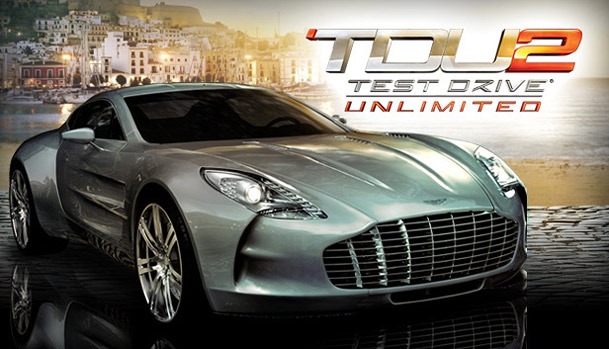
📅 Game released: 2011
Use this updated 2026 Test Drive Unlimited 2 PC guide to check official download status for existing Steam owners, review system requirements and offline setup, understand the official server shutdown, and compare Steam Deck, TDU World multiplayer, and mod options.
 By Editor Zero — independently researched, edited, and maintained.
Last updated: 1 October 2026
Last reviewed: 1 October 2026
Table of Contents
- Quick Summary
- Quick Facts
- Official PC Stores, Download & Installation
- Test Drive Unlimited 2 Review
- Pros & Cons
- PC System Requirements
- Frequently Asked Questions
- Similar Games
Test Drive Unlimited 2 Quick Summary
✔ Open-world racing and lifestyle game set across Ibiza and Oahu, combining free-roam driving, asphalt and off-road events, dynamic weather, day/night changes, car collecting, houses, clothing, and social features
✔ Progression revolves around driving licenses, championships, cups, duels, exploration, vehicle ownership, property purchases, and discovering roads and activities across two large islands
✔ Similar to Forza Horizon 5 through its open-world cruising, large vehicle collection, varied racing events, exploration, and freedom to leave structured competition behind and simply drive
✔ The native Windows PC version is no longer sold through its original Steam listing, but existing Steam owners retain library download access and can continue using the offline portion of the game
✔ Atari’s official online services and TDU2 Casino are no longer available; unofficial community projects such as TDU World provide a separate multiplayer option for legitimate copies
Test Drive Unlimited 2 Quick Facts
Official PC Store Status, Download & Installation
👇 Use the notes below to understand Test Drive Unlimited 2’s official PC availability, Steam re-download rights for existing owners, offline setup, and legitimate community options without relying on unofficial game-file sources.
- New purchases: No verified official Windows storefront is offering Test Drive Unlimited 2 as a normal new digital purchase. The former Steam release remains represented in Steam’s ecosystem but is no longer sold to new buyers.
- Existing Steam owners: Atari’s official service-shutdown announcement states that owners can keep Test Drive Unlimited 2 in their Steam library and download it again. Steam ownership therefore remains useful even though the store no longer accepts new purchases.
- Offline play: The single-player/offline portion remains playable without Atari’s former online services. Players should expect obsolete server checks or connection errors from parts of the original launcher rather than interpreting those errors as meaning the offline game itself has been removed.
- Official multiplayer: Atari shut down the original online services, so official head-to-head matchmaking, shared online functionality, and TDU2 Casino access are no longer available.
- Legacy activation: The Windows releases use older SecuROM-era activation and CD-key components. Steam metadata still contains legacy CD-key information, and retail copies may have their own activation requirements, so possession of old installation media alone does not guarantee that every second-hand copy will activate successfully.
- DLC ownership: Official purchasing of the game’s DLC is no longer available. Existing installations or licenses may contain previously acquired vehicle content, but TDU2 Casino depended on the discontinued official online service and should not be treated as working offline DLC.
- TDU World: TDU World is an unofficial community-run multiplayer restoration rather than an Atari service. Its setup documentation requires a legitimate game copy and valid ownership/CD-key proof; use its own installation instructions because its launcher, account system, and server infrastructure are separate from the original Atari service.
- Steam Deck: Valve classifies the retired Steam app as Unsupported on Steam Deck and SteamOS. This guide does not recommend buying hardware specifically for TDU2 on the assumption that Valve provides supported Deck compatibility.
- Modern Windows: Test Drive Unlimited 2 is a 32-bit Direct3D 9.0c-era PC release. Modern systems can require additional compatibility work around its old launcher, server checks, DRM components, or memory behavior, so back up saves before experimenting with community launchers or modifications.

Test Drive Unlimited 2 Review
A sprawling motoring fantasy whose islands outshine the racing that unlocks them.
Test Drive Unlimited 2 is most convincing when there is no chequered flag in sight. Eden Games builds its sequel around the idea that cars should exist inside a lifestyle rather than a sequence of event menus: they are bought from dealerships, stored in garages, tuned, photographed, taken across Ibiza and Oahu, and used to uncover more of the world simply by travelling through it. A trip to a championship can reveal an unexplored road, a wreck, a property or a side activity before the race even begins.
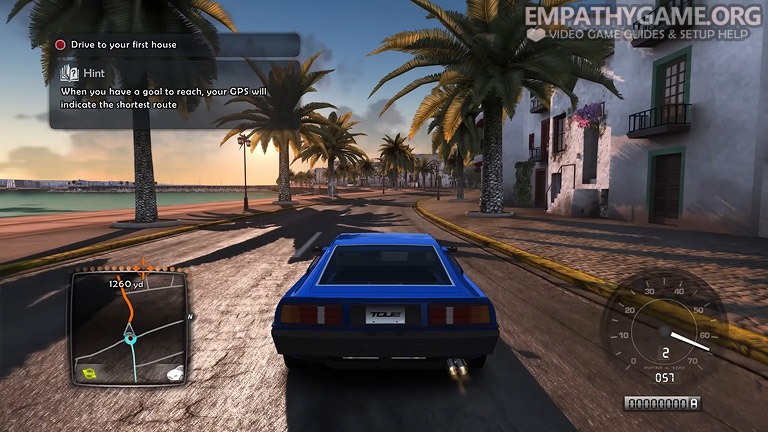
The compromise is that the act of racing is less polished than the world built around it. Handling sits uneasily between arcade accessibility and simulation, licence tests magnify its rough edges, rival AI rarely provides the same interest as the road network, and the glossy Solar Crown story is more memorable for its awkwardness than its drama. Yet TDU2 remains distinctive because ownership, discovery and long-distance movement matter almost as much as finishing first.
The Islands Make Ordinary Travel Matter
Ibiza immediately establishes the game’s range. Coastal highways encourage relaxed high-speed cruising, towns compress traffic into tighter spaces, mountain routes demand more care, and dirt roads give SUVs and off-road classes a purpose beyond novelty. Weather and the day-night cycle change the mood of familiar routes, while Oahu later provides a second, broader network with a different rhythm. Neither island is merely a backdrop for icons. Roads themselves are part of progression, so filling the map requires actually driving through the gaps rather than simply buying a reveal.
That changes how free roam feels. A detour has practical value because it may reveal a dealership, tuner, real-estate office, photographer location or another useful route. Wreck hunting gives empty stretches of landscape a reason to exist, and the map gradually becomes easier to navigate as more roads are discovered. Even when the scenery shows its age, the geography keeps asking the player to learn it.
The result is one of TDU2’s most important reversals of normal racing-game logic: travel is not dead time between events. Choosing a destination, stopping at a newly discovered property and then continuing toward a championship creates a chain of small goals without needing a scripted mission. A long cruise can be more satisfying than several races in succession.
Handling Is the Price of the Fantasy
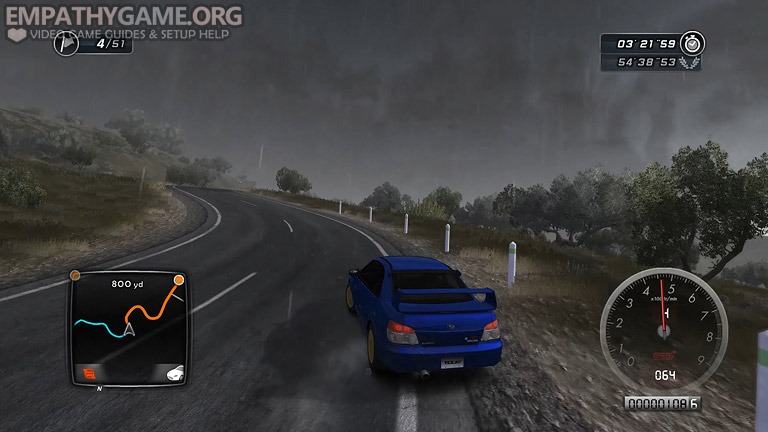
The driving model is the weakest link in that otherwise persuasive structure. Full, Sport and Hardcore assistance settings change how forgiving cars feel, but none produces a perfectly coherent middle ground. Cars can feel light at the limit, rear-wheel-drive machines may step out abruptly under power, and steering does not always communicate the loss of grip before the slide has already started. Wet roads make those traits more obvious, especially in faster asphalt classes.
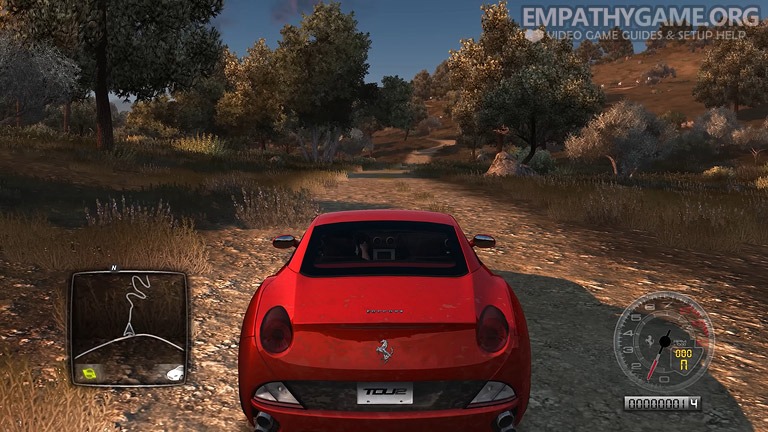
Off-road driving often works better precisely because the surface lowers expectations of perfect grip. Sliding an SUV across dirt feels appropriate, so the looser handling becomes part of the spectacle rather than something the player is constantly trying to suppress. On dry tarmac, the same vagueness can make a powerful road car feel less connected to its tyres than its speed and price suggest.
Vehicle statistics do not always resolve that uncertainty. The showroom presents performance figures and tuning stages as if progress can be understood numerically, yet actual road behaviour may not line up cleanly with those numbers. Some cars reach practical limits that make a higher listed figure or another tuning stage less transformative than expected. Test drives and familiarity therefore matter more than blind trust in the stat sheet. A theoretically stronger car is not automatically the better choice if its gearing, traction or steering makes it harder to exploit.
Traffic adds another inconsistent variable. Civilian cars can turn routine overtaking into sudden avoidance, while collision responses can feel harsher or stranger than the visual impact suggests. The unpredictability occasionally creates memorable improvisation, but it can also spoil a clean run for reasons that feel more like friction than racing pressure.
Licence Tests Turn Progression Into a Handling Exam
Racing Schools are a clever structural idea. Classic, Asphalt and Off-Road licences prevent the career from collapsing into one favourite supercar, and they introduce different vehicle classes before corresponding championships open. In theory, the tests teach braking, cornering and surface control. In practice, they can become the point where TDU2’s handling problems are hardest to ignore.
The important detail is that the tests do not always behave like an ordinary free-roam session with the player’s preferred safety net. Sport-style assistance leaves less traction control than some players may be using elsewhere, so hard acceleration while the car is still rotating can trigger spins that seem disproportionate to the timer itself. The reliable response is to settle the car early, stay patient through the turn and wait until it is straighter before applying full power. Once that behaviour is understood, some supposedly impossible tests become less mysterious, but the game does a poor job of explaining why the same car suddenly feels harder to control.
Championships are less severe. Their mix of races, time trials and speed events gives the career enough variety, and the class structure keeps older or less exotic cars relevant. Rival drivers, however, often fail to create much tactical pressure. The most interesting challenge frequently comes from the route, traffic, weather and the player’s attempt to manage an unruly car.
Side Missions Reward Route Reading
The side missions are easy to dismiss as small diversions, but several reveal a more playful understanding of the islands. Adrenaline challenges reward risky behaviour such as fast near-misses, jumps and slides. Jolt missions reverse the priority by asking for smooth driving and punishing abrupt inputs. Convoy-style deliveries make the condition of someone else’s car part of the objective, while timed variants can force a genuine trade-off between preserving the vehicle and arriving quickly enough.
More interestingly, the direction in which a challenge begins is not necessarily the best route. An Adrenaline mission may become easier by reaching a road with denser oncoming traffic rather than trying to build points on the obvious path. Some Jolt routes can be approached from the opposite direction to avoid rough dirt sections at the cost of a slightly longer journey. That freedom gives route knowledge practical value: the mission marker tells the player what must be achieved, not always how it should be achieved.
This is where TDU2’s uneven systems briefly work together. The player who has explored more of the map has an advantage because familiar roads suggest alternatives. Side missions can still repeat, and their rewards are not always proportionate to the effort, yet the better examples turn open-world knowledge into a driving skill of its own.
The Lifestyle Layer Gives Cars a Place to Belong
The Solar Crown story is thin, but the fantasy surrounding it is unusually committed. The player begins as an Ibiza valet and is pulled into a televised competition hosted by Tess Wintory, meeting rivals painted in broad, flashy strokes. Dialogue often lands somewhere between reality television and luxury-car advertising, and stiff character animation makes the attempt at glamour even more awkward. As drama, it is difficult to take seriously.
As framing, though, it works. Success means more than unlocking a faster car. Houses can be bought and furnished, wardrobes expanded, appearance changed and garages filled with vehicles that physically occupy owned space. Cockpit details, convertible roofs, storms, sunsets and the ability to return home after a drive reinforce the sense that the player is accumulating a lifestyle rather than only clearing a career ladder.
Photography creates a particularly neat bridge between exploration and ownership. Photos taken around the islands can live in the player’s personal album and be used in home decoration, turning a discovery activity into something that changes a private space. It is a small feature, but it captures what TDU2 understands better than many more polished racers: a collectible matters more when it feeds another system instead of disappearing into a checklist.
The audio presentation is less durable. Radio repetition becomes noticeable during long drives, and the voice work reinforces the story’s artificial tone. But the holiday atmosphere survives because so much of it is generated by place: rain during a night drive, a coastal road at sunset, a newly purchased car sitting in a garage, or the simple decision to ignore the next event and keep driving.
Progression Makes Exploration Mechanically Important
TDU2 divides global progress among Competition, Discovery, Collection and Social categories, and the design is strongest when those tracks overlap. Competition advances through licences and racing; Discovery rewards roads, wrecks, photographs and side activities; Collection values cars, houses, clothing and other possessions. Non-racing activities are therefore part of the same larger progression identity rather than decorative extras.
Tuning shows both the ambition and opacity of that approach. Higher tuning stages are tied to regional Discovery progress and area standing, not simply to championship completion or overall level. A driver can progress far through Solar Crown events while stronger upgrades remain locked at a local tuner. Opening roads, finding wrecks, taking photographs and finishing side missions in that region can matter more than winning another major race. The concept is excellent because exploration affects vehicle development; the problem is that the connection is easy to misunderstand until an expected upgrade is blocked.
Property ownership creates a similar relationship. Garages have finite capacity, so collecting cars eventually creates pressure to buy more or larger homes. A new property can represent room for the next part of the collection, and an expensive car occupies space that has to be planned for rather than vanishing into an unlimited menu. The friction slows accumulation, but it also gives purchases more weight. Cars feel owned because they have somewhere to live.
The same interdependence can become exhausting for someone interested only in racing. Completion asks for substantial road coverage, repeated side activities, collectibles and spending in systems that may not appeal equally to everyone. Yet it also gives weaker cars and smaller goals time to matter. Classic championships and off-road events pull the player away from simple escalation toward the fastest asphalt machine, while test drives help reveal whether an expensive purchase actually suits the handling model.
Replayability comes less from radically different story outcomes than from the scale of the two islands and the number of goals threaded through them. There are roads to uncover, wrecks to find, photo locations to discover, houses to acquire, garages to fill and side missions to clear. The structure becomes repetitive when treated as a checklist, but it works remarkably well for players who enjoy setting their own smaller objectives between formal competitions.
Final Verdict
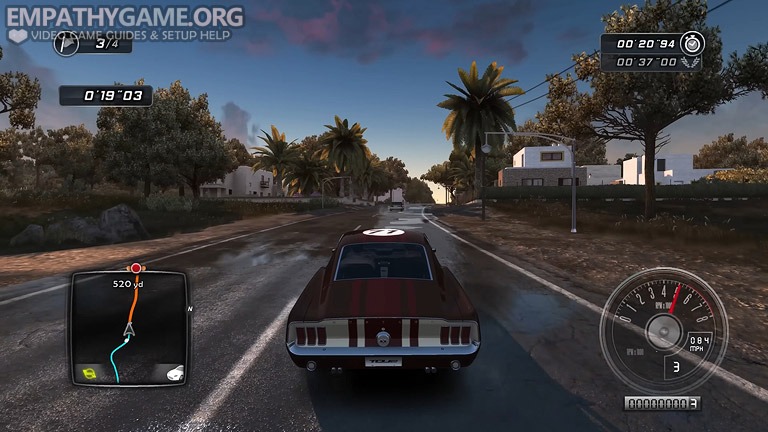
Test Drive Unlimited 2 is a flawed racing game wrapped around an unusually persuasive idea of what an open-world driving game can be. Its physics are inconsistent, licence tests can turn that inconsistency into a progression barrier, rival AI lacks personality, and the reality-show story rarely rises above campy decoration. Anyone primarily looking for precise steering feedback, disciplined race design or a convincing simulation will encounter those weaknesses constantly.
What keeps TDU2 distinctive is the way everything around the racing gives cars context. Ibiza and Oahu are not just collections of event markers; they are places to learn road by road. Houses determine garage capacity. Exploration affects tuner access. Photography can feed home customization. Side missions reward route knowledge. Buying a car feels different when it must be stored, driven, tested and integrated into a larger collection rather than instantly summoned from an endless list.
That interlocking design is also why the rough edges are easier to forgive during a long cruise than during a demanding licence test. TDU2 succeeds when the journey is enjoyable enough that winning is only one reason to drive. For players who value exploration, collecting, ownership and the fantasy of building a life around cars, its islands offer something more specific—and stranger—than a conventional open-world racer.
Test Drive Unlimited 2 Pros & Cons
Test Drive Unlimited 2 PC System Requirements
Archived official PC requirements published for the original Windows release:
MINIMUM:
OS: Windows XP SP2, Windows Vista SP2, or Windows 7
CPU: Intel Core 2 Duo 2.2 GHz or AMD Athlon X2 4400+
RAM: 2 GB
GPU: Nvidia GeForce 8800 or ATI Radeon HD 3870 or faster
DirectX: DirectX 9.0c
Storage: 14 GB
Sound Card: DirectX 9.0c-compatible
Internet: Broadband internet connection listed in the original requirements
Additional Notes: Microsoft .NET Framework 3.5 required; integrated graphics such as ATI Radeon HD 3200 and Intel HD Graphics were listed as unsupported
RECOMMENDED:
OS: Windows XP SP2, Windows Vista SP2, or Windows 7
CPU: Intel Core 2 Duo 2.2 GHz or AMD Athlon X2 4400+
RAM: 2 GB
GPU: Nvidia GeForce GTX 280 or ATI Radeon HD 4870
DirectX: DirectX 9.0c
Storage: 14 GB
Sound Card: DirectX 9.0c-compatible
Internet: Broadband internet connection listed in the original requirements
Additional Notes: Microsoft .NET Framework 3.5 required
Additional PC Performance and Setup Notes
These specifications describe the original Windows release and should not be interpreted as a guarantee of trouble-free operation on newer versions of Windows. Raw hardware performance is rarely the main obstacle on a modern PC; the more relevant issues are the old launcher, retired network endpoints, legacy activation components, and the game’s 32-bit Direct3D 9.0c executable.
PCGamingWiki documents that the 32-bit executable may benefit from the Large Address Aware flag on modern systems and also records workarounds for the original launcher attempting to contact services that no longer exist. Apply only fixes that are necessary for your installation rather than combining multiple old tweaks at once.
Before installing community launchers, server replacements, or gameplay modifications, back up the local save directory at %USERPROFILE%\Documents\Eden Games\Test Drive Unlimited 2\savegame\. Keeping an untouched copy makes it considerably easier to recover progression if a profile or community setup becomes incompatible.
Official Trailer
Note: This authorized launch trailer shows Test Drive Unlimited 2’s open-world cruising, exotic cars, island setting, lifestyle presentation, and original online identity; the written guide adds modern ownership, offline-play, compatibility, and community-multiplayer context.
Frequently Asked Questions
Is Test Drive Unlimited 2 worth playing in 2026?
Yes, especially if you want an open-world racer where cruising, car collecting, houses, exploration, and lifestyle progression matter almost as much as winning events. Its handling and presentation feel dated and Atari’s official online services are gone, so it is best suited to players comfortable with an older PC game and optional community multiplayer.
Can Test Drive Unlimited 2 still be played offline?
Yes. Atari confirmed that the game remains playable offline after the shutdown of its official online services. The single-player championships, exploration, car collecting, houses, driving schools, missions, and most other offline activities remain available.
Are the official Test Drive Unlimited 2 servers still online?
No. Atari permanently shut down the official online services, which removed the original head-to-head matchmaking and other server-dependent functionality. The official TDU2 Casino also stopped functioning with those services.
Can Test Drive Unlimited 2 still be played online on PC?
Yes, through unofficial community server projects rather than Atari’s original infrastructure. TDU World is one established option that provides its own launcher, accounts, servers, and restored multiplayer functionality for legitimate PC copies.
Is TDU World an official Test Drive Unlimited 2 service?
No. TDU World explicitly states that it is a community project and is not endorsed by or affiliated with Atari, Eden Games, Nacon, or the Test Drive Unlimited rights holders. Treat its launcher, accounts, servers, and modifications as separate community services.
Do I need to own Test Drive Unlimited 2 to use TDU World?
Yes. TDU World’s own FAQ requires an original copy of TDU2 and an appropriate activation/CD key. The project is intended to work with legitimate existing ownership rather than replace the game itself.
Can I use my old Test Drive Unlimited 2 save with TDU World?
Old Atari saves can be used, but TDU World recommends beginning with a new save because its multiplayer environment and included modifications change parts of the experience. Importing an old save may also lose some server-related data such as club information.
Does Test Drive Unlimited 2 have split-screen or local multiplayer?
No. TDU2 does not provide split-screen or couch multiplayer on PC, PS3, or Xbox 360. Its original multiplayer design was built around online players sharing the open world rather than multiple people playing on one screen.
Does Test Drive Unlimited 2 support LAN multiplayer?
No native LAN mode is available. The original PC multiplayer depended on external online services, and modern community multiplayer replacements likewise use their own networking systems rather than the game providing a conventional LAN-host option.
Does Test Drive Unlimited 2 support controllers and steering wheels on PC?
Yes. The PC version supports gamepads and steering wheels, including several wheels that were officially supported during the game’s original release period. Newer wheels may require manual control binding or manufacturer software because TDU2 predates many modern devices.
Does Test Drive Unlimited 2 work on Windows 10 and Windows 11?
It can run on modern Windows systems, but compatibility is not as predictable as with a modern PC release. The old launcher, 32-bit graphics code, retired server checks, legacy activation components, and some newer GPU configurations can cause startup, crashing, or map-related problems on certain PCs.
Does Test Drive Unlimited 2 work on Steam Deck?
Valve currently classifies the retired Steam release as Unsupported on Steam Deck and SteamOS. Community experimentation with Proton may produce different results, but that should not be confused with official Steam Deck support.
How does progression work in Test Drive Unlimited 2?
Progress is divided into Competition, Collection, Discovery, and Social categories. Racing championships raise Competition, buying cars and properties helps Collection, exploring roads and finding activities develops Discovery, while the original Social category depended heavily on online interaction.
Can you reach the maximum level while playing Test Drive Unlimited 2 completely offline?
Not through the original stock offline experience. Part of the global progression system depends on Social objectives and other activities that used Atari’s online services, so some original progression goals became unavailable after the shutdown; community servers may restore portions of that functionality separately.
How do driving licenses work in Test Drive Unlimited 2?
Licenses are earned by completing tests at Racing Schools and are required before entering championships for the corresponding vehicle classes. There are eight main licenses covering Classic, Off-Road, and Asphalt classes across Ibiza and Oahu.
How do you unlock Oahu in Test Drive Unlimited 2?
Reach Global Level 10 and the airport route to Oahu becomes available. Because Global Level combines several progression categories, you can reach that threshold through a mixture of racing, exploration, and collecting rather than one specific championship alone.
Can you travel freely between Ibiza and Oahu?
Yes. Once Oahu has been unlocked, the airport allows you to move between the two islands instead of treating them as separate save files or campaigns. Both islands remain part of the same character progression.
How does fast travel work in Test Drive Unlimited 2?
Exploration unlocks convenient travel points on the map. You generally need to discover roads and locations by driving through the world first, after which the map makes returning to known areas much quicker.
Can you buy houses and use garages in Test Drive Unlimited 2?
Yes. Property ownership is an important part of Collection progression, and different houses provide garage space for storing vehicles. Players can also enter their properties and garages, making car and house ownership part of the game’s lifestyle-focused identity rather than simple menu upgrades.
What are wrecks and photo missions in Test Drive Unlimited 2?
They are Discovery activities spread across Ibiza and Oahu. Wreck hunting rewards exploration and can eventually produce special vehicles, while photographer assignments ask you to locate particular scenery under the required conditions.
How do police chases work in Test Drive Unlimited 2?
Traffic violations committed near police raise the violation meter, and sufficiently serious or repeated offences can trigger a pursuit. Being chased by police exists in the offline game, while the original ability for other players to participate in certain police activities depended on online multiplayer.
Can you still access the TDU2 Casino?
Not through Atari’s original official service. The Casino depended on online infrastructure that was shut down, so owning the old Casino content does not restore the original official service; community-server projects may implement their own supported features separately.
Can Test Drive Unlimited 2 be modded on PC?
Yes, but modding is unofficial because the game has no official toolkit or Steam Workshop support. If you use TDU World, follow its own mod policy: its launcher permits selected mods through its Mod Manager, while unsupported side-loaded modifications can cause compatibility problems or violate that community’s rules.
Still have questions? Check the Test Drive Unlimited Reddit community, Steam Discussions, or TDU World community for additional help and discussion.
Sources & References
Key factual and technical information in this guide was checked against relevant official and community sources, including:
- Atari — Test Drive Unlimited 2 Now Available — publisher announcement used to verify the original Windows PC, PS3, and Xbox 360 release and the game’s intended open-world online-racing structure
- Test Drive Unlimited 2 Official Steam Announcements — Atari’s service-shutdown notice confirming offline play, retained Steam-library download access, and the end of official matchmaking and Casino functionality
- SteamDB — Test Drive Unlimited 2 App 9930 — Steam app metadata, release information, legacy CD-key data, server status, user-review metadata, and Steam Deck compatibility classification
- PCGamingWiki — Test Drive Unlimited 2 — PC availability history, SecuROM information, DLC status, save locations, community-server context, and modern compatibility notes
- Metacritic — Test Drive Unlimited 2 PC Critic Reviews — PC Metascore and original critic-review context
- TDU World — status and ownership context for the independent community multiplayer restoration project
Similar Games Like Test Drive Unlimited 2





Found something worth playing through DecideGame?
DecideGame.com is an independent gaming project run by Editor Zero. If this guide helped you discover a game, solve a problem, or find useful information, you can support DecideGame.com and help keep new and updated game guides coming.
DecideGame — PC Game Guides, Reviews & Setup Help