
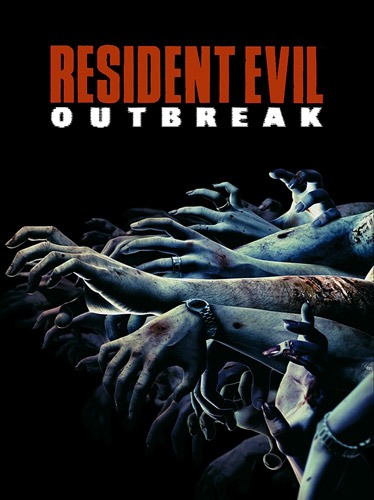
📅 Game released: 2003
Resident Evil Outbreak follows eight civilians through five desperate survival-horror scenarios during Raccoon City’s collapse. This PC guide covers official download availability, PCSX2 setup using an owned PS2 disc, an unofficial Windows recompilation alternative, multiplayer options, and emulator system requirements.
 By Editor Zero — independently researched, edited, and maintained.
Last updated: 9 November 2026
Last reviewed: 9 November 2026
Table of Contents
- Quick Facts
- Official PC Stores, Download & Installation
- Resident Evil Outbreak Review
- Pros & Cons
- PC System Requirements
- Frequently Asked Questions
- Similar Games
Resident Evil Outbreak Quick Facts
- Game: Resident Evil Outbreak / Resident Evil: Outbreak / Biohazard Outbreak (Japan)
- Developer: Capcom Production Studio 1
- Publisher: Capcom
- Genre: Survival Horror, Zombie Games, Multiplayer
- Release: December 11, 2003 (Japan); March 2004 (North America); September 17, 2004 (Europe); no native Windows PC release
- Platforms: PS2
- Best PC Emulation Route: Original PS2 version through PCSX2
- Unofficial Windows port: Fan-made RE: Outbreak recompilation project; requires a compatible backup from an owned PS2 disc, and is not a Capcom release
- Modes: Single-player with two AI companions; original online co-op for up to four players in supported regional editions; no local split-screen co-op
- Official Multiplayer: Original Capcom-operated servers discontinued; community-operated alternatives are unofficial
- Content: Five scenarios, eight playable survivors, multiple difficulty settings, character-specific abilities, and unlockable extras
- Sequel: Resident Evil Outbreak File #2 — a separate PS2 game with five additional scenarios
- Engine: Proprietary Capcom technology; official engine name not confirmed
- Community: Capcom Resident Evil Portal, PCSX2 Compatibility Wiki, Outbreak Server Resurrection
- PC modding: No official PC mod tools; PCSX2 provides emulator-side enhancements, while unofficial recompilation and community modifications are independently developed and version-dependent
- Metacritic score: 71/100 (original PS2 version)
- IGN score: 7.6/10 (original PS2 version)
- GameSpot score: 7.2/10 (original PS2 version)
- Steam user reception: Not available on Steam; no official Windows PC release
Official PC Store Status, Download & Installation
👇 Check Resident Evil Outbreak’s official PC download status, regional PS2 differences, PCSX2 setup, and the separate unofficial Windows project before choosing how to use a game copy you own.
- Official Windows status: Capcom has not released the original Resident Evil Outbreak as an official native Windows PC game. There is no official Steam, Epic Games Store, GOG, Microsoft Store, or Capcom Windows edition to purchase or download. Independently developed fan projects must not be confused with a commercial Capcom PC release.
- Recommended emulator: PCSX2 is the best-supported starting point for Windows players because it emulates the PlayStation 2, the game’s original platform. The emulator supports controller mapping, internal-resolution scaling, modern graphics renderers, virtual memory cards, and other PS2 compatibility features. The PCSX2 game wiki lists Resident Evil Outbreak as playable on Windows.
- Best console version: The original PlayStation 2 edition is the version to emulate. No original PSP, GameCube, Xbox, or native Windows edition exists. For English-language offline play, the North American PS2 release is a straightforward choice. The European release is also suitable for offline play, while the Japanese edition may appeal to players interested in its original regional presentation or particular fan-community setups.
- Regional multiplayer differences: North American and Japanese PS2 editions originally included online cooperation, while the European PAL edition did not. Capcom’s original servers are closed. Obsrv’s fan-operated service supports Japanese NTSC-J Outbreak and File #2 editions on original PS2 hardware or PCSX2; ordinary emulator installation does not restore online play. The separate Windows recompilation project uses a different community multiplayer implementation and North American game files, so the two routes are not interchangeable.
- Unofficial native Windows recompilation: The independent RE: Outbreak project describes a Windows build that recompiles supported North American PS2 disc data into a native program. Its project documentation lists support for the original game, File #2, controllers, display options, and a separate co-op service. It requires a backup made from an owned, compatible PS2 copy (specified NTSC-U revisions), is not affiliated with Capcom, and is not the same as running PCSX2. As a newer fan-maintained project, compatibility, trust, and installation instructions should be checked directly before use.
- Owned PS2 disc backup: PCSX2 can read a correctly created image of a PlayStation 2 game disc. Its official disc-dumping documentation explains how to create a backup from your own physical disc using a compatible optical drive. An ISO is a common disc-image format for PS2 DVD games.
- Game-file responsibility: PCSX2 does not include Resident Evil Outbreak or any other commercial PS2 game. This guide does not provide game ISOs, direct readers to unofficial game-file providers, or endorse third-party copies. Readers are responsible for the legality and security of any game files they choose to obtain or use. Creating a personal backup from a legitimately owned disc is the documented route recommended here; local copyright rules may differ.
- PlayStation 2 BIOS: PCSX2 requires a real PlayStation 2 BIOS, which is proprietary Sony software and is not included in the emulator download. Follow PCSX2’s official BIOS-dumping guide to obtain the required BIOS from your own PS2 console. Downloading PCSX2 alone is not sufficient to run the game.
- PCSX2 installation: Download the stable PCSX2 build from its official website, install or extract it, and complete the first-run configuration. Add the BIOS obtained from your own PS2, configure a gamepad or keyboard, and add the folder containing your own game backup to PCSX2’s game list. Launch Resident Evil Outbreak from the detected entry. The official PCSX2 setup instructions explain the installation process.
- Controller and graphics setup: A controller with two analog sticks is recommended for the original PS2 control layout. Begin with PCSX2’s default game settings and native internal resolution, then try a higher rendering scale such as 2x or 3x if performance allows. Vulkan is a useful rendering option on compatible hardware, while Direct3D 11 or 12 may work better with some Windows systems. Disable optional enhancements individually if visual artifacts appear.
- Offline and community multiplayer: The five scenarios remain playable offline with AI-controlled companions. For network play, Obsrv publishes separate connection instructions for compatible Japanese PS2 versions on console or emulator. The independent Windows recompilation project offers its own community co-op route for supported North American copies; neither option is officially supported by Capcom, and both depend on their respective project documentation and configuration.
- File #2 distinction: Resident Evil Outbreak File #2 is a separate PlayStation 2 sequel with another five scenarios, not a remaster of the original game. Owning either disc does not automatically provide the other. PCSX2 and the independent recompilation project have their own version-specific requirements for File #2, so verify the supported game revision before configuring either route.
 Download PCSX2 from the Official Emulator Website

Resident Evil Outbreak Review
Raccoon City’s civilian survivors make teamwork compelling, even when the game fights back.
Resident Evil Outbreak finds a different kind of terror in a familiar disaster. Rather than following an armed specialist with a clear mission, it drops ordinary people into the collapse of Raccoon City and asks them to improvise an escape together. A waitress, a subway employee, a reporter, a doctor, and the rest of its eight-person cast are not interchangeable heroes. They bring different skills, limited supplies, and an unreliable capacity to help one another. A teammate drawing zombies away from a doorway may contribute more than the person firing a gun.
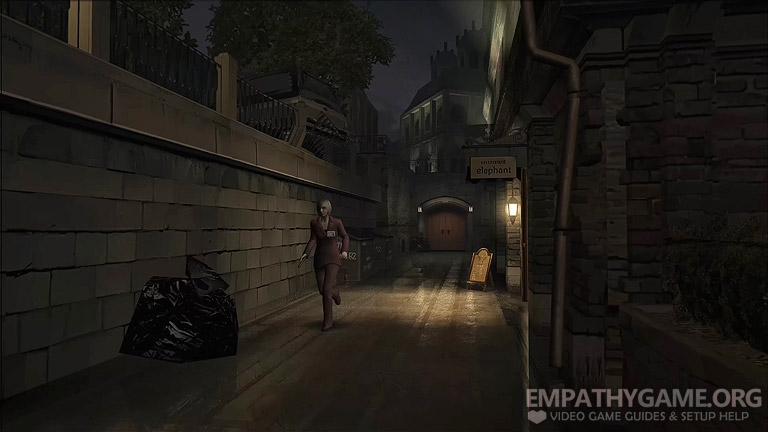
That is the game’s defining achievement. Classic Resident Evil exploration, puzzles, scarce ammunition, and deliberate combat become problems of shared responsibility, while the steadily rising Virus Gauge prevents a group from debating every decision indefinitely. Yet the idea is trapped inside an often awkward PlayStation 2-era interface. Preset calls make coordination imprecise, computer-controlled companions can be maddening, and the camera is least cooperative when a corridor becomes dangerous. Outbreak rewards survival-horror fans willing to learn its habits, not anyone expecting effortless cooperation.
Five Disasters Give Raccoon City a Human Scale
Instead of a single continuous adventure, Outbreak presents five scenarios that share a city and a catastrophe. The opening chapter, Outbreak, starts in J’s Bar, where survivors barricade an entrance as the infection spills into the streets. Below Freezing Point heads into an Umbrella research complex; The Hive traps the cast inside a hospital; Hellfire crosses a burning hotel; and Decisions, Decisions moves the escape effort to Raccoon University. Each location becomes a separate emergency rather than a checkpoint on a hero’s journey.
The episodic structure is more than an accommodation for shorter sessions. It gives each setting a distinct pressure. In the bar, shifting barrels against a door buys a little breathing room but does not stop the threat; later, searching for the right exit matters more than standing and fighting. In the hotel, fire and obstructed routes make navigation part of the danger. Together, they suggest a city abruptly turned hostile. At the same time, the cuts between episodes weaken narrative momentum. No one character receives the sustained arc of Leon, Claire, or Jill, and the survivors rarely build relationships through lengthy scenes. The resulting moments of panic are more convincing than the ensemble drama.
Inventory Space and Infection Turn Time Into a Resource
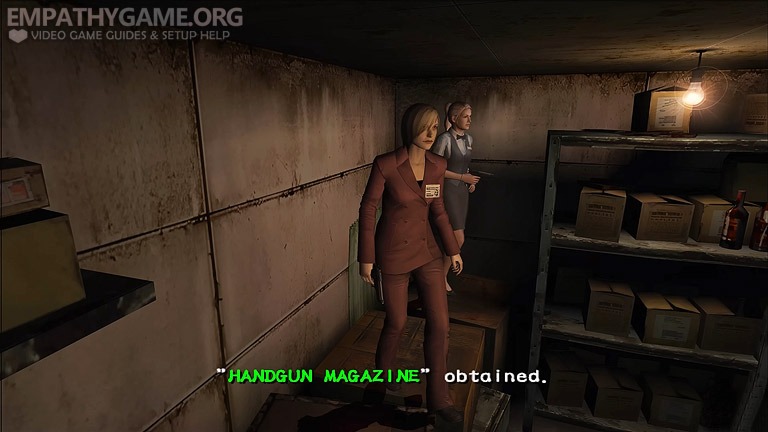
Most characters have only four standard inventory slots. A handgun, its ammunition, one healing item, and a puzzle object can fill them immediately. Without a shared item box, a newly discovered key raises an awkward choice: carry it, trade something, or leave a useful supply behind? Even exchanging equipment requires attention because the world does not stop when the inventory opens. A decision that would be routine in another Resident Evil can expose a survivor to an approaching enemy here.
The Virus Gauge applies a second cost to hesitation. Infection rises over time, and attacks or a critically injured state can accelerate the process. A wounded survivor who has fallen into a crawl is therefore a problem for the whole group: helping them up spends time and may endanger the rescuer, but abandoning them can mean losing their skills and whatever they are carrying. Anti-virus medicine can buy a temporary reprieve, not erase the larger countdown. It creates urgency even in empty corridors.
Outbreak is cleverest when these pressures collide. An iron pipe can save ammunition in a narrow hallway, but improvised melee weapons wear out and bring the user close to a dangerous grab. Killing every zombie is frequently less efficient than making enough room to slip past. Deciphering a clue as the gauge climbs can feel tense, then punitive when the answer depends on a detail the player has not recognized. Preparing a code or checking a file in a relatively safe room is often more valuable than trying to think under attack.
Character Abilities Change the Cost of a Route
Choosing among the eight survivors meaningfully changes how a familiar scenario unfolds. Kevin starts with his own handgun and has a charged aiming technique that rewards taking a moment to line up a stronger shot. Alyssa can open particular locks with her picks and backstep away from danger, turning some optional detours into worthwhile opportunities. David’s toolbox can repair broken weapons or assemble makeshift equipment, while Yoko’s knapsack doubles the usual carrying capacity, making her a natural choice for hauling keys and supplies. Those advantages redefine a safe route.
The more specialized abilities create interesting trade-offs. Cindy’s herb case makes her a useful source of healing support, while George can use his medical set to turn herbs into pills for different conditions. That conversion is not automatically a gain: a green herb that could restore health becomes an antidote if George processes it, which is excellent when poison is the problem and wasteful when somebody urgently needs ordinary healing. Supply planning matters as much as distribution. Mark, by contrast, favors toughness and defensive force, better suited to absorbing danger than slipping away from it.
Jim provides a particularly revealing example of Outbreak’s eccentric design. His coin toss can build a better chance of critical hits after successive favorable flips, but an unfavorable result wipes out the accumulated advantage. Performing the ritual before danger arrives makes more sense than gambling while a zombie closes in. He can also play dead to evade threats, at the cost of faster infection buildup. His kit rewards preparation rather than firepower. Not every character is equally forgiving, but few feel like simple costume swaps.
Co-op Works Best When Teammates Take Different Jobs
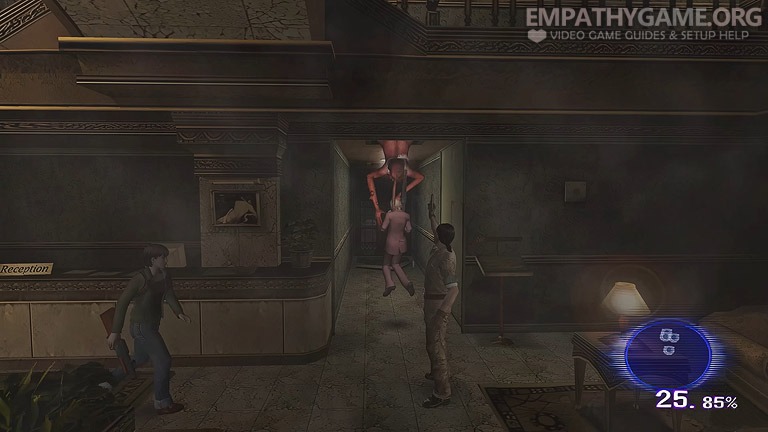
Outbreak’s four-player cooperative design is at its best when the group stops acting like four solo protagonists sharing a screen. One survivor can investigate a puzzle while another lures zombies down a corridor or keeps pressure off an entrance. Somebody carrying extra supplies can become the team’s runner; a better-armed character can protect the route back. The crucial decision is whether to risk your safety making another person’s task possible.
This changes the meaning of an ordinary room search. A player looking through cupboards might not see the enemy approaching behind them, and rescuing a partner in a dangerous state may force the whole group to abandon a shortcut or use a treasured healing item. Scenarios with branching objectives can reward splitting into smaller teams, but separating increases the risk that an isolated member will fall or become stranded. Staying together is not always safest. Cohesion improves protection; division can save precious minutes.
The communication system is the obvious weakness. Preset directions, calls, and contextual Ad-Libs can express urgency but not explain a complicated plan or clarify exactly which item someone is searching for. That can cause confusion where a normal conversation would solve the problem instantly. Yet the restriction produces a peculiar social texture, too: repeated gestures, character movements, requests for help, and the act of returning for a stranded teammate become a shared shorthand. The messiest rescues can be the most memorable because the group has learned to communicate without words.
Solo Partners Are Unreliable, but Not Useless
Playing alone replaces the human team with two computer-controlled survivors, and they do not behave like obedient inventory containers. They may spend ammunition at the wrong moment, drift away with an important object, or arrive too late to prevent a grab. George may even turn an herb handed to him into medicine without consulting the player. Such behavior can make a difficult scenario feel arbitrary when a route depends on keeping the group equipped and healthy. The limited commands do not offer enough precision to correct every poor decision, so success sometimes requires working around companion behavior instead of relying on it.
There is a useful counterpoint to that frustration. In branching scenarios such as The Hive, Hellfire, and Decisions, Decisions, an AI companion can leave the player’s route, complete part of an objective, and eventually rejoin with a necessary item. When it happens, an apparently unhelpful disappearance saves an entire trip across hostile rooms. That makes solo play more than leading two armed followers. The problem is consistency: the same independence that can produce an efficient shortcut can also disrupt a careful plan. Outbreak asks the player to treat companions as imperfect partners, but it occasionally mistakes unpredictability for believable teamwork.
The Best Enemies Reshape Exploration
The Hive offers the clearest example of an enemy changing how a location is understood. Its hospital has the rooms, clues, and branching passages to support slow exploration, but the persistent Leech Man makes lingering dangerous. Ordinary gunfire is not the satisfying answer. Blood packs can divert its attention, and an environmental solution involving a temperature-controlled room can remove the immediate pursuer. The hunt for clues becomes a puzzle about controlling the creature. The design is memorable precisely because learning the hospital also means learning the threat.
It is not always pleasant in practice. A relentless pursuer can make a carefully detailed environment difficult to appreciate, especially before the player understands what the level is asking. Other enemies are more traditional obstacles, and the frequent distinction between fighting, evading, and barricading them keeps ammunition decisions meaningful. Survival knowledge is more rewarding than another interruption. Its horror comes less from surprise alone than from realizing that the safe-looking plan may be the most expensive one.
Old-School Presentation Sometimes Obscures Good Decisions
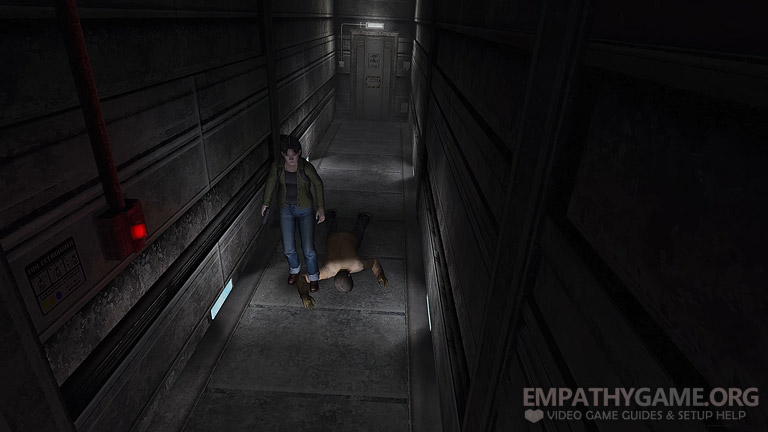
The scenery still carries the character of classic Resident Evil: tightly furnished rooms, ominous institutional corridors, abandoned personal belongings, and abrupt transitions from domestic spaces to industrial horror. The hospital and laboratory benefit from being places where people once worked rather than purpose-built combat arenas. Sound effects and restrained music give empty rooms an uneasy weight, while the occasionally stiff delivery of the voice lines lends the civilian cast an unintentionally theatrical edge. The scenery tells what the episodic script leaves unfinished.
The controls are harder to defend. Fixed and shifting camera angles can conceal a threat or disrupt the direction of movement at exactly the wrong time. Aiming takes deliberation, tight spaces magnify collisions and grabs, and repeated room changes interrupt momentum. Some friction is an intentional part of survival horror: committing to an action should carry risk. But there is a difference between being punished for a greedy attack and struggling to see what the game expects. Outbreak crosses that line often enough to make mastery feel partly like learning around the presentation rather than mastering the underlying danger.
Replayability Comes From Knowledge and Different Survivors
There are no experience levels or elaborate skill trees to chase. Progress comes from clearing scenarios, opening harder difficulties and extra modes, earning collection points, and uncovering optional events. Event Checklists encourage attention to interactions a hurried escape might miss; different characters can expose alternate scenes or practical routes through the same map. Helping the injured Bob during the opening episode, for instance, turns an apparently secondary civilian encounter into a risky escort decision instead of leaving it as scenery. Those details deepen the city without extending the campaign.
The stronger replay incentive is tactical familiarity. Knowing where a key lies can free an inventory slot for ammunition; knowing which rooms are worth revisiting can keep the Virus Gauge manageable; knowing when an AI partner might take a separate route changes how aggressively a solo run can proceed. Harder difficulties make such knowledge matter more, while experimenting with less comfortable characters can restore some uncertainty. Still, familiarity has diminishing returns. Once the best routes are memorized, slow transitions and erratic companion behavior can feel like chores rather than fresh suspense. Five episodes can only sustain so much discovery.
Final Verdict
Resident Evil Outbreak remains one of the series’ most interesting deviations because it understands that helplessness can be shared. Its civilian cast, infection pressure, compact inventory, and scenario-specific obstacles turn small acts of cooperation into genuine survival decisions. Protecting someone who is reading a clue, giving up a healing item, or trusting an ally to finish another branch can be more dramatic than a conventional boss fight. That is more than a novelty attached to familiar zombie encounters.
The frustrations are equally real. Teammates cannot communicate complicated intentions through the game’s narrow set of commands, AI behavior swings between useful initiative and baffling mistakes, and awkward cameras or controls can make a fair challenge feel clumsy. The episodic narrative supplies a vivid view of Raccoon City’s collapse but not the emotional continuity of a focused single-protagonist campaign. Replaying the scenarios reveals clever details, although it also exposes their fixed solutions and recurring delays.
For survival-horror fans who enjoy route planning, resource scarcity, character experimentation, and cooperation that demands actual sacrifice, those compromises are worth considering. Anyone who prefers modern responsiveness or wants allies to follow precise instructions will find Outbreak stubbornly resistant. Its lasting appeal lies in a rare question: not just whether you can make it out of Raccoon City, but what you are willing to risk so somebody else can escape with you.
Resident Evil Outbreak Pros & Cons
- Pro: Distinctive survival-horror concept that places ordinary Raccoon City civilians at the center of the outbreak rather than returning military or police protagonists from the main series.
- Pro: Five varied scenarios featuring memorable locations such as J’s Bar, an Umbrella laboratory, a hospital, a hotel, and Raccoon University.
- Pro: Eight playable survivors with different abilities, equipment advantages, and survival priorities, encouraging alternative approaches to familiar situations.
- Pro: Scarce resources, shared supplies, limited inventories, infection management, and cooperative puzzle-solving give decisions meaningful consequences.
- Pro: PCSX2 makes the original PS2 experience accessible on compatible computers with customizable controls and improved internal rendering resolution.
- Con: No official native Windows release or modern official PC storefront option, making setup less convenient than contemporary Resident Evil games.
- Con: Official multiplayer servers are discontinued, and the European original lacked online play; fan-operated alternatives require additional investigation and configuration.
- Con: AI companions can act unpredictably, making offline teamwork less reliable than cooperation with experienced human players.
- Con: Aging controls, camera transitions, repeated environments, loading interruptions, and limited inventory space can frustrate players accustomed to modern survival-horror conveniences.
Resident Evil Outbreak PC System Requirements
Resident Evil Outbreak has no official native Windows PC system requirements because Capcom released the original game for PlayStation 2 rather than Windows.
For PC emulation, the relevant hardware requirements are those of PCSX2. The specifications below come from PCSX2’s host-system guidance, not from an official Capcom PC release. Actual performance depends on the game, emulator settings, graphics hardware, and rendering resolution. The separate unofficial Windows recompilation project has different technical requirements, which must be checked in its own documentation.
PCSX2 MINIMUM HOST-PC REQUIREMENTS:
OS: Windows 10 64-bit, version 22H2 or supported LTSC equivalent
CPU: x86-64 processor supporting SSE4.1, with PassMark single-thread rating of at least 1500 and two physical cores with simultaneous multithreading
RAM: 8 GB
GPU: Graphics hardware supporting Vulkan 1.1, Direct3D 11, or the required OpenGL 3.3 features; approximately 600 or higher on PassMark G3D Mark
Storage: Space for PCSX2, the BIOS obtained from your own PS2, virtual memory-card data, and your own game-disc image; exact game-file size varies
Additional Software: Supported Microsoft Visual C++ x64 runtime
PCSX2 MODERATE / RECOMMENDED HOST-PC TARGET:
OS: Windows 11 64-bit
CPU: x86-64 processor with AVX2, PassMark single-thread rating of at least 2000, and four physical CPU cores
RAM: 16 GB
GPU: Approximately 6000 or higher on PassMark G3D Mark, 4 GB VRAM, and support for Vulkan 1.3, Direct3D 12, or OpenGL 4.6
Storage: Sufficient local storage for your PS2 game backup, emulator configuration, and save data
Controller: USB or Bluetooth controller recommended; keyboard mapping is also supported
Source: Official PCSX2 System Requirements. These are general emulator requirements, not guaranteed Resident Evil Outbreak performance benchmarks.
Additional PC Performance and Setup Notes
- Game compatibility: PCSX2’s Resident Evil Outbreak compatibility documentation identifies the game as playable on Windows. Individual test reports cover different regions, emulator versions, GPUs, and graphics backends, so results may vary between systems.
- Graphics resolution: Start at native PS2 resolution to establish a stable baseline. Increase the internal rendering scale gradually after verifying that gameplay and cutscenes behave correctly. Higher resolution can make 3D environments clearer but does not replace the original textures or character models.
- Rendering artifacts: Some PCSX2 compatibility reports mention graphical issues involving floor reflections when resolution scaling or certain renderers are used. If reflections, lighting, or textures appear incorrect, return to native resolution, try another supported renderer, and test with optional enhancements disabled.
- Widescreen presentation: PCSX2 can apply compatible game-specific widescreen patches, but forcing a wider aspect ratio may alter framing or expose areas the original camera was not intended to show. Native 4:3 remains a reliable starting point.
- Game speed: Avoid forcing arbitrary frame-rate changes. The emulator’s full-speed percentage and an actual game’s rendered frame rate are not the same measurement. Use standard timing settings first to avoid broken animations, audio problems, or other gameplay behavior.
- Save data: Use PCSX2 virtual memory-card saves for normal progress and back them up periodically. Save states can be useful for recovery, but they should not be the only copies of important progress, particularly before major emulator changes.
- Online configuration: Offline single-player does not require a multiplayer server. Community online play is a more complicated, unofficial configuration and may be affected by game region, network settings, or the community’s supported client versions.
- Steam Deck and handheld PCs: There is no native Steam version or official Steam Deck compatibility rating for Resident Evil Outbreak. Emulating it on compatible handheld hardware is a separate PCSX2 setup scenario, not evidence of a native handheld release.
Video Trailer
Frequently Asked Questions
Is Resident Evil Outbreak one continuous campaign, and must scenarios be completed in order?
It contains five separate scenarios: Outbreak, Below Freezing Point, The Hive, Hellfire, and Decisions, Decisions. They share the Raccoon City setting rather than forming one uninterrupted level. Scenarios unlock in sequence on an initial run, and previously unlocked scenarios can be replayed with other survivors or difficulties.
How does Resident Evil Outbreak connect to Resident Evil 2 and Resident Evil 3?
It takes place during the same 1998 Raccoon City disaster but follows ordinary civilians instead of Leon, Claire, or Jill. Familiar Umbrella connections and locations provide another perspective on the collapse without replacing the main series’ campaigns.
Which survivor is best for beginners, and how do their abilities differ?
Kevin is an approachable starting pick thanks to his personal handgun and strong aimed shot, while Mark is more durable. Alyssa picks locks, Yoko carries extra items, Cindy stores herbs, George prepares medicine, David repairs and improvises weapons, and Jim can play dead. Their strengths affect the value and risk of different routes.
How does the Virus Gauge work, and can infection be cured?
Infection increases over time and can accelerate after injuries or while incapacitated. Ordinary antiviral medicines delay its progress rather than permanently cure the character. Decisions, Decisions introduces a special treatment tied to the finale and its different outcomes.
Does the inventory pause the game, and how many items can you carry?
No. Enemies and infection keep moving while the inventory is open. Most survivors have four ordinary item slots, so exchanging equipment and choosing between healing items, ammunition, and puzzle objects is essential. Yoko’s knapsack holds four additional items, though they must be moved into an ordinary slot to use them.
How do AI partners behave, and can you exchange items or rescue them?
In offline play, two AI companions can respond to basic calls, exchange supplies, and help injured survivors, but they may also wander off, spend ammunition, or ignore requests. You can assist a companion who is crawling and still alive, but cannot revive someone after death.
Can you save during a scenario?
Yes. Typewriters create a temporary suspend save without an Ink Ribbon, but saving ends the active session. Loading consumes that save rather than creating a reusable checkpoint. Normal PCSX2 memory-card saves are distinct from emulator save states.
How do you unlock Hard, Very Hard, and Lone Wolf Mode?
Extra difficulty settings and Lone Wolf Mode are purchased through the Collection using earned points after meeting progression conditions. Hard becomes available after clearing all five scenarios, while Very Hard and the AI-free Lone Wolf challenge require further progress. Revisit the Collection to see available unlocks.
What do Event Checklists and Collection points unlock?
Event Checklists track optional discoveries, interactions, and alternate actions inside each scenario. Clearing scenarios and earning points opens extras such as costumes, artwork, movies, and additional modes, making repeat runs useful even after the main escape objectives are understood.
Does Resident Evil Outbreak have different endings?
Yes. Decisions, Decisions includes different outcomes involving story-related treatment decisions and the survivors who make it through. Character-specific events and unlockable content give further reasons to revisit scenarios.
How long does it take to finish all five scenarios?
A first run can take roughly 6–10 hours, but unfamiliar puzzles, retries, and AI behavior may extend it. Harder difficulties, optional events, and experimenting with every survivor can add substantially more time.
Should you play Resident Evil Outbreak or File #2 first?
Start with the original if you want the scenarios in release order and an introduction to the survivor and infection systems. File #2 is a separate PS2 sequel containing five other scenarios and refinements, not a DLC pack or a remaster of the first game.
Are Capcom’s original Resident Evil Outbreak online servers still available?
No. The original official PS2 services were discontinued. Community-maintained alternatives such as Obsrv are unofficial and require their own supported game editions, setup instructions, and network configuration.
Does Resident Evil Outbreak support split-screen, couch co-op, or LAN?
The original PS2 release has no split-screen or local couch co-op, and the retail game did not offer a built-in LAN mode. Cooperative play used network sessions on separate systems. Some later unofficial Windows fan projects introduce their own LAN or online methods; those are not original Capcom features.
Can you play online with PCSX2, and is the Japanese version required?
Yes, through the independent Obsrv service, which supports Japanese NTSC-J Biohazard Outbreak and File #2 releases. It supports compatible PS2 hardware and PCSX2 players, including in shared sessions. North American and European versions cannot simply connect to this service; in-game coordination uses preset calls and Ad-Libs rather than full voice chat.
Can the Japanese PS2 edition be played in English?
The Japanese release is not an official English edition. Fan translation patches exist, but their compatibility depends on the precise disc revision and community setup. They are unofficial modifications for readers using a lawfully owned copy.
Is there an unofficial native Windows port of Resident Evil Outbreak?
Yes. The community-developed RE: Outbreak recompilation project describes support for the original game and File #2 on Windows using compatible North American PS2 disc data supplied by the owner. It also offers a separate co-op system. This is a fan-maintained project, not an official Capcom release or a standard Steam download; check its documentation and security before using it.
Has Capcom released an official Resident Evil Outbreak remake or remaster?
No official remake, remaster, or native Windows edition of the original Resident Evil Outbreak was verified during this audit. Independent emulation tools, translation patches, and fan recompilations are not Capcom releases.
Still have questions? Check the Outbreak Server Resurrection community for multiplayer and region-specific setup, the Resident Evil Reddit community for gameplay discussions, or the PCSX2 forums for emulator compatibility questions.
Sources & References
Key factual and technical details were checked against the following official documentation, original game coverage, and identified community projects:
- Capcom Resident Evil Portal — Series History — Capcom’s official account of Outbreak’s civilian survivors and Raccoon City timeline.
- PCSX2 Wiki — Resident Evil Outbreak — PS2 regional releases, game compatibility, and documented rendering behavior.
- PCSX2 — BIOS Documentation — Official instructions for obtaining proprietary PS2 BIOS data from hardware you own.
- PCSX2 — System Requirements — Published host-system requirements; see also the official disc-backup guide for creating game images from your own PS2 discs.
- Outbreak Server Resurrection — FAQ — Community service support for the Japanese editions and important regional multiplayer distinctions.
- RE: Outbreak — Community Windows Recompilation — First-party project documentation for its unofficial ownership-based Windows port, supported game revisions, and independent co-op.
- GameSpot — Outbreak Offline in Europe — Contemporary confirmation that the European release did not include the original online component.
- Metacritic — Resident Evil Outbreak (PS2) — The original PS2 version’s aggregate critical score.
Similar Games Like Resident Evil Outbreak
- Resident Evil 2 Remake
- Resident Evil 5
- Resident Evil Revelations 2
- Project Zomboid
- Resident Evil 3 Remake
- Left 4 Dead 2


Found something worth playing through DecideGame?
DecideGame.com is an independent gaming project run by Editor Zero. If this guide helped you discover a game, solve a problem, or find useful information, you can support DecideGame.com and help keep new and updated game guides coming.
DecideGame — PC Game Guides, Reviews & Setup Help