
📅 Game released: 2015
Dying Light follows Kyle Crane through the infected city of Harran, where first-person parkour, scavenging, melee combat, and dangerous nighttime hunts make movement essential to survival. This PC guide compares official Steam, Epic Games Store, and GOG purchase and download options, explains Essentials and Definitive Edition content, and covers co-op, system requirements, Steam Deck support, mods, and setup troubleshooting.
 By Editor Zero — independently researched, edited, and maintained.
Last updated: 29 October 2026
Last reviewed: 29 October 2026
Table of Contents
- Quick Facts
- Official PC Stores, Download & Installation
- Dying Light Review
- Pros & Cons
- PC System Requirements
- Frequently Asked Questions
- Similar Games
Dying Light Quick Facts
Official PC Stores, Download & Installation
👇 Compare official Dying Light PC editions and installation options on Steam, Epic Games Store, and GOG before choosing which package to download.
- Steam: Sells Dying Light for Windows PC and provides achievements, Steam Cloud, online co-op and PvP, controller support, Workshop content, and a level editor. Check the listed edition or bundle before buying.
- Epic Games Store: Offers Essentials Edition and Definitive Edition. Essentials includes the base game, Bozak Horde, Cuisine & Cargo, and eight themed weapon/outfit bundles, including the 10th Anniversary Bundle; it does not include The Following or Hellraid.
- GOG: Sells Dying Light: Definitive Edition as a DRM-free Windows download with offline installers. GOG Galaxy is optional for single-player installation and play, although online features and cloud synchronization require connectivity.
- Definitive Edition: The comprehensive package combines the base game, The Following countryside story expansion, Hellraid, The Bozak Horde, Cuisine & Cargo, and an extensive collection of weapon and cosmetic DLC. Contents and anniversary branding may vary by storefront, so inspect each listing.
- Older Enhanced licenses: Techland upgraded original Standard Edition owners to Enhanced Edition content, including The Following, Bozak Horde, Cuisine & Cargo, Ultimate Survivor Bundle, and Crash Test Skin Bundle. An older Enhanced library license is not necessarily identical to a newly sold Essentials package.
- 10th Anniversary Bundle: A smaller weapon-and-cosmetic add-on, with the Hotshot Outfit, Dawnbreaker shotgun, Sunburst revolver, Golden Idol machete, and Golden Hour buggy skin. It is not The Following or a separate story expansion; avoid buying it twice if your edition includes it.
- Retouched enhancements: The free update for existing Dying Light owners improves selected textures, skyboxes, shadows, combat audio, and music. Techland describes it as enhancements to the original game, not a separate remaster or paid edition.
- Co-op and online ownership: PC players on Steam, Epic, and GOG can join each other, but not console players. Each person needs access to their own game copy and any relevant expansion for expansion-specific sessions; online co-op and PvP need an internet connection.
- Steam Deck and mods: Valve rates the Steam version Verified. Steam Workshop is convenient for compatible custom content, but third-party mods or mismatched game data can interfere with co-op; keep save backups and restore clean files when troubleshooting.

 Buy Dying Light on Epic Games Store
 Buy Dying Light: Definitive Edition on GOG

Dying Light Review
Parkour makes every escape through Harran a test of timing and nerve.
Many zombie games focus on slow tension, tight corridors, or heavy gunplay, but Dying Light stands out because it makes movement the heart of survival. Developed by Techland, it combines brutal melee combat, open-world exploration, crafting, scavenging, and a fast parkour system that completely changes how you think about a zombie-infested city.
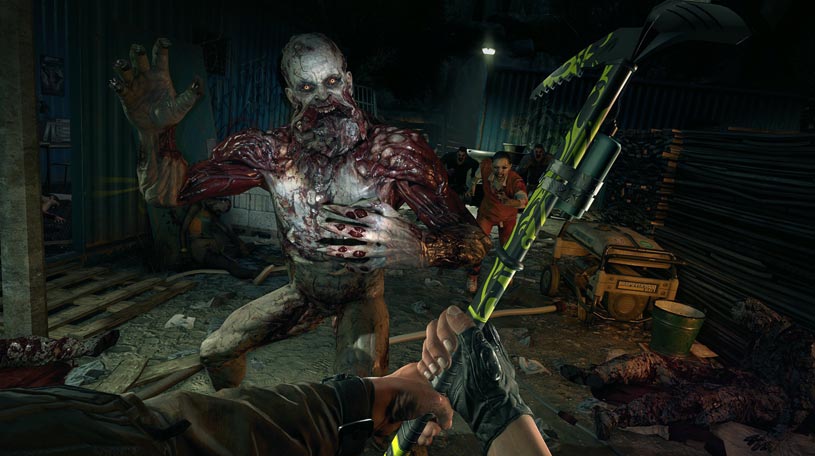
The game takes place in a quarantined city overrun by infected, but the real tension comes from how exposed you always feel. A street that looks manageable during the day can become a death trap at night. A rooftop escape can turn into panic if you miss one jump. Even a simple supply run can collapse into chaos when noise attracts more infected than you expected.
At its best, Dying Light feels like survival horror with momentum. You are not just fighting zombies; you are climbing, sprinting, jumping, sliding, crafting, scavenging, repairing weapons, unlocking safe zones, and constantly asking yourself whether it is worth staying outside a little longer before the sun goes down.
A City Devastated by Infection
The game is set in the fictional Middle Eastern city of Harran, where a viral outbreak has turned most of the population into aggressive infected. You play as Kyle Crane, an undercover operative sent into the quarantine zone to recover sensitive information, but the mission quickly becomes more complicated once he meets the survivors trying to stay alive inside the city.
Harran is a large open-world environment filled with dangerous streets, rooftops, alleys, balconies, construction sites, abandoned apartments, markets, safe houses, and infected-filled zones. What makes the setting work so well is its vertical design. The streets are dangerous, but rooftops are not simply safe paths either. They are escape routes, scouting points, shortcuts, and sometimes the only thing between Crane and a swarm below. The Slums and Old Town also demand different habits: the Slums often break a rooftop route with streets and awkward gaps, while Old Town’s denser, taller buildings can support longer runs above ground. Neither layout is simply better; each changes the decisions made during a chase.
The core gameplay loop is simple but addictive: leave a safe zone, scavenge supplies, complete objectives, fight or avoid infected, collect crafting parts, unlock new skills, repair or upgrade weapons, secure more safe houses, and return before night turns the city into something far more dangerous. That loop stays engaging because movement, combat, and resource management constantly feed into each other.
Exploration has a strong sense of risk. You might enter a building looking for gauze and alcohol to craft medkits, hear infected moving in another room, open one more cabinet because you need parts for a weapon upgrade, then suddenly realize the sun is setting and the nearest safe zone is several rooftops away. That pressure gives even basic looting a nervous edge.
Players who enjoy open-world survival in hostile environments may also appreciate Far Cry 3. It is not a zombie game, but it shares a similar feeling of being dropped into a dangerous sandbox where movement, improvisation, enemy camps, crafting, wildlife, and sudden chaos all shape the adventure. Where Dying Light makes rooftops and nighttime survival the main source of tension, Far Cry 3 uses tropical outposts, fire, predators, and enemy patrols to create unpredictable open-world encounters.
Parkour: The Defining Feature of the Game
Parkour is what separates Dying Light from almost every other zombie survival game. Crane can sprint across rooftops, climb ledges, vault over fences, leap between buildings, slide under obstacles, dropkick enemies, and use the city’s architecture as a survival tool.
The movement feels a little rough at first because Crane does not start as a superhero. Early jumps feel risky, stamina matters, and missing a ledge can be costly. But that is part of what makes progression satisfying. As your agility improves, Harran slowly changes from a maze of threats into a city you understand. You begin to see routes instead of walls.
The parkour becomes most expressive during a chase through the Slums, with Crane low on health and infected screaming behind him. You jump to a balcony, scramble onto a rooftop, slide under a pipe, miss the cleanest route, improvise with a desperate climb, and barely reach a safe zone as the UV lights kick in. That kind of escape feels personal because you survived through movement, not just better stats.
The agility skill tree reinforces this perfectly. New abilities make you faster, more mobile, and more confident. Skills like vaulting, better climbing, slide moves, and improved freerunning do not just make Crane stronger on paper; they change how you move through the world. By the middle of the game, you stop thinking like a normal FPS player and start scanning every street for climbable surfaces, ledges, awnings, poles, and rooftops.
The best route is not always the highest one. Sometimes staying halfway above street level, on vans, fences, low roofs, and balconies, is faster than climbing all the way up and losing time. Once you start reading Harran like that, the parkour becomes much more natural. The grappling hook introduces an interesting compromise later on: it makes emergencies and long climbs easier, but its rapid pull can bypass the very route-finding that makes the physical parkour satisfying. Using it constantly is convenient; choosing to climb the old-fashioned way can be more engaging.
Day and Night: A Game-Changing System
One of Dying Light’s most memorable mechanics is its day-night cycle. During the day, the infected are dangerous but manageable. You can explore, scavenge, clear areas, complete side quests, and fight your way through problems if you are prepared enough.
Night changes everything.
After dark, Volatiles come out. They are faster, stronger, smarter, and far more terrifying than regular infected. Suddenly, the same streets you crossed easily during the day become hunting grounds. Your flashlight feels weak, and every rooftop jump carries more pressure because getting spotted can trigger a chase that escalates very quickly. On Normal difficulty, the minimap helps identify roaming Volatiles; on Hard and Nightmare, they no longer appear there. That changes the challenge beyond enemy strength, since listening, looking ahead, and using Survivor Sense become more important than following threat markers.
Nighttime is not just a visual filter. It changes how you play. You move slower, listen more carefully, avoid unnecessary fights, use Survivor Sense more often, and look for UV safe zones like lifelines. The game also rewards nighttime exploration with greater experience gains, which creates a brilliant risk-reward choice: go out when it is safer, or risk the dark for faster progression.
The first few night runs are genuinely stressful. You might leave a safe zone thinking you can handle one objective, then hear a Volatile scream nearby and immediately regret your confidence. If a chase starts, the game becomes pure panic: sprint, climb, turn, jump, fall, recover, throw a firecracker, and hope the safe house lights are close enough.
This is where Dying Light earns its survival horror identity. It has plenty of action, but nighttime reminds you that Crane is still vulnerable. The city belongs to something worse after dark.
Combat, Weapons, and Survival Progression
Combat in Dying Light is physical, messy, and mostly built around melee weapons. Pipes, knives, machetes, hammers, axes, bats, and improvised blades all have weight to them. You are not simply clicking until enemies fall over; you are managing stamina, weapon durability, enemy spacing, and crowd control.
The early game can feel brutal because weapons break quickly and Crane is not strong enough to easily control groups. A few infected in a tight alley can become a real problem if you swing too much, run out of stamina, or get grabbed from behind. Later, with better weapons and upgrades, you can become much more aggressive, but the game still punishes careless play when infected surround you. Human opponents, especially Rais’s armed men, can be more frustrating for a different reason: their frequent dodges sometimes make carefully aimed melee swings appear to pass straight through them. That feels less consistent than the weighty contact of fighting ordinary infected.
Weapon crafting gives combat a strong sense of progression. Adding fire, electricity, poison, or impact effects to a blade or blunt weapon can completely change how it feels. There is something extremely satisfying about turning a basic machete into a modified shock weapon and watching it tear through infected that used to feel overwhelming. Yet stronger effects can create their own problems. Setting a toxic infected on fire, for instance, may trigger an explosive burst and bring Virals toward the noise, so extra damage is not always the safest upgrade.
The power skill tree improves your combat abilities, while the survivor tree adds practical upgrades tied to crafting, trading, traps, and survival tools. Progression feels meaningful because it supports the way you actually play. If you spend more time climbing and escaping, agility grows. If you fight often, combat skills improve. That connection between action and progression helps the game feel natural.
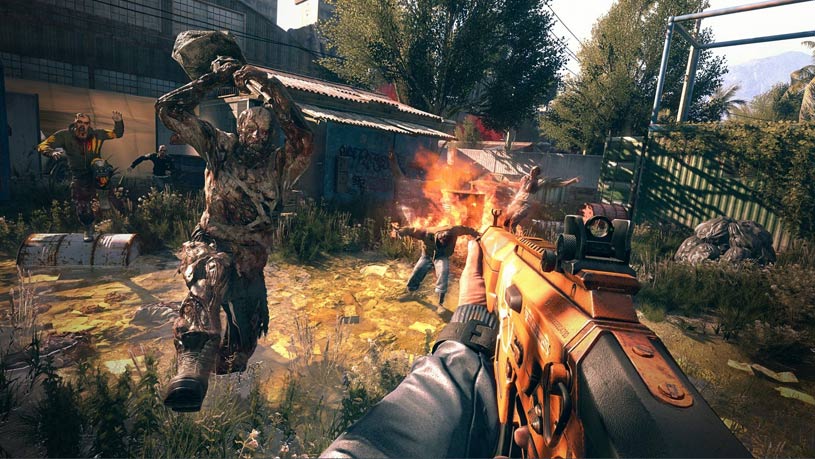
Guns exist, but they are not always the smart choice. Firearms are powerful against human enemies, but they make noise, and noise brings infected. That creates one of the game’s best survival rules: just because you can shoot does not mean you should. A loud solution can solve one problem and create five more.
If you like Dying Light for survival tension, limited resources, dangerous infected, and the pressure of moving through hostile spaces in first person, Metro Exodus is another strong pick. It trades rooftop parkour and zombie hordes for post-apocalyptic travel, firearms, stealth, crafting, radiation, and a slower survival rhythm, but both games make every trip outside safety feel risky.
Quests, Safe Zones, and the Human Side of Harran
The main story is serviceable, but Dying Light is often more memorable in its smaller moments. Harran works because it feels like a city full of people trying to survive after the world has stopped caring about them. Safe zones, survivor camps, radio calls, side missions, and desperate requests all help make the quarantine feel lived in.
Side quests often send you into dangerous places for simple human reasons: medicine, missing people, supplies, family members, or strange survivor problems that only make sense in a collapsed city. Some quests are serious, while others have that slightly odd, darkly humorous tone Techland likes to use. The mix keeps the city from feeling like one endless misery loop.
Safe zones are especially important because they change how you move through the map. Securing one gives you a new place to rest, escape night, and respawn if things go badly. Lighting up a safe house after clearing infected feels like reclaiming a tiny piece of the city. It is a small reward, but it matters because Harran constantly feels hostile.
Atmosphere, Horror, and Replayability
The atmosphere in Dying Light works because it balances action with dread. During the day, Harran can look almost warm and alive, with sunlight over rooftops, distant city noise, and survivors trying to function. Then the streets fill with infected, interiors become claustrophobic, and nighttime turns the same map into a completely different place. Even some daytime fights have an unnerving detail: a Viral may briefly recoil and plead in a recognizably human voice before attacking again. That moment of apparent vulnerability makes the infected harder to dismiss as nothing more than moving targets.
Players who want a more intimate and terrifying horror experience should also look at Resident Evil 7 Biohazard. Where Dying Light uses open-world movement, parkour escapes, and infected crowds to create panic, Resident Evil 7 traps you inside a much tighter nightmare built around first-person tension, limited resources, disturbing family horror, and the fear of opening the next door. Both games are about survival under pressure, but they create fear in completely different ways.
Replayability comes from the movement system, co-op, side activities, skill progression, and the satisfaction of becoming better at navigating Harran. Returning to earlier areas after unlocking stronger parkour and combat skills feels noticeably different. Routes that once felt dangerous become smooth. Enemies that once forced panic become manageable. Night runs that once felt impossible become something you might attempt on purpose for the extra rewards.
Co-op also adds a lot of long-term value. Playing with friends turns Harran into a chaotic playground where one player is looting, another is climbing, someone is fighting too many infected, and everyone starts laughing when a simple plan becomes a disaster. The game still works solo, but co-op gives the open world a different energy.
The expansion content, especially The Following, adds even more value with a larger countryside map, vehicle-based exploration, and a different survival rhythm. Its buggy is not an effortless replacement for parkour: running into infected and obstacles wears down components, forcing stops for repairs and scavenged parts. Vehicle upgrades gradually make those journeys less punishing, giving the countryside its own sense of progression. It does not replace the rooftop parkour of the main city, but it gives returning players a fresh reason to keep going.
Final Thoughts
Dying Light successfully blends parkour, melee combat, survival horror, open-world exploration, crafting, and co-op into one of the most distinctive zombie games of its era. Its movement system is still the main reason it stands out, but the day-night cycle, weapon crafting, safe zones, infected pressure, and vertical map design all work together to make Harran feel dangerous and memorable.
It is not perfect. The story is not as strong as the gameplay, some missions follow familiar open-world patterns, and early combat can feel rough before the progression systems open up. But once the movement clicks, the game becomes hard to put down.
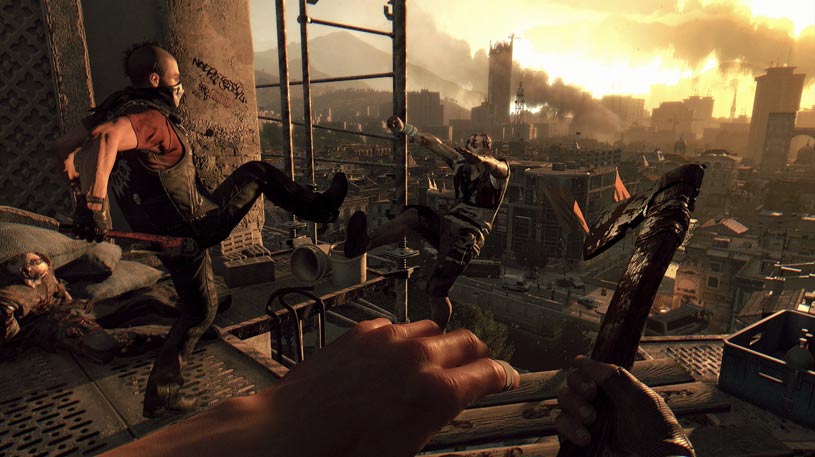
The real magic of Dying Light is that it turns escape into gameplay. The moments that stick are running across rooftops at sunset, missing a jump during a Volatile chase, kicking an infected off a roof, crafting a stronger weapon from scavenged parts, or barely reaching UV light before getting torn apart. It is a zombie survival game where the city itself becomes your weapon, your enemy, and your best chance to stay alive.
Dying Light Pros & Cons
Dying Light PC System Requirements
OFFICIAL WINDOWS PC REQUIREMENTS:
Important: The published game requirements are legacy specifications from the original PC release and still list Windows 7/8-era operating systems. Steam itself requires Windows 10 or later, while Techland designed the Retouched enhancements not to increase the game’s original hardware requirements.
MINIMUM:
OS: Windows 7 64-bit / Windows 8 64-bit / Windows 8.1 64-bit in the original specification
CPU: Intel Core i5-2500 @ 3.3 GHz / AMD FX-8320 @ 3.5 GHz
RAM: 4 GB DDR3
GPU: NVIDIA GeForce GTX 560 / AMD Radeon HD 6870 with 1 GB VRAM
DirectX: Version 11
Storage: 40 GB available space
Sound Card: DirectX-compatible
Input: Windows-compatible keyboard and mouse; controller optional
Additional: Laptop versions of listed graphics cards may work but are not officially supported by the original specification
RECOMMENDED:
OS: Windows 7 64-bit / Windows 8 64-bit / Windows 8.1 64-bit in the original specification
CPU: Intel Core i5-4670K @ 3.4 GHz / AMD FX-8350 @ 4.0 GHz
RAM: 8 GB DDR3
GPU: NVIDIA GeForce GTX 780 / AMD Radeon R9 290 with 2 GB VRAM
DirectX: Version 11
Storage: 40 GB available space
Sound Card: DirectX-compatible
Input: Windows-compatible keyboard and mouse; controller optional
Additional: Laptop versions of listed graphics cards may work but are not officially supported by the original specification
Additional PC Performance and Setup Notes
- If Dying Light stutters or drops frames, update the GPU driver, test fullscreen versus borderless mode, reduce view distance first, disable unnecessary overlays, and use a stable frame-rate limit instead of changing many settings simultaneously.
- On laptops, confirm that the game is using the dedicated GPU and a high-performance power profile. Thermal throttling or hybrid-graphics selection can cause sudden performance loss even when the hardware is otherwise fast enough.
- If the game crashes or refuses to launch, verify store files, remove recently installed mods, return unstable CPU/GPU overclocks to stock settings, disable conflicting overlays, and test a clean configuration before reinstalling the full game.
- If co-op fails, make sure all players have compatible game files and DLC, remove modifications that trigger a modified-data mismatch, and review Techland’s multiplayer/NAT troubleshooting before assuming the servers are unavailable.
- Steam Deck is Verified. Valve reports that the default controls work, Deck button icons are shown correctly, interface text is legible, no manual launcher navigation is required, and the default graphics configuration performs well.
- Back up saves before adding gameplay overhauls, save tools, durability edits, custom maps, ReShade presets, or other unofficial changes. Steam Workshop content is easier to manage than manual file replacements, but it can still affect compatibility.
Official Trailer
Note: Techland’s official Dying Light: Definitive Edition trailer highlights Harran, parkour, infected combat, The Following, Hellraid, and the expanded content package, while the written guide above adds current storefront differences, Retouched enhancements, cross-store PC co-op, Steam Deck support, system requirements, and troubleshooting.
Frequently Asked Questions
Does Dying Light: Essentials Edition include The Following?
No. Essentials includes the main game, Bozak Horde, Cuisine & Cargo, and several themed bundles, but not The Following or Hellraid. Choose Definitive Edition or check whether your existing library already grants The Following before purchasing another package.
What is the difference between Enhanced Edition and Definitive Edition?
The older Enhanced Edition adds The Following and several earlier DLC packs to the base game. Definitive Edition includes that major expansion, Hellraid, Bozak Horde, Cuisine & Cargo, and a much wider collection of weapon and outfit bundles. The newer Essentials name does not mean the same thing as the historical Enhanced upgrade.
Is the 10th Anniversary Bundle a new game or expansion?
No. It adds the Hotshot Outfit, three named weapons, and the Golden Hour buggy paint job. It does not add a new story or replace The Following, and it may already be included in your purchased edition.
Does the Retouched Update turn Dying Light into a remaster?
No. Techland calls it a free enhancement of the existing game rather than a new remastered product. It improves selected visuals, environmental audio, combat sounds, and music without requiring a separate purchase.
How do I start Dying Light: The Following?
With The Following installed and available in your owned edition, select its separate campaign option from the main menu. It takes Crane into the countryside with drivable buggies and its own story; it is not merely another mission inside the Slums or Old Town.
When does four-player co-op unlock, and can the whole campaign be played together?
Co-op opens after the introductory solo sequence, once the game enables multiplayer. Most exploration and missions support up to four players, but Techland notes that some late-story objectives must be completed solo before co-op becomes available again.
Can Steam, Epic Games Store, and GOG players join the same co-op session?
Yes. Techland confirms cross-store co-op between those three PC versions. There is no general PC-to-PlayStation or PC-to-Xbox crossplay, and save transfers between console and PC are not officially supported.
Does Dying Light support split-screen or LAN multiplayer?
No split-screen mode exists on PC or consoles, and Techland says direct LAN multiplayer is not officially supported by default. Co-op is designed around online sessions.
What is Be the Zombie mode?
It is an asymmetric online PvP mode in which one player controls the Night Hunter and invades a survivor session. It is separate from the normal four-player cooperative campaign.
Can I play Dying Light offline?
Yes. The single-player campaign can run without a persistent internet connection after the game is installed. GOG additionally offers DRM-free offline installers; co-op, PvP, online account features, and cloud synchronization need a connection.
What should beginners prioritize before their first night?
Unlock nearby safe zones, gather gauze and alcohol for medkits, carry firecrackers, and learn a few rooftop escape routes. Avoid fighting every infected in the street; keeping stamina and a clear path to UV-lit shelter is usually more valuable.
Why are Volatiles so dangerous at night?
They are faster and tougher than ordinary infected, and detection can trigger escalating pursuits. UV light, route planning, traps, and breaking line of sight are generally safer early-game strategies than standing your ground.
Can damaged weapons be repaired or upgraded?
Most melee weapons have limited durability and repairs. Crafting blueprints, upgrades, and replacement weapons help maintain your arsenal, so salvage materials and plan for weapons eventually wearing out.
Does Dying Light have New Game Plus?
Yes. New Game Plus allows another run of the main campaign with established character progression, while difficulty options let experienced players increase the pressure. Check the selected save and campaign mode before restarting so you do not unintentionally overwrite your intended progress.
What should I do if Dying Light stutters, crashes, or reports modified data?
Start with your store’s file-verification feature, remove recent mods or conflicting overlays, check that the dedicated GPU is being used, and lower view distance if frame rates are unstable. For modified-data warnings during co-op, restore original files and confirm that everyone is using compatible versions and content.
Can I use Steam Workshop or other PC mods?
Yes. The Steam version supports Workshop content and the level editor, while Nexus Mods hosts additional community modifications. Back up save data and avoid mixing incompatible altered files into normal online co-op sessions.
Still have questions? Visit Techland’s official Dying Light support centre, Steam Discussions, or the Dying Light Reddit community.
Sources & References
- Techland’s official Dying Light page — original release, supported platforms, game modes, editions, and Steam Deck support.
- Dying Light on Steam — PC features, user reception, Workshop support, and Windows specifications.
- Dying Light Essentials on Epic Games Store — Essentials package contents and comparison with available editions.
- Dying Light Definitive Edition on GOG — DRM-free ownership, offline installer, and edition availability.
- Techland cross-store play guidance — Steam, Epic, and GOG PC compatibility and PC-to-console restrictions.
- Techland’s Windows PC requirements — original minimum and recommended hardware specifications.
- Techland Retouched Update details — free visual and audio enhancements for original-game owners.
Similar Games Like Dying Light
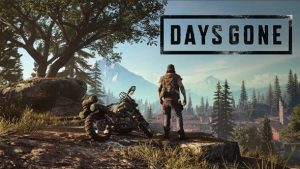
- Days Gone
- Left 4 Dead 2
- Resident Evil Outbreak
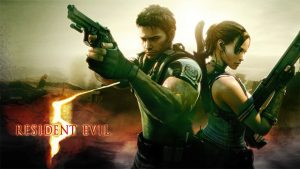
- Resident Evil 5
- Resident Evil 6
- Call of Duty: Black Ops III


Found something worth playing through DecideGame?
DecideGame.com is an independent gaming project run by Editor Zero. If this guide helped you discover a game, solve a problem, or find useful information, you can support DecideGame.com and help keep new and updated game guides coming.
DecideGame — PC Game Guides, Reviews & Setup Help