
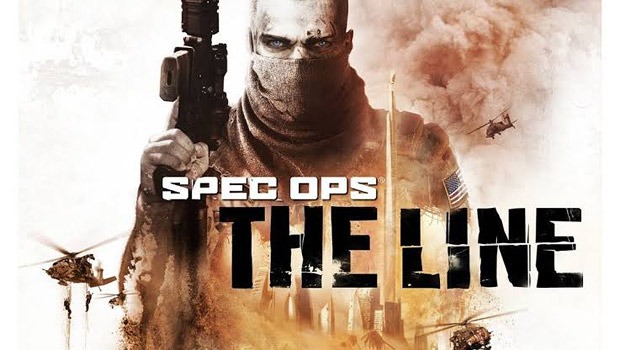
📅 Game released: 2012
Spec Ops: The Line is a story-driven third-person military shooter following Captain Martin Walker and his squad into a sandstorm-ravaged Dubai. This PC guide explains the game’s official store status, how existing owners can download and reinstall their legitimate copy, Steam setup, system requirements, Steam Deck compatibility, mods, and practical PC advice.
 By Editor Zero — independently researched, edited, and maintained.
Last updated: 14 November 2026
Last reviewed: 14 November 2026
Table of Contents
- Quick Facts
- Official PC Stores, Download & Installation
- Spec Ops: The Line Review
- Pros & Cons
- PC System Requirements
- Frequently Asked Questions
- Similar Games
Spec Ops: The Line Quick Facts
- Game: Spec Ops: The Line
- Developer: YAGER Development
- Publisher: 2K Games
- Genre: Third-Person Shooter, Action-Adventure
- Release: June 26, 2012 (North America, including Windows PC); June 29, 2012 (international / Steam release)
- Platforms: Windows PC, macOS (legacy), Linux (legacy), PS3, Xbox 360
- Steam Deck: Unsupported (Valve compatibility classification)
- Engine: Unreal Engine 3
- Modes: Single-player campaign, competitive multiplayer, and four separate two-player co-op missions
- Community: Steam Discussions, Spec Ops: The Line Reddit Community, 2K Support
- PC modding: Nexus Mods hosts unofficial visual, interface, camera, and gameplay modifications; no official Steam Workshop
- Metacritic score: 76/100 (PC)
- IGN score: 8/10 (same multiplatform release)
- GameSpot score: 6.5/10 (same multiplatform release)
- Steam user reception: Very Positive overall (about 93% positive); Steam listing no longer sells new copies
Official PC Store Status, Download & Installation
👇 Use the notes below to understand the current official PC availability status for Spec Ops: The Line and safely reinstall an already-owned copy without relying on unofficial acquisition sources.
- Digital-store status: Spec Ops: The Line has been removed from official online storefront sale after several partnership licenses connected to the game expired.
- Existing owners: 2K has stated that players who purchased the game before delisting can continue to download and play it, so an existing legitimate digital license remains usable.
- Steam re-download: Previous Steam buyers should install the game from the Steam Library attached to the account that originally owns it. The public Steam listing remains retired and does not provide a new purchase option.
- Other prior purchases: If the game was legitimately purchased through another former digital storefront, use that store’s owned-games library and account tools rather than searching for replacement installers on unofficial websites.
- No current purchase route: There is no normal first-party digital PC storefront where a new customer can presently buy the game. Third-party key marketplaces, abandonware sites, mirrors, and file-hosting pages should not be treated as official alternatives.
- Steam authentication: The official PC documentation specifies a one-time internet connection during initial Steam installation for authentication rather than a permanent always-online requirement for the single-player campaign.
- Required software: The original Steam installation includes the Steam client, Microsoft DirectX, Visual C++ 2008 Redistributable, and Visual C++ 2005 SP1 Redistributable components required by the older PC build.
- Modern Windows: The original specification lists Windows XP, Vista, and Windows 7, but those OS entries are historical. The current Steam client requires Windows 10 or newer, so those XP/Vista/7 lines are historical game requirements rather than present-day Steam-client support guidance.
- Old Premium Edition: Historical preorder material referred to a Premium Edition and FUBAR Pack containing multiplayer bonuses. These are not current editions or modern purchase choices and should not be confused with a presently sold complete edition.
- Steam Deck: Valve’s compatibility metadata categorizes Spec Ops: The Line as Unsupported on Steam Deck, even though community users have reported varying results with Proton.
- Mod compatibility: Nexus Mods and community configuration edits can alter visuals, camera behavior, difficulty, interface elements, and other files. Back up saves and configuration files before modifying an existing installation.
 View Spec Ops: The Line on Steam


Spec Ops: The Line Review
A familiar cover shooter that turns its own conventions into something deeply uncomfortable.
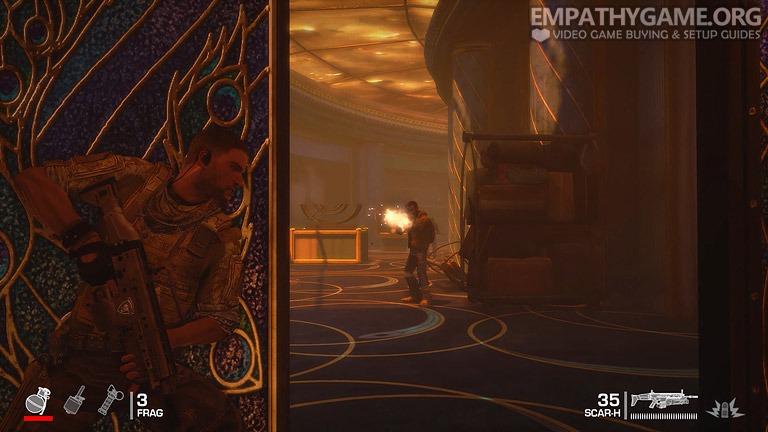
Spec Ops: The Line works partly because it understands how ordinary it looks at first. Captain Martin Walker enters a sand-buried Dubai with Lieutenant Alphonso Adams and Staff Sergeant John Lugo on a seemingly straightforward reconnaissance mission: locate survivors, investigate Colonel John Konrad and the missing 33rd Battalion, then get out. Everything initially resembles an early-2010s military shooter. There is waist-high cover, regenerating health, assault rifles, grenades, squad commands, turret sequences, and constant forward momentum.
That familiarity is both the game’s weakness and its most important design choice. Gunplay has a satisfying snap once its rhythm settles in, but predictable enemies, awkward contextual movement, and similar firing lines rarely produce exceptional combat. What changes the experience is the meaning the campaign gradually gives those actions. Dubai’s unsettling scenery, a deteriorating squad, and a story suspicious of military heroism gradually change how that shooting feels. The question stops being whether Walker can complete the next objective and becomes why he is so determined to reach it. Anyone seeking deep squad tactics may be disappointed. Anyone interested in how a game can turn familiar player habits against their expectations will find considerably more here.
Familiar Cover Combat With Just Enough Bite
The basic loop is easy to understand: find cover, identify dangerous targets, thin the group, advance, and repeat. Walker carries two firearms, so weapon choice depends more on the equipment enemies leave behind than on carefully building a loadout. Assault rifles cover most medium-range engagements, shotguns reward taking risks in close spaces, and sniper rifles become useful when the city opens into longer sightlines. Even executions have a practical purpose. Finishing a wounded enemy replenishes ammunition, making an unpleasant act tempting precisely when resources are running low.
The act of shooting is better than the combat’s reputation sometimes suggests. Aiming is direct, weapons have recognizable recoil and impact, and the cover system becomes comfortable once its timing is understood. Movement is less dependable. Sprinting, vaulting, melee attacks, entering cover, and breaking away from it depend on contextual inputs, so Walker can perform the action the game thinks is appropriate rather than the one the player intended. On normal difficulty, this is usually an irritation. Under heavier fire, being attached to the wrong wall for a second can decide the encounter.
Enemy variety does not do enough to overcome that friction. Riflemen, rushers, snipers, heavy soldiers, and turret positions suggest different priorities, but seldom demand a new strategy. The better battles rely instead on geography. A sniper above the squad, a machine gun controlling a corridor, or an exposed flank can make cover selection matter. In a less carefully arranged arena, there is little beyond waiting for an enemy to reveal himself, firing, and moving to the next wall. Gunplay serves the campaign, but seldom gives the story a reason to step aside.
Squad Commands Add Pressure Without Becoming Tactics
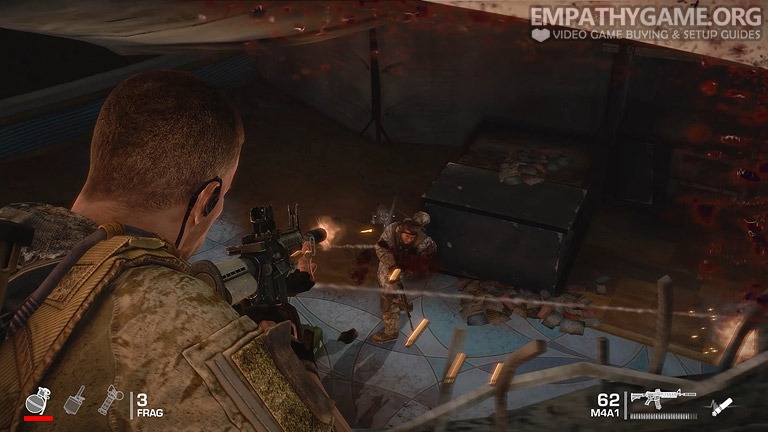
Adams and Lugo give Walker useful options without turning The Line into a squad simulator. Marking a priority target lets the pair concentrate on one threat while Walker deals with another. Lugo is especially helpful against distant enemies and snipers; Adams can supply heavier suppression or explosives against entrenched positions. When a gunner has everyone pinned down, directing the squad toward that one problem can make more sense than exchanging fire with easier targets.
There is a useful limitation here. An exposed enemy may be quicker to shoot directly than to mark and wait for a squad response. Commands therefore require a little judgment instead of functioning as a free elimination button. Still, Adams and Lugo handle most of their own positioning, and there are few opportunities to construct a plan beyond choosing which enemy should go down first. The system supports a sense of teamwork more effectively than genuine tactical freedom.
Its more interesting role emerges through dialogue. The early banter sounds like three professionals managing a dangerous assignment. As the mission unravels, the same commands become sharper, and the responses less assured. Nothing fundamental changes about pressing the squad-order button, yet it no longer feels quite like directing a confident team. That small shift says more about Walker’s leadership than an elaborate command system necessarily would.
Dubai Turns Repetition Into Atmosphere
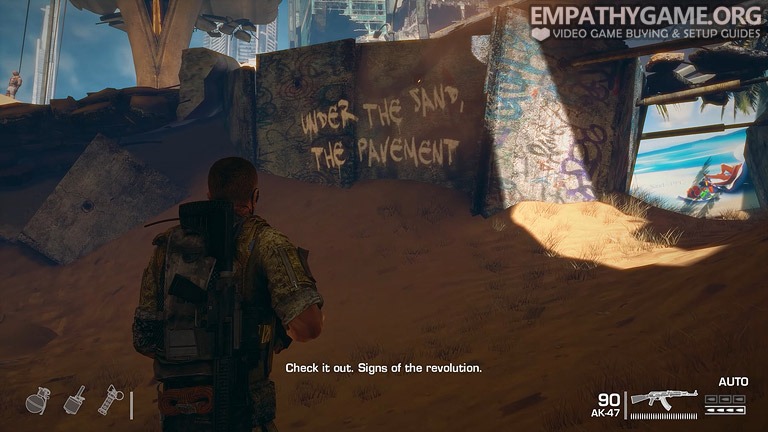
Dubai is the strongest reason to look beyond the ordinary firefights. Rather than offering a believable open city, the campaign leads through striking fragments of one: buried highways, broken hotels, abandoned malls, aquariums, refugee camps, rooftop positions, and luxury interiors invaded by sand. Marble and glass sit beside military barricades and corpses. The destruction never becomes anonymous. This was a place built to display wealth, and nearly every environment shows how little that wealth matters now. Its art direction has aged better than the character animation because the locations still communicate an idea, not merely a level theme.
Sometimes sand becomes a weapon. Shooting a barrier can unleash a trapped mass onto enemies below; grenades throw up dust, while scripted storms shorten sightlines and force closer, less comfortable engagements. These moments feel appropriate to the setting, which makes their limited use disappointing. Sand traps are designed for particular encounters, not a general tool that can be improvised whenever the terrain suggests it. Dubai looks like a place with endless tactical possibilities, but the shooter underneath remains quite controlled.
Brief stealthier passages, rappels, turret sections, and changes in visibility provide enough variety to keep the journey moving. They do not turn the campaign into the dynamic environmental shooter its imagery occasionally promises. The setting is far more inventive than the ways Walker can interact with it, although that difference becomes easier to accept when the city itself is telling so much of the story.
The Short Campaign Knows When to Escalate
The decision to keep The Line compact is more important than it first appears. There are no upgrade trees, crafting systems, sprawling side activities, or opportunities to settle into an open world. Chapters move Walker deeper into Dubai, undermine another assumption about the mission, and push ahead. A larger game might have offered more mechanical variety, but it could also have weakened the relentless movement from reconnaissance toward obsession.
The progression works because the surroundings and the squad change together. Early encounters resemble a difficult rescue operation conducted by disciplined soldiers. Later spaces become more hostile and less believable, while conversations begin to sound like arguments the squad is barely containing. With no comfortable hub to return to, there is little distance between what Walker has just done and what he insists on doing next.
Repetition contributes to that effect, though it should not be excused entirely on thematic grounds. Clearing another group of armed men becomes automatic just as Walker starts treating further escalation as unavoidable. That is a meaningful connection between story and play. It does not suddenly make another ordinary cover arena exciting. If the narrative fails to draw someone in, the same tight campaign may feel like a sequence of similar shootouts. Its restraint matters because it ends before this compromise becomes unbearable.
The Story Turns Shooter Reflexes Into Part of the Argument
What distinguishes The Line is not simply its willingness to depict the horrors of war. It examines a habit military shooters normally reward: trust the objective, assume progress is necessary, shoot the threat, and keep going. Walker increasingly treats continuing the mission as proof of responsibility, even as the original reasons for being in Dubai lose their force. There is something unsettling about how little the usual instructions change while the consequences of following them become harder to defend.
The white-phosphorus sequence brings that idea into focus, along with a serious limitation in the game’s argument. Its remote-weapon presentation initially resembles a familiar military-shooter set piece, inviting efficient targeting before confronting the human cost. As a portrayal of Walker’s choices and the ease with which games package destruction as spectacle, it is powerful. As a judgment of the player, it is less convincing. Progression requires the action, so declining to participate means effectively abandoning the campaign rather than choosing another path. The story raises a difficult question about responsibility without always giving the player the freedom necessary to answer it.
Some smaller decisions handle that tension better. A confrontation may allow shooting, waiting, threatening, or discovering another response through ordinary controls, without announcing a morality test. Around civilians, reacting immediately to movement can cause a much uglier mistake than a missed shot. There is no neat score adjustment to tell the player how to feel about it. Those unmarked moments are persuasive because the game leaves room for an instinct, a hesitation, or an interpretation to belong to the person holding the controls.
The narrative sometimes blurs Walker’s guilt and the player’s agency too conveniently, but that flaw does not cancel its insight. Few shooters are willing to examine their own objective markers, combat rituals, and assumptions about heroic persistence so directly. Even when the criticism overreaches, the mechanics are part of the argument rather than simply the activity between cutscenes.
Walker, Adams, and Lugo Make the Descent Believable
This approach would be much less effective with interchangeable companions. Lugo’s humor and increasingly emotional reactions challenge the squad’s early professional confidence, while Adams brings discipline and loyalty that do not always sit comfortably with what Walker demands. Their disagreements expose the cost of following a leader whose certainty is growing as his judgment becomes less dependable. Those relationships change within the squad that initially made the mission feel manageable.
Nolan North gives Walker that deterioration gradually. Early orders sound controlled and procedural; later they become harsher, and his justifications more defensive. Christopher Reid and Omid Abtahi make Adams and Lugo distinct enough for those changes to register against recognizable personalities. Even routine conversations while moving between encounters are worth listening to, partly because a familiar voice can sound very different after the next decision.
Sound completes much of the atmosphere. The Radio Man’s licensed music lends certain encounters an absurd, menacing, sometimes darkly comic character. Wind, distorted broadcasts, distant announcements, and increasingly aggressive combat chatter make Dubai feel unstable in more than a physical sense. The contrast is deliberate: the presentation can resemble exhilarating military spectacle while the dialogue and surrounding destruction increasingly question what that excitement is built upon.
FUBAR Exposes Both the Combat’s Strengths and Its Weaknesses
Higher difficulties reveal how much pressure the basic systems can carry without changing their nature. On FUBAR, a mistake that would be survivable elsewhere can end an encounter almost instantly. Grenades push Walker out of safe positions, low ammunition makes dropped weapons and executions matter, and a downed companion can turn orderly target selection into a desperate rescue. The limited squad commands become more valuable when one sniper or entrenched gunner is enough to prevent progress.
There is satisfaction in understanding an arena well enough to survive those demands, but the added difficulty also magnifies the least dependable parts of the controls and AI. A companion falling in an exposed spot or Walker attaching himself to the wrong cover is far harder to forgive when death follows immediately. FUBAR makes sense as a severe test for someone who already knows the campaign, not as the best introduction to it.
Beyond difficulty, replay value comes from collecting Intel, revisiting unmarked decisions, exploring alternate ending choices, and noticing how earlier scenes change when Walker’s perspective is better understood. Competitive multiplayer and separate co-op missions exist alongside the campaign, but they do not develop its central ideas in the same way. The strongest reason for returning is narrative: a second visit can change the meaning of a line of dialogue or an apparently straightforward order without changing the encounter itself.
Final Verdict
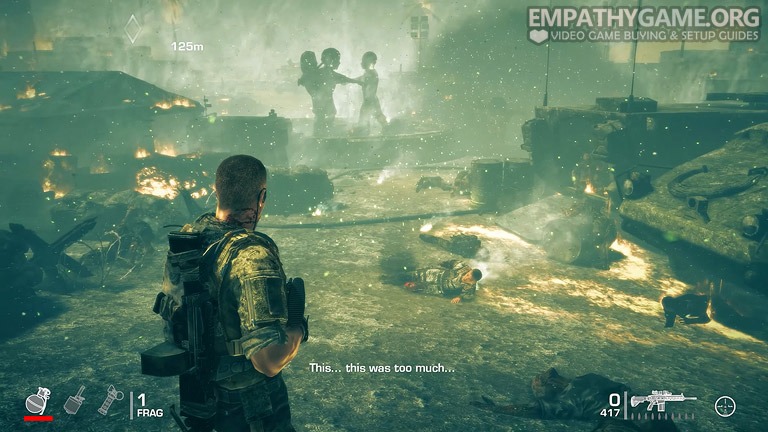
Spec Ops: The Line is easier to admire than to recommend purely for its shooting. Weapons respond well enough, cover combat has occasional bite, and squad commands add useful pressure. But awkward movement, repetitive enemy encounters, and environmental ideas that rarely grow beyond scripted moments prevent it from standing beside the strongest action games on mechanical quality alone.
Its achievement is in what it does with that familiar framework. Dubai’s ruined extravagance, the changing relationships within Walker’s squad, the Radio Man’s unsettling soundtrack, and the unmarked moral responses all give the campaign a direction beyond the next firefight. Its attempts to confront the player are not always fair, particularly when the most consequential actions are mandatory. Yet that contradiction is worth thinking about rather than dismissing, because the game questions the pleasures and assumptions of its own genre.
Anyone seeking fluid modern movement, elaborate squad tactics, or constantly evolving combat will probably find it limited. For players drawn to tightly paced stories, strong performances, and games that make familiar actions feel different by the end, it remains distinctive. The Line has not escaped the mechanical conventions of its era. Its lasting value is that it knows what those conventions can reveal.
Spec Ops: The Line Pros & Cons
- Pro: Psychological military story that challenges conventional shooter heroism and responsibility
- Pro: Memorable sand-buried Dubai environments and increasingly unsettling atmosphere
- Pro: Squad commands, weapons, and scripted sand hazards create occasional tactical pressure
- Pro: Modest original Windows PC hardware requirements
- Pro: Previous legitimate digital owners retain download and play access
- Con: Contextual cover movement and repeated firefights can feel stiff and conventional
- Con: Some central moral moments require specific actions rather than genuine alternatives
- Con: No normal official digital PC purchase route remains for new buyers
- Con: Steam Deck is Unsupported, and some modern display setups require workarounds
Spec Ops: The Line PC System Requirements
Original official Windows PC requirements: These are the launch-era specifications, not a statement of support for the historical operating systems in the current Steam client.
MINIMUM:
OS: Windows XP SP3
CPU: Intel Core 2 Duo @ 2 GHz / AMD Athlon 64 X2 equivalent
RAM: 2 GB
GPU: NVIDIA GeForce 8600 / ATI Radeon HD 2600 XT with 256 MB video memory
DirectX: Version 9.0
Storage: 6 GB available space
Sound Card: DirectX-compatible
Additional: Steam client and one-time internet authentication on initial installation; included software: Microsoft DirectX, Visual C++ 2008 Redistributable, and Visual C++ 2005 SP1 Redistributable
RECOMMENDED:
OS: Windows Vista / Windows 7
CPU: 2.4 GHz quad-core processor
RAM: 3 GB
GPU: NVIDIA GeForce 9800 GTX / ATI Radeon HD 4850 with 512 MB or more video memory
DirectX: Version 9.0
Storage: 10 GB available space
Sound Card: DirectX-compatible
Additional PC Performance and Setup Notes
- The Windows XP, Vista, and Windows 7 entries above are the game’s original published requirements. The present Steam client requires Windows 10 or newer, so those historical OS listings should not be interpreted as current Steam-client support.
- The Windows version is based on an older 32-bit Unreal Engine 3 executable. Modern hardware greatly exceeds the original requirements, but age-related compatibility issues can matter more than raw performance.
- If the game fails to start, verify its files through Steam first and allow the bundled DirectX and Visual C++ redistributables to install before replacing files manually.
- PCGamingWiki’s Spec Ops: The Line page documents game-specific compatibility troubleshooting and links the unofficial Flawless Widescreen fix for non-16:9 aspect ratios. Review its instructions before changing game files or settings.
- Ultrawide and multi-monitor users should expect the original presentation to behave less cleanly than a modern native ultrawide implementation and may need community configuration tools.
- Back up files under the game’s configuration and save locations before using INI edits, graphics modifications, camera tools, cutscene replacements, or gameplay overhauls.
- If a modification causes crashes, broken menus, or missing assets, restore the original files through Steam before stacking additional mods.
Official Trailer
Note: 2K’s official launch trailer introduces Captain Walker, his Delta Force squad, the devastated Dubai setting, sandstorms, military firefights, and the campaign’s increasingly disturbing tone, while this guide adds the present delisting status, legitimate owner download information, PC requirements, Steam Deck notes, mods, and installation guidance.
Frequently Asked Questions
Should I play Spec Ops: The Line without reading story spoilers first?
Yes. Several of the game’s most effective moments depend on the player initially treating it like a conventional military shooter, so major character revelations, moral situations, and ending explanations are better discovered during the campaign. Even knowing that the story becomes darker can change how some scenes are interpreted.
How long is the Spec Ops: The Line campaign?
A first story-focused playthrough usually takes roughly 5–7 hours. Exploring for Intel, replaying chapters, pursuing achievements, trying harder difficulties, and seeing different ending outcomes can extend that considerably.
How do squad commands work in Spec Ops: The Line?
Walker can mark an enemy and order Adams and Lugo to concentrate on that target, while certain situations trigger contextual squad actions. Lugo is particularly useful against distant threats, while Adams can help pressure groups or entrenched enemies, so issuing orders becomes more important on the harder difficulties.
Does the sand actually affect gameplay?
Yes, although many sand interactions are scripted rather than part of a fully dynamic simulation. Players can sometimes shoot or destroy barriers to dump sand onto enemies, explosions can create obscuring dust, and sandstorms reduce visibility during particular combat sequences.
Which difficulty should I choose for a first playthrough?
Combat Op is the most balanced starting point for players familiar with third-person shooters, while Walk on the Beach is useful if the story is the main priority. Suicide Mission is considerably harsher, and completing it unlocks FUBAR, the game’s toughest difficulty.
Do your choices matter in Spec Ops: The Line?
Yes, but not in the form of a large branching campaign. Several situations allow different actions that change immediate scenes, dialogue, flashbacks, or achievements, while the main narrative continues toward the same final confrontation and the decisive ending branches occur near the end.
How many endings does Spec Ops: The Line have?
There are four main ending outcomes, determined by choices made during the finale and its possible epilogue. Earlier moral decisions contribute to the journey and some narrative details, but they do not create four completely different campaign routes.
Can you avoid using white phosphorus in Spec Ops: The Line?
Story spoiler: no. You can attempt to fight the soldiers conventionally, but the encounter is deliberately designed so that progressing requires the white-phosphorus sequence; that lack of a conventional alternative is itself part of what the scene is trying to communicate.
What do the Intel collectibles do?
There are 23 Intel items spread across the campaign. They provide additional context about Dubai, the 33rd, Konrad, refugees, and Walker’s interpretation of events, while collecting them also contributes to several achievements.
Can I replay chapters or continue after finishing the story?
Yes. Previously completed chapters can be revisited through Chapter Select, making it easier to recover missed Intel and revisit decision points without replaying the entire campaign. There is no conventional New Game Plus system, but harder difficulties, achievements, alternate decisions, and ending outcomes provide reasons to replay.
Does Spec Ops: The Line have multiplayer or co-op?
Yes, but the single-player campaign itself is not cooperative. The game includes competitive multiplayer, and it also received four separate two-player cooperative challenge missions with their own objectives, locations, and playable characters.
Does Spec Ops: The Line have split-screen, local co-op, or LAN play?
It does not support two-player split-screen or couch co-op on one PC. The original PC version does include LAN hosting and joining for network multiplayer, while the separate co-op content is designed for two players rather than shared-screen play.
Is Spec Ops: The Line multiplayer still practical to play?
Public multiplayer matching is unreliable for a game of this age and the PC version uses legacy Steamworks and LAN options. Coordinating with other owners through Steam Discussions is more practical than assuming a quick public match will be available.
Why was Spec Ops: The Line delisted, and can existing owners still download it?
2K permanently removed the game from online storefront sale because several partnership licenses associated with it expired. Players who already purchased a digital copy retain their ownership and can still download and play it through the account and library where they originally acquired it.
Does Spec Ops: The Line work on Windows 10 and Windows 11?
The old Windows PC build can run on Windows 10 and 11, but compatibility is not guaranteed for every configuration. For startup trouble, first verify the owned Steam installation and check the game-specific fixes linked in the PC setup notes above.
Does Spec Ops: The Line support controllers on PC?
Yes. Steam lists full controller support, and the PC version was designed around conventional gamepad controls as well as keyboard and mouse. Xbox-style controllers provide the most straightforward experience, while other controller types may depend on Steam Input or their normal Windows compatibility.
Does Spec Ops: The Line work on Steam Deck?
Valve classifies it as Unsupported, not Playable or Verified. Some owners report running it through Proton, but these are unofficial experiences and not a compatibility guarantee.
How disturbing is Spec Ops: The Line?
It contains graphic military violence, civilian casualties, executions, psychological deterioration, suicide-related imagery, traumatic events, strong language, and deliberately upsetting depictions of the consequences of combat. Its disturbing material is central to the story rather than simply background gore, so players sensitive to war trauma or civilian suffering should approach it accordingly.
Still have questions? Check the Spec Ops: The Line Reddit community, Steam Discussions, or 2K Support for additional help and community discussion.
Sources & References
Store status, ownership access, requirements, compatibility, reception, and multiplayer details were checked against these sources:
- PC Gamer — 2K publisher statement — explanation of the game’s removal from digital sale and continued owner re-download rights.
- Official Steam-hosted Spec Ops readme — original Windows system requirements, bundled redistributables, and initial Steam authentication.
- SteamDB — Spec Ops: The Line — retired Steam listing, overall user reception, and Valve’s Steam Deck metadata.
- PCGamingWiki — Spec Ops: The Line — Windows release, Unreal Engine 3, legacy platform history, and community display/configuration advice.
- Metacritic — PC critic reviews — PC-specific 76/100 Metascore.
- Engadget — 2K co-op announcement — separate four-mission, two-player cooperative update for PC and consoles.
Similar Games Like Spec Ops: The Line
- Call of Duty: Modern Warfare 2
- Call of Duty: Black Ops
- Battlefield 3
- Metal Gear Solid 4: Guns of the Patriots
- Tomb Raider (2013)
- 007: Blood Stone




Found something worth playing through DecideGame?
DecideGame.com is an independent gaming project run by Editor Zero. If this guide helped you discover a game, solve a problem, or find useful information, you can support DecideGame.com and help keep new and updated game guides coming.
DecideGame — PC Game Guides, Reviews & Setup Help