
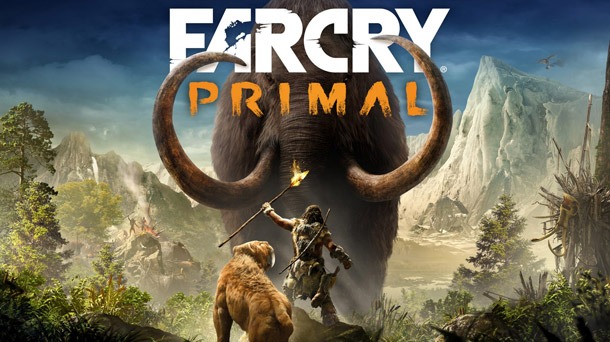
📅 Game released: 2016
Far Cry Primal is a single-player Stone Age adventure in which Takkar hunts, crafts, tames predators, and rebuilds the Wenja tribe in the dangerous open world of Oros. This PC guide compares official purchase and download options, Apex Edition and Wenja Pack contents, Game Pass, Ubisoft Connect, Steam Deck compatibility, system requirements, and common setup issues.
 By Editor Zero — independently researched, edited, and maintained.
Last updated: 13 November 2026
Last reviewed: 13 November 2026
Table of Contents
- Quick Facts
- Official PC Stores, Download & Installation
- Far Cry Primal Review
- Pros & Cons
- PC System Requirements
- Frequently Asked Questions
- Similar Games
Far Cry Primal Quick Facts
- Game: Far Cry Primal (Standard Edition / Apex Edition)
- Developer: Ubisoft Montreal, with Ubisoft Toronto, Ubisoft Shanghai, and Ubisoft Kyiv
- Publisher: Ubisoft
- Genre: Open World, Action-Adventure, Survival, Hunting Action
- Release: February 23, 2016 (PS4 / Xbox One); Windows PC: March 1, 2016
- Platforms: Windows PC, PS4, Xbox One, Stadia (discontinued)
- Modes: Single-player only; no co-op, local multiplayer, or PvP
- Editions / DLC: Standard Edition; Apex Edition includes the Wenja Pack, also sold separately for base-game owners
- Subscriptions: PC Game Pass / Game Pass Ultimate (Microsoft PC listing); Ubisoft+ Classics and Premium tiers vary by edition
- Cloud Access: Xbox Cloud Gaming for the Xbox edition, subject to eligible subscription or ownership conditions
- Steam Deck: Playable; launcher, controller prompts, and online authentication may require additional steps
- Engine: Dunia Engine 2
- Community: Steam Discussions, r/FCPrimal, r/farcry
- PC modding: Nexus Mods (unofficial mods; check version compatibility)
- Metacritic score: 74/100 (Windows PC)
- IGN score: 7.9/10 (same original release)
- OpenCritic average: 77/100 (original release)
- PC Gamer score: 79/100 (Windows PC)
- Steam user reception: Very Positive overall
Official PC Stores, Download & Installation
👇 Compare official PC stores and access options below to purchase, download, and install Far Cry Primal.
- PC availability: The Windows edition is officially available through Ubisoft Store, Steam, Epic Games Store, and Microsoft/Xbox Store.
- Microsoft/Xbox PC: The Microsoft/Xbox PC product page is a genuine Windows PC listing and shows the standard game in PC Game Pass and Ultimate. This PC listing is separate from the Xbox console edition; check the current catalog and region before subscribing.
- Ubisoft+ subscription: Ubisoft lists Standard Edition access with Ubisoft+ Classics and Apex Edition access with Ubisoft+ Premium; subscription content and availability can vary by region.
- Standard Edition: This contains the complete main game, including the Oros campaign, beast taming, village progression, and optional Survivor Mode.
- Apex Edition: This adds three Legend of the Mammoth missions, the Blood Shasti Club, and Sabretooth, Owl, Mammoth, and Bomb enhancement packs with resource or cosmetic bonuses.
- Wenja Pack: The separately sold pack groups the additional missions, weapon, cosmetics, and resource perks for owners of the standard game. Compare its price with Apex Edition and check storefront compatibility before buying the add-on; Ubisoft warns that its own DLC is for Ubisoft-purchased base copies.
- Ubisoft Connect: The game needs a Ubisoft account and Ubisoft Connect on Windows. Steam supports linking its account to Ubisoft; purchasing through another store does not remove the Ubisoft requirement.
- Denuvo: Steam and Epic identify Denuvo anti-tamper technology, while Steam specifies a limit of five different PC activations within one day.
- Steam: Steam sells the Standard and Apex editions and includes Steam achievements and partial controller support, but still requires Ubisoft authentication.
- Epic Games Store: Epic sells both editions and lists the same official 20 GB Windows requirements; Ubisoft account and activation conditions still apply.
- Internet requirement: Ubisoft lists high-speed internet for activation, authentication, and re-activation. Valve’s Steam Deck compatibility notes specifically flag an active connection for first-time setup and single-player gameplay; do not count on fully offline, launcher-free use.
- Steam Deck: Valve rates it Playable rather than Verified. Default Deck graphics perform well, but some functions require touchscreen, virtual keyboard, or a community controller layout; non-Deck button prompts and authentication can add friction.
 Buy This Game on Ubisoft Store

 Buy This Game on Epic Games Store
 Buy This Game on Microsoft / Xbox Store

Far Cry Primal Review
A prehistoric Far Cry where the wilderness matters as much as the enemies.
Far Cry Primal removes much of what normally defines the series. No assault rifles, jeeps, rocket launchers or modern surveillance tools. Instead, its version of 10,000 BC gives you a bow, a handful of spears, fire and an uneasy relationship with the animals sharing your territory. The familiar open-world structure remains, but taking away modern weapons changes what ordinary travel and combat ask of the player.
You play as Takkar, a Wenja hunter stranded in Oros after his group is attacked. He sets about finding the scattered Wenja, rebuilding their village and resisting the Udam and Izila tribes. It is a straightforward premise, and the game is often more interesting in the spaces between story missions. A journey to rescue a survivor can become a hunt, a cautious detour around predators or an unexpected fight in the dark. That willingness to let the landscape interrupt your plans gives Far Cry Primal its identity.
A Brutal Prehistoric World
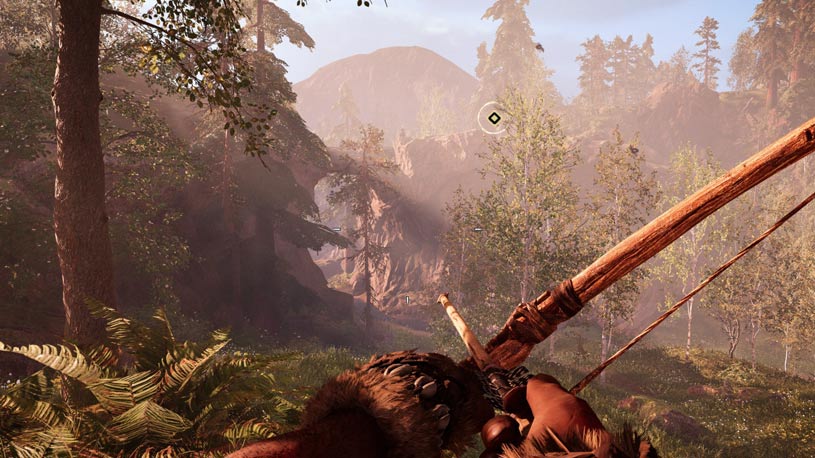
Oros moves between thick forests, cold mountain paths, wetlands, rivers and caves, with tribal settlements scattered among the hunting grounds. The scenery can look peaceful, but it rarely feels completely safe. The absence of vehicles makes distance and terrain more noticeable. Crossing a stretch of forest on foot feels different from driving past its dangers in a typical Far Cry game, especially when a hostile animal can turn a simple gathering trip into a scramble for shelter.
There is an effective rhythm to gathering wood and stone, hunting for skins, collecting healing plants, rescuing Wenja and returning to the village with useful materials. Each activity supports another. Better bags allow longer trips, stronger weapons make the hunt less risky, and specialists brought home expand Takkar’s abilities. The loop is familiar open-world design, yet its rewards usually make sense within the survival fantasy rather than feeling like unrelated menu upgrades.
Night changes how that world is read. Darkness conceals predators, animal cries become harder to place, and a burning club can feel more reassuring than a weapon with greater reach. Fire offers protection but also makes stealth less comfortable. The contrast matters: Oros is inviting enough to explore slowly by daylight, then capable of making the same route feel hostile after sunset. The Udam and the more ritualistic Izila add human dangers, although their role in the story is less subtle than the wilderness itself.
The people of Oros have a character of their own, too. Sayla’s anger at the destruction of the Wenja gives the early village a sense of loss, while Tensay’s strange rituals connect Takkar’s growing bond with animals to the tribe’s beliefs. The constructed spoken languages help maintain that separation from a modern setting, even if reading subtitles can distance the player from the performances. Individual villagers stand out more than the broader plot, which too often reduces the conflict with rival tribes to another sequence of targets.
Caves are an especially divisive part of exploration. Their turns and narrow passages can demand genuine attention to where you entered. Following previously lit torches back through a cave, or stopping to examine paintings on its walls, can be more satisfying than simply chasing a map marker. Equally, getting lost after securing the objective may feel like needless friction. Far Cry Primal sometimes trusts the player to navigate in ways that modern open worlds often avoid.
Mastering the Beasts
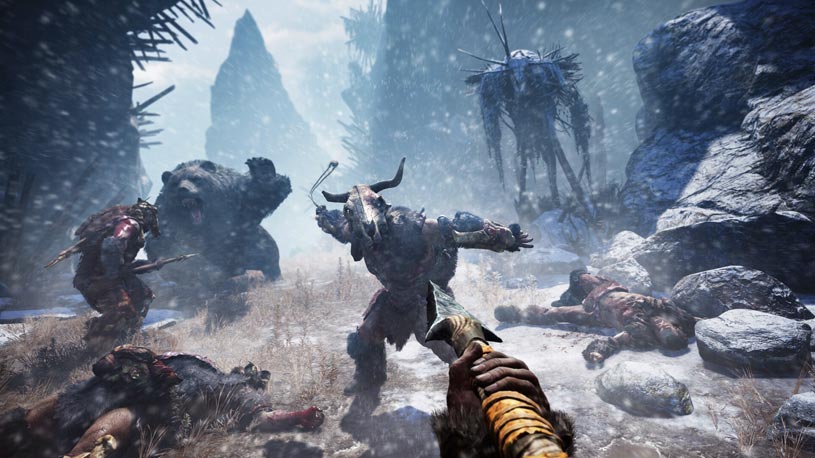
The Beast Master system is the clearest sign that this is more than Far Cry with older weapons. Takkar can tame predators and command them while exploring or attacking camps. A wolf helps track threats and offers reliable support; a jaguar suits quieter attacks; a bear can draw attention and absorb punishment. The fast, aggressive sabretooth changes the confidence with which you approach dangerous ground. Choosing a companion therefore changes the way an encounter begins, not merely how much damage Takkar can deal.
The owl fills a different role. It surveys a camp from above, marks guards and helps identify alarm positions before Takkar approaches. It is effectively the series’ reconnaissance tool translated into something believable for this setting. The pleasure comes from connecting that information with a plan: distract an archer with a beast, slip through vegetation and disable the horn before the camp reacts.
These systems are not completely obedient. A companion close to Takkar can occasionally crowd a narrow route or move awkwardly during a careful infiltration. That makes stealth-oriented animals useful but not automatically discreet. At times, leaving a beast farther away and relying on the bow is the more controlled option. Conversely, when an ambush goes wrong, commanding a predator to occupy a dangerous enemy can create exactly the breathing room needed to heal or retreat.
Survivor Mode gives beast mastery a more serious cost. Powerful predators must be weakened before taming, and a companion that dies cannot simply be restored from the menu. Ordinary animals can be replaced by finding another, but losing a unique legendary beast can be permanent. A bear charging into a fortified camp is suddenly not a disposable solution. It is a risk to an ally you may have spent considerable effort obtaining. That single rule makes the bond between hunter and beast more convincing.
Survival With Limited Resources
Removing firearms makes combat closer and more deliberate. Bows support hunting and quiet camp clears, spears deliver heavy damage but leave Takkar exposed when thrown, and clubs are dangerous precisely because using them means getting close enough to be hit. Fire, shards, bait and traps broaden the possibilities without disguising the limited arsenal. A weapon that works well against a lone animal may be awkward when several warriors and archers attack together.
Gathering is constant, but there is a practical reason to care about skins, reeds, wood and rare resources. Better equipment improves carrying capacity and survivability, while successful hunts support crafting and village development. Searching for a particular animal can give the landscape a purpose beyond reaching the next icon. There is also a limit to this pleasure: after enough hours, routine material collection starts to resemble the familiar Far Cry checklist rather than a test of survival.
That tension is most apparent when comparing the standard campaign with Survivor Mode. In the latter, human and animal encounters are less frequent, supplies are scarcer, stamina must be maintained through food and rest, and fast travel carries a cost. A quieter forest is not necessarily a safer one. When prey is less abundant, finding food and choosing when to travel require more thought. Survival becomes a pattern of decisions across the journey rather than something that happens only when the health bar runs low.
The standard settings are more forgiving, which suits players interested primarily in exploration and beast companions. Survivor Mode, particularly with optional permadeath, can make Oros more immersive for those who want every mistake to matter. It also makes some mechanics slower and more demanding. Neither approach is automatically better; the question is whether gathering and preparation are part of the enjoyment or obstacles between more interesting encounters.
The growing Wenja village gives those efforts a human purpose. Recruiting specialists unlocks more skills and upgrades, while rescuing tribe members suggests that Takkar is helping something larger than himself survive. Small discoveries reinforce that idea. Wenja bracelets, for example, carry a connection to the tribe’s ancestors that makes searching for them feel more personal than collecting another anonymous resource. The central story rarely develops its characters deeply, but these environmental details give the campaign’s rebuilding theme some weight.
Combat, Stealth, and Outpost Freedom
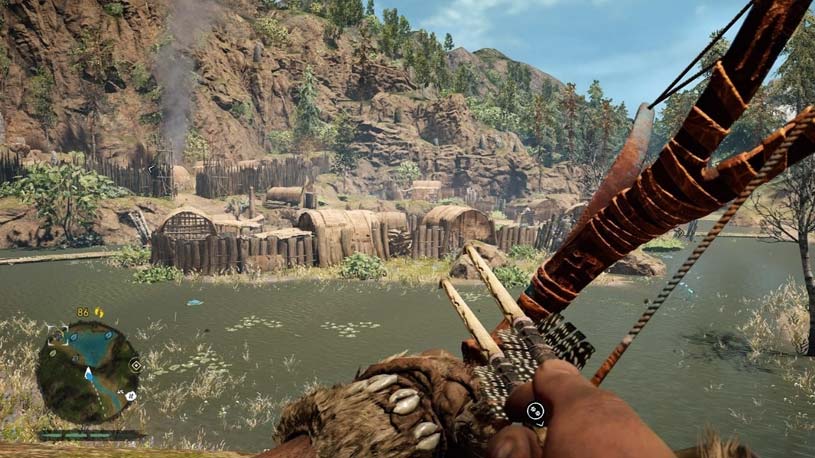
Enemy camps still provide the most recognizable Far Cry encounters. Scouting from cover, identifying alarm horns, finding an approach through grass and deciding whether to remain silent or start a fight all feel familiar. Far Cry 3 offers the closest comparison in structure, but its silenced firearms, explosives and vehicles make mistakes easier to resolve at a distance. In Primal, approaching the same sort of objective with arrows, spears and a restless animal companion leaves less separation between planning and danger.
Stealth can be satisfying because it encourages patience. A carefully placed arrow removes a sentry, a thrown bait distracts a predator, and an owl sighting reveals a safe path around a camp. When something breaks the plan, combat becomes rougher: clubs swing at close range, archers keep up pressure and fire can turn both cover and escape routes against Takkar. These overlapping systems are more interesting than the individual melee moves, which remain fairly simple.
Enemy equipment occasionally forces a more thoughtful response. A heavily armored warrior’s helmet can shrug off attacks that would drop an ordinary guard, so repeatedly aiming at the head is not always the smart answer. Changing targets, using a takedown or creating an opening through distraction gives weapon choice a purpose beyond raw damage. The distinction is welcome because ordinary melee exchanges do not offer much technical depth, and the same camp patterns can become predictable.
The open-world freedom has an unusual downside as well. Clearing outposts makes routes safer, which initially feels like meaningful progress for the Wenja. But liberating too much territory before advancing the story can leave later journeys with fewer hostile interruptions. The player is allowed to reduce the tension that makes Oros compelling. It is an understandable consequence of reclaiming land, though one that can flatten the campaign’s pacing if the map is cleared too methodically.
Progression and Replayability
Takkar grows through skill trees, crafted equipment, village improvements and beast abilities rather than traditional character classes. Combat, survival, stealth, healing and gathering upgrades provide different priorities. A cautious hunter might develop scouting and quiet takedowns first; someone who enjoys direct fights can favor stronger weapons and more capable companions. The freedom is useful, although advanced skills gradually make the early sense of vulnerability harder to sustain.
There is a less obvious limit to progression. Experience from kills and collectibles eventually reaches a ceiling even when some skills remain locked. At that point, completing side missions that award skill points matters more than doing another round of general hunting. For a completion-focused player, this changes the logic of the late game: not every activity continues contributing to the abilities still missing.
Most replay value comes from changing approaches to outposts, using different beasts or choosing a more demanding survival setup. The story follows a largely fixed path, and the number of distinct combat tools never expands enough to prevent some repetition. Far Cry 5 offers a larger modern sandbox with vehicles, firearms and broader encounter variety, but it does not reproduce the particular pleasure of planning a hunt on foot through Oros.
Primal works best when exploration is allowed to interrupt the campaign without turning every map icon into an obligation. There is satisfaction in becoming a capable hunter, but rushing to own the entire map can diminish the uncertainty that made the first few hours exciting.
Final Thoughts
Far Cry Primal is at its best when it makes ordinary movement feel consequential. Night hunting, the sounds of nearby predators, scouting with an owl and deciding whether to risk a valuable companion give familiar Far Cry systems a different emotional weight. The village and the scattered traces of Wenja history help tie those activities to Takkar’s purpose, even when the story itself remains fairly thin.
Its weaknesses are real: straightforward melee combat, repeated camp objectives and progression that can eventually remove too much danger from the world. Survivor Mode restores some of that pressure, but its slower pace will not appeal to everyone. Players who enjoy unhurried exploration, stealth and making do with limited tools have the strongest reason to visit Oros. Those looking for varied gunfights or a heavily scripted narrative may miss what the other games provide. This experiment works because its wilderness, not its mission list, is what stays with you.
Far Cry Primal Pros & Cons
- Pro: Oros creates a distinctive prehistoric wilderness filled with predators, rival tribes, caves, forests, and dangerous nights
- Pro: Beast companions and owl scouting give combat, stealth, travel, and exploration a clear identity
- Pro: Hunting, crafting, village growth, primitive weapons, and outpost attacks feed one coherent progression loop
- Pro: Survivor Mode and optional permadeath provide a harsher alternative without replacing the accessible standard campaign
- Con: Side activities and enemy camps become repetitive during long completion-focused sessions
- Con: Limited weapon variety, simple melee combat, and a restrained story may disappoint players expecting a traditional Far Cry shooter
- Con: Ubisoft Connect, Denuvo, active-internet requirements, and older PC quirks can complicate an otherwise single-player game
Far Cry Primal PC System Requirements
MINIMUM:
OS: Windows 10 64-bit
CPU: Intel Core i3-550 or AMD Phenom II X4 955 or equivalent
RAM: 4 GB
GPU: NVIDIA GeForce GTX 460 with 1 GB VRAM or AMD Radeon HD 5770 with 1 GB VRAM or equivalent
DirectX: Version 11
Storage: 20 GB available space
Internet: High-speed connection required for activation, authentication, and re-activation
Additional: Valid Ubisoft account; Windows-compatible keyboard and mouse, headset, or optional controller
RECOMMENDED:
OS: Windows 10 or Windows 11, 64-bit (Ubisoft current listing)
CPU: Intel Core i7-2600K or AMD FX-8350 or equivalent
RAM: 8 GB
GPU: NVIDIA GeForce GTX 780 or AMD Radeon R9 280X or equivalent
DirectX: Version 11
Storage: 20 GB available space
Internet: High-speed connection required for activation, authentication, and re-activation
Additional: Valid Ubisoft account; laptop versions of listed GPUs may work but are not officially supported
Ubisoft lists Windows 10 as the minimum supported OS and Windows 10 or Windows 11 as supported recommended operating systems. The CPU and GPU levels above are original-era requirements, not tested performance guarantees for every modern system.
Far Cry Primal Official Trailer
Frequently Asked Questions
Can Far Cry Primal be played offline on PC?
Do not assume an unrestricted offline experience. Ubisoft requires online activation and re-authentication, and Valve’s Steam Deck compatibility data flags internet access for setup and single-player play. Your ability to launch while disconnected can depend on previous activation and Ubisoft Connect.
Does Far Cry Primal have co-op or multiplayer?
No. The campaign and optional challenge settings are single-player only, with no online co-op, split-screen, competitive multiplayer, or cross-play.
What does Survivor Mode change, and is permadeath required?
Survivor Mode makes stamina, resource gathering, travel, and wildlife more demanding, but permadeath is optional. With full permadeath enabled, a death can end the entire run, so it is best reserved for players who want high-stakes survival.
Can a tamed beast be permanently lost?
Yes, under Survivor Mode rules, a dead companion cannot simply be revived through the usual menu. Ordinary beasts may be tamed again, but losing a unique legendary beast can be permanent; consider sending it into a heavily defended camp carefully.
How do you tame beasts and unlock riding?
Follow Tensay’s Beast Master progression, use bait to approach eligible predators, and unlock the skills needed for more demanding animals. Riding requires separate skills for eligible beasts; not every species can be ridden.
Which upgrades should beginners prioritize?
Upgrade carrying capacity, healing, bows and spears, and the village specialists who unlock useful skills. Owl reconnaissance and a reliable early beast are especially useful for disabling camp alarms before enemies call reinforcements.
Which edition should existing owners buy for the extra content?
Standard Edition owners should compare the separately sold Wenja Pack with upgrading to Apex Edition. Both provide the bonus mammoth missions and extras; check which add-on is compatible with the storefront where you own the base game before purchasing.
Does Far Cry Primal require Ubisoft Connect even when purchased on Steam?
Yes. A Ubisoft account and Ubisoft authentication are required on Windows; Steam’s listing specifically identifies third-party account linking and Denuvo anti-tamper. Buying it on another launcher does not make the game DRM-free.
Does Far Cry Primal work on Windows 11?
Ubisoft’s current PC specifications list Windows 11 among supported recommended operating systems. Keep Ubisoft Connect and GPU drivers updated, and remember that the old published CPU/GPU tiers are not modern benchmark results.
Why is the HD Texture Pack option missing in the Steam version?
A documented Steam installation issue can leave the HD texture files in the main game folder instead of the game’s texture directory. If present, back up primal_main_hd_tex.dat and primal_main_hd_tex.fat, move the two files to data_win32/worlds/primal_main/ inside the game installation, then restart and check Video settings. See the PCGamingWiki instructions if your installation layout differs; do not download replacement game files from unofficial archives.
Why do the characters speak unfamiliar languages instead of English?
Wenja, Udam, and Izila dialogue uses constructed prehistoric-inspired languages as part of the setting. The game relies on localized subtitles and menus rather than replacing that spoken dialogue with modern English.
Can you keep playing after completing the story?
Yes. You can continue exploring Oros and work on unfinished hunts, village improvements, collectibles, camps, and side activities. The main campaign is not built around major branching endings.
Does the console 60 FPS update change the PC version?
Ubisoft’s 60 FPS update specifically targeted PS5, PS5 Pro, and Xbox Series X|S backward-compatible versions. It is not a separate new Windows PC edition or an overhaul of the PC system requirements.
Does Far Cry Primal work on Steam Deck?
Valve rates it Playable, not Verified. It can run on SteamOS, but some actions may need the touchscreen, virtual keyboard, or a community controller configuration; online authentication is also flagged.
Still have questions? Check the Far Cry Primal subreddit, Steam Community discussions, or official Ubisoft Help for game-specific discussion and support.
Sources & References
Key PC availability, gameplay-mode, technical, and edition details were checked against these sources:
- Ubisoft — Far Cry Primal — first release, editions, subscriptions, Ubisoft Connect, and modern PC operating-system guidance.
- Steam — Far Cry Primal — Windows editions, user reviews, account linking, controller support, and Denuvo.
- Xbox — Far Cry Primal for PC — Microsoft Windows listing and eligible PC Game Pass plans.
- Epic Games Store — Far Cry Primal — PC release date, Windows requirements, and professional review references.
- Ubisoft News — 60 FPS console update — supported backward-compatible console versions.
- SteamDB — Steam Deck compatibility — Valve’s Playable status, controls, and online setup notes.
- PCGamingWiki — Far Cry Primal — Steam HD texture-file placement and practical troubleshooting context.
Similar Games Like Far Cry Primal






Found something worth playing through DecideGame?
DecideGame.com is an independent gaming project run by Editor Zero. If this guide helped you discover a game, solve a problem, or find useful information, you can support DecideGame.com and help keep new and updated game guides coming.
DecideGame — PC Game Guides, Reviews & Setup Help