
📅 Game released: 2012
Call of Duty: Black Ops II connects a Cold War conspiracy with a near-future conflict through a branching single-player campaign, fast competitive multiplayer, and ambitious Zombies maps. This PC guide compares official Steam and Microsoft Store purchase and download options, Digital Deluxe and Season Pass content, system requirements, online considerations, Steam Deck support, and practical setup advice.
 By Editor Zero — independently researched, edited, and maintained.
Last updated: 14 November 2026
Last reviewed: 14 November 2026
Table of Contents
- Quick Facts
- Official PC Stores, Download & Installation
- Call of Duty Black Ops II Review
- Pros & Cons
- PC System Requirements
- Frequently Asked Questions
- Similar Games
Call of Duty Black Ops II Quick Facts
- Game: Call of Duty: Black Ops II (2012 original PC release); separate Microsoft Store Windows edition
- Developer: Treyarch
- Publisher: Activision
- Genre: First Person Shooter (FPS), Multiplayer, Co-op Shooter, Zombie Games
- Release: November 13, 2012 (original game on Windows PC and consoles); Microsoft Store Windows edition: December 19, 2024
- Platforms: Windows PC, PS3, Xbox 360, Wii U; PS4 and PS5 rereleases; backward-compatible Xbox One and Xbox Series X|S
- Steam Deck: Unsupported (Valve rating for original Steam game and its multiplayer/Zombies components)
- Engine: Treyarch-modified IW engine (Black Ops II engine, evolved from the original Black Ops technology)
- Campaign: Single-player, linked 1980s and 2025 storylines, mission loadouts, Strike Force missions and branching outcomes
- Multiplayer: Online competitive modes, Pick 10, Scorestreaks, League Play and Combat Training; no confirmed modern cross-platform matchmaking
- Zombies: Solo and online co-op, TranZit, Survival, Grief, Nuketown Zombies and DLC maps
- Main DLC: Revolution, Uprising, Vengeance and Apocalypse; Nuketown Zombies sold separately or included in eligible packages
- Anti-Cheat: Valve Anti-Cheat is listed for relevant original Steam multiplayer components
- Online Status: Activision lists official online support; available matches vary by platform, region and playlist
- Community: Steam Discussions, Black Ops II Reddit, Activision Support
- PC modding: No official Steam Workshop support is listed; keep unofficial game modifications away from official online sessions
- Metacritic score: 74/100 (original Windows PC release)
- IGN score: 9.3/10 (original multiplatform Black Ops II review)
- Steam user reception: Very Positive overall (original Steam release)
Official PC Stores, Download & Installation
👇 Compare the official Steam and Microsoft Store Windows PC purchase, download and installation options, including which editions and DLC belong to each storefront.
- Official PC storefronts: The original Windows game is offered through Steam; a separate Microsoft Store / Xbox app Windows edition is also sold. Neither is the modern Call of Duty HQ release.
- Steam base game: Includes the campaign, competitive multiplayer and core Zombies experience. Steam lists the main game alongside distinct Multiplayer and Zombies components, so check the selected mode when installing or verifying files.
- Steam Digital Deluxe: Steam still lists a Digital Deluxe Edition. The original package included Nuketown Zombies, cosmetic bonuses, the soundtrack and Call of Duty: World at War; it is not the same as buying every Black Ops II map pack.
- Steam bundle: Steam also offers a Black Ops II bundle that combines the base game with additional DLC content. Check its live package details and compare the total with the base game plus Season Pass before paying.
- Steam Season Pass: Adds the four major map packs—Revolution, Uprising, Vengeance and Apocalypse—plus Nuketown Zombies and a calling card. Steam says it requires the base game and warns Pass owners not to buy included packs again.
- Microsoft Store Season Pass: Microsoft sells a separate Windows PC Season Pass listing the four main map packs. It specifically requires the Microsoft Store PC version; do not assume a Steam Pass or Steam DLC will work with it.
- Revolution: Adds four competitive maps, the Peacekeeper SMG, Die Rise for Zombies and the Turned variant of Zombies.
- Uprising: Adds four competitive maps and Mob of the Dead, the Alcatraz-set Zombies adventure with the Afterlife mechanic.
- Vengeance: Adds four competitive maps and Buried for Zombies; the Ray Gun Mark II is also available to owners of the pack.
- Apocalypse: Adds four competitive maps and Origins, the First World War-inspired Zombies map built around elemental staffs and large-scale quests.
- Nuketown Zombies: The map has a standalone Steam listing and is included in Steam Season Pass ownership. Check the exact contents of other storefront packages before paying separately.
- Separate licenses and saves: Steam and Microsoft Store purchases are not interchangeable and do not grant each other’s DLC. Steam lists Steam Cloud, while the Microsoft PC product lists Xbox cloud saves; do not assume automatic cross-store progression or save transfer.
- Game Pass and multiplayer: The Microsoft listing presents a paid PC purchase, not a confirmed PC Game Pass inclusion. It says cross-platform multiplayer is not supported; there is no verified promise of shared Steam–Microsoft PC matchmaking. Buy the same ecosystem as your friends unless compatibility is specifically confirmed.
- Official online play: Activision continues to publish Black Ops II service and connection support, but online status does not guarantee busy matchmaking, clean public lobbies or protection from malicious users. Avoid untrusted game executables and modified public sessions.
- Steam Deck and console versions: Valve rates original Steam Black Ops II Unsupported on Steam Deck. The PS4/PS5 rerelease and backward-compatible Xbox console release are separate purchases, not entitlements to either Windows edition.
 Buy Black Ops II on Steam — Compare Editions
Buy Black Ops II Season Pass on Steam
View Black Ops II DLC on Steam
 Buy Black Ops II for Windows on Microsoft Store
View Microsoft Store PC Season Pass

Call of Duty: Black Ops II Review
A Cold War conspiracy and a future conflict that give players more control than Call of Duty usually allows.
Call of Duty: Black Ops II looks like another tightly directed military blockbuster until its decisions begin following the player into later missions. One timeline returns to Alex Mason and Frank Woods in the 1980s. The other follows David Mason in 2025, facing Raul Menendez and a movement capable of turning networked military technology against its owners. Between the two, Treyarch delivers the usual gunfights and spectacle, but also experiments with campaign consequences, customizable equipment and ways to approach familiar situations.
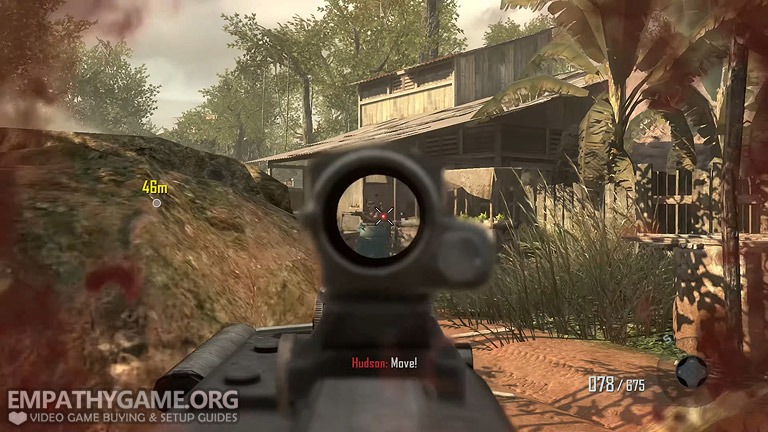
That willingness to change the formula extends to multiplayer’s Pick 10 classes and to Zombies, where TranZit stretches survival across several locations. Some experiments are better ideas than finished systems. Strike Force struggles with unreliable squad AI, and TranZit often makes travel more irritating than survival. Even the failures are revealing: this is a sequel more interested in giving established modes new possibilities than simply making everything louder.
Two Timelines Give the Campaign Different Rhythms
The 1980s chapters bring back the rifles, exposed terrain and covert operations associated with the original Black Ops. Their real purpose is to establish the history between Mason, Woods and Menendez. In the 2025 missions, advanced optics, drones and prototype weapons change how threats are found and tackled. Switching periods gives the campaign variety beyond a change of scenery, even though the underlying shooting remains recognizably Call of Duty.
There is something oddly interesting about its future setting now that the real calendar has passed 2025. Black Ops II’s drones and connected warfare resemble an alternate military future imagined in 2012. Some concepts feel plausible, while others have the exaggerated confidence of science fiction. That contrast suits a story in which technology matters, but old personal grievances still determine how it is used.
Large explosions, vehicle sequences and sudden changes of pace remain central. Players familiar with Battlefield 3 will recognize the period’s enthusiasm for cinematic military scale. Treyarch’s distinction is to build that spectacle around a family conflict whose consequences cross decades.
Campaign Loadouts Make Familiar Missions More Personal
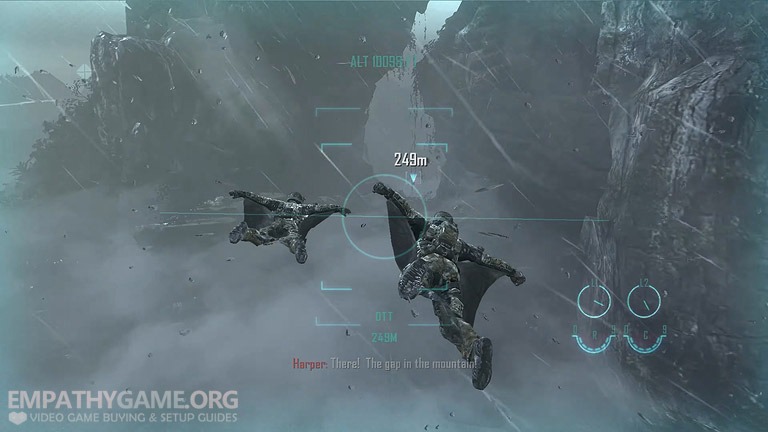
Before many missions, the player can select weapons, attachments and equipment rather than accept a fixed arsenal. It sounds like a modest concession, but it changes the preparation for firefights. A shotgun can be chosen for a mission with tight interiors; a preferred rifle can travel into an encounter where the level would otherwise dictate the available weapons. Equipment starts reflecting a playstyle instead of merely serving the script.
The campaign is still linear. Allies trigger scenes, objectives arrive in a planned order and most battles happen in predetermined spaces. The freedom lies in how those spaces are handled, especially when replaying with a different weapon class. Compared with Call of Duty: Modern Warfare 2, which draws much of its force from controlling the next moment, Black Ops II lets the player make a few useful decisions before that moment arrives.
Campaign Choices Matter Because Consequences Persist
Branching decisions would be little more than decoration if every outcome disappeared after the next loading screen. Here, character fates, failed objectives and geopolitical circumstances can influence later events. The main campaign route does not split into several entirely different games, but a decision can remain relevant long after the mission that introduced it.
That persistence makes mistakes more interesting. An unsuccessful optional operation can become part of the story instead of being erased by an automatic restart. A surviving character may matter again. The different endings emerge from accumulated outcomes, not simply a final choice made after everything important has already happened.
Rewind Story reinforces the connection between events. To alter a consequence, the player returns to an earlier point and carries the changed history forward. It is less convenient than selecting an ending from a menu, but more consistent with the campaign’s underlying idea: these choices are linked, even when the levels themselves remain heavily authored.
Strike Force Is a Strong Concept Undermined by Its AI

Strike Force missions try to combine tactical command with direct first-person action. Units can receive orders from an overhead perspective, while the player can take control of individual soldiers or machines when a situation demands immediate intervention. Their outcomes also contribute to campaign consequences, giving what could have been a disconnected side mode a reason to exist.
The problem appears when those orders must be carried out. Friendly AI can position itself poorly, respond inefficiently or fail to manage threats that a human-controlled soldier could handle quickly. Instead of directing a capable force, the player can end up switching units simply to finish basic tasks personally. That weakens the whole command fantasy. Strike Force deserves credit for its ambition, but its execution repeatedly argues against trusting the tactical tools it introduces.
Menendez Makes the Technology-Heavy Story Human
Raul Menendez prevents the 2025 plot from becoming only a collection of drones and cyberwarfare threats. The 1980s missions establish his history with Mason and Woods, allowing the later conflict to grow from resentment rather than an anonymous plan for world domination. His actions are extreme and his methods indefensible, but the story gives his anger an understandable origin.
Woods is just as important. His older self carries the memories and consequences of the earlier conflict, while David Mason inherits a struggle he did not begin. That relationship gives the alternating timelines a stronger purpose than simply comparing old and new military hardware. Beneath the extravagant action, Black Ops II is unusually concerned with what one generation leaves for the next.
Pick 10 Gives Multiplayer Classes Real Trade-offs
Pick 10 is the multiplayer change with the clearest long-term value. Weapons, attachments, perks, grenades, tactical equipment and Wildcards all draw from one shared point budget. Instead of filling a set of compulsory categories, players decide which parts of a loadout deserve space at all.
A secondary weapon or tactical grenade can be dropped to improve a primary firearm. Wildcards bend the usual equipment restrictions, but cost points themselves. An intentionally empty slot is therefore not a failure to finish a class. It can be evidence that the player values another advantage more.
The interesting part is how this changes the meaning of unlocking equipment. Having access to an attachment does not make it an automatic upgrade; choosing it requires giving something up. That tension keeps class building engaging, whether the goal is a specialized close-range weapon or a more adaptable setup.
Shotguns Reveal the Precision Behind the Fast Gunplay
The R870 MCS shows why a focused multiplayer class can be satisfying. A successful close-range encounter depends on movement, target acquisition and getting the first shot right. Enter a room at the appropriate distance and the fight may end instantly. Miss, hesitate or cross an open sightline, and an assault rifle or SMG can exploit the shotgun’s limitations.
Pick 10 helps because the entire class can be tailored to those risks. Perks, attachments and equipment become parts of the same close-range plan instead of accessories surrounding a weapon choice. On PC, mouse aiming can suit quick turns and snap shots, although how comfortable that feels still depends on the player rather than granting every mouse user an automatic advantage.
Scorestreaks Make Playing the Objective More Rewarding
Replacing traditional Killstreaks with Scorestreaks changes the incentives inside multiplayer matches. Kills still count, but captures, assists and other useful contributions can also move a player toward a UAV or a more powerful reward. In Domination and Hardpoint, that matters because progress toward a personal reward can come from helping the team do what the mode actually asks.
It does not make every lobby cooperative, and players can still pursue kills at the expense of objectives. The improvement is more practical: the scoring rules stop treating objective work as a distraction from progression. Together with Pick 10, the system gives players more freedom over both their preparation and the kind of contribution they make during a match.
TranZit Makes Travel Part of Zombies, Sometimes Too Much
TranZit links Green Run’s separate areas through a bus route, adding buildable equipment, power activation and environmental hazards to the usual fight against escalating undead waves. A team must think about where its members are, when transportation will arrive and whether someone stranded between stops can survive long enough to regroup. The distance between areas creates stories that a compact survival map cannot.
Unfortunately, distance also becomes the main frustration. Fog obscures routes, lava punishes careless movement and Denizens make travelling on foot exhausting. Missing the bus can turn a simple separation into a lengthy recovery. The strongest moments come from a group improvising around that danger; the weakest come when the obstacles seem designed mainly to slow movement. TranZit is memorable for attempting something larger, not because every part of that journey is enjoyable.
Zombies Has More Identities Than TranZit Alone
Black Ops II’s Zombies offering works best when treated as several approaches to survival. The smaller Green Run Survival areas, including Town and Bus Depot, strip away the long-distance bus journey for more immediate rounds of weapons, perks and crowd control. Grief introduces two competing human teams who face the same undead pressure, creating rivalry without simply turning Zombies into ordinary deathmatch.
The additional maps explore more demanding ideas. Die Rise’s vertical layout makes navigation dangerous. Mob of the Dead gives Alcatraz a distinct atmosphere and uses Afterlife to connect survival with puzzle-solving. Buried’s underground Western town allows a looser style of experimentation, while Origins adds generators, elemental staffs, mud and giant machines to an elaborate quest structure.
These maps are uneven in complexity, but that variety is valuable. A straightforward round-based session and a long, systems-heavy adventure ask for different kinds of attention. Not every player wants both, and Black Ops II is better for offering that choice rather than forcing the TranZit formula across the entire mode.
A Short Campaign With a Reason to Return

The main campaign is compact, especially when Strike Force and optional challenges receive little attention. That brevity might be disappointing for someone looking for a long military adventure, but it fits a game built around consequential replays. Revisiting an early decision, changing a loadout or handling an optional mission differently gives another run a purpose beyond selecting a harder difficulty.
Campaign challenges and collectible intel offer conventional completion goals. The stronger motivation is curiosity about what changes when the player refuses to repeat the same choices. Black Ops II manages something unusual for a cinematic shooter: it can keep much of the spectacle intact while giving the second playthrough different questions to answer.
Final Verdict
Call of Duty: Black Ops II is one of Treyarch’s more interesting sequels because it challenges several assumptions of its own series. Campaign loadouts give a tightly scripted shooter room for player preference, and persistent choices make its short story more rewarding to revisit. Menendez and Woods give that branching conflict a personal foundation, while Pick 10 and Scorestreaks reward deliberate multiplayer decisions.
Its experiments do not all land. Strike Force’s unreliable AI makes tactical command unnecessarily awkward, and TranZit’s bus, fog and environmental hazards can overwhelm the pleasure of fighting zombies. Fortunately, the wider Zombies lineup offers experiences ranging from simple survival to the intricate systems of Mob of the Dead and Origins.
Players who want an entirely open campaign or consistently polished tactical systems will notice the boundaries quickly. Those who enjoy fast shooting but also want meaningful loadout decisions, varied cooperative survival and reasons to replay the story will find a sequel with a distinct identity. Black Ops II still delivers the spectacle expected of Call of Duty. Its lasting appeal comes from the places where Treyarch allowed the player to influence what happens around it.
Call of Duty Black Ops II Pros & Cons
- Pro: Two contrasting story timelines connect returning Black Ops characters with 2025 drones and advanced warfare
- Pro: Campaign choices, mission loadouts and Strike Force outcomes give meaningful reasons to replay
- Pro: Pick 10 and Scorestreaks reward thoughtful class building and objective play
- Pro: TranZit, Survival, Grief and DLC maps give Zombies unusually varied goals and pacing
- Pro: The Steam Season Pass bundles the major Zombies expansions and helps avoid duplicate DLC purchases
- Con: The campaign is relatively short, and the ambitious Strike Force squad AI often struggles
- Con: TranZit’s fog, lava, bus routes and Denizens can make movement more frustrating than survival
- Con: Legacy multiplayer lobbies can be inconsistent, with additional caution warranted around unknown public sessions
- Con: The complete paid DLC lineup can be costly, and Valve rates the original Steam game Unsupported on Deck
Call of Duty Black Ops II PC System Requirements
Official minimum for the original 2012 Steam/Windows release: Activision still publishes the launch-era requirements below, not a separate recommended tier. The named operating systems are historical specifications, not advice to install unsupported Windows versions or an obsolete Steam client. Microsoft does not present a separate comparable recommended hardware tier on the linked current PC product page.
OFFICIAL MINIMUM:
OS: Windows Vista Service Pack 2 or Windows 7; Windows XP not supported
CPU: Intel Core 2 Duo E8200 2.66 GHz or AMD Phenom X3 8750 2.4 GHz or better
RAM: 2 GB (32-bit OS) or 4 GB (64-bit OS)
GPU: NVIDIA GeForce 8800 GT 512 MB or AMD Radeon HD 3870 512 MB or better
DirectX: 9.0c or later
Storage: 16 GB free hard drive space (historical minimum; allow additional room for DLC and updates)
Sound: DirectX 9.0c or later
Internet: Broadband and service required for multiplayer connectivity; internet required for activation
Steam: The original Steam release requires Steam installation; Steam Offline Mode can be used for the campaign after setup
OFFICIAL RECOMMENDED:
Activision does not publish a distinct recommended CPU, GPU, RAM or storage specification for this original Windows version.
Additional PC Performance and Setup Notes
- Modern Windows: Use a supported Windows installation. The historical Vista/7 requirements do not imply that today’s Steam client supports those operating systems.
- Separate mode components: Steam lists campaign, multiplayer and Zombies components. If one mode fails to start, check and verify its installed files before replacing the whole installation.
- Launch or crash problems: Verify files through the official launcher, update the operating system and graphics drivers, and test without third-party overlays or unsupported modifications before attempting more invasive fixes. Avoid random EXE/DLL downloads.
- Cloud saves: Steam advertises Steam Cloud; the Microsoft Windows edition advertises Xbox cloud saves. Back up important local settings or saves before manually changing legacy configuration files, and do not assume cross-store sync.
- Online connections: Check Activision’s support and service information if official matchmaking fails; service availability and individual lobby population are different questions.
- Deck: Valve classifies the original Steam components Unsupported, and a community Proton configuration is not an official compatibility guarantee.
- Online security: Maintain clean installation files and avoid untrusted unofficial clients, account-repair utilities or third-party executable downloads; official service status does not establish the safety of every public lobby.
Official Trailer
Trailer note: The original launch trailer introduces the fictional 2025 conflict, Raul Menendez, drones and large campaign set pieces. Storefront, DLC and PC compatibility details are covered separately above.
Frequently Asked Questions
Do I need to play the first Call of Duty: Black Ops?
Not strictly, but the first Black Ops establishes Mason, Woods and several relationships that make Black Ops II’s conflicts and returning characters more meaningful.
How do campaign choices and Strike Force missions affect the ending?
Character decisions, some mission outcomes and optional Strike Force operations can affect later events and ending scenes. Strike Force switches between soldiers and controllable units to attack or defend tactical objectives; failure can carry into the story rather than simply ending the run.
Can I replay missions to change the campaign ending?
Yes, but use the campaign’s rewind-story progression if you want subsequent missions to inherit different choices. Replaying an isolated mission without updating the story timeline is not the same as rebuilding a new ending.
How long is the Black Ops II campaign?
A first run typically takes about 7–9 hours, depending on difficulty and optional missions. Challenges, intel and alternative choices make subsequent playthroughs more substantial.
What is the difference between TranZit, Survival and Grief?
TranZit connects Green Run locations by bus and requires navigating fog, lava, Denizens and buildables. Survival focuses on smaller round-based arenas; Grief pits two human teams against the same zombie threat in a competitive 4v4 format.
Which Zombies maps come with the base game?
The base game centers on Green Run, with TranZit and related Survival/Grief areas. Nuketown Zombies is additional content, while Die Rise, Mob of the Dead, Buried and Origins are part of the four major map packs. Check the exact package before purchase.
What do the Zombies Bank, weapon fridge and persistent upgrades do?
On supported Victis maps, the Bank stores points between matches and the fridge can store eligible weapons for later retrieval. The community term “perma-perks” describes hidden persistent gameplay bonuses, which are distinct from ordinary perk-machine purchases and may be lost.
Can Black Ops II Zombies be played solo or cooperatively?
Standard Zombies supports solo play and up to four-player online co-op; Grief allows up to eight people across two teams. The original Windows release does not offer the console-style same-screen split-screen mode, so arrange separate PCs for normal PC co-op.
Can every Black Ops II Zombies main Easter egg be finished solo?
No. Origins has a solo-completable main quest, while quests such as the full Mob of the Dead finale and the main Buried quest require cooperation. Always check requirements for the specific map and route before starting a long quest alone.
Does the Season Pass include the base game, and which Steam edition has the DLC?
No Season Pass includes the base game by itself. Steam’s Season Pass adds the four major map packs plus Nuketown Zombies; the Digital Deluxe Edition is a different bonus-content package and should not be assumed to include those four packs. Compare the Steam bundle contents before buying duplicates.
Are Black Ops II official multiplayer services still available?
Activision continues to maintain online-service and troubleshooting information for Black Ops II. That does not guarantee active lobbies in every region, mode or DLC playlist; verify your platform’s service status and actual matchmaking before assuming a given mode is populated.
Is it safe to join unknown public multiplayer lobbies on PC?
A functioning official service does not certify the security of every individual lobby. Legacy PC players have reported modified lobbies and security concerns, but these reports do not establish a verified exploit status for every build. Keep official files intact, avoid unknown executables and leave suspicious sessions.
Does Black Ops II support crossplay between Steam, Microsoft Store, and consoles?
Modern cross-platform multiplayer is not advertised for the original Windows edition, and the Microsoft PC product explicitly says cross-platform multiplayer is unsupported. Shared Steam–Microsoft Store PC matchmaking has not been confirmed in official documentation. The separate PS4 and PS5 rerelease supports cross-generation play within those PlayStation versions.
Is Black Ops II available on Microsoft Store for PC or PC Game Pass?
Microsoft sells a distinct Windows PC version with Xbox achievements and cloud saves. Its public product page shows a paid purchase, not a confirmed PC Game Pass catalog entitlement; consult the live Xbox app catalog before subscribing specifically for this game. Steam ownership does not grant that Windows license.
Does Black Ops II support a controller and an offline PC campaign?
Steam lists full Xbox-controller support and Steam Cloud. Activision says the original Steam installation needs activation and Steam, but Steam Offline Mode can be used when multiplayer is not needed. The Microsoft PC version has its own license and platform services.
Does Black Ops II work on Windows 11, and what if it crashes?
The original official minimum requirements predate Windows 11, so they are not a certification for every modern system. For launch errors such as “Unhandled Exception Caught,” first verify the relevant mode files, update graphics drivers, restart the official launcher and test without third-party overlays or altered game files.
Is Black Ops II Steam Deck compatible?
Valve currently classifies the original Steam game, Multiplayer and Zombies as Unsupported. Individual community Proton reports may describe successful launches, but they do not change the official rating or guarantee consistent online play.
Does Black Ops II have official PC mod tools or Steam Workshop?
No official Steam Workshop support is listed. Community modifications exist, but avoid using altered executables or game files in public online services, particularly when account integrity or anti-cheat rules may be involved.
Which Call of Duty game comes after Black Ops II?
Black Ops III is the next numbered entry. Black Ops Cold War expands the timeline between the first two games, while Black Ops 7 follows later events involving David Mason.
Still have questions? Check the Black Ops II community on Reddit, official Activision Black Ops II Support, and Steam Discussions.
Sources & References
The guide’s PC store, DLC, platform, reception and setup details were checked against these sources:
- Steam — Black Ops II — base game, editions and bundle, features, Deck status and overall player reception
- Steam — Black Ops II Season Pass — included map packs, Nuketown Zombies and duplicate-purchase warning
- Microsoft/Xbox — Black Ops II Windows — separate PC license, release date, cloud saves and cross-platform multiplayer warning
- Microsoft/Xbox — PC Season Pass — Microsoft Windows DLC entitlement and listed map packs
- Activision — official minimum PC requirements — 2012 hardware, activation and Steam offline notes
- Activision — Black Ops II Support — official connection, service and crash troubleshooting
- PlayStation — Black Ops II — separate PS4/PS5 rerelease and platform information
- Metacritic — PC critic reviews — the original Windows PC Metascore
Similar Games Like Call of Duty Black Ops II
- Call of Duty: Black Ops
- Call of Duty: Black Ops III
- Call of Duty: Modern Warfare 2
- Call of Duty: World at War
- Battlefield 3
- Battlefield 4
Found something worth playing through DecideGame?
DecideGame.com is an independent gaming project run by Editor Zero. If this guide helped you discover a game, solve a problem, or find useful information, you can support DecideGame.com and help keep new and updated game guides coming.
DecideGame — PC Game Guides, Reviews & Setup Help