
📅 Game released: 2008
Race Driver: GRID is Codemasters’ track-focused simcade racer, mixing aggressive rivals, mechanical damage, Flashback rewinds, and a team-building career across European circuits, American streets, and Japanese drift events. This PC guide explains its official download availability for previous owners, Steam and GOG reinstallation, the ZOOM Ultimate Edition, original system requirements, Steam Deck support, and practical compatibility notes.
 By Editor Zero — independently researched, edited, and maintained.
Last updated: 9 November 2026
Last reviewed: 9 November 2026
Table of Contents
- Quick Facts
- Official PC Stores, Download & Installation
- Race Driver: GRID Review
- Pros & Cons
- PC System Requirements
- Frequently Asked Questions
- Similar Games
Race Driver: GRID Quick Facts
- Game: Race Driver: GRID / GRID (2008) / Race Driver: GRID Ultimate Edition
- Developer: Codemasters (original Windows and console release)
- Publisher: Codemasters (original release)
- Genre: Racing, Driving Simulation
- Release: May 30, 2008 (Europe); June 3, 2008 (North America); Steam PC release June 4, 2008
- Platforms: Windows PC, PS3, Xbox 360, Nintendo DS (separate handheld adaptation), macOS
- DLC / Editions: 8 Ball Pack and Prestige Pack; the later Windows Ultimate Edition from ZOOM bundled both packs with modern-PC compatibility improvements
- Multiplayer: Original hosted PC online servers are offline; native LAN play remains available for up to 12 racers
- Steam Deck: Playable for existing Steam owners; manual on-screen keyboard input or controller-order adjustment may be needed
- Engine: Codemasters EGO Engine (EGO 1.0)
- Community: Steam Discussions, GOG Dreamlist, Race Driver: GRID on ModDB
- PC modding: Nexus Mods and ModDB host unofficial visual, gameplay, AI, car, interface, and compatibility mods; no official Steam Workshop
- Metacritic score: 87/100 (original Windows PC release)
- IGN score: 8.7/10 (original multiplatform release, including PC)
- Steam user reception: Very Positive overall (82% positive in Steam metadata); no longer sold to new buyers
Official PC Store Status, Download & Installation
👇 Check Race Driver: GRID’s official PC store status and use your existing Steam, GOG, ZOOM, or retail entitlement to download or reinstall a legitimately owned copy.
- Current availability: Race Driver: GRID is not normally available for a new digital PC purchase through Steam or GOG, and the later ZOOM Ultimate Edition is marked temporarily unavailable. Avoid websites presenting unofficial copies as if they were current authorized PC releases.
- Steam owners: The original Steam app is retired from sale, but Valve’s retired-game policy allows previous owners to keep the game in their library and continue downloading, installing, and launching it through Steam.
- GOG owners: The former GOG release was removed because of expiring licenses. Players who purchased it before removal retain access through their GOG library and can use the official files attached to that ownership.
- ZOOM Ultimate Edition: This legitimate Windows edition bundled the 8 Ball Pack and Prestige Pack and added broader support for modern processors, resolutions, and Logitech G27, G29, G920, and G923 steering-wheel hardware, but the official ZOOM listing does not accept new purchases.
- DLC differences: Do not assume every Windows copy contains the extra cars and Bathurst content. The 8 Ball and Prestige packs originated outside the standard Windows release, while ZOOM’s Ultimate Edition officially bundled both packs on PC.
- Retail copies: Original boxed Windows editions can use older disc-era copy protection and installation components. Compatibility therefore depends more heavily on the specific release, original media, operating system, and legitimately owned activation materials than it does with later digital editions.
- Multiplayer: Codemasters’ original hosted PC servers are no longer operating. LAN multiplayer remains part of the game, but internet play built around community networking tools is unofficial and should not be confused with restored publisher-operated servers.
- Steam Deck: Valve rates the Steam version Playable rather than Unsupported. Existing Steam owners can run it through SteamOS, although some text entry needs the on-screen keyboard and an external Bluetooth or USB controller may require changing the active controller order.
- Modern Windows: The original Steam and GOG-era builds can encounter CPU-thread, resolution, memory, or high-refresh-display problems on much newer PCs. Community compatibility fixes exist, but back up the game files and profile first and avoid tools whose purpose is to bypass ownership or DRM.
 View Race Driver: GRID’s Retired Steam Page

Race Driver: GRID Review
Loose-edged handling, ruthless opponents and a smart team career make every race tense, even if tuning and long-term depth are limited.
Race Driver: GRID works because it treats racing as controlled instability. Cars are responsive enough to throw into a corner with confidence, but they rarely feel completely settled; brake too late, put the power down too early, or lean on another driver at the wrong moment and a clean lap can turn into a recovery exercise. That slightly slippery edge is not an accident to be engineered away. It gives even familiar circuits a sense that the car is moving underneath the driver rather than simply following an ideal line.
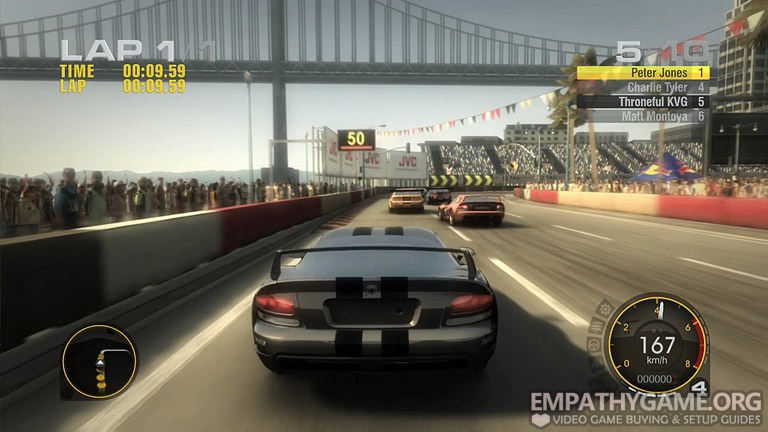
Codemasters surrounds that handling with damage, aggressive AI and a career that makes money and reputation matter without burying the racing beneath management screens. The result sits between arcade immediacy and simulation discipline. Mechanical tuning is shallow and the campaign can leave a skilled driver wanting more, yet few circuit racers make a crowded braking zone feel this dangerous while remaining approachable with assists and Flashbacks.
Handling Feels Best at the Edge of Control
GRID’s defining quality is the way its cars communicate speed through movement rather than strict realism. Weight shifts visibly and audibly under hard braking, rear-driven cars can become nervous when power arrives too quickly, and a small correction at corner exit can decide whether the next straight begins cleanly or sideways. The physics are forgiving enough that a controller never feels like the wrong tool, but they still punish the habit of entering every bend at maximum speed and hoping the barriers will sort out the rest.
That balance becomes clearer across disciplines. A touring car can tolerate close racing, a powerful GT machine asks for more restraint on corner exit, open-wheel events raise the cost of contact, and drift cars turn rotation into the point of the event. The handling model succeeds because the same sense of weight and slip supports very different racing styles without making them feel disconnected.
Touge on Mount Haruna is an especially good demonstration. In Pro Touge, two runs send the drivers up and down the narrow mountain road, with contact penalized. There is nowhere to hide a poor entry because barriers sit close to the racing line, and the car’s slight looseness makes each transition feel deliberate. A safer pair of corners can matter more than one heroic slide. Midnight Touge changes the pressure by adding darkness, traffic and legal contact, turning the same road into a more chaotic duel. These events reveal why GRID’s handling can feel tense even when the physics are not trying to reproduce a hardcore simulator.
Damage and AI Make Position Fighting Dangerous
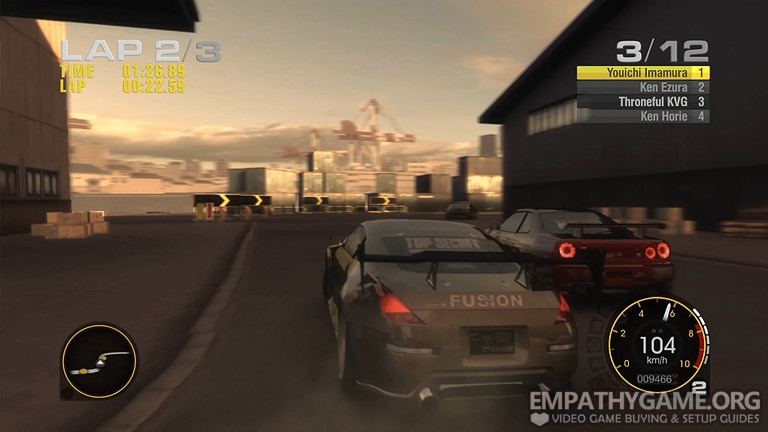
Many racing games use collisions as spectacle. GRID uses them as a reason to think twice. Panels deform, windscreens crack, pieces detach, and heavier impacts can bend the car’s behavior enough that finishing becomes harder than simply keeping the throttle down. A mistake early in a multi-lap race can therefore create a lingering problem: steering may no longer feel neutral, acceleration can suffer, or the next contact can end the event entirely. The damage model gives the surrounding traffic real strategic weight because another car is not just scenery occupying the same corner.
The AI reinforces that pressure. Rivals defend, attempt opportunistic moves, run wide, spin and occasionally create accidents that force a reaction rather than a memorized line. A driver filling the inside at a braking zone may make a pass, bounce off the player, or turn a clean corner into a three-car mess. That unpredictability keeps races from feeling like fixed processions.
It can also become irritating. Contact does not always distribute blame or consequences in a satisfying way, and an AI nudge can spin the player’s car more decisively than expected. At higher difficulty, the opposition can feel less like an equal field and more like a set of rivals with unusual advantages or very specific aggressive habits. The important point is that they create pressure, not that every incident is fair. A clean overtake is often more valuable than forcing a gap that technically exists but leaves no margin for the opponent’s next move.
Flashback is the release valve for that volatility. After a missed braking point or a crash, the replay can be rewound and resumed from an earlier moment, with the number of uses tied to difficulty. It is an unusually good fit for a game where one collision can erase several minutes of careful racing. Used constantly, though, it weakens the very tension that makes damage matter. Pro Mode is the sharper alternative: no Flashbacks and no mid-race restarts. Suddenly a harmless-looking kerb, a desperate lunge and a damaged steering rack all carry consequences until the finish.
GRID World Adds Decisions Without Becoming Management Work
The career begins with Driver Offers, effectively an apprenticeship in which other teams supply the car while the player earns money and reputation. Once there is enough cash to establish a team, the structure becomes more personal. Team colors and branding appear across owned cars, sponsors attach extra objectives to races, and a hired teammate turns an individual result into part of a wider team performance. Ravenwest Motorsport provides a visible benchmark at the top, giving the career a rival to chase without pretending there is a conventional story.
Sponsors are simple, but the best payout is not always attached to the safest objective. A high-finishing target may suit a familiar circuit, while a damage-sensitive condition becomes a gamble in a crowded street race. The major sponsor slot doubles its usual payment, adding a small layer of planning before the lights go out without turning the career into an accounting game.
Teammates work for the same reason. Better drivers can contribute stronger results, but their share of the winnings matters, so hiring is not simply a matter of buying the highest statistic available. These decisions stay light and directly tied to racing, which is why the career feels brisk rather than grindy.
The limitation is what the career does not develop. Cars are purchased to enter events, but there is little mechanical building beyond choosing the right machine and adjusting assists or driving style. Players who enjoy spending an evening changing ratios, suspension settings, engine parts or bodywork will find GRID unusually uninterested in that fantasy. The team is customized more than the car. That focus keeps the pace fast, but it also means progression has fewer layers to explore once the license structure is understood.
Varied Disciplines Keep a Compact Career Fresh
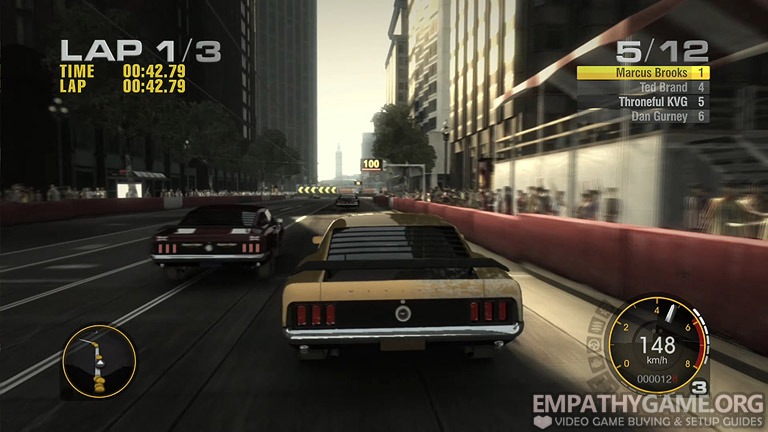
GRID divides its identity across Europe, the United States and Japan rather than asking one kind of racing to carry the whole game. European events lean toward touring cars, GT machinery, open-wheel competition and endurance racing. American events push harder into street courses, muscle and demolition derby. Japan shifts toward drift and Touge. Moving between them changes more than the scenery because braking habits, acceptable contact and even the meaning of car control can change from one event to the next.
Drifting is the most specialized example. Instead of merely being fast, the driver has to create and maintain angle while linking slides into a higher-value sequence. It can feel more like learning a scoring language than racing naturally, especially for someone who prefers grip events, but it also gives the career a rhythm that ordinary circuit championships cannot. Demolition derby goes in the opposite direction: survival, opportunism and keeping the car pointing forward matter as much as a clean line. The damage system finally gets permission to become part of the objective rather than a threat hanging over it.
The seasonal 24 Hours of Le Mans event is the campaign’s best change of scale. The career version compresses the full race into roughly 12 minutes while cycling from daylight into darkness and back again. Several classes share Circuit de la Sarthe, so a faster prototype may be slicing through slower traffic while still racing primarily against its own class. In slower machinery the event can initially feel like an interruption to the quicker, punchier disciplines, but its appeal grows with faster cars. Darkness reduces visual certainty, traffic complicates lines, and the long straights make every earlier mistake feel expensive.
This breadth explains why the campaign can feel shorter than expected without feeling thin. New classes, formats and license targets arrive before repetition settles in. Once the major licenses are open, familiar tracks and a modest roster become more noticeable. GRID rarely becomes a grind; its weakness is almost the reverse, ending while players who connect with the handling may still want more.
Presentation Makes Motorsport Feel Dirty and Physical
GRID’s visual identity is built around heat, glare, smoke, sparks and battered bodywork. The heavy bloom and color treatment unmistakably belong to its era, but the direction still serves the racing. San Francisco’s streets feel different from Japanese mountain roads or European circuits because lighting, barriers, road width and surrounding architecture change the mood of a race. Cockpit views intensify the effect: a cracked windscreen, a violent impact and debris crossing the track make speed feel physical rather than pristine.
Sound carries just as much weight. Engines are forceful without drowning out tire scrub, impacts land with an ugly metallic crunch, and the race engineer gives enough information to make the event feel connected to a team rather than a silent time trial. The garage-based menus extend that atmosphere between events. Some post-processing and interface choices have aged, but the game still understands that a racing presentation should make the player nervous about the next braking point, not merely admire a polished car model.
Replayability Comes From Raising the Stakes
Because car development is shallow, replay value depends less on building a second garage and more on changing how strictly the racing is approached. Turning off assists, raising difficulty, using fewer Flashbacks and eventually committing to Pro Mode changes the emotional texture of familiar events. A corner that was previously disposable becomes important when there is no rewind waiting behind it. Drift scoring, tougher sponsor objectives and cleaner Le Mans runs provide other reasons to revisit events, but the central attraction remains mastery of the handling.
That creates a strong skill-driven second layer for players who enjoy shaving risk out of a lap. It is less compelling for anyone who needs large upgrade trees, extensive tuning or a huge roster to justify repetition. GRID knows what it wants replayability to mean: driving the same machinery with better judgment, fewer safety nets and greater consistency. For the right player, that is enough. For collectors and builders, the career will reveal its limits much sooner.
Final Verdict
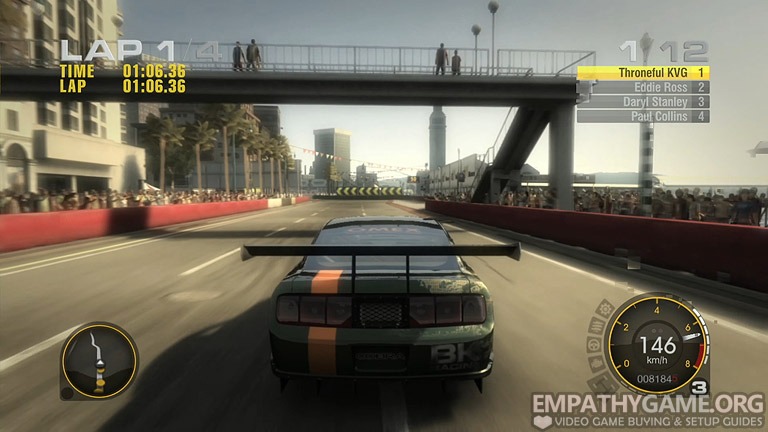
Race Driver: GRID remains distinctive because its best systems all point toward the same feeling: a race should never be completely under control. The handling is accessible but loose enough to demand respect, AI drivers create incidents rather than simply follow rails, and the damage model makes every unnecessary touch a decision with possible consequences. Flashback prevents that volatility from becoming exhausting, while Pro Mode proves how much tension the same races can generate once the safety net disappears.
GRID World is equally important. Sponsors, teammates, Driver Offers, regional licenses and Ravenwest give victories a context without slowing the game with heavy management. The trade-off is limited tuning, a relatively compact car and track pool, and a campaign that may end just as its strongest handling starts to feel second nature. Drifting will not appeal equally to everyone, and AI contact can cross the line from aggressive to frustrating. Even so, players who value fast, physical circuit racing over car collecting or mechanical tinkering will find a remarkably focused simcade racer. Its greatest strength is not realism for its own sake, but the sensation that one brave corner can still become either the pass of the race or the mistake that ruins it.
Race Driver: GRID Pros & Cons
- Pro: Excellent simcade balance makes braking and racing lines meaningful without demanding full racing-simulator knowledge
- Pro: GRID World gives races extra purpose through regional progression, team ownership, teammates, sponsors, earnings, licenses, and rivalries
- Pro: Touring cars, GT racing, open-wheel events, drifting, touge, American street racing, demolition derby, and Le Mans provide unusually broad motorsport variety
- Pro: Flashbacks reduce restart frustration, while convincing vehicle damage makes collisions and aggressive AI genuinely consequential
- Pro: Steam Deck Playable support and an active PC modding community give existing owners useful ways to keep the classic Windows version practical on newer hardware
- Con: No normal official digital purchase route remains for new PC players, and even the enhanced ZOOM Ultimate Edition is unavailable
- Con: Publisher-hosted online multiplayer has been discontinued, leaving LAN and unofficial community networking as the remaining multiplayer paths
- Con: Original PC builds can encounter resolution, CPU-thread, high-refresh-display, or controller problems on modern Windows hardware
- Con: Car tuning and mechanical setup depth are limited compared with racing games built around extensive customization
Race Driver: GRID PC System Requirements
ORIGINAL WINDOWS PC REQUIREMENTS:
These specifications reflect Codemasters’ original PC requirements for the classic Windows release. Modern computers normally exceed the raw performance targets by a large margin, but newer operating systems, CPUs, displays, and controllers can introduce compatibility issues that were never part of the original hardware targets.
MINIMUM:
OS: Windows XP / Windows Vista; Service Pack 1 recommended for Vista
CPU: Intel Pentium 4 3.0 GHz / AMD Athlon 64 3000+
RAM: 1 GB
GPU: NVIDIA GeForce 6800 / ATI Radeon X1300 or better
DirectX: DirectX 9.0c
Storage: 12.5 GB available space
Sound Card: DirectX-compatible sound card
Optical Drive: Dual-layer compatible DVD-ROM drive for the original retail installation
RECOMMENDED:
OS: Windows XP / Windows Vista; Service Pack 1 recommended for Vista
CPU: Intel Core 2 Duo 2.66 GHz / AMD Athlon X2 3800+
RAM: 2 GB
GPU: NVIDIA GeForce 8800 / ATI Radeon X1950
DirectX: DirectX 9.0c
Storage: 12.5 GB available space
Sound Card: Creative Sound Blaster X-Fi or equivalent compatible audio hardware
Optical Drive: Dual-layer compatible DVD-ROM drive for the original retail installation
Additional PC Performance and Setup Notes
- The original requirements were designed around Windows XP/Vista-era hardware. A modern PC can easily exceed those performance specifications while still encountering compatibility problems caused by substantially newer CPUs, operating systems, display modes, or drivers.
- Older builds were designed primarily around dual- and quad-core processors. Community compatibility work can improve behavior on high-core-count CPUs, but such tools are unofficial and should be researched carefully before changing executable or configuration files.
- Some legacy installations may incorrectly restrict available display resolutions or behave poorly with very high-resolution and high-refresh monitors. Check the game’s graphics configuration before assuming the GPU itself is too weak.
- The later ZOOM Ultimate Edition included expanded modern processor and wheel compatibility, but it is a distinct enhanced release and should not be confused with the older Steam, GOG, or retail builds.
- Valve rates the Steam build Playable on Steam Deck and reports that the default graphics configuration performs well. Some text entry requires manual use of Steam’s on-screen keyboard.
- The original PC release was designed for controllers and racing wheels as well as keyboard play, including period hardware such as the Xbox 360 controller, Logitech G25, Logitech MOMO, Logitech Driving Force Pro, and Thrustmaster RGT Force Feedback Pro.
- If an owned Steam installation behaves unexpectedly, use Steam’s built-in file verification before replacing original files. GOG owners can similarly return to their clean owned installation files when troubleshooting.
- Back up the player profile and original game files before installing graphics overhauls, AI changes, compatibility tools, vehicle packs, interface modifications, or other community content.
Official Trailer
Note: This GOG-hosted Race Driver: GRID trailer uses the game’s original promotional footage to show high-speed circuit racing, street events, crashes, drifting, licensed cars, and Codemasters’ EGO Engine presentation.
Frequently Asked Questions
Is Race Driver: GRID the same game as GRID from 2019?
No. Race Driver: GRID is the original 2008 Codemasters game that began the GRID series, while GRID from 2019 is a much later entry. Searching for “GRID 2008” or “Race Driver GRID” is the easiest way to distinguish the original PC release.
Is Race Driver: GRID an open-world racing game?
No. Racing takes place on individual circuits, street courses, mountain roads, drift areas, and other event locations rather than a freely explorable open world. Progression happens through GRID World events and the separate Race Day mode.
How does GRID World career mode work?
GRID World starts with Driver Offers before allowing you to establish your own team, earn regional reputation, unlock higher licences, buy cars, attract sponsors, and hire a teammate. American, European, and Japanese disciplines eventually feed into higher-level events and challenges against Ravenwest Motorsport.
How do Flashbacks work in Race Driver: GRID?
Flashback lets you rewind the instant replay after a spin, crash, missed braking point, or other mistake and resume the race from an earlier moment. Higher difficulty settings give you fewer Flashbacks, while unused Flashbacks can contribute a cash bonus in GRID World.
What is Pro Mode in Race Driver: GRID?
Pro Mode is a more punishing career option that disables both Flashbacks and race restarts. It increases the reputation reward, making it useful for experienced drivers who want mistakes and mechanical damage to carry full consequences.
Can you tune or upgrade cars in Race Driver: GRID?
Not in the extensive mechanical sense found in tuning-focused racing games. GRID concentrates on racing, car ownership, team branding, liveries, sponsors, difficulty, and driving assists rather than engine upgrades, suspension builds, body kits, or detailed performance tuning.
How does Touge racing work in Race Driver: GRID?
Pro Touge is a two-leg head-to-head race on Mount Haruna, with one uphill and one downhill run and the fastest combined result deciding the winner. Contact is forbidden in Pro Touge, while Midnight Touge uses a similar structure but allows contact and introduces civilian traffic.
Is the 24 Hours of Le Mans really 24 hours long in Race Driver: GRID?
No. The GRID World career event lasts about 12 real minutes, with a rapidly accelerated day-and-night cycle. Longer versions are available through Race Day, and your result depends on how you perform within your own vehicle class.
What settings are best for beginners?
Starting on Basic or Normal difficulty with traction control, braking assistance, stability control, and automatic transmission enabled makes the handling easier to learn. Once braking points and car behavior become familiar, assists can be removed or the difficulty raised for a larger reputation reward.
Can you still buy Race Driver: GRID on PC?
No normal new digital purchase route is available through Steam or GOG, and ZOOM lists its legitimate Ultimate Edition as temporarily unavailable. Previous owners can still access their game through the official library or installer associated with their purchase.
What is different about Race Driver: GRID Ultimate Edition from ZOOM?
ZOOM’s Ultimate Edition bundles the 8 Ball and Prestige DLC packs and includes additional compatibility work for modern processors, resolutions, and several newer Logitech steering wheels. It is a separate enhanced Windows release rather than an automatic upgrade for owners of the older Steam, GOG, or retail versions.
Are Race Driver: GRID’s official multiplayer servers still online?
No. The original hosted multiplayer servers have been taken offline, so the normal publisher-operated internet multiplayer service is no longer available. Community networking methods should not be confused with official Codemasters servers.
Does Race Driver: GRID still support LAN multiplayer?
Yes. The PC version retains LAN multiplayer for up to 12 racers even though the original hosted online servers are offline. Each participant needs a compatible legitimate installation on their own PC.
Does Race Driver: GRID support split-screen or local co-op?
No. The original game does not include native split-screen or couch co-op. Its remaining built-in local-network option is LAN multiplayer between separate computers rather than several players sharing one screen.
Does Race Driver: GRID work on Steam Deck?
Yes, for players who already own the Steam version. Valve rates it Playable and reports that the default graphics configuration performs well, although some text entry requires manually opening the on-screen keyboard and external controllers may need their active controller order changed.
Does Race Driver: GRID work on Windows 10 and Windows 11?
It can, but compatibility depends on the release and PC configuration. ZOOM’s enhanced edition added modern-processor and display support, while the original Steam, GOG, and retail builds may need careful version-specific compatibility checks for startup, CPU recognition, or resolutions.
Does Race Driver: GRID support controllers and racing wheels on PC?
Yes. The original PC version supports gamepads and a range of period racing wheels, while ZOOM’s enhanced edition specifically added compatibility for Logitech G27, G29, G920, and G923 wheel and pedal sets. Other modern hardware may require manual control configuration and results can vary between releases.
Can Race Driver: GRID be modded, and does it support Steam Workshop?
Yes, the PC game has an established unofficial modding scene covering graphics, AI, cars, interfaces, handling, compatibility, and larger overhauls. There is no official Steam Workshop or Codemasters mod toolkit, so follow each mod’s instructions carefully and keep clean backups before changing files.
Where are Race Driver: GRID save files stored on Windows?
The standard Windows save location is %USERPROFILE%\Documents\Codemasters\GRID\savegame. Backing up that folder before installing mods, changing compatibility files, or moving to another PC is a simple way to protect career progress.
Still have questions? Check the GRID community on Reddit, Race Driver: GRID Steam Discussions, or the Race Driver: GRID GOG forum for additional help and community discussion.
Sources & References
Key store-status, platform, technical, and reception information in this guide was checked against:
- ZOOM Platform — Race Driver: GRID Ultimate Edition — official edition listing and purchase availability.
- SteamDB — GRID (App 12750) — retired Steam status, release metadata, overall review reception, and Steam Deck compatibility.
- GOG Dreamlist — Race Driver: GRID — GOG’s present non-purchasable listing and return-request context.
- PCGamingWiki — Race Driver: GRID — original PC requirements, legacy compatibility, saves, LAN features, and edition distinctions.
- Metacritic — GRID (2008) — original game’s PC review aggregate and version identification.
- GameSpot — GRID Review — original career, handling, difficulty, multiplayer and race-mode design.
Similar Games Like Race Driver: GRID


Found something worth playing through DecideGame?
DecideGame.com is an independent gaming project run by Editor Zero. If this guide helped you discover a game, solve a problem, or find useful information, you can support DecideGame.com and help keep new and updated game guides coming.
DecideGame — PC Game Guides, Reviews & Setup Help