
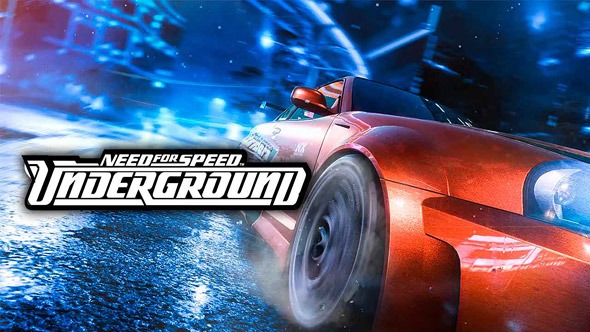
📅 Game released: 2003
Need for Speed: Underground is an arcade street racer set on Olympic City’s neon-lit circuits, where tuner-car customization, Drag and Drift events, and a climb through the rankings define the career. This PC guide explains the original game’s official download availability, legitimate retail-copy installation, historical system requirements, SafeDisc limitations, and practical widescreen and controller fixes for modern Windows.
 By Editor Zero — independently researched, edited, and maintained.
Last updated: 7 November 2026
Last reviewed: 7 November 2026
Table of Contents
- Quick Facts
- Official PC Stores, Download & Installation
- Need for Speed: Underground Review
- Pros & Cons
- PC System Requirements
- Frequently Asked Questions
- Similar Games
Need for Speed: Underground Quick Facts
- Game: Need for Speed: Underground / NFS Underground / NFSU
- Developer: EA Black Box (EA Canada)
- Publisher: Electronic Arts
- Genre: Racing, Arcade Street Racing
- Release: November 17, 2003 (first North American release; Windows PC and home consoles)
- Platforms: Windows PC, PS2, Xbox, GameCube, Game Boy Advance (separate adaptation), arcade (separate version)
- Steam Deck: Not available on Steam; no official Valve compatibility rating
- Engine: Speed (EA Black Box’s proprietary engine)
- Multiplayer: Originally up to four players online on PC, with PC–PS2 cross-platform racing; official online service retired
- Community: Need for Speed Reddit, EA franchise forum, PCGamingWiki
- PC modding: No official tools or Steam Workshop; Nexus Mods and independent community fixes provide unofficial enhancements
- Metacritic score: 82/100 (Windows PC)
- IGN score: 9/10 (Windows PC)
- Steam user reception: Not available on Steam; no Steam release or overall review rating
Official PC Store Status, Download & Installation
👇 Check official PC download availability and the legitimate retail-copy setup considerations before trying to install Need for Speed: Underground on a modern Windows computer.
- Official PC availability: EA does not list the original Underground for new digital PC purchase in its current Need for Speed catalog. No verified Windows release is available to buy through Steam, Epic Games Store, GOG, or Microsoft Store.
- Legitimate ownership: The original Windows game was sold on physical discs. If you own a genuine copy, keep the discs, product key, and installation media together; used copies can have missing discs or serial numbers and may still have compatibility limitations.
- EA App and EA Play: The 2003 original is not offered as a normal new EA App purchase or EA Play entitlement. Check your EA library or contact EA Support only if you believe you already have a valid account entitlement.
- SafeDisc protection: Many original PC retail installations rely on the legacy SafeDisc disc-check driver, which Windows 10 and Windows 11 do not normally support. Successful installation from owned media therefore does not guarantee that the unmodified game will launch. The guide does not provide modified executables, game files, or DRM-bypass instructions.
- Widescreen and controllers: ThirteenAG’s unofficial Widescreen Fix adds modern aspect ratios, HUD/FOV correction, windowed options, and better gamepad input. See the step-by-step setup notes below. This fix is not a replacement for lawful game ownership and does not solve the original SafeDisc restriction.
- Mods and backups: Community projects can alter graphics, cosmetics, interface, and gameplay, but they are not official EA releases. Back up saves and the original installation before adding third-party components, and avoid combining modifications that change the same files.
- Online multiplayer: The original EA-operated service is retired. Any replacement network or server project is independent of EA, and its functionality or availability should not be assumed.
- Steam Deck: There is no official Steam release or Valve compatibility rating. Manual installation on SteamOS is an unofficial setup and can encounter the same protected-executable and controller issues as a modern Windows PC.
 Visit the Official Need for Speed Website

Need for Speed: Underground Review
Focused arcade racing, memorable tuner culture and rewarding customization overcome a career that leans too heavily on repeated roads and aggressive catch-up AI.
Need for Speed: Underground is the point where the series committed itself completely to the early-2000s street-racing fantasy. Exotic highways gave way to modified imports, neon-lit streets and a career built around climbing rankings while turning an ordinary starter car into something recognizably yours. That change was more than cosmetic. Racing, visual reputation and performance upgrades feed into each other so consistently that the garage becomes part of the core progression rather than a menu visited between events.
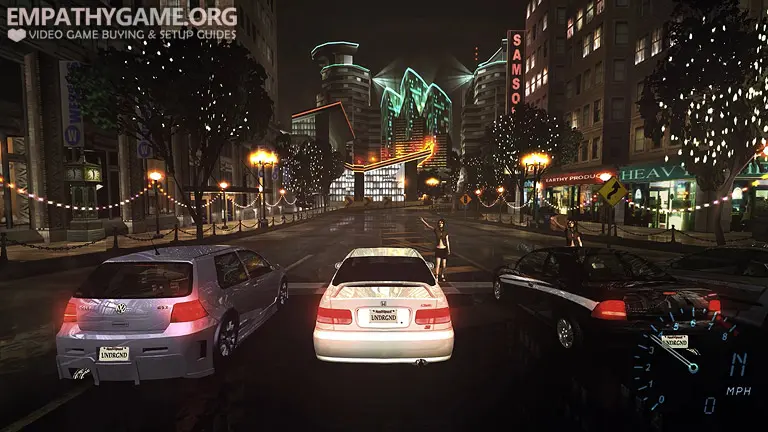
The driving remains deliberately arcade-focused. Cars carry generous grip, mistakes are recoverable, nitrous can rescue a weak exit, and traffic matters as much as perfect braking technique. The trade-off is that steering can feel abrupt rather than fluid, particularly with digital inputs, and the AI’s catch-up behaviour sometimes undermines the satisfaction of building a clean lead. The 111-event Underground Mode also asks the same sections of Olympic City to support a long career. Yet those limitations sit beside unusually strong event identity: Drag and Drift are not just cosmetic variations on Circuit racing, and the closed-course structure makes the city increasingly familiar in a way a larger open world might not. For players who prefer focused arcade competition, car personalization and a strong sense of period-specific tuner culture, that clarity is still the game’s greatest strength.
Arcade Handling Rewards Speed More Than Precision
Underground’s handling is easy to read because it rarely asks for simulation-style discipline. A late brake into a medium-speed corner usually produces a recoverable slide rather than a ruined lap, and most cars respond quickly enough that avoiding a taxi or clipping into a shortcut becomes part of the rhythm. The game wants the driver looking forward: judging traffic, protecting momentum and deciding when a shot of nitrous is worth more than saving it for a longer straight.
That accessibility should not be mistaken for especially polished steering. Direction changes can feel stepped and twitchy, particularly when small corrections are needed at high speed. Underground is happier with decisive input than fine trimming. Once that behaviour is understood the handling becomes consistent, but it is one of the clearest places where the game’s age is felt.
Traffic is the system that keeps this forgiving model dangerous. A clean Sprint can turn on one civilian car entering an intersection, while a Circuit lead can disappear after hitting a van on the final lap. Shortcuts and ramps reward route knowledge, but taking them blindly can be worse than staying on the road because the landing may place the car directly into traffic. That makes familiarity more valuable than raw cornering finesse: knowing where the road narrows or where cross-traffic tends to appear often matters more than shaving a fraction from a braking point.
Drag and Drift Give the Event List Real Variety
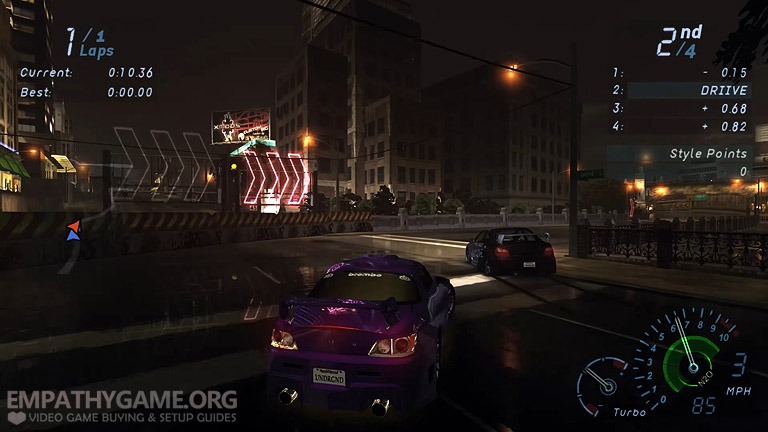
The strongest argument for Underground’s career structure is that its specialist modes genuinely change how the game is played. Drag strips away normal steering and converts left-right input into lane changes while manual shifting becomes mandatory. The tachometer is enlarged, clean shifts preserve acceleration, and later runs layer traffic, dividers and ramps over what initially looks like a simple straight-line race. A powerful car can still lose because one late shift overheats the engine or one mistimed lane change ends in a collision.
On a strip such as 14th & Vine, the first attempts are less about finding a racing line than memorizing where traffic makes lane changes dangerous. A useful micro-skill is resisting unnecessary movement: once the car is in a safe lane, extra input often creates another opportunity to crash.
Drift works almost in reverse. Position and lap time stop being the priority, and the goal becomes sustaining slides long enough to build a worthwhile score without touching the barriers. The physics are exaggerated and approachable, so a driver can link corners without learning real-world drift technique. It is less punishing than a dedicated drifting simulation, but that is exactly why it fits the career. Circuit, Sprint and Lap Knockout test racing pace; Drag tests shifting and obstacle reading; Drift asks for controlled instability. The repeated event types still become familiar, but at least they do not all demand the same skill.
Olympic City Becomes Familiar—Then Repetitive
Olympic City is not an open world, and that limitation has an unexpected benefit. There is no commute between events and no need to pad the career with free-roam travel. Instead, the same tunnels, industrial roads, downtown junctions, construction areas and highway sections are rearranged into closed routes. After enough races, certain corners stop feeling anonymous. A tunnel exit, a divider before an intersection or a shortcut entrance becomes recognizable because the game has asked the player to approach it from several directions.
That familiarity can make the city more memorable than its actual size suggests. A Sprint works especially well because it keeps moving forward and lets route recognition feel like accumulated knowledge rather than repetition. The weakness appears when Circuit and tournament events recycle those same components for several laps. Underground Mode contains 111 numbered events, far more than the road network can support without repetition, so the middle of the career can feel as though the game is changing event labels more often than locations.
This is the central pacing problem. The city is cohesive enough that learning it is satisfying, yet the career is long enough to overuse that cohesion. Around the halfway point, another Circuit, Sprint or Knockout can feel less inviting because the underlying road pieces are already familiar. Underground occasionally stretches a compact set of assets past its ideal length.
Customization Is Progression, Not Just Decoration
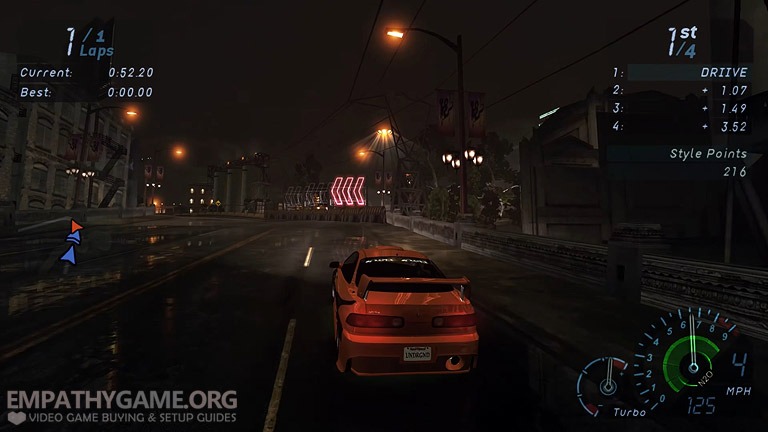
The garage gives those repeated races a stronger reason to matter. Performance packages improve areas such as engine output, drivetrain, ECU, turbo, nitrous, suspension, brakes, tires and weight, while visual parts reshape the car through bumpers, skirts, spoilers, hoods, rims, paint, vinyls, decals, neons and other period-specific modifications. The important part is that the two sides of progression are connected. A visually upgraded car gains reputation, and that reputation increases the multiplier applied to Style Points, helping unlock further cosmetic rewards.
That turns customization into a second progression track. Near misses, shortcuts, clean sections, airtime and powerslides are not merely flourishes during a race; they contribute to Style Points, so taking a slightly riskier route can have a reward beyond finishing first. Magazine covers and ranking milestones reinforce the same idea. The career is not only measuring whether the car is faster. It is constantly signalling that the driver is becoming more visible within Olympic City’s scene.
The downside is how slowly some of the most desirable visual options arrive. A player who already knows exactly how an Eclipse should look may spend dozens of events waiting for a preferred spoiler, body part or paint-related option to unlock. That restriction makes sense as progression, but it can also make the garage feel less expressive than its large customization catalogue suggests. The most satisfying version of the system belongs to a first playthrough, when each unlock feels like a new possibility; on repeat runs, the same gating can feel like being asked to earn back choices that are already understood.
Unique rewards from Samantha and TJ help break that routine because certain challenges offer parts with more identity than another ordinary purchase. The appeal is less about mechanically intricate tuning and more about watching a modest Civic, Golf, Miata, Neon or 206 evolve alongside the career. Visible transformation is motivational in its own right.
Thin Characters, Strong Atmosphere
The story is little more than a framework for the rankings. Samantha introduces the scene, Eddie gives the career a rival to chase, and TJ becomes tied to some of the more distinctive upgrade rewards. Their personalities are broad, the dialogue is pure early-2000s attitude, and the plot rarely asks to be taken as serious drama. That restraint is mostly appropriate because the career’s real narrative is the rise from unknown driver to recognized name.
Magazine covers, rival messages and ranking boards make progress visible without interrupting the racing for long. Moving upward gives otherwise disconnected events a purpose, and a new position, part or cover often says more about status than the thin script does.
Atmosphere does the rest. Wet asphalt reflects storefronts and streetlights, headlights cut through permanent darkness, and the city is drenched in neon without becoming difficult to read at speed. Turbo flutter, tire squeal and increasingly aggressive engine notes combine with a soundtrack spanning hip-hop, rock and electronic music. The presentation is unmistakably tied to its era, but that specificity has aged better than a more neutral visual style might have. Underground does not merely contain modified cars; nearly every menu, camera effect and audio cue sells the fantasy of a particular tuner scene.
Rubber-Banding Makes the Hardest Races Less Honest
The most damaging flaw is the AI’s catch-up behaviour. Building a large lead does not always create the security it should, because rivals can close implausibly quickly after falling behind. The result is a strange incentive in some late races: driving conservatively near the pack can feel safer than dominating from the first lap, because the game is less likely to convert one late traffic collision into a complete loss after several minutes of clean racing.
This matters more in Circuit events than in Sprints. A point-to-point race ends before the catch-up system has as much time to repeatedly compress the field, whereas a multi-lap race can make an early advantage feel temporary. The frustration peaks when strong driving is followed by a final-corner accident and an opponent immediately appears to capitalize. Difficulty can be changed per event, which offers a pressure release, but it does not remove the underlying sense that some close finishes are manufactured rather than earned.
There is still meaningful skill beneath that behaviour. Better racing lines and more disciplined braking make the game substantially easier than simply holding the accelerator and reacting late, and experienced players can turn once-difficult events into manageable ones by treating corners seriously. That contrast is important: Underground is not difficult because its arcade physics are demanding. Its hardest moments usually come from traffic, route hazards, repeated-event fatigue and AI behaviour that can punish a single mistake far more heavily than the preceding clean driving deserves.
Replayability Depends on Cars More Than the Career
A second run is most appealing as an excuse to use different cars, build another visual identity or revisit favourite event types. Remembering a shortcut or a dangerous Drag lane gives familiar routes some returning value, but the full career’s unlock pacing and repetition become more obvious once the surprises are gone. Cosmetics that once felt exciting can become gates between the player and a planned build. The direct structure still helps: there are no long stretches of travel or side activity separating the races.
Final Verdict

Need for Speed: Underground succeeds because almost every major system serves the same fantasy. Winning races earns money and status, customization changes both performance and reputation, Style Points reward expressive driving, and the audiovisual presentation turns a relatively small collection of roads into a convincing street-racing scene. Drag remains the standout mode because manual shifts and lane-based obstacle reading give it a rhythm unlike ordinary racing, while Drift provides an accessible score attack that breaks up the career.
The weaknesses are just as clear. Steering lacks the fine smoothness expected from newer racers, desirable customization parts can stay locked for too long, Olympic City is recycled heavily across 111 events, and rubber-banding can make late races feel less fair than they should. Those problems are most noticeable during a long uninterrupted career run, when familiar roads and compressed AI gaps begin to expose the machinery underneath the atmosphere.
Yet the game’s narrow scope is also part of why it remains coherent. It does not need an open world to make Olympic City memorable, and it does not need simulation physics to make traffic, shortcuts and momentum matter. Players looking for precise handling, free-roam exploration or deep mechanical tuning will find its limits quickly. Players drawn to focused arcade racing, early-2000s tuner culture and the simple pleasure of turning an ordinary import into a personalized street machine will find a game whose identity is still unusually concentrated.
Need for Speed: Underground Pros & Cons
- Pro: Distinctive neon-lit tuner atmosphere, licensed car upgrades, and an expressive early-2000s soundtrack
- Pro: Extensive visual customization and performance progression that make cars feel increasingly personal
- Pro: Circuit, Sprint, Drag, and Drift events provide substantially different racing challenges
- Pro: Accessible arcade handling, with traffic, route knowledge, and nitrous creating moment-to-moment decisions
- Pro: Established unofficial widescreen and input fixes improve presentation and controllers on a suitably configured PC
- Con: Aggressive catch-up AI can undo a clean lead after a single late mistake
- Con: Closed-course Olympic City routes repeat heavily across the lengthy career; there is no free roam or police pursuit system
- Con: Original SafeDisc protection and the lack of an official digital PC purchase complicate modern ownership and installation
- Con: Original EA online services have ended, and the game has no official Steam Deck rating
Need for Speed: Underground PC System Requirements
Historical requirements note: EA no longer maintains a live Underground PC product page containing its original specification sheet. The period Windows requirements below are preserved by long-running PC compatibility documentation and reflect the hardware targets for the original retail release, not modern Windows compatibility guarantees.
ORIGINAL WINDOWS PC REQUIREMENTS:
MINIMUM:
OS: Windows 98 / ME / 2000 / XP
CPU: Intel Pentium III 700 MHz / AMD Athlon equivalent
RAM: 128 MB on Windows 98 / ME; 256 MB for Windows 2000 / XP and original online play
GPU: NVIDIA GeForce 2 / ATI Radeon 7500 / Matrox Parhelia or compatible graphics card with 32 MB VRAM
DirectX: DirectX 9-compatible graphics hardware
Storage: Approximately 2 GB available space
Sound Card: DirectSound-compatible audio device
Optical Drive: 8X CD-ROM/DVD-ROM drive
RECOMMENDED:
OS: Windows 98 / ME / 2000 / XP
CPU: Intel Pentium 4 2.5 GHz / AMD Athlon XP equivalent
RAM: 256 MB
GPU: NVIDIA GeForce or ATI Radeon graphics card with 128 MB VRAM
DirectX: DirectX 9-compatible graphics hardware
Storage: Approximately 2.5 GB including additional room for saved games, Windows swap files, and DirectX installation
Sound Card: DirectSound-compatible audio device
Additional PC Performance and Setup Notes
- The original hardware requirements are extremely light by modern standards, but that does not mean a modern Windows installation will work automatically; legacy DRM, display modes, input handling, and old DirectX-era behavior are the more important concerns.
- The original SafeDisc implementation does not function normally on Windows 10 or Windows 11. Avoid downloading random replacement executables or modified game files when troubleshooting a legitimately owned copy.
- Widescreen fix and installation: From ThirteenAG’s official Need for Speed: Underground Widescreen Fix release, download the ZIP asset listed for Underground (normally
NFSUnderground.WidescreenFix.zip). Back up your installed game folder and extract the archive directly into the folder containingspeed.exe, preserving the suppliedscriptsdirectory. The fix provides proper widescreen and ultrawide resolution support, adjusted HUD and FOV, and gamepad improvements. To customize it, openscripts\NFSUnderground.WidescreenFix.ini;FixHUD = 1andFixFOV = 1are in the[MAIN]section, whileWindowedMode = 1under[MISC]enables borderless windowed mode. Review the author’s feature and installation notes if your version differs. Back up your files before altering settings. This plugin cannot remove the original SafeDisc launch restriction. - The Widescreen Fix also provides improved gamepad support and configurable analog deadzones, which can make modern Xbox- and PlayStation-style controllers easier to use than relying only on the original input handling.
- Very high frame rates can affect game speed and some visual effects. Use a sensible frame-rate limit and test races rather than assuming that the highest possible uncapped frame rate is always preferable.
- Save files are normally stored under
%PROGRAMDATA%\NFS Underground\. Back up this folder before installing major customization mods, changing save-related tools, or experimenting with community fixes. - Install and test one compatibility modification at a time. Multiple ASI-based tools or files that alter the same rendering, input, or executable behavior can conflict with each other.
- EA’s original online multiplayer infrastructure is no longer active. Community netplay tools are unofficial and should be evaluated separately from the single-player installation.
Official Trailer
Note: This archival upload preserves EA’s original E3 trailer for Need for Speed: Underground, highlighting neon street racing, tuner cars, customization, nitrous, and the game’s early-2000s visual identity, while the written guide adds current ownership, Windows compatibility, widescreen, requirements, and mod guidance.
Frequently Asked Questions
Is Need for Speed: Underground an open-world game?
No. Olympic City looks like a connected urban environment, but races take place on defined courses and the player cannot freely drive around the city between career events. Full open-world free roaming became a major feature of Need for Speed Underground 2.
Does Need for Speed: Underground have police chases?
No. Despite being built around illegal nighttime street racing, Underground does not include police pursuits, a wanted level, or police-interception events.
How many races are in Need for Speed: Underground’s career?
Underground Mode is presented around 111 numbered events, with an introductory race occurring before the numbered progression. This is why some older guides count the opening sequence separately and show a slightly different total.
How do Drag races work in Need for Speed: Underground?
Drag events emphasize manual gear changes, good shift timing, nitrous use, lane positioning, and avoiding traffic rather than normal cornering. Steering is simplified into lane changes, so a fast car can still lose immediately through a bad shift, blown engine, collision, or poorly timed move into traffic.
How does Drift scoring work in Need for Speed: Underground?
Drift points increase with factors such as slide speed, duration, angle, and use of bonus zones. Hitting walls interrupts strong scoring runs, so maintaining a controlled continuous slide is usually more valuable than simply throwing the car sideways as aggressively as possible.
What do Style Points and Reputation do in Underground?
Stylish driving actions such as drifting, drafting, near misses, jumps, and shortcuts earn Style Points toward visual rewards. Your car’s Reputation reflects its visual customization and raises the Style Point multiplier, so cosmetic parts also help unlock more appearance options.
Do body kits, spoilers, rims, and other visual parts make the car faster?
No. Visual modifications primarily affect appearance and Reputation rather than acceleration, handling, or top speed. Performance improvements come from dedicated engine, drivetrain, ECU, turbo, brakes, suspension, tires, nitrous, weight-reduction, and related upgrade packages.
Can you manually tune gear ratios, suspension, or individual performance settings?
No. Underground uses progressively unlocked performance packages that automatically improve the car rather than a detailed tuning interface with adjustable gear ratios, suspension values, ECU curves, or dyno settings. Underground 2 expanded this side of tuning considerably.
Can you change the difficulty during Underground Mode?
Yes. Career events provide Easy, Medium, and Hard difficulty choices, so you are not permanently locked into one setting for the whole playthrough. Harder settings generally offer larger cash rewards, while dropping the difficulty can help when a particular event becomes a progression wall.
Does picking the wrong starter car ruin the career?
No. Your starting car affects the early handling and acceleration you work with, but the career does not permanently lock you to that vehicle. Additional cars and upgrade levels become available through progression, so there is no need to restart simply because another car later suits your driving style better.
Can you unlock Eddie’s Nissan Skyline in Need for Speed: Underground?
Yes. Eddie’s Nissan Skyline R34 GT-R exists as a bonus unlock tied to the Style Point reward progression. Bonus cars such as Eddie’s Skyline are intended for modes such as Quick Race rather than becoming normal career cars in Underground Mode.
Can you still officially buy Need for Speed: Underground digitally on PC?
No normal official digital PC storefront offers the original game for new purchase. EA’s current catalog does not list it as a purchasable EA App title, and there is no verified Steam, Epic Games Store, GOG, or Microsoft Store PC release; original retail copies have separate ownership and compatibility considerations.
Does Need for Speed: Underground work on Windows 10 and Windows 11?
It is not a plug-and-play original retail installation on modern Windows because legacy SafeDisc copy protection is not normally supported. The game’s low hardware demands are not the issue; compatibility modifications do not necessarily solve the disc-check problem, and this guide does not provide unauthorized game executables.
Does Need for Speed: Underground support controllers on PC?
Yes, the PC version supports controller input, although its original gamepad handling predates modern Xbox and PlayStation controllers. The established Widescreen Fix can improve gamepad support, analog deadzones, menu bindings, and button-icon presentation.
Does Need for Speed: Underground support widescreen and ultrawide monitors?
The original PC display options were designed for 4:3 screens. The unofficial ThirteenAG Widescreen Fix adds modern resolutions, corrected aspect ratio, HUD and FOV, and windowed options; it does not remove SafeDisc restrictions.
Are the official Need for Speed: Underground multiplayer servers still online?
No. EA’s original online infrastructure for Underground has been retired, so the built-in online mode no longer connects to the original service. Community networking and replacement-server projects exist, but they are unofficial and separate from EA’s discontinued multiplayer system.
Does the PC version have split-screen, LAN, or cross-platform multiplayer?
The Windows PC version does not include native split-screen or a standard LAN mode. Its original internet multiplayer could match PC players with PS2 players, but that EA-operated online service is retired; community networking projects are unofficial.
Still have questions? Check the Need for Speed Reddit community, the PCGamingWiki technical reference, or the EA Need for Speed franchise forum for additional discussion.
Sources & References
Release, availability, reception, and technical details were checked against these publisher, historical, and community-maintained references:
- EA — Need for Speed catalog — the publisher’s active franchise catalog and current official PC purchase context.
- GameSpot — EA Ships Need for Speed Underground — original North American PC and console release confirmation and PC/PS2 cross-platform online play.
- PCGamingWiki — Need for Speed: Underground — original PC hardware requirements, Speed engine, legacy DRM, save paths, widescreen, and technical compatibility.
- ThirteenAG — Underground Widescreen Fix — original developer release, feature list, supported executable, and installation steps.
- Metacritic — Need for Speed: Underground PC Reviews — PC Metascore and IGN’s original PC review score.
Similar Games Like Need for Speed: Underground
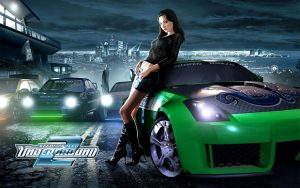
- Need for Speed Underground 2
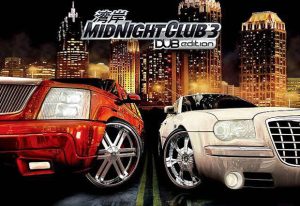
- Midnight Club 3: DUB Edition
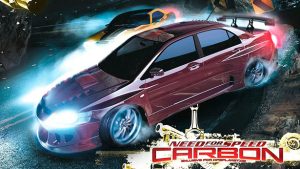
- Need for Speed Carbon
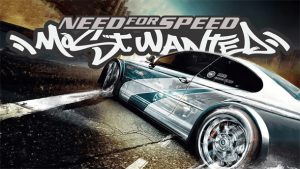
- Need for Speed Most Wanted (2005)
- Need for Speed Heat
- Forza Horizon 3


Found something worth playing through DecideGame?
DecideGame.com is an independent gaming project run by Editor Zero. If this guide helped you discover a game, solve a problem, or find useful information, you can support DecideGame.com and help keep new and updated game guides coming.
DecideGame — PC Game Guides, Reviews & Setup Help