

📅 Game released: 2019
Need for Speed Heat is an open-world arcade street racer set in Palm City, where sanctioned daytime events earn Bank and risky night races build REP under police pursuit. This PC guide compares official EA app, Steam, Epic Games Store, and Microsoft/Xbox download and access options, explains Deluxe Edition and separate add-ons, and covers cross-play, EA Play, system requirements, Steam Deck, mods, and installation.
 By Editor Zero — independently researched, edited, and maintained.
Last updated: 10 November 2026
Last reviewed: 10 November 2026
Table of Contents
- Quick Facts
- Official PC Stores, Download & Installation
- Need for Speed Heat Review
- Pros & Cons
- PC System Requirements
- Frequently Asked Questions
- Similar Games
Need for Speed Heat Quick Facts
- Game: Need for Speed Heat / Deluxe Edition
- Developer: Ghost Games
- Publisher: Electronic Arts
- Genre: Open-World Racing, Racing, Multiplayer
- Release: November 8, 2019 (Windows PC, PS4, Xbox One)
- Platforms: Windows PC, PS4, Xbox One
- Steam Deck: Playable; some launcher/text input needs touchscreen or virtual keyboard, small text may be difficult to read, and Valve flags active internet for first-time setup and single-player
- Engine: Frostbite 3 (technical documentation)
- Modes: Single-player and online multiplayer for up to 16 players; no local split-screen
- Cross-Play: Supported across PC, PlayStation, and Xbox after opting in; cross-platform parties work, but Crews remain same-platform
- Cross-Progression: Not supported between PC, PlayStation, and Xbox; saves and progression remain platform-specific
- Support Status: Feature-complete; EA documents online cross-play and provides game support, but no ongoing seasonal update programme is advertised
- Community: Official EA Help, Steam Discussions, Need for Speed Heat Reddit Community
- PC modding: Nexus Mods for Need for Speed Heat hosts visual changes, handling edits, interfaces, saves, and community tools; UNITE Heat and other overhaul packages are unofficial
- Metacritic score: 72/100 on PC
- IGN score: 8/10
- OpenCritic average: 72/100
- Steam user reception: Very Positive overall
Official PC Stores, Download & Installation
👇 Compare the official Need for Speed Heat PC stores, Deluxe content, subscriptions, and account requirements below before purchasing, downloading, or installing.
- PC availability: Need for Speed Heat is available for Windows through the EA app, Steam, and Epic Games Store; Microsoft/Xbox also lists a Windows PC Deluxe Edition, while PC Game Pass access through EA Play uses the EA app.
- EA app: EA provides the direct PC purchase route, including Standard Edition, Deluxe Edition, and a Deluxe Edition Upgrade for a compatible Standard copy.
- Steam: Steam sells the Deluxe Edition. It requires an EA Account, linked Steam account, EA online activation, and EA launcher installation or background use.
- Epic Games Store: Epic sells the Deluxe Edition and requires Epic and EA accounts, account linking, EA online activation, and EA app installation or background use.
- Microsoft/Xbox: The Deluxe Edition listing identifies Windows PC and handheld compatibility. PC Game Pass and Game Pass Ultimate members can use the included EA Play PC benefit through the EA app after linking their Xbox and EA accounts; confirm your entitlement before purchasing separately.
- EA Play: The Deluxe Edition is included through EA Play on supported PC storefronts. Subscription catalogues can change, and access ends if the membership expires or the title leaves the catalogue.
- EA Play Pro: This separate premium PC membership is available only through the EA app and is not included with PC Game Pass or Game Pass Ultimate.
- Deluxe Edition: The package includes the K.S Edition Mitsubishi Lancer Evolution X starter car, K.S BMW i8 Coupe at REP 10, K.S Mercedes-AMG C 63 Coupe at REP 14, K.S Chevrolet Corvette Grand Sport at REP 18, four outfits, a 5% REP boost, and a 5% Bank boost.
- Deluxe Upgrade: Standard Edition owners can buy the Deluxe content separately for a compatible copy. Confirm the storefront and base-game ownership before purchasing an upgrade because it does not create a separate license on another platform.
- McLaren F1 DLC: McLaren F1 Black Market Delivery is a separate paid add-on containing the McLaren F1 and a set of Black Market challenges and rewards.
- Keys to the Map: This separate convenience add-on reveals collectibles, activities, safe houses, and other district locations without adding a new map or story campaign.
- Duplicate purchases: Deluxe Edition does not include McLaren F1 Black Market Delivery or Keys to the Map, so check owned content before buying either add-on or the Deluxe Upgrade separately.
- Ownership and saves: Cross-play connects players but does not combine licenses or progression. Steam, Epic, EA app, Microsoft/Xbox, PlayStation, and Xbox ownership remain separate, and saves do not transfer between platform families.
- Internet and activation: EA’s PC terms require an internet connection, EA Account, and online activation. Steam Deck compatibility metadata also identifies active-internet requirements for first-time setup and single-player.
- Account linking: Use the EA Account you intend to keep before linking Steam, Epic, or Xbox. Unlinking and relinking platform accounts can affect access to entitlements and may be restricted by EA account-linking rules.
 Buy Need for Speed Heat through EA
 Buy Need for Speed Heat Deluxe Edition on Steam
 Buy Need for Speed Heat Deluxe Edition on Epic Games Store
 View Need for Speed Heat Deluxe Edition on Microsoft / Xbox

Need for Speed Heat Review
A stylish street racer where surviving the journey home matters as much as winning.
Need for Speed Heat is built around a contrast that does more than change the lighting. Daytime racing is organized, bright, and profitable. Night racing is illegal, soaked in neon, and dangerous enough to put those profits at risk. One side funds the garage; the other earns the reputation needed to unlock better parts. That split gives Palm City a stronger identity than another open-world checklist, because finishing an event is not always the same as finishing a successful night.
Heat understands the appeal of a personalized street racer: a favourite car transformed through tuning, roads learned through escapes, and the temptation to risk one more event. Its handling, race balance, and story are less convincing. Yet the way its strongest systems reinforce one another makes it more engaging than those individual shortcomings might suggest.
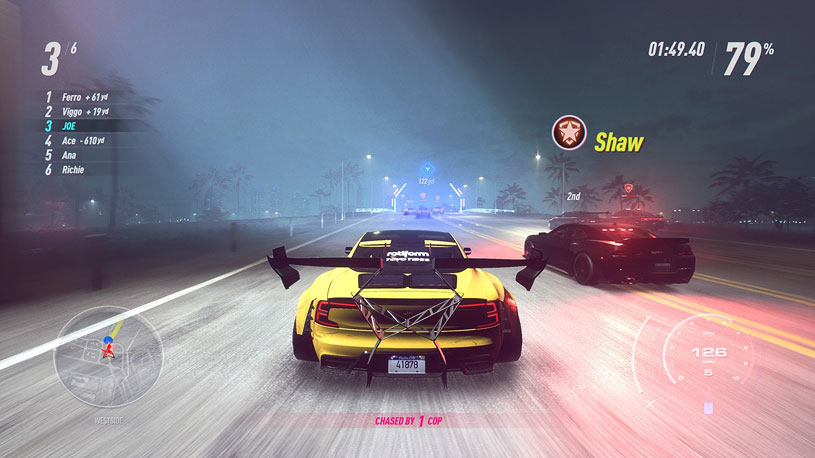
Day and Night Give Progression a Strong Rhythm
Daytime hosts sanctioned Speedhunters Showdown events. Winning earns Bank for cars, engine swaps, performance parts, and visual work. Police rarely define these sessions. Day is where a build can be funded and tested without constantly worrying about the rewards disappearing on the way home.
Ordinary race difficulty is not always as readable as the progression rules. Occasionally, one AI front-runner can seem far quicker than the rest of the field, even when the player’s car comfortably exceeds the event’s recommended rating. That does not establish unfair catch-up mechanics; driving lines, tuning, and difficulty matter too. But it makes those recommendations feel less dependable.
At night, illegal races award REP and raise Heat, increasing both the potential reward and the police response. The multiplier becomes more valuable as risk escalates, but reputation is secured only after reaching a garage. That creates a decision no ordinary finish line can resolve: take what has been earned, or enter another race while the multiplier is high?
A clean event might end close to another promising race. Ten minutes later, the car could be damaged, a helicopter overhead, and the garage marker across the river. Getting busted costs Bank and accumulated nighttime progress; escaping gives even an unremarkable race a satisfying final act. Some of Heat’s best sequences happen without a scripted mission because the player has chosen to push a good night too far.
A broader festival racer such as Forza Horizon 5 provides more event variety and a larger car-collecting playground. Heat is less polished and expansive, but its sessions have a clearer shape. The day is preparation; the night asks whether the preparation was enough.
Police Chases Turn Map Knowledge Into Survival
High-Heat police are the game’s most distinctive opponents. They ram, surround, pursue with faster units, and punish cars that enter the night without sufficient pace or durability. Repairs at gas stations are limited, so one unnecessary collision can matter several races later. Even an equipped emergency repair offers no guarantee: a particularly hard impact may erase much of the health it restores. Avoiding damage is more important than assuming another recovery option will save the run.
Speed helps, but learning Palm City’s geography makes the greatest difference. A jump can disrupt pursuers, a sharp change in elevation can create separation, and a narrow turn can succeed where a long highway sprint fails. Water threatens both sides. These are not just shortcuts; they turn knowledge of the city into something that protects hours of progression.
Consider the moment after a High Heat race when the car is already damaged and a patrol arrives before the map is open. The finishing position suddenly matters less than the next junction, the nearest garage, and whether a familiar jump is worth attempting with almost no health left. The pursuit becomes its own improvised event.
There is a rougher side to this intensity. Police acceleration and collision damage can feel disconnected from the performance of the cars they drive. An early vehicle may be overwhelmed before the player understands how strongly the system favours evasive routes over direct confrontation. Heat becomes more satisfying as those escape rules are learned, although the learning process can feel unnecessarily harsh.
Handling Rewards Experimentation, but Its Feedback Can Mislead
The driving model sits firmly on the arcade side. Cars change direction quickly, slide readily, and remain manageable through traffic at improbable speeds. Grip and drift builds offer different ways to approach a corner, but neither has the subtle weight transfer of a driving simulator. The interesting question is not whether the cars behave realistically. It is how much control the player feels they have over the behaviour Heat expects.
That distinction matters with gas-to-drift. Releasing and reapplying the accelerator, an ordinary way to moderate speed through a bend, can initiate a slide when that drift style is active. Someone accustomed to earlier Need for Speed handling may find themselves rotating the car when they intended only to adjust their corner entry. The control becomes more predictable once its rules are understood, but the initial mismatch is a concrete reason the handling can feel imposed rather than intuitive.
Suspension, tires, differential, and auxiliary components move a vehicle toward road, race, drift, or off-road use. Live tuning adds steering sensitivity, downforce, traction control, and drift style. A troublesome car may need different tires or a change in drift initiation rather than another engine. Yet the handling chart is only a rough summary: the marker can appear to have reached its limit while swapping parts still changes the car noticeably. The garage encourages experimentation, then sometimes fails to explain the results.
Performance ratings can also mislead. Off-road tires and suspension may lower the displayed number even when they make a vehicle better suited to a dirt event. That can turn sensible specialization into an apparent setback, particularly when the event shows a recommended rating. The more useful measure is how a build actually drives on the surface it was prepared for, not whether every upgrade makes one number rise.
Drift trials reveal another tension. Scoring rewards maintaining slides and multipliers, not necessarily following an elegant racing line. Wide arcs and unconventional part combinations can be effective even when they look less convincing than a tidy run through the intended corners. It gives drift specialists freedom to experiment, but also makes the ideal scoring technique feel oddly separate from the fantasy of stylish street drifting.
Engine swaps help preserve favourite cars beyond their original performance limits. Heat lacks the physical detail of BeamNG.drive, where suspension, weight transfer, deformation, and damage are central. Here those systems serve spectacle, tuning choices, and police pressure. That is a reasonable arcade priority, provided the player accepts that a car’s true behaviour may require more testing than the interface suggests.

Palm City Looks Best After Dark
Palm City takes inspiration from Miami without recreating it directly. Downtown avenues, beaches, marinas, industrial districts, highways, mountain roads, wetlands, and dirt routes form a map that is varied enough to reward familiarity, even if its overall scale is modest.
The night is its strongest visual argument. Rain turns asphalt into a reflective surface, neon sharpens ordinary buildings, and the flash of police lights announces trouble before the pursuing car comes into view. Daytime is cleaner and easier to read during sanctioned racing, but can also feel strangely empty. The contrast makes repeated routes feel different without needing to invent new scenery for every event.
Forza Horizon 4 is more relaxed, with changing British seasons and a broader celebration of driving for its own sake. Heat is interested in a narrower feeling. The bridge that once looked scenic becomes valuable because its jump breaks a pursuit; an open highway becomes frightening when there is nowhere to hide. Its city becomes a network of decisions rather than icons.
Customization Gives Every Car a Personal Identity
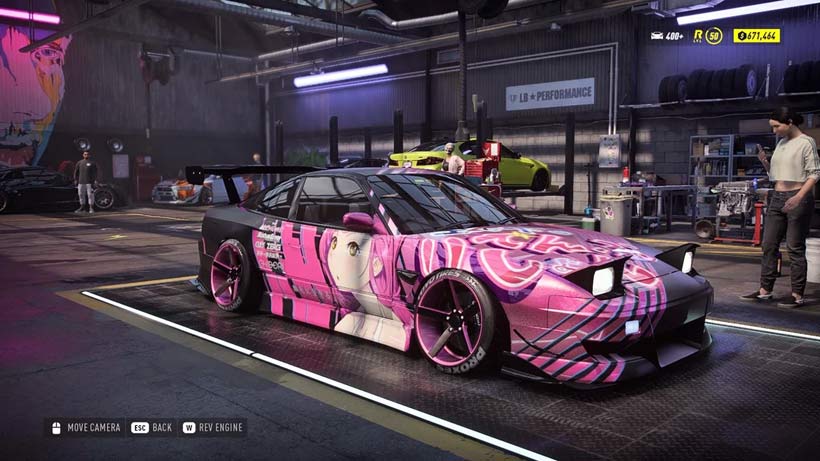
Visual customization remains one of Heat’s clearest strengths. Bumpers, fenders, splitters, skirts, spoilers, exhausts, wheels, stance, wraps, decals, underglow, and sound adjustments make the garage feel like a creative space rather than a shop window. Not every licensed car has the same bodywork options, but the most flexible models can look radically different from their stock versions.
The performance side supports that attachment. Engine parts, chassis and drivetrain changes, auxiliary equipment, and engine swaps give a reason to keep developing a car rather than discard it when a faster model unlocks. High Heat events eventually provide access to Ultimate and Ultimate+ components, so the most powerful upgrades remain tied to the game’s most dangerous activity.
Compared with Need for Speed Payback’s randomized Speed Cards, planning a build is more straightforward. Bank is earned predictably, while parts and REP requirements provide understandable targets. What makes this work is not simply the number of available upgrades. A car developed over many evenings has a history attached to it, especially if it has survived nights when a more sensible driver would have gone home.
The Story Provides Direction but Little Lasting Weight
The campaign follows the player, Ana Rivera, and Lucas Rivera as they confront Lieutenant Mercer’s corrupt High-Speed Task Force. Ana supplies the appetite for illegal racing, Lucas brings a more cautious perspective, and Mercer puts a face to the police threat. Their conflict creates momentum, but important character developments arrive before the relationships have earned much weight.
The League is a particularly telling missed opportunity. It is introduced as a prestigious goal within Palm City’s racing hierarchy, yet the campaign never delivers the direct racing confrontation that such a buildup seems to promise. This makes the story feel less like a completed climb through the city’s crews and more like a police plot that moves past the competitive world it established.
The smaller details communicate that culture better: garage conversations, car meets, music, and the shift from public daytime events to illegal nights. A longer script would not automatically improve Heat. What it needs is more satisfying follow-through on the racing ambitions it introduces, without interrupting the player-driven rhythm that already gives the city personality.
Multiplayer and Cross-Play Expand the Road, but Can Narrow the Choices
AllDrive lets other racers share Palm City, join events, and challenge one another. Cross-play connects friends on PC, PlayStation, and Xbox, although Crews and progression do not become fully shared across those platforms. Cooperative racing and casual roaming complement the solo campaign, rather than replacing it.
Competition introduces a different tension. A garage may offer dozens of personally appealing builds, but a race against determined opponents can favour a narrower set of exceptionally strong cars, particularly the Porsche 911 Carrera RSR. Familiar, efficient events can dominate invitations, and deliberate contact can turn close racing into a contest of who can force whom off the road. These are not inevitable, but they expose a conflict between individual style and winning online.
That is why its solo structure matters. Races, pursuits, REP, activities, and garage projects remain worthwhile without requiring a competitive lobby. Multiplayer works best as another way to enjoy the cars, not as the only meaningful destination for building them.
Replayability Depends on the Garage After the Story Ends
The campaign ends before the vehicle systems run out of possibilities. REP Level 50, Ultimate parts, High Heat events, drift zones, speed traps, long jumps, collectibles, Crew levels, wraps, and specialized builds provide reasons to keep returning. There is pleasure in revisiting an old race after an engine swap, or learning a reliable escape route in a car that initially seemed too slow for the task.
The limit is structural. Heat has a fixed set of official races and activities rather than an ongoing seasonal cycle, so the game eventually stops supplying new reasons to participate. Continued interest depends on whether experimenting with the same roads and different vehicles feels satisfying in itself.
For a broader festival alternative, Forza Horizon 6 emphasizes Japan, wider exploration, and a larger activity and collecting structure. Heat’s appeal is more concentrated. Its most memorable reward is not always unlocking something new, but getting a car and its accumulated REP safely back to the garage.
Final Verdict
Need for Speed Heat gives an ordinary arcade-racing progression system a surprisingly effective sense of consequence. Daytime funds the build; night racing puts that investment under pressure. Aggressive police make routes worth learning, and extensive customization makes the car escaping down those routes feel personal.
Its weaknesses are equally specific. Handling inputs can feel counterintuitive, tuning indicators do not always reflect what a car does, occasional race opponents can seem out of step with an event’s stated difficulty, and the short campaign leaves promising racing conflicts unresolved. Competitive play can also favour optimal cars over the variety that makes the garage interesting.
Players seeking exact physics, a substantial narrative, or carefully balanced online competition may prefer something else. For those who want expressive arcade cars, wet neon streets, and police pursuits in which deciding to stop is as important as deciding to race, Heat remains a compelling expression of Need for Speed’s street-racing identity.
Need for Speed Heat Pros & Cons
- Pro: Daytime Bank and nighttime REP create a clear progression loop with meaningful risk
- Pro: Aggressive police pursuits make map knowledge, damage, repairs, jumps, and escape planning important
- Pro: Bodywork, wraps, stance, exhaust sound, engine swaps, performance parts, and handling setups support highly personal cars
- Pro: Palm City’s rain, neon, highways, districts, and elevation changes suit fast arcade racing
- Pro: Cross-play connects PC, PlayStation, and Xbox racers, while the complete solo progression remains enjoyable
- Con: The short story and lightly developed crews do not match the strength of the racing atmosphere
- Con: High-Heat police can feel unfair until the player owns a sufficiently fast and durable car
- Con: Cross-platform Crews, shared wraps, profiles, screenshots, saves, and progression are unavailable
- Con: EA app activation and the absence of an ongoing seasonal content model reduce the convenience and long-term structure of the PC version
Need for Speed Heat PC System Requirements
OFFICIAL WINDOWS PC REQUIREMENTS:
MINIMUM:
OS: Windows 10, 64-bit
CPU: AMD FX-6350 / Intel Core i5-3570 or equivalent
RAM: 8 GB
GPU: AMD Radeon HD 7970 / Radeon R9 280X / NVIDIA GeForce GTX 760 or equivalent
DirectX: Version 11
Internet: 320 Kbps or faster connection
Storage: 50 GB available space
Additional: 64-bit processor and operating system, EA Account, EA app, and online activation required
RECOMMENDED:
OS: Windows 10, 64-bit
CPU: AMD Ryzen 3 1300X / Intel Core i7-4790 or equivalent
RAM: 16 GB
GPU: AMD Radeon RX 480 / NVIDIA GeForce GTX 1060 or equivalent
DirectX: Version 11
Internet: 512 Kbps or faster broadband connection
Storage: 50 GB available space
Additional: 64-bit processor and operating system, EA Account, EA app, and online activation required
Additional PC Performance and Setup Notes
- EA’s published requirements list Windows 10 rather than a dedicated Windows 11 profile. On newer Windows installs, begin troubleshooting with current drivers, the EA app, and file verification before changing compatibility settings.
- Install current graphics drivers and Windows updates, verify the game through the purchasing storefront, and test without overlays, capture tools, unstable overclocks, or mods when the game crashes or fails to start.
- When EA app remains on “Preparing game,” fully close EA and store processes, clear the EA app cache through App Recovery, sign back into the intended linked account, verify files, and check EA service status before reinstalling the complete game.
- Lower shadows, reflections, ambient occlusion, post-processing, effects, and resolution scale when performance is inconsistent. Motion blur can be disabled for clarity without providing a major performance gain.
- A stable frame-rate cap can improve frame pacing on systems that fluctuate heavily. Test exclusive fullscreen and borderless modes separately when refresh-rate or focus behavior is unreliable.
- Ultrawide gameplay and rendered cutscenes use horizontal-plus scaling, while pre-rendered FMV sequences can remain pillarboxed on wider displays.
- Controller is the most natural input for analog steering and throttle. Duplicate input, Steam Input, third-party mapping software, or an EA overlay can cause controller conflicts, so test one input layer at a time.
- Steam Deck is Playable rather than Verified. Default controls and graphics work, but the launcher may require touchscreen or virtual-keyboard input, some text is small, and an active connection is required for first setup and single-player.
- Back up saves and modified files before installing UNITE Heat, Frosty-based changes, visual presets, handling overhauls, or community save tools. Restore clean files before troubleshooting or joining online sessions.
Official Trailer
Note: This official Xbox launch trailer presents Palm City, daytime Speedhunters events, illegal night races, customization, police pursuits, crews, and the day-versus-night identity at the centre of Need for Speed Heat.
Frequently Asked Questions
Can Need for Speed Heat be played offline on PC?
Do not rely on a fully offline PC experience. EA requires an account, internet connection, and activation, and Valve’s Steam Deck compatibility notes specifically flag an active connection for first-time setup and single-player. Check the launcher requirements before buying for offline use.
What does Deluxe Edition include, and do I need its separate add-ons?
Deluxe Edition includes four K.S Edition cars, four outfits, and 5% Bank and REP boosts. The McLaren F1 Black Market Delivery and Keys to the Map are separate optional purchases; neither is necessary to complete the base racing campaign.
Is Need for Speed Heat included with EA Play or PC Game Pass?
Yes. The Deluxe Edition is offered through EA Play on supported PC storefronts. PC Game Pass and Game Pass Ultimate include the EA Play PC benefit through the EA app; memberships and catalogues can change, so check the subscription listing before relying on access.
Can PC players race with friends on PlayStation or Xbox?
Yes. Enable cross-play and add friends through the in-game Find Players and EA Friends features. Cross-platform racing and parties work, but a Crew can only contain players on the same platform; community wraps, profile viewing, and screenshot sharing also have cross-platform restrictions.
Does cross-play carry cars and career progression between platforms?
No. Cross-play connects racing sessions, not saves or purchases. A PC career does not become the same career on PlayStation or Xbox simply by linking those accounts to one EA Account.
Is there split-screen or online co-op?
There is no local split-screen. Online sessions support racing with other players, including friends in a party, and the single-player campaign and car progression can also be enjoyed solo.
How do I secure my REP after a night race?
Return safely to a garage to end the night and bank the REP you’ve earned, including the Heat multiplier. Getting busted ends the night, removes the multiplier, and costs some Bank, so another race is not always worth the added risk.
Can I switch from night back to day without returning to a garage?
No. You can move from day into night through the map menu, but finishing a night and returning to daytime requires entering a garage. You cannot fast-travel while carrying Heat.
What helps against high-Heat police pursuits?
Plan an escape route before starting another night event, use jumps and changes in elevation to break pursuit, and avoid trying to win repeated head-on collisions. A gas station can repair damage, but only three station repairs are available each night.
How can I tune a car for grip, drift, or off-road racing?
Check the Handling Compass and change tires, suspension, and differential parts to shift a car toward Race, Road, Offroad, or Drift behavior. A setup that works well in a drift trial is not necessarily suitable for a fast road circuit.
How do I unlock Ultimate and Ultimate+ parts?
Reach REP Level 50 and compete in High Heat events that award volatile parts. Heat Level 3 and Heat Level 5 races provide access to the highest-tier rewards; finish successfully and return to a garage to secure the reward. Check the event’s displayed part tier before entering.
Can I change the difficulty and drive with a manual gearbox?
Yes. Easy, Medium, and Hard difficulty settings are available, and driving can use automatic or manual shifting. The PC version supports keyboard controls and gamepads, with analog steering and throttle particularly comfortable on a controller.
What can I do after finishing the story?
You can keep collecting and building cars, completing drift zones, speed traps and long jumps, earning High Heat parts, progressing with a Crew, and racing online. This is a finished game with repeatable activities, not a new-season progression model.
Is Need for Speed Heat Steam Deck Verified?
No. Valve rates it Playable. The default controller and graphics setup can work, but the EA launcher can need touchscreen or virtual-keyboard input, some text is small, and Valve flags active internet requirements.
Are UNITE Heat and other PC mods officially supported?
No. Handling overhauls, visual changes, and other community mods are unofficial. Back up saves and changed files, check compatibility with your exact game version, and restore clean files when troubleshooting or racing online.
How can I troubleshoot the EA app’s “Preparing game” loop?
Close EA and storefront processes, clear the EA app cache through App Recovery, confirm that you’re signed into the linked EA Account, and repair or verify the game files. If the problem persists, consult EA Help and check for service problems before reinstalling everything.
Still have questions? Check the official EA Help page, Need for Speed Heat Steam Discussions, or Need for Speed Heat community on Reddit.
Sources & References
Key factual and technical information in this guide was checked against relevant official and technical sources, including:
- Electronic Arts — Need for Speed Heat — original PC release information and official Windows system requirements
- Steam — Need for Speed Heat — Deluxe Edition contents, EA account and activation requirements, DLC listings, Metacritic score, and current Steam reception
- Epic Games Store — Need for Speed Heat Deluxe Edition — Epic availability, EA app/account requirements, OpenCritic average, IGN score, and Windows requirements
- Microsoft / Xbox — Need for Speed Heat Deluxe Edition — Windows PC and handheld compatibility for the Microsoft listing
- EA Help — Need for Speed Heat cross-play — cross-platform play, friend search, Crew restrictions, wraps, profiles, and screenshots
- EA Help — EA Play and Xbox Game Pass — PC Game Pass and Game Pass Ultimate EA Play access plus EA Play Pro limitations
- PCGamingWiki — Need for Speed Heat — Frostbite 3, ultrawide behavior, controller notes, modding context, and other PC-specific technical details
Similar Games Like Need for Speed Heat
- Need for Speed Unbound
- Need for Speed Most Wanted (2005)
- Midnight Club 3: DUB Edition
- Need for Speed Carbon
- Forza Horizon 5
- Burnout Paradise




Found something worth playing through DecideGame?
DecideGame.com is an independent gaming project run by Editor Zero. If this guide helped you discover a game, solve a problem, or find useful information, you can support DecideGame.com and help keep new and updated game guides coming.
DecideGame — PC Game Guides, Reviews & Setup Help