
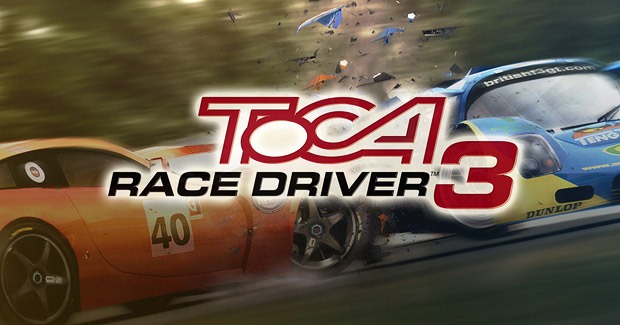
📅 Game released: 2006
TOCA Race Driver 3 is Codemasters’ motorsport racer built around more than 35 racing disciplines, varied championship careers, realistic damage, and a choice between accessible and demanding driving. This PC guide explains official download availability for previous owners, legacy retail compatibility, multiplayer limitations, system requirements, controller setup, and practical Windows configuration.
 By Editor Zero — independently researched, edited, and maintained.
Last updated: 14 November 2026
Last reviewed: 14 November 2026
Table of Contents
- Quick Facts
- Official PC Stores, Download & Installation
- TOCA Race Driver 3 Review
- Pros & Cons
- PC System Requirements
- Frequently Asked Questions
- Similar Games
TOCA Race Driver 3 Quick Facts
- Game: TOCA Race Driver 3 / TOCA Race Driver 2006 / DTM Race Driver 3 / V8 Supercars 3
- Developer: Codemasters
- Publisher: Codemasters
- Genre: Racing, Driving Simulation
- Release: February 22, 2006 (North America); February 24, 2006 (Europe), including Windows PC
- Platforms: Windows PC, PS2, Xbox, macOS
- Related PSP game: TOCA Race Driver 3 Challenge is a separate handheld adaptation, not the original Windows PC release
- Career Modes: World Tour and Pro Career, alongside Free Race and Time Trial
- Multiplayer: Original GameSpy internet service retired; PC supports two-player same-system racing and LAN competition for up to 12 players
- Engine: Not officially confirmed
- Community: Steam Discussions, PCGamingWiki, ModDB Community
- PC modding: Nexus Mods and ModDB host unofficial modifications; no official Steam Workshop or modern modding toolkit
- Metacritic score: 84/100 (Windows PC)
- IGN score: 8.7/10 (original game)
- GameSpot score: 8.5/10 (original game)
- Steam user reception: Very Positive (historical overall reception; no longer sold on Steam)
Official PC Store Status, Download & Installation
👇 Use these notes to check TOCA Race Driver 3’s official PC purchase and download status, previous digital ownership, and safe setup considerations before looking for an old Windows copy.
- Current PC availability: TOCA Race Driver 3 is no longer sold as a normal new digital purchase on Steam or GOG. No verified current Epic Games Store, EA app, or Microsoft Store Windows edition is available.
- Steam edition: The game’s historical Steam app and community pages still exist, but the store no longer offers a standard new purchase. People who previously bought it should check their own Steam library and account entitlements for any available installation option.
- GOG edition: GOG withdrew TOCA Race Driver 3 from sale because of licensing restrictions. Although GOG initially said purchasers could still re-download it, a later licensing notice said access to re-downloads would also end. Do not assume a historical GOG purchase still provides an installer; check your account, any legally retained backup, or GOG Support.
- Original discs: Used Windows DVD editions may be obtainable from second-hand sellers, but they are legacy physical copies rather than a current publisher-supported digital download.
- Edition-specific DRM: Some Windows retail releases use StarForce or SafeDisc copy protection that does not work on Windows 10 and Windows 11. Other reissues used different disc checks, so the exact edition matters. Do not assume an original protected DVD will launch on a current PC.
- Offline careers: World Tour, Pro Career, Free Race and Time Trial are single-player features and do not require the discontinued GameSpy internet service once a legitimately owned, compatible copy is running.
- Official multiplayer: The original GameSpy-based online matchmaking is retired. Two-player local play and LAN support for up to 12 players are part of the original PC game, but modern systems, routers and input devices can introduce compatibility issues. Third-party networking methods are unofficial.
- Community changes: Widescreen, camera, track and visual modifications can be useful for owners of compatible copies, but they are unofficial. Keep backups of game saves, profiles and configuration files before changing a working installation.

TOCA Race Driver 3 Review
A racing career built around learning new cars, with damage that makes mistakes matter.
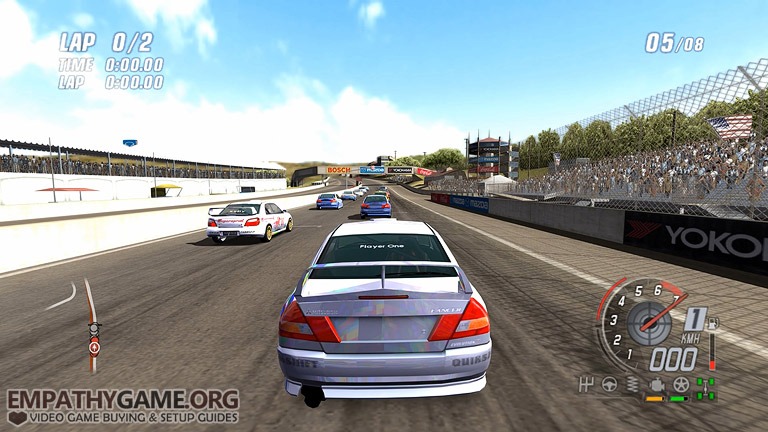
TOCA Race Driver 3 takes an unusual approach to becoming a better racing driver. Rather than asking players to perfect one discipline, it keeps changing the machinery and asking how much of what they have learned still applies. World Tour moves through more than 35 forms of motorsport, from touring cars and GT racing to open-wheel machines, rally, trucks, classics, karts and off-road events. The number matters only if the cars behave differently. Here, differences in braking, weight, grip and steering can make a familiar circuit feel like an entirely new challenge.
There is a satisfying logic behind the constant changes. The handling is accessible without turning every event into arcade-style bumper cars, while mechanical damage, racing rules and setup decisions encourage a little more care than simply holding the throttle down. It is not equally convincing in every category, and the AI sometimes mistakes stubbornness for competitive driving. Yet the game’s central idea remains appealing: knowing a track is useful, but understanding how a particular car behaves on that track matters more.
Every Championship Asks You to Relearn the Car
World Tour makes that idea clear from the beginning. After creating a profile, the player enters a race while Scottish mentor Rick offers guidance over the radio. There is no elaborate car-collection fantasy to establish first. The focus is on driving whatever the next event provides and becoming capable enough to move on. Across 32 tiers, multiple championship choices regularly become available, making progression less about loyalty to a favourite vehicle and more about deciding which branch of racing to tackle next.
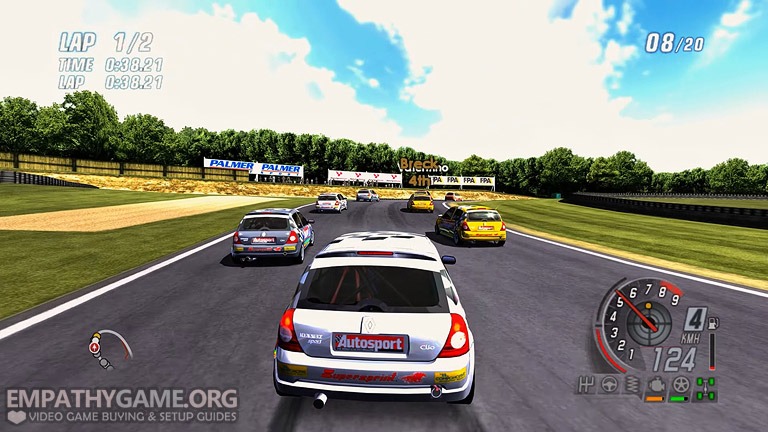
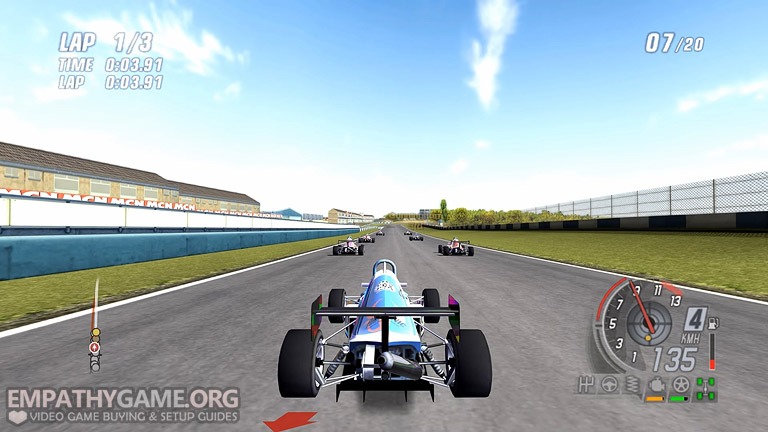
Consider the difference between a Renault Clio Cup race and an open-wheel event. In the Clio, clean braking, carrying momentum and keeping out of trouble are often the priorities. With lighter, more responsive formula machinery, small steering or braking errors become much less forgiving, and contact between wheels can end the contest abruptly. Supertrucks bring a different problem: mass and suspension movement demand patience that feels almost opposite to the precision of an open-wheel car. Rally and off-road events further change the relationship between grip and throttle control. The basic techniques remain familiar, but their timing and importance do not.
That changes the value of track knowledge. Silverstone, Hockenheim, Laguna Seca and Spa-Francorchamps are recognisable venues, yet a corner that permits a confident approach in one class may require much earlier braking in another. An overtaking opportunity can disappear simply because the next vehicle cannot change direction or slow down in the same way. The discipline list teaches adaptation rather than repeating one successful routine. The drawback is just as clear. World Tour can move to another championship at precisely the moment a car begins to feel natural. Drivers who enjoy spending an entire season refining one technique may find that restless pace frustrating.
Tuning Matters, but You Do Not Have to Live in the Garage
Vehicle setup offers another way to respond to those differences. Depending on the championship, available adjustments include gear ratios, downforce, brake bias, suspension, ride height and tyre-related settings. These choices have understandable trade-offs. Shorter gearing helps a car accelerate but limits its speed at the top end; extra downforce can provide greater confidence through corners while adding drag. A setup suited to a smooth circuit is not automatically sensible for uneven ground. Tuning works best when treated as a response to the car and event, not as a separate numbers game.
The interface is less helpful at explaining why an adjustment works. Change several settings together and it is easy to make handling worse without knowing which decision was responsible. There is depth here for someone willing to experiment, but the game assumes more technical understanding in the garage than it does on the track. Fortunately, default setups remain usable through much of the career. Learning a car’s behaviour first, then making a few deliberate changes, is a more inviting route into the system than feeling obliged to tune everything before the first lap.
Damage Gives Every Risk a Second Consequence
The damage model is where TOCA Race Driver 3 makes its strongest case for careful driving. A substantial collision can affect steering alignment, suspension, wheels, gears or engine performance rather than merely leave the bodywork looking worse. Surviving an impact does not mean escaping its cost. A car that pulls sideways makes the next braking point harder to judge; damaged gearing can spoil acceleration; engine trouble may take away the straight-line speed needed to defend a place.
Even leaving the tarmac can create a problem that follows the car back onto it. Driving across grass or an infield can compromise tyre condition and grip, so cutting a corner to save time may make the following corner more difficult. The connection between cause and consequence is easy to understand: brake too late, run wide, lose grip and spend the next section correcting the original mistake. Corner-cutting and dangerous-driving penalties reinforce that approach. Touring-car contact still has a place, but treating opponents like barriers is rarely the clever shortcut it first appears to be.
What makes the system interesting is how it changes the meaning of a good lap. A risky overtake may gain one position while leaving the car harder to control for the rest of the event. Sometimes the faster long-term choice is to preserve the car. This does not turn the game into a demanding mechanical simulator, but it gives restraint a genuine purpose. In racers where a crash is forgotten immediately, taking a chance usually costs only a few seconds. Here, a small mistake can keep asking for payment several corners later.
Rival AI Is Capable, but Close Packs Expose Its Limits
The opposing drivers can make a race feel properly contested. They overtake each other, defend positions, make errors and respond when an accident disrupts the circuit. On normal difficulty, conservative braking at some corners can create a useful opening for a late pass. Higher difficulty reduces that margin and places more pressure on consistency. When the field has room to spread out, there is enough going on to make the rivals feel like competitors rather than moving obstacles.
Crowded corners reveal a less convincing side. An opponent may commit to its preferred racing line even when another car already occupies the space, particularly when several vehicles arrive together at the first turn. Instead of easing off or adjusting its approach, it can continue toward the apex and cause a collision that feels difficult to avoid. There is an important difference between an aggressive rival forcing a difficult decision and an AI driver behaving as though the rest of the pack should simply move aside. The former makes close racing exciting. The latter makes it unpredictable for the wrong reason.
Patience becomes a practical defence. Leaving extra space through the opening corner, concentrating on the exit and making a move once the cars separate can protect a strong race better than attempting three passes immediately. That caution fits the damage system, but it also exposes an occasional unfairness: losing because of an ambitious braking point is easier to accept than losing because another driver refuses to acknowledge your position. Instant restarts soften the frustration without removing it, especially when a promising championship race must be repeated after a messy first-lap incident.
World Tour Encourages Discovery; Pro Career Rewards Commitment
The decision to offer two career structures gives the game more balance than its constantly changing World Tour might suggest. World Tour’s 32 tiers are designed to show off the range of motorsport, sometimes placing an unfamiliar discipline in front of someone who would never have chosen it independently. Rick’s role as mentor and crew chief, along with brief rivalries and garage scenes, gives the journey some personality. The animation and dialogue are clearly of their time, but the story remains light enough not to distract from the races. Its purpose is to provide continuity while the driving keeps changing.
Pro Career is the alternative for someone who finds that variety exhausting. Competition is organised into six paths: Open Wheel, GT, Touring Car, Oval, Off-Road & Rally, and Historic. Instead of jumping constantly between unrelated machines, a driver can follow one discipline and work toward more demanding events. An open-wheel progression, for example, lets slower cars establish the basics before faster formula machinery requires more precise control. The pleasure here comes from recognising genuine improvement in one style of driving rather than proving that you can manage a little of everything.
Neither approach makes the other unnecessary. World Tour can reveal a category worth exploring more seriously, and Pro Career gives that interest room to develop. Championship completion also unlocks more options for Free Race and Time Trial, allowing favourite combinations to survive beyond the structured careers. With roughly 70 licensed cars and more than 80 circuits or configurations, there is plenty to revisit. The real replay incentive is not the count. It is the possibility of returning to a track in another vehicle and discovering that the line which worked before no longer feels quite right.
Presentation Works Best When It Explains the Driving
The graphics have aged unevenly. Trackside surroundings, menus and human characters show their age quickly, whereas the car models, visible deformation and replays remain effective. Part of that is simply visual interest, but there is a more useful reason: damage is tied to the race itself. Bent bodywork suggests that an impact may have changed the car’s behaviour, and parts coming off an open-wheel machine make a collision look as serious as its consequences can be.
Sound contributes to that feedback. Engine notes, tyre noise and impact effects help communicate changes in speed, grip and contact, while the soundtrack adds some energy to the menus and transitions between championships. The presentation cannot hide its older technology, nor does it need to. Its most convincing moments are those in which the sights and sounds help the driver understand what the car is doing, rather than merely making the event look dramatic.
Final Verdict
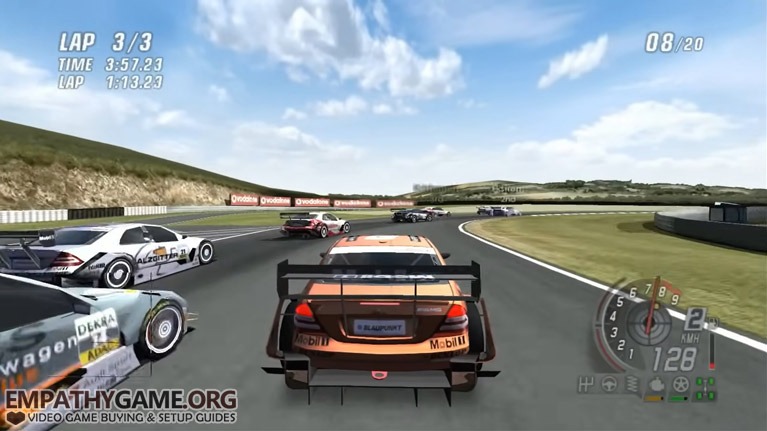
TOCA Race Driver 3 earns its variety because the vehicles change more than the scenery. Moving from a Clio to an open-wheel car, a supertruck or an off-road machine means reconsidering braking points, grip, contact and the amount of risk worth taking. Damage and race rules give those decisions lasting consequences, while setup options offer extra control without making extensive tuning essential.
The ambition comes with uneven results. World Tour sometimes interrupts the pleasure of mastering a class, certain disciplines feel more convincing than others, and the garage could do a better job of teaching its own systems. Most frustratingly, rival AI can alternate between believable racing and collisions that seem to ignore the space another car occupies. Those weaknesses matter more here because keeping the car intact is such a central part of the challenge.
Still, there is something distinctive about a racing game that asks for adaptability as often as outright speed. World Tour suits drivers curious about many forms of motorsport; Pro Career is better for those who want to concentrate on one. Someone seeking the most refined simulation of a single series may prefer a more specialised racer. For anyone who enjoys learning how different cars ask different things of the same circuit, TOCA Race Driver 3 offers a broad, sometimes imperfect, but genuinely worthwhile kind of racing education.
TOCA Race Driver 3 Pros & Cons
- Pro: Exceptional motorsport variety across touring cars, GT, open-wheel, rally, off-road, oval racing, classics, trucks and karts
- Pro: World Tour provides rapid variety, while Pro Career gives simulation-minded players a focused motorsport progression path
- Pro: Mechanical damage, race rules, large grids and competitive AI make races more demanding than a typical arcade racer
- Pro: More than 70 licensed vehicles and numerous circuit configurations support extensive single-player replayability
- Pro: Established modding and preservation resources offer unofficial widescreen, camera, visual and track modifications
- Con: No straightforward official digital purchase route remains for new Windows PC buyers
- Con: Original GameSpy-powered internet multiplayer is no longer officially available
- Con: Legacy DRM and old hardware-configuration tools may prevent straightforward use on Windows 10 or Windows 11
- Con: Some rival AI behaviour, menu design, controller handling and presentation show the game’s age
TOCA Race Driver 3 PC System Requirements
Historical requirements notice: The specifications below describe the original Windows XP-era release, not a modern Windows 10/11 compatibility guarantee. Requirements varied slightly across historical retail references; allow approximately 7 GB of free disk space and check the needs of your particular edition.
HISTORICAL MINIMUM:
OS: Windows XP
CPU: Intel Pentium 4 or AMD Athlon at approximately 1.4 GHz
RAM: 256 MB
GPU: Supported 32 MB DirectX 9-compatible graphics card
DirectX: DirectX 9.0c
Storage: Approximately 6–7 GB of available disk space, depending on the release
Sound Card: DirectX 9-compatible sound card
Optical Drive: 2x DVD-ROM drive for applicable physical releases
HISTORICAL RECOMMENDED:
OS: Windows XP
CPU: Intel Pentium 4 or AMD Athlon at approximately 2.4 GHz
RAM: 512 MB
GPU: Supported 64 MB DirectX 9 graphics card or better, such as a compatible GeForce 4 or Radeon model
DirectX: DirectX 9.0c
Storage: Approximately 7 GB available disk space
Sound Card: DirectX 9-compatible sound card
Additional PC Performance and Setup Notes
- Compatibility matters more than power: This is a 32-bit, DirectX 9-era Windows game. Modern PC hardware usually exceeds its original requirements, but unsupported DRM and configuration software may prevent an otherwise capable system from launching it.
- Identify the disc edition: PCGamingWiki documents StarForce 3.7.13 and SafeDisc-protected releases as well as some later editions with different disc checks. Verify your own edition before troubleshooting; do not install untrusted executable replacements or copy-protection workarounds.
- Native widescreen setup: Standard 16:9 and 16:10 display ratios are supported by the original Hardware Setup utility. Choose the resolution and the aspect ratio separately; the image may still show stretched cutscenes.
- Unlisted resolutions: If the Hardware Setup utility omits your resolution, the existing
savedata/pchardwareconfig.inifile can be backed up and its[Graphics]values forFullScreenWidth,FullScreenHeightandFullScreenRefreshedited as documented by WSGF. Use a refresh rate that your monitor supports; unofficial ultrawide camera or FOV changes are separate. - Controllers and wheels: PC controller and force-feedback wheel support was designed around contemporary devices. Remapping and wheel calibration may be needed with newer hardware; exact support varies.
- LAN versus online: GameSpy shutdown affects the historical internet multiplayer service, not the underlying single-player careers. LAN support remains an original game feature, though operation on a particular modern network is not guaranteed.
- Preserve your settings: Back up the
savedatafolder, profiles and configuration files before installing unofficial graphics, camera, track or other gameplay modifications.
Official Trailer
Note: This IGN-hosted TOCA Race Driver 3 trailer shows the game’s circuit racing, licensed cars, pack competition and damage-focused presentation, while the written guide adds the modern PC availability, delisting, compatibility, multiplayer, requirements and setup context.
Frequently Asked Questions
What is the difference between World Tour and Pro Career, and which should I start with?
World Tour introduces more than 35 racing disciplines across 32 tiers, so it is the easier way to sample the game’s variety. Pro Career follows a selected motorsport category more closely; choose it if you would rather build consistency in one discipline.
Must I win every championship to progress through World Tour?
No. Meeting the required objective in one of the available championships is normally enough to advance to the next tier. Completing additional events can still unlock more cars, circuits and other content.
Does TOCA Race Driver 3 have a story?
World Tour has a light career narrative, cutscenes, rivals and guidance from Rick, the Scottish racing mentor. It adds continuity between championships but does not turn the game into a story-focused adventure.
Is TOCA Race Driver 3 more of a simulator or an arcade racer?
It is an accessible simulation-oriented racing game. Driving assists and adjustable simulation rules make it approachable, while mechanical damage, tyre behaviour, racing flags and differences between vehicle classes reward more careful driving.
What do the Pro-Simulation options change?
They make vehicle behaviour and race consequences less forgiving. Beginners can learn the braking points and handling on gentler settings first, then increase simulation demands when a particular class begins to feel familiar.
Can damage affect the car after a collision?
Yes. A crash can affect steering, suspension, wheels, gears or engine output, so surviving a collision does not necessarily mean the car remains competitive. This gives clean racing and preserving the car a practical advantage.
Are tyre wear, fuel use, pit stops and racing penalties included?
Yes, with their importance varying by event and simulation settings. Tyre condition, fuel, pit requirements, race flags and corner-cutting penalties can all matter, especially in longer or more regulation-heavy championships.
Can you tune cars or practise outside the career modes?
Yes. Where the event permits it, setups include adjustments such as gearing, downforce and suspension. Free Race and Time Trial allow extra driving with the cars and circuits unlocked through career progression.
Does TOCA Race Driver 3 have split-screen, LAN or cooperative multiplayer on PC?
The original Windows release supports competitive two-player same-system racing and LAN sessions for up to 12 people; it does not have a cooperative story campaign. The official GameSpy internet service is discontinued, and modern local or LAN compatibility can depend on your equipment and version.
Can I still buy or officially download TOCA Race Driver 3 on Windows?
Not through a normal new Steam or GOG purchase. Existing Steam owners should check their library, while GOG’s original promise of continued downloads was followed by a later licensing notice that restricted re-downloads. Check any owned account entitlement, lawful backup or distributor support rather than assuming a historical purchase still provides a download.
Why was TOCA Race Driver 3 removed from digital stores?
Licensing restrictions prompted the old GOG removal, and the game is no longer offered for a normal new digital purchase. Its large set of licensed motorsport content helps explain why long-term distribution rights can be complicated, although the full details of every storefront agreement are not public.
Will an original DVD install and run on Windows 10 or Windows 11?
Not reliably. Certain retail releases use StarForce or SafeDisc DRM that is incompatible with modern Windows; other editions differ. Identify your exact edition, consult reliable compatibility documentation and avoid untrusted patches or DRM-bypass downloads.
Does the PC version support racing wheels and force feedback?
Yes, it includes controller and force-feedback wheel support. Some modern controllers and wheels need manual configuration because they use input systems newer than the game’s original PC implementation.
Can TOCA Race Driver 3 run at 16:9 widescreen resolutions?
Yes. Its original Hardware Setup utility supports common 16:9 and 16:10 aspect ratios, but you must set resolution and aspect ratio separately. Custom ultrawide setups may need additional configuration and will not always display every element correctly.
Are mods available for TOCA Race Driver 3?
Yes. Established communities host unofficial camera, visual, track and other changes. Mod support is version-dependent, and there is no official Steam Workshop or modern publisher-supported mod toolkit.
Still have questions?
Visit the Steam Discussions, PCGamingWiki technical guide, or TOCA Race Driver 3 ModDB community for version-specific help and further discussion.
Sources & References
These references were used to check the game’s historical release, official-store history, PC compatibility, multiplayer features, display support and reception. Availability and account entitlements may change.
- GOG — original TOCA Race Driver 3 removal announcement and later licensing notice discussed on GOG — historical sale and re-download restrictions.
- PCGamingWiki — TOCA Race Driver 3 — Windows requirements, DRM variations, technical configuration and GameSpy middleware.
- SteamDB — TOCA Race Driver 3, app 11500 — historical Steam listing, app metadata and overall user reception.
- WSGF — TOCA Race Driver 3 — native widescreen support and hardware-configuration settings.
- MobyGames — TOCA Race Driver 3 — historical same-system and network multiplayer features.
- GameSpot — TOCA Race Driver 3 review — contemporary gameplay assessment and original review score.
Similar Games Like TOCA Race Driver 3

Found something worth playing through DecideGame?
DecideGame.com is an independent gaming project run by Editor Zero. If this guide helped you discover a game, solve a problem, or find useful information, you can support DecideGame.com and help keep new and updated game guides coming.
DecideGame — PC Game Guides, Reviews & Setup Help