
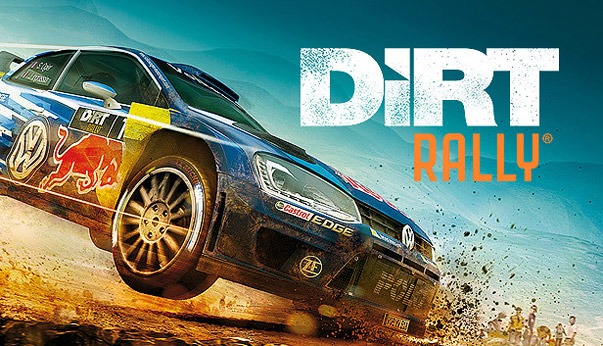
Use this updated 2026 DiRT Rally PC guide to understand its delisted Steam status, reinstall options for existing owners, legacy Oculus Rift VR support, Steam Deck compatibility, system requirements, Workshop setups, and safe official installation guidance.
 By Editor Zero — independently researched, edited, and maintained.
Last updated: 15 September 2026
Last reviewed: 15 September 2026
Table of Contents
- Quick Summary
- Quick Facts
- Official PC Stores, Download & Installation
- DiRT Rally Review
- Pros & Cons
- PC System Requirements
- Frequently Asked Questions
- Similar Games
DiRT Rally Quick Summary
✔ Hardcore rally-driving simulation built around precise car control, co-driver pace notes, changing surfaces, mechanical damage, repairs, and stage-by-stage consistency rather than arcade-style racing
✔ Six major rally locations provide more than 70 stages across gravel, tarmac, snow, and ice, alongside Pikes Peak hillclimb and officially licensed FIA World Rallycross competition
✔ Similar to Project CARS through its simulation-first handling, strong racing-wheel focus, demanding vehicle behaviour, and emphasis on clean technique rather than forgiving arcade physics
✔ DiRT Rally is delisted from new digital PC sales, making an existing Steam library copy or other previously activated ownership the main legitimate route to installation
✔ Existing Steam owners retain a feature-rich PC version with Steam Deck Verified compatibility, full controller support, Steam Workshop tuning presets, Steam Cloud metadata, and legacy Oculus Rift VR support
✔ Single-player rallying remains the safest long-term use case because RaceNet-era and multiplayer features should now be treated as legacy functionality rather than guaranteed services
DiRT Rally Quick Facts
Official PC Store Status, Download & Installation
👇 Use the notes below to understand the current official PC availability status for DiRT Rally and safely reinstall an existing legitimate copy without relying on unofficial acquisition sources.
- Current availability: DiRT Rally has been removed from new digital sale on Steam and its other former digital storefronts, so there is no verified official Windows PC purchase page for new buyers.
- Existing Steam owners: If DiRT Rally is already attached to your Steam account, install it through your Steam Library rather than searching for a replacement game download elsewhere.
- EA Play: DiRT Rally was removed from the EA Play catalogue and should not be treated as an available EA Play subscription title.
- Steam installation: The legacy Steam build launches through Steam and does not list the EA App as a separate launcher requirement. Steam metadata also retains achievements, controller support, Steam Cloud, Workshop integration, leaderboards, and Family Sharing features.
- Offline play: Valve compatibility metadata does not mark an internet connection as required for either initial setup or single-player play, making offline rally stages the most dependable way to use an owned copy.
- Online functionality: RaceNet-era services and community events should be treated as legacy or partially unavailable. Community reports indicate that some Steamworks-based player-versus-player functionality may behave differently from RaceNet features, so online access should not be assumed before launching the game.
- Oculus Rift VR: The Windows Steam build received native Oculus Rift support for seated cockpit play. Its VR implementation predates today’s broader OpenXR ecosystem, so newer Meta, SteamVR, or Windows headsets may require additional compatibility work and are not universally guaranteed.
- Steam Deck: Valve rates the Steam version Verified, with default controls, readable interface text, matching controller icons, and suitable default graphics behaviour for Deck hardware.
- Workshop & modding: The official Steam Workshop remains focused on ready-to-use car tuning and Force Feedback presets. Back up important settings before experimenting with unofficial file replacements or external compatibility tools.
No purchase buttons are shown because DiRT Rally is no longer available through a verified official PC storefront for new digital purchases.

DiRT Rally Review
A demanding rally sim where the fastest lesson is learning when not to push.
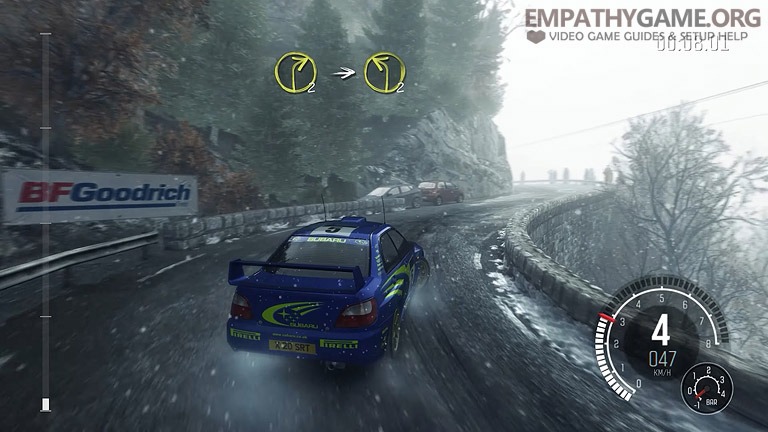
DiRT Rally is at its best when a stage stops feeling like a sequence of corners and starts feeling like one continuous decision about risk. Codemasters stripped the series back to rallying fundamentals: a car, a co-driver, a road you often cannot see beyond the next crest, and enough mechanical consequence to make one reckless moment matter several stages later. The result is not a driving game built around constant rewards or spectacle. Its satisfaction comes from becoming smoother, calmer, and faster through repetition.
That focus gives the handling its character. Gravel, snow, ice, mud, and tarmac demand different braking and throttle habits, while front-wheel drive, rear-wheel drive, and four-wheel drive cars punish different mistakes. The simulation is not the last word in absolute realism—damage can be surprisingly forgiving after some large impacts, and certain surface behaviours are less nuanced than in harder-core rally simulators—but the relationship between speed, weight transfer, grip, and commitment is convincing enough to make improvement feel earned. It is a game for players who enjoy shaving seconds by understanding a car rather than by unlocking a better one.
Speed Only Works When the Car Is Settled
The central skill is not simply driving quickly. It is keeping the car composed while using weight transfer to place it for what comes next. On loose gravel, braking before turn-in and then easing the car into rotation is often faster than charging into the corner and correcting halfway through it. A front-wheel-drive MINI Cooper S or Lancia Fulvia gives newcomers a relatively stable introduction because the driven front wheels help pull the car towards the exit. Move into a rear-wheel-drive machine such as the Lancia Stratos and the same throttle habits can suddenly turn a small slide into a spin.
That difference between classes is one of the strongest reasons to keep learning. Powerful Group B cars are not merely faster versions of starter machinery; they compress decision-making time and amplify poor inputs. A crest that feels harmless in a slower car can become a launch point, while an overconfident throttle application on corner exit can send the rear around before there is space to catch it. Four-wheel drive adds traction but not immunity. The faster the car becomes, the more important it is to finish braking, settle the chassis, and know where the power can safely go down.
The off-road handling is especially good at letting controlled movement become part of the line rather than treating every slide as a failure. There is room to rotate the car on loose surfaces, catch it with throttle, and use the available grip rather than fighting for a perfectly tidy trajectory. That gives gravel stages a satisfying skill ceiling: early runs can feel like survival, but once braking points and weight transfer make sense, the same bends begin to connect into a rhythm.
Pace Notes Turn Blind Roads Into a Language
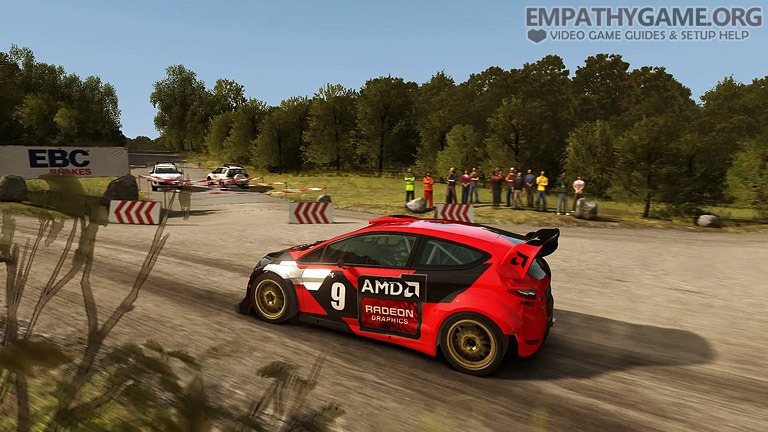
The co-driver is effectively the game’s navigation system, and learning to trust the calls is as important as learning the steering. Numbers describe corner severity while additions such as “tightens,” “crest,” “don’t cut,” and distance calls tell you how one hazard connects to the next. At first the stream of information can feel too dense to process. The breakthrough comes when the notes stop being individual instructions and become a preview of the road: brake for the three-left, but already position the car for the right that follows.
Different locations make that language matter in different ways. Finland’s high-speed crests reward commitment but leave little time to react after landing. Wales is narrower and more claustrophobic, with mud, trees, and changing visibility discouraging late corrections. Monte Carlo is a more deceptive test because a line that feels secure on dry tarmac can become dangerous when the surface turns icy. The important habit is to respond to the note before the hazard is visible rather than waiting for visual confirmation.
The system is not flawless. Some stage calls can arrive too late or understate the danger, with Finland containing a few sequences where memorising the road becomes safer than treating every note as complete. That is a meaningful weakness in a game that asks the co-driver to function as the player’s eyes beyond a blind crest. Most calls are useful enough to build confidence, but the occasional bad one makes the learning process less pure than the otherwise disciplined design suggests.
Damage Makes Consistency More Important Than Heroics
Persistent damage changes the meaning of a fast stage. A clipped rock, heavy landing, or tree strike can affect steering, suspension, cooling, transmission, lights, or the general condition of the car, and service areas provide limited time to deal with the consequences. That creates a more interesting question than “how fast can this corner be taken?” The real question is often whether a few tenths are worth the chance of carrying a wounded car into the next stage.
A night run makes the trade-off obvious. Smash the headlights early and the car may still be mechanically capable of finishing, yet the loss of visibility can make every following corner far more dangerous. At service, spending time on the lights, radiator, or suspension may matter more than repairing cosmetic damage. The best championship driving therefore has a conservative streak. A slightly slower clean stage can be more valuable than a spectacular sector followed by a recovery, puncture, or retirement.
The damage model nevertheless stops short of truly punishing simulation. Serious accidents do not always have consequences proportional to the violence of the impact, and a car can sometimes limp away from a collision that would plausibly end a real rally. That leniency does not erase the strategic value of persistent damage, but it does place DiRT Rally between accessible simulation and more uncompromising rally software. The game sells the fear of damaging the car better than it simulates every possible mechanical consequence.
Career Progression Rewards Patience, Then Starts to Repeat
The career works because its structure reinforces consistency. Championships stretch across multiple stages and locations, prize money funds additional cars, and a small engineering team improves repair efficiency. Moving into another class is meaningful because a new drivetrain or power level can force a partial relearning of technique. The progression is strongest when it feels like the player’s own skill is advancing alongside the garage.
The AI times also give the standings a useful sense of uncertainty. Rivals do not always appear to behave like perfectly fixed benchmarks; strong competitors can lose ground dramatically while less threatening names sometimes produce a good stage. That variation helps a long event feel closer to a rally championship than a simple ladder of identical target times. It also means a cautious finish can occasionally gain more places than expected when other competitors falter.
The weakness is repetition. The same core locations return across longer championships, different conditions, reverse layouts, and faster classes. Those variations change how the roads must be driven, but they cannot fully disguise the limited environmental pool. The economy compounds that issue because buying into new classes can require more repeated events than the sparse career presentation really supports. There is no elaborate team drama or generous stream of unlocks to distract from the repetition; the road itself has to be enough.
For a patient player, that can still work. A 20-plus-stage championship becomes less about seeing new scenery and more about maintaining concentration, keeping the car alive, and measuring how much cleaner familiar roads have become. The satisfaction is unusually internal: an old corner that once required a nervous lift can eventually be taken with one deliberate braking input and a clean exit. If that sort of self-measured improvement is not rewarding, the career can feel austere rather than focused.
Rallycross and Pikes Peak Change the Rhythm
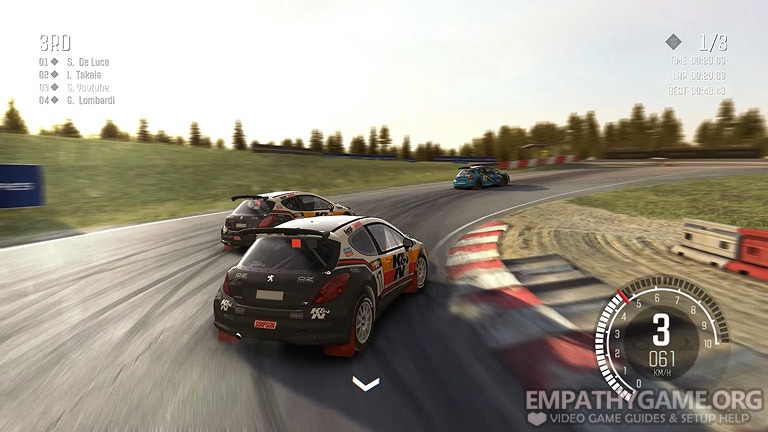
Rallycross provides the most obvious break from solitary time trials by putting several cars on a compact circuit at once. Traffic changes the problem immediately: a technically perfect line is less useful when another car already occupies it, and positioning becomes almost as important as outright pace. It is an entertaining contrast to stage rallying, though the limited circuit selection prevents it from carrying the same long-term depth.
Hillclimb is a different kind of test. Pikes Peak turns the challenge increasingly towards memorisation, precision, and nerve across a long ascent. Its different surface configurations also expose how differently the same route behaves when grip changes. In the older, more unruly hillclimb machinery, a missed gear change or poorly timed throttle input can break momentum for several seconds, while the exposed edges make small steering errors feel far more consequential than they would on a conventional circuit.
Both modes strengthen the package because they ask for skills that rally stages only partly test, but neither feels as complete as the main discipline. Rallycross has direct competition without enough circuits; Hillclimb has a superb centrepiece without enough breadth around it. They are valuable diversions rather than equal pillars.
Sound and Feedback Do More Than Sell the Atmosphere
The presentation is restrained, which suits the subject. There is no elaborate festival framing and little attempt to turn the driver into a celebrity. Atmosphere comes from the start marshal, the countdown, the co-driver’s cadence, the car vibrating over rough ground, and the release of crossing the timing beam after several minutes of concentration.
Sound is particularly important because it communicates the car’s condition and the road beneath it. Gravel striking the floor, transmission whine, tyre scrub, engine note, suspension movement, and impact noises all reinforce what the steering is already telling you. With a wheel, force feedback can add another layer by making surface changes and weight movement easier to read, but the underlying design does not depend on expensive hardware; smooth analogue inputs matter more than the controller used to provide them.
The environments are similarly functional rather than lavish. Wales feels enclosed and damp, Greece dry and exposed, Sweden bright but treacherous, Germany rigid and fast, Finland built around speed and crests, and Monte Carlo beautiful precisely because its mountain roads are so easy to misread. Repeated stages eventually reveal the limits of the asset pool, yet the strong contrast in road character keeps them from blending together as quickly as the raw location count might suggest.
Final Verdict
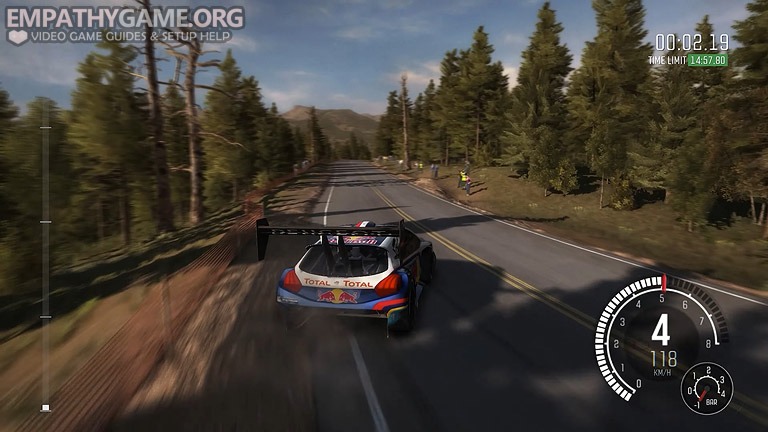
DiRT Rally succeeds because it understands that rally driving is not exciting merely because the cars are fast. The tension comes from incomplete information, narrow roads, changing grip, mechanical consequence, and the knowledge that one unnecessary risk can undo several clean stages. Its handling gives loose surfaces enough movement to reward controlled rotation, the different drivetrain layouts demand genuine adaptation, and the co-driver system gradually turns intimidating strings of numbers into a usable racing language.
It is also more forgiving and more limited than its hardest-edged reputation implies. Large crashes can be survivable in ways that soften the simulation, some pace notes are less reliable than they should be, the career economy can become grindy, and repeated locations expose the modest breadth of the championship structure. Rallycross and Pikes Peak are worthwhile changes of pace, but neither matches the depth of the core rallying.
For players who want constant novelty, generous progression, or an easy path from beginner to expert, that narrowness can be frustrating. For anyone who enjoys learning a difficult system until formerly chaotic inputs become deliberate, it remains unusually rewarding. The best runs are not the wildest ones. They are the stages where the car stays settled, the calls make sense, the risks are chosen rather than improvised, and the finish line arrives with the feeling that the speed was earned.
DiRT Rally Pros & Cons
DiRT Rally PC System Requirements
OFFICIAL WINDOWS PC REQUIREMENTS:
MINIMUM:
OS: 64-bit Windows 7, Windows 8, or Windows 10
CPU: AMD FX Series or Intel Core i3 Series
RAM: 4 GB
GPU: AMD Radeon HD 5450, NVIDIA GeForce GT 430, or Intel HD Graphics 4000 with 1 GB VRAM; DirectX 11-compatible graphics required
DirectX: Version 11
Storage: 50 GB available space
Sound Card: DirectX-compatible sound card
RECOMMENDED:
OS: 64-bit Windows 7, Windows 8, or Windows 10
CPU: AMD FX-8150 or Intel Core i5-4670K
RAM: 8 GB
GPU: AMD Radeon R9 290 or NVIDIA GeForce GTX 780
DirectX: Version 11
Storage: 50 GB available space
Sound Card: DirectX-compatible sound card
Additional PC Performance and Setup Notes
- The specifications above reproduce the game’s original Windows requirements. Steam’s client itself now requires Windows 10 or newer, so an existing Steam copy should normally be installed on Windows 10 or Windows 11 rather than relying on the older operating systems named in the original specification.
- Valve rates DiRT Rally as Steam Deck Verified, making it an unusually strong handheld option for owners of the retired Steam app.
- The original system requirements were written for conventional monitor play. Oculus Rift VR adds rendering overhead, so hardware comfortably above the minimum specification is preferable when using the legacy VR mode.
- Racing wheels, pedals, gamepads, and keyboard controls are supported, while the Steam Workshop provides downloadable Force Feedback and vehicle-setup presets for compatible owned copies.
- If the game fails to launch correctly after reinstalling, verify its local files through Steam before changing configuration files or adding unofficial compatibility tools.
Official Trailer
Note: Codemasters’ full-release PC trailer highlights DiRT Rally’s simulation-focused driving, rally stages, historic and modern cars, challenging surfaces, and motorsport atmosphere, while the written guide adds the present delisting status, Steam Deck information, VR caveats, requirements, and installation guidance.
Frequently Asked Questions
Is DiRT Rally worth playing in 2026?
Yes, especially for players who want a focused and demanding rally simulation built around pace notes, car control, damage management, and improving stage consistency. Its biggest limitations are the delisted store status, retired RaceNet-dependent features, and older VR implementation, but the offline rally experience remains highly playable for existing owners.
Can you still buy DiRT Rally on Steam?
No. DiRT Rally has been retired from the Steam store and is no longer available for normal new digital purchases. Existing owners can still access the game through the Steam account on which it was previously activated.
Can existing Steam owners reinstall DiRT Rally?
Yes. If DiRT Rally already belongs to your Steam library, you can normally download and reinstall it from that library even though its public store page is retired. You do not need to buy the game again simply because it has been delisted.
Can DiRT Rally be played offline?
Yes. Rally, Hillclimb, career content, practice, and offline Rallycross against AI can be played without a continuous internet connection. Steam Deck compatibility metadata also does not flag internet access as required for single-player play.
Are DiRT Rally’s official online services still available?
Not in their original form. RaceNet-dependent features such as community events and leagues should be considered unavailable, while community reports indicate that some direct Rallycross PVP functionality may still work through Steam; it is best treated as legacy multiplayer rather than a guaranteed supported service.
Does DiRT Rally have multiplayer or co-op?
The original multiplayer component centers on Rallycross PVP, where cars race together on the circuit. Traditional rally and Hillclimb stages are individual timed runs rather than cooperative modes, and there is no campaign co-op.
Does DiRT Rally support split-screen or local multiplayer?
No. The PC version does not provide split-screen or simultaneous local multiplayer. Two people can take turns driving stages on one system, but that is not an official two-player mode.
Can you race against AI cars offline?
Yes. Rallycross lets you compete directly against AI-controlled cars offline. Standard rally and Hillclimb instead use timed competition, so you drive the stage alone and compare your result with other recorded times.
How does career difficulty work in DiRT Rally?
Career difficulty is tied to championship progression rather than a normal Easy/Medium/Hard slider. Strong championship results move you upward through increasingly demanding tiers, while poor results can move you back down; Custom Championships provide more direct control over difficulty.
Which DiRT Rally car is best for beginners?
A slower front-wheel-drive car such as the MINI Cooper S or Lancia Fulvia HF is a sensible starting point because it is easier to understand than powerful rear-wheel-drive or Group B machinery. Learn braking, throttle control, and pace notes before moving into faster AWD and high-power classes.
What do the co-driver numbers mean in DiRT Rally?
The numbered pace notes describe corner severity: lower numbers indicate tighter turns, while higher numbers describe faster, more open corners. Extra calls such as “tightens,” “crest,” “don’t cut,” “caution,” and distance measurements provide additional information about what immediately follows.
Can the timing of co-driver calls be adjusted?
Yes. DiRT Rally provides options that let you change how early the co-driver delivers pace notes. Moving the timing earlier can help when you need more preparation before corners, while later calls may feel more natural once you are comfortable reading the road quickly.
What is the most important beginner tip for DiRT Rally?
Prioritize finishing cleanly over trying to win every stage. Braking earlier, listening carefully to the co-driver, and accepting a slightly slower clean run usually costs far less time than one large crash, recovery, puncture, or terminal accident.
How do repairs work between stages?
Damage carries between stages until a service area gives your engineering team time to repair the car. You choose which components to prioritize within the available service time, so important systems such as the radiator, wheels, suspension, brakes, and gearbox may need attention before cosmetic damage.
What do engineers and the Crew Chief do?
Your Crew Chief and hired engineers improve how efficiently the team can repair the car during service periods. Engineers gain experience as you race, and their skills become more useful during longer championships where damage accumulated across several stages can become a serious disadvantage.
Does car damage actually affect handling and performance?
Yes. Damage is more than visual: impacts can affect steering, suspension, wheels, engine cooling, transmission, lights, and other systems. A car that survives a crash may therefore remain noticeably harder or slower to drive until enough repair time becomes available.
Can you tune cars in DiRT Rally?
Yes. Cars provide setup adjustments that can alter gearing, suspension, differential behaviour, braking, alignment, and other characteristics depending on the vehicle. Beginners are usually better served by learning the default setup first and changing one area at a time rather than copying an extreme tune immediately.
Does DiRT Rally support racing wheels and Force Feedback?
Yes. The PC version was designed with extensive wheel and Force Feedback support alongside gamepads and keyboard controls. Because modern wheel software and Steam Input can occasionally cause an older wheel to be detected incorrectly, calibrate it inside the game and confirm that DiRT Rally recognizes it as a wheel rather than a generic controller.
Do you need a racing wheel to enjoy DiRT Rally?
No. A wheel provides more detailed steering and Force Feedback, but the game is fully playable with a controller. Smooth analogue steering, braking, and throttle inputs matter much more than owning expensive simulation hardware.
What should I try if DiRT Rally detects my wheel as a gamepad?
First confirm that the wheel’s current drivers or software recognize it correctly, restart Steam, and recalibrate the device through DiRT Rally’s Controls menu. Steam Input can sometimes interfere with direct wheel detection on older racing games, so check the game’s Steam controller settings before modifying files or installing unofficial fixes.
Does DiRT Rally support Steam Workshop?
Yes, but its Workshop is focused on shared car setups and Force Feedback configurations rather than downloadable cars, tracks, or major gameplay expansions. It remains useful for comparing tuning approaches without manually copying every adjustment.
Can DiRT Rally be modded?
Unofficial modifications and configuration changes exist, but Codemasters did not provide a comprehensive official toolkit for creating new stages or vehicles. Back up saves and configuration files before experimenting, and check compatibility carefully because many community modifications were created for older game and driver environments.
Does DiRT Rally support VR on PC?
Yes, but the native implementation was designed specifically around Oculus Rift support and seated cockpit play. Modern Meta or other SteamVR/OpenXR headsets may require additional compatibility steps, so support beyond the original Oculus environment should not be assumed to work as seamlessly as a modern VR release.
Why does DiRT Rally sometimes launch flat instead of in VR on newer headsets?
The game’s VR integration predates today’s SteamVR and OpenXR ecosystem, so newer headset connection methods may not trigger the original Oculus mode correctly. Confirm that the headset runtime is active before launching and use the headset manufacturer’s supported Oculus-compatible connection method where available rather than assuming every SteamVR route will work.
Does DiRT Rally work on Steam Deck?
Yes. Valve rates DiRT Rally as Verified, with the default controller configuration working, readable interface text, appropriate controller icons, and default graphics settings considered suitable for Steam Deck.
Does DiRT Rally work on Windows 11?
The original published requirements only list Windows 7, Windows 8, and Windows 10, so Windows 11 was never part of the original specification. Many existing owners use the game on modern Windows systems, but because it is a legacy title, wheel software, VR runtimes, overlays, and older configuration files can cause system-specific issues.
What should I try if DiRT Rally crashes or performs badly on a modern PC?
Start by verifying the Steam installation, resetting unusual graphics settings, checking GPU and peripheral drivers, and temporarily disabling conflicting overlays or unstable overclocks. If the problem began after adding a mod or custom configuration, test again with clean game files before making deeper system changes.
Still have questions? Check the DiRT Rally Reddit community or DiRT Rally Steam Discussions for additional setup help, wheel discussions, VR experiences, tuning advice, and legacy multiplayer information.
Sources & References
Key factual and technical information in this guide was checked against relevant official and community sources, including:
- Electronic Arts Online Service Updates — legacy platform service status and EA Play removal information for DiRT Rally
- Steam Support — DiRT Rally — release information, supported Steam features, publisher/developer metadata, and official Windows system requirements
- SteamDB — DiRT Rally — retired Steam-store status, Steam Deck compatibility metadata, release information, Steam reception, and legacy app details
- Steam Workshop — DiRT Rally — official Workshop support for ready-to-use car setups and Force Feedback settings
- Codemasters DiRT Rally VR announcement — official Oculus Rift support, seated VR setup guidance, and VR interface features
- DiRT Rally Steam community service-status discussion — community-reported behaviour of legacy RaceNet and Steamworks functions after service changes; used cautiously rather than as official confirmation
Similar Games Like DiRT Rally


Found something worth playing through DecideGame?
DecideGame.com is an independent gaming project run by Editor Zero. If this guide helped you discover a game, solve a problem, or find useful information, you can support DecideGame.com and help keep new and updated game guides coming.
DecideGame — PC Game Guides, Reviews & Setup Help