
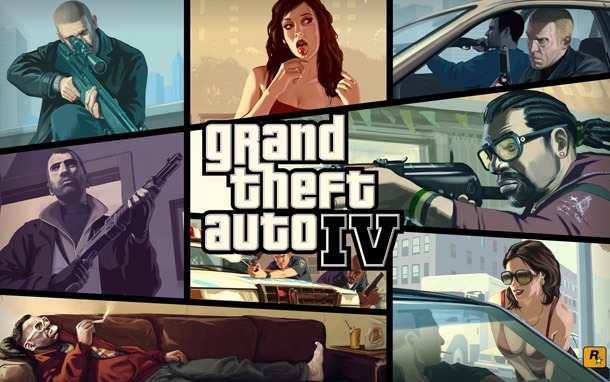
📅 Game released: 2008
Grand Theft Auto IV follows Niko Bellic through a darker, physics-driven Liberty City, while Complete Edition adds The Lost and Damned and The Ballad of Gay Tony. This PC guide compares official Steam and Rockstar purchase, download, and installation options, launcher and save requirements, Steam Deck support, performance fixes, mods, and system requirements.
 By Editor Zero — independently researched, edited, and maintained.
Last updated: 15 November 2026
Last reviewed: 15 November 2026
Table of Contents
- Quick Facts
- Official PC Stores, Download & Installation
- Grand Theft Auto IV Review
- Pros & Cons
- PC System Requirements
- Frequently Asked Questions
- Similar Games
Grand Theft Auto IV Quick Facts
- Game: Grand Theft Auto IV: The Complete Edition / GTA IV / GTA 4 / Episodes from Liberty City
- Developer: Rockstar North, with Rockstar Toronto also credited on Steam
- Publisher: Rockstar Games
- Genre: Action-Adventure, Open World, Third-Person Shooter, Sandbox, Crime
- Release: April 29, 2008 (PS3, Xbox 360); Windows PC: December 2, 2008
- Complete Edition PC Transition: March 24, 2020
- Included Stories: Grand Theft Auto IV, The Lost and Damned, and The Ballad of Gay Tony
- PC Account & Launcher: Rockstar Games account and Rockstar Games Launcher required; Steam supports account linking
- Official PC Multiplayer: Removed from Complete Edition, along with the original leaderboards
- Platforms: Windows PC, PS3, Xbox 360
- Steam Deck: Playable; first-time setup requires internet, and launcher interaction may need the touchscreen or virtual keyboard
- Engine: Rockstar Advanced Game Engine (RAGE)
- Community: Official Rockstar Support, Steam Discussions, Reddit GTA IV
- PC Modding: Nexus Mods for GTA IV hosts fixes, visual changes, vehicles, textures, scripts, radio restorations, and quality-of-life projects; compatibility varies by game build
- Metacritic score: 90/100 (original 2008 Windows PC release; not a separate Complete Edition review score)
- IGN score: 9.2/10 (original 2008 Windows PC review; the console review scored 10/10)
- Steam user reception: Very Positive overall
Official PC Stores, Download & Installation
👇 Compare the official Steam and Rockstar Store versions below before purchasing, downloading, installing, activating, or modifying GTA IV: The Complete Edition.
- PC availability: Grand Theft Auto IV: The Complete Edition is sold for Windows PC through Steam and Rockstar Store / Rockstar Games Launcher.
- Complete Edition: The package includes the full Niko Bellic campaign plus The Lost and Damned and The Ballad of Gay Tony. The Episodes are separate stories launched from the Complete Edition menu rather than DLC chapters inserted into Niko’s save.
- Store ownership: Steam and Rockstar Store purchases provide the same three stories but remain separate ownership records. Buying on one store does not add the product to the other library.
- Steam account linking: The Steam version requires a Rockstar Games account linked to Steam and launches through Rockstar Games Launcher. Use the Rockstar account you intend to keep because the entitlement is associated with that account connection.
- Activation: Internet access is required for activation and periodic entitlement verification. Rockstar also lists its PC platform, DirectX, Chromium, Microsoft Visual C++ 2008 SP1, and hardware-recognition authentication software among the installation requirements.
- Existing Steam owners: When Complete Edition replaced the earlier GTA IV and Episodes from Liberty City Steam listings, eligible owners were moved to the combined package rather than being required to buy both products again.
- Removed PC services: Complete Edition removed the former Games for Windows Live requirement, original official PC multiplayer, and leaderboards. Legacy store tags or descriptive text can still mention multiplayer, but those original official PC services are not part of the modern Complete Edition.
- Legacy saves: Automatic scanning for old Games for Windows Live saves is no longer offered, but Rockstar still documents manual migration by copying legacy save files into the save location opened through Rockstar Games Launcher.
- Physical PC keys: Rockstar says disc copies that were not previously activated through Games for Windows Live can use the activation code from the manual to activate and update to Complete Edition through Rockstar Games Launcher. Previously consumed, missing, or problematic codes may require Rockstar Support.
- Backups and versions: Back up saves before reinstalling, moving legacy data, downgrading, or installing mods. Older builds, Complete Edition, and different script frameworks may expect different files or save structures.
- Steam features: Steam includes 55 achievements and controller support, is excluded from Steam Family Sharing by the publisher, and is rated Playable rather than Verified on Steam Deck.
- Modding baseline: Start with a clean official installation before adding FusionFix, radio restorations, downgraders, graphics packages, or other unofficial files. FusionFix offers a DXVK/Vulkan graphics option; follow the installation documentation for the exact package or FusionFixHub setup you choose instead of stacking overlapping renderer DLLs.
 Buy GTA IV: The Complete Edition on Rockstar Store
 Buy GTA 4: The Complete Edition on Steam

Grand Theft Auto IV Review
A bleak, character-driven crime story whose heavy physics and densely observed city remain distinct from every other GTA.
What makes Grand Theft Auto IV memorable is not simply that Liberty City resembles New York. It is the way the place behaves. Traffic builds up, strangers argue on pavements, police become involved in incidents Niko did not start, and an ordinary journey can turn unpleasant after one badly judged corner. Rockstar gives its crime sandbox a kind of friction that many open worlds try to remove.
Compared with GTA San Andreas or the later GTA 5, this is a colder, more restrained game. Cars lean rather than turn instantly, gunfights are untidy, and the characters often make destructive choices for reasons that are painfully understandable. There is plenty of satire and absurdity, but underneath the familiar thefts and police chases sits a story about a man who cannot easily leave his past behind.

Niko Bellic and the Cost of Reinvention
Niko arrives from Eastern Europe expecting the prosperity promised in Roman’s emails. Instead, he finds a cramped apartment, a struggling taxi business, loan sharks and a cousin whose optimism survives every setback. Liberty City disappoints him almost immediately.
Niko is more interesting than a criminal simply trying to become powerful. His wartime experiences have left him wary of violence, yet violence remains the skill that other people are willing to pay him for. He can be loyal, dryly funny, frightening and visibly tired, sometimes within the same exchange. His hunt for someone from his past gives the story direction, while the more difficult question concerns whether he can become someone different.
The writing cannot entirely resolve one contradiction. Niko regrets the harm he has caused, yet the missions repeatedly require him to kill large groups of enemies. His remorse is harder to believe when gun battles remain the main form of entertainment.
Roman believes success is around the corner. Brucie performs confidence, while Playboy X treats wealth as proof of worth. The American Dream is advertised by people exploiting somebody else. Even the late decisions resist an easy answer: revenge cannot repair the past, and compromise demands unearned trust.
Liberty City Reflects the People Inside It
The boroughs have distinct personalities. Broker and Dukes mix immigrant neighbourhoods, old housing, railway lines and industrial streets. Bohan feels compressed and neglected. Algonquin is busy, wealthy and heavily advertised without being particularly welcoming, while Alderney’s harsher industrial landscape suits the criminal organisations Niko encounters later.
Liberty City is smaller than some later Rockstar worlds, but its density is unusually convincing. Pedestrians react to one another, traffic jams form, drivers panic after collisions, and the police may intervene in arguments that have nothing to do with the player. Rain, street lighting and the sound of passing vehicles change the feeling of familiar roads. A quiet drive at night can be more absorbing than an elaborate activity marker.
Music, news, talk shows and ridiculous radio advertisements make the city sound as busy as it looks. Some broadcasts react to story events, so the world keeps commenting after a mission ends.
This is why walking through a neighbourhood or taking a taxi across Algonquin can be worthwhile in itself. Liberty City’s strongest details are often the ones that do not reward the player with money or progress.
Driving Has Weight, Risk, and a Learning Curve
Driving is among GTA IV’s most distinctive decisions, and probably the one most likely to divide players. Suspension compresses, body weight shifts through corners, and stopping distances matter. A fast sports car can become troublesome on uneven streets, while an ordinary sedan sometimes makes more sense in heavy traffic. The handling asks the player to pay attention rather than hold the accelerator and steer at the last moment.
That weight changes a chase. One sharp turn can send a car into parked traffic or Niko through the windscreen. Motorcycles are especially unforgiving. These accidents are frustrating, but they also make successful escapes feel earned.
Police escapes reward more than speed. When officers lose sight of Niko, the wanted stars turn grey and the search area stops tracking him. Leave that area unseen and the pursuit ends; get spotted again and it shifts to his position. An alleyway or unexpected turn may be more useful than a faster car. The street layout becomes part of the escape.
Braking before corners and choosing a suitable route eventually become satisfying habits. Players who prefer the accessible arcade handling of later GTA games may never enjoy this approach, and that is a reasonable preference. Still, the physicality gives Liberty City much of its personality.
Taxis offer a useful alternative. Skipping a ride avoids another long journey, but staying in the back seat leaves room to watch the streets and listen to the radio. For a very different version of Rockstar’s city-driven crime formula, GTA Vice City exchanges this grey realism for neon, 1980s excess and quicker arcade driving. Both settings are memorable for quite different reasons.
Combat Is Rough but Physically Convincing
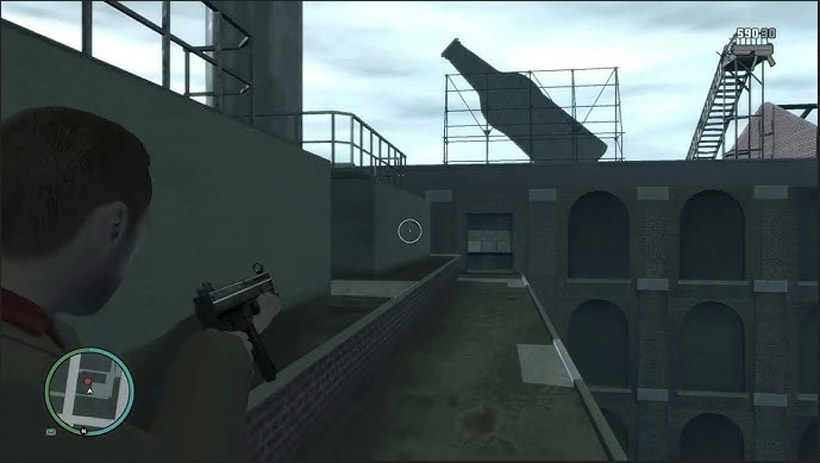
Cover-based shooting gives Niko a reason to use parked cars, walls and doorways instead of standing exposed in the street. The relatively modest weapon selection also keeps equipment choices understandable. A shotgun dominates a narrow hallway, a sniper rifle encourages a slower approach, and an RPG can clear a vehicle while making an already chaotic street considerably worse.
Euphoria physics give impacts their distinctive character. Enemies stagger into furniture, try to regain their footing and fall according to the force of a hit. Even when aiming feels dated, the physical reactions remain striking.
Cover becomes troublesome when precision matters. In cramped rooms, walls can block the camera or interfere with firing, and Niko does not always emerge promptly. A target may retreat while he is still leaving cover. The difficulty then comes from delayed response rather than enemy tactics.
Combat improves when the wider city intervenes. Police can respond to armed criminals as well as Niko, turning a confrontation into a fight between groups if officers witness the threat. It is unpredictable, but it makes law enforcement feel like part of the city rather than an enemy squad devoted solely to Niko.
The bank robbery demonstrates the same idea at a larger scale. Civilians scatter, police fill the streets, cover keeps changing, and the escape eventually pushes into the subway. Hand-to-hand fighting is simpler, but even a minor dispute can escalate when pedestrians, traffic or officers become involved.
Friendships Make the City Personal and Occasionally Annoying
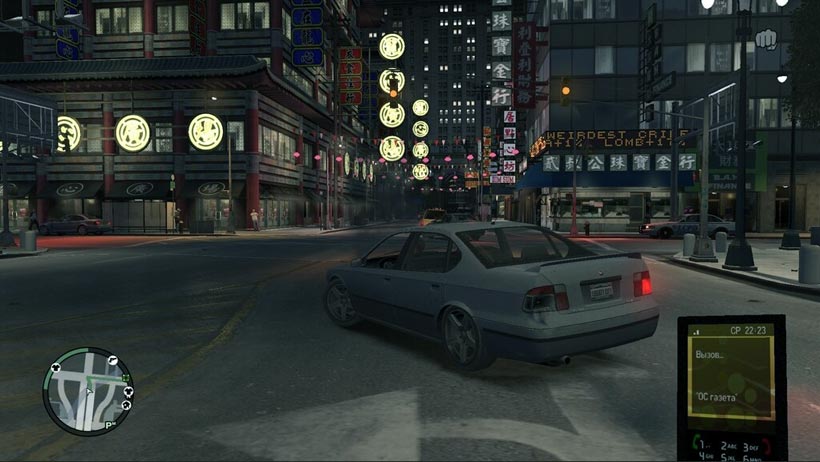
Niko’s phone connects him to jobs, friends, dates and practical services. Spending time with Roman, Little Jacob, Brucie, Dwayne and Packie can lead to useful benefits such as taxi rides, weapon deliveries, transport or backup. More importantly, these relationships give the characters lives outside the moments when they need somebody shot.
Bowling with Roman or drinking with Packie is simple gameplay, but it allows conversations that missions leave little room for. These quieter moments make the cast feel like people rather than mission dispensers.
The problem is timing. An invitation can interrupt a journey to another objective, and repeatedly turning friends down can damage the relationship. Once the system is understood, it becomes easier to manage, but the inconvenience is still real. Rockstar is asking the player to accept social obligations in a game that otherwise promises freedom.
For readers drawn primarily to this character-driven side of crime stories, Yakuza 0 Director’s Cut offers another interesting approach to loyalty, humour and personal compromise. Its combat and city design are very different, but it also understands the value of spending ordinary time with people between major events.
Progression Comes Through Access Rather Than Skill Trees
There are no conventional character builds or experience levels. Progress opens boroughs, safehouses, contacts, weapons and services while moving Niko into increasingly powerful criminal circles. This fits a story about access and influence, although it also means money eventually loses some of its importance. A large mission payment has less impact when there are relatively few expensive purchases worth making.
Vigilante assignments, Most Wanted targets, races, stunt jumps, pigeons and social activities fill the gaps between missions. Random encounters with strangers are particularly worthwhile, showing lives that the main crime plot might otherwise miss.
Vehicle collectors face an awkward limit. Safehouses offer small outdoor parking spaces rather than roomy garages, so preserving a Comet or Infernus competes with storing a practical everyday car. The wide vehicle selection is more generous than the storage system.
Replay value comes less from unlocking new abilities than from the unpredictability of familiar situations. A pursuit can unfold differently because one taxi blocks a turn or a collision changes the route. The scripted objectives may remain the same, but the streets around them rarely behave exactly alike.
The Lost and Damned Shows Liberty City From the Road
The Lost and Damned follows Johnny Klebitz, who has held the motorcycle club together while leader Billy Grey is away. Billy’s return exposes old divisions. Johnny values the community; Billy wants obedience. The shorter story gives their conflict room to grow.
Group rides make that community believable. Staying in formation triggers conversations between members and provides practical rewards. Racing ahead is quicker but sacrifices dialogue that helps explain the later divisions. The clubhouse similarly gives the gang a shared life between missions.
Motorcycle handling is more approachable than in Niko’s campaign, and gang backup gives several fights a stronger collective identity. The missions still lean heavily on familiar gun battles, but Johnny is not simply Niko with a different vehicle. His story asks what loyalty means when the group demanding it is destroying itself, and overlapping events gain a different meaning from his perspective.
The Ballad of Gay Tony Brings Back Spectacle
Luis Lopez sees another Liberty City. Working with nightclub owner Tony Prince, he navigates celebrity excess, wealthy clients, family pressure and criminals trying to control the business. The danger remains, but the emphasis shifts toward spectacle and appearances.
Luis is more comfortable with action than Niko, and the missions reflect that attitude. Parachutes, helicopters, more powerful weapons and elaborate set pieces restore some of the outrageous energy the main campaign deliberately holds back. Mission scoring also encourages returning to an encounter to perform it more cleanly, rather than simply surviving and moving on.
The brighter tone does not make Luis’s problems trivial. His obligations to Tony, family and neighbourhood compete constantly. Unlike Niko and Johnny, he is struggling to hold several separate lives together.
The three stories work especially well together because they let the same characters, incidents and criminal transactions look different depending on who is caught up in them. Playing the base campaign before both Episodes makes those connections easier to appreciate without turning either expansion into a mere appendix.
Mission Design Shows Its Age
For all the freedom in Liberty City’s streets, too many main missions follow the same routine: meet someone, drive across town, shoot or chase a target, then escape. Failure can mean repeating a long approach because the checkpoints are less generous than in newer Rockstar games. Over a lengthy session, that repetition is difficult to ignore.
Yet the missions are not always as restrictive as they appear. Some combat areas allow flanking, repositioning or using nearby streets instead of following a single prescribed route. Repetitive objectives and local tactical freedom can exist together, a distinction GTA IV sometimes handles well.
Niko’s movement remains heavy on foot, and confined spaces expose awkward cover transitions and camera behaviour. The result is a game whose physical systems still create memorable accidents and improvisation, even when the mission framework and controls make the player work harder than necessary. The city invites exploration, but the missions regularly hurry Niko toward the next confrontation. GTA IV works best when there is room for both rhythms, rather than another drive ending in predictable gunfire.
Final Verdict
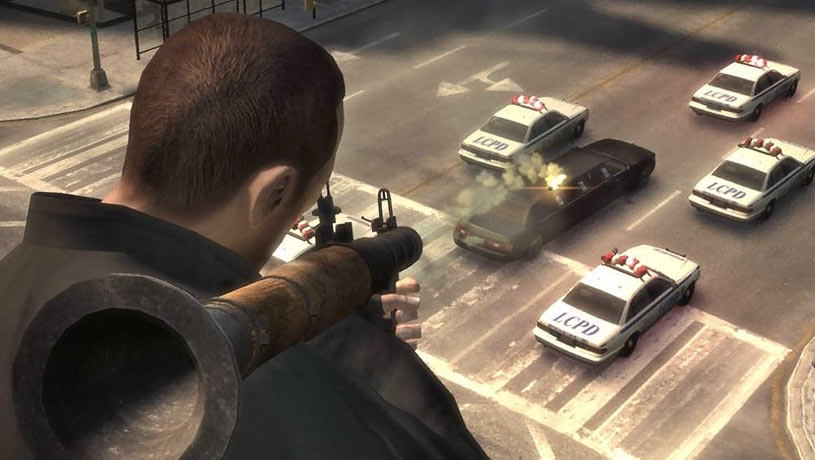
Grand Theft Auto IV is still unusual because its story and mechanical design pull in the same direction. Liberty City feels crowded and indifferent, vehicles demand care, and Niko’s attempt to escape his past repeatedly runs into the way he earns a living. Even routine travel communicates something about the place.
The Complete Edition broadens that perspective through Johnny’s collapsing biker brotherhood and Luis’s extravagant nightlife. Their stories overlap with Niko’s, but each finds a different kind of pressure in the same streets.
Not everything has aged gracefully. Repeated objectives, punishing restarts, awkward cover, persistent friendship calls and limited car storage can all interrupt the enjoyment. The contrast between Niko’s remorse and the campaign’s body count is another weakness worth recognising. Players who want immediate driving response, generous checkpoints and constant spectacle may prefer the series’ later direction.
The GTA 6 follows the series’ evolution, but GTA IV remains compelling on its own terms. For those who value a dense city, grounded characters and three connected stories, its heavier pace is part of the appeal.
Grand Theft Auto IV Pros & Cons
- Pro: Niko Bellic’s grounded immigrant crime story gives betrayal, family, revenge, and the American Dream unusual emotional weight
- Pro: Liberty City remains dense and convincing through neighbourhood identity, pedestrians, traffic, radio, weather, police reactions, and street-level detail
- Pro: Heavy vehicle handling, Euphoria physics, cover-based gunfights, and unpredictable collisions create a distinctive physical sandbox
- Pro: Complete Edition adds The Lost and Damned and The Ballad of Gay Tony, giving three interlocking perspectives on the same city
- Pro: Side characters, friendship perks, random encounters, taxis, activities, story choices, and community fixes provide lasting replay value
- Con: The modern official PC version removed the original multiplayer and leaderboards
- Con: Repetitive mission structure, limited checkpoints, intrusive phone calls, and stiff movement show the game’s age
- Con: The PC port can suffer from uneven frame pacing, display quirks, weak modern hardware scaling, and launcher-related failures
- Con: Mods, downgrades, FusionFix, DXVK, radio restorations, and old saves require careful version matching and backups
Grand Theft Auto IV PC System Requirements
Important: Rockstar Support’s official minimum specification is newer and higher than the legacy launch-era table still shown on Steam. The Rockstar Support values below are the clearest official baseline, but they do not guarantee smooth performance on every modern PC.
ROCKSTAR SUPPORT — OFFICIAL MINIMUM
OS: Windows 10 64-bit
CPU: Intel Core 2 Quad Q6600 at 2.40 GHz / AMD Phenom 9850 Quad-Core at 2.5 GHz
RAM: 2 GB
GPU: NVIDIA GeForce 8600 with 512 MB / ATI Radeon 3870 with 512 MB
Sound: DirectX 9.0c-compliant Windows-compatible sound card
Storage: 22 GB available space
Input: Mouse and keyboard; controller recommended
Internet: Required for activation and periodic entitlement verification
Additional: Rockstar Games platform, DirectX, Chromium, Microsoft Visual C++ 2008 SP1, and entitlement-authentication software
Additional PC Performance and Setup Notes
- Rockstar’s GTA IV requirement table names Windows 10 64-bit, while Rockstar Games Launcher documentation supports Windows 10 or later. If the launcher incorrectly reports that only Windows 10 or later is supported, remove compatibility-mode settings that force the launcher or game executable to emulate an older Windows version.
- GTA IV uses an old DirectX 9-era rendering path. Powerful modern hardware may still show uneven frame pacing, CPU bottlenecks, delayed asset loading, or lower-than-expected GPU use.
- Begin with moderate view distance, detail distance, traffic density, shadows, and night shadows. Increase them gradually after checking frame pacing rather than assuming maximum values are harmless.
- Rockstar’s official PC title-update notes state that the former Out of Commission completion problem above 60 FPS was fixed. If a timing or input problem still appears on a particular system, temporarily capping the frame rate remains a useful diagnostic step rather than a universal requirement.
- FusionFix is an unofficial community patch addressing gameplay, display, frame-rate, shader, controller, cutscene, and other quality-of-life issues. Complete Edition is its main supported version; selected legacy builds require the project’s separate Legacy Addon. Its graphics options can use DXVK when that component is installed through a compatible setup.
- DXVK translates DirectX calls to Vulkan and can improve frame pacing on some systems, but results vary by GPU and driver. FusionFix supports selecting a Vulkan/DXVK rendering route, with component installation depending on the package or FusionFixHub options. Follow the project’s documentation and avoid overlapping DXVK installations or conflicting renderer DLLs.
- Verify a clean official installation before adding fixes. Back up saves, command-line files, configuration, and the game directory before downgrading or installing script, radio, vehicle, texture, or graphics mods.
Official Trailer
Official Grand Theft Auto IV trailer “Things Will Be Different,” originally released by Rockstar Games.
Frequently Asked Questions
What does GTA IV: The Complete Edition include?
The package includes Grand Theft Auto IV and two separate campaigns: The Lost and Damned and The Ballad of Gay Tony. Each has its own protagonist, progression, missions, and save data.
Where should I buy and download GTA 4 for PC?
Steam and Rockstar Store sell the official Windows PC Complete Edition. Both provide the same three stories, but purchases remain attached to their respective store accounts, and Steam still launches the game through Rockstar Games Launcher.
Does GTA 4 need Rockstar Games Launcher or Games for Windows Live?
Complete Edition requires a Rockstar Games account and Rockstar Games Launcher, including for Steam copies. The old Games for Windows Live requirement was removed; internet is still needed for activation and periodic entitlement checks.
Does GTA 4: The Complete Edition have official multiplayer?
No. Rockstar removed the original PC multiplayer mode and leaderboards when it moved to Complete Edition. Older store tags and descriptions can still mention multiplayer, but those original official services are absent from the modern Windows version.
Can an original GTA 4 PC disc or activation key still be used?
Rockstar documents a Rockstar Games Launcher redemption route for physical copies whose activation codes were not previously used with Games for Windows Live. Previously activated or problematic copies require checking Rockstar’s separate support guidance rather than assuming every old key will redeem normally.
Can Games for Windows Live saves be transferred to Complete Edition?
Yes. Rockstar has retired automatic legacy-save scanning but documents manually copying old save files into the directory opened from Rockstar Games Launcher’s View save files option. Back up both old and new files before transferring them.
What order should I play the three GTA IV stories?
Start with Niko Bellic’s Grand Theft Auto IV campaign, follow with Johnny Klebitz’s The Lost and Damned, and finish with Luis Lopez’s The Ballad of Gay Tony. The stories can be started independently, but this order makes their overlapping events easier to understand.
How are The Lost and Damned and The Ballad of Gay Tony different?
The Lost and Damned concentrates on motorcycle-club politics, group riding, and rougher street-level conflict. The Ballad of Gay Tony shifts toward nightclubs, parachuting, extravagant weapons, helicopters, and more spectacular missions.
Can GTA 4 be played after the ending, and are there multiple endings?
Yes. A major late-game Deal-or-Revenge choice produces different outcomes, and Niko can keep exploring Liberty City and completing remaining activities after the finale. Both Episodes also retain separate free-roam progress.
Why does GTA 4 driving feel heavier than GTA 5?
Cars exhibit pronounced suspension movement, body roll, braking distance, and weight transfer. That makes collisions and turning more physical and demanding, but less immediately responsive than GTA 5’s more arcade-oriented handling.
Does GTA 4 support controllers on PC?
Yes. Controller play is supported, with gamepad input often more comfortable for driving and aircraft. Keyboard and mouse remain useful for aiming, though the game’s older on-foot controls can feel awkward with either approach.
Does GTA 4 work on Windows 11?
The Complete Edition can run on Windows 11 through Rockstar Games Launcher, although Rockstar’s GTA IV minimum-requirements page still names Windows 10 64-bit. Check launcher updates and avoid forced legacy Windows compatibility modes if an incorrect operating-system warning appears; compatibility is not a guarantee for every setup.
Why can GTA 4 stutter on a powerful PC?
Its older rendering and CPU workload do not always scale smoothly with modern hardware. High traffic and view-distance settings, frame-rate behavior, overlays, and conflicting modifications can worsen frame pacing; start from a clean installation and moderate settings before troubleshooting further.
What do FusionFix and DXVK change in GTA 4?
FusionFix is an unofficial collection of display, gameplay, frame-rate, and quality-of-life fixes. DXVK translates the game’s DirectX rendering to Vulkan and can help some PCs, but results vary. Follow the official FusionFix documentation to confirm how your chosen installer provides the Vulkan/DXVK option rather than adding overlapping renderer components.
Can mods or downgrades break a GTA 4 installation?
Yes. Mods can depend on specific executables, script loaders, radio files, and save formats. Some older mods target legacy builds while modern fixes focus on Complete Edition, so verify the exact supported version and back up your game files and saves first.
Does GTA 4 work on ultrawide monitors?
The game supports widescreen resolutions, but its original interface and cutscenes were not designed around every ultrawide aspect ratio, and it lacks a modern built-in field-of-view slider. Unofficial fixes can adjust framing, with compatibility depending on the installed version.
Is GTA 4 Steam Deck Verified?
No. Valve rates the Steam release Playable, not Verified. The default controls and graphics configuration are considered usable, but first-time setup needs an internet connection and the launcher may require touchscreen or virtual-keyboard interaction.
Can GTA 4 be played offline?
Its single-player campaigns can be played without a continuous connection after setup, but Rockstar requires internet access for initial activation and periodic entitlement verification. Launcher updates or verification checks may require reconnecting.
Does GTA 4 contain mature content?
Yes. Its ESRB rating identifies intense violence, blood, strong language, strong sexual content, partial nudity, and drug and alcohol use.
Still have questions? Check the official Rockstar Support page for GTA IV, GTA IV Steam Discussions, and the GTA IV community on Reddit.
Sources & References
Key factual and technical information in this guide was checked against relevant official and community sources, including:
- Rockstar Games — Grand Theft Auto IV — official first-release date, game platforms, developer credits, and setting
- Steam — Grand Theft Auto IV: The Complete Edition — official PC listing, Complete Edition transition details, Rockstar account requirement, removed PC services, achievements, and Steam user reception
- Rockstar Games Support — GTA IV PC system requirements — official minimum hardware, storage, activation, internet, and installation-component requirements
- Rockstar Games Support — installing GTA IV from disc — physical PC activation-code eligibility and Rockstar Games Launcher redemption guidance
- Rockstar Games Support — legacy save migration — manual migration guidance for Games for Windows Live save files
- SteamDB — GTA IV configuration — Steam Deck Playable metadata, first-time internet requirement, launcher interaction notes, and Family Sharing exclusion
- PCGamingWiki — Grand Theft Auto IV — PC performance context, FusionFix compatibility, DXVK integration, and other community technical information
- FusionFix — official project documentation — supported game builds, Legacy Addon, graphics options, and DXVK/Vulkan setup
Similar Games Like Grand Theft Auto IV
Found something worth playing through DecideGame?
DecideGame.com is an independent gaming project run by Editor Zero. If this guide helped you discover a game, solve a problem, or find useful information, you can support DecideGame.com and help keep new and updated game guides coming.
DecideGame — PC Game Guides, Reviews & Setup Help