
📅 Game released: 2011
Terraria is a 2D sandbox adventure of mining, building, crafting, and increasingly demanding boss battles, available for official PC purchase and download through Steam and GOG. This guide compares those editions, explains multiplayer and tModLoader modding options, and covers Steam Deck compatibility, system requirements, and practical Windows installation and setup advice.
 By Editor Zero — independently researched, edited, and maintained.
Last updated: 4 November 2026
Last reviewed: 4 November 2026
Table of Contents
- Quick Facts
- Official PC Stores, Download & Installation
- Terraria Review
- Pros & Cons
- PC System Requirements
- Frequently Asked Questions
- Similar Games
Terraria Quick Facts
- Game: Terraria (standard PC edition); tModLoader is a separate community-developed modding application
- Developer: Re-Logic (original PC game)
- Publisher: Re-Logic (PC)
- Genre: Sandbox, Crafting, Survival, Action-Adventure
- Release: May 16, 2011 (Windows PC; first release)
- Platforms: Windows PC, macOS, Linux, PS3, PS4, PS Vita, Xbox 360, Xbox One, Nintendo Switch, Wii U, Nintendo 3DS, iOS, Android
- DLC / Expansions: Major gameplay additions are included in the base game; separately sold PC soundtrack downloads are optional, not story expansions
- Steam Deck: Verified by Valve; full controller support
- Modes: Single-player, online co-op, and online PvP; player-hosted and dedicated PC servers
- Engine: Microsoft XNA framework (Windows); FNA technology used for macOS/Linux versions
- Community: Official Terraria Forums, Steam Discussions, r/Terraria
- PC modding: tModLoader for gameplay mods; Steam Workshop for Terraria resource packs and worlds
- Metacritic score: 83/100 (PC)
- IGN score: 9/10 (original PC review)
- OpenCritic average: 79/100 (aggregated reviews across available versions)
- Steam user reception: Overwhelmingly Positive overall
Official PC Stores, Download & Installation
👇 Compare Terraria’s official Steam and GOG editions below before purchasing, downloading, installing, inviting friends, or adding mods on PC.
- Official PC stores: The full Windows game is sold on Steam and GOG. Both provide the base Terraria adventure; these are separate store licenses, not interchangeable library entitlements.
- Steam installation: Purchase Terraria in Steam, open your Library, select Terraria, and choose Install. Steam manages the game download, updates, achievements, cloud features, and friends-based invitations through its own client.
- GOG and DRM-free play: GOG sells a DRM-free Windows edition. You can download its offline installer from your account and launch the installed game without GOG Galaxy; the optional Galaxy client provides library, update, and supported cloud conveniences.
- Editions and bonus content: There is no separate Deluxe or Complete Edition required for the main Terraria bosses, biomes, or equipment. Steam also offers a multi-copy four-pack where available; the optional Terraria: Official Soundtrack and Terraria: Otherworld Official Soundtrack are music purchases, not playable expansions.
- Online multiplayer: PC players can host a world, join by IP address, or connect through supported Steam invitations. A dedicated server is available for longer-running shared worlds. To play together, use matching compatible game versions and agree on how the server will be hosted.
- Cross-platform limits: Do not assume Windows, console, and mobile copies can join the same multiplayer session. General official cross-platform multiplayer across those versions has not been released; buying a console edition does not grant a native PC copy or Xbox Play Anywhere entitlement.
- Workshop versus mods: Terraria’s own Steam Workshop focuses on shared worlds and resource packs. Large gameplay mods, new bosses, and modded classes generally use the separately maintained tModLoader application and its Workshop or built-in mod browser.
- tModLoader compatibility: The Steam installation of tModLoader requires Terraria ownership. It runs separately from the normal game and may target an earlier Terraria content branch while its developers port newer changes. Check the supported game/mod versions before importing a world or joining friends; vanilla Terraria and tModLoader users cannot simply join the same modded session.
- Steam Deck and controllers: Valve marks Terraria Verified for Steam Deck, and Steam lists full controller support. The handheld interface works, although managing large inventories and precise building can still be more comfortable with mouse and keyboard.
- Offline access and saves: Terraria supports offline single-player play. Steam Cloud and other online conveniences require their corresponding services. On Windows, back up local character and world files before experimenting with mods or switching between incompatible game versions.


 Visit the Official Terraria Website
 Install tModLoader for Owned Terraria Copies

Terraria Review
Exploration and boss-driven progression make a brilliant sandbox, even when freedom becomes work.
Terraria gives you a patch of land, a handful of tools, and very little explanation. The first achievement might be a wooden box that keeps monsters outside after dark. It hardly looks like the beginning of a great adventure, yet the same world can eventually hold elaborate towns, underground transport routes, and arenas built to fight creatures that would have seemed impossible to defeat during that first night.
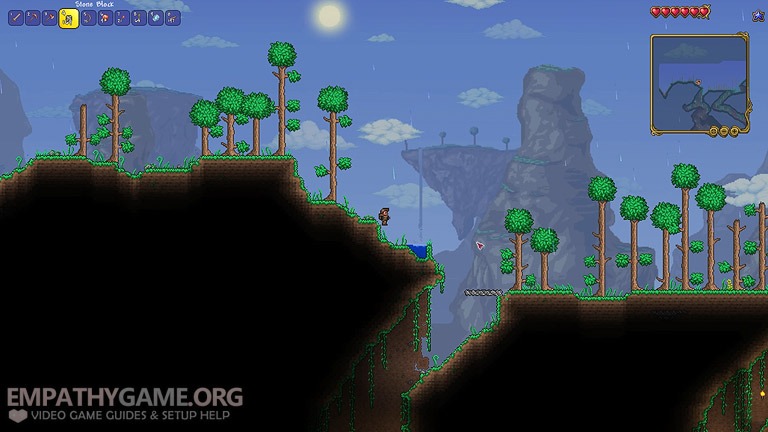
What makes Re-Logic’s sandbox special is how those changes happen. Exploration supplies better equipment, new equipment changes where you can travel, and boss victories reshape what the world allows or threatens. Building is part of that progression rather than an activity reserved for quieter moments. Terraria gives players room to pursue their own interests, but it also expects them to discover a complicated set of rules with limited guidance. That independence is rewarding for curious players and exhausting for anyone looking for a clear objective.
Exploration Keeps Making Small Discoveries Matter
One of Terraria’s best qualities is that a minor discovery can change an entire journey. A mining trip might lead to an abandoned cabin containing Hermes Boots. Suddenly, crossing the surface no longer feels like a slow walk between familiar landmarks. A Cloud in a Bottle adds a second jump, while a Magic Mirror makes it possible to venture deeper without worrying quite so much about the return trip. Rather than increasing damage, they change what feels possible.
The effect builds over time. A grappling hook turns a deep shaft into a route that can be climbed with confidence. Wings eventually allow players to approach cliffs, caverns, and boss arenas from entirely different angles. Terraria does not need to replace old locations to make exploration interesting. Better movement gives familiar terrain new purpose.
There is also the satisfaction of changing the terrain itself. A lake blocking an underground passage can be drained. A dangerous chasm can be bridged, and a long route shortened by tunneling straight through a hillside. Such solutions are rarely elegant, but a rough shortcut made to reach some ore may become useful throughout later expeditions.
The drawback is that discovery and confusion are sometimes difficult to separate. The Guide offers hints and recipe information, but he cannot turn Terraria into a clearly directed adventure. A player can explore enthusiastically and still overlook the item, crafting station, or boss that opens the next stage. Getting lost is enjoyable when it leads somewhere unexpected. It is less enjoyable when the player has no idea what they are supposed to be looking for.
Boss Battles Make Preparation Part of the Fight
Combat gradually reveals that Terraria is more demanding than its simple controls suggest. The Eye of Cthulhu teaches the value of open ground and constant movement. Skeletron requires attention to several attacking parts rather than a single target. Later, the mechanical bosses and Plantera challenge not just weapon strength but the player’s ability to move, recognize attack patterns, and keep a workable amount of space between themselves and danger.
This is where building becomes especially interesting. A crude stack of wooden platforms might provide enough vertical freedom to avoid attacks that would otherwise trap the player against solid ground. Campfires, healing supplies, and a sensible route through an arena can make an encounter feel entirely different without changing the boss. Terraria allows preparation to become a form of problem-solving. If an enemy seems impossible, improving the surroundings may be as valuable as upgrading a weapon.
Bosses can still fill the screen with projectiles, smaller enemies, and sudden charges. Even strong armor leaves little room for careless movement, particularly when attacks arrive from different directions. Learning when to concentrate on damage and when to stop attacking is a skill in itself.
Failed attempts have an additional cost outside the fight. Potions need replacing, materials may need gathering, and the weakness exposed by a boss could require another long expedition. Victory feels earned, but repeated restocking can crowd out the process of learning. Terraria’s strongest encounters make the work feel worthwhile because they demand a different strategy. When preparation becomes repetitive, the freedom to approach a challenge in several ways starts to feel narrower than it should.
Combat Styles Create Different Kinds of Risk
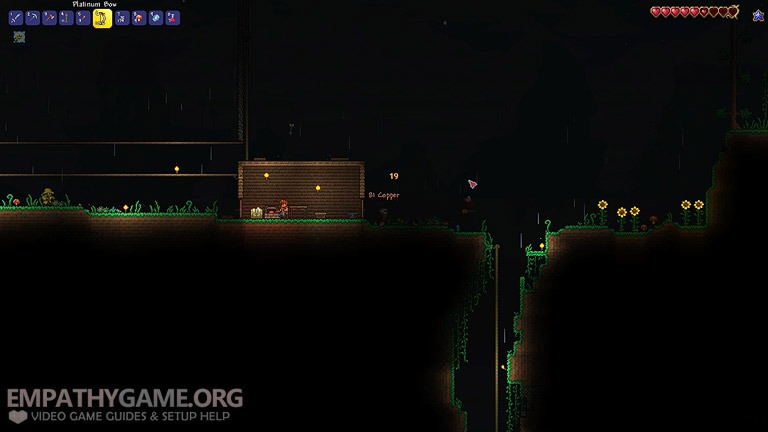
Terraria does not ask players to choose a permanent character class. Melee, ranged, magic, and summoner playstyles develop through weapons, armor bonuses, and accessories. A new discovery can change the character’s direction without a fresh start, although these are not merely four ways to deal damage.
Melee can offer a reassuring amount of defense, while ranged combat gives more space to react at the expense of ammunition and positioning. Magic brings its own balance between damage, mana, and weapon behavior. Summoner is especially revealing because it appears easier than it often feels. Minions attack independently, leaving the player free to dodge, but whips direct their attention and strengthen their attacks against marked targets. Using those whips effectively means moving closer to enemies, often while wearing relatively fragile summoner armor. The build rewards good evasion and then asks the player to take risks that make evasion harder.
Accessories complicate these choices in a useful way. An extra movement option can be worth more than a little additional damage against a fast boss. Defensive equipment may make an imperfect attack pattern manageable. The most interesting builds are not necessarily those with the largest numbers, but those whose weapons, mobility, and protection suit the situation. Terraria gives players plenty to experiment with, although its crowded equipment menus do not always make those relationships easy to understand.
Co-op Adds Strength Without Guaranteeing Control
With friends, Terraria becomes less about one person doing every job. Someone can mine for resources while another expands the settlement or prepares a boss arena. Larger projects feel more manageable, and the shared town develops its own personality.
Boss fights, however, are not simply solo encounters with additional damage. A boss may change its target as players move around, suddenly crossing the arena toward someone else. For a lightly armored summoner trying to keep enemies within whip range, that movement can be more troublesome than a predictable solo attack. Extra players create opportunities for cooperation, but they also introduce different positions and reactions that everyone has to account for.
Progression needs similar coordination. One person can rush into harder content while another is still searching for basic mobility accessories, and sharing valuable drops may require a conversation before the next fight. Solo play offers a clearer sense of pace. Co-op can be more lively and inventive, but it is at its best when the group enjoys building a shared world rather than merely progressing through bosses as quickly as possible.
Biomes and Settlements Give the World a Personality
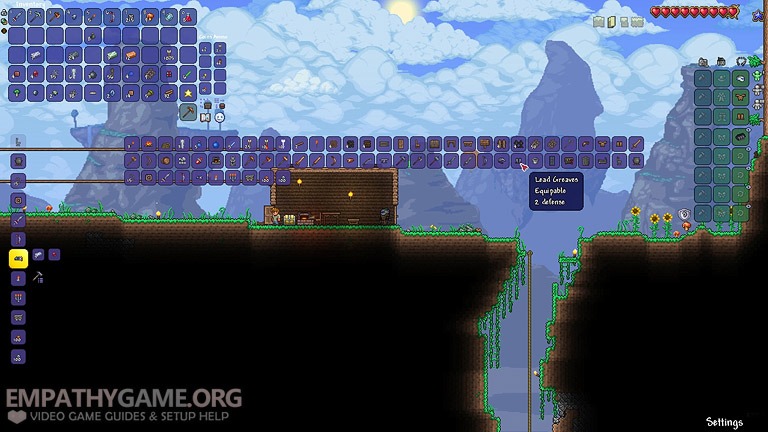
There is little traditional storytelling in Terraria, yet the world develops a strong identity through the places players discover and eventually learn to navigate. A forest shelter can feel peaceful during the day and unsafe once night falls. The Underground Jungle is dense, difficult terrain full of enemies and hazards. Corruption and Crimson turn ordinary-looking land into something visibly unhealthy, while glowing mushroom caverns and the lava-filled Underworld create completely different moods.
The pixel art communicates more than its scale suggests. Enemy designs and environmental details give each region a recognizable character, and the soundtrack helps make those transitions memorable. Returning to familiar town music after a dangerous expedition produces a genuine feeling of relief. Dialogue is hardly needed to distinguish home from danger.
NPCs strengthen that attachment. The Guide becomes an imperfect source of direction; the Dryad gives the world’s condition a more personal presence; and finding the Goblin Tinkerer changes how useful old accessories can become. Housing these characters gradually turns a shelter into a settlement with practical routines. Workshops, storage areas, gardens, and spare rooms may not advance the next boss fight directly, but they make returning home feel worthwhile.
That creative freedom comes with a curious compromise. NPC happiness affects shop prices according to crowding, preferred biomes, and neighbors. Keeping everyone in one central town is convenient, especially when buying supplies or organizing equipment, but it can mean less favorable prices. Smaller settlements in different biomes create useful destinations for a pylon network and give builders another project. Yet that is not necessarily how every player wants to design a town. Pylon purchases do not depend on high happiness, but an extensive working network still benefits from inhabited outposts. Shop prices favor some housing layouts over others. Terraria encourages free construction while quietly placing practical value on particular decisions.
Hardmode Turns Familiar Territory Into Something to Protect
Defeating the Wall of Flesh is one of Terraria’s most effective changes of pace. Hardmode brings new materials, stronger enemies, different bosses, and the Hallow, while new Corruption or Crimson spreads through parts of the world. The striking part is that the player is not sent to a new map. The landscape that once seemed familiar becomes dangerous again.
The consequences feel more personal than another armor upgrade. An underground passage carefully cleared for safe travel may now pass through a hostile biome. A favorite desert cave or oasis can be affected, and a settlement built near corrupted ground may suddenly need protection. The initial biome conversion cuts diagonally through the world, so even advance planning with vertical trenches cannot guarantee that everything important will remain untouched. Containment and later cleansing tools provide answers, but they require attention and effort.
Defending a place previously used only as an exploration base is a compelling reversal. The world begins to feel like a responsibility rather than a collection of resources. Yet the same mechanic can be discouraging for players who spend much of their time building. Instead of choosing the next cave or boss, they may feel obliged to maintain territory they already worked to improve. Hardmode succeeds at making familiar ground matter again, although its demands do not always suit the relaxed freedom that drew people into the sandbox in the first place.
Crafting, Fishing, and the Inventory Problem
Crafting creates another layer of discovery. An accessory found early in the adventure may turn out to be one part of an elaborate combination at the Tinkerer’s Workshop. Finding out that several modest items can become a powerful upgrade is genuinely satisfying, partly because it gives purpose to equipment that seemed outdated. The problem is discovering those combinations. Rare drops, different crafting stations, and long ingredient chains can make a realistic goal appear much further away than it is.
Shimmer provides an interesting counterweight. Certain items can be transformed into related ones, including accessories needed for the Ankh Shield. A spare Megaphone, for example, can become a Nazar instead of leaving the player to hunt another specific drop. What looks like unlucky repetition may actually be a useful opportunity. It is a clever system because knowledge changes the value of items already collected, although learning about Shimmer is another challenge in a game not known for explaining itself.
Fishing is easy to overlook for similar reasons. Compared with fighting through caves, waiting for a catch can seem like a strangely passive way to spend time. Its importance becomes clearer when difficult encounters make buff potions valuable. Fish used for Endurance and Lifeforce Potions can help a character survive fights that raw weapon damage alone does not solve. Crates provide further rewards. For someone filling a tank role in co-op, fishing may become part of serious preparation. The repetition will still deter players who want constant action.
Inventory management is less defensible. Blocks, ores, ammunition, potions, furniture, and dozens of accessories accumulate faster than most players can organize them. The Void Bag helps considerably. When open, it can function as a second working inventory: informational accessories remain useful inside it, materials can contribute to crafting, potions can be used through Quick Buff, and items can be Quick Stacked into nearby chests. This does not eliminate the need to sort a huge collection, but it shows how much thought Terraria puts into solving its own clutter. The irony is that one of its best conveniences can remain undiscovered until the player already feels overwhelmed.
The Late Game Narrows the Adventure, but Replayability Remains Strong
Earlier progression often involves exploring somewhere unfamiliar because a new tool or boss victory has made it accessible. That pattern becomes less prominent later on. After Plantera, the route through Golem, the Lunatic Cultist, and the Celestial Pillars can advance relatively quickly, with combat challenges taking priority over finding entirely new places. The fights matter, but the earlier curiosity about what lies beyond the next cave wall fades. The adventure begins to resemble a series of increasingly demanding encounters.
There is still plenty outside that route. Duke Fishron and the Empress of Light offer distinct optional challenges; events, rare equipment, and construction projects can occupy many more hours. The issue is timing. When powerful rewards arrive along the main path, detouring for an optional item may begin to feel unnecessary. Boss-focused players may welcome that emphasis; explorers may wish for more reasons to wander before the next major fight.
Starting over is appealing for reasons beyond randomized terrain. Corruption and Crimson worlds offer different discoveries, Expert and Master difficulties make known encounters more demanding, and Journey Mode lets players control more of the experience. A character focused on magic approaches familiar enemies differently from one built around melee or summoning. Groups can set shared construction goals, while players interested in experimentation may spend far longer building than pursuing the final boss. PC gameplay mods extend those choices further. There is still repeated resource gathering, and the opening hours will become familiar, but replayability comes from deciding what matters on the next world rather than expecting a completely different campaign.
Final Verdict
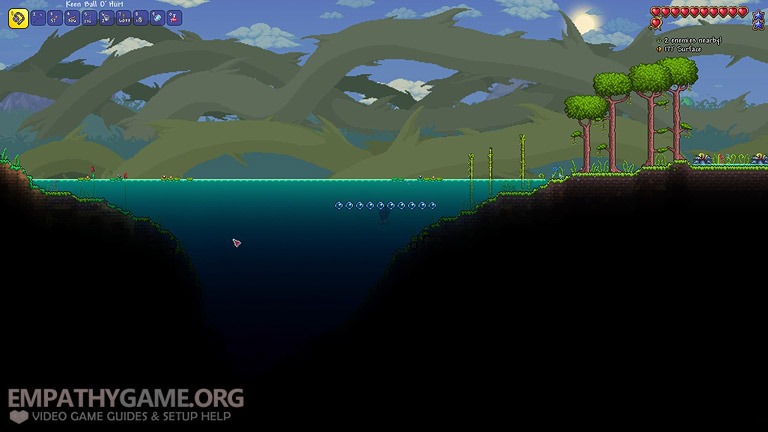
Terraria’s greatest strength is how easily one activity creates a reason to try another. A pair of boots makes travel easier, which leads to deeper exploration and better equipment. A boss defeat may unlock new possibilities while making an old route dangerous again. Even a crude bridge or a storage room can become part of a world the player remembers because it solved a particular problem. The game makes its building and adventure systems depend on each other without insisting that everyone enjoy them in the same order.
It also asks for considerable patience. Progression clues are sometimes too obscure, rare-item farming can become tedious, and inventory sorting or biome containment can interrupt the parts of the game a player actually enjoys. Later progression leans more heavily toward successive boss fights than the uncertain exploration of the early stages. These are meaningful limitations, not small inconveniences to dismiss because Terraria offers so much content.
Those who prefer a guided story and a steady sense of forward motion may find the freedom more tiring than liberating. Players who like learning a complicated world, adapting their combat style, and shaping useful spaces around their own needs have much more to discover. What stays impressive is not simply how large Terraria becomes, but how much significance it can give to the small piece of ground where everything began.
Terraria Pros & Cons
- Pro: Mining, building, crafting, and exploration constantly feed into meaningful equipment progression.
- Pro: Distinctive bosses, biomes, and weapon styles give the open-ended sandbox a strong adventure structure.
- Pro: Co-op worlds, randomized generation, and multiple difficulty settings encourage repeat play.
- Pro: Steam Deck verification, controller support, and modest vanilla hardware requirements make PC access flexible.
- Pro: DRM-free GOG ownership and an extensive tModLoader ecosystem give PC players useful options.
- Con: Limited early guidance can leave newcomers unsure which materials, bosses, or crafting stations to pursue.
- Con: Inventory organization and repeated material farming can interrupt the pace of exploration.
- Con: Boss preparation can be demanding, particularly when the necessary accessories or arena setup are unclear.
- Con: Modded builds may lag behind the normal game, while console/mobile cross-platform multiplayer is not universally supported.
Terraria PC System Requirements
The specifications below are the official Windows requirements published for the standard Terraria game on Steam. The separate tModLoader program has higher requirements, and GOG publishes somewhat different figures for its own installer.
OFFICIAL WINDOWS PC REQUIREMENTS (STEAM):
MINIMUM:
OS: Windows XP, Vista, 7, 8/8.1, or 10 (legacy game listing; see Windows note below)
CPU: 2.0 GHz processor
RAM: 2.5 GB
GPU: 128 MB video memory; Shader Model 2.0 or higher
DirectX: 9.0c or newer
Storage: 200 MB available space (Steam’s published specification)
RECOMMENDED:
OS: Windows 7, 8/8.1, or 10 (legacy game listing; see Windows note below)
CPU: Dual-core 3.0 GHz processor
RAM: 4 GB
GPU: 256 MB video memory; Shader Model 2.0 or higher
DirectX: 9.0c or newer
Storage: 200 MB available space (Steam’s published specification)
Additional PC Performance and Setup Notes
- Modern Windows: The system-requirements panel still names older Windows editions, but the Steam client itself requires Windows 10 or newer. Do not interpret XP or Windows 7 in the game listing as recommended operating systems for a new Steam installation.
- Storage planning: Steam’s historical 200 MB requirement is smaller than the 1 GB listed by GOG. Reserve at least 1 GB for the base installation, with additional free space for saved worlds, resource packs, and mods rather than relying on the older minimum alone.
- tModLoader is different: Heavily modded Terraria can use much more memory and storage than vanilla Terraria. Consult the separate tModLoader requirements before installing large mod packs.
- Character and world backups: Terraria normally keeps local Windows saves under
Documents\My Games\Terraria. Back up thePlayersandWorldsfolders before moving saves, using external world editors, or testing modded branches; cloud-enabled saves can be managed differently. - Multiplayer reliability: If a friend cannot join, first confirm that both players use compatible versions and that the host has the correct network/server configuration. A vanilla world and a tModLoader world should not be treated as interchangeable.
Official Trailer
Note: Re-Logic’s official Terraria trailer highlights more of the game’s equipment, encounters, building possibilities, and expanded sandbox. The PC guide above covers storefront ownership, mods, installation, and system requirements rather than treating the video as setup instructions.
Frequently Asked Questions
What should beginners do first in Terraria?
Start by collecting wood, crafting a Work Bench, building a small shelter, and making torches before nightfall. Speak to the Guide NPC for useful hints, then explore nearby caves for ores, Life Crystals, and movement accessories. A Classic character in a Classic world is a good starting point for learning the normal progression system.
How do you find crafting recipes in Terraria?
Speak to the Guide and select his crafting option, then place a material into the available slot to see what it can become and which crafting station it requires. The inventory crafting menu also shows recipes available with your accessible materials. If an expected item is missing, check whether you need an Anvil, Furnace, or another station nearby.
Which Terraria difficulty should beginners choose?
Classic world difficulty with a Classic character is the most straightforward choice. Journey Mode is another good option if you prefer adjustable enemy difficulty, item research and duplication, and more control over the environment. Expert and Master worlds make enemies and bosses more demanding while adding exclusive rewards.
What happens when your character dies in Terraria?
It depends on the character’s difficulty setting. Classic characters normally lose coins, Mediumcore characters drop their carried items, and Hardcore characters permanently lose their character when they die. These death penalties are separate from the world’s Classic, Expert, or Master difficulty.
Is there a specific order for fighting Terraria bosses?
Terraria allows some flexibility, particularly during early progression. King Slime and the Eye of Cthulhu are common early encounters, while bosses such as Skeletron and the Wall of Flesh become important progression milestones. Later encounters have additional prerequisites, so following the Guide’s hints and improving your equipment between battles is more useful than treating every boss as part of a completely fixed sequence.
What is Hardmode in Terraria, and how do you unlock it?
Hardmode begins permanently in a world after you defeat the Wall of Flesh in the Underworld. It introduces stronger enemies, additional bosses, equipment progression, new resources, and the Hallow biome. Hardmode is not the same as Hardcore: Hardmode changes world progression, while Hardcore is a character setting with permanent death.
Should you choose Corruption or Crimson in Terraria?
Both are valid choices. Corruption features purple landscapes, the Eater of Worlds, and its own equipment and materials, while Crimson has red, flesh-themed environments, the Brain of Cthulhu, and different rewards. Neither choice prevents you from completing the adventure, although certain items and enemies depend on the world’s native evil biome.
How can you stop Corruption or Crimson from spreading in Terraria?
Protect important towns and biomes by separating vulnerable blocks from infected areas with sufficiently wide trenches or non-corruptible materials, taking care to prevent thorny growth from bridging gaps. Hardmode also generates new infected regions, so preparation before defeating the Wall of Flesh cannot completely prevent future spread. Cleansing tools become available through progression, while Journey Mode offers a setting to disable infection spread.
Why won’t NPCs move into your Terraria house?
Check the room using the housing menu. Most town NPCs require a suitably sized enclosed room with player-placed background walls, an entrance, a light source, a comfort item such as a chair, and a suitable flat-surface item such as a table or Work Bench. Some NPCs also require a particular item, boss defeat, or other condition before they can arrive.
How do Pylons work in Terraria, and why might one stop working?
Pylons form a fast-travel network between settlements. Most require placement in their matching biome and at least two qualifying housed NPCs near both the departure and destination pylons. If teleportation fails, check the NPC housing assignments, biome, your distance from the Pylon, and whether the minimap is enabled.
Does Terraria have classes, and can you change between them?
Terraria has four main combat styles: melee, ranged, magic, and summoner, but you do not permanently select a class during character creation. Your weapons, armor, and accessories determine your specialization, so switching styles generally involves changing equipment rather than resetting a skill tree. Specializing becomes increasingly useful as later equipment provides stronger bonuses to particular damage types.
Can you use the same Terraria character in different worlds?
Yes. Characters and worlds are saved separately, allowing you to take a character and their inventory into another compatible world. However, defeated bosses, constructed buildings, opened chests, and Hardmode progression belong to individual worlds rather than automatically transferring with your character.
Can you change Terraria’s world difficulty after creating a world?
Normal Classic, Expert, and Master world difficulty settings cannot be changed through the standard in-game options after creation. Journey Mode is the exception, offering an adjustable enemy difficulty slider and other world-control settings. You can also create another world with a different difficulty and enter it using an existing compatible character.
Does Terraria support split-screen or couch co-op on PC?
No. The standard Windows PC version does not provide built-in split-screen multiplayer, even though supported console versions offer local split-screen play. Two people can play together over a local network using separate PCs, while unofficial split-screen solutions are not equivalent to an officially supported PC feature.
Can you play Terraria over LAN without Steam invitations?
Yes. Players on the same local network can use Terraria’s Host & Play or dedicated-server options and connect through the host’s local IP address. Steam invitations are convenient for Steam users, but direct IP connections provide another supported way to join compatible PC multiplayer sessions.
Can friends join your Terraria world when you are offline?
Not through an ordinary Host & Play session, because that world closes when its host leaves. A dedicated Terraria server can keep a shared world available without the original player remaining connected, provided the server itself continues running. This can be useful for groups that want to build and explore at different times.
Can you play modded Terraria multiplayer with friends?
Yes, through tModLoader, provided everyone uses compatible tModLoader versions and the required mods. A normal vanilla Terraria client cannot simply join a modded tModLoader session. Agree on the mod list before starting a shared world, and back up important saves before changing major content mods.
Does Terraria give every co-op player their own boss rewards?
The reward system depends on world difficulty. In Classic worlds, bosses generally drop a shared collection of loot, so players must decide how to distribute it. In Expert and Master worlds, eligible participating players receive individual Treasure Bags containing boss rewards, making repeat farming and reward sharing more convenient for groups.
Can you continue playing Terraria after defeating the Moon Lord?
Yes. The Moon Lord is Terraria’s final main progression boss, but defeating him does not end your world or force a New Game Plus cycle. You can continue building, collecting rare equipment, completing achievements, fighting optional bosses, or exploring other worlds with the same character.
Still have questions? Check the Terraria Reddit community, Steam Discussions, or the Official Terraria Forums for additional help and community discussion.
Sources & References
Key factual and technical information in this guide was checked against relevant official and community sources, including:
- Terraria on Steam — original PC release, developer and publisher, purchase options, supported features, Steam Deck rating, user reception, and Windows system requirements.
- Terraria on GOG — DRM-free ownership, offline installation, PC platform support, and GOG’s listed hardware and storage requirements.
- tModLoader on Steam — separate modding application, Terraria ownership requirements, co-op restrictions, and modded-PC requirements.
- Re-Logic’s Terraria Development Announcements — verification of major permanent game additions and the official state of cross-platform multiplayer.
- PCGamingWiki: Terraria — Windows XNA and macOS/Linux FNA technology, local save-file locations, and platform-specific technical information.
- Metacritic: Terraria PC Reviews — PC-specific aggregate score and historical critical reception.
Similar Games Like Terraria




Found something worth playing through DecideGame?
DecideGame.com is an independent gaming project run by Editor Zero. If this guide helped you discover a game, solve a problem, or find useful information, you can support DecideGame.com and help keep new and updated game guides coming.
DecideGame — PC Game Guides, Reviews & Setup Help