
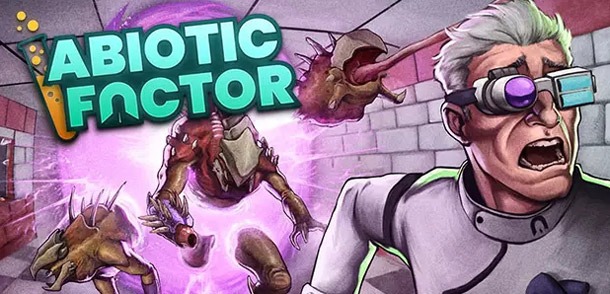
📅 Game released: 2024
Abiotic Factor is a first-person survival-crafting adventure where scientists scavenge, build bases, and explore a sprawling research facility after a dimensional containment disaster. This PC guide explains official Steam and Microsoft/Xbox download and installation options, Game Pass and co-op, the Supporter’s Pack and Temple of Stone DLC, official mods, system requirements, and Steam Deck support.
 By Editor Zero — independently researched, edited, and maintained.
Last updated: 13 November 2026
Last reviewed: 13 November 2026
Table of Contents
- Quick Facts
- Official PC Stores, Download & Installation
- Abiotic Factor Review
- Pros & Cons
- PC System Requirements
- Frequently Asked Questions
- Similar Games
Abiotic Factor Quick Facts
- Game: Abiotic Factor
- Developer: Deep Field Games
- Publisher: Playstack
- Genre: Survival, Crafting, Sci-Fi, Multiplayer
- Release: Early Access — May 2, 2024 (Windows PC); full release — July 22, 2025
- Platforms: Windows PC, PS5, Xbox Series X|S
- PC Editions & DLC: Standard Edition; Supporter’s Edition (base game plus Supporter’s Pack and Torii Home World); separate Temple of Stone Home World DLC
- Xbox Play Anywhere: Supported by the Microsoft digital version across Windows PC and Xbox Series X|S under one account
- Subscriptions: PC Game Pass and eligible Xbox Game Pass memberships; offerings and cloud access depend on plan and region
- Multiplayer: 1–6 players; solo play, online co-op, LAN co-op on Steam, cross-platform multiplayer and dedicated servers
- Steam Deck: Playable; default graphics settings perform well, but some text is small and external controllers may require manual selection
- Engine: Unreal Engine 5
- Community: Steam Discussions, Reddit Abiotic Factor, Official Abiotic Factor Wiki
- PC modding: Official in-game mod.io browser and mod-creation tools; Nexus Mods also hosts unofficial community projects
- Metacritic score: 88/100 on PC
- IGN score: N/A / Not scored — no verified scored IGN review for this release
- PC Gamer score: 92/100 (PC)
- Steam user reception: Overwhelmingly Positive overall
Official PC Stores, Download & Installation
👇 Compare the official Steam and Microsoft / Xbox PC options below before purchasing, downloading, installing, or choosing a co-op platform for Abiotic Factor.
- Official PC stores: Abiotic Factor is available for Windows through Steam and Microsoft / Xbox Store. Ownership is storefront-specific: a Steam purchase does not add the game to a Microsoft library, or vice versa.
- Standard Edition: The base game includes the complete survival campaign and supports solo play and co-op without either optional Home World DLC.
- Supporter’s Edition: This package bundles the base game with the Supporter’s Pack. Existing owners can purchase the Supporter’s Pack separately rather than buying the full edition again.
- Supporter’s Pack: Includes the Torii Home World, Torii researcher uniform pieces, furnishings, and themed extras. The Home World is optional and does not replace the main campaign.
- Temple of Stone: This separately sold DLC adds a garden-and-ruins Home World and GATE Botanist cosmetics. It is not included in the Supporter’s Edition. The server host needs the DLC to enable access to its location; other players on that server can enter without owning it.
- Xbox Play Anywhere: Microsoft digital ownership covers supported Windows PCs and Xbox Series X|S consoles under the same Microsoft account, including Xbox cloud saves and achievements. Steam ownership and Steam Cloud remain separate.
- Game Pass and cloud: Abiotic Factor is listed for Game Pass Premium, PC Game Pass, and Ultimate on eligible devices; Xbox Cloud Gaming access varies by membership and whether the game is owned. Check the live Xbox listing before subscribing.
- Cross-play and LAN: PC, PS5, and Xbox Series X|S players can join supported cross-platform sessions. Steam also lists online co-op and LAN co-op; split-screen play is not an advertised feature.
- Dedicated servers: The game supports persistent multiplayer worlds. Consult the developer-maintained server documentation before configuring hosting, network ports, or cross-play restrictions.
- Steam Deck: Valve rates the Steam version Playable and says the default graphics configuration performs well, although some text is small and an external controller may need to be selected manually through SteamOS.
- Official mod support: The game includes an in-game mod browser integrated with mod.io, with official mod-creation tools available separately. Open MODS from the main menu to browse and subscribe; enable gameplay mods for a saved world before hosting. Cosmetics have their own customization controls. This is not Steam Workshop integration.
- Mod precautions: Back up saved worlds and server configuration before enabling new mods. Older unofficial mod files may conflict with the integrated system; disable or remove them first when diagnosing crashes or connection problems. Review the developer’s mod installation guidance.
 Buy the Abiotic Factor Supporter’s Pack on Steam
Buy Abiotic Factor: Temple of Stone on Steam
 Buy or Play Abiotic Factor on Microsoft / Xbox Store
 Visit the Official Abiotic Factor Website
Abiotic Factor Review
A resourceful, unsettling survival labyrinth where good science beats brute force.
Most survival games begin by dropping someone into the wilderness. Abiotic Factor has a more entertaining problem: an ordinary researcher is stuck at work while the laws of reality collapse around them. The GATE Cascade Research Facility is full of abandoned offices, broken laboratories, escaped organisms and soldiers who are not particularly interested in your scientific credentials. Survival means turning whatever the building provides into something useful.
That premise gives the game its character. The same expedition can involve hunting for electrical parts, improvising a weapon, retreating from a creature you barely understand and arguing over where to put the next storage cabinet. Beneath the workplace comedy is a substantial survival-crafting adventure that rewards understanding a place, not simply overpowering it.
Story
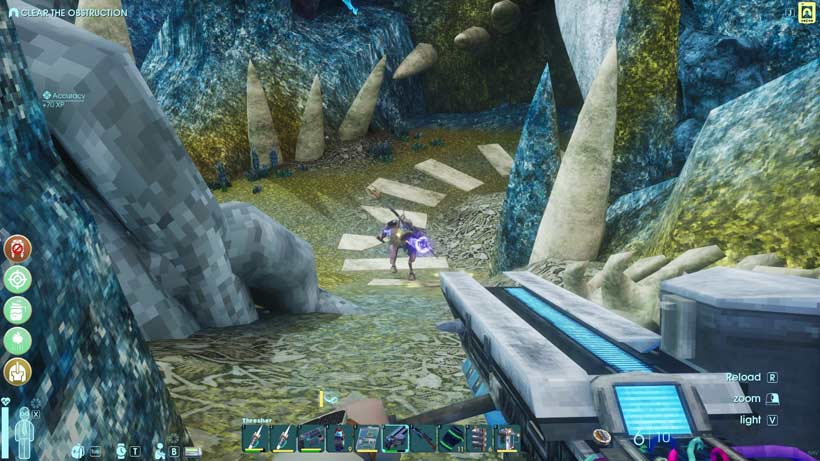
The disaster at GATE is more interesting because its consequences are visible long before its causes become clear. Dimensional breaches have released hostile creatures, security has broken down, and research departments that once served ordinary purposes are now dangerous places to investigate. Rather than making a scientist into a conventional action hero, the story lets that lack of preparedness define the experience.
Environmental storytelling carries much of the mystery. A deserted workstation, damaged containment chamber or corridor sealed in a hurry suggests a sequence of decisions that went badly wrong. Notes, encounters and changes in the surrounding architecture gradually give those clues context. Moving into another sector is therefore both a practical breakthrough and a chance to understand more of what happened.
The slow approach fits the setting. There is room to wonder what connected the facility to other dimensions, who understood the risks, and whether anyone is genuinely in control of the cleanup. Answers arrive through discoveries rather than a continuous sequence of cutscenes. That gives each newly accessible department a purpose beyond collecting materials, although someone looking for a tightly directed narrative may find the story too dispersed among scavenging trips and locked routes. Here, curiosity is meant to provide as much momentum as the plot.
Gameplay
You’re Not a Fighter. You’re Smarter Than That!
The basic rhythm is exploration, scavenging, crafting and preparation, followed by another attempt to reach somewhere previously inaccessible. A search for cables, batteries or food may reveal a door without power or an enemy guarding a useful component. You might slip around that threat, restore a circuit and discover a shortcut, only to realize that there is barely enough room in your inventory for the supplies you came to collect. Returning to base with one critical item can feel like progress even when the next sector remains closed. Hunger, thirst, equipment durability and limited carrying space make those small decisions matter. When a plan collapses, improvisation usually matters more than reflexes.
Combat deliberately sits inside that wider survival problem. Enemies are dangerous enough that observing patrols, choosing a route or preparing the right tool often makes more sense than charging in. Improvised weapons can get a scientist through a confrontation, but fighting consumes durability and supplies that might be needed elsewhere. The best response is often to observe first, prepare second and leave yourself an escape route. That restraint supports the game’s identity, although the melee combat can feel awkward when close encounters leave little room to recover. Unlike a shooter that builds its rhythm around defeating everything in sight, this one can make a retreat feel like a sensible achievement.
There are less obvious equipment compromises, too. Carrying a shield improves protection, but it can obstruct access to some weapons’ alternate attacks. Switching equipment in the middle of a fight introduces friction, so a defensive setup is not automatically the most flexible one. For a lone researcher, companions add another tactical option: a sturdy pet can hold an enemy’s attention while its owner regroups, whereas a powerful but slow-moving creature may struggle to keep up. Their usefulness depends on positioning and survivability, not just damage.
Scientific specializations bring a different kind of variety. Engineering, cooking, medical support, stealth and combat skills give researchers reasons to approach problems differently. A solo scientist has to handle every unpleasant chore, so specialization is as much a choice about what to neglect as what to improve. In a group, those strengths develop into informal jobs: one person maintains food and storage, another builds equipment, and someone pushes into dangerous corridors to find the next breakthrough. The result feels less like an organized military squad than a department attempting to survive its worst working day.
There is also a cost to bringing more colleagues. Six people can gather materials quickly, but six sets of weapons, armor and ammunition can strain the same stockpile. Groups that diversify equipment and share responsibilities may be better prepared than teams whose members all want identical gear. Co-op makes survival more sociable without removing the resource-management decisions underneath it.
The design is an interesting contrast with Dune: Awakening, whose desert survival unfolds across a much larger MMO environment, and with the PvP pressure of Rust. Abiotic Factor concentrates on PvE expeditions and connected scientific spaces. The interesting question is usually how to reach a sealed area and return safely, not which rival group will raid your home.
Crafting Isn’t Just “Crafting”
The crafting system works because its materials belong to the place. Office supplies, discarded electronics, furniture and alien specimens become tools, weapons, defenses and functioning household necessities. What begins as desperate reuse of rubbish gradually resembles an improvised research project. A blueprint can change which materials seem valuable, while a better tool can turn yesterday’s dead end into tomorrow’s route forward. That changes the meaning of scavenging: finding the right scrap is satisfying not because it fills another crafting meter, but because it helps solve a problem the facility has already presented.
These discoveries make even familiar rooms worth revisiting, though not every supporting survival activity maintains the same momentum. Fishing, with its repeated quick-time interactions, can feel laborious beside the more inventive scavenging. Preparing food also takes effort, and the difference between certain meals may feel modest compared with the work involved. Cooking adds personality and useful supplies, but it is not uniformly as engaging as finding a new application for laboratory equipment.
Your Base Is Your Brainchild
A base usually starts with a few containers and furniture dragged into a relatively safe corner. Gradually it acquires workstations, storage, cooking facilities, defenses and a power system. The satisfaction is partly practical: a well-organized shelter reduces the time lost between expeditions and gives deeper excursions a dependable starting point. It is also personal. A barricade marks a previous scare, a kitchen reveals somebody’s priorities, and an inconveniently placed cabinet may survive simply because moving everything again sounds worse. Making an unsafe room feel livable is a powerful reward in a game that keeps discovering new ways to make the outside world dangerous.
Electricity is a good example of the game’s less obvious depth. Higher-tier batteries are not necessarily the answer to every power problem. Distributing cheap makeshift batteries among appliances can meet overnight needs while conserving rarer components, even if the wiring becomes untidy. The interesting decision is not always which upgrade to craft next, but whether a smarter layout makes that upgrade unnecessary. Understanding the system can save resources that matter elsewhere.
Nor is a base permanently safe. Threats can intrude, equipment needs attention, and clutter becomes a real obstacle when something goes wrong. Cooperation amplifies both sides of that design. A carefully organized workshop makes the entire group more efficient; one colleague returning with a pile of alien meat and broken tools can make the storage plan a fresh problem. That balance between control and barely managed chaos is part of the appeal.
Dimensional Travel Changes Everything
The facility is already an unusual survival map, but excursions into portal worlds make its scale harder to predict. Recognizable offices and security zones give way to unfamiliar geography, lighting and creatures. Their strange environments are a reminder that this is not simply an abandoned workplace with aggressive wildlife. Crossing that threshold changes the calculation: provisions that seemed adequate for a trip down the corridor may suddenly feel insufficient. The urge to investigate one more room competes with the knowledge that the return journey still has to be made. A portal expedition can produce useful discoveries and a very genuine temptation to turn back at the same time.
Navigation is not always kind to players, particularly as routes intersect and useful locations accumulate. Yet this limitation can produce a clever response. Whiteboards and lights can become a homemade signposting system, turning base-building tools into a way to navigate the wider complex. That is a wonderful expression of the scientist fantasy, even if needing to create your own directions can sometimes feel like unnecessary work.
The relationship between shelter and hazardous exploration recalls Subnautica 2. One takes scientists through densely connected facilities and strange dimensions; the other explores an alien ocean. Both build tension around preparation, the distance from safety and the temptation to continue beyond what your equipment comfortably supports.
Atmosphere and Presentation
Abiotic Factor has the awkward, functional appearance of an older PC science-fiction setting. Offices, cafeterias, industrial areas and laboratory corridors feel designed for work rather than adventure. That plainness makes a strange growth, broken containment room or unnatural silhouette more disturbing. The retro styling is not just nostalgia; it helps the place remain recognizable while its contents become increasingly absurd.
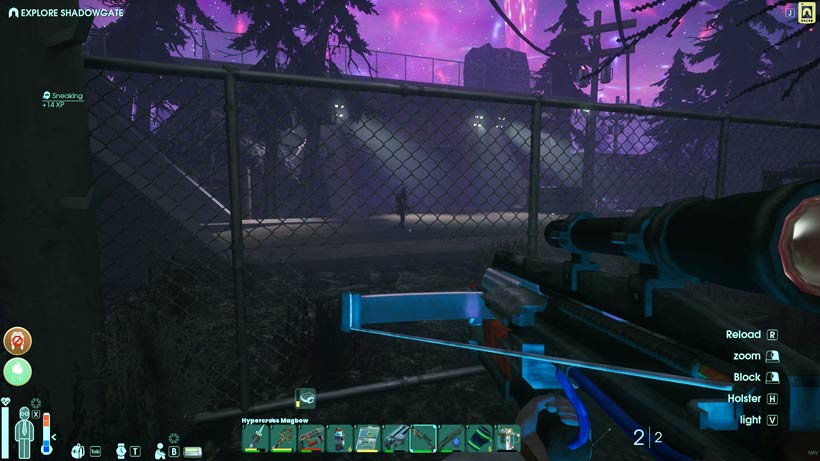
Sound keeps the tension alive between major encounters. Electrical hums, alarms, footsteps and distant creature noises suggest activity beyond the next doorway. A dim corridor is uncomfortable not because the game constantly stages a jump scare, but because valuable supplies and an unfamiliar threat might be waiting in the same room. The comedy makes those shifts sharper. A scientist carrying improvised equipment and a ridiculous assortment of food can still be frightened into silence by a noise from the next hallway.
The recurring Leyak pushes that idea further. Being stalked while working or exploring means even familiar spaces can demand attention, and X-ray defenses give players a way to respond. Yet repeated appearances can eventually feel less frightening than disruptive, especially for someone trying to build or organize in peace. Later containment options ease the pressure, but the tension between horror and uninterrupted routine remains a revealing design choice.
That mixture of unsettling exploration and makeshift domestic life also invites comparison with Fallout 4. Both find satisfaction in scavenging and creating shelter amid danger, although Fallout 4 spreads those activities through an open wasteland with RPG quests and settlements. GATE is denser and more peculiar, allowing workplace comedy and creature horror to collide within the same few corridors.
Progression, Co-op & Replayability
Progression is not simply a climb toward better weapons. Skills develop, recipes open new possibilities, tools unlock routes, and knowledge of enemy behavior changes which risks seem acceptable. Shortcuts gradually transform the facility from an intimidating maze into a place that can be understood and managed. A new base layout or more efficient expedition route can be as satisfying as a new piece of equipment.
That does not make the entire journey equally paced. Some late-game encounters can favor longer, more direct fights over the earlier satisfaction of avoiding danger or winning through a carefully timed attack. When tougher enemies take longer to defeat and major discoveries become less frequent, the scientist’s improvisation can start to feel closer to attrition. Not every playstyle will notice that shift equally, but it complicates the idea that progression always increases freedom.
Co-op offers different reasons to return. Groups choose different specializations, develop their own unwritten rules and build bases around their habits. Solo play is viable and can make resource decisions more deliberate, though gathering, cooking, combat and recovery all fall on one person. Neither approach removes the backtracking and organization that define the game. Players who need constant action may find that rhythm tiring, while patient explorers are more likely to enjoy how each completed task changes the next expedition.
Final Verdict
Abiotic Factor is at its best when a seemingly mundane piece of office equipment becomes the solution to an extraordinary problem. Its strongest ideas connect survival, construction and exploration so closely that learning the facility feels like a form of character progression. The eerie laboratories, absurd improvisations and informal teamwork give it a personality that a bigger arsenal would not improve.
There are compromises: close combat can be clumsy, some food-related tasks outstay their welcome, navigation requires patience, and the later emphasis on tougher fights will not satisfy everyone. Recurring threats can also interrupt the quieter pleasure of building a home. Still, these weaknesses rarely erase the appeal of making a hostile research complex gradually intelligible. For players who enjoy cooperative problem-solving, strange science and careful expeditions, this is a remarkably distinctive survival game. Those seeking a faster, combat-led adventure should look elsewhere.
Abiotic Factor Pros & Cons
- Pro: Distinctive sci-fi survival setting built around scientists, office scavenging, portal worlds, improvised technology, and a huge interconnected research facility
- Pro: Excellent 1–6 player co-op with cross-platform multiplayer, LAN support on Steam, official dedicated servers, and useful role specialization
- Pro: Crafting, skills, base-building, food, power, portal resources, shortcuts, and sector progression constantly give scavenged materials a practical purpose
- Pro: Official mod support through the in-game mod.io browser and separate creation tools makes community customization more accessible
- Pro: Strong atmosphere balances workplace comedy, retro scientific bureaucracy, creature horror, and the satisfaction of turning unsafe rooms into functioning bases
- Con: Melee combat and some enemy encounters can feel awkward compared with the game’s stronger exploration and crafting systems
- Con: Solo players carry the full burden of gathering, cooking, fighting, organizing, and recovering from mistakes, which can make the opening hours more demanding
- Con: Hosting several players, maintaining very large bases, and running busy persistent worlds can put more pressure on CPU performance and connection quality
- Con: Steam Deck is Playable rather than Verified; small text and occasional external-controller switching friction remain considerations
Abiotic Factor PC System Requirements
MINIMUM:
OS: Windows 10 or later, 64-bit
CPU: Intel Core i5 9th Gen or similar
RAM: 8 GB
GPU: NVIDIA GeForce GTX 1660 / AMD Radeon RX 5600 XT
DirectX: Version 11
Network: Broadband internet connection
Storage: 10 GB available space
RECOMMENDED:
OS: Windows 10 or later, 64-bit
CPU: Intel Core i5 11th Gen or similar
RAM: 16 GB
GPU: NVIDIA GeForce RTX 3070 / AMD Radeon RX 6700 XT or better
DirectX: Version 12
Network: Broadband internet connection
Storage: 10 GB available space
Additional PC Performance and Setup Notes
- Abiotic Factor uses Unreal Engine 5. Its deliberately retro presentation does not imply extremely low hardware demands, especially in large bases or heavily populated worlds.
- Steam explicitly notes that the multiplayer host may need a stronger CPU, particularly with several scientists connected.
- Valve rates Steam Deck Playable. Updated compatibility information says the default graphics configuration performs well, but some text is small. Switching to an external controller may require the SteamOS Quick Access Menu.
- The Steam version supports single-player without a persistent network connection after installation. Online co-op, cross-play, servers, store downloads, and cloud synchronization require connectivity.
- The Microsoft edition supports Xbox Play Anywhere and Xbox cloud saves and is labeled Mostly Compatible on supported Windows handhelds. Results vary with the handheld’s processor, power setting, resolution, and drivers.
- For performance dips, test the same busy location with a lower graphics preset and fewer background programs. On servers, compare host CPU load and connection quality before blaming the game client.
- For crashes, restart the PC and launcher, verify installation files, update graphics drivers, and disable both official and older unofficial mods while testing. Check for leftover unofficial mod files before changing server settings or reinstalling.
- For dedicated-server setup and troubleshooting, use the maintained server documentation rather than copying old launch parameters.
Official Trailer
Note: This official 1.0 launch trailer presents the GATE Cascade Research Facility, scientist co-op, survival crafting, portal threats, improvised equipment, and the full-release adventure, while the written guide adds PC ownership, Xbox Play Anywhere, DLC, dedicated servers, requirements, Steam Deck, mods, and troubleshooting guidance.
Frequently Asked Questions
Can Steam, Xbox, and PlayStation players play together?
Yes. Supported cross-play connects Windows PC, PS5, and Xbox Series X|S players. If a friend cannot join a dedicated server, check its cross-platform settings and required game version before investigating the network.
How many players can join one game?
Up to six scientists can cooperate, and the same adventure works in single-player. Larger teams can divide scouting, cooking, construction, and combat duties, although everyone still shares the resource and hosting constraints of the world.
Does Abiotic Factor support LAN and dedicated servers?
Yes. Steam lists LAN co-op and online co-op, and dedicated-server tools are available for persistent worlds. Follow the developer-maintained server documentation for configuration and network settings.
Can I transfer Steam saves to Xbox or PlayStation?
Xbox Play Anywhere supports Microsoft-account cloud saves between the eligible Microsoft Windows and Xbox versions. Steam Cloud saves do not automatically transfer to those versions or to PS5; cross-play is not the same as cross-save.
Can Abiotic Factor be played offline?
The installed Steam single-player game can run without a persistent connection. Online multiplayer, cloud synchronization, updates and downloads require connectivity. Other storefronts may have additional authentication requirements.
Is there split-screen or couch co-op?
No same-screen split-screen mode is advertised. Friends use separate systems through supported online, cross-platform, or LAN multiplayer.
What is the difference between the Supporter’s Pack and Temple of Stone?
The Supporter’s Pack adds the Torii Home World, a researcher uniform, and themed furnishings; it is included in the Supporter’s Edition. Temple of Stone is a separate paid Home World with garden ruins, a hedge maze, botanist cosmetics, and decorative items. Neither is required to finish the base campaign.
Does everyone in co-op need to own the Home World DLC?
No. For Torii and Temple of Stone, the host must own and enable the relevant DLC location, but other players in that server can enter without buying the pack. Individual cosmetic entitlements remain tied to their owners.
Do Early Access owners already have the Supporter’s Pack?
Eligible Early Access owners received the Supporter’s Pack. Check the downloadable-content section of your storefront library before buying it again.
Is the GATE facility an open world?
It is a large interconnected research complex rather than an unrestricted outdoor sandbox. Tools, unlocked doors, lifts, and shortcuts gradually open routes between sectors, while portal worlds add separate places to explore.
Does Abiotic Factor have a story ending?
Yes. The full-release campaign has a conclusion. Story clues emerge through characters, terminals, experiments, locations and environmental details while base-building and exploration remain important parts of the journey.
Do portal-world resources respawn?
Many portal destinations replenish resources on a world cycle and can be revisited for supplies. The main facility does not restore every dismantled object in the same way, and sandbox settings can affect resource behavior.
Can you change your scientist’s skills or difficulty?
Starting backgrounds and developing skills affect specialization, while the world host can adjust several survival and challenge settings. Review the sandbox options carefully before changing the rules of a shared save.
Where should beginners build their first base?
A practical early base has reliable power, enough room for storage, and short routes to food, water, and useful materials. A compact crafting and cooking hub is usually easier to manage than repeatedly transporting everything deep into new sectors.
What is a good first-hour strategy?
Collect basic components, set up storage and food preparation, craft essential tools, and learn a few safe routes before challenging dangerous enemies. Hold onto unfamiliar scientific materials until you understand their uses.
Does Abiotic Factor work well on Steam Deck?
Valve rates it Playable, not Verified. Default graphics settings perform well in Valve’s assessment, but some text is small and an external gamepad may need to be selected through SteamOS’s Quick Access Menu.
Does Abiotic Factor support a controller on PC?
Yes. Steam lists full controller support, including Xbox and PlayStation controllers. Mouse and keyboard are also supported and may be more convenient for inventory management.
Can Abiotic Factor be modded officially?
Yes. The game has an official in-game mod browser using mod.io. Choose MODS on the main menu to find and subscribe to mods, then enable gameplay mods on the relevant saved world; cosmetic mods are managed through character customization. Official mod-creation tools are available separately, while older unofficial Nexus Mods projects may need compatibility checks.
Why does Abiotic Factor crash or fail to launch?
Restart the game and launcher, verify files through the official storefront, update graphics drivers, and temporarily disable overlays or mods. When using older unofficial modifications, check that no leftover files remain before attempting a clean installation. Consult official announcements or Steam Discussions if a particular error persists.
Why do I get low FPS or lag in co-op?
Busy bases, numerous placed objects, host CPU demands, network latency, and graphics settings can contribute. Test the same location with lower settings and no mods; if only co-op is affected, investigate the host and connection separately.
Still have questions? Check the Abiotic Factor Steam Discussions, Abiotic Factor community on Reddit, or Official Abiotic Factor Wiki for help with gameplay, co-op servers, and modding.
Sources & References
Key game, PC feature, ownership, technical and reception details were checked against:
- Playstack — Abiotic Factor: Developer, publisher, Early Access date, full release, and premise.
- Steam — Abiotic Factor: Official Windows availability, requirements, features, controller support, Steam Deck status, and overall user reception.
- Microsoft / Xbox — Abiotic Factor: Xbox Play Anywhere, multiplayer, subscription, and cloud-access distinctions.
- Steam — Supporter’s Pack and Temple of Stone: Home World contents and the host’s DLC access requirement.
- Deep Field Games — Official Steam announcements: Integrated mod.io support, developer mod-installation guidance, and mod compatibility precautions.
- Metacritic — PC critic reviews: PC Metascore and PC Gamer review score.
Similar Games Like Abiotic Factor






Found something worth playing through DecideGame?
DecideGame.com is an independent gaming project run by Editor Zero. If this guide helped you discover a game, solve a problem, or find useful information, you can support DecideGame.com and help keep new and updated game guides coming.
DecideGame — PC Game Guides, Reviews & Setup Help