
📅 Game released: 2009
Left 4 Dead 2 is Valve’s four-player co-op zombie shooter, available for official purchase and download through Steam, where survivors face unpredictable hordes and teamwork matters more than individual firepower. This PC guide covers the included campaigns and DLC, online co-op and Versus, Steam Workshop mods, Steam Deck support, system requirements, and practical installation and performance setup.
 By Editor Zero — independently researched, edited, and maintained.
Last updated: 4 November 2026
Last reviewed: 4 November 2026
Table of Contents
- Quick Facts
- Official PC Stores, Download & Installation
- Left 4 Dead 2 Review
- Pros & Cons
- PC System Requirements
- Frequently Asked Questions
- Similar Games
Left 4 Dead 2 Quick Facts
- Game: Left 4 Dead 2 (L4D2)
- Developer: Valve
- Publisher: Valve
- Genre: Co-op Shooter, First Person Shooter (FPS), Zombie Games, Multiplayer
- Release: November 16, 2009 (Windows PC via Steam); Xbox 360 retail: November 17, 2009
- Platforms: Windows PC, Xbox 360, macOS (historical release), Linux
- Modes: Single-player with AI teammates; four-player online co-op; Versus, Scavenge, Survival, Realism and Mutations
- Included PC content: The Passing, The Sacrifice, Cold Stream, The Last Stand, and the original Left 4 Dead campaigns
- Steam Deck: Verified
- Engine: Valve Source engine (with AI Director 2.0)
- Community: Steam Discussions, Steam Workshop, r/l4d2
- PC modding: Official Steam Workshop and Source authoring tools; community campaigns, maps, models, sounds and Mutations
- Metacritic score: 89/100 (PC)
- IGN score: 9/10 (original release review)
- GameSpot score: 9/10 (PC/Xbox 360 review)
- Steam user reception: Overwhelmingly Positive overall
Official PC Stores, Download & Installation
👇 Compare the official Steam purchase, download and installation options for Left 4 Dead 2, including bundled content, online play and Workshop add-ons.
- Official Windows PC store: Steam sells the native Windows version of Left 4 Dead 2. The Steam listing also provides a Linux version. A separate game-file source or third-party launcher is not required.
- Edition and bundle choice: Buy Left 4 Dead 2 on its own, or compare Steam’s Left 4 Dead Bundle (both games) and Valve Complete Pack if you want the other included titles. Owning the first Left 4 Dead is not required to access its official campaigns inside the PC version of Left 4 Dead 2.
- Included campaigns: Steam’s PC game incorporates the five original L4D2 campaigns, The Passing, The Sacrifice, Cold Stream, The Last Stand and adapted campaigns from the first Left 4 Dead. The Valve-published Last Stand content is integrated into the PC game rather than sold as a separate expansion.
- Steam installation: Purchase or activate the game on your Steam account, open Library > Left 4 Dead 2 > Install, select your Steam library drive, and let Steam download and install the files. Launch from the Library after installation.
- Solo and online play: Campaign can be played alone with AI-controlled companions or online with up to three other players. Versus pits a survivor team against player-controlled Special Infected, while Scavenge and Survival provide shorter competitive or endurance-focused sessions.
- PC and Xbox differences: The historical Xbox 360 edition is a separate console product; an Xbox purchase is not a Steam PC license. PC and Xbox players do not share cross-platform matchmaking. Content and add-on availability on the older console edition should not be assumed to match Steam’s integrated PC content.
- Steam Workshop mods: Visit the official Left 4 Dead 2 Workshop and select Subscribe on a compatible campaign, map or add-on. Let Steam finish downloading the item; if necessary, enable or disable installed content through the game’s Add-ons menu. A modded server and its players may need compatible content.
- Steam Deck and controllers: Valve classifies Left 4 Dead 2 as Verified for Steam Deck. Steam also lists full controller support, Steam Input, Steam Cloud and Remote Play Together. A keyboard and mouse remain practical for precise aiming and quick team communication on desktop.
- Offline and online access: The single-player campaign can run without a live multiplayer connection once the game is installed and available through Steam’s offline capabilities. Online co-op, matchmaking, cloud synchronization and Workshop subscriptions require internet access.
- VAC and custom content: Valve Anti-Cheat (VAC) is listed for online play. Use ordinary Workshop add-ons with attention to their compatibility notes, and avoid unauthorized executables or cheat tools. Disable conflicting add-ons before troubleshooting missing models, unusual behavior or public-server issues.
- Legacy Mac and Windows notes: Valve previously released a native Mac version, but the current Steam store advertises Windows and SteamOS/Linux rather than modern macOS compatibility. Its old Windows XP/Vista/7 requirements are historical; the present Steam client requires Windows 10 or later.

 Visit the Official Left 4 Dead Website

Left 4 Dead 2 Review
The horde is dangerous, but losing track of a teammate can be worse.
Left 4 Dead 2 has a way of turning an ordinary mistake into a problem for four people. Someone walks a little too far ahead, a Smoker pulls them out of sight, and suddenly the rest of the team has to decide whether to turn back or push through an approaching horde. The interesting part is that nobody needs to be a poor shot for this to happen. Valve’s cooperative shooter is built around situations where weapons alone cannot solve the problem.
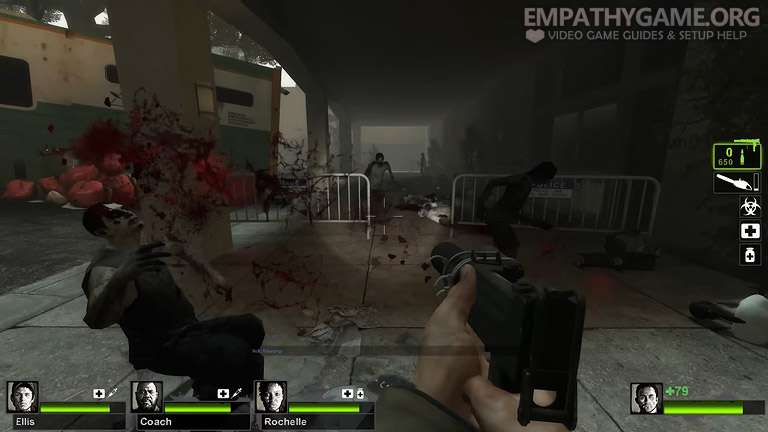
The journey through the infected American South is straightforward on paper: move between safe rooms, survive a few major encounters and eventually escape. What makes it absorbing is how quickly a familiar route can become a test of positioning, supplies and trust. Its fixed objectives, lightweight story and unreliable AI partners put a limit on solo enjoyment. But with people who communicate, even a failed attempt can be entertaining because the reason for failure is often worth discussing before the next run.
The AI Director Changes the Pressure, Not the Destination
Most campaign chapters follow a fixed path through abandoned streets, buildings or open ground. The AI Director 2.0 varies enemy encounters, supplies and certain environmental conditions, so learning the route does not mean learning exactly what will happen on it. A passage that was empty on one attempt may contain a dangerous combination of infected on the next. The geography becomes familiar much sooner than the circumstances.
That unpredictability works especially well during the quieter stretches. Finding extra ammunition should be good news, but reaching it may mean leaving a defensible position. A teammate stopping to heal might be sensible, unless the group is already scattered and another attack is starting. Left 4 Dead 2 makes these small decisions feel relevant because a few seconds of poor coordination can outweigh several minutes of accurate shooting.
There is a clear limit to what the Director can accomplish. Once the layouts are known, repeated alarm events and scripted objectives become easier to anticipate. Defending against another horde can feel more exhausting than surprising, particularly when a chapter demands several similar holds or rushes. The strongest campaign sequences are the ones that change the team’s behavior instead of merely increasing the number of enemies.
Special Infected Make Teamwork a Survival Mechanic
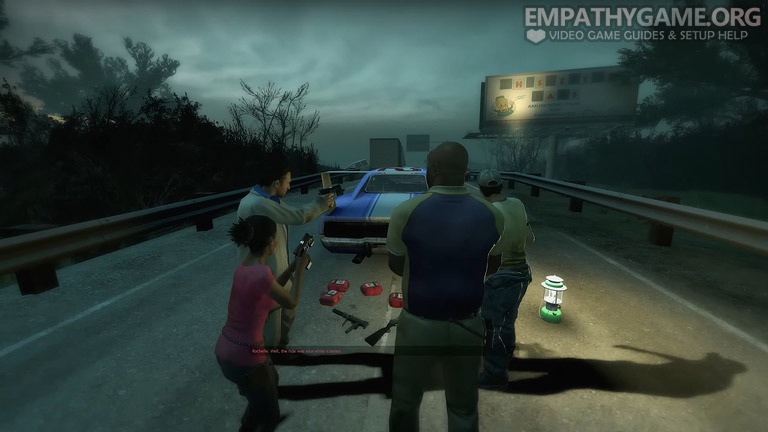
Common infected create the noise and physical pressure, but Special Infected give each attack a particular problem to solve. A Hunter pins its victim until someone intervenes. A Smoker can drag a survivor beyond a useful firing angle, while a Charger breaks up an otherwise stable formation. Jockeys steer people into danger and Spitters spread acid across the ground where a rescue might need to happen. Even the relatively fragile Boomer can turn a manageable street into chaos by covering survivors in bile.
What makes these enemies so effective is the way their abilities interact. Consider a Boomer blinding three survivors while the fourth avoids the bile. An opposing Hunter or Smoker can then target that fourth person, removing the teammate most capable of helping the others. The blinded survivors are already struggling with ordinary infected, and suddenly nobody has a clean opportunity to rescue anyone. It is a more interesting threat than simply giving the enemy more health or damage.
The team therefore needs to stay close, but not so close that one attack catches everybody. Huddling around a doorway makes covering each other easy until a Charger rush or Spitter attack makes that position untenable. Spread too far apart and a pinned teammate becomes helpless. This constant adjustment of distance is one of the game’s smartest ideas. It turns movement through an area into a shared responsibility rather than four separate players following the same objective marker.
Friendly fire makes the same principle apply to the weapons. On higher difficulties, firing through a teammate to reach an infected can be as costly as missing the enemy altogether. Not every overwhelming encounter is perfectly fair, especially when several threats arrive together, but the best failures encourage a useful question: was the group genuinely trapped, or had it lost track of its escape and rescue options?
Weapons and Supplies Are Simple Until You Need Them
The shooting has little interest in elaborate customization. Shotguns excel at opening space when infected get close, while rifles provide more control at a distance. Melee weapons such as the axe, katana and frying pan make clearing nearby enemies satisfying, although carrying one means giving up a backup pistol. The choices are uncomplicated, which suits a game where decisions often have to be made under pressure.
The grenade launcher is a good example of how a powerful weapon is not necessarily the most convenient one. A well-placed shot can clear a chokepoint or break up a cluster of threats around a trapped survivor. Its slow, single-shot reload is a serious drawback when the next attack arrives immediately, and careless explosions can hurt teammates. A less dramatic rifle may be more dependable through an entire chapter. The best weapon depends partly on what the rest of the team can cover while its user is vulnerable.
Throwables offer a different sort of control. Pipe bombs draw ordinary infected toward an explosion; Molotovs can stop them crossing a particular approach. Boomer bile is especially interesting because it can keep an existing horde occupied somewhere away from the survivors. There may be little benefit in immediately killing every distracted infected if the group could instead use that breathing room to heal, reload or move ahead. Throwing bile onto a Tank, however, can bring additional common infected into an already difficult fight. The useful distinction is between removing a threat and deciding where that threat will be.
Medical supplies are similarly dependent on circumstances. First-aid kits restore health, while pain pills and adrenaline provide temporary benefits. Adrenaline can help with an urgent revival or a difficult run through water, but its muffled audio is an overlooked cost when listening for a Hunter or Smoker is part of staying alive. Defibrillators provide another option at the expense of carrying a first-aid kit. These are not complicated inventory systems; their strength is that a small supply decision can matter several rooms later.
The Best Campaigns Change What Feels Safe
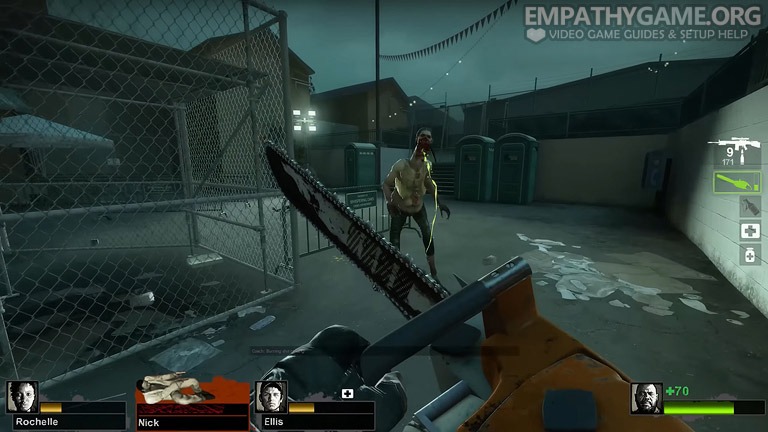
The southern setting gives the sequel a personality beyond its enemy roster. Dead Center passes through the remains of an urban evacuation, Swamp Fever replaces familiar streets with isolated settlements and wetlands, and Dark Carnival turns an abandoned fairground into a place where almost every attraction seems designed to make noise. Its roller-coaster event works because the team must keep moving along an exposed route rather than settle into a comfortable defense.
Hard Rain is more subtle and, in some ways, more unsettling. The return trip takes the survivors through territory they have already crossed, now flooded and battered by severe weather. The storm interferes with more than visibility. Heavy rain can drown out the sounds that normally give warning of an approaching Special Infected, so familiar ground suddenly feels less predictable. Players accustomed to identifying threats by ear have to rely more heavily on proximity and visual checks. It is a strong example of environmental design affecting how the game is played, not just how it looks.
The Parish ends with a bridge crossing that creates almost the opposite pressure. Instead of cautiously clearing every corner, the survivors have to commit to moving forward. Both campaigns demonstrate why Left 4 Dead 2 is strongest when it changes the team’s priorities. The weaker stretches fall back on repeated alarms and waves of enemies, which can make a long session feel more mechanical than its best moments deserve.
A Light Story Supported by Character and Sound
Coach, Nick, Rochelle and Ellis are not part of a complicated narrative, and the game is better for not interrupting its pace with lengthy cutscenes. Their personalities emerge between attacks. Nick’s irritated remarks contrast with Ellis’s enthusiastic stories, Coach often tries to keep everyone focused, and Rochelle helps give the group’s banter some balance. These exchanges make the survivors feel like companions rather than interchangeable character models, even though their abilities are functionally the same.
The locations do much of the storytelling. Abandoned evacuation points, hurriedly constructed defenses, warning signs and deserted public spaces suggest how rapidly ordinary life collapsed. A mall and a fairground are especially effective settings because they were built for crowds and comfort, yet now feel threatening for precisely those reasons. The older presentation is evident in some animations and environmental detail, but the colorful locations and readable enemy silhouettes continue to serve the action.
Sound contributes more than atmosphere. A Witch’s crying can make the team reconsider a route through an otherwise quiet room. The Tank’s music announces a very different kind of emergency, while distinctive enemy noises help experienced survivors understand what is approaching before they can see it. This is also why Hard Rain’s storm matters so much. Taking away part of that information changes the experience more effectively than simply darkening the screen or adding another wave of enemies.
Versus and Scavenge Reveal a Different Kind of Skill
Versus makes familiar campaign spaces more interesting by placing the Special Infected under human control. A player controlling a Smoker can wait until a survivor rounds a corner, while a Charger can hold back until a narrow passage gives its target less room to escape. The infected team’s challenge is not simply to inflict damage whenever possible. It is to combine attacks so that one successful pin prevents the next rescue.
This changes how a map is understood. A corridor that feels like a safe shortcut in Campaign can become a carefully chosen ambush point in Versus. It also creates an intimidating learning curve. Experienced opponents understand sightlines, spawn opportunities and the timing needed to overwhelm a rescue attempt. Newcomers can find themselves repeatedly disabled before they have properly understood why the attack worked. The competitive design is clever, but it is not equally welcoming to every skill level.
Scavenge shifts attention away from reaching a safe room and toward collecting fuel cans while an opposing infected team interferes. Moving cans efficiently develops its own rhythm. Teammates can throw containers ahead and pick them up again rather than transport each one over the entire distance individually. That small movement skill matters because every additional second spent carrying fuel is another opportunity to be interrupted. A can abandoned in the wrong place can undo an otherwise good run. The mode feels less expansive than Campaign, but its focused objective produces a satisfying contest between execution and disruption.
Difficulty and Replayability Depend on What You Enjoy Improving
There are no permanent character levels, skill trees or upgraded builds to carry between campaigns. Equipment is found during each run, and most of the improvement happens in the player rather than on a progression screen. Familiarity with enemy audio, safe angles, routes and rescue timing changes how comfortably a group can handle situations that once seemed impossible.
Survival mode makes that learning especially visible. Holding one position for an extended period is a test of supply management and coordination, but even deciding when to heal has no universal answer. A disciplined team might protect a severely injured survivor through a predictable lull and save its first-aid kits for later. A less coordinated group can lose its defense the moment that person goes down, so healing sooner may be sensible. The right choice depends on the group’s reliability and the length of the attempt, not an arbitrary health threshold.
Realism deserves a more qualified recommendation than simply calling it the better challenge. Removing the usual teammate outlines makes separation more dangerous, and tougher common infected reward accurate headshots over casual body shots. That can intensify cooperation, but it can also make ordinary horde cleanup laborious and push players toward a narrower set of comfortable weapons. Greater punishment does not automatically make every encounter more interesting. Players who enjoy the faster, more improvisational feel of standard Campaign may reasonably prefer it.
Mutations introduce alternative rules, while additional official campaigns and community-created maps offer more places to apply the same skills. They broaden replayability without changing the fundamental cycle of moving, defending, reviving and escaping. Solo play exposes that limitation most clearly. AI partners can shoot and revive, but their uneven positioning and unreliable responses to urgent objectives do not replace the judgment of human teammates. Without people to coordinate with, a large part of the design’s personality disappears.
Final Verdict
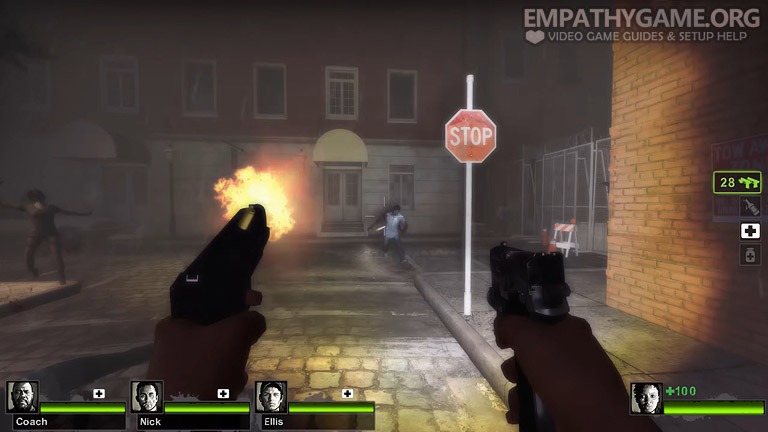
Left 4 Dead 2 remains compelling because its cooperation has real mechanical consequences. The Special Infected isolate people, the maps challenge the group’s ability to stay organized, and the limited supplies make even an ordinary pause worth thinking through. A well-timed rescue or a sensible decision to avoid a fight can contribute more than another impressive kill count. Few cooperative shooters connect movement, sound, enemy behavior and resource management so consistently.
The focus is narrow, and that deserves recognition. Familiar objectives and repeated horde alarms can wear thin, the narrative does not provide much momentum of its own, and AI companions struggle to make solo play equally rewarding. Versus has a steep learning curve, while Realism sometimes trades enjoyable pacing for extra punishment. There is also no long-term character progression for players who need persistent rewards to make repeated sessions worthwhile.
Yet those limitations do not undermine what the game is trying to do. Left 4 Dead 2 is most satisfying with a group that pays attention, communicates and is willing to learn from a disastrous escape. The pleasure is not just in surviving a crowd of infected. It is in discovering how differently that same encounter can unfold when four people make better decisions together.
Left 4 Dead 2 Pros & Cons
- Pro: Four-player cooperation turns rescue attempts, ammo use and positioning into meaningful team decisions.
- Pro: The AI Director varies encounters, supplies and pressure across repeated campaign runs.
- Pro: A large selection of official campaigns, Versus modes and Workshop creations extends replay value.
- Pro: Modest official PC requirements, native widescreen support and Steam Deck Verified status improve accessibility.
- Con: AI teammates are less dependable than coordinated human partners, particularly during difficult rescues.
- Con: The campaign loop and limited long-term character progression may feel repetitive for solo-focused players.
- Con: Coordinated Special Infected and experienced Versus opponents can be unforgiving to newcomers.
- Con: Source-era animation and visuals show their age, and Workshop add-ons can cause compatibility conflicts.
Left 4 Dead 2 PC System Requirements
The specifications below are Valve’s official Windows requirements published on Steam. The listed Windows XP, Vista and 7 versions are historical, not a recommendation for installing Steam on unsupported systems. The Steam client requires Windows 10 or later.
MINIMUM (OFFICIAL WINDOWS PC):
OS: Windows 7 / Vista / XP (legacy listing; use a Steam-supported Windows version)
CPU: Intel Pentium 4 3.0 GHz
RAM: 2 GB
GPU: 128 MB video card, Shader Model 2.0; ATI Radeon X800 or NVIDIA GeForce 6600 or better
DirectX: Version 9.0c
Storage: 13 GB available space
Sound Card: DirectX 9.0c-compatible sound card
RECOMMENDED (OFFICIAL WINDOWS PC):
OS: Windows 7 / Vista / XP (legacy listing; use a Steam-supported Windows version)
CPU: Intel Core 2 Duo 2.4 GHz
RAM: 2 GB
GPU: Shader Model 3.0 video card; NVIDIA GeForce 7600 or ATI Radeon X1600 or better
DirectX: Version 9.0c
Storage: 13 GB available space
Sound Card: DirectX 9.0c-compatible sound card
Additional PC Performance and Setup Notes
Resolution and display: Left 4 Dead 2 supports modern widescreen resolutions through its built-in video settings; no external widescreen fix is normally necessary. Select your monitor’s native resolution and appropriate aspect ratio in Options > Video. If performance is inconsistent, lower anti-aliasing, effects or other graphics settings before looking for unofficial fixes.
Workshop storage and stability: Steam’s 13 GB figure is the official base-game requirement, not a guarantee that an installation with numerous custom campaigns, maps and texture packs will occupy only that amount. Allow additional storage for Workshop subscriptions and updates. If models or sounds disappear, disable add-ons in groups to identify conflicts; if core game files seem damaged, use Steam Library > Left 4 Dead 2 > Properties > Installed Files > Verify integrity of game files.
Linux and Steam Deck: Steam provides a native SteamOS/Linux build and rates the game Verified on Steam Deck. Valve publishes a separate Linux minimum requirement on the Steam store page; do not mistake the historical Windows minimum specifications above for Linux-specific guidance.
Official Trailer
Note: Valve’s official teaser introduces the game’s infected hordes and co-operative survival atmosphere. The guide above covers the Steam PC version, its included campaigns and practical setup considerations.
Frequently Asked Questions
Can you play Left 4 Dead 2 in split-screen on PC?
Yes, but the Windows version does not provide a straightforward split-screen option in its normal menus. Two-player local play is possible through hidden console functionality or community-made Steam Workshop add-ons that enable a split-screen menu. Setup and controller configuration may be necessary, and compatibility with online servers can vary. Steam also lists Remote Play Together, but this does not automatically configure split-screen gameplay.
Does Left 4 Dead 2 support LAN multiplayer?
Yes. Players on separate PCs connected to the same local network can host and join LAN sessions without relying on public matchmaking. Valve documents creating a local game through the developer console because Left 4 Dead 2 has no dedicated Create Server menu option. Each computer should have the game installed and Steam configured appropriately before attempting offline LAN play.
How do I create a private Left 4 Dead 2 game with friends?
Select Campaign and Play With Friends, create a lobby, choose your campaign and difficulty, then set the lobby permissions to Friends Only or Private before inviting your Steam friends. For ordinary official campaigns, an Official Dedicated server is a convenient option. A Local Server is often more suitable when hosting custom campaigns or gameplay modifications.
Does Left 4 Dead 2 support crossplay between PC and Xbox?
No. Steam PC players cannot join Xbox 360 multiplayer sessions, and Xbox ownership does not transfer to Steam. Players who want to play together should use compatible versions within the same platform ecosystem.
Can you save a Left 4 Dead 2 campaign and continue later?
There is no conventional save-and-resume system that restores your exact position, equipment and health after leaving a campaign. However, you can start a new session from a selected chapter rather than replaying the entire campaign from its beginning. Remember the last chapter you reached and choose it when creating your next game.
What order should I play the Left 4 Dead 2 campaigns?
For the main story, the recommended order is Dead Center, The Passing, Dark Carnival, Swamp Fever, Hard Rain and The Parish. The Passing connects Dead Center to Dark Carnival and brings the new survivors into contact with characters from the original Left 4 Dead. The original game’s campaigns form a separate story, while Cold Stream and The Last Stand can be approached independently.
How does the AI Director 2.0 work in Left 4 Dead 2?
The AI Director adjusts enemy encounters, item placement and other environmental elements according to how a session unfolds. It can also influence weather, lighting and certain routes in supported areas. The campaigns retain their recognizable locations and objectives, so the system creates variation within designed levels rather than generating completely new maps.
What is the difference between Realism and Expert difficulty?
Expert is a difficulty setting that makes combat substantially more punishing, particularly through increased damage from infected. Realism changes the rules themselves: teammate and item outlines are reduced or removed, common infected are more resistant to ordinary body shots, and surviving teammates cannot rescue dead players from rescue closets. Realism can be combined with Expert for an especially demanding challenge.
Which game mode is best for beginners in Left 4 Dead 2?
Campaign on Normal difficulty is the best starting point. It introduces the Special Infected, healing items, rescue mechanics and campaign objectives without the harsher penalties of Advanced or Expert. After learning the maps and enemy behavior, try higher difficulties, Realism or Survival before moving into competitive Versus matches.
What are Mutations in Left 4 Dead 2?
Mutations are alternative gameplay modes that change the rules of Campaign, Versus or other existing modes. For example, Chainsaw Massacre emphasizes chainsaw combat, while Tank Run replaces much of the usual enemy pressure with repeated Tank encounters. They provide different challenges without requiring a separate character progression system.
What happens when a survivor dies, and how can teammates revive them?
An incapacitated survivor can normally be helped back up by another survivor, but repeated incapacitations eventually become fatal unless properly healed. A dead teammate may be restored with a defibrillator if their body is accessible, while standard Campaign mode can also provide rescue opportunities later in a chapter. A defibrillator is for dead survivors, not teammates who are merely incapacitated.
Which Special Infected are most dangerous when playing alone?
The Hunter, Smoker, Jockey and Charger are particularly dangerous because they can grab or pin a survivor, leaving that player dependent on help from teammates. Staying within sight and rescue distance of the group is therefore more important than simply having a powerful weapon. The Boomer can summon hordes with its bile, while the Spitter can punish teams gathered in confined spaces.
Does Left 4 Dead 2 have permanent weapon upgrades or character levels?
No. There are no traditional character levels, permanent weapon upgrades or skill trees to develop between campaigns. Survivors find weapons, ammunition, medical supplies and throwable items during each run. Long-term improvement comes mainly from learning maps, enemy behavior, equipment choices and teamwork rather than accumulating stronger character statistics.
Can I play custom Steam Workshop campaigns online with friends?
Yes. Subscribe to the desired campaign through Steam Workshop and have participating players install the necessary custom content. When creating the lobby, select the custom campaign and use a compatible Local Server or community server. Valve’s standard Official Dedicated servers do not host arbitrary Workshop campaigns, so choosing the wrong server type can prevent a custom map from launching.
Why do some Steam Workshop add-ons stop working in Versus mode?
Official Versus play restricts many client-side add-ons, particularly modifications that could affect competitive fairness. An add-on that works in Campaign or a locally hosted session may therefore be unavailable during Versus. Custom community servers can have different rules, but ordinary Workshop subscriptions do not guarantee that a modification will function in every multiplayer mode.
Still have questions? Check the Left 4 Dead 2 Reddit community, Steam Discussions, or Steam Support for Left 4 Dead 2 for additional gameplay advice, multiplayer assistance and technical troubleshooting.
Sources & References
Key factual and technical information in this guide was checked against relevant official and editorial sources, including:
- Left 4 Dead 2 on Steam — official Windows and Linux availability, game features, Steam Deck rating, reception and PC system requirements
- Valve’s Mac release confirmation — historical native macOS platform history and Steam ownership context
- Valve’s official campaign overview — included original campaigns, added maps and multiplayer modes
- Left 4 Dead: The Last Stand — official description of the integrated community-developed campaign and additional arenas
- Left 4 Dead 2 Steam Workshop — supported add-on distribution and Steam subscription workflow
- Metacritic’s PC critic reviews — the original game’s PC aggregate and contemporary critical reception
Similar Games Like Left 4 Dead 2
- Dying Light
- Resident Evil Outbreak
- Call of Duty: Black Ops III
- Resident Evil 5
- Resident Evil 6
- Call of Duty: Black Ops II





Found something worth playing through DecideGame?
DecideGame.com is an independent gaming project run by Editor Zero. If this guide helped you discover a game, solve a problem, or find useful information, you can support DecideGame.com and help keep new and updated game guides coming.
DecideGame — PC Game Guides, Reviews & Setup Help