
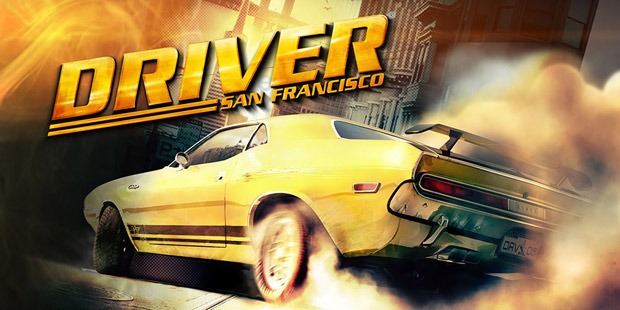
📅 Game released: 2011
Driver: San Francisco is an open-world arcade driving adventure in which detective John Tanner uses Shift to jump between cars during cinematic chases and missions. This PC guide explains official download availability for existing owners, Ubisoft Connect setup, offline single-player access, legacy system requirements and modern-Windows compatibility.
 By Editor Zero — independently researched, edited, and maintained.
Last updated: 14 November 2026
Last reviewed: 14 November 2026
Table of Contents
- Quick Facts
- Official PC Stores, Download & Installation
- Driver: San Francisco Review
- Pros & Cons
- PC System Requirements
- Frequently Asked Questions
- Similar Games
Driver: San Francisco Quick Facts
- Game: Driver: San Francisco / legacy Standard, Deluxe, Special, and Collector-related editions
- Developer: Ubisoft Reflections, with additional Ubisoft studio support
- Publisher: Ubisoft
- Genre: Racing, Open-World Racing, Action-Adventure
- Release: September 1, 2011 (Australia, console); Windows PC: September 27, 2011 (North America), September 30, 2011 (Europe)
- Legacy Editions: Standard Edition; Deluxe Edition with four additional solo challenges and three multiplayer cars; physical Special and Collector-related packages also existed
- Platforms: Windows PC, macOS, PS3, Xbox 360, Wii (separate version with a different story)
- Steam Deck: Unsupported (Valve rating for the legacy Steam release)
- Engine: Not officially confirmed; built with proprietary Ubisoft Reflections technology
- Modes: Single-player driving campaign; historical online multiplayer (retired); no local split-screen on Windows
- Online Services: Official PC multiplayer services shut down on October 1, 2022
- Community: Steam Discussions, Driver community on Reddit, Ubisoft Support
- PC modding: Nexus Mods for Driver: San Francisco lists unofficial vehicle, visual, interface and compatibility changes; no official Steam Workshop or Ubisoft mod tools
- Metacritic score: 80/100 (Windows PC)
- IGN score: 8/10 (original game; PC listing)
- Steam user reception: Mostly Positive overall (legacy Steam app; no longer sold to new buyers)
Official PC Store Status, Download & Installation
👇 Use the notes below to understand Driver: San Francisco’s official PC availability, legitimate reinstall options for existing owners, and the limitations of its old account and online services.
- Delisted status: Driver: San Francisco is no longer offered for a normal new digital purchase through Steam or Ubisoft Store. Its removal from sale did not make the commercial game freeware.
- Existing Steam owners: If you purchased the game on Steam before its removal, check the Library of the Steam account that owns it. The old Steam release uses Ubisoft account and launcher integration, so having the Steam files alone may not be sufficient to activate it on another PC.
- Ubisoft ownership: If your Ubisoft account already contains a valid entitlement, use the same account in Ubisoft Connect PC. Access and first-time activation of this legacy game can be inconsistent; the presence of game files or an old product listing is not a guarantee of successful authorization.
- Retail copies and codes: Original PC discs used product activation. A used disc, second-hand code, or allegedly unused key should not be assumed to grant a fresh valid entitlement, especially if the code was previously redeemed.
- Unofficial downloads: Abandonware archives, key marketplaces, repacks, pre-installed copies, and mirrors are not verified official Ubisoft or Steam purchase/download routes. This guide intentionally does not link to them.
- Ubisoft Connect and offline play: The Windows version uses Ubisoft account/launcher DRM. The original permanent always-online policy was relaxed, so its single-player campaign can operate without a continuous connection after the required legitimate setup and authentication; compatibility with a new installation is not guaranteed.
- Official multiplayer retirement: Ubisoft retired official PC online services on October 1, 2022. The Windows edition also lacks the two-player local split-screen offered on PS3 and Xbox 360. Ubisoft states that offline features remain available.
- Legacy Deluxe content: The Deluxe Edition originally added Russian Hill Racers, Mass Chase, Relay Race and Taxi! single-player challenges, plus a 1966 Shelby Cobra 427, 1972 Lamborghini Miura and 1963 Aston Martin DB5 for multiplayer. Ubisoft’s retirement policy says previously redeemed PC unlockable content may no longer be accessible; do not assume every bonus will still unlock, even for an existing owner.
- Steam Deck: Valve classifies the old Steam release as Unsupported. Community configurations have sometimes launched it through Proton, but obsolete Ubisoft launcher integration and uncertain activation make this an unreliable setup recommendation.
- Modern Windows PCs: Windows 10 and 11 postdate the original release. Some legitimate installations encounter launcher, old DirectX, fullscreen, startup, display or controller problems; use the troubleshooting notes below before introducing unofficial fixes.
- Community fixes and mods: Unofficial tools may improve visual effects or modern display behavior. Back up saves and configuration files first, read each tool’s release instructions, and change one component at a time to isolate compatibility problems.
 Download Ubisoft Connect PC from Ubisoft

Driver: San Francisco Review
Shift turns everyday traffic into the most inventive part of a cinematic driving game.
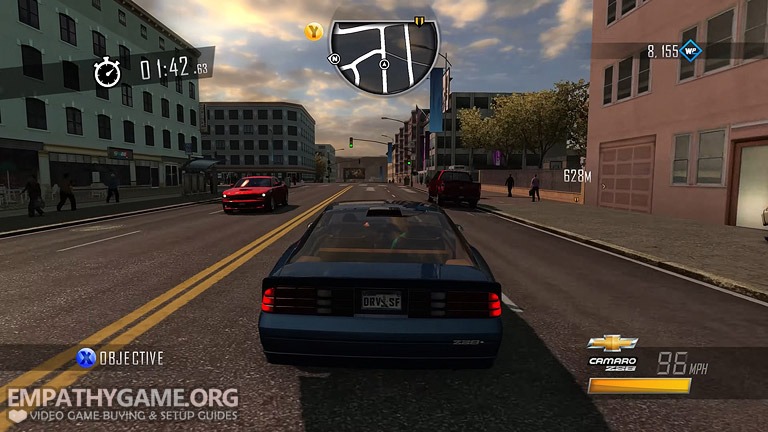
Driver: San Francisco begins with a strange idea: what if the best way to win a car chase is to stop driving your own car? Detective John Tanner’s Shift ability lets him leave one driver, rise above the streets and take control of another moving vehicle almost instantly. A race becomes a two-car juggling act. A pursuit can end when Tanner abandons the chase, takes over an oncoming truck and drives it straight into the target. A missed turn can simply mean choosing another vehicle.
This is still an arcade driving game built around broad drifts, hard braking, spectacular collisions and San Francisco’s famously steep streets. But Shift changes how those familiar pieces fit together. Traffic is no longer just something to dodge, and the fastest car is not necessarily the right one. The campaign shines when objectives and vehicles interact. Its weakness becomes clearer once the novelty settles: many optional activities still rely on conventional races, takedowns and stunts. Anyone looking for motorsport realism or detailed tuning will be disappointed. For fans of cinematic pursuits and unconventional solutions, that is the attraction.
Shift Turns the Whole City Into a Driving Tool
Shift is sometimes described as a way to travel quickly, but that misses what makes it interesting. Activating it lifts Tanner above the road, slows the action and allows him to select another vehicle. As the campaign progresses, the overhead view reaches farther across the city. The greater range matters less than how it changes the streets. A bus, pickup or ordinary commuter car can suddenly matter more than the sports car Tanner was driving a moment earlier.
Consider a takedown. Following a fleeing vehicle and repeatedly ramming its bumper is one solution, but Shift opens up another: move ahead of the target, occupy an approaching car and arrange a head-on collision. A large vehicle can become a temporary roadblock, while a damaged pursuit car can be left behind without the usual struggle to recover speed. The decision shifts from perfecting a driving line to noticing opportunities several streets away.
Team races reveal another side of this design. Tanner can alternate between two friendly cars, helping whichever one needs attention, or trust the AI with a teammate while taking control of surrounding traffic to disrupt rivals. Timing each switch still matters. Mission-critical opponents are also protected from direct possession, preventing the ability from cancelling the challenge altogether. Shift offers freedom without eliminating challenge, and a mistake can change the options instead of ending the run.
Loose Handling Fits the Car-Chase Fantasy
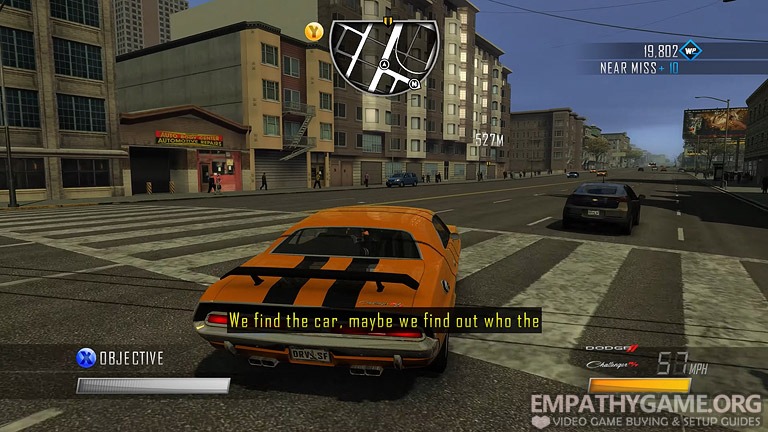
The driving model retains something of the weight and rear-drive attitude of earlier Driver games, but leans firmly toward arcade spectacle. Cars roll, slide and rotate willingly under braking, particularly the American muscle machines. It is a system that rewards a confident handbrake turn more readily than a perfect racing line. Sending a car downhill, catching a long slide and squeezing through a gap in traffic captures the feeling the game is built to deliver. The appeal is making apparent chaos feel controlled.
The city supports that character unusually well. Its hills make intersections natural launch points, freeways encourage sustained weaving, and car transporters can serve as moving ramps. Traffic adds unpredictability, but it also provides more vehicles for Shift to use. The congestion that blocks one route can open another. The compromise appears during tighter timed objectives, where an unpredictable collision or an overly wide drift feels less like an entertaining complication and more like lost progress. Handling designed for spectacular escapes is not always ideal when precision becomes compulsory.
There are more than 130 licensed vehicles, including everyday sedans, American muscle cars, sports cars and exotics. Their differences are noticeable: a heavy sedan, a Challenger and a lighter performance car do not turn or recover speed in quite the same way. Still, the roster offers more individual models than genuinely different handling styles. A vehicle’s weight and position matter more than its badge.
The Best Missions Keep Rewriting the Rules
A game built around Shift could have used the mechanic simply to make ordinary races easier. Instead, the campaign often changes what a driving objective means. Police pursuits sit alongside civilian scenarios, stunt assignments and tasks involving several vehicles. One mission needs speed; another asks Tanner to protect someone, engineer a crash or coordinate cars that cannot all be driven at once. They require understanding traffic around an objective, not merely reaching a checkpoint.
The incidental dialogue gives those changes of perspective extra charm. Shifting into a stranger’s car can interrupt an argument or put Tanner in the middle of a conversation whose passengers have no idea what has happened to their driver. The game rarely stops for the joke. Someone can be panicking in the passenger seat while the car is already sliding toward an intersection. These little situations give routine journeys a personality that a collection of anonymous events would struggle to provide.
Movie Challenges test the driving from another direction. Unlocked with collectible Movie Tokens, they remove Shift and Boost, putting the emphasis back on controlling a car through scenarios inspired by classic screen chases. The handling has enough character to carry these events, although removing Shift exposes its rougher edges.
The broader activity list is less inventive. Dares, races, pursuits and stunt events repeatedly return to drifting a set distance, jumping, smashing targets or beating another vehicle. Each can be enjoyable in isolation, but clearing the map exposes how much they share. Some later missions also demand unexpectedly exact execution after a campaign that normally encourages improvisation. The best way to appreciate the variety is to follow the story and choose the side challenges that sound interesting, rather than treating every icon as an obligation.
A Buddy-Cop Story Gives the Absurdity a Purpose
The story opens with criminal Charles Jericho escaping custody and Tanner pursuing him through San Francisco. A violent crash leaves Tanner in a coma, providing the unusual context for Shift. Hospital voices, visual distortions and small breaks in reality keep suggesting that the city is not quite the straightforward world it first appears to be. Rather than treating its supernatural idea as a convenient gameplay excuse, the writing makes Tanner’s altered perception part of the mystery.
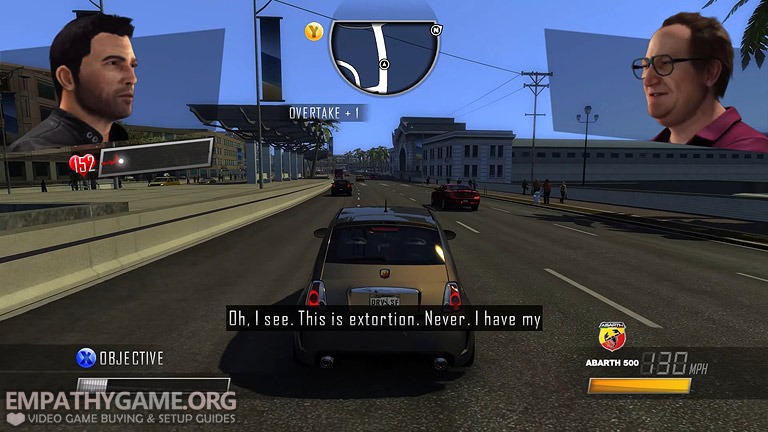
Tanner’s relationship with Tobias Jones helps keep the story grounded in an approachable buddy-cop tone. Their exchanges are more entertaining than the crime conspiracy itself, and picture-in-picture conversations let the two keep talking while the player drives. Lengthy exposition would interrupt the driving’s momentum. The plot is pulpy and not especially deep, but its rhythm fits the exaggerated chases.
The smaller stories inside other cars are arguably more revealing than the central investigation. Tanner suddenly taking over an ordinary driver can turn a stranger’s trip into a ridiculous stunt sequence, with the passenger reacting to behaviour that makes no sense from their perspective. Not every exchange is equally funny, yet they help distinguish a populated city from a map full of interchangeable traffic. More importantly, they make Shift feel connected to Tanner’s experience. Changing vehicles is an essential part of both the story’s strange logic and the way the game is played.
Progression Rewards Reckless Driving
Willpower rewards the behaviour this game encourages: drifting, jumping, overtaking and driving against traffic, alongside completing missions. It can be used for cars, garages and ability upgrades, while garages broaden purchasing options and help unlock further activities. The reasoning is clear. Driving flamboyantly is not merely a way to entertain yourself between objectives; it contributes to what Tanner can do next.
There is also a contradiction worth noticing. With such a large licensed roster, buying and collecting cars should be a major source of attachment. Yet Shift makes ownership less important than it is in garage-focused racers. The ideal car for a particular moment may already be passing through the next intersection, ready to borrow. That can make a carefully expanded collection feel surprisingly secondary, but restricting Shift to make purchased vehicles more valuable would weaken the game’s best feature. Dares, Movie Tokens and collecting still offer plenty to pursue; they simply work better as optional incentives than as the reason to keep driving.
Presentation Sells a 1970s Car-Chase Mood
San Francisco is more convincing as a setting for car-chase cinema than as a detailed simulation of a living city. The steep roads, wide avenues, highways and steady traffic are arranged to make driving situations interesting. Funk, soul, blues and other licensed music bring a period-flavoured energy without forcing the entire game into one decade. Engine notes, squealing tyres, collisions and continuous dialogue give the action an appropriately busy soundscape. Much of the atmosphere comes from how those elements work together at speed, not from visual detail alone.
Cockpit view is especially effective because it changes the sense of risk without changing the driving physics. From inside the car, a sudden lane change feels sharper, a downhill rush seems faster and threading through oncoming traffic requires a more deliberate read of the road. The physics stay equally arcadey. One odd default controller choice interrupts that smoothness: pushing forward on the left stick activates Boost, so forceful steering can trigger acceleration unintentionally. Remapping the control addresses the annoyance, but it is an awkward fit for such a movement-focused game.
Multiplayer Proved How Flexible Shift Could Be
The multiplayer modes explored Shift as a competitive idea rather than treating it as a campaign gimmick. In Tag, the surrounding traffic was part of the threat because an opponent could occupy another vehicle close to the leader. Trailblazer turned the road behind an AI-controlled DeLorean into a contested scoring space. Takedown, relay and team events used vehicle swapping for ambushes, recoveries and changing roles, while races without Shift gave players a clearer test of the handling itself.
Every nearby car could become an opponent’s next move. Position, timing and traffic awareness matter in ways they would not in an ordinary race. That makes multiplayer another demonstration of the central design idea: Shift does not replace driving skill, but it gives players an unusual set of decisions to make around it.
Final Verdict
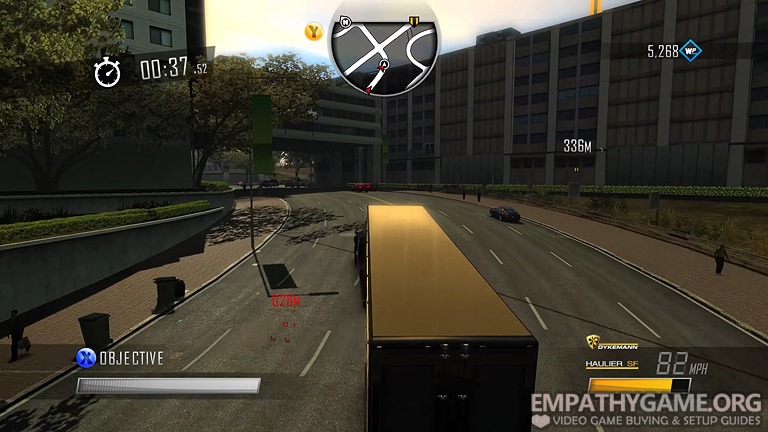
Driver: San Francisco stands out because its strangest mechanic changes so many ordinary situations. Shift turns traffic into a set of tools, gives players creative ways to recover from mistakes and makes pursuits feel closer to moving puzzles than simple tests of speed. Loose, drift-friendly handling and steep city streets support that idea, while the buddy-cop humour, licensed cars, cockpit perspective and soundtrack give the action its cinematic identity.
The weaknesses are real. Once Shift becomes familiar, the long list of optional activities reveals plenty of repeated races, takedowns and stunt objectives. Precision-heavy missions do not always suit the handling, occasional difficulty spikes limit the freedom to improvise, and collecting cars feels less essential when a suitable replacement is almost always nearby. Completionists will notice those compromises most.
Still, there is a meaningful difference between a driving game with an unusual feature and one designed around the consequences of that feature. Driver: San Francisco belongs in the second category. It is not the choice for detailed vehicle tuning or motorsport realism, but for anyone who enjoys arcade handling, memorable chases and unexpected ways to solve a problem on the road, its personality is difficult to mistake for anything else.
Driver: San Francisco Pros & Cons
- Pro: Shift remains one of the most inventive mechanics in an open-world driving game, turning ordinary traffic into part of races, pursuits, escapes, and tactical objectives
- Pro: Responsive arcade handling, long drifts, dense traffic, hills, jumps, licensed cars, cockpit views, and cinematic crashes make simply driving around San Francisco entertaining
- Pro: Story missions regularly change their rules instead of relying entirely on conventional checkpoint races
- Pro: Strong personality, soundtrack, humor, film-inspired presentation, side challenges, collectibles, garages, and vehicle unlocks give the single-player campaign more identity than many traditional racers
- Pro: Modding and compatibility communities still provide useful options for improving presentation and addressing some problems on modern PCs
- Con: The game is delisted, leaving no normal official PC purchase option for new players
- Con: Official online multiplayer is no longer available, while the PC port never received the console versions’ local split-screen mode
- Con: Ubisoft Connect integration and ageing DirectX 9-era code can make legitimate installation and startup more troublesome on modern Windows systems
- Con: Some missions have abrupt difficulty spikes, and repeatedly using Shift can reduce the importance of owning and carefully choosing individual vehicles
Driver: San Francisco PC System Requirements
The following are legacy Windows PC requirements published for the original release. They are not a guarantee of successful Ubisoft account activation or Windows 10/11 compatibility.
MINIMUM:
OS: Windows XP, Windows Vista, or Windows 7
CPU: Intel Pentium D 3.0 GHz / AMD Athlon 64 X2 4400+ 2.2 GHz
RAM: 1 GB on Windows XP / 2 GB on Windows Vista or Windows 7
GPU: 256 MB DirectX 9.0c-compatible graphics card with Shader Model 4.0 support; ATI Radeon HD 2600 XT or NVIDIA GeForce 8600 GT generation or better from the originally supported ranges
DirectX: DirectX 9.0c
Storage: 10 GB available space
Sound Card: DirectX 9.0c-compatible sound device
RECOMMENDED:
OS: Windows XP, Windows Vista, or Windows 7
CPU: Intel Core 2 Quad Q6600 2.4 GHz / AMD Athlon II X4 620 2.6 GHz
RAM: 4 GB (conservative legacy listing; some preserved requirement tables list 2 GB)
GPU: 512 MB DirectX 9.0c-compatible graphics card with Shader Model 4.0 support
DirectX: DirectX 9.0c
Storage: 10 GB available space
Sound Card: 5.1-capable sound card recommended
Additional PC Performance and Setup Notes
- The original requirements were written for much older operating systems; a modern CPU and GPU do not automatically resolve obsolete launcher, DirectX 9, or display issues.
- If a legitimate installation will not start, begin with your owning platform’s file verification, the current official Ubisoft Connect installer, and necessary Microsoft legacy runtimes. Test a clean installation with overlays and unofficial modifications disabled.
- Driver: San Francisco supports conventional widescreen displays, including 16:9. Ultrawide 21:9 may stretch by default; community display fixes can help, but they are unofficial and may depend on executable version.
- The original Windows release can exceed 60 FPS and has a 120 FPS cap. High-refresh presentation may still need configuration; do not assume frame-rate behavior or stability will match modern racing games.
- The PC port omits several post-processing effects seen on consoles. Community visual modifications exist, but compatibility and authenticity vary by mod and game version.
- Valve’s Steam Deck status remains Unsupported. Individual reports of working Proton configurations do not establish reliable support for every legitimate installation.
- Back up saves and configuration files before trying DXVK, shader replacements, display tools, vehicle mods, or similar community fixes. Some tools modify the same DLLs and may conflict.
Official Trailer
Note: The launch trailer highlights John Tanner, Charles Jericho, San Francisco’s streets, high-speed pursuits, licensed cars, crashes, and the unusual Shift mechanic, while the written guide adds the present delisting situation, legitimate owner-download guidance, Ubisoft Connect setup, requirements, Steam Deck status, and modern-PC compatibility notes.
Frequently Asked Questions
Can you still buy Driver: San Francisco on PC?
The original Windows version is not available as a normal new purchase from Steam or Ubisoft Store. A listing on an unofficial download or key site is not evidence of an authorized new Ubisoft entitlement.
Can existing Steam or Ubisoft owners reinstall the game?
An existing owner should check the Steam Library or Ubisoft account that originally received the game. Steam retains a legacy app for prior owners, but successful installation can still depend on Ubisoft account/launcher authentication. Older codes may fail to activate.
Why was Driver: San Francisco removed from sale?
Ubisoft has not publicly confirmed a definitive reason. Vehicle and music licensing are often suggested as possibilities, but they should not be presented as an official explanation.
What does Shift do, and can the campaign be played without it?
Shift lets Tanner leave his current vehicle and control another car elsewhere in traffic. It is central to the campaign and cannot be disabled for all story missions. Certain Movie Challenges deliberately restrict Shift and Boost for more traditional driving.
Can John Tanner leave his car and explore on foot?
No. The main game is built around driving, not GTA-style walking or on-foot combat. Shift is the main method of moving into another vehicle.
What should beginners spend Willpower on?
Willpower comes from missions, Activities, Dares and driving actions such as drifting and jumping. Garages are a practical early priority because they expand the available vehicles and activities; buy individual cars according to the challenges or handling styles you enjoy.
How do Movie Challenges work?
Collect Movie Tokens around the city to unlock driving scenarios inspired by film chases. These challenges usually remove Shift and Boost, putting more emphasis on precise control, speed and timing.
Can you keep playing or start New Game Plus after the story?
Yes. Free-roam activities and remaining challenges remain available after the ending. Completing the campaign also opens New Game Plus, which lets you replay the story while retaining important previously earned unlocks.
Do you need to play the earlier Driver games first?
No. The history of John Tanner and Charles Jericho adds context, but the story explains enough to follow on its own. Familiarity with earlier entries mainly adds references.
Does Driver: San Francisco still support online multiplayer or co-op on PC?
Ubisoft retired the original official PC online services. Competitive and cooperative online modes are therefore not available through those servers. Any community-run replacements are unofficial and should not be confused with Ubisoft-supported multiplayer.
Is split-screen or local co-op available on Windows?
No. The PC version does not include the two-player local split-screen modes present on PS3 and Xbox 360. Adding a second controller does not restore them.
Can the single-player campaign work offline?
Yes, the game was changed so that the campaign did not require a continuous connection once properly installed and authenticated. Official online-service retirement did not remove Ubisoft-listed offline features, but setting up a legitimate copy on a new PC may still require account verification.
Does Driver: San Francisco work on Windows 10 and Windows 11?
It can run, but those systems are outside the original supported Windows versions. Launcher authentication, DirectX 9, fullscreen behavior and older display or controller code can cause problems, so operation cannot be guaranteed for every PC.
What should I try if the game crashes or opens to a blank screen?
First confirm the owning account and a clean installation. Update Ubisoft Connect, verify files using the original store library when possible, install required legacy Microsoft runtime components, and test with overlays and mods disabled. Change only one compatibility setting at a time.
Does the PC version support controllers, steering wheels and ultrawide screens?
Xbox-style controllers are the simplest supported input route. Some period-specific racing wheels have profiles, while modern wheels may need manual configuration. Standard widescreen is supported; 21:9 can appear stretched without an unofficial fix, and the original frame-rate cap is 120 FPS.
Is Driver: San Francisco supported on Steam Deck?
Valve rates the legacy Steam release Unsupported. Some owners report success with specific Proton setups, but that does not remove launcher and activation uncertainty.
Can Driver: San Francisco be modded?
Yes, but the changes are unofficial. Nexus Mods includes visual, vehicle, interface and compatibility projects. Back up game saves and settings, check which game version a mod expects, and avoid combining fixes that replace the same files.
Still have questions? Check the Driver: San Francisco Reddit community, Steam Discussions, or Ubisoft Support for additional help and community discussion.
Sources & References
Key ownership, legacy-service, technical, release, and review information in this guide was checked against:
- Ubisoft — Decommissioning of Online Services — confirms the PC multiplayer shutdown and its effects on offline features and formerly redeemed unlockable content.
- SteamDB — Driver San Francisco — historical Steam app metadata, release listing, overall review category, and Steam Deck compatibility classification.
- PCGamingWiki — Driver: San Francisco — Windows compatibility, original editions, controller and display limitations, frame-rate cap and community-fix context.
- Metacritic — PC Critic Reviews — verifies the PC aggregate review score and IGN’s original 8/10 review.
- Steam — Original Mac Release Announcement — confirms the historical macOS version.
- Ubisoft — Installing Ubisoft Connect PC — official account-launcher installation and reinstall guidance.
Similar Games Like Driver: San Francisco
- Burnout Paradise
- Need for Speed Most Wanted (2012)
- Need for Speed Most Wanted (2005)
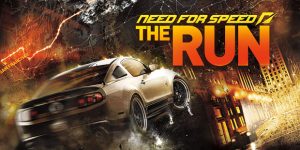
- Need for Speed: The Run
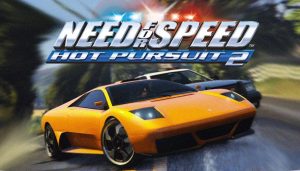
- Need for Speed: Hot Pursuit 2
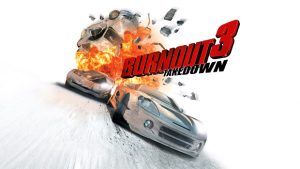
- Burnout 3: Takedown
Found something worth playing through DecideGame?
DecideGame.com is an independent gaming project run by Editor Zero. If this guide helped you discover a game, solve a problem, or find useful information, you can support DecideGame.com and help keep new and updated game guides coming.
DecideGame — PC Game Guides, Reviews & Setup Help