
📅 Game released: 2011
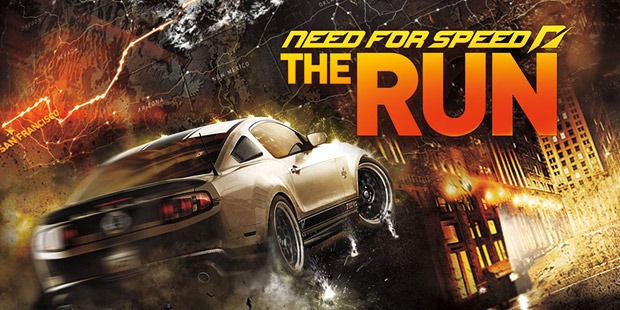
Need for Speed: The Run is a cinematic arcade racer following Jack Rourke from San Francisco to New York through police pursuits, mountain hazards, and high-stakes road races. This PC guide explains its official download status, existing EA-account ownership and installation options, retired online services, system requirements, and practical Windows setup advice.
 By Editor Zero — independently researched, edited, and maintained.
Last updated: 15 November 2026
Last reviewed: 15 November 2026
Table of Contents
- Quick Facts
- Official PC Stores, Download & Installation
- Need for Speed: The Run Review
- Pros & Cons
- PC System Requirements
- Frequently Asked Questions
- Similar Games
Need for Speed: The Run Quick Facts
- Game: Need for Speed: The Run / Standard Edition / Limited Edition
- Developer: EA Black Box (main Windows PC, PS3, and Xbox 360 versions)
- Publisher: Electronic Arts
- Genre: Racing, arcade racing
- Release: November 15, 2011 (North America); November 17, 2011 (parts of Europe)
- Platforms: Windows PC, PS3, Xbox 360, Wii, Nintendo 3DS
- Limited Edition: Lamborghini Aventador, Chevrolet Camaro ZL1, Porsche 911 Carrera S, and five extra challenges
- Online services: Official multiplayer and Autolog servers retired; offline content remains the main way to play
- Steam Deck: Not available on Steam; no Valve compatibility rating
- Engine: Frostbite 2 (main PC/PS3/Xbox 360 versions)
- Community: EA Need for Speed Forums, Need for Speed Reddit Community
- PC modding: Nexus Mods and unofficial compatibility projects; no Steam Workshop
- Metacritic score: 69/100 (Windows PC)
- IGN score: 6.5/10 (original main-platform review)
- GameSpot score: 7/10 (original main-platform review)
- Steam user reception: Not available on Steam; no Steam user-rating category
Official PC Store Status, Download & Installation
👇 Check the game’s official PC store status and the legitimate ownership, download, and setup options available to people who already own a copy.
- Official delisting: Electronic Arts removed Need for Speed: The Run from digital storefronts. There is no verified normal Steam, EA app, Epic Games Store, GOG, or Microsoft Store route for a new Windows PC purchase.
- Existing EA ownership: If you previously redeemed the PC game, sign in to the original EA account, open your EA app Library, and check whether its download or installation option is present. Availability may depend on your original entitlement; EA’s general library instructions are not a promise that every legacy license will install successfully.
- Missing library entry: If the game is absent, follow EA’s missing-games guidance: check the original account, refresh the Library, clear the app cache if appropriate, and contact EA Help if ownership still cannot be confirmed.
- Original PC discs: Retail editions used product-key/account activation. A second-hand disc does not guarantee a new usable license: an already-redeemed key generally remains associated with the original EA account.
- Offline campaign: EA retired the official online services but specifically said owners could continue using offline features. Initial installation and entitlement verification can still require functioning EA account services; do not assume every unactivated old disc is independently playable offline.
- Retired online features: Official matchmaking, competitive multiplayer, Autolog, and online leaderboards no longer operate. The Windows campaign and available local Challenge Series content are the main remaining reasons to keep an owned copy installed.
- Limited Edition: The historical Limited Edition includes three bonus cars—Lamborghini Aventador, Chevrolet Camaro ZL1, and Porsche 911 Carrera S—and five additional challenges. Physical packaging and third-party listings do not guarantee an unused, transferable activation key.
- PC DLC differences: Not all console add-on packs were released on Windows. Check original edition entitlements rather than assuming that console DLC or multiplayer-linked unlocks are included with a PC copy.
- Subscriptions: The game is not a verified normal EA Play or PC Game Pass catalogue route for acquiring a new PC license.
- Community fixes: Unofficial enhancements may improve the display, camera, and legacy-PC experience for an already licensed installation. Keep original files and saves backed up; a mod is not a substitute for a valid license or official activation.
 Read EA’s EA App Download & Installation Guide
Read EA’s Need for Speed Delisting Notice

Need for Speed: The Run Review
A spectacular coast-to-coast racer whose sense of motion exceeds its freedom.
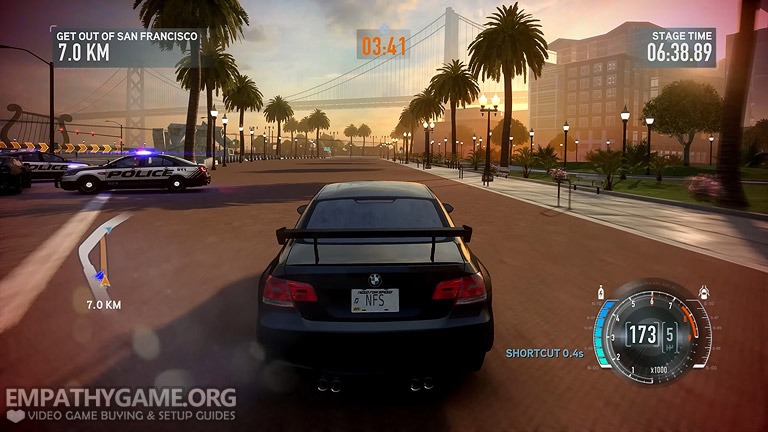
Need for Speed: The Run takes a curious idea for an arcade racer and commits to it almost completely. Jack Rourke, pursued by criminals and tempted by a $25 million prize, joins an illegal race from San Francisco to New York. Around 200 competitors stand between him and the finish, while police, traffic, dangerous weather and sudden environmental disasters keep turning otherwise ordinary stretches of road into emergencies.
Instead of asking the driver to build a career around a familiar city, the game keeps moving east. Every stage has a destination, and the changing landscape makes progress feel physical rather than merely numerical. That gives The Run an identity few racing campaigns share. It also leaves little room for wandering, tuning a personal collection or setting your own racing agenda. Whether that feels refreshingly direct or unnecessarily restrictive depends on how much of Need for Speed’s appeal lies outside the race itself.
The Handling Has More Weight Than the Spectacle Suggests
The cars are arcade-friendly without feeling interchangeable. Sports cars are generally easier to place through quick changes of direction; powerful muscle cars can repay a careful corner exit with exhilarating acceleration, then punish an impatient throttle in the next bend. A rear-driven car that feels unstoppable on a straight can push wide or break traction when its driver demands too much at the apex. The game broadly associates greater power with more demanding handling, so choosing a faster car is not always the same as choosing a quicker route through a difficult event.
The Ford Shelby GT500 Super Snake makes the trade-off easy to understand. Its straight-line pace encourages aggression, but carrying too much speed into a tight bend can waste everything gained beforehand. The satisfying approach is to protect momentum: brake early enough to open the exit, allow the car to rotate, perhaps with a brief handbrake tap, and use nitrous as the steering straightens. Boosting while the tyres are still struggling for grip looks dramatic but accomplishes less.
Driver Abilities eventually add drafting, increased nitrous capacity and faster recharge through risky driving, which makes those decisions more interesting without turning the handling into a simulation. On broad highways, a rival’s slipstream can set up a decisive pass. In narrow, traffic-heavy sections, smaller steering corrections often matter more than a spectacular swerve. A complete lane change to dodge one car may cost speed or put Jack directly in another vehicle’s path. In a demanding Challenge Series event such as The Gap, where traffic crowds a narrow road, a clean near miss may preserve more speed than a full evasive lane change. The road asks for anticipation, not constant heroics.
That is why the heavily managed rivalry can frustrate. Opponents sometimes seem determined to remain nearby whatever lead has been earned, and one late collision can erase several minutes of good driving. The Run is most convincing when speed, car control and road conditions produce tension naturally. It is less satisfying when a dramatic finish seems to have been arranged in advance.
The Route Is the Real Star of the Campaign
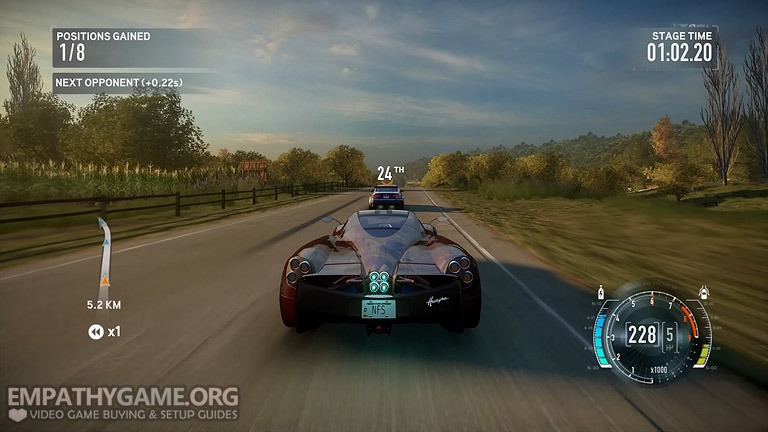
San Francisco streets give way to deserts, mountains, plains, industrial routes, Chicago traffic, forests and the final approach to New York. Frostbite 2 gives the journey unusual scale for an arcade racer of its generation. Distant terrain, roadside detail, lighting and moving weather make the world feel expansive even though the playable routes are carefully confined. The scenery is not simply attractive; it changes how each race is read.
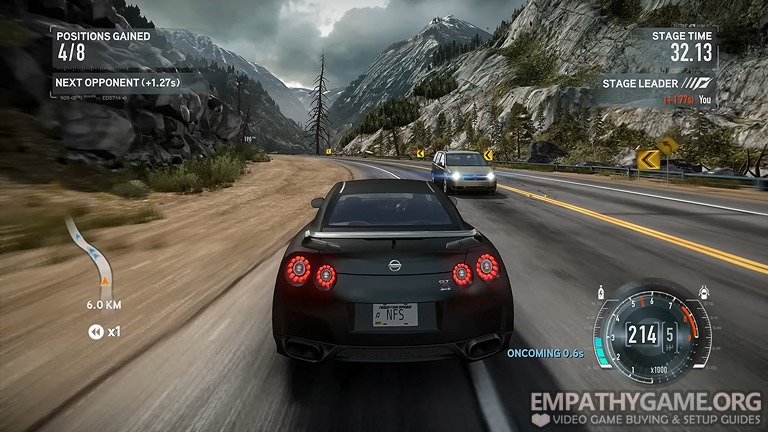
Independence Pass is the clearest example. Snow makes the next corner harder to judge, ice discourages careless corrections, debris interrupts the racing line and an avalanche turns the mountain itself into a hazard. The sequence works because the spectacle continues to demand driving decisions. It is not just an impressive scene happening beside the car.
Police encounters create a different kind of pressure. Roadblocks make the safest gap more important than the widest-looking one, while patrol vehicles can crowd a car toward barriers. Crowded city roads reward precision that open western highways barely require. Not every mile feels equally distinct, though. A desert section encountered later in the trip can look strikingly familiar even when the direction or lighting changes, and certain urban sections can create a similar impression. That does not establish that the roads are identical, but it does make the geography feel less varied than the surrounding spectacle. The sense of variety comes partly from presentation and changing conditions, not always from a completely new road design.
Even with that qualification, the journey is the game’s strongest organizing idea. An open world would offer greater freedom, but it might lose the feeling of crossing a country one dangerous section at a time. The Run chooses forward motion over exploration, and its best environments justify that choice.
Different Objectives Rarely Escape the Same Basic Sprint
The campaign changes the immediate objective more often than the underlying activity. Sprint Races require Jack to overtake enough competitors; Time Challenges put him against the clock; Battle Mode demands passes against successive opponents before time runs out; Survival stages emphasize escaping danger; and Preview events briefly introduce cars not yet available through normal progression. Each changes the pressure, but nearly every solution begins with driving the same point-to-point roads faster and more cleanly.
A Battle event can reward a bold overtake because waiting for the ideal corner may exhaust the timer. A Time Challenge exposes even small losses of speed, since there is no rival to blame when a medal slips away. In later Make Up Time events, several AI drivers can also converge on one tempting shortcut, turning the apparent fastest route into a bottleneck. It is a revealing moment: route choice matters, but not always in the simple way the road layout suggests.
Checkpoint Resets are another compromise between accessibility and the game’s appetite for drama. After a wreck, Jack returns to a previous checkpoint, with the allowed number of retries depending on difficulty. That is kinder than restarting every long event, yet it breaks the sensation of an uninterrupted chase. A fast respawn into moving traffic can sometimes create a second collision almost immediately, and the boundary between a recoverable off-road mistake and a forced reset may feel inconsistent. The system can make failure seem less like a consequence of driving badly and more like an interruption imposed by the stage.
The brief on-foot scenes are less defensible. Their quick-time prompts convey Jack’s desperate situation, but they are not meaningful exploration or action mechanics. They interrupt the one activity the game has spent so much effort making exciting. With little circuit racing, drifting, drag competition or free-roam variety elsewhere, those interruptions stand out more than they otherwise would.
The Story Provides Urgency, Not Much Character Development
Jack Rourke owes money to dangerous people, and Sam Harper offers him a way out through the cross-country race. Sean Faris gives Jack a convincing mixture of confidence and impatience; Christina Hendricks makes Sam sound as though she is considering the next problem before Jack has solved the present one. The performances do considerable work because the script gives both characters relatively little space.
Jack’s limited dialogue suits a campaign that rarely stops to talk. Still, the desperation introduced at the beginning remains more of a reason to drive than an unfolding character story. Nikki Blake and Mila Belova establish a memorable racing partnership, while Cesar DeLeon, Eddie Cooke and Calvin Garrett add personality to the field. Most opponents disappear too quickly for those introductions to develop into meaningful rivalries.
Strangely, the road often tells the story better. A run through the Nevada desert at dusk feels different from pushing through Chicago at night, even if the immediate task remains overtaking cars. Brian Tyler’s score, engine notes, police chatter and the noise of hazards build an urgency the dialogue seldom matches. The plot supplies the destination; sound and scenery provide the experience of trying to reach it.
Car Choice Matters More Than Car Customisation
Progression centres on XP, Driver Levels, abilities and car unlocks rather than collecting and tuning individual performance parts. Nitrous upgrades, drafting and bonuses for risky driving make Jack more capable, while challenges and level rewards broaden the vehicle selection. This is a lean system, but its simplicity fits a campaign that wants the next stretch of road to matter more than a garage menu.
Gas Stations add an appealing decision during a race: pull over, select another available car and rejoin the route. A powerful muscle car might suit a long highway, while something easier to control could be preferable through tight mountain corners. Yet switching is not free. Entering the station sacrifices momentum, and the replacement must accelerate again while rivals continue racing. On demanding difficulties, a technically better car may not repay the time lost getting into it.
There is a second restriction that makes the selection less open than the number of unlockable vehicles suggests. Available car tiers are tied to campaign progression, so a driver who wants a higher-tier option during a difficult stage may have to wait for a later leg of the journey. The game offers choices, but it often decides when those choices become practical.
Stock models, special NFS editions and Signature variants offer visual and handling differences, yet they cannot replace the satisfaction of building a personalized machine from components. Players who prefer choosing a ready-to-race car may welcome the absence of garage busywork. Those who enjoy the tuning culture of Underground 2 or Most Wanted will find that an extensive roster does not necessarily create deep ownership.
Challenge Series Makes Better Use of a Short Campaign
The campaign’s brevity is part of its character. There is almost no downtime, and the trip reaches its conclusion before the formula becomes exhausting. But it can also end just as the premise seems capable of supporting more rivals, locations and racing situations.
Challenge Series gives the roads a second purpose. Themed event sets open as campaign stages are completed, with Bronze, Silver, Gold and Platinum times to pursue. Medals provide XP and vehicle rewards, but the stronger attraction is how familiarity changes attention. Once an avalanche or police chase has lost its initial surprise, a clean braking point or properly timed nitrous burst becomes the interesting part. Harder medals make the underlying driving model easier to appreciate.
Extreme difficulty, unlocked after completing the campaign, provides another reason to revisit the journey, though its stricter tolerance for mistakes also magnifies the frustration of scripted rivals and Checkpoint Resets. It is a worthwhile challenge for drivers who enjoy learning a route thoroughly, less so for those who want to improvise without repeating difficult sequences.
Replay freedom has limits beyond the campaign’s length. Stage Select can return Jack to completed portions of the journey, and Challenge Series adds prescribed events, but there is no conventional Quick Race mode for pairing any car with any favorite road on demand. That distinction matters once the story is finished. The game has plenty of reasons to chase a better time, fewer ways to simply enjoy one stretch of scenery on your own terms.
Final Verdict
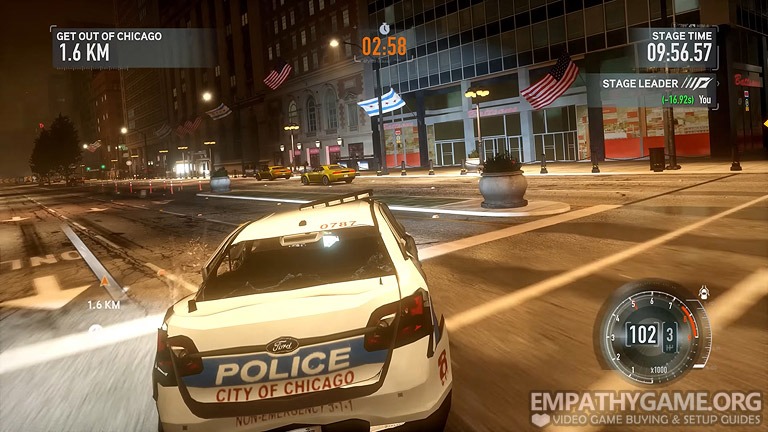
Need for Speed: The Run works best when judged as a deliberately focused action racer, not as a smaller version of the series’ open-world entries. Its strongest roads combine weighty arcade handling, dramatic changes of scenery, police interference and environmental danger into something that genuinely feels like a journey. They also reveal why driving here can be satisfying: momentum is earned through restraint as often as aggression.
The limitations are inseparable from that design. Repeated point-to-point objectives, managed rival behaviour, abrupt resets and limited car freedom can make the experience feel directed rather than competitive. The quick-time scenes contribute little as gameplay, and the story rarely develops beyond its initial urgency. Even some of the most attractive routes offer less freedom on a replay than their scenery invites.
Still, the campaign’s momentum is difficult to dismiss. Challenge Series rewards a more precise reading of its roads, and the short main race avoids the filler that can dilute a longer career. Players looking for open-world wandering, deep tuning or a flexible racing sandbox have stronger alternatives. Those who want a fast, cinematic road trip with distinct places, demanding bursts of driving and an actual finish line to chase will find The Run an unusual and worthwhile Need for Speed experiment.
Need for Speed: The Run Pros & Cons
- Pro: Distinctive San Francisco-to-New York premise gives the campaign a convincing sense of crossing a country
- Pro: Deserts, mountain passes, highways, cities, police chases, and environmental hazards create striking variety
- Pro: Fast, weighty arcade handling rewards momentum and makes tightly staged events exciting
- Pro: Frostbite 2 lighting, weather, scale, and sound remain atmospheric for the game’s era
- Pro: Unofficial community modifications can improve presentation and quality of life for existing PC owners
- Con: No verified official new-copy PC purchase route remains
- Con: Retired official multiplayer and Autolog remove the original connected competition
- Con: Short campaign, scripted rivals, abrupt checkpoints, and quick-time scenes can feel restrictive
- Con: Limited tuning and older EA activation or Windows compatibility can frustrate players seeking an effortless setup
Need for Speed: The Run PC System Requirements
Important: These are the original Windows-era minimum and recommended specifications, cross-checked against preserved PC technical documentation. They target Windows Vista and Windows 7, not a guaranteed Windows 10 or Windows 11 installation. A legitimate license and working legacy activation may still be needed.
MINIMUM:
OS: Windows Vista SP2, 32-bit
CPU: 3.0 GHz Intel Core 2 Duo or equivalent AMD processor
RAM: 3 GB
GPU: ATI Radeon HD 4870 or NVIDIA GeForce 8800 GT, 512 MB VRAM; DirectX 10-class graphics capability
DirectX: DirectX 10-class GPU support (the PC game uses Direct3D 11)
Storage: 18 GB free
Sound: DirectX-compatible device
Input: Keyboard, gamepad, or steering wheel
Optical drive: DVD-ROM for an original disc installation
RECOMMENDED:
OS: Windows 7 SP1, 64-bit
CPU: 3.0 GHz Intel Core 2 Quad or equivalent AMD processor
RAM: 4 GB
GPU: ATI Radeon HD 6950 or NVIDIA GeForce GTX 560, 1 GB VRAM
DirectX: DirectX 11
Storage: 18 GB free
Sound: DirectX-compatible device
Input: Keyboard, gamepad, or steering wheel
Optical drive: DVD-ROM for an original disc installation
Additional PC Performance and Setup Notes
- Modern Windows: Windows 10 and Windows 11 were not part of the original published OS requirements. An EA app entitlement or older DVD installation can face separate activation, library, controller, or display problems even when the PC hardware is powerful enough.
- Autolog connection screen: With EA’s servers retired, a legitimately installed copy may hang while contacting Autolog. If that happens after any required account verification, try launching without an internet connection; this is a legacy offline workaround, not an activation bypass or a guarantee for every installation.
- Graphics requirements: The PC edition uses Direct3D 11 with older DirectX feature-level hardware compatibility. Check the active graphics adapter if Direct3D initialization fails rather than assuming that any modern CPU-integrated graphics configuration works.
- Controller input: An Xbox 360-style controller was recommended for the original PC experience. Keyboard input is supported, but individual modern controllers or steering wheels can need extra configuration; see PCGamingWiki’s game-specific notes if input is not detected.
- 30/60 FPS behavior: In-game V-Sync can impose a 30 FPS limit. Disabling it can permit 60 FPS or higher, but very high frame rates may disturb sound or effects; test 60 FPS first and use documented, version-compatible fixes if problems occur. Menus and prerendered scenes may remain at 30 FPS.
- Fusion Fix: For a legitimate PC installation, the author’s Need for Speed: The Run Fusion Fix release offers borderless window improvements, camera adjustments, and optional startup changes. The project documents extracting its archive into the folder containing
Need For Speed The Run.exeand editingplugins\NFSTheRun.FusionFix.iniif needed. Back up files first and do not mix overlapping modifications without checking compatibility. - Save backups: Local save/configuration data is normally under
%USERPROFILE%\Documents\NFSTR\settings\. Copy that folder before changing hardware, trying mods, or troubleshooting. A redirected Documents folder (for example through OneDrive) may change the physical location.
Official Trailer
Note: Electronic Arts’ official launch trailer shows the cross-country route, high-speed rivals, police pursuits, mountain roads, city traffic, environmental hazards, and cinematic action that define The Run, while the written guide adds its delisted PC status, offline-service limitations, system requirements, compatibility, and modding guidance.
Frequently Asked Questions
Can you still buy Need for Speed: The Run on PC?
There is no verified official digital storefront selling new Windows licenses. EA withdrew it from sale; existing owners should check their original EA account or properly licensed retail installation rather than rely on unofficial sellers.
Can existing owners reinstall the game, and what if a product key is already used?
Check the EA app Library while signed in to the account that originally redeemed the game. A previously redeemed retail key usually cannot be activated again on another account. If the title is missing, use EA’s missing-library troubleshooting or contact EA Help.
Why does the game hang on ‘Connecting to Autolog servers’?
Autolog’s official servers were retired. For a legitimately installed copy, temporarily disconnecting the network before launching can help reach offline play, provided any required EA account or license verification was completed. EA app Offline Mode alone may not resolve every configuration.
Are the official multiplayer servers or campaign co-op available?
No. Official competitive multiplayer and Autolog services are closed, and the story campaign was never cooperative. The remaining standard experience is single-player, including its available offline challenges.
Does the PC release support split-screen or LAN multiplayer?
The original Windows release does not provide an official split-screen or conventional LAN multiplayer mode. Its original online competitive modes depended on services that have since closed.
Is Need for Speed: The Run open world?
No. It follows a structured sequence of point-to-point routes across the United States. The scenery changes constantly, but there is no freely explorable map like those in many other Need for Speed games.
How long is the campaign?
A normal playthrough often takes roughly four to six hours including retries and cutscenes, depending on difficulty and skill. The recorded racing time can be much shorter; additional Challenge Series events extend playtime.
Can you freely control Jack Rourke during the on-foot scenes?
No. Those short cinematic sequences use quick-time button prompts rather than free on-foot exploration or conventional third-person gameplay.
Can you change or customize your car during The Run?
Certain roadside Gas Stations allow a switch to another unlocked vehicle. Visual variants and car choice matter, but there is no Underground-style garage for extensively tuning individual performance parts.
How do checkpoint Resets work?
After a crash, a Reset returns you to the latest checkpoint. The available number depends on difficulty, and running out of Resets can fail the event, which is why taking a safer corner can be faster than repeatedly attempting an aggressive shortcut.
What does Driver Level XP unlock?
Driver Level progression awards driving-related abilities and rewards, including improvements involving nitrous, drafting, and XP from risky manoeuvres. It is not a conventional car-parts upgrade tree.
What is Challenge Series?
Challenge Series adds themed events with separate time targets and Bronze, Silver, Gold, or Platinum medals. These events make more use of familiar roads and provide reasons to improve precision after the main race.
How do you unlock Extreme difficulty and replay stages?
Finishing the main campaign unlocks Extreme difficulty. Stage Select lets you revisit completed parts of the journey, while Challenge Series provides additional event objectives.
Did the Windows version get all the console DLC?
No. Several extra car and challenge packs were console-only. The Limited Edition’s three bonus vehicles and five challenges are separate from later add-ons, and access depends on what the original owned edition includes.
Does the PC version support a controller?
Yes. The original design supports keyboard input and Xbox 360-style gamepads. Modern XInput controllers may work, but some newer devices and steering wheels can require configuration or game-specific workarounds.
Can it run on Windows 10 or Windows 11?
It can work on newer Windows installations, but EA’s original requirements predate those operating systems. Account licensing, Autolog contact attempts, input detection, and display options can create legacy compatibility issues.
Can Need for Speed: The Run run at 60 FPS?
Yes. With in-game V-Sync disabled, gameplay can exceed the default 30 FPS presentation; 60 FPS is a sensible first target. Higher frame rates can affect effects, sound, or stability without appropriate unofficial fixes, while some cutscenes and menus still run at 30 FPS.
What does Fusion Fix do, and is it an official mod?
Fusion Fix is a third-party enhancement for owned Windows installations. It adds improved windowed presentation, camera options, and startup conveniences; it is not an EA product and cannot replace game ownership or activation.
Where are PC save files kept?
The usual folder is %USERPROFILE%\Documents\NFSTR\settings\. Back it up before modifying files or moving to another computer. OneDrive or another Documents-folder redirect may affect the actual directory.
Is there an official Steam Deck compatibility rating?
No. There is no Steam release with a Valve Steam Deck rating. Unofficial installation through Proton may be possible for some legitimate PC owners, but EA account and legacy-game compatibility complicate setup.
Still have questions?
Check the Need for Speed Reddit community, EA Need for Speed Forums, or EA Help for community discussion or account and ownership support.
Sources & References
Key historical, official-availability, and PC technical details in this guide were checked against these sources:
- EA’s original launch announcement — original release date, main platforms, game identity, and Frostbite 2.
- EA’s retirement announcement — digital-store withdrawal, official multiplayer shutdown, and offline-game continuation.
- EA app download and installation support — general owned-game library, download, and offline-mode procedures.
- PCGamingWiki: Need for Speed: The Run — preserved Windows requirements, save location, PC frame-rate behavior, and compatibility notes.
- Metacritic PC critic reviews — version-specific Windows PC aggregate rating.
- Fusion Fix creator’s release — documented windowed-mode, camera, and legacy-PC enhancement features.
Similar Games Like Need for Speed: The Run
- Driver: San Francisco
- Need for Speed: Hot Pursuit 2
- Need for Speed Most Wanted (2005)
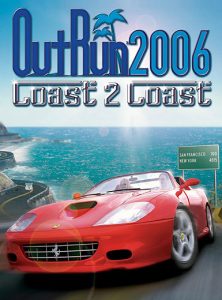
- OutRun 2006: Coast 2 Coast
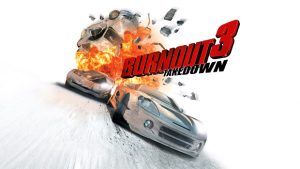
- Burnout 3: Takedown
- Need for Speed Most Wanted (2012)

Found something worth playing through DecideGame?
DecideGame.com is an independent gaming project run by Editor Zero. If this guide helped you discover a game, solve a problem, or find useful information, you can support DecideGame.com and help keep new and updated game guides coming.
DecideGame — PC Game Guides, Reviews & Setup Help