
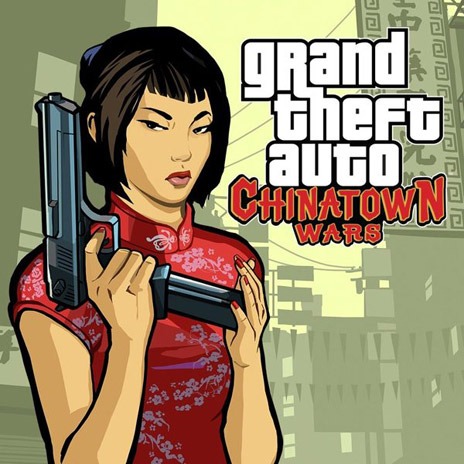
📅 Game released: 2009
Grand Theft Auto: Chinatown Wars follows Huang Lee through Liberty City’s Triad underworld, combining top-down driving, quick-fire missions, police pursuits, and a surprisingly involved trading economy. This PC guide explains the official Windows download status, how to play a legally owned PSP copy with PPSSPP or the original Nintendo DS version with melonDS, and the emulator setup, controls, and hardware considerations that matter.
 By Editor Zero — independently researched, edited, and maintained.
Last updated: 13 November 2026
Last reviewed: 13 November 2026
Table of Contents
- Quick Facts
- Official PC Stores, Download & Installation
- GTA Chinatown Wars Review
- Pros & Cons
- PC System Requirements
- Frequently Asked Questions
- Similar Games
GTA Chinatown Wars Quick Facts
- Game: Grand Theft Auto: Chinatown Wars / GTA Chinatown Wars / GTA CW
- Developer: Rockstar Leeds, in conjunction with Rockstar North
- Publisher: Rockstar Games
- Genre: Action-Adventure, Open World, Sandbox; top-down crime action
- Release: March 17, 2009 (Nintendo DS, North America); PSP — October 20, 2009 (North America); no native Windows PC release
- Platforms: Nintendo DS, PSP, iOS, Android, Amazon Kindle devices
- Best PC emulation route: PSP version with PPSSPP; original DS version with melonDS for touch-based gameplay
- Modes: Single-player campaign; original handheld versions also offered local wireless multiplayer with platform-specific limitations
- Steam Deck: No official Steam release or Valve rating; PSP emulation is possible through PPSSPP on compatible handheld PCs
- Engine: Not officially confirmed
- Community: GTA Reddit community, PPSSPP Forums, melonDS project
- PC modding: No official native Windows tools; emulator-side control, rendering, and save options vary by platform, with community modifications remaining unofficial
- Metacritic score: 90/100 (PSP); 93/100 (original Nintendo DS version)
- IGN score: 9.3/10 (PSP); 9.5/10 (Nintendo DS)
- GameSpot score: 9.5/10 (PSP)
Official PC Store Status, Download & Installation
👇 GTA Chinatown Wars has no official Windows game download. For PC play, compare the legitimate PSP and Nintendo DS emulation routes below, and use game files from copies you are entitled to use.
- Native PC status: Rockstar has not released Chinatown Wars for Windows. It is not a native Steam, Epic Games Store, GOG, Microsoft Store, or Rockstar Games Launcher game; emulator software does not create an official Windows edition.
- Best emulator for PC: PPSSPP is the recommended first choice for most Windows players. It runs the PSP edition in one widescreen view, supports standard PC controllers, can render at higher resolutions, and does not require a separate PSP BIOS file.
- Why choose the PSP edition: Compared with the Nintendo DS original, it has enhanced graphics and lighting, additional missions featuring Melanie Mallard, more radio music, and controls adapted to the PSP’s single screen. Those differences make it the strongest all-round version for a conventional monitor and gamepad.
- Why choose the Nintendo DS edition: The 2009 original was designed around two screens, stylus-operated tasks, and a distinct cel-shaded appearance. With melonDS, mouse input can stand in for touch interactions, but a split-screen layout is less convenient for living-room or controller-only play.
- Legitimate PSP game copy: PPSSPP does not include Chinatown Wars. If you own a PSP UMD and suitable PSP hardware, its official game-dumping instructions describe making an ISO backup using a PSP with custom firmware and a USB connection. A compatible legitimately owned digital PSP installation can instead use its copied game files where supported.
- Legitimate DS game copy: For melonDS, use an
.ndsbackup of a cartridge you legally own and are permitted to copy. An ordinary PC disc drive cannot read a DS cartridge; a compatible console or cartridge-dumping setup is needed. - DS BIOS and firmware: melonDS’s official setup guide documents BIOS and firmware requirements for DS emulation, including
bios9.bin,bios7.bin, andfirmware.binfrom appropriate hardware. Do not confuse these files with the game itself or obtain unknown firmware bundles. - Game-file responsibility: You must locate or prepare any required game backup independently and confirm that you have the right to use it under applicable law. This guide provides no copyrighted game images, cartridge files, BIOS files, or links to unauthorized sources. Simply owning a game does not necessarily authorize downloading another person’s copy.
- PSP backup format: PPSSPP supports game images such as
.isoand.cso; consult its game-loading documentation for other supported formats and legitimately owned digital PSP titles. A DS.ndsfile cannot be loaded into PPSSPP. - Ownership and service limits: An iOS or Android purchase does not provide a Windows license or a PSP disc image. Original DS/PSP wireless modes and old Rockstar-connected unlocks should not be treated as guaranteed modern online PC features; the offline single-player campaign is the practical focus.
 Get PPSSPP from the Official Website
Get melonDS from the Official Website
 Visit the Official GTA Chinatown Wars Page

Grand Theft Auto: Chinatown Wars Review
A restless little Liberty City where making money creates its own trouble.
In Grand Theft Auto: Chinatown Wars, the next story mission can wait if Huang Lee hears about a particularly good deal across town. That is what makes this overhead GTA interesting. Money is not simply a reward for completing criminal jobs; earning it becomes another reason to explore, take risks, and attract police attention. A trip to meet a Triad contact might turn into a drug delivery, a stolen vehicle, or an improvised getaway before Huang reaches his destination. It recalls early GTA’s arcade pace without turning Liberty City into a string of errands. Despite camera and gunplay limitations, its overlapping systems make ordinary travel unusually unpredictable.
Liberty City Works Differently From Above
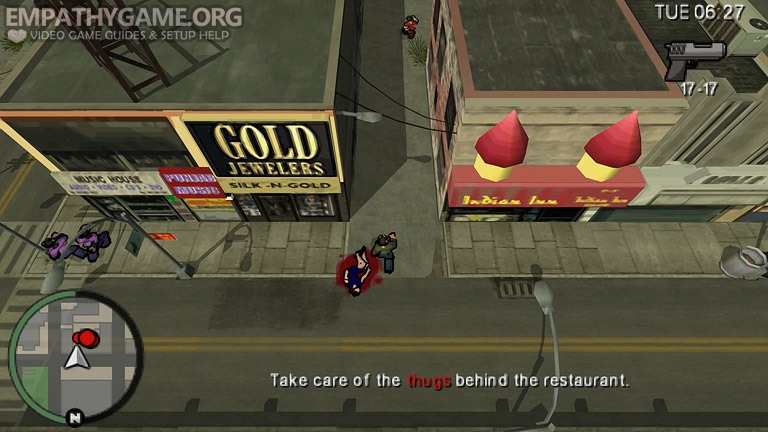
Chinatown Wars uses a version of GTA IV‘s Liberty City focused on Algonquin, Broker, Dukes, and Bohan. Seen from above, the city feels less like a place to admire at street level and more like a dense network of junctions, shortcuts, and escape routes. Driving is brisk and forgiving, helped by steering assistance that guides vehicles around bends. Weaving through traffic becomes enjoyable immediately, though precise cornering offers less direct control.
The elevated viewpoint gives useful advance warning of approaching traffic, but it cannot always make sense of the scenery layered over a road. Under elevated railway tracks, translucent passing trains can crowd the screen during a fast pursuit. A crash caused by briefly losing sight of the road is frustrating precisely because the rest of the handling encourages quick decisions. It is a camera designed for momentum, not always for clarity.
Police Chases Reward Creative Driving
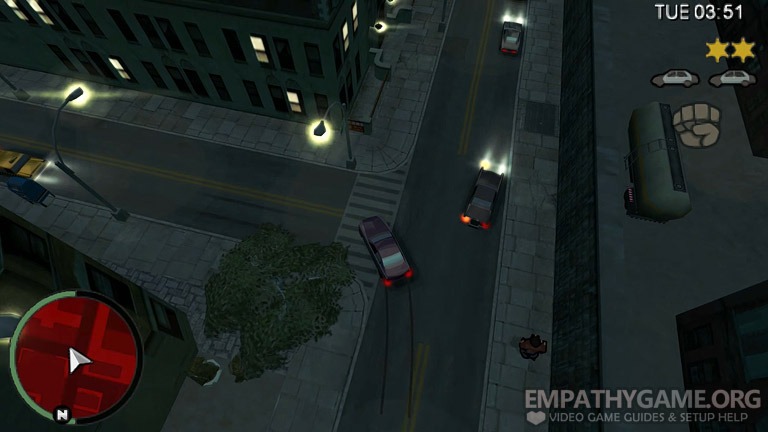
Escaping the police is one of Chinatown Wars’ most satisfying departures from the usual GTA formula. Rather than simply driving outside a search area and waiting, Huang can lower his wanted level by forcing pursuing police cars to crash. A narrow gap, a sharp turn around a solid obstacle, or traffic at a busy junction becomes something to use against the officers chasing him. Getting a cruiser to wreck through its own overcommitment feels more deliberate than merely being faster.
It also changes how the streets are read. A straight road is good for travelling; a crowded junction may be better for shaking a pursuer. The drawback is that these escapes become harder to control when several cruisers crowd the same space. At higher wanted levels, a clever manoeuvre can turn into an unavoidable-looking pile-up. Firing indiscriminately at officers is not a substitute for disabling their vehicles through driving, either; escalating the confrontation can leave Huang with an even bigger problem.
The Trading Economy Makes Detours Worth Considering
The drug-trading system is where Chinatown Wars most convincingly turns its open world into a game of decisions. Dealers across Liberty City offer different prices, and Huang’s PDA supplies leads on unusually profitable transactions. That creates a reason to learn neighbourhoods beyond their mission markers. A cheap purchase in one borough may justify a long drive to a better buyer elsewhere. Suddenly, the journey between story assignments has an objective of its own, and that objective is one the player has chosen.
More importantly, the trading loop does not behave like a perfectly dependable shop menu. A dealer might be absent when Huang arrives, and some encounters can turn into police stings. Stealing drug vans offers another way to obtain stock, tying ordinary GTA vehicle theft into the economic system. These details stop a profitable route from becoming entirely predictable. A tempting bargain is still worth investigating, but the journey itself carries uncertainty.
Arrest makes that uncertainty meaningful. Drugs Huang is carrying can be confiscated, while stock stored at a safehouse is protected. Selling a smaller load is therefore less lucrative but easier to risk than carrying a fortune across the city. Destroying security cameras near dealers can improve prices, giving collectibles a purpose. Yet the economy eventually exposes a weakness: successful trading can generate far more cash than weapons and safehouses provide interesting ways to spend. Building a criminal fortune remains entertaining, but its long-term reward becomes largely self-imposed.
Small Criminal Tasks Benefit From Different Controls
The original Nintendo DS version gives ordinary criminal actions a surprisingly physical quality. Certain vehicles require hot-wiring, bins can be searched, and weapon preparation involves short touchscreen sequences. None is complicated, but there is a meaningful difference between pressing a button to obtain an item and briefly handling the work yourself. These little interruptions make Huang’s criminal routine feel distinct from the larger console games, even if they are less charming after the twentieth repetition.
Making Molotov cocktails at petrol stations is a good example of the idea working as more than decoration. The DS stylus is used to direct fuel into bottles, so careful pouring can make better use of the quantity purchased. Tattooing reveals the other side of the design. Tracing a pattern with the stylus fits the activity, but painstaking repetition can become tiresome. On PSP, prompted analogue-stick gestures sacrifice that direct connection while making some tasks quicker to complete. Sometimes the less literal interaction is more comfortable.
PSP also offers stronger lighting, extra missions, and a presentation better suited to one uninterrupted screen. DS retains the distinctive touch interactions and sharper comic-book character of the original design. Neither version completely replaces the other. Their differences affect how often a small criminal chore feels entertaining rather than obstructive, not just how attractive Liberty City looks.
Mission Variety Helps Offset Imprecise Shootouts
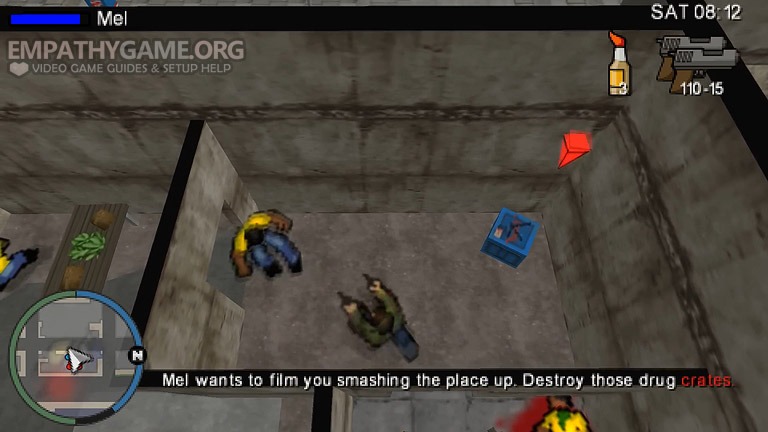
The campaign moves briskly between pursuits, ambushes, protection jobs, escapes, and larger criminal schemes. Its strongest assignments leave room for the systems to interfere with the plan. A straightforward drive may attract unwanted attention, while an encounter that initially looks manageable can become chaotic once vehicles and enemies occupy the same cramped street. Shorter and less cinematic than console GTA missions, these assignments generally favour interesting problems over prolonged spectacle.
Shooting is where the overhead approach struggles most. Lock-on targeting keeps fights functional, yet selecting a particular enemy becomes awkward when gunmen, vehicles, trees, and building edges overlap. An explosive weapon can clear a busy area, but that does not make the underlying aiming more precise. Some confrontations reward careful positioning and preparation more than responsive marksmanship. The contrast with driving is noticeable: the same distant camera that makes traffic easy to anticipate can make a crowded firefight unnecessarily difficult to read.
At least the retry structure respects the game’s compact pacing. Trip-skip can remove the opening journey when restarting eligible missions, and replaying completed jobs offers another reason to refine a route or improve a result. They cannot repair awkward gunplay, but they prevent each failure from becoming another commute.
Huang Lee Fits the Comic-Book Triad Story
Huang arrives from Hong Kong after his father’s murder, bringing the ceremonial Yu Jian sword to his uncle, Wu “Kenny” Lee. An immediate betrayal places him among Liberty City’s competing Triads, where family loyalty is constantly praised and rarely practised. Kenny, Hsin Jaoming, Chan Jaoming, and Zhou Ming each have their own ambitions, and their promises are seldom as reassuring as they sound. The plot has the usual ingredients of a crime mystery, but its appeal lies more in watching these personalities manipulate one another than in expecting an emotionally heavy gangster drama.
Huang is a good fit for that approach. His sarcasm punctures the self-importance of the people giving him orders, although he is hardly above the greed and arrogance surrounding him. The supporting cast can feel deliberately unpleasant rather than especially complex. Still, the writing gains energy from the tension between everyone’s grand claims and their transparently selfish behaviour.
Illustrated portraits and text replace fully voiced cinematic conversations. Some confrontations lose dramatic weight without spoken performances, but the character artwork communicates more expression than its simple appearance suggests. A raised eyebrow or exaggerated scowl can make Huang’s reply land without animation. Bright signage, street noise, and radio music reinforce the mischievous mood. Where GTA IV often examines the personal cost of criminal ambition, Chinatown Wars is more interested in how absurdly inventive that ambition can become.
Optional Jobs Have Unexpected Consequences
Taxi, Vigilante, Paramedic, and Firefighter activities are easy to dismiss as familiar GTA side jobs, yet the details often give them a stronger connection to the city. Vigilante work lets Huang select reported crimes, while emergency calls can place victims among the visible consequences of an accident or other incident. Firefighter assignments likewise involve recognisable urban emergencies rather than only abstract checkpoints. These touches do not make the missions deeply simulated, but they give routine objectives a little more context.
More importantly, some rewards reach beyond the activity that grants them. Completing enough taxi work can unlock bulletproof cabs, an advantage that can unexpectedly change the tactics of a dangerous story encounter. Other service activities improve Huang’s endurance or protection. An optional job therefore has a reason to exist beyond cash or completion percentage. It can give the player a new solution to a later problem, which is a more satisfying form of progression than simply raising another statistic.
Progression Is Flexible, but Its Rewards Eventually Thin Out
Huang does not develop through levels or an elaborate skill tree. Progress is built around new contacts, completed assignments, weapon access, safehouses, and growing familiarity with the streets. Ammu-Nation orders through his PDA fit neatly alongside the trading business, while safehouse stashes allow valuable stock to be separated from whatever Huang chooses to carry. Preparing for the next story mission and pursuing a profitable side venture are not entirely separate activities. Each can make the other easier or riskier.
Rampages, street races, stunt jumps, security cameras, delivery work, and mission replays offer plenty to chase after the main story has established its rhythm. Their appeal fades once trading removes financial pressure; familiar routes repeat, and narrative outcomes do not change. But the strongest reason to return is not a checklist. It is the freedom to give a simple journey another purpose, whether that means pursuing a cleaner getaway, earning a useful side-job reward, or taking one more calculated risk with a valuable shipment.
Final Verdict
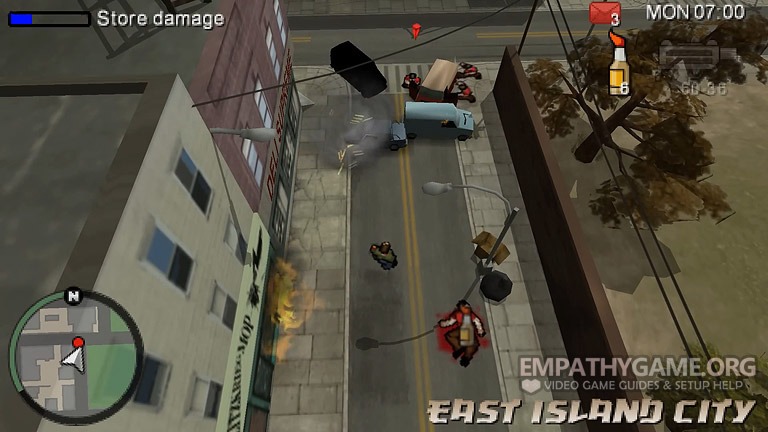
Grand Theft Auto: Chinatown Wars is at its best when its systems interrupt one another. Drug trading makes geography and money matter, police chases turn road layouts into escape puzzles, and side jobs can unexpectedly influence the main campaign. Its comic-book tone suits Huang’s sharp exchanges, while the DS and PSP versions each offer worthwhile but different approaches to the small interactive tasks. The compromises are real: aiming is imprecise, overhead scenery can obscure the action, and a thriving criminal business eventually runs short of meaningful purchases. Players who want cinematic drama and modern third-person gunplay will find it limited. Those who enjoy responsive arcade driving, compact missions, and making their own trouble between objectives will find a particularly inventive GTA. Here, taking the long way to a mission can be the whole point.
GTA Chinatown Wars Pros & Cons
- Pro: The trading economy adds meaningful risk, planning, and optional progression to Liberty City’s crime sandbox.
- Pro: Short missions, replayable objectives, and quick retries suit both brief sessions and longer play.
- Pro: The PSP edition combines extra missions and stronger presentation with an accessible PC gamepad setup through PPSSPP.
- Pro: The DS edition preserves inventive touchscreen interactions absent from the PSP adaptation.
- Con: There is no native Windows version or official Windows store purchase.
- Con: Some stylus-focused minigames lose their tactile appeal when translated to PSP button prompts.
- Con: The high camera can obscure parts of shootouts and the compact handheld controls remain less precise than modern GTA.
- Con: Original online-linked extras and local handheld multiplayer are not equivalent to supported PC network features.
GTA Chinatown Wars PC System Requirements
There are no official Windows PC system requirements for GTA Chinatown Wars because Rockstar did not release a native Windows version. The specifications and steps below concern the emulators, not an official PC port.
PPSSPP PC Hardware Guidance (Recommended PSP Version)
Operating system: A compatible current Windows PC; PPSSPP also offers builds for macOS and Linux.
CPU: PPSSPP does not publish a game-specific minimum CPU for Chinatown Wars; most reasonably modern processors are suitable for PSP emulation.
GPU: A graphics adapter supported by PPSSPP; use Vulkan when available, or test a supported Windows alternative such as Direct3D 11.
RAM: No official game-specific PC minimum published.
Storage: Space for PPSSPP, your legitimately created game backup, and save data; no official Windows game-storage figure exists.
Controller: Xbox-compatible or other Windows-recognized gamepad recommended; keyboard mapping also available.
BIOS: No separate proprietary PSP BIOS download required by PPSSPP.
Performance: PPSSPP’s hardware guidance says most PCs built within roughly the past 15 years should handle PSP emulation, although performance depends on the game, GPU, drivers, and settings.
How to Play the PSP Version on Windows with PPSSPP
- Install the emulator: Download the Windows installer or portable package from PPSSPP’s official download page. Choose the build appropriate for your system.
- Prepare your game copy: Use your lawful backup of the PSP edition. For a physical UMD, follow PPSSPP’s documented PSP-and-USB method; it requires suitable original hardware. Keep the finished game image in a folder you can identify easily.
- Open Chinatown Wars: Start PPSSPP and select the game through the Games browser, or on Windows use File > Load to select your owned PSP game image.
- Configure controls: Connect a gamepad, open PPSSPP’s control-mapping options, and verify movement, targeting, shoulder buttons, menus, and vehicle actions. The PSP scheme is not native PC keyboard-and-mouse gameplay.
- Set graphics conservatively: Start with default settings. Under Graphics, try Vulkan on compatible hardware, then raise Rendering resolution gradually (for example, 2× then 3×). If performance drops or graphics misbehave, return to defaults or test Direct3D 11.
- Use the game’s own saves: Save normally during play; PPSSPP also provides emulator save tools. Back up the emulator’s Memory Stick/save-data folder before moving computers or testing unofficial modifications.
Compatibility caveat: PPSSPP’s public reports for the North American PSP release include successful Windows results alongside mixed reports from other devices. This is encouraging, not a guarantee that every copy, configuration, or GPU will behave identically. Start with a current stable PPSSPP build and unchanged settings.
Widescreen note: The PSP version already uses a 16:9-style widescreen display, so no unofficial widescreen patch is needed for normal PC play. Raising PPSSPP’s internal resolution makes the image sharper; it does not turn the game’s original assets into a new HD remaster.
Nintendo DS Alternative: melonDS Setup
- Download melonDS: Obtain a Windows build from the official melonDS downloads page.
- Prepare legitimate DS files: Use an
.ndsbackup created from a cartridge you are entitled to copy and any required BIOS/firmware dumped from your own compatible Nintendo hardware. Check the melonDS setup documentation for the DS-mode file names and configuration options. - Load the original game: Configure the necessary DS-mode firmware settings, then open your DS cartridge backup in melonDS. Arrange the two screens so both the main action and lower-screen map/touch tasks remain visible.
- Map input: Assign movement and buttons to your keyboard or controller and use the mouse for stylus interactions such as hot-wiring and other DS-specific minigames.
- Preserve the original image: The DS screens are 4:3 individually. Display them at a suitable scale without stretching them into a fake 16:9 image; there is no verified game-specific widescreen patch recommended here.
Which one should you choose? Pick PSP + PPSSPP for the simplest single-screen PC experience, stronger built-in presentation, and additional story content. Pick DS + melonDS if the original touchscreen mechanics are a major reason you want to play Chinatown Wars. Neither route should be mistaken for an official Rockstar Windows release.
Official Trailer
Note: This official Rockstar Games PSP trailer introduces Chinatown Wars’ visual style and handheld presentation; the guide above explains the separate PC emulation and ownership requirements.
Frequently Asked Questions
How do you lose wanted stars by disabling police cars in GTA Chinatown Wars?
Unlike most GTA games, Chinatown Wars lets you reduce your wanted level by forcing pursuing police vehicles to crash or become disabled. Ram them into traffic, barriers, or other obstacles without using weapons, since destroying police cars by shooting does not count toward this special escape mechanic. Avoiding police attention or using Pay ‘n’ Spray remains another option.
How do you unlock Ammu-Nation in GTA Chinatown Wars?
Complete the story mission “Pimp His Ride” and read the Ammu-Nation email on Huang’s PDA, following its link to activate the ordering service. Weapons are purchased through the in-game AmmuNation.net interface and delivered to a safehouse rather than collected from a conventional gun shop. More powerful weapons become available through story progression and the Fully Cocked License.
What is the best way to make money in GTA Chinatown Wars?
The drug-trading system is one of the most profitable activities. After “Tricks of the Triad” introduces it, compare dealer prices, pay attention to favorable trade-tip messages, and buy inventory cheaply before selling where demand is higher. You can also earn money through missions, scratch cards, vehicle-related activities, and other side jobs without relying entirely on trading.
What happens to your drug stash when the police arrest Huang?
Drugs carried in Huang’s Holdall are confiscated when he gets busted, but drugs placed in a safehouse Stash Box remain protected. The Stash Box is shared between your safehouses, so you can deposit inventory at one location and retrieve it elsewhere. Storing valuable supplies before risky journeys helps prevent expensive losses.
How do you increase the amount of drugs Huang can carry?
Complete both Excess Delivery courier challenges, Alpha Mail and Liberty State Delivery, to unlock the Big Pants reward. This doubles the Holdall’s carrying capacity from 50 to 100 units, making larger trading trips possible without repeatedly returning to a safehouse.
Why should you destroy security cameras in GTA Chinatown Wars?
Destroying security cameras improves conditions for the drug-trading economy and contributes toward 100% completion. There are 100 cameras scattered around Liberty City, and removing them can reduce purchase prices. They become available as part of the trading system introduced during “Tricks of the Triad.”
Can you replay completed story missions in GTA Chinatown Wars?
Yes. Visit a safehouse and interact with its whiteboard to select previously completed story missions. This allows you to revisit favorite missions or improve performance without restarting the entire campaign.
Can you save anywhere in GTA Chinatown Wars?
Yes. Chinatown Wars allows manual saving through the PDA or pause interface without requiring a return to a safehouse. You can also save using the furniture inside a safehouse, while automatic saving after missions is available through the game’s settings. Loading a normal save places Huang at a safehouse rather than necessarily restoring his exact street position.
Why is the next story mission not appearing?
Check Huang’s PDA for unread emails and complete any other available mission branches. Chinatown Wars sometimes requires progress with several contacts before the next story objective becomes available. An apparently missing mission marker does not necessarily mean the game or emulator has malfunctioned.
Is GTA Chinatown Wars set in the same Liberty City as GTA IV?
Yes. Chinatown Wars uses a stylized, overhead interpretation of GTA IV’s Liberty City, including Broker, Dukes, Bohan, and Algonquin, but omits Alderney. Its story follows Huang Lee and the Triads rather than Niko Bellic, so you can understand the campaign without finishing GTA IV.
Does GTA Chinatown Wars have full voice acting?
No. The main story uses illustrated, comic-style dialogue panels with written text rather than fully voiced cinematic conversations. Sound effects and instrumental radio stations provide much of the audio presentation, giving the game a different narrative rhythm from GTA IV or the larger console releases.
Does GTA Chinatown Wars support multiplayer, co-op, or split-screen?
The original Nintendo DS and PSP editions include local wireless multiplayer activities, including competitive races and cooperative challenges. They do not provide conventional split-screen couch co-op, and the single-player story cannot be completed as a cooperative campaign. The original Nintendo Wi-Fi Connection online service has been discontinued.
Can you play GTA Chinatown Wars multiplayer through PPSSPP on PC?
PPSSPP supports emulation of PSP ad-hoc networking, which can allow compatible multiplayer games to connect over a local network or through supported relay servers. Chinatown Wars contains original PSP wireless modes, but their reliability through emulation is not guaranteed, and the emulator does not automatically provide matchmaking or split-screen. The single-player campaign is the more dependable PC emulation experience.
Do you need Rockstar Social Club to complete GTA Chinatown Wars 100%?
No. The original handheld editions included optional Social Club-linked content, such as Xin Shan’s bonus missions, but those missions are not required for the normal 100% completion percentage. Legacy online unlock instructions should not be assumed to work through the discontinued original services.
What activities count toward 100% completion in GTA Chinatown Wars?
Completion involves more than finishing Huang’s story. Requirements include side missions and challenges, meeting the standard 80 drug dealers, acquiring safehouses, destroying 100 security cameras, completing 30 unique stunt jumps, and collecting other required trophies and collectibles. Some activities have different totals between the DS and PSP editions, so use a checklist matching your version.
Can you transfer an original PSP save to PPSSPP on PC?
Yes. PPSSPP uses a PSP-style Memory Stick directory, with normal game saves generally stored under PSP/SAVEDATA. Copy the appropriate save folder from your own PSP Memory Stick into the emulator’s corresponding directory. Regional game IDs and incompatible revisions can prevent a save from loading, so preserve a backup before transferring files.
Can you continue playing GTA Chinatown Wars after finishing the story?
Yes. Completing the main campaign does not end access to Liberty City’s open world. Huang can continue exploring, trading, replaying missions, collecting security cameras, completing vehicle jobs, and working toward 100% completion without starting a new story.
Still have questions? Check the GTA Reddit community, PPSSPP Forums, or Rockstar Games Support for additional gameplay information, emulator troubleshooting, and official support.
Sources & References
Key factual and technical information in this guide was checked against relevant official, emulator-project, and established critical sources, including:
- Rockstar Games — Chinatown Wars — official developer credits, original release date, platforms, and story premise
- Rockstar Games — PSP Edition Details — enhanced lighting, visual changes, and added PSP missions
- PPSSPP — Dumping UMD Games — lawful-copy workflow and supported PSP backup formats
- PPSSPP — Chinatown Wars Compatibility Reports — real emulator reports and platform-specific compatibility uncertainty
- melonDS — Setup FAQ — Nintendo DS BIOS/firmware requirements, input configuration, and original-hardware setup
- Metacritic — Chinatown Wars — original DS and PSP version-specific historical critic aggregates
- GameSpot — PSP Review — PSP-versus-DS control trade-offs, mission design, and PSP review score
Similar Games Like GTA Chinatown Wars
- GTA Liberty City Stories
- GTA 4
- GTA 3
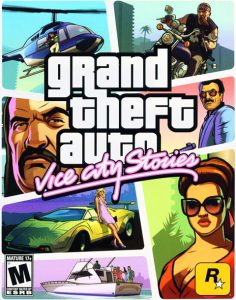
- GTA Vice City Stories
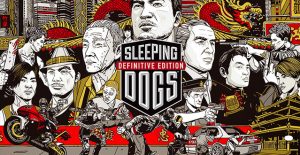
- Sleeping Dogs: Definitive Edition
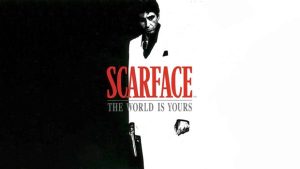
- Scarface: The World Is Yours
Found something worth playing through DecideGame?
DecideGame.com is an independent gaming project run by Editor Zero. If this guide helped you discover a game, solve a problem, or find useful information, you can support DecideGame.com and help keep new and updated game guides coming.
DecideGame — PC Game Guides, Reviews & Setup Help