
📅 Game released: 2001
Metal Gear Solid 2: Sons of Liberty follows Solid Snake and Raiden through two connected stealth missions, with reactive guards, non-lethal tactics, and an elaborate espionage story. This PC guide compares official Steam purchase and download options for the Master Collection version, its bonus content, system requirements, Steam Deck compatibility, controls, mods, and practical setup choices.
 By Editor Zero — independently researched, edited, and maintained.
Last updated: 15 November 2026
Last reviewed: 15 November 2026
Table of Contents
- Quick Facts
- Official PC Stores, Download & Installation
- Metal Gear Solid 2 Review
- Pros & Cons
- PC System Requirements
- Frequently Asked Questions
- Similar Games
Metal Gear Solid 2 Quick Facts
- Game: Metal Gear Solid 2: Sons of Liberty / MGS2 / Metal Gear Solid 2 – Master Collection Version
- Developer: Konami Computer Entertainment Japan (original); Bluepoint Games (HD Edition); Rocket Studio (Master Collection adaptation)
- Publisher: Konami
- Genre: Tactical Espionage, Stealth Action, Action-Adventure
- Release: Original MGS2 — November 12, 2001 on PS2; Substance Windows PC version — March 27, 2003 (North America); Master Collection Version — October 24, 2023
- Platforms: Original: PS2; Substance: PS2, Xbox, Windows PC; HD Edition: PS3, Xbox 360, PS Vita; Master Collection: Windows PC, PS5, PS4, Xbox Series X|S, Nintendo Switch
- MGS2 Bonus Content: Snake Tales, VR Missions, Alternative Missions, dog-tag collection, unlockables, Screenplay Book, Master Book, achievements, and collection features
- Modes: Single-player only; no campaign co-op or competitive multiplayer
- Steam Deck: Verified; Valve’s compatibility checks confirm default controls, matching icons, readable text, good default performance, and SteamOS compatibility
- PC Controls: Controller recommended; customizable keyboard-and-mouse layouts, mouse aiming, sensitivity controls, and controller remapping are also available
- Engine: Not officially confirmed for the MGS2 gameplay executable; the Master Collection launcher uses Unity
- Community: Official Master Collection Website, Steam Discussions, Metal Gear Solid Reddit Community
- PC modding: Nexus Mods for Metal Gear Solid 2 – Master Collection hosts texture restoration, community bug fixes, visual changes, character models, save files, ultrawide tools, resolution adjustments, and other unofficial modifications
- Metacritic score: N/A / Not scored for the Master Collection Version on PC
- IGN score: N/A / No separate scored review verified for the standalone MGS2 Master Collection Version
- Steam user reception: Very Positive overall
Official PC Stores, Download & Installation
👇 Compare the official Steam purchase options below before purchasing, downloading, or installing Metal Gear Solid 2 on Windows PC.
- Steam installation: After purchase, open Steam Library, select the MGS2 Master Collection app, choose Install, and let Steam download the required files. Open the game from your library and choose display and control settings before beginning a session.
- PC availability: The current native Windows release is Metal Gear Solid 2: Sons of Liberty – Master Collection Version on Steam.
- Standalone purchase: MGS2 can be purchased separately, so the full collection is not required if this is the only game you want.
- Master Collection Vol. 1: The broader package also includes Metal Gear, Metal Gear 2: Solid Snake, Metal Gear Solid, Metal Gear Solid 3, bonus games, digital books, graphic novels, and soundtrack content.
- Duplicate-purchase check: The standalone MGS2 app is already included in Metal Gear Solid: Master Collection Vol. 1, so check your Steam library before buying both.
- Version basis: The Steam release uses the HD Collection version rather than direct emulation of the original PlayStation 2 disc.
- Included MGS2 extras: The HD Collection-based release carries forward expanded Substance content such as Snake Tales, VR Missions, Alternative Missions, dog-tag challenges, and additional unlockables.
- Legacy GOG ownership: The older Substance Windows port was removed from new GOG sales in November 2021; customers who purchased it beforehand retain it in their GOG libraries.
- Legacy file compatibility: Old Substance saves, executables, V’s Fix files, controller profiles, and configuration tools are not interchangeable with the Steam Master Collection version.
- Display settings: The current release provides Original, Fine, and Custom display configurations, with FHD internal rendering, sharper upscaling choices through 4K on compatible displays, and original or higher-resolution movie options.
- Control settings: Controller remapping and customizable keyboard-and-mouse layouts are available, including mouse aiming and sensitivity controls; Steam still recommends a controller for the intended control feel.
- Steam features: The Steam release is single-player and supports achievements, Family Sharing, full controller support, and Steam Input. Steam’s normal client and DRM rules apply.
- Steam Deck: Valve rates the game Verified. External Bluetooth or USB controllers may require manually changing the active controller order in Steam’s Quick Access Menu.
- Other PC stores: Konami’s current Windows listing points to Steam; the Xbox store listing is for Xbox Series X|S rather than Windows PC, and no current Epic Games Store or new-purchase GOG Windows release was verified.
 Buy Metal Gear Solid 2 – Master Collection Version on Steam
Buy Metal Gear Solid: Master Collection Vol. 1 on Steam
 Visit the Official Metal Gear Solid: Master Collection Website

Metal Gear Solid 2 Review
A stealth sequel that improves the rules while questioning who controls the mission.
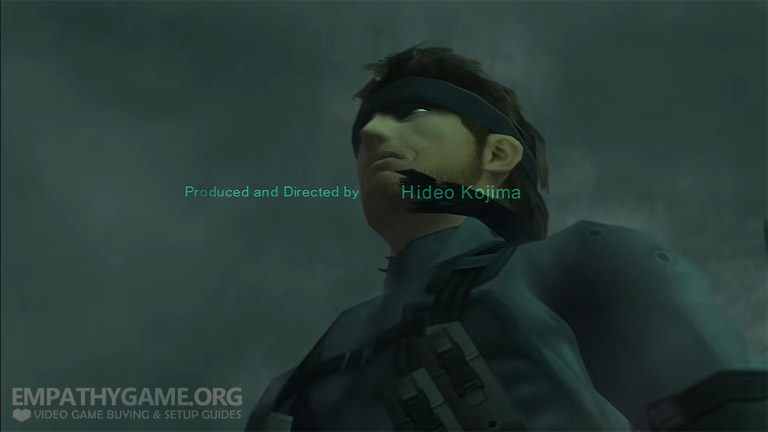
Metal Gear Solid 2 does something unusual with the promise of a sequel. It gives Solid Snake a convincing return, makes stealth considerably more sophisticated, then hands most of the adventure to a soldier who seems to have learned heroism from simulations. The switch to Raiden initially feels like a loss. Gradually, it becomes difficult to separate that disappointment from what the story is trying to examine.
There is a genuine mechanical leap beneath the deception. Guards investigate disturbances, communicate over radios and organize searches; first-person aiming, hold-ups and non-lethal tools give players more ways to intervene. Yet compact rooms, a fixed camera and awkward action sequences keep the design rooted in its PlayStation 2 origins. The game is both a more capable stealth adventure and a deliberately uneasy one, interested in how much of an experience the player actually controls.
The Tanker Makes a Convincing Promise
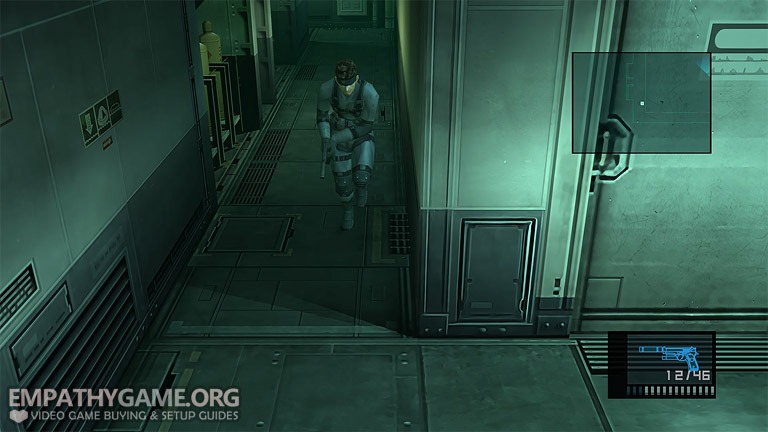
The Tanker is a remarkably economical opening. Snake boards a military transport in heavy rain, moves through corridors and cargo holds, and photographs a new Metal Gear. There is a clear espionage objective, but the more interesting discovery is how much the environment now notices. Wet footprints can expose a route. A guard whose radio is destroyed cannot summon help so easily. An unconscious soldier can be dragged into a locker, although a tranquilized enemy may eventually wake up.
Other details seem to exist simply to reward curiosity. Shoot an ice bucket and cubes scatter, break and slowly melt. A flour sack spills its contents when damaged. These are not elaborate alternate routes; they make the surroundings feel like a physical place rather than scenery assembled around patrol paths. Snake still succeeds through restraint and observation, only now there is more to observe. For anyone expecting an entire campaign with him, the opening makes an almost irresistible case.
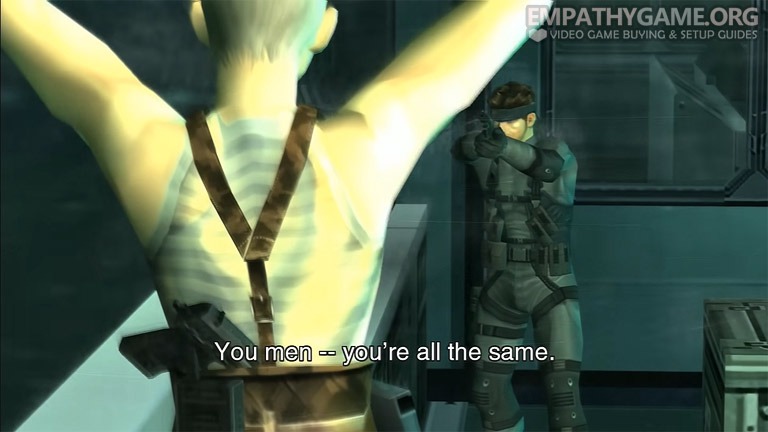
Raiden Is More Than a Replacement for Snake
Raiden enters the Plant chapter with virtual training, confidence in his instructions and little experience of the world he is entering. Beside Snake, he can appear uncertain and overly dependent on the Codec. That contrast is purposeful. Snake is already the legend; Raiden is trying to become the sort of operative his training told him to admire.
His uneasy relationship with Rose, his reactions to Snake and the gradual uncovering of his past complicate that first impression. The question is not simply whether Raiden can perform the mission. It is whether a person whose memories, relationships and expectations have been shaped by others can decide what kind of person to become. The concealed protagonist switch may still frustrate players who want more Snake, but treating Raiden as a failed substitute misses the reason he occupies the centre of this story.
Guards Behave Like a Security Network
The original Metal Gear Solid made patrol routes easy to read. Its sequel retains that clarity while giving individual guards a stronger connection to the people around them. Soldiers investigate sounds, react to footprints and suspicious equipment, search lockers and notice disrupted patrol routines. If an alert escalates, reinforcement teams arrive with shields and begin clearing spaces rather than simply rushing toward the last known position.
That coordination changes the basic calculation of stealth. A careless takedown can become a problem several rooms later, while hiding a body or disabling a radio prevents one mistake from spreading through the facility. It also makes recovery less enjoyable. Alert, Evasion and Caution can stretch on, particularly inside Big Shell’s tight rooms, where escaping an organized search is less satisfying than avoiding detection in the first place. Higher difficulties amplify this pressure without always creating more interesting choices. The enemy behaviour is impressive, but the best encounters are planned before the alarm sounds.
First-Person Aiming Gives Every Tool More Purpose
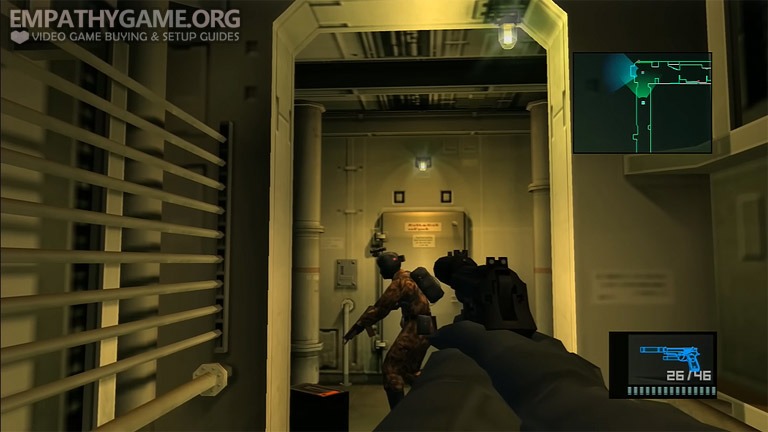
First-person aiming is not just a convenience for shooting enemies. It lets Snake and Raiden target radios, cameras, lights, explosives and specific parts of an encounter. The M9 tranquilizer pistol makes non-lethal infiltration practical, provided the player remembers that sleeping guards do not stay unconscious forever. A precise shot can solve a problem before it becomes a firefight.
Hold-ups are even more revealing. Sneak close enough, raise a weapon and a guard may surrender; search him for supplies or a dog tag, and an uncooperative soldier may need a more persuasive threat. Suddenly, getting behind an enemy offers a decision beyond killing or bypassing him. This remains a stealth game with fixed-camera movement, not a modern third-person shooter. The improvement is the ability to shape a situation before committing to a route.
Big Shell Rewards Attention More Than Exploration
Big Shell’s struts and connecting bridges form an easily understood circuit for bomb disposal, hostage rescue and repeated journeys between objectives. Familiar routes change as security conditions and mission demands change. Unfortunately, the orange industrial surfaces, bright water and similar interiors do not have Shadow Moses’ visual personality. Repeated crossings can begin to feel like commuting between tasks.
Many rooms also reveal their practical layout almost immediately, leaving less space for improvisation than the responsive guards might suggest. What gives these modest environments life is their density of interactions. Glass, fire extinguishers, magazines, cameras, railings and lockers invite experimentation; hanging beneath a walkway or disturbing an object can alter how a patrol unfolds. Posters, optional Codec calls and small environmental reactions reward a closer look. Big Shell is more convincing as a carefully controlled place to observe behaviour than as a memorable world to explore.
The Action Sequences Expose the Older Controls
The bosses have striking identities, but their encounters are less consistent than the stealth. Fatman turns bomb disposal into a pursuit, forcing Raiden to divide his attention between shooting and coolant use. The Harrier provides spectacle, while Vamp’s theatrical movements can be difficult to track through the camera. The Metal Gear RAY confrontation has scale, yet repeated targeting routines can wear down the excitement. Fortune and Solidus help give the cast its peculiar personality, even when the fights are mechanically restrictive.
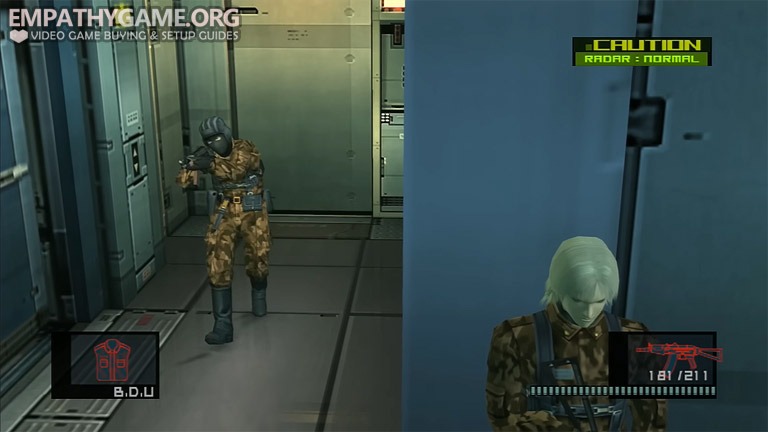
Fast action also exposes the context-sensitive movement and pressure-sensitive-button heritage. Swimming, switching actions quickly and using the HF Blade can feel less natural than quietly navigating a corridor. A controller suits much of that design; mouse aiming can help with precision on PC, but it does not fundamentally change how hanging, inventory use or movement were built.
Emma’s Escort Interrupts the Best Gameplay Rhythm
Guiding Emma through guarded areas is a different sort of challenge, though not always a welcome one. She moves slowly and needs protection, so the most reliable approach is to clear trouble before asking her to follow. The resulting stop-start rhythm takes attention away from the flexible solo infiltration that MGS2 handles so well.
The underwater stretches are similarly uncomfortable. Tight routes, oxygen management and the need to dive and surface make navigation harder to read than ordinary stealth. Variety has value, but here it arrives just as the story is becoming more demanding. Mechanical interruptions and lengthy explanations begin reinforcing the same late-game fatigue.
The Story Uses Familiarity to Undermine Trust
Raiden’s mission repeatedly resembles Shadow Moses: hostages, a terrorist group, a new Metal Gear, Codec guidance and even a mysterious ninja-like figure. At first these parallels can look like a sequel borrowing too heavily from its predecessor. Later, repetition itself becomes suspicious. Raiden has been prepared through simulations, while the player has been prepared through the previous game and the Tanker.
The Patriots, the S3 Plan, Arsenal Gear, Solidus Snake, Ocelot, Rose and the Colonel complicate what can be trusted. Orders cease to match events; explanations contradict earlier explanations; even the Codec and interface become unsettling. MGS2 does not merely describe the manipulation of information. It uses the structure of a familiar game to make the player question the instructions and assumptions that usually go unexamined. The execution is messy, but the connection between story and play is unusually deliberate.
Information Control Is More Than a Plot Twist
The late narrative is concerned with cultural memory, context and the selection of what deserves attention. Its argument is not that information must disappear for people to be controlled. An overwhelming quantity of material can bury meaning too, particularly when someone else decides which fragments will be presented as important.
It would be simplistic to call MGS2 an exact prediction of social media or modern algorithms. The writing is full of military conspiracy and extravagant reversals. Still, the distinction between having access to facts and being able to understand their context has lost none of its force. The game is strongest when it lets that idea emerge through Raiden’s uncertainty, rather than explaining it one more time.
The Codec Gives the Story Depth and Slows It Down
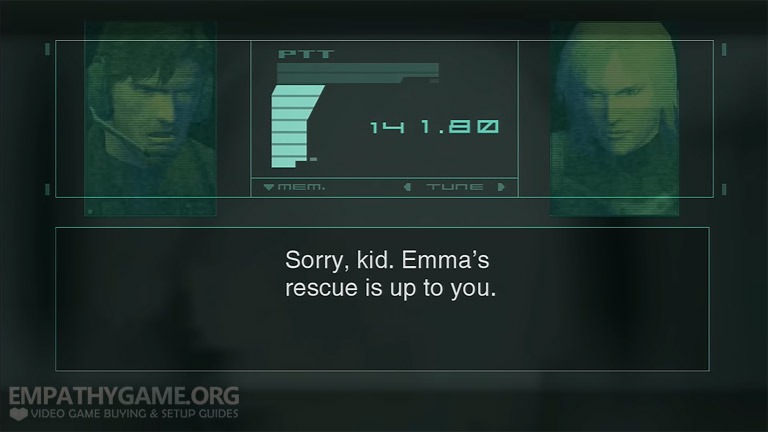
The Codec makes isolation interesting. Mission advice, political arguments, character relationships and optional conversations reach an operative who spends much of his time alone. Rose’s discussions with Raiden can be uncomfortable because they interrupt military urgency with questions of trust, memory and commitment. That discomfort has a purpose, even if not every exchange is pleasant to hear.
The cost becomes obvious near the ending, when revelations, reversals and explanations arrive with little room to settle. The game seems reluctant to let a strong idea stand without another conversation clarifying it. The same device that gives the characters depth also deprives the final act of breathing space. It is possible to admire the writing’s ambition while wishing the player had more time to absorb it.
The Characters Become More Interesting on Replay
A second run changes the meaning of scenes that initially seem merely strange. The Colonel’s familiar manner, Rose’s intrusions, Raiden’s insecurity and apparently minor inconsistencies look different once the mission’s larger design is understood. What first felt like awkward exposition can sometimes be recognized as an early warning.
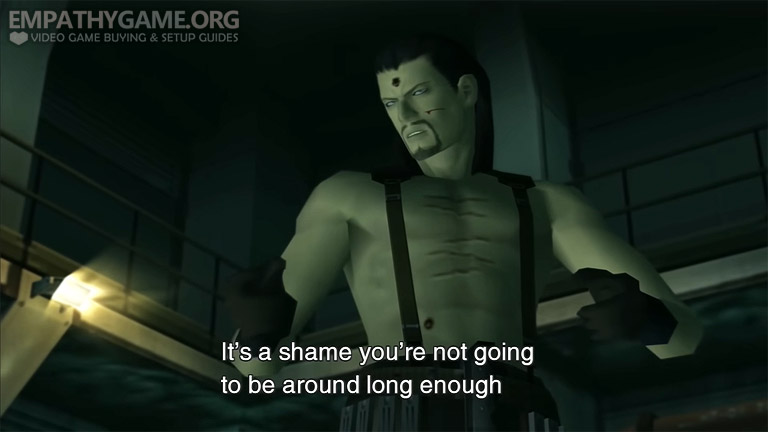
That does not make every confusing moment brilliant in retrospect. The narrative still asks a lot of patience. But Raiden, Emma, Otacon, Snake and Solidus carry more emotional weight when their roles can be viewed without the constant effort of following the next twist. Replaying rewards attention to character as well as plot mechanics.
Dog Tags Turn Familiar Rooms Into New Challenges
Dog tags give hold-ups a larger purpose across different difficulties. Guards carry difficulty-specific tags, encouraging players to approach patrols they might previously have slipped past. Collecting them changes a room from an avoidance puzzle into a challenge of positioning, intimidation and timing.
The rewards, including wigs and Stealth Camouflage, provide an incentive for thorough completion. The sheer number of tags can nevertheless turn a clever use of the stealth system into a checklist, with little connection to the story. They work best as optional mastery challenges, not an obligation attached to understanding the game.
VR Missions Show How Much Lies Beneath the Story
The Substance-derived VR and Alternative Missions strip away most of the cinematic interruptions. Stealth drills, weapon challenges, bomb disposal, photography, hold-ups, elimination and time trials demand clean execution with quick opportunities to retry. Their clearer objectives expose how precise and demanding the mechanics can become when nothing else competes for attention.
Snake Tales provide five non-canon scenarios around Big Shell, giving Snake more playable material but relying heavily on text rather than the main campaign’s voiced presentation. They are less polished as stories, yet worthwhile for those who wanted the Tanker’s promise extended. Between these scenarios, VR challenges and dog tags, replayability comes from learning the systems, not simply watching the story again.
Its Influence Is Not Limited to Smarter Guards
Later entries broadened the maps and made direct combat more comfortable. By Metal Gear Solid 4: Guns of the Patriots, shooting, battlefield action and cinematic scale had moved considerably further. Yet MGS2 remains unusually cohesive in a different way: its reactive enemies, careful observation, misleading familiarity and unreliable instructions all support its fascination with control. The protagonist switch matters because the mechanics have already taught players to trust the sequel’s promises.
Final Verdict
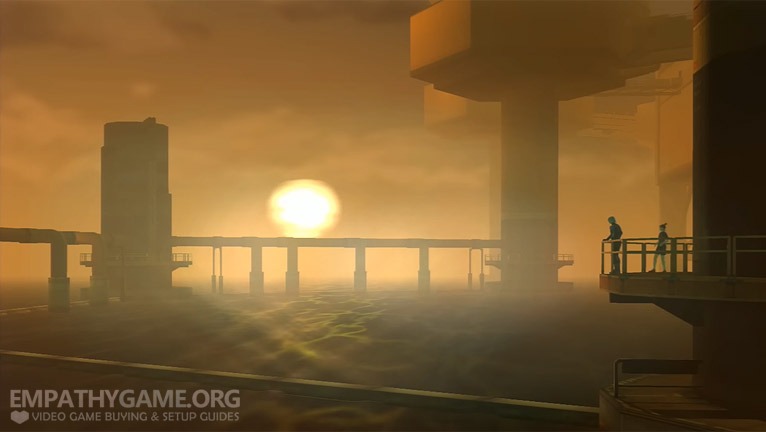
Metal Gear Solid 2 offers more ways to think through an infiltration than its predecessor, with reactive guards, precise aiming, non-lethal tools and environmental details that still reward attention. Its greatest surprise is how those mechanical improvements become part of a story about expectations, identity and the information people are given.
Big Shell is repetitive, escaping alerts can be tedious, some bosses favor endurance over invention, and Emma’s escort and swimming sections strain the controls. The late Codec marathon can exhaust the patience earned by the earlier chapters. These are substantial compromises, not incidental quirks.
Players seeking an uncomplicated Snake adventure or fluid modern action may find the experience frustrating. Those drawn to demanding stealth and stories willing to question their own structure have more reason to stay. MGS2 is sometimes excessive and deliberately disorienting, but its systems and ideas are still in conversation with each other. Understanding it often requires another look, and that may be the clearest measure of what this peculiar sequel achieves.
Metal Gear Solid 2 Pros & Cons
- Pro: Guards communicate through radios, report missing patrols, investigate sounds, follow footprints, search hiding places, and coordinate reinforcements
- Pro: First-person aiming, non-lethal weapons, ledge hanging, lockers, hold-ups, body handling, and environmental interaction create flexible stealth encounters
- Pro: The Tanker and Plant chapters use different protagonists, locations, mission structures, and perspectives to challenge expectations established by the first Metal Gear Solid
- Pro: Snake Tales, VR Missions, Alternative Missions, dog tags, rankings, difficulty settings, unlockables, and hidden interactions provide substantial replay value
- Pro: The current Steam release offers sharper rendering, upscaling through 4K, higher-resolution movie options, configurable controls, and Steam Deck Verified support
- Con: Long Codec conversations, cutscenes, exposition, and late-game information can overwhelm players expecting constant stealth action
- Con: Fixed camera angles, older aiming conventions, context-sensitive controls, and pressure-sensitive-era design remnants require adjustment
- Con: Some original PlayStation 2 visual effects and presentation details changed during the HD Collection conversion and may need restoration mods for closer historical accuracy
- Con: The old Substance PC port and current Master Collection release use different files, saves, fixes, and mod ecosystems, which can confuse returning PC players
Metal Gear Solid 2 PC System Requirements
OFFICIAL REQUIREMENTS FOR METAL GEAR SOLID 2 – MASTER COLLECTION VERSION ON STEAM:
MINIMUM:
OS: Windows 10, 64-bit
CPU: Intel Core i5-7500
RAM: 8 GB
GPU: NVIDIA GeForce GTX 970
DirectX: Version 11
Storage: 17 GB available space
Sound Card: DirectX 11-compatible sound card
Additional Notes: Steam’s requirements still list an XInput controller as required, although the current Steam page also confirms keyboard controls and Konami’s current control settings include keyboard-and-mouse layouts.
RECOMMENDED:
OS: Windows 10, 64-bit
CPU: Intel Core i5-7600
RAM: 16 GB
GPU: NVIDIA GeForce GTX 980
DirectX: Version 11
Storage: 17 GB available space
Sound Card: DirectX 11-compatible sound card
Additional Notes: A controller remains the recommended input method even though keyboard-and-mouse controls are supported.
Additional PC Performance and Setup Notes
- Fine mode is the simplest sharper-image option, using FHD internal rendering and selecting an appropriate upscaling target for the connected display.
- Original mode stays closer to the earlier HD Collection presentation, while Custom mode provides more control over internal rendering, output upscaling, and movie quality.
- Display settings are selected before entering gameplay and may not be changeable after a session has started.
- A controller remains the most natural option for movement, inventory use, swimming, hanging, and the HF Blade, but keyboard-and-mouse layouts and mouse aiming are available.
- Steam Deck is officially Verified. If an external controller is ignored, open Steam’s Quick Access Menu and manually change the active controller order.
- Verify Steam files before reinstalling if cutscenes fail, audio disappears, saves stop loading, or the collection launcher becomes damaged.
- Do not install old GOG Substance executables, V’s Fix files, or legacy PC patches into the Master Collection directory.
- MGSHDFix and similar tools can provide ultrawide, borderless, aspect-ratio, resolution, or advanced presentation options, but check compatibility with the installed game build before use.
- Back up saves and configuration files before combining texture restoration, community bug fixes, model replacements, launcher changes, or gameplay modifications.
Video Trailer
Frequently Asked Questions
Is the Master Collection version a remake of Metal Gear Solid 2?
No. It is based on the HD Collection edition, retaining the original campaign, level structure, voice acting, and stealth mechanics while adding PC display, input, and quality-of-life options.
Where can I officially buy and download Metal Gear Solid 2 on PC?
The native Windows release is sold on Steam as Metal Gear Solid 2: Sons of Liberty – Master Collection Version. You can buy MGS2 separately or as part of Metal Gear Solid: Master Collection Vol. 1; check your existing library before purchasing both.
Can I transfer saves or V’s Fix files from the older Substance PC version?
No. The original Windows Substance port and the Master Collection have different executable, save, and mod structures. Do not copy V’s Fix, old executables, or old save data into the Master Collection folder.
What happened to the original Metal Gear Solid 2: Substance PC release?
The earlier Windows port was removed from new GOG sales in November 2021. People who purchased it beforehand retain access through their GOG libraries, but that edition is separate from the newer Steam release.
What extra missions are included, and is the skateboard mode present?
The HD Collection-based release includes five Snake Tales scenarios, VR Missions, Alternative Missions, Boss Survival, dog-tag challenges, and unlockables. The PS2 Substance skateboarding minigame is not included. The Master Collection also provides digital Screenplay and Master books.
Do you play as Solid Snake or Raiden?
Both. Solid Snake is playable in the opening Tanker chapter, while Raiden is the main playable character through most of the Plant chapter.
Should I play the first Metal Gear Solid before MGS2?
It is strongly recommended. The central story can be followed without it, but MGS2 deliberately draws on the first game’s characters, situations, Codec conversations, and player expectations. See the Metal Gear Solid guide for that earlier game.
Can Metal Gear Solid 2 be completed using non-lethal tactics?
Many guards can be avoided, held up, knocked unconscious, or tranquilized, and several boss encounters allow stamina-based defeats. Strict no-kill challenges require attention to scripted sequences and end-of-game statistics.
How do you collect dog tags in Metal Gear Solid 2?
Hold up a guard with a weapon and make the guard surrender the dog tag. Separate difficulties contain different sets; collecting enough can unlock special equipment for repeat playthroughs.
What is the difference between Snake Tales and VR Missions?
Snake Tales are five standalone, non-canon Solid Snake scenarios with text-heavy narrative sequences. VR Missions and Alternative Missions are focused challenges that test stealth, aim, weapon handling, bomb disposal, photography, and other mechanics without requiring another full story playthrough.
Does Metal Gear Solid 2 have multiplayer, co-op, or split-screen?
No. The Master Collection version is a single-player experience. It has no campaign co-op, competitive multiplayer, split-screen mode, or cross-play.
Can you play Metal Gear Solid 2 with keyboard and mouse?
Yes. The Steam version provides keyboard-and-mouse layouts, custom bindings, mouse aiming, and sensitivity options. Konami and Steam still recommend a controller for movement, inventory use, swimming, and blade controls.
Is Metal Gear Solid 2 Steam Deck Verified?
Yes. The Master Collection version has a Verified Steam Deck rating. If an external Bluetooth or USB controller is not selected automatically, use the Steam Quick Access Menu to change controller order.
Does Metal Gear Solid 2 support 4K, ultrawide, or modern upscaling?
Its official display options include FHD internal rendering and output upscaling choices through 4K on compatible displays, but this is not a native 4K remake. Native ultrawide presentation, DLSS, FSR, ray tracing, and frame generation are not built-in features; some wider-format options depend on unofficial tools.
Does Metal Gear Solid 2 support PC mods?
Yes. Unofficial projects can restore textures, adjust aspect ratios, replace models, and modify presentation. Nexus Mods for the Master Collection edition lists version-specific projects. Back up saves and check compatibility before combining mods; there is no official Steam Workshop.
Is the Xbox console purchase also a Windows PC license?
No. The listed Xbox Series X|S console edition should not be assumed to grant access to the Windows Steam version. Use the Steam product page for the verified native Windows release.
Still have questions?
Check the Metal Gear Solid subreddit, Konami’s Metal Gear support section, and Steam Discussions.
Sources & References
Key factual and technical information in this guide was checked against relevant official and community sources, including:
- Steam — Metal Gear Solid 2: Sons of Liberty – Master Collection Version — current Windows availability, standalone purchase, system requirements, controls, Steam Deck rating, features, and user reception
- Konami — Metal Gear Solid: Master Collection Vol. 1 — collection contents, supported platforms, HD Collection basis, digital books, and release information
- Konami — Master Collection PC feature update notes — current display modes, internal rendering and upscaling choices, higher-resolution movies, controller remapping, keyboard-and-mouse layouts, and mouse controls
- PCGamingWiki — Metal Gear Solid 2: Sons of Liberty – Master Collection Version — PC version lineage, launcher technology, technical behavior, configuration, and community-fix context
- GOG.com Team — Metal Gear Solid 2: Substance catalog notice — historical GOG removal and continued library access for existing owners
Similar Games Like Metal Gear Solid 2
- Metal Gear Solid
- Tom Clancy’s Splinter Cell: Chaos Theory
- Metal Gear Solid Delta: Snake Eater
- Metal Gear Solid 4: Guns of the Patriots
- Hitman World of Assassination
- 007 First Light



Found something worth playing through DecideGame?
DecideGame.com is an independent gaming project run by Editor Zero. If this guide helped you discover a game, solve a problem, or find useful information, you can support DecideGame.com and help keep new and updated game guides coming.
DecideGame — PC Game Guides, Reviews & Setup Help