
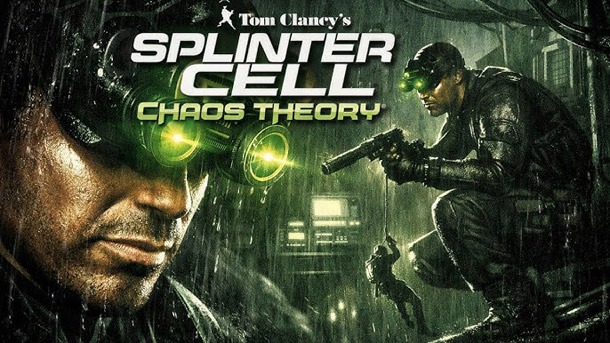
📅 Game released: 2005
Tom Clancy’s Splinter Cell: Chaos Theory follows Sam Fisher through demanding stealth missions where darkness, sound, and careful planning shape every approach. This PC guide covers official Steam, Epic Games Store and Ubisoft download and installation options, Ubisoft+ access, Windows compatibility, system requirements, widescreen and controller fixes, Steam Deck support, and the status of original online modes.
 By Editor Zero — independently researched, edited, and maintained.
Last updated: 10 November 2026
Last reviewed: 10 November 2026
Table of Contents
- Quick Facts
- Official PC Stores, Download & Installation
- Splinter Cell: Chaos Theory Review
- Pros & Cons
- PC System Requirements
- Frequently Asked Questions
- Similar Games
Tom Clancy’s Splinter Cell: Chaos Theory Quick Facts
- Game: Tom Clancy’s Splinter Cell: Chaos Theory / Standard Edition (original PC release)
- Developers: Ubisoft Montreal and Ubisoft Milan (Ubisoft-listed credits)
- Publisher: Ubisoft
- Genre: Stealth Action, Tactical Espionage, Action-Adventure
- Release: March 21, 2005 (N-Gage adaptation, historical release records); original Windows PC release: March 29, 2005 (Ubisoft/Steam listings)
- Platforms: Windows PC, Xbox, PS2, GameCube, N-Gage, Nintendo DS, mobile phones, PS3 (HD adaptation), Nintendo 3DS (Splinter Cell 3D)
- Steam Deck: Unsupported under Valve’s compatibility classification; experimental configurations are not guaranteed
- Online status: Ubisoft-operated co-op and competitive online services have been discontinued; original multiplayer/co-op are not supported official features
- Engine: Unreal Engine 2.5 (modified Unreal Engine 2 technology)
- Input: Keyboard and mouse; legacy joystick support. Current XInput controllers may need a community compatibility fix
- Community: Splinter Cell subreddit, Steam Discussions
- PC modding / fixes: Nexus Mods and community widescreen, mouse, controller, shadow, display and compatibility fixes; no official Steam Workshop integration
- Metacritic score: 92/100 (Windows PC version)
- IGN score: 9.6/10 (original release; PC review)
- Steam user reception: Very Positive overall
Official PC Stores, Download & Installation
👇 Compare official PC purchase, download, and installation options for the original Splinter Cell: Chaos Theory before deciding where to get it.
- Steam: Steam sells the original Windows PC release, lists single-player and Family Sharing, and makes the game’s legacy system requirements visible on the store page.
- Epic Games Store: Epic sells the Windows PC base game and clearly warns that the original multiplayer and online features are no longer available.
- Ubisoft Store: Ubisoft offers the original Standard Edition as a PC purchase, connected to its Ubisoft Connect library.
- Ubisoft Connect: The version purchased directly from Ubisoft requires a Ubisoft account and the Ubisoft Connect PC launcher for activation, download, and library access. Do not automatically assume the same launcher requirement applies to the Steam copy.
- Ubisoft+ Premium: Chaos Theory appears in the Ubisoft+ Premium game catalogue. Check the supported-region catalogue and subscription terms before joining specifically for it.
- Edition: These PC offers cover the original full game, not a modern remaster, new Definitive Edition, or separate expansion bundle.
- Online services: Ubisoft and Steam state that official multiplayer and co-op functionality is no longer supported. The old two-player co-op and Spies vs Mercs modes are historical features, not working Ubisoft-hosted online services.
- Modern Windows: Ubisoft and Steam list Windows 10 and Windows 11 compatibility. The 2005 PC build may still need a community fix for correct widescreen framing, modern controllers, shadows, or other legacy behavior.
- Steam Deck: Valve classifies the Steam release as Unsupported. Some users experiment with Proton and additional fixes, but performance and successful launch are not guaranteed.
 Buy Splinter Cell Chaos Theory on Steam
 Buy Splinter Cell Chaos Theory on Epic Games Store
 Buy Splinter Cell Chaos Theory on Ubisoft Store
 Visit the Official Splinter Cell Chaos Theory Page

Splinter Cell: Chaos Theory Review
Stealth feels different when darkness, sound, and patience all matter.
Tom Clancy’s Splinter Cell: Chaos Theory is unusually interested in what happens before Sam Fisher makes a move. The important decision may be whether to cross a doorway, wait for a guard to finish speaking, or simply leave a light alone. Where many action games treat hesitation as wasted time, Chaos Theory makes observation an active part of play. It gives the player precise control over movement and a convincing set of rules for light and sound, then asks them to work out how those rules fit together.
Ubisoft Montreal’s 2005 stealth game builds on its predecessors with less restrictive missions, more useful gadgets, and greater freedom to recover when a plan goes wrong. Its controls and some enemy behaviour show their age, but the underlying design remains distinctive. It is not trying to make every approach equally comfortable. The pleasure comes from understanding a guarded space well enough to cross it on your own terms.
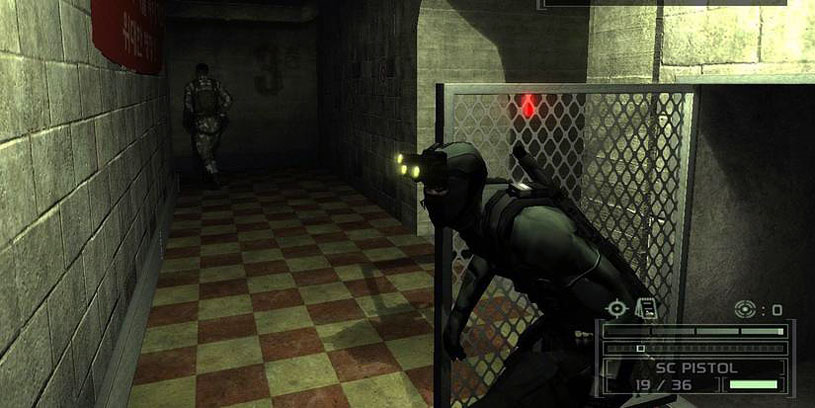
Sam, a veteran Third Echelon operative, is sent into an international crisis shaped by information warfare, covert operations, and competing military interests. The story provides urgency, although its shifting political details are sometimes less compelling than the work of infiltration itself. Sam’s dry exchanges with his support team give the missions personality without turning him into an action hero who can shoot his way through any complication.
Gameplay Built Around Tension and Control
A typical mission begins with reading a space rather than clearing it. Patrol routes, cameras, doorways, vents, floor surfaces, and possible exits all matter, but not equally at every moment. A guard facing away may still hear Sam moving too quickly. A dark corner may offer safety until a passing light exposes it. The game is strongest when several small considerations overlap, because the player must choose which risk is worth taking.
Movement speed is central to that decision. Sam can ease forward almost imperceptibly or move quickly enough to make the next patrol turn dangerous. The light meter offers useful feedback, but it does not replace awareness of where enemies are looking. A good route is not necessarily the shortest one. Sometimes the safer option is to remain still while two guards separate, then cross a narrow stretch of floor during the few seconds neither can investigate.
That emphasis gives even simple rooms a distinctive rhythm. A seemingly empty hallway can require more thought than a large firefight elsewhere, especially when its lighting is poor and its floor is noisy. Unlike Metal Gear Solid 4: Guns of the Patriots, which mixes infiltration with a much more cinematic military spectacle, Chaos Theory often gets its tension from the prospect of one careless footstep.

There is a limit to how far the illusion of intelligent security extends. Guards respond to disturbances and can attack Sam’s last known position, yet their searches often remain close to the immediate encounter area. An aggressive player can exploit that by striking from darkness and moving before return fire arrives. This makes improvisation possible, but it also exposes how little the wider facility sometimes reacts to a serious intrusion. The local stealth puzzle is more sophisticated than the illusion of an interconnected security force.
Sound and Stealth Precision
Sound is where the movement system becomes especially satisfying. A cautious step on carpet may pass unnoticed, while moving at the same speed across harder or noisier surfaces can change the outcome. Rain, machinery, and other background noise can mask Sam’s footsteps, so listening to the environment is as important as watching the patrol in front of him. Noise is not just an alarm waiting to happen; it is also something the player can use.
That is why the very slowest movement speed eventually makes sense. At first, creeping across a room can feel excessive, particularly beside newer stealth games with more forgiving movement. Over time, the extra control becomes useful rather than restrictive. Sam does not simply have a crouch button that makes him safe. The player decides how much noise to risk, and a mistake often feels connected to a decision that could have been made differently.
The sound design also supports the game’s atmosphere without demanding constant music or spectacle. Guards talking beyond a doorway, mechanical hum in a secure building, and the small noises Sam makes all help a location feel occupied. There is a quiet satisfaction in reaching an objective while the people protecting it continue their ordinary routines, unaware that anything happened.
Freedom, Gadgets, and Tactical Choices
Sam’s tools make that restraint more interesting. The optic cable allows a look beneath a door, sticky cameras can scout or distract, and night and thermal vision help distinguish a hiding place from a dangerous crossing. The SC-20K provides several tactical options, but none removes the need to understand the room. Gadget use works best when it changes a situation rather than merely bypassing it.
The pistol’s OCP is a good example. Temporarily disabling a light creates a crossing opportunity without smashing the bulb, but repeated interference can make nearby guards suspicious. A particularly subtle interaction involves disrupting a lamp and then using its physical switch: the effect can be less conspicuous than leaving an obvious broken light behind. What matters is not only whether Sam can see, but what a guard will think when the environment changes.
Other tools reward attention to physical surroundings. A sticky shocker can affect an enemy standing in water, offering a different way to handle the encounter than aiming directly at a moving target. A split-stance position above a narrow passage creates another kind of opportunity, using Sam’s movement abilities rather than ammunition. Such choices make gadgets feel like parts of the level design, not items to use simply because the inventory offers them.
Interrogations add a more personal layer. Grabbing an isolated guard may provide a code, intelligence, or a wonderfully dry exchange with Sam, but reaching that guard safely is often the difficult part. Hacking offers a similar trade-off between access and exposure. Its number-selection interface, however, is not always explained clearly; learning which controls select the highlighted digits can interrupt the flow and lead to an avoidable alarm. That friction belongs to the game as surely as its elegant stealth systems do.
Direct fighting is less convincing. The Assault loadout provides more ammunition, yet the SC-20K’s handling, aiming demands, and two-stage firing behaviour can make apparently straightforward shots unreliable for someone expecting an ordinary third-person shooter. Attachments can help, but a deliberate ambush followed by repositioning suits these mechanics better than standing in the open exchanging fire. Chaos Theory allows violence without making violence the path of least resistance, a distinction that gives its stealth identity real weight.
Level Design and Mission Variety
The missions offer different versions of the same central challenge. Cargo Ship places Sam among confined interiors and patrols, Hokkaido changes the pace with its quieter architecture and close-range encounters, and Displace turns corporate security into a network of cameras, offices, and information to uncover. Their spaces are designed to be studied, yet they rarely demand exactly one route or one solution.
Bank is the clearest showcase. Its cameras, lasers, keypads, guards, and vault procedures combine into a convincing infiltration job. Reaching the objective is only part of the appeal; understanding how its security systems connect allows increasingly elegant routes. Small optional details reward a different kind of curiosity, too. A concealed safe behind a painting holds a gold bar that is easy to overlook even after learning the mission’s main paths. It does not need to offer a major progression reward to make the building feel worth investigating.

Outdoor sections change the calculation again. Darkness, weather, exposure, and the distance between patrols matter differently from the controlled lighting of an interior corridor. A successful approach often means resisting the urge to deal with every enemy. Each guard left undisturbed is one fewer body to hide and one fewer unpredictable reaction to manage.
There are useful comparisons with Metal Gear Solid V: The Phantom Pain, which expands reconnaissance and tactical choice into larger mission areas, and Hitman World of Assassination, which makes routines, disguises, and social spaces the basis of infiltration. Chaos Theory is more intimate than either. Its pleasure comes from being physically close to a threat while understanding just enough about light, sound, and timing to remain unseen.
Progression Comes From Mastery
There is no modern skill tree or stream of equipment upgrades to make Sam progressively stronger. Improvement takes place in the player. A route that initially requires several attempts becomes manageable once patrol timing, noise thresholds, and gadget interactions are understood. That form of progression is less visible than an unlock screen, but it gives repeated missions a clear purpose.
Mission ratings sharpen that purpose. Completing an objective and leaving unnoticed are not necessarily the same achievement. Unnecessary knockouts, discovered bodies, alarms, and other signs of trouble can undermine a technically successful operation. A less-than-perfect percentage invites another attempt, not for a different reward, but to see whether the plan can be refined.
The strictness is not always matched by clear feedback. In Bathhouse, for instance, approaching a ventilation grate too closely during an eavesdropping and remote-hacking sequence has been reported to spoil an otherwise clean rating even without an obvious guard reaction. The lesson can become less about reading an enemy and more about learning an obscure detection boundary. This is where the game’s demand for precision occasionally slips into frustration.
Replayability
Different objectives give repeat runs distinct priorities. One attempt may focus on optional intelligence and interrogations; another might conserve gadgets, avoid all unnecessary contact, or discover a less exposed route. Expert difficulty makes the difference between a plausible hiding place and a genuinely safe one much more consequential. Mastery is not just knowing where the guards stand. It is knowing which actions will change their behaviour and which can be avoided entirely.
Even the idea of a perfect ghost run has qualifications. Some objectives impose contact that a player cannot simply route around. The extraction at Lighthouse, for example, requires the guard at the top to be incapacitated. A minimally intrusive run therefore involves understanding the mission’s requirements, not pursuing an absolute zero-knockout rule regardless of what the scripting allows. This nuance makes route planning more interesting, although it also reveals the limits of the game’s otherwise flexible design.
The original package also explored cooperation and competition in ways that suited the same stealth principles. Co-op asked partners to coordinate movement and timing, while Spies vs Mercs contrasted vulnerable, mobile infiltrators with armed defenders. Those modes are an important part of the game’s design history, though the single-player missions remain its most complete expression of careful, self-directed infiltration.
Final Thoughts
Splinter Cell: Chaos Theory succeeds because its systems make ordinary decisions consequential. Choosing a slower step, leaving a guard alone, or interfering with a light at the right moment can feel more rewarding than defeating an entire room of enemies. The Bank mission shows how well that design supports exploration, while the sound system gives patience a practical value instead of treating it as a virtue the player is merely expected to have.
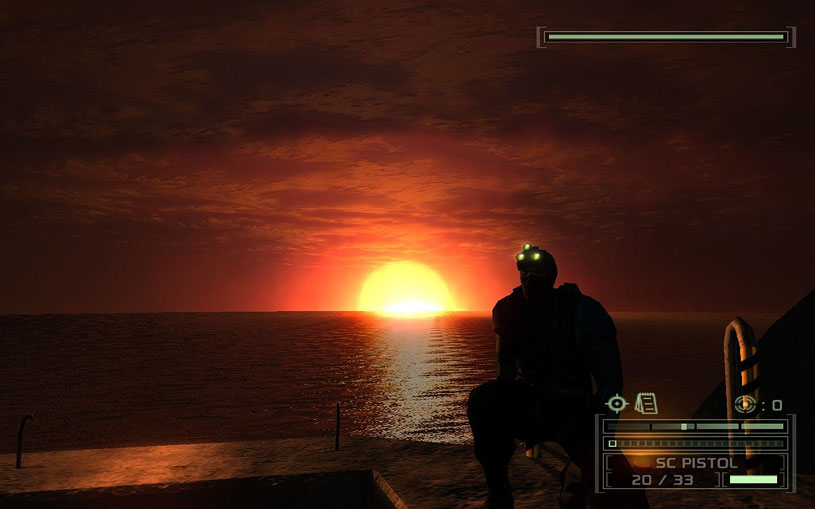
It is not without friction. Firearms are awkward when used as conventional shooter weapons, the hacking interface can be opaque, enemy searches do not always convincingly extend beyond a room, and perfect-rating attempts sometimes expose unforgiving detection rules. Players who prefer brisk action and transparent feedback may find those compromises difficult to overlook. For someone who enjoys learning a space and finding a quieter solution, they are outweighed by the unusually close relationship between observation and control.
007 First Light explores espionage through a more cinematic mixture of bluffing, social stealth, gadgets, and action. Chaos Theory takes a narrower approach, and gains focus from it. Its strongest moments are not about Sam seeming unstoppable, but about the player realizing that a dangerous room can be crossed without anyone noticing. Few stealth games make that realization feel quite so earned.
Splinter Cell: Chaos Theory Pros & Cons
- Pro: Exceptional stealth mechanics built around light, sound, movement speed, line of sight, environmental noise, and careful observation
- Pro: Open-ended missions support alternate routes, gadgets, hacking, interrogation, optional objectives, and lethal or non-lethal tactics
- Pro: Bank, Cargo Ship, Hokkaido, Displace, and Bathhouse make different stealth demands rather than recycling one layout
- Pro: Skill-based progression gives cleaner replays and 100% mission attempts lasting value
- Pro: Amon Tobin’s soundtrack, Sam Fisher’s dry dialogue, atmospheric lighting, and environmental sound strengthen the campaign
- Con: Guard searches sometimes feel too local, while open firefights and certain interactions expose dated design
- Con: Official online co-op and Spies vs Mercs services are discontinued
- Con: Modern controller, widescreen, and shadow setups can require unofficial compatibility fixes
- Con: Steam Deck remains officially Unsupported
Splinter Cell: Chaos Theory PC System Requirements
Important: The specifications below are the original PC-era hardware figures published in the current Steam listing, not modern performance benchmarks. Steam and Ubisoft list the game as playable on Windows 10 and Windows 11. Because it is still the original game rather than a remaster, display, input and legacy component adjustments may be useful.
MINIMUM:
OS: Windows 2000 / XP (original legacy minimum); current Steam and Ubisoft pages list Windows 10 / 11 compatibility
CPU: Intel Pentium III or AMD Athlon, 1.4 GHz
RAM: 256 MB
GPU: 64 MB DirectX 9.0c-compliant graphics card
DirectX: Version 9.0c or higher
Storage: 4 GB available space
Sound Card: DirectX 9.0c-compliant sound card
Input: Windows-compatible mouse and keyboard; legacy joystick support
RECOMMENDED (ORIGINAL HARDWARE FIGURES):
OS: Windows 2000 / XP (original legacy era); Windows 10 / 11 listed as supported by current PC stores
CPU: Intel Pentium IV or AMD Athlon, 2.2 GHz
RAM: 512 MB
GPU: 128 MB DirectX 9.0c-compliant graphics card
DirectX: Version 9.0c or higher
Storage: 4 GB available space
Sound Card: DirectX 9.0c-compliant sound card; EAX 2.0 or higher was recommended
Additional Modern PC Setup and Compatibility Notes
- Widescreen fix (16:9 and ultrawide): Use ThirteenAG’s Splinter Cell Chaos Theory Widescreen Fix (author’s release page). Download its game-specific archive, back up the original files you will replace, then extract it into the game’s installation directory so its supplied
Systemcontents go under the existingSystemfolder. The fix corrects resolution, aspect ratio, field of view, HUD and video scaling. If needed, editSystem/scripts/SplinterCellChaosTheory.WidescreenFix.inito setResXandResYfor your display (for example 1920 and 1080), then launch the game and check that the image and HUD are not stretched. Keep a clean backup so the fix can be reversed. - Controller setup: The original game uses legacy joystick input, not modern plug-and-play XInput mapping. The same author-maintained widescreen project includes improved controller compatibility through Xidi; read its included instructions before combining it with another wrapper.
- Shadows and lighting: If shadow edges or placement look wrong at higher resolutions, the widescreen fix includes a shadow-map setting. Adjust the documented
SetShadowMapSizeoption only if required and test the result rather than combining several unrelated graphics patches. - High frame rates: Very high frame rates can produce AI pathfinding or physics issues in this older engine. Use the widescreen fix’s frame-rate limiter where necessary and favor stable gameplay over chasing the display’s maximum refresh rate.
- Steam Deck: Valve rates the game Unsupported and recommends Proton Experimental in compatibility metadata. A working community setup may also need special DLL overrides; it is not an officially supported configuration.
- Launch problems: Verify files through the game store, remove or temporarily disable third-party modifications, restore clean configuration files, and retest before adding more compatibility tools.
- Legacy DirectX: The game uses DirectX 9-era components. Newer Windows DirectX versions do not necessarily provide every older optional runtime file a game expects.
- Backups and safe sources: Back up saves and configuration files before changing resolution, DLL wrappers, textures, or executable files. Obtain unofficial patches from their developer’s release pages and refer to PCGamingWiki’s Chaos Theory guide for documented compatibility limitations.
Official Trailer
Note: Ubisoft originally released the “I Believe” trailer as official promotional material for Splinter Cell: Chaos Theory. The historical YouTube upload below preserves that original trailer; the written guide above provides the modern PC store, compatibility, Steam Deck, mod, and online-service information.
Frequently Asked Questions
Do I need to play the earlier Splinter Cell games first?
No. Earlier entries add context for Sam Fisher, Third Echelon, Lambert and Grim, but the main Chaos Theory conflict stands on its own.
Is Splinter Cell: Chaos Theory open world?
No. It is a sequence of distinct missions rather than a continuous map, but locations such as Bank and Displace allow alternate approaches, gadgets, optional objectives, and several ways to avoid a patrol.
How long is the single-player campaign?
A careful first run commonly takes around 10–15 hours. Difficulty, retries, optional objectives and attempts to secure cleaner mission ratings can extend it considerably.
Does the PC version have split-screen co-op?
No. The original PC edition was designed for two-player co-op over a network rather than same-screen split-screen; split-screen was available on certain console editions. The official network services are no longer supported.
Can I still play Chaos Theory co-op or Spies vs Mercs online?
Not through Ubisoft’s discontinued official online services. Historical LAN functionality and unofficial community preservation efforts are separate from official matchmaking and may need additional software or setup; do not assume the sold PC copy provides working online co-op.
What is Spies vs Mercs?
It is an asymmetric competitive mode: third-person spies infiltrate defended locations, while first-person mercenaries use weapons, light, and detection equipment to stop them. The original official online service is discontinued.
How do the light and sound meters work?
The light meter indicates Sam’s visibility; the sound meter helps show whether footsteps and other noises rise above the environment. Machinery, rain, and other ambient noise can cover movement, while well-lit areas make even silent movement risky.
Can I finish missions without killing enemies?
Many objectives allow non-lethal or ghost-style approaches using alternate paths, distractions, grabs, airfoil rounds, sticky shockers and other gadgets. Mission-specific scripted situations and objectives can still impose particular constraints.
What does a 100% mission rating mean?
It indicates an exceptionally clean infiltration rather than simply finishing the objectives. Avoiding detection, alarms, unnecessary violence and compromised encounters helps earn a better mission score.
What are the most useful tips for beginners?
Watch patrol patterns, adjust movement speed, listen for floor and environmental noise, check the optic cable before opening uncertain doors, hide bodies, and save before risky encounters. Gunfire is usually a last resort, not the default plan.
Does Splinter Cell: Chaos Theory work on Windows 11?
Ubisoft and Steam list Windows 10 and Windows 11 as supported operating systems. Because this is the original 2005 PC release, some configurations still need widescreen, controller or rendering adjustments.
How can I get correct 16:9 or ultrawide display support?
Use ThirteenAG’s maintained widescreen fix, linked with installation and configuration instructions in the PC System Requirements section above. It adjusts resolution, field of view and interface scaling rather than simply stretching a 4:3 image.
Does the PC version work with modern Xbox controllers?
The original controls were designed around keyboard/mouse and legacy joystick support. Modern XInput controllers can work more comfortably with the community controller compatibility features included in the widescreen fix.
Does the Steam version require Ubisoft Connect?
The Steam store page does not list a mandatory Ubisoft Connect third-party launcher requirement for this release. Ubisoft’s own store edition explicitly requires a Ubisoft account and Ubisoft Connect, so check the activation terms of the storefront you choose.
Does Chaos Theory have modern DLC or a remaster?
No modern Definitive or remastered PC edition is offered in the verified storefronts. The original game’s historical updates included additional co-op missions, but these are not a modern story expansion or season pass, and official co-op services have since been discontinued.
Is Splinter Cell: Chaos Theory Steam Deck Verified?
No. Valve classifies the Steam edition as Unsupported, not Verified or Playable. Any success using Proton and community fixes is setup-dependent.
Why can lighting or shadows look wrong on modern PCs?
The original graphics renderer was designed for older hardware and screen formats. Higher resolution and widescreen setups can reveal shadow-map issues that community compatibility fixes attempt to correct; the setup notes above link the maintained fix.
What should I do if the PC version will not launch?
Start by verifying the installation through your storefront, removing recently installed unofficial fixes, and restoring backed-up configuration files. Test the unmodified game before adding additional wrappers or rendering patches.
Still have questions? Check the official Ubisoft Chaos Theory page, the PCGamingWiki technical guide, and Steam Discussions.
Sources & References
Key PC availability, legacy-service, requirements, compatibility and technical information in this guide was verified against these sources:
- Ubisoft — official game information — developer credits, PC release, account/launcher information and online-service status.
- Steam — Splinter Cell Chaos Theory — official Windows purchase listing, hardware requirements and user reception.
- Epic Games Store — Chaos Theory — Windows purchase listing and official warning about unavailable original online features.
- SteamDB — App 13570 metadata — Valve Steam Deck Unsupported classification and recommended runtime metadata.
- PCGamingWiki — Chaos Theory — legacy renderer, widescreen, input, high-frame-rate and technical workaround references.
- ThirteenAG — Chaos Theory Widescreen Fix — author-maintained fix package, widescreen/FOV/HUD changes and installation notes.
Similar Games Like Splinter Cell: Chaos Theory
- Metal Gear Solid 2: Sons of Liberty
- Metal Gear Solid Delta: Snake Eater
- Metal Gear Solid V: Ground Zeroes
- Hitman World of Assassination
- No One Lives Forever 2: A Spy in H.A.R.M.’s Way
- 007 First Light



Found something worth playing through DecideGame?
DecideGame.com is an independent gaming project run by Editor Zero. If this guide helped you discover a game, solve a problem, or find useful information, you can support DecideGame.com and help keep new and updated game guides coming.
DecideGame — PC Game Guides, Reviews & Setup Help