
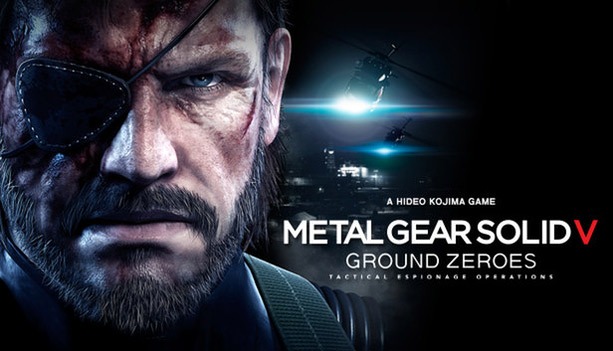
Use this updated 2026 Metal Gear Solid V: Ground Zeroes PC guide to compare the standalone Steam release with The Definitive Experience, follow official download and installation guidance, and check Camp Omega content, system requirements, Steam Deck support, save transfer, and PC mods.
 By Editor Zero — independently researched, edited, and maintained.
Last updated: 19 September 2026
Last reviewed: 19 September 2026
Table of Contents
- Quick Summary
- Quick Facts
- Official PC Stores, Download & Installation
- Metal Gear Solid V: Ground Zeroes Review
- Pros & Cons
- PC System Requirements
- Frequently Asked Questions
- Similar Games
Metal Gear Solid V: Ground Zeroes Quick Summary
✔ Compact tactical-espionage prologue set in 1975, following Big Boss as he infiltrates the heavily guarded Camp Omega prison facility to rescue Chico and Paz
✔ Open-ended stealth lets you scout patrols, mark guards, use CQC, suppressors, vehicles, distractions, non-lethal tactics, or direct combat while choosing your own infiltration and extraction routes
✔ Similar to Metal Gear Solid V: The Phantom Pain through its third-person stealth sandbox, FOX Engine movement, enemy marking, flexible mission routes, weapons, gadgets, and emergent infiltration
✔ The PC version combines the central Ground Zeroes operation with replay-focused Side Ops plus the Déjà-Vu and Jamais-Vu Extra Ops, alongside rankings, trials, collectibles, cassette tapes, and multiple challenge goals
✔ Ground Zeroes remains available separately on Steam, but buyers who also want The Phantom Pain should compare Metal Gear Solid V: The Definitive Experience before purchasing either product individually
✔ The PC release supports 4K output and runs comfortably on modest modern hardware, while Valve currently classifies it as Steam Deck Verified
Metal Gear Solid V: Ground Zeroes Quick Facts
Official PC Stores, Download & Installation
👇 Compare the official standalone Steam release and Metal Gear Solid V: The Definitive Experience before purchasing, downloading, or installing Metal Gear Solid V: Ground Zeroes on PC.
- Standalone Steam release: Metal Gear Solid V: Ground Zeroes remains available as its own Windows PC purchase through Steam and can be installed independently of The Phantom Pain.
- Definitive Experience: Metal Gear Solid V: The Definitive Experience contains Ground Zeroes, The Phantom Pain, and the included DLC content for the two games, making it the broader official package for players who want the complete Metal Gear Solid V release set.
- Duplicate-purchase check: If you intend to play both Ground Zeroes and The Phantom Pain, compare The Definitive Experience with your existing Steam library before buying the standalone games separately. Package availability and pricing can vary by region.
- Steam installation: Ground Zeroes uses Steam for PC ownership, installation, updates, achievements, Steam Cloud, leaderboards, controller support, and library management.
- Offline single-player: Steam compatibility metadata does not require an internet connection for setup or single-player gameplay, although Steam services, cloud synchronization, rankings, and the Ground Zeroes save-upload feature depend on online access.
- Save transfer: Ground Zeroes can upload eligible save data for The Phantom Pain through Konami’s documented transfer system. On PC, both games must use the same Steam account, and online access is required for the upload and download process.
- Transfer rewards: The Ground Zeroes Sneaking Suit and certain prisoners or soldiers extracted during Ground Zeroes can become available in The Phantom Pain after a successful transfer and sufficient story progression.
- PC bonus missions: The Steam version includes both Déjà-Vu, featuring Solid Snake references to the original Metal Gear Solid, and Jamais-Vu, which places Raiden in a separate Camp Omega scenario.
- Steam Deck: Valve classifies Ground Zeroes as Verified, with default graphics performance, controller icons, and interface text meeting Deck requirements; an external controller may require manual controller-order selection.
- Other PC stores: The verified official Windows PC release is Steam-based; no official Epic Games Store, GOG, or Microsoft Store Windows release was found for Ground Zeroes.
 Buy Metal Gear Solid V: Ground Zeroes on Steam
Buy Metal Gear Solid V: The Definitive Experience on Steam
 Visit the Official Metal Gear Solid V: Ground Zeroes Website

Metal Gear Solid V: Ground Zeroes Review
A remarkably flexible stealth sandbox whose tiny scale is both its greatest strength and its unavoidable limitation.
Metal Gear Solid V: Ground Zeroes is less a conventional campaign than a concentrated demonstration of how much tactical choice can fit inside one carefully designed military base. Set in 1975, it sends Big Boss into Camp Omega in Cuba to rescue Chico and Paz, connecting the aftermath of Peace Walker to The Phantom Pain. The central operation can be completed quickly, but judging the game only by the first credits roll misses what its design is built to do.
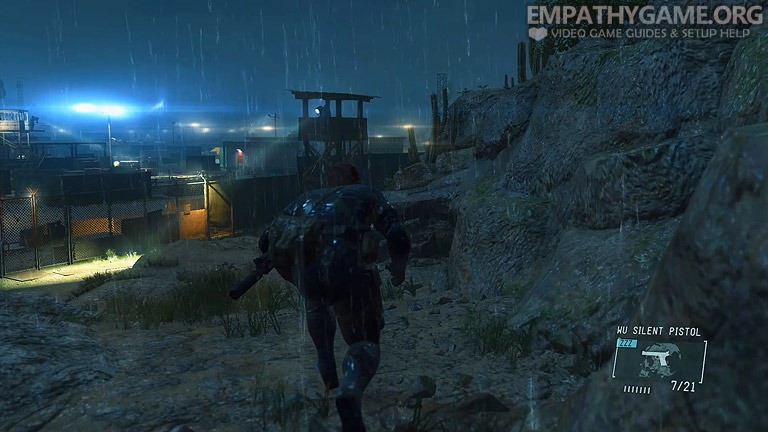
Camp Omega is a place to learn, dismantle and eventually manipulate. Routes that initially feel dangerous become familiar; guard patrols become opportunities; a drainage path, parked truck, dark patch of grass or unguarded fence can completely change an approach. The responsive movement, readable stealth systems and strong mission scoring make repeated infiltration unusually satisfying. At the same time, nearly everything depends on returning to the same location. Players who enjoy refining routes and experimenting with systems can extract hours of depth from it. Those looking for the breadth, narrative development or geographic variety of a full Metal Gear campaign will find the package undeniably slight.
Camp Omega Makes Reconnaissance the Main Skill
The biggest change from earlier Metal Gear games is not simply that the map is larger. It is that information has to be gathered rather than handed over by a traditional radar. From the opening cliffside, the binoculars can identify and mark soldiers, while interrogation can reveal additional enemy positions or useful points of interest. The result is a stealth loop built around observation: find a safe angle, study patrols, decide which threats actually matter, then move before the situation changes.
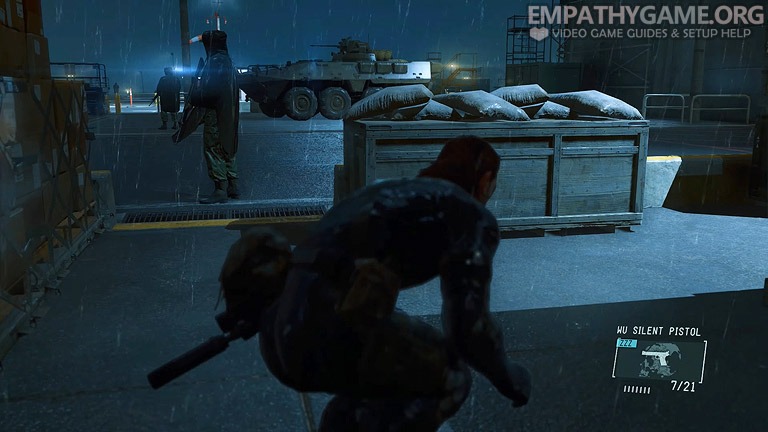
Camp Omega supports that loop exceptionally well because its spaces overlap. The prison cages, roads, watchtowers, administrative compound, helipad, cliffs and drainage routes are not separate rooms connected by corridors; they are parts of the same security problem. A direct path toward an objective may expose Big Boss to searchlights and multiple patrols, while a longer route can trade speed for cover. Trucks can become transportation rather than scenery, elevated positions provide reconnaissance, and the coastline gives both escape routes and exposed sightlines.
The iDroid strengthens that tension because opening its map does not pause the action. Checking a marker while a patrol closes in remains a decision rather than a safe menu break. Even the detection indicator is more nuanced than a simple spotted/not-spotted switch. A white directional cue can mean a guard has noticed movement without yet confirming Snake, and night patrols may sweep suspicious areas with flashlights before the situation escalates. That brief uncertainty creates some of the game’s best moments because moving too soon can turn suspicion into a full alert.
Reflex Mode provides a forgiving counterweight. When an enemy fully identifies Snake, time briefly slows and gives a chance to neutralize the witness before the alarm spreads. It is useful while learning the map, but disabling it makes the stealth noticeably harsher and exposes how much the game relies on reading distance, stance, noise and lines of sight. Once an alert begins, guards search the last known area and reinforcements can turn a clean infiltration into a running escape rather than a simple reset.
CQC Has More Tactical Texture Than It First Appears
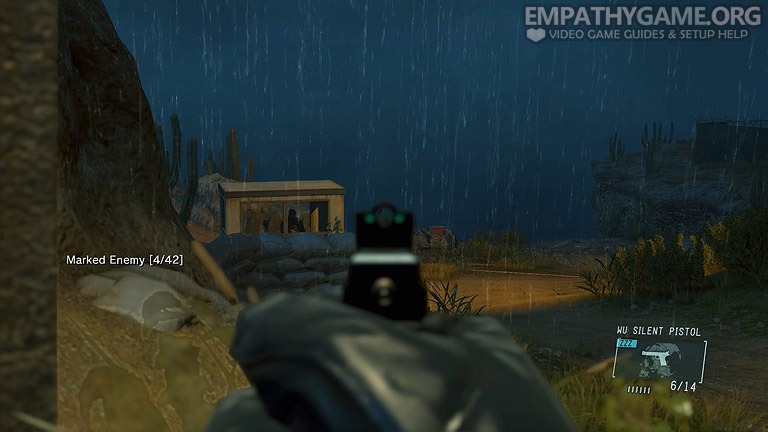
Big Boss is unusually mobile for a Metal Gear protagonist. Standing, crouching, crawling, sprinting, climbing and the quick dive flow into one another smoothly, allowing mistakes to be corrected without making movement feel weightless. CQC is similarly flexible: enemies can be grabbed, interrogated, thrown, knocked out or held at gunpoint, while firearms, explosives and mounted weapons provide louder alternatives when stealth breaks down.
The important detail is that non-lethal takedowns are not all equivalent. A quick throw may remove a guard only temporarily, while stronger CQC sequences can keep him unconscious for much longer. A held-up soldier ordered to the ground can remain compliant until another guard discovers him or an alert changes the situation. That turns body management into a tactical question. Neutralizing a sentry is not necessarily the end of the problem; the method chosen determines how long that section of the map remains safe.
The tranquilizer pistol is therefore powerful without making CQC irrelevant. A distant guard can be put to sleep without approaching him, but close-range control creates other advantages: interrogation can expose information, a hold-up can avoid leaving a temporary knockout, and carrying a body into cover can protect a carefully prepared route. These are small differences, but Ground Zeroes is compact enough for them to matter. Repeated runs reveal that successful stealth is less about clearing every enemy than controlling exactly the few soldiers who threaten the chosen path.
The Same Base Produces Several Different Types of Mission
The Side Ops justify Camp Omega’s reuse better than a simple set of remixed objectives would. Classified Intel Acquisition, for example, can turn the base’s transport network into part of the solution: riding the truck deep into the administrative area creates a very different infiltration rhythm from crossing the perimeter on foot. Destroy the Anti-Air Emplacements shifts attention toward sabotage, C4 placement and escape planning while the base becomes more chaotic around the objective.
Intel Operative Rescue changes the format more dramatically by placing much of the action around helicopter support, forcing precise non-lethal shooting if pursuing its pacifist challenge. The mission is less representative of the core stealth loop, but its existence demonstrates how aggressively the game repurposes one environment. Enemy placement, available equipment, lighting, objectives and routes change enough that familiarity with the geography becomes a tool rather than merely repetition.
That reuse still has a ceiling. After several operations, the surprise of discovering Camp Omega fades. The same roads, towers and compounds remain recognizable no matter how cleverly patrols are rearranged. A larger game could use mastery of one location as a chapter before moving elsewhere; Ground Zeroes asks that mastery to carry most of the package. Whether that feels elegant or restrictive depends heavily on how much pleasure comes from optimization itself.
A Colder Story Fits the Setting, but Its Cruelty Is Unevenly Handled
The story assumes familiarity with Peace Walker. Chico and Paz are not introduced as strangers whose importance slowly develops; Big Boss already has reasons to risk entering Camp Omega, while Kaz Miller provides remote support and Skull Face’s XOF operation hangs over the rescue. That makes the prologue efficient for returning players but less emotionally complete as a standalone narrative.
What works best is the atmosphere. Heavy rain, searchlights, fences, concrete cages, radio chatter and distant machinery make Camp Omega feel hostile before anything happens. The sparse HUD keeps attention on the environment, while the soundscape communicates danger with footsteps, voices, alarms and weather rather than constant interface prompts. Kiefer Sutherland’s restrained Big Boss also suits this quieter approach. There is less codec-driven banter than in many earlier entries, with cassette tapes carrying much of the context that would once have been delivered through extended conversations.
The darker tone becomes less convincing when the game deals with torture and sexual violence surrounding Paz and Chico. Those events establish the brutality of Camp Omega and the threat posed by Skull Face, but the treatment often pushes suffering toward shock rather than giving the victims equivalent dramatic space. The discomfort is intentional; the problem is that intensity sometimes substitutes for insight. That makes the ending powerful as a rupture leading into The Phantom Pain, yet less satisfying as character drama on its own.
Replayability Is the Real Progression System
There is no meaningful skill tree, equipment economy or character build. Progress comes from the player learning Camp Omega. A first infiltration may involve cautious marking and frequent map checks; a later run can rely on remembered patrols, shortcut routes and precise timing. Hard difficulty increases the pressure further, while optional restrictions such as disabling Reflex Mode or pursuing no-kill runs reveal how differently the same objective can play.
Mission ranks make that knowledge measurable, but the scoring system is more interesting than a pure speedrun timer. Fast completion matters, yet clean stealth, avoiding kills, minimizing retries and rescuing prisoners can contribute heavily to the final result. That means an efficient S-rank route does not always have to be the shortest possible line between objectives. A methodical rescue-focused run can recover points that would otherwise be lost to slower completion, giving optional prisoners mechanical importance instead of making them purely charitable detours.
Trials and collectibles add narrower reasons to experiment. Cassette tapes provide story material, XOF patches reward exploration, and finding all of the patches opens the playful Extra Ops. Déjà-Vu reconstructs references to the original Metal Gear Solid, while Jamais-Vu puts Raiden into a deliberately strange alternate scenario. They are lightweight bonuses, but they fit a game whose appeal lies in seeing how many different purposes one map can serve.
This is why describing Ground Zeroes as merely a very short game is accurate but incomplete. Its authored story content is brief; its systems are designed for repetition. The distinction matters. Someone satisfied after a single rescue run will see the limits immediately. Someone interested in cleaner infiltrations, alternate routes, ranks, rescues and challenge conditions can keep finding new problems inside an environment that no longer feels new.
Final Verdict
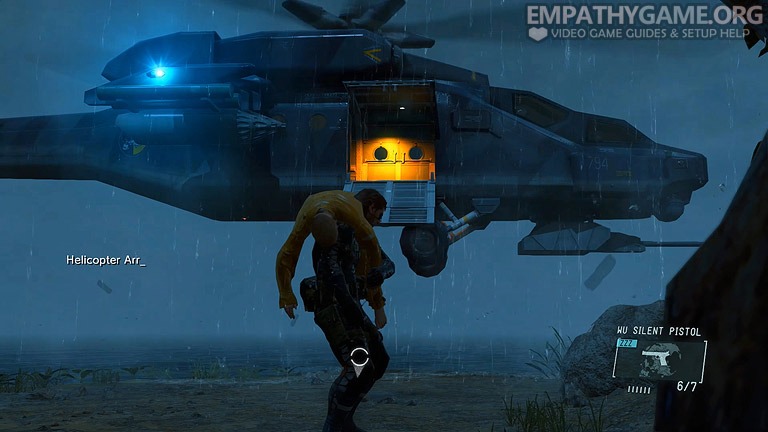
Metal Gear Solid V: Ground Zeroes succeeds because it treats stealth as a collection of interacting decisions rather than a prescribed route through guards. Camp Omega is compact enough to learn but layered enough to support scouting, CQC, non-lethal control, sabotage, vehicles, improvised escapes and radically different mission objectives. The non-pausing iDroid, graduated enemy suspicion, flexible movement and reactive alert system keep even familiar paths tense, while subtle details such as different knockout persistence give experienced players more to optimize than the simple rules first suggest.
Its weaknesses are equally inseparable from its design. The central story is short, nearly every operation reuses the same facility, and the grim treatment of Paz and Chico sometimes reaches for provocation more effectively than character depth. There is no conventional progression system or broader campaign structure to hide that repetition.
For players who want a long sequence of new locations and story beats, Ground Zeroes feels like a prologue because that is fundamentally what it is. For players who enjoy learning a stealth space until every patrol, route and scoring trade-off becomes part of a personal plan, its limited scale becomes unusually productive. It is one of Metal Gear’s smallest campaigns, but also one of its clearest demonstrations of how much freedom can emerge from a tightly constructed infiltration sandbox.
Metal Gear Solid V: Ground Zeroes Pros & Cons
Metal Gear Solid V: Ground Zeroes PC System Requirements
OFFICIAL WINDOWS PC REQUIREMENTS:
MINIMUM:
OS: Windows Vista SP2 x64 / Windows 7 x64 / Windows 8 x64 — 64-bit OS required
CPU: Intel Core i5-4460 3.20 GHz or better; quad-core or better
RAM: 4 GB
GPU: NVIDIA GeForce GTX 650 2 GB or better; DirectX 11 graphics card required
DirectX: Version 11
Storage: 4 GB available space
Sound Card: DirectX 9.0c-compatible sound card
RECOMMENDED:
OS: Windows 7 x64 / Windows 8 x64 — 64-bit OS required
CPU: Intel Core i7-4790 3.60 GHz or better; quad-core or better
RAM: 4 GB
GPU: NVIDIA GeForce GTX 760
DirectX: Version 11
Storage: 4 GB available space
Sound Card: DirectX 9.0c-compatible sound card with Surround Sound 5.1
Important: These are the original Steam-listed game requirements. The Steam client itself now requires Windows 10 or later, so installing the game through Steam requires a newer supported Windows environment than the historical OS list above.
Additional PC Performance and Setup Notes
- Konami’s PC release supports 4K output and increased simultaneous light sources, on-screen model counts, and shadow resolution compared with the original console-era presentation.
- The hardware requirements are modest by modern standards, but keep graphics drivers updated and verify the installation through Steam if the game develops missing-file, startup, or rendering problems.
- Steam Deck is officially Verified. Valve reports that the default graphics configuration performs well and that interface text and controller prompts are suitable for the handheld.
- When using an external Bluetooth or USB controller with Steam Deck or SteamOS, you may need to switch the active controller manually through Steam’s Quick Access Menu.
- Steam Cloud is supported, but keeping a separate backup before experimenting with unofficial mods or save files is still sensible.
- Ground Zeroes has a small but active community-modding archive on Nexus Mods. Community tools and modified files are unofficial, so check compatibility carefully and restore clean Steam files if a modification causes problems.
Official Trailer
Note: This official PlayStation launch trailer introduces Big Boss, Camp Omega, the game’s darker story setup, stealth infiltration, CQC, vehicles, combat, and open mission design, while the written guide adds current Steam ownership, Definitive Experience, system requirements, Steam Deck, save-transfer, and PC setup information.
Frequently Asked Questions
Is Metal Gear Solid V: Ground Zeroes worth playing in 2026?
Yes. Ground Zeroes remains an excellent compact stealth sandbox and an important story bridge into The Phantom Pain, with Camp Omega rewarding experimentation, repeated infiltration, challenge runs, and different tactical approaches. Its biggest limitation is scope: the central story mission is short, so much of the value comes from replaying the location through Side Ops, Extra Ops, rankings, trials, and collectibles.
Is Metal Gear Solid V: Ground Zeroes a full game or a prologue?
Ground Zeroes is a standalone game, but narratively it serves as the prologue to Metal Gear Solid V: The Phantom Pain. It contains one central story operation plus additional Side Ops and Extra Ops built around the Camp Omega sandbox.
Should I play Metal Gear Solid: Peace Walker before Ground Zeroes?
It is strongly recommended if you care about the story. Ground Zeroes assumes familiarity with Big Boss, Kaz Miller, Paz, Chico, Mother Base, and the events surrounding Militaires Sans Frontières, although the game includes a Backstory option for players who need a refresher.
Do I need to play Ground Zeroes before The Phantom Pain?
You can start The Phantom Pain without playing it, but Ground Zeroes explains the operation and disaster that directly set up The Phantom Pain’s opening situation. Playing it first also makes several characters, motivations, cassette tapes, and emotional references easier to understand.
Is Ground Zeroes included in Metal Gear Solid: Master Collection Vol. 2?
No. Metal Gear Solid: Master Collection Vol. 2 contains Metal Gear Solid 4: Guns of the Patriots and Metal Gear Solid: Peace Walker, with Metal Gear: Ghost Babel and a digital soundtrack as collection bonuses. Ground Zeroes remains available separately and through Metal Gear Solid V: The Definitive Experience.
Do I need to buy Ground Zeroes separately if I own Metal Gear Solid V: The Definitive Experience?
No. The Definitive Experience already includes Ground Zeroes, The Phantom Pain, and the associated Metal Gear Solid V DLC package. Check your Steam library before purchasing the standalone Ground Zeroes listing to avoid buying content you already own.
How long does Metal Gear Solid V: Ground Zeroes take to finish?
A first run through the central Ground Zeroes mission commonly takes roughly one to two hours, but that represents only part of the package. Completing the additional operations, finding collectibles, improving mission ranks, unlocking trials, and experimenting with alternate routes can extend playtime considerably.
How many missions are in Ground Zeroes?
The PC version has seven main selectable operations: the Ground Zeroes story mission, four Side Ops, and the Déjà-Vu and Jamais-Vu Extra Ops. Because most use Camp Omega in different circumstances, their objectives, enemy layouts, time of day, available equipment, and routes change rather than introducing seven separate maps.
Is Camp Omega a true open world?
It is better described as a compact open-ended stealth sandbox than a large open world. Camp Omega is one connected military installation with multiple roads, buildings, guard routes, restricted areas, vehicles, extraction points, and infiltration routes, giving you much more freedom than the segmented areas of earlier Metal Gear Solid games.
What is the difference between Side Ops and Extra Ops?
Side Ops reuse Camp Omega for separate tactical scenarios with different objectives and conditions outside the central rescue mission. Extra Ops are more playful bonus scenarios: Déjà-Vu celebrates the original Metal Gear Solid, while Jamais-Vu replaces Big Boss with Raiden for a deliberately unusual mission.
How do you unlock Déjà-Vu and Jamais-Vu?
Find all nine XOF unit patches hidden across the main Ground Zeroes operation and complete the mission so the collection progress is registered. The PC version includes both Extra Ops rather than restricting them to their original console-specific releases.
What is Reflex Mode in Ground Zeroes, and can it be disabled?
Reflex Mode briefly slows the action when an enemy spots Snake, giving you a chance to neutralize that guard before a full alert is raised. It can be disabled if you prefer a harsher stealth experience; beginners may find it useful while learning Camp Omega’s patrols and sightlines.
What should beginners do first when infiltrating Camp Omega?
Use the binoculars to scout and mark guards before committing to a route, stay crouched or prone when crossing exposed areas, and remember that faster movement creates more detection risk. Also be careful when opening the iDroid map: unlike a conventional pause screen, the game world continues moving while the iDroid is open.
Can you manually save or create multiple save slots in Ground Zeroes?
No. Ground Zeroes automatically saves at checkpoints and overwrites its existing progress rather than providing multiple manual save slots. Wait until the save icon disappears before quitting the game.
Does Metal Gear Solid V: Ground Zeroes have multiplayer, co-op, split-screen, or LAN play?
No. The playable missions are single-player only, with no campaign co-op, local co-op, split-screen, LAN mode, or competitive multiplayer. Online functionality is instead used for features such as leaderboards, Steam services, and the Ground Zeroes-to-The Phantom Pain data transfer.
Can Ground Zeroes be played offline on PC?
Yes. The core single-player missions do not require a continuous internet connection after normal Steam setup. Internet access is still needed for Steam synchronization, online leaderboards, and uploading Ground Zeroes data for use in The Phantom Pain.
Can I transfer my Ground Zeroes save data to The Phantom Pain on PC?
Yes. On Steam, choose the Ground Zeroes save-upload option from its title menu, then use the Ground Zeroes data-download option in The Phantom Pain. Konami requires both games to use the same Steam account, and the transfer process requires online access.
What transfers from Ground Zeroes into The Phantom Pain?
The transfer provides bonus content rather than moving your complete Ground Zeroes playthrough into the larger game. Konami specifically lists the Ground Zeroes Sneaking Suit and certain prisoners and soldiers you extracted, with eligible personnel joining Diamond Dogs after you reach the appropriate points in The Phantom Pain.
Can I import Ground Zeroes data after I have already started The Phantom Pain?
Yes. Konami allows the Ground Zeroes transfer after a Phantom Pain playthrough has already begun. Some transferred soldiers and features do not appear immediately and become usable only after reaching the relevant progression points.
Does Metal Gear Solid V: Ground Zeroes work on Steam Deck?
Yes. Valve rates Ground Zeroes as Steam Deck Verified, with the default graphics configuration, interface text, and standard controller layout meeting its compatibility requirements. When using an external Bluetooth or USB controller, you may need to select the active controller manually through Steam’s Quick Access Menu.
Can Ground Zeroes run above 60 FPS or properly use an ultrawide monitor?
The PC version is capped at 60 FPS by default and supports ordinary widescreen and 4K output, but native ultrawide behavior is limited and some presentation remains designed around 16:9. Community fixes can alter the frame-rate cap or ultrawide presentation, but those are unofficial modifications and should be used with appropriate backups and compatibility checks.
Does Ground Zeroes support controllers as well as keyboard and mouse?
Yes. Steam lists full controller support, while the PC version also supports keyboard and mouse. Konami provides several controller-layout types, including Action and Shooter configurations, so players coming from older Metal Gear games or conventional third-person shooters can choose a more familiar arrangement.
Can Metal Gear Solid V: Ground Zeroes be modded?
Yes, through unofficial PC community mods. Nexus Mods hosts tools, models, textures, save-related files, and other Ground Zeroes modifications, but there is no official Steam Workshop or Konami modding toolkit; back up saves and verify mod compatibility before changing game files.
Still have questions? Check the Metal Gear Solid Reddit community, Ground Zeroes Steam Discussions, or Konami Ground Zeroes support page for additional help and community discussion.
Sources & References
Key factual and technical information in this guide was checked against relevant official and community sources, including:
- Steam — Metal Gear Solid V: Ground Zeroes — current standalone PC availability, Steam features, official minimum and recommended requirements, and overall user reception
- Konami — Ground Zeroes Steam Release Details — PC release date, 4K support, PC-specific graphical improvements, and inclusion of the Déjà-Vu and Jamais-Vu missions
- Konami — Metal Gear Solid V: The Definitive Experience — official package contents combining Ground Zeroes, The Phantom Pain, and their DLC content
- Konami — Metal Gear Solid V Save Data — Ground Zeroes-to-The Phantom Pain transfer process, online requirement, same-account restriction, and transfer rewards
- SteamDB — Metal Gear Solid V: Ground Zeroes — current Steam Deck compatibility, SteamOS status, and internet-requirement metadata
- Metacritic — Ground Zeroes PC Critic Reviews — PC Metascore and the recorded IGN PC review score
Similar Games Like Metal Gear Solid V: Ground Zeroes
- Metal Gear Solid V: The Phantom Pain
- Metal Gear Solid: Peace Walker
- Metal Gear Solid Delta: Snake Eater
- Tom Clancy’s Splinter Cell: Chaos Theory
- Hitman World of Assassination
- 007 First Light




Found something worth playing through DecideGame?
DecideGame.com is an independent gaming project run by Editor Zero. If this guide helped you discover a game, solve a problem, or find useful information, you can support DecideGame.com and help keep new and updated game guides coming.
DecideGame — PC Game Guides, Reviews & Setup Help