
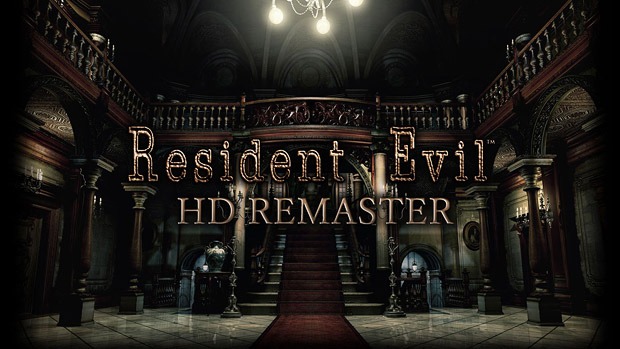
Use this updated 2026 Resident Evil HD Remaster PC guide to compare official Steam and DRM-free GOG purchase, download, and installation options, understand the remaster’s controls, display modes, bundles, system requirements, Steam Deck support, mods, and player guidance before entering the Spencer Mansion.
 By Editor Zero — independently researched, edited, and maintained.
Last updated: 29 September 2026
Last reviewed: 29 September 2026
Table of Contents
- Quick Summary
- Quick Facts
- Official PC Stores, Download & Installation
- Resident Evil HD Remaster Review
- Pros & Cons
- PC System Requirements
- Frequently Asked Questions
- Similar Games
Resident Evil HD Remaster Quick Summary
✔ Classic survival-horror game set inside the Spencer Mansion, where Jill Valentine or Chris Redfield investigates bizarre murders, undead creatures, locked rooms, puzzles, scarce resources, and Umbrella’s hidden experiments
✔ This is the HD remaster of Capcom’s 2002 remake of the original Resident Evil, not a modern over-the-shoulder remake like newer Resident Evil 2, 3, and 4 releases
✔ Similar to Resident Evil 0 HD Remaster through its fixed-camera exploration, tank-control option, puzzle progression, limited inventory, item management, and classic survival-horror pacing
✔ PC players can choose between Steam features and a DRM-free GOG version, with GOG also maintaining the game through its Preservation Program
✔ The remaster supports high-resolution backgrounds, 16:9 widescreen, classic 4:3 display, remastered audio, original tank controls, and alternate modern movement controls
✔ Steam Deck is Verified, making the Steam version a practical handheld option for players who want a portable classic Resident Evil experience
Resident Evil HD Remaster Quick Facts
Official PC Stores, Download & Installation
👇 Compare the official Steam and GOG options below before purchasing, downloading, or installing Resident Evil HD Remaster on Windows PC.
- PC availability: Resident Evil HD Remaster is officially sold for Windows PC through Steam and GOG.
- Steam: The Steam version supports achievements, Steam Cloud, trading cards, Steam Leaderboards, Family Sharing, full controller support, file verification, and Steam Deck Verified compatibility.
- GOG: The GOG version is DRM-free, supports offline installers without online activation, can use GOG Galaxy optionally, and is maintained through the GOG Preservation Program with Windows 11 verification.
- Base game: The standard purchase contains the complete Resident Evil HD Remaster game. There is no separate paid story expansion, campaign DLC, season pass, or expansion pass required for the main experience.
- Deluxe Origins Bundle: Steam and GOG both list a Resident Evil Deluxe Origins Bundle containing Resident Evil HD Remaster, Resident Evil 0, and the Resident Evil 0 costume packs. Check existing ownership before buying the bundle.
- GOG Classic Bundle: GOG also lists a Resident Evil Classic Bundle containing Resident Evil HD Remaster, Resident Evil 0, and the original Resident Evil trilogy. Its dynamic bundle pricing can account for eligible games already owned on GOG.
- Single-player: The game has no co-op campaign, online multiplayer, PvP mode, cross-play, or cross-progression system.
- Steam Deck: Valve rates the Steam version Verified. The GOG Windows build does not provide the same one-click Steam Deck integration and may require manual compatibility setup on SteamOS-based handhelds.
- Separate ecosystems: Steam and GOG use separate store libraries, achievements, cloud services, and installation directories. Do not assume saves or mods transfer automatically between them without checking file locations first.
- Mod compatibility: Many community guides assume Steam folder paths. GOG users should confirm the installed directory structure before applying texture packs, randomizers, visual fixes, or other file-replacement mods.
 Buy Resident Evil HD Remaster on Steam
 Buy Resident Evil HD Remaster on GOG
 Visit the Official Resident Evil Portal

Resident Evil HD Remaster Review
A masterclass in classic survival horror where fixed cameras, limited inventory, route planning, and the Spencer Mansion turn every decision into pressure
Resident Evil HD Remaster remains one of the clearest examples of what survival horror means when the genre is built around systems rather than speed. This is not a modern over-the-shoulder shooter, and it is not trying to become one. It is the HD version of Capcom’s 2002 remake of the original Resident Evil, which means it already comes from a layered history: a remake of the 1996 classic, later remastered for modern platforms, while still preserving fixed camera angles, deliberate movement, limited saves, small inventories, locked doors, item boxes, strange keys, and a mansion designed to make every trip feel dangerous.
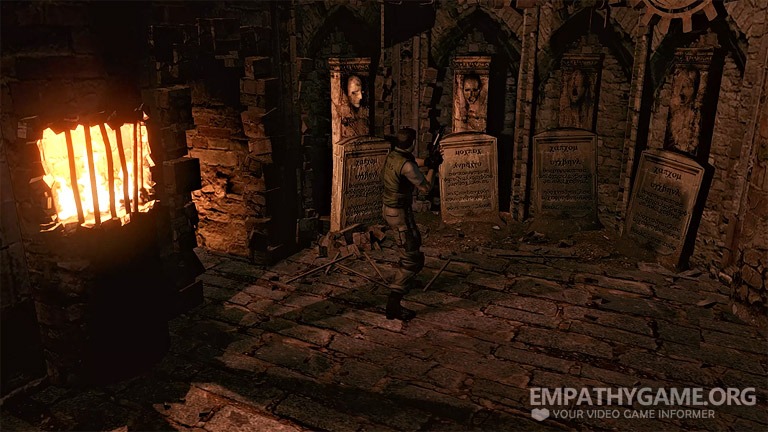
What makes it endure is not only nostalgia. The Spencer Mansion is still brilliantly structured. Every hallway, shortcut, locked room, key item, corpse, and safe room contributes to a larger survival puzzle. The player is not simply moving from objective marker to objective marker. They are learning a hostile building, deciding which routes are safe, which zombies are worth killing, which items belong in the box, and whether the next save is worth spending an Ink Ribbon.
The game can feel uncomfortable at first, especially for players coming from newer entries. Fixed camera angles hide danger. Tank controls feel strange until they click. Door animations slow the rhythm. Backtracking can feel severe. Chris’s inventory can make simple item collection feel like a logistics problem. But those irritations are also part of the design’s force. Resident Evil HD Remaster is not frictionless horror. It is horror made from friction.
The Spencer Mansion Is the Real Main Character
The best way to understand Resident Evil HD Remaster is to see the mansion as a giant puzzle box. At first, it feels confusing: locked doors, strange emblems, dead ends, decorative rooms, statues, armor keys, medical supplies, scattered notes, and corridors that seem to loop without explanation. Slowly, the layout becomes readable. A key found in one wing changes the meaning of a door seen thirty minutes earlier. A puzzle item that seemed useless suddenly belongs in a room the player barely remembered. A hallway that was terrifying the first time becomes a familiar route between safe rooms.
This is not lazy backtracking. It is progression through knowledge. The mansion becomes more satisfying because the player gradually memorizes it. Returning to earlier locations with the correct key or item creates a feeling of mastery that a straight-line horror game cannot easily replicate. The building does not open because the player earned a skill point. It opens because the player understood it.
That structure gives even quiet moments tension. Carrying the wrong item can waste a trip. Forgetting a key in the box can force a dangerous return. Leaving a zombie alive in a main route may make every future crossing stressful. The mansion punishes poor planning, but it also rewards careful memory. By the second half of a playthrough, the same building that once felt impossible begins to feel like a machine the player can operate.
This is why the game often feels better on replay. A first run can be messy, slow, and full of wrong turns. Later runs become cleaner. The player knows which doors matter, which enemies can be ignored, where to store herbs, when to carry the shotgun, and when a puzzle item should stay in the item box until its purpose becomes clear. The horror never disappears completely, but knowledge becomes its own weapon.
Fixed Cameras and Tank Controls Work Together
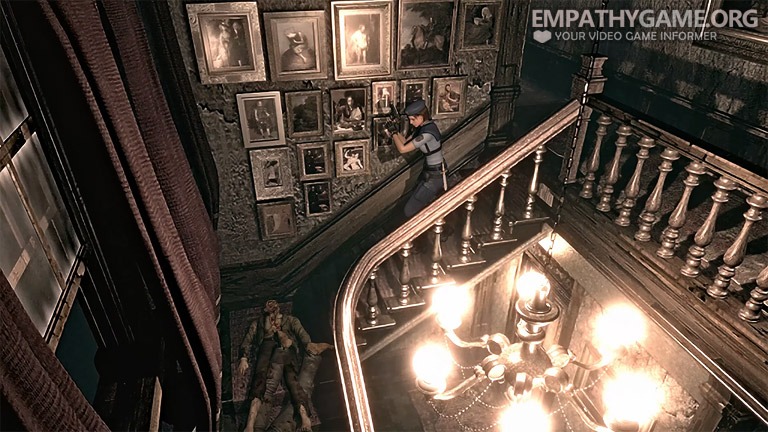
Fixed camera angles are one of the remaster’s biggest barriers for new players, but they are also one of its strongest tools. Each room is framed like a horror composition: a long hallway seen from a distance, a staircase viewed from an uneasy angle, a blind corner near a window, a quiet statue room with too much empty space, or a doorway that feels safe until something groans off-screen. The camera does not simply show the mansion. It directs fear.
Tank controls make more sense inside that system than many players expect. Because movement is based on the character’s orientation, pressing forward continues moving the character forward even when the camera angle changes. That consistency is important. It lets the player kite zombies, turn around furniture, run through camera cuts, and maintain control in rooms where a modern camera-relative system might suddenly reverse direction after an angle change.
The alternate controls are useful, especially for players who cannot get comfortable with tank movement, but they are not automatically better. Moving directly with the stick feels smoother in open spaces, yet camera cuts can create awkward direction changes. The original controls feel stranger at first, but they fit the fixed-camera logic more naturally once the player adapts.
The important point is that the controls are not accidental clumsiness. They are part of the horror rhythm. Turning takes commitment. Aiming takes time. Running around a zombie requires awareness of both the room and the character’s facing. Escaping danger is not effortless, and that makes danger matter.
Inventory Limits Create the Survival Puzzle
Resident Evil HD Remaster’s tiny inventory can be painful, but it is also one of the main reasons the game works. Jill has more space and a lockpick, making her the friendlier first route. Chris has fewer item slots, which makes his campaign feel more demanding because every weapon, herb, key, and puzzle object competes for space. Playing Chris can turn a simple discovery into a problem: do you carry the item now, drop off supplies first, or risk coming back through a dangerous hallway later?
The item box is the center of that pressure. It is not just storage. It is a planning station. A player who does not know what a puzzle item does should usually keep it in the box until the mansion reveals its purpose. Carrying everything “just in case” quickly becomes impossible. The game teaches discipline: take what you need, store what you do not, and think before leaving the safe room.
This can absolutely become frustrating. Running back to a safe room because the inventory is full can feel tedious, especially after finding a key item at the end of a dangerous route. Door animations, fixed camera transitions, and long mansion loops can make those trips feel even slower. Players coming from a smoother modern remake may feel that the game is wasting their time.
But the inconvenience is also why the mansion feels hostile. The player is never only asking, “Can I survive this room?” They are asking, “Do I have enough space to make this trip worth it?” That is survival horror in a very pure form. The enemy is not only the zombie in the hallway. It is the decision to leave the safe room with one slot too few.
Jill and Chris Change the Game More Than Expected
Choosing Jill or Chris is not just a cosmetic decision. Jill is usually the better first choice because her larger inventory, lockpick, and Barry Burton’s support make the mansion more manageable. She can carry more items, access certain locks more conveniently, and her route gives the story a slightly warmer tone through Barry’s presence and suspicious behavior.
Chris’s route is harsher. His smaller inventory forces stricter planning, and his support dynamic with Rebecca Chambers changes the feel of the story. He has more health, but that does not erase the practical difficulty of carrying fewer items. Chris turns the game into a tighter resource-management puzzle, especially for players who are still learning where everything belongs.
The route differences also support replayability. The mansion is familiar on a second run, but the character choice changes item flow, story beats, support moments, and practical priorities. A Jill player may learn the mansion with more flexibility, then return as Chris and realize how much extra space had been protecting them from mistakes.
This is one of the remaster’s quiet strengths. It does not need RPG builds or modern branching paths to create replay value. Two characters, different inventories, different support roles, and a dense mansion are enough to make a second run feel meaningfully different.
Combat Is About Cost, Not Power
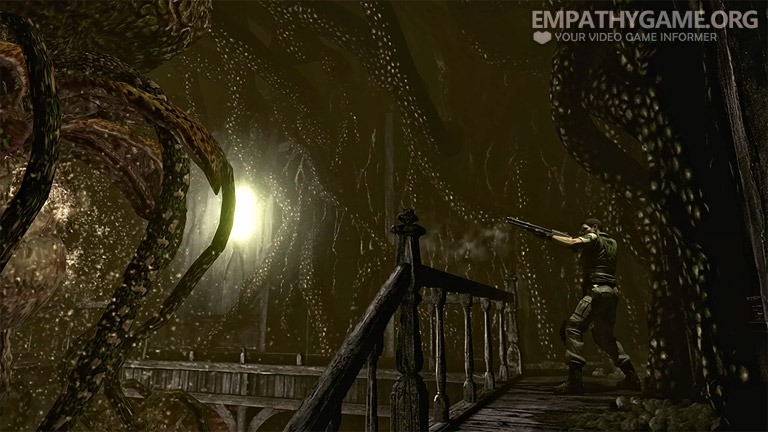
Combat in Resident Evil HD Remaster is intentionally limited. Zombies are slow, but they are frightening because every shot has a cost. A handgun bullet spent in the wrong hallway is one less bullet for a later emergency. A shotgun blast may save health now, but it might also be needed for a Hunter. Killing an enemy may make a route safer, but it may also create a corpse-management problem.
This is where the game differs sharply from action-heavy entries. Fighting is rarely a clean reward. It is a transaction. Sometimes killing a zombie is smart because the hallway becomes a repeated route. Sometimes dodging is better because the room is rarely revisited. Sometimes leaving an enemy alive is more dangerous than spending ammo. The game constantly asks the player to judge value.
Crimson Heads make that decision even more interesting. A dead zombie may later return as a faster, stronger threat unless the head is destroyed or the corpse is burned with kerosene. Suddenly, killing a zombie is not always the end of a problem. It can be the beginning of a worse one. The player has to decide which bodies matter enough to burn, which corridors deserve permanent safety, and which areas can remain risky.
Defensive items help without removing fear. Daggers, stun guns, and flash grenades can save the player from a grab, but they are limited tools, not comfort blankets. Stronger enemies such as dogs, Hunters, spiders, Yawn, Plant 42, and Lisa Trevor work because the game has already taught the player that every mistake costs ammunition, health, or time.
The combat is not deep in the modern action sense. It is deep because of context. A single zombie in the wrong hallway can be more meaningful than a dozen enemies in a louder game.
Lisa Trevor Is the Mansion’s Hidden Tragedy
The main plot begins with S.T.A.R.S. Alpha Team investigating strange murders near Raccoon City and fleeing into the Spencer Mansion. From there, the story reveals Umbrella experiments, the T-virus, betrayal, hidden laboratories, and the scientific rot underneath the estate. That structure is effective, but the most haunting story in the remake is not told through a traditional cutscene-heavy arc. It is the tragedy of Lisa Trevor and her family.
The Trevor family history gives the mansion a human wound. The family connected to the mansion’s construction and maintenance becomes tied to some of its earliest cruelty. Lisa’s suffering, the experiments performed on her, and the way her presence lingers beneath the estate make the mansion feel less like a simple haunted house and more like a place built on exploitation and secrecy.
What makes this story powerful is how indirectly it is told. Files, environmental details, hidden spaces, and Lisa’s appearances carry more weight than exposition. The game does not stop for a long dramatic explanation every time the Trevor history matters. It lets the player piece together the horror through notes, rooms, and encounters. That restraint makes the story feel buried inside the mansion itself.
Lisa also changes the emotional texture of the game. She is not frightening only because she is hard to kill or dangerous to approach. She is frightening because she is tragic. Her existence suggests that the mansion’s real horror began long before the player arrived. By the time the Umbrella conspiracy becomes clear, the Trevor story has already shown what that conspiracy did to individuals.
The Atmosphere Still Holds Up

Resident Evil HD Remaster remains visually uneven in places, but its art direction is still excellent. The Spencer Mansion is full of candlelit rooms, polished floors, old wood, stone corridors, quiet staircases, medical corners, hidden labs, graveyard spaces, and strange architectural choices that make it feel both elegant and diseased. It is beautiful and unsafe at the same time.
The fixed camera turns ordinary rooms into threats. A window becomes suspicious because the camera lingers on it. A hallway feels dangerous because the enemy is heard before it is seen. A door creates tension because opening it means committing to the next space. The famous door transitions may slow the game down, but they also make movement between rooms feel like crossing a threshold into uncertainty.
Sound design carries much of the fear. Zombie groans, footsteps, thunder, dogs, creaking doors, distant movement, and the save-room music all matter. The game knows when to stay quiet. Silence gives the mansion weight. When a sound finally breaks it, the player notices.
Compared with newer horror entries such as Resident Evil 7: Biohazard, this remaster creates fear through distance and composition rather than first-person intimacy. Resident Evil 7 puts horror close to the player’s face. Resident Evil HD Remaster frames it like a nightmare diorama and makes the player walk into it anyway.
Backtracking Can Be Brilliant and Annoying at the Same Time
Backtracking is central to Resident Evil HD Remaster, and it is both one of the game’s greatest strengths and one of its most legitimate frustrations. Revisiting old rooms with new keys and puzzle items creates satisfying progression. The mansion slowly transforms from an unknown maze into a place the player understands. That is brilliant design.
At the same time, backtracking can become a chore. Limited inventory, unskippable door transitions, long routes to item boxes, and repeated safe-room trips can make a first playthrough feel heavy. This is especially true when playing after smoother modern games that preserve survival horror tension while reducing friction.
The important distinction is that the backtracking is not empty. Most return trips have a purpose: unlocking a door, collecting an item, solving a puzzle, clearing a route, preparing for a boss, or reorganizing supplies. But the pace is intentionally slow, and not every player will enjoy that. Some will find the mansion oppressive in the best way. Others will find it exhausting.
The game becomes easier to appreciate once the player understands that efficiency is part of mastery. A first playthrough may involve wasted trips and overstuffed inventory. A later run can feel almost surgical. You know where the item boxes are, which zombies can be ignored, which routes need clearing, and which items can stay stored until later. The design improves with knowledge, which is why replaying it can change a player’s opinion dramatically.
Challenge Modes Turn Knowledge Into Tension
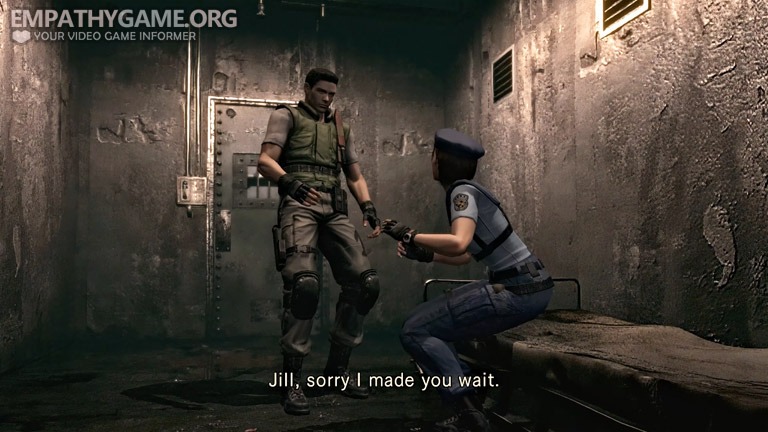
Resident Evil HD Remaster has strong replay value because it turns mansion knowledge into new kinds of pressure. Once the player understands normal routing, the game offers harder modes, different character runs, alternate costumes, speed goals, unlockable weapons, Invisible Enemy mode, Real Survival mode, and One Dangerous Zombie mode.
Real Survival is one of the best examples because it disconnects item boxes. Suddenly, storage becomes local instead of universal. Items placed in one box are not magically available everywhere else. This turns the mansion into a harsher logistics puzzle and forces players to plan routes with far more discipline. Combining that kind of run with self-imposed challenges such as knife-only play can make the mansion terrifying again, even for someone who already knows the layout.
Bosses also change under stricter conditions. Encounters like the Crimson Head Elder, Yawn, and Plant 42 may be manageable on a normal run, but they become real tests when resources are limited, saves are restricted, or the player is relying on minimal weapons. The game’s mechanics reveal more depth when comfort is removed.
One Dangerous Zombie adds a different kind of replay pressure. Forest appears in scripted mansion spots, moves quickly, and carries explosives that kill the player if shot. The result is a mode where instinct becomes dangerous. A veteran player who reacts by firing immediately can destroy themselves. The safest answer is evasion, awareness, and restraint.
These modes work because the mansion is worth mastering. A weak layout would not support this many challenge variations. Resident Evil HD Remaster does because its spaces, routes, enemies, and item economy remain tightly connected.
How It Compares to Modern Resident Evil
Resident Evil HD Remaster can feel harsh after modern remakes. Newer entries provide smoother controls, better aiming, more generous checkpointing, clearer feedback, and faster movement through familiar spaces. Resident Evil 2 Remake keeps more of the series’ deliberate exploration, puzzle routing, and resource pressure while moving to an over-the-shoulder camera, while Resident Evil 3 Remake pushes further toward faster action-horror pacing.
But smoother is not automatically better for this specific kind of horror. Resident Evil HD Remaster uses inconvenience as pressure. The small inventory, fixed cameras, Ink Ribbons, door transitions, and backtracking all contribute to the feeling that the mansion resists the player. Removing too much of that friction would make it a different game.
This is why the remaster remains essential even after newer Resident Evil releases. It shows a version of the series where horror comes from planning, not only presentation. A modern monster can be scary because it chases you. A classic Resident Evil hallway can be scary because you know there is one zombie inside, you have two bullets, no healing item, and a puzzle object taking up the slot you need.
That kind of fear is slower, but it lasts. The mansion stays in the player’s head because every route was learned under pressure.
Final Verdict
Resident Evil HD Remaster is still one of the strongest survival-horror games on PC because it understands how to make systems frightening. Fixed camera angles, tank controls, limited saves, small inventories, item boxes, corpse burning, Crimson Heads, locked doors, puzzle routing, and dangerous backtracking all work together to make the Spencer Mansion feel hostile and memorable.
Its frustrations are real. Inventory trips can become tiring, Chris’s smaller item capacity can feel punishing, door animations slow the pace, fixed cameras are difficult for some newcomers, and the remastered presentation is not perfectly even on modern displays. Players who want smooth action, constant checkpoints, or over-the-shoulder shooting may struggle.
But those rough edges are also part of why the game has lasted. The mansion is brilliantly designed, Jill and Chris offer meaningfully different routes, Lisa Trevor gives the remake a tragic hidden heart, and challenge modes turn familiar spaces into new tests of discipline. For players willing to slow down, plan carefully, and learn the building instead of overpowering it, Resident Evil HD Remaster remains essential classic survival horror.
Resident Evil HD Remaster Pros & Cons
Resident Evil HD Remaster PC System Requirements
OFFICIAL WINDOWS PC REQUIREMENTS:
MINIMUM:
OS: Windows 10
CPU: Intel Core 2 Duo 2.4 GHz / AMD Athlon X2 2.8 GHz or better
RAM: 2 GB
GPU: NVIDIA GeForce GTX 260 / ATI Radeon HD 6790 or better
Monitor: 1024×768 resolution or higher
DirectX: Version 9.0c
Storage: 20 GB available space
Network: Broadband internet connection
Sound Card: DirectSound-compatible sound device with DirectX 9.0c support or higher
Additional: Keyboard and mouse are supported; a genuine Xbox 360 PC-compatible controller or comparable XInput gamepad is recommended. Capcom notes that some high-end integrated graphics chips and modern gaming laptops with discrete GPUs may work but were not officially tested or supported.
RECOMMENDED:
OS: Windows 10
CPU: Intel Core 2 Quad 2.7 GHz / AMD Phenom II X4 3.0 GHz or better
RAM: 4 GB
GPU: NVIDIA GeForce GTX 560 / ATI Radeon HD 6950 or better
Monitor: 1280×720 resolution or higher
DirectX: Version 9.0
Storage: 20 GB available space
Network: Broadband internet connection
Sound Card: DirectSound-compatible sound device with DirectX 9.0c support or higher
Additional: Keyboard and mouse are supported; an Xbox 360 PC-compatible controller or comparable XInput gamepad is recommended.
Additional PC Performance and Setup Notes
- Steam’s official requirements target Windows 10 and DirectX 9.0c, while GOG’s Preservation Program build is verified by GOG for Windows 11.
- The 30 FPS and 60 FPS modes can slow game speed when the PC cannot maintain the selected target; PCGamingWiki documents the variable frame-rate option as a workaround for that behavior.
- Use Steam file verification or a clean GOG reinstall before applying unofficial fixes when the game stops launching after configuration or mod changes.
- Controller play suits the fixed-camera movement and aiming well, but keyboard and mouse are officially supported. Try both original tank controls and the alternate movement scheme before settling on a setup.
- Use 4:3 if you want the original framing, or 16:9 widescreen if you prefer a fuller display with automatic vertical camera scrolling.
- Steam Deck users should confirm the clean Steam installation and controller behavior before adding mods or replacing visual files.
- Large texture and background packs can substantially increase storage use. Back up save data and modified files before installing them.
Official Trailer
Note: This official launch trailer shows the remastered Spencer Mansion atmosphere, fixed-camera survival horror, undead threats, puzzle-heavy exploration, and classic Resident Evil tone, while the written guide adds Steam and GOG ownership details, bundles, Steam Deck support, requirements, mods, and setup guidance.
Frequently Asked Questions
Is Resident Evil HD Remaster worth playing in 2026?
Yes. It remains one of the strongest ways to experience classic Resident Evil because the Spencer Mansion, limited inventory, route planning, puzzles, scarce ammunition, fixed cameras, and Jill/Chris route differences still create unusually focused survival horror. The deliberate pacing and older control philosophy are the main barriers for players used to modern remakes.
Is Resident Evil HD Remaster the original 1996 game?
No. It is the HD remaster of Capcom’s 2002 remake of the 1996 Resident Evil. The 2002 remake rebuilt the original with new environments, story material, enemies, puzzles, and presentation, while the HD release adapted that remake for newer platforms.
Where can I officially buy and download Resident Evil HD Remaster on PC?
The Windows PC version is officially sold through Steam and GOG. Steam provides its normal platform features, while GOG sells a DRM-free version with offline installers and Preservation Program support.
What is the difference between the Steam and GOG versions?
Steam provides Steam Cloud, achievements, trading cards, leaderboards, Family Sharing, file verification, controller integration, and Steam Deck Verified support. GOG focuses on DRM-free ownership, offline installers, optional GOG Galaxy features, and preservation-oriented compatibility maintenance.
Can Resident Evil HD Remaster be played offline?
Yes. GOG explicitly offers the game without activation or an online connection requirement. Steam’s single-player game does not require a continuous internet connection after normal installation and client setup, although Steam Cloud and other online platform services need connectivity.
What does the Resident Evil Deluxe Origins Bundle include?
The Deluxe Origins Bundle combines Resident Evil HD Remaster, Resident Evil 0 HD Remaster, and the Resident Evil 0 costume packs. Steam and GOG both list versions of this bundle, so check existing ownership before buying it.
What does the Resident Evil Classic Bundle on GOG include?
The GOG Classic Bundle combines Resident Evil HD Remaster, Resident Evil 0, and the original Resident Evil, Resident Evil 2, and Resident Evil 3 releases sold by GOG. GOG can adjust eligible bundle pricing around games already owned in the account.
Does Resident Evil HD Remaster have story DLC or a season pass?
No separate paid story expansion, campaign DLC, season pass, or expansion pass is required. The main Resident Evil HD Remaster purchase contains the complete campaign experience.
Is Resident Evil HD Remaster single-player or co-op?
It is a single-player game. There is no co-op campaign, competitive multiplayer, cross-play, or cross-progression system.
Should I choose Jill or Chris first?
Jill is usually the easier first route because she has more inventory space, a lockpick, and support from Barry. Chris has fewer item slots and requires stricter route and inventory planning, although he has more health and a different support relationship with Rebecca.
Should I use original tank controls or alternate controls?
Try both. Tank controls remain consistent through fixed-camera changes because movement is based on the character’s facing direction. Alternate controls feel more immediately familiar, but abrupt camera cuts can make direction changes less predictable.
Does the PC version support both 4:3 and 16:9?
Yes. The remaster supports the classic 4:3 presentation and a 16:9 widescreen mode. In widescreen, the image is cropped and the camera scrolls vertically to reveal areas outside the fixed crop as the character moves.
Does Resident Evil HD Remaster support controllers on PC?
Yes. Steam lists full controller support, and Capcom’s requirements recommend an Xbox 360 PC-compatible or comparable XInput gamepad. Keyboard and mouse are also supported.
Is Resident Evil HD Remaster Steam Deck Verified?
Yes. Valve rates the Steam version Verified. Valve’s compatibility data says the default controls work, controller icons match, interface text is legible, and the default graphics configuration performs well on Steam Deck.
Does Resident Evil HD Remaster run on Windows 11?
GOG marks its Preservation Program version as Windows 11 verified. Steam’s published official requirements still list Windows 10, so Windows 11 users who encounter problems should start with file verification, clean configuration, drivers, and removal of incompatible mods.
Why can the game feel slow when the frame rate drops?
The PC version can tie game speed to the selected 30 FPS or 60 FPS target. If the system cannot maintain that frame rate, movement can slow as well; PCGamingWiki documents the variable frame-rate option as a practical workaround for this behavior.
How much storage does Resident Evil HD Remaster require on PC?
Steam lists 20 GB of available space. Leave additional free space if you plan to use large texture or background restoration mods, which can add several gigabytes beyond the base installation.
Does Resident Evil HD Remaster support mods?
Yes. Nexus Mods hosts visual, texture, interface, gameplay, audio, utility, and other community modifications. There is no official Steam Workshop integration, so read each mod’s version and installation notes and back up saves or replaced files first.
What are Crimson Heads, and can they be prevented?
Some ordinary zombies can later return as faster and more dangerous Crimson Heads. Destroying a zombie’s head or burning its corpse with kerosene prevents that transformation, which makes corpse management part of route planning.
How do Ink Ribbons and saving work?
On the traditional difficulty settings, manual saving at typewriters consumes Ink Ribbons. Because they are limited, saving becomes another resource decision rather than an unlimited checkpoint system. Very Easy is more forgiving for newcomers.
What is Real Survival mode?
Real Survival is an unlockable challenge mode that disconnects item boxes, so items stored in one box are not available from every other box. It turns familiar routes into a stricter logistics and inventory-planning challenge.
What are Invisible Enemy and One Dangerous Zombie modes?
Invisible Enemy hides enemies from view, forcing greater reliance on memory, sound, and positioning. One Dangerous Zombie adds Forest Speyer as a fast explosive threat in scripted mansion locations, and shooting him can immediately kill the player.
Is Resident Evil HD Remaster a good starting point before the modern remakes?
Yes, especially if you want to understand the series’ classic design language: puzzle-box exploration, limited inventory, deliberate combat, save resources, backtracking, and route knowledge. Modern remakes are easier to control, but many of their survival-horror ideas are rooted in this structure.
What are the biggest frustrations for new players?
Fixed cameras, door transitions, tank controls, limited inventory, Ink Ribbon saving, backtracking, and learning the mansion layout can all feel demanding. Those same restrictions are also central to the tension, so players who approach the game as a planning-focused survival puzzle usually adapt more easily.
Still have questions? Check the Capcom Resident Evil HD Remaster support page, Steam Discussions, or the Resident Evil subreddit.
Sources & References
Key factual and technical information in this guide was checked against relevant official and community sources, including:
- Capcom — Resident Evil HD Remaster release summary — verified the remaster’s first release timing, Windows PC launch date, and original platform rollout
- Steam — Resident Evil / biohazard HD REMASTER — verified PC availability, Steam features, Steam Deck rating, system requirements, display/control options, and Steam user reception
- GOG — Resident Evil HD REMASTER — verified DRM-free ownership, offline play, Windows 11 verification, bundles, and Preservation Program status
- PCGamingWiki — Resident Evil HD Remaster — checked the MT Framework engine, Windows release metadata, OpenCritic average, and PC-specific frame-rate behavior
- Metacritic — Resident Evil HD Remaster PC reviews — verified the 82/100 PC Metascore
- GameSpot — Resident Evil HD Review Roundup — cross-checked IGN’s 8/10 review score and the applicable HD Remaster review context
Similar Games Like Resident Evil HD Remaster
- Resident Evil 0 HD Remaster
- Resident Evil Code: Veronica X HD
- Resident Evil 2 Remake
- Resident Evil 7: Biohazard
- Silent Hill 2 (2001)
- Silent Hill






Found something worth playing through DecideGame?
DecideGame.com is an independent gaming project run by Editor Zero. If this guide helped you discover a game, solve a problem, or find useful information, you can support DecideGame.com and help keep new and updated game guides coming.
DecideGame — PC Game Guides, Reviews & Setup Help