
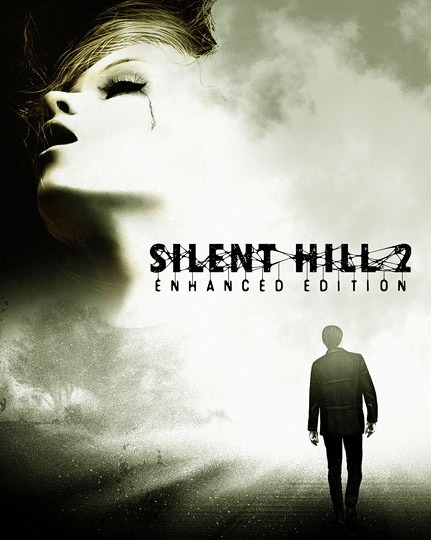
📅 Game released: 2001
Silent Hill 2 (2001) follows James Sunderland into a fog-covered town, and this PC guide explains the original game’s official download status, how to install Enhanced Edition using an owned Windows copy, how to emulate the expanded PS2 version through PCSX2, and which system requirements matter. It also separates the original from the completely different 2024 remake.
 By Editor Zero — independently researched, edited, and maintained.
Last updated: 6 November 2026
Last reviewed: 6 November 2026
Table of Contents
- Quick Facts
- Official PC Stores, Download & Installation
- Silent Hill 2 (2001) Review
- Pros & Cons
- PC System Requirements
- Frequently Asked Questions
- Similar Games
Silent Hill 2 (2001) Quick Facts
- Game: Silent Hill 2 (2001 original); Silent Hill 2: Director’s Cut (original PC/expanded release); Silent Hill 2: Enhanced Edition (unofficial PC enhancement project)
- Developer: Team Silent / Konami Computer Entertainment Tokyo; Windows conversion credited to Creature Labs
- Publisher: Konami
- Genre: Survival Horror, Horror, Puzzle-Solving; psychological horror
- Release: September 25, 2001 (original PS2, North America); Windows PC: December 2, 2002 (North America), February 28, 2003 (Europe / Director’s Cut)
- Platforms: PS2, Xbox, Windows PC; PS3 and Xbox 360 via the later Silent Hill HD Collection
- Modes: Single-player only; no multiplayer or co-op
- Expanded content: Born from a Wish bonus scenario and UFO ending in the expanded PC release and PS2 Greatest Hits / Director’s Cut; absent from the first 2001 PS2 edition
- Recommended PC setup: Original Windows release with Silent Hill 2: Enhanced Edition; alternative: expanded PS2 version through PCSX2
- Steam Deck: No Steam Deck rating for the original game, which has no Steam listing; unofficial PC and emulator configurations are not equivalent to a verified Steam release
- Engine: Original in-house Team Silent technology; no independently verified official engine brand
- Community & support: Enhanced Edition documentation, PCSX2 game compatibility notes
- PC modding: Unofficial; the Enhanced Edition project restores visuals and audio, improves widescreen and controller support, and fixes PC issues; no official Steam Workshop or mod tools
- Metacritic score: 70/100 (original PC release / Director’s Cut); 89/100 (original PS2 release)
- IGN score: 8.4/10 (original PC release); 9/10 (original PS2 release)
- Steam user reception: Not available on Steam (the original game; the separately sold 2024 remake has its own Steam listing)
Official PC Store Status, Download & Installation
👇 Silent Hill 2 (2001) has an original Windows release, but no verified official PC storefront download for new buyers. The best way to play that release on a modern PC is to enhance a copy you legally own; PCSX2 provides a separate route for owners of the PS2 game.
- Original PC availability: The 2002 Windows version is not available for normal new purchases through Steam, GOG, Epic Games Store, or Microsoft Store. Existing retail-disc owners can use their original media; physical second-hand availability varies and is not an official digital purchase.
- Avoid confusing the remake: The Silent Hill 2 game on Steam and the Silent Hill 2 game on GOG are the separate Bloober Team remake released in 2024, not the original 2001 game or a license for its 2002 PC port.
- Best overall original-game PC route: Install an owned North American or European original Windows edition and then use Silent Hill 2: Enhanced Edition. This community-maintained upgrade preserves the original story, camera language, voice performances, and level design while fixing important PC presentation and compatibility problems.
- Enhanced Edition is not the game: Its official setup tool downloads enhancement packages only. It does not include Konami’s copyrighted game files, cannot create a Windows installation from nothing, and requires the original, unmodified PC game to have been installed first.
- Install the original Windows discs: Using your own PC release, insert Disc 1 and run
Setup.exe. The project’s installation instructions recommend a local user folder, copying the movie files to the hard drive when prompted, and declining the original installer’s obsolete DirectX 8.1 installation. - Run the Enhanced Edition setup tool: After the base installation is complete, obtain the installer directly from the project’s Download & Usage page. Run its setup tool and follow the prompts to install the enhancement packages into your existing game. Do not substitute downloads from unrelated sites.
- Modern Windows and original disc protection: The original PC executable uses legacy SecuROM disc protection that modern Windows blocks. Do not repeatedly launch the untouched executable to diagnose this problem; follow the Enhanced Edition project’s supported installation and troubleshooting instructions instead. This guide does not supply bypass utilities or altered game executables.
- Controller and display setup: Use the project’s configuration tool,
SH2EEconfig.exe, in the installed game folder to adjust the features it exposes. Begin with a 16:9 display at your monitor’s native resolution and an Xbox-style controller or other supported gamepad. The project also improves mouse input, but original-era movement and camera behaviour remain part of the game. - Original PC editions: Both the North American 2002 PC release and European 2003 Director’s Cut work with Enhanced Edition. They include the additional Born from a Wish Maria scenario; the fan-made enhancement package does not replace the story with the 2024 remake.
- Best PS2 version to emulate: Choose the expanded PS2 Greatest Hits edition (North America) or Director’s Cut / Platinum edition (Europe) when possible. These include Born from a Wish, while the original 2001 PS2 release only includes the main scenario. The complete 2001 main story is playable on either version.
- Best PS2 emulator: PCSX2 is the preferred emulator for the original PS2 release on Windows. It supports controllers, internal-resolution scaling, virtual memory cards, and per-game settings. Download the emulator from its official download page and review the Silent Hill 2 compatibility notes before applying optional patches.
- Your own PS2 game and BIOS are required: PCSX2 does not distribute Silent Hill 2 or Sony’s proprietary BIOS. Use a backup made from your own legitimately obtained PS2 disc, following PCSX2’s disc-backup instructions, and a BIOS extracted from your own PS2 console according to PCSX2’s BIOS guide.
- Game image responsibility: A personally created PS2 disc backup is commonly stored as an
.isofile. You are responsible for obtaining and using any game image or other required game files lawfully and for checking your local copyright rules. This guide does not provide, search for, recommend, or link to third-party ISO archives, game-file downloads, or BIOS collections; owning a disc does not automatically authorize downloading an unlicensed copy from another source. - Start PCSX2: Install the current PCSX2 build, select the BIOS from your own console during setup, add the directory containing the backup of your own PS2 game, map a controller, and launch Silent Hill 2 from the game list. Keep the default compatibility settings at first; adjust graphics only after establishing that the game runs normally.
 Get Silent Hill 2: Enhanced Edition from the Project Website
Download PCSX2 from the Official Emulator Website

Silent Hill 2 (2001) Review
A haunting mystery where ordinary places carry more fear than the monsters.
The premise of Silent Hill 2 is impossible, but the journey begins in a strangely ordinary way. James Sunderland receives a letter from Mary, his wife, whom he believes died three years earlier. She asks him to meet her in Silent Hill, a lakeside town they once visited together. James goes looking for an explanation and instead finds deserted streets, locked buildings, and creatures that seem disconnected from any recognizable reality. Team Silent’s town feels like more than a collection of scares. Searching an apartment, studying a map, or listening to an uncomfortable conversation can carry as much weight as an encounter with a monster.
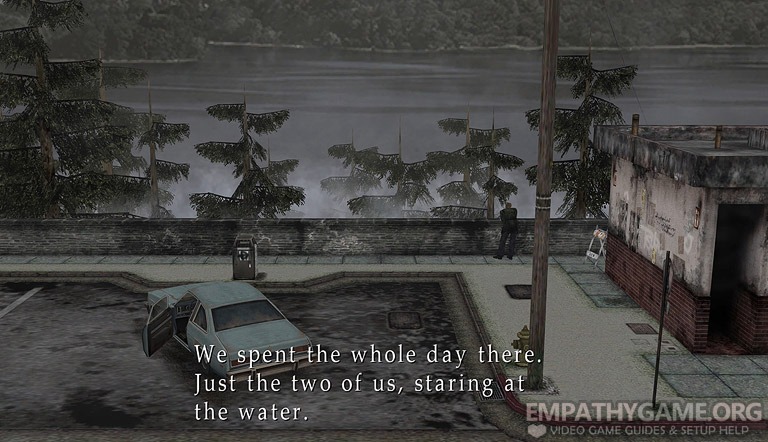
It is also a game that asks for patience. Fighting is awkward, the camera sometimes complicates basic movement, and progress can stall over one overlooked door or object. Atmosphere does not automatically excuse these frustrations. Yet the slower rhythm gives the environments and characters room to make an impression. The question is less whether James can survive the next corridor than what he might learn by entering it.
A Town That Feels Connected, Even When Every Road Is Blocked
Silent Hill initially appears to offer a whole town to explore. In practice, damaged streets, locked gates, and inaccessible buildings guide James along a deliberate route. What is interesting is how rarely that guidance feels like a conventional level boundary. Streets lead into apartment blocks, corridors open onto familiar stairwells, and later areas seem to belong to the same troubled place. That ordinary geography makes the impossible events more convincing.
Wood Side Apartments establishes the central rhythm: consult the map, try doors, examine rooms, find an object, and reconsider where it might belong. Brookhaven Hospital develops that rhythm through denser floors of patient rooms and connecting corridors. James updates his map with blocked paths, while his tendency to glance toward items offers a subtle hint without placing a glowing marker over every discovery. These details make navigation feel like an investigation rather than a march between objectives.
The town rewards looking beyond those objectives. An optional detour near the Historical Society, for instance, can lead to a disturbing roadside scene that many players could walk past. Such discoveries suggest unease beyond James’s immediate task. There is a cost to that freedom, though. Too many doors are permanently locked, and missing one required object can mean another circuit through similar-looking rooms. After a while, exploration risks becoming a process of checking every wall and handle. The layout is convincing; the actual searching is not always enjoyable.
Puzzles Give Mundane Objects an Uncomfortable Logic
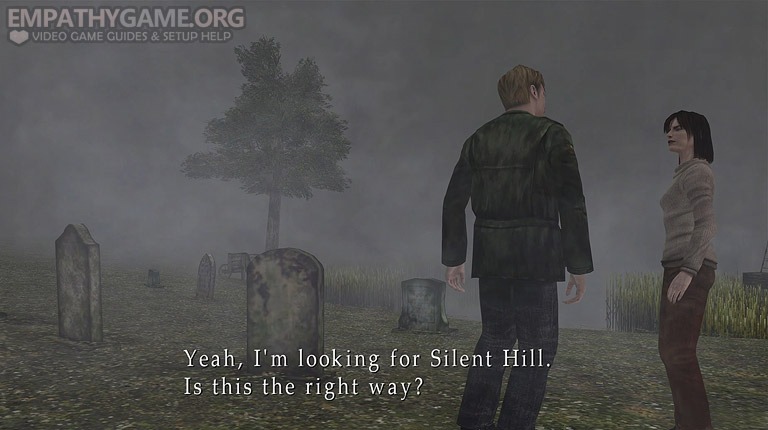
The puzzles work best when they make a believable space behave according to rules that are just slightly wrong. Some tasks are practical: find the missing object, open a route, or use something discovered elsewhere in the building. Others involve written riddles, symbols, and arrangements that demand interpretation. Familiar tasks make the environment feel inhabited; stranger ones suggest that ordinary logic may not be enough.
Separately adjustable Action and Riddle difficulties are especially welcome here. Someone interested in the story but less interested in deciphering elaborate clues does not have to lower the combat challenge as well. Higher Riddle settings, meanwhile, change what some puzzles ask of the player, making close reading and deduction more important. The challenge is not simply finding an item; it is figuring out what the item or clue means.
Consider the locked briefcase in Lake View Hotel. James needs to work from a clue and an obscured combination rather than enter a universal code learned from a previous run. Its four-letter solution can vary, so remembering the steps is more useful than memorizing the answer. That preserves interest on replay. Still, the puzzles do not always communicate their reasoning equally well. A difficult solution feels satisfying when the clues eventually connect. When they remain obscure, another trip through several empty corridors can feel less like investigation and more like punishment for missing the designer’s intended association.
Combat Makes James Vulnerable Without Becoming Very Interesting
James handles weapons like somebody who would rather not be using them. His first makeshift weapon is a wooden plank; later he finds a steel pipe, handgun, shotgun, and other means of defending himself. Melee strikes are slow to recover, aiming takes commitment, and a fallen enemy may still need a finishing blow. It suits the character, but suitability is not the same as satisfying play. The most useful combat decision is often whether the encounter needs to happen at all.
Outdoors, ignoring a Lying Figure and keeping moving may be safer than wasting ammunition or health. In a narrow indoor passage, that choice becomes harder because enemies and changing camera angles restrict the available space. Mannequins and nurses have memorable, unsettling shapes, but repetition gradually makes their behaviour easier to predict. Supplies can also accumulate enough that ordinary encounters lose much of their resource pressure. The game presents James as poorly equipped for this nightmare, yet the inventory does not always leave the player feeling equally helpless.
Hard Action difficulty exposes a more specific weakness. Firing the shotgun can lock James into a recovery long enough for an opponent to attack again before he can retreat. What felt merely clumsy on Normal becomes genuinely punishing when an enemy recovers faster than James does. Carrying plenty of ammunition does little to solve a timing problem. Choosing when to fire builds tension; being unable to respond afterward feels arbitrary.
The bosses make a stronger impression through their roles in the story and their visual presence than through mechanically varied fights. Pyramid Head is frightening long before a confrontation becomes a matter of attack patterns. That is revealing of the combat as a whole. The monsters contribute enormously to the atmosphere, but fighting them is rarely the best part of encountering them. The game is more accomplished at making an enemy feel wrong than at making repeated exchanges with that enemy interesting.
Camera and Movement Can Either Support or Break the Tension
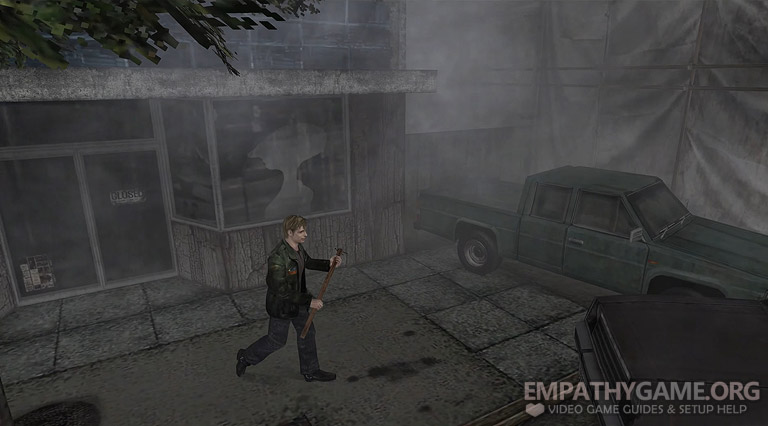
The camera frequently refuses to show everything. It can leave James isolated in a large room, hide the far end of a hallway, or suggest a threat somewhere beyond the visible frame. The player hears movement, checks the radio, and tries to interpret the hidden space. A permanently convenient over-the-shoulder perspective would change that experience substantially.
But the same framing becomes frustrating when James must move quickly. The default 3D, or tank-style, controls are relative to the direction he faces, so pressing forward keeps him moving forward even after the camera cuts. Optional 2D controls move him relative to the screen and can make a sudden turn or winding chase corridor easier to handle. Neither option is universally superior. With 2D movement, a camera change can alter the direction associated with an input; with 3D movement, steering around bends under pressure may feel unnecessarily awkward.
This distinction matters because uncertainty about a monster is different from uncertainty about the controls. The first can build fear. The second can break concentration just when the game needs it most. Familiarity makes James easier to manage, and there is a defensible artistic reason for the unusual angles. Still, some of the difficulty comes from the interface between the player and the scene, not from anything threatening inside the scene.
The Characters Make the Mystery More Disturbing Than Its Monsters
James’s encounters with Angela, Eddie, Laura, and Maria complicate the search rather than neatly advancing it. Each person seems to understand Silent Hill differently. Angela’s guarded responses suggest pain she cannot easily discuss. Eddie’s defensiveness exposes how deeply other people’s judgment affects him. Laura’s familiarity with Mary introduces questions James cannot answer. These conversations matter because they change how the town is understood, not because they hand over a convenient explanation for the next location.
Maria unsettles James in another way. She resembles Mary closely, yet her manner is different enough to make that familiarity uncomfortable. The game does not hurry to resolve the contradiction. Instead, pauses, evasions, and strained exchanges leave room for the player to draw connections. Themes of illness, grief, guilt, and abuse emerge through people who struggle to speak openly about what has happened to them. It is uncomfortable material, handled with more restraint than the game’s creature designs might lead someone to expect.
The original voice acting does not always meet the writing’s ambitions. Some lines sound detached when they need emotional precision, and others simply land awkwardly. Not every unusual delivery should be excused as intentional strangeness. At their best, the hesitations make people sound unable to communicate with one another. At their weakest, they remind us that this is an older production struggling to express difficult scenes.
Sound Creates Threats That Do Not Need to Appear
Much of the visual horror comes from limits on what James can see. Fog reduces streets to a few metres of pavement, while his flashlight catches peeling surfaces, stained tiles, and pieces of a room without revealing the whole space. Even the monsters often register first as odd silhouettes or movements. Its effect comes less from detail than from struggling to identify what stands ahead.
Sound is even more important. The radio’s static warns James about nearby creatures, but it does not provide a clear position or a safe route past them. It helps without removing uncertainty. Akira Yamaoka’s music works in a different register, shifting between industrial noise and gentle, melancholy passages. Those quieter pieces matter. They allow Silent Hill to feel like somewhere associated with loss rather than merely a place full of things trying to kill James.
Then there are the sounds that offer no practical information at all. In the Toluca Prison area, hoofbeat-like noises suggest movement without revealing an obvious source. A sudden scream during a bathroom encounter can be startling precisely because there is no enemy to aim at and no immediate task that explains it away. The natural response is to stop and listen. An enemy can be fought or escaped; an unexplained noise lingers after the room is empty.
This restraint helps explain Pyramid Head’s effectiveness too. A glimpse or an approaching sound can create more tension than the confrontation itself. The game understands that showing a threat repeatedly makes it familiar. Sometimes the stronger decision is to leave the player with a question and let the next quiet corridor do the work.
Repeat Playthroughs Reveal Different Kinds of Uncertainty
Progression is built around knowledge rather than character growth. James does not gain levels, choose skills, or develop a new combat style. He finds access routes, solves problems, survives encounters, and learns information that changes the meaning of things he has already seen. Once a major part of the mystery is understood, returning cannot create the same uncertainty.
There are still reasons to return. Several endings take account of James’s behaviour across the story instead of offering one obvious final choice. His attention to certain personal items, treatment of Maria, and apparent concern for his own well-being can affect the outcome. These systems invite a different kind of replay, one focused on noticing choices that did not initially look like choices. Subsequent runs also offer unusual endings and special equipment such as the Chainsaw. Changing puzzle combinations and higher Riddle difficulty preserve some problem-solving, although the streets and enemy placements inevitably become more familiar.
The expanded releases include Born from a Wish, a short scenario that follows Maria through Baldwin Mansion and the surrounding area. Its most interesting contribution is not simply another piece of narrative background. Maria lacks James’s radio and flashlight, so the warning pattern established by the main game no longer applies. There are still sounds to listen for and camera angles to interpret, but an encounter may begin without the familiar static announcing it. In such a brief scenario, removing two ordinary tools changes the feeling of exploration surprisingly well. Its story has more resonance alongside James’s journey, though its limited length prevents it from becoming an equally substantial adventure.
Final Verdict
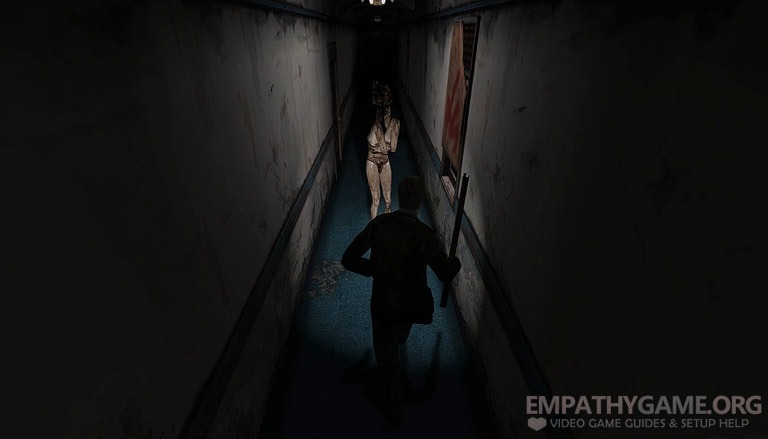
The original Silent Hill 2 is not a game whose faults disappear once its themes are appreciated. Combat remains shallow, animation recovery can feel unfair on higher difficulty, and the camera and controls sometimes create frustration where the scene itself should be creating fear. Certain riddles require too much guesswork, and not every performance conveys its material convincingly. Those weaknesses affect long stretches of the journey.
What makes the game endure is the way its stronger ideas work together. The town’s credible geography makes its impossible events more intrusive. Maps and incidental discoveries encourage attention, while fog and sound make the player question spaces that appear empty. Its conversations gradually change the meaning of those spaces, giving the horror an emotional dimension that does not depend on constant combat. Alternative endings and Born from a Wish offer reasons to return, even without the first journey’s uncertainty.
Players who prefer precise fighting, direct navigation, and prompt explanations may struggle with the pace and older design. Those who enjoy patient exploration and stories that leave difficult feelings unresolved have something far more unusual to discover. Silent Hill 2 (2001) is at its most convincing when James has no immediate danger to overcome and the player still hesitates before opening another door. That is the kind of fear its mechanics serve best, even when those mechanics are far from perfect.
Silent Hill 2 (2001) Pros & Cons
- Pro: Unusually focused psychological horror story built around unsettling environments, sound, and character encounters
- Pro: Distinctive fog, fixed cinematic camera angles, and Akira Yamaoka’s atmospheric soundtrack
- Pro: Exploration and puzzles offer more tension and texture than straightforward combat
- Pro: Enhanced Edition meaningfully improves the original PC version’s widescreen, audio, controls, and presentation
- Pro: Expanded PC and PS2 editions add the Maria-focused Born from a Wish scenario
- Con: Deliberately awkward melee combat and dated movement may frustrate action-focused players
- Con: No normal official storefront purchase for the original Windows release
- Con: Original PC disc protection and PS2 emulation prerequisites add setup complexity
Silent Hill 2 (2001) PC System Requirements
Important: The original 2002 Windows release has historical PC specifications, but those old numbers do not describe reliable operation on modern Windows. For a practical original-game setup, the Silent Hill 2: Enhanced Edition project’s published hardware guidance is more useful. PCSX2 has its own separate emulator requirements. None of the requirements below should be confused with those of the much newer 2024 remake.
ORIGINAL SILENT HILL 2 PC — HISTORICAL RETAIL-ERA REQUIREMENTS
MINIMUM:
OS: Windows 98 / Me / 2000 / XP (period-era supported systems)
CPU: 700 MHz Pentium / Athlon or equivalent
RAM: 64 MB
GPU: DirectX 8.1-compatible 3D card with 32 MB video memory
DirectX: 8.1
Storage: Approximately 1.8 GB
Optical Drive: 4× CD-ROM drive
RECOMMENDED (HISTORICAL):
CPU: 1 GHz Pentium / Athlon or equivalent
RAM: 128 MB
GPU: 3D graphics card with 64 MB video memory
Optical Drive: 8× CD-ROM drive
Controller: Gamepad recommended
SILENT HILL 2: ENHANCED EDITION — PROJECT-PUBLISHED PC REQUIREMENTS
MINIMUM:
OS: Windows 7
CPU: Processor newer than approximately eight years (project’s relative guideline)
RAM: 4 GB
GPU: Dedicated graphics card newer than approximately eight years, with 2 GB VRAM
Storage: Approximately 10 GB for the base game and Enhanced Edition files
RECOMMENDED:
OS: Windows 10
CPU: Processor newer than approximately five years (project’s relative guideline)
RAM: 4 GB
GPU: Dedicated graphics card newer than approximately five years, with 4 GB VRAM
Storage: Approximately 10 GB for the base game and Enhanced Edition files
Target: Project guidance estimates these tiers around 1080p; higher resolutions and heavy anti-aliasing can demand more GPU performance
PCSX2 — EMULATOR HOST-PC REQUIREMENTS, NOT ORIGINAL GAME REQUIREMENTS
MINIMUM:
OS: Supported Windows 10 release (64-bit; see current PCSX2 documentation)
CPU: x86-64 with SSE4.1; approximately 2,000+ PassMark single-thread score; four physical cores with SMT
RAM: 8 GB
GPU: Vulkan 1.1 / Direct3D 11 / OpenGL 3.3-capable graphics; approximately 600+ PassMark G3D score
MODERATE / UPSCALING GUIDANCE:
OS: Windows 11
CPU: x86-64 with AVX2; approximately 2,500+ PassMark single-thread score; six physical cores
RAM: 16 GB
GPU: Vulkan 1.3 / Direct3D 12 / OpenGL 4.6-capable graphics; approximately 6,000+ PassMark G3D score and 4 GB VRAM
Compatibility: The PS2 version is listed as playable in PCSX2’s game-specific compatibility documentation; actual performance depends on the computer, emulator settings, and game revision.
Additional PC Performance & Setup Notes
Restoring real widescreen on the original PC release: The unmodified original was designed around 4:3 displays. Instead of stretching the image, use the Silent Hill 2: Enhanced Edition setup tool to add the project’s actual 16:9 camera, framing, and interface fixes to an owned Windows installation. Open SH2EEconfig.exe in the game directory after installation, configure the project’s display options, and launch the enhanced game at your monitor’s native 16:9 resolution. The project also adjusts the framing of in-game cutscenes to avoid unintended objects or idle characters appearing at the edges. Unusual ultrawide ratios may still expose visual anomalies; 4:3 remains a legitimate option for the original framing.
PS2 widescreen is a different problem: PCSX2’s display aspect-ratio option alone can stretch a 4:3 picture rather than expand the intended camera view. PCSX2 includes a widescreen-patch system; only enable a game-specific patch when PCSX2 lists one for your exact disc revision. The Silent Hill 2 game notes warn that its widescreen patch can leave textures missing in some scenes, so disabling that patch and playing in the original 4:3 ratio is the safer visual fallback. Raising internal resolution improves clarity but does not, by itself, create correct 16:9 gameplay.
Preserve the original horror pacing: Use PCSX2’s default emulation speed and test the game before adding high-frame-rate patches or aggressive graphics changes. A modern controller makes movement more convenient, but James’s deliberate turning, camera transitions, and vulnerable combat are part of the original design. For PC Enhanced Edition, its optional high-frame-rate features are project-specific and should not be assumed equivalent to emulator frame-rate hacks.
If the original PC game fails to start: Work through the Enhanced Edition troubleshooting page first, checking installation location, graphics configuration, project files, and controller setup. If the emulated PS2 version stalls or displays incorrectly, compare your disc revision with PCSX2’s game-specific notes and return to default graphics settings before experimenting with fixes.
Official Trailer
Frequently Asked Questions
What difficulty settings should I choose for my first playthrough of Silent Hill 2 (2001)?
Normal Action and Normal Riddle are good starting choices. Action difficulty controls enemy strength and combat challenge, while Riddle difficulty changes puzzle clues and solutions. Choose Easy Action if you mainly want to experience James Sunderland’s story without difficult fights, or Easy Riddle if you prefer more straightforward puzzles.
Can I change the Action or Riddle difficulty after starting the original Silent Hill 2?
No. In the original 2001 game and its PC conversion, both difficulty settings are selected when beginning a new scenario and cannot be changed during that playthrough. The 2024 remake handles difficulty differently, so advice about changing its combat settings does not apply to the original.
Do I need to play Silent Hill 1 before Silent Hill 2?
No. Silent Hill 2 follows James Sunderland and tells a largely self-contained story with different central characters from the first game. Playing Silent Hill (1999) can deepen your understanding of the town and the series’ atmosphere, but it is not necessary to follow James’s story.
Is Silent Hill 2 (2001) an open-world game?
No. Certain streets and buildings allow exploration, but progression follows a structured sequence of locations such as Wood Side Apartments, Brookhaven Hospital, and Lakeview Hotel. Some doors and roads remain permanently inaccessible, while others open after finding the appropriate keys or completing puzzles.
What do the red markings on James’s map mean?
James automatically annotates collected maps with useful information about explored locations. Red squiggly lines indicate blocked doors or passages, while other markings identify accessible routes, important locations, and save points. Checking the map regularly is one of the best ways to avoid repeatedly searching dead ends. In dark areas, James may need his flashlight to read it.
What does the radio static mean, and should I turn off the flashlight?
The portable radio produces static when monsters are nearby, generally becoming louder as they approach. Both the radio noise and flashlight can attract enemy attention, so switching them off may help James avoid certain encounters. However, the flashlight is essential for searching many dark environments and interacting with some objects.
Do I need to kill every monster in Silent Hill 2?
No. Many ordinary enemies can be avoided, especially while exploring the town’s streets. Running past monsters can conserve handgun ammunition and healing supplies for more dangerous encounters. When an enemy is knocked down, a finishing attack may be necessary to prevent it from getting back up.
How can I check James Sunderland’s health?
Open the inventory and examine the health-status indicator, which becomes increasingly red as James takes damage. Health Drinks restore smaller amounts of health, while First-Aid Kits and Ampoules provide stronger recovery. The original PC version also displays a blinking warning icon when James is critically injured.
How do I save Silent Hill 2 on PC compared with PS2?
The original PS2 version uses distinctive red save points found throughout the game. The 2002 Windows version also allows saving from the pause menu in most situations, with F5 providing a quick-save shortcut and F9 loading that quick-save by default. The PC quick-save slot is overwritten when used again, and saving is unavailable during boss battles. PCSX2 emulates the PS2 version’s original save-point system.
Can I disable tank controls in the original Silent Hill 2?
Yes. The original game offers Rotational (3D) movement, commonly called tank controls, and Directional (2D) movement, which makes James move relative to the camera’s viewpoint. Try Directional movement if turning feels uncomfortable, although camera transitions may take practice. Enhanced Edition’s improved mouse-controlled character turning requires Rotational movement.
How long does Silent Hill 2 (2001) take to complete?
A first playthrough of the original main story generally takes around 6–10 hours, depending on exploration, puzzle difficulty, and familiarity with older survival horror controls. Learning the town’s layout and solving puzzles without hints can increase that time. The additional Born from a Wish scenario is much shorter, usually taking around an hour.
What is Born from a Wish, and when should I play it?
Born from a Wish is a short bonus scenario starring Maria rather than James Sunderland. It explores events connected to the main story through additional locations, encounters, and puzzles. Although it can be selected separately in expanded editions, completing James’s main scenario first is recommended to preserve the intended mystery and character introductions.
How many endings does the original Silent Hill 2 have?
The original 2001 PS2 release contains five endings. The expanded Greatest Hits, Director’s Cut, and original Windows versions contain six, including the additional UFO ending. Some endings are available during the first playthrough, while others require subsequent runs or special conditions. Born from a Wish has its own fixed conclusion and is not counted among the six main-scenario endings.
Do choices affect which ending you get in Silent Hill 2?
Yes, but the original game does not use a conventional dialogue-choice system. Several endings are influenced by James’s behavior throughout the journey, including particular interactions, his condition, and how he responds to certain characters. The game does not openly display an ending meter, making it possible to reach different conclusions without realizing which actions contributed to them.
Does Silent Hill 2 (2001) have New Game Plus or unlockable weapons?
Yes, although it does not use the modern New Game Plus label. After completing the game, starting another playthrough using the completed game’s progress unlocks opportunities to find additional weapons, special items, and secret endings. Bonus equipment such as the Chainsaw and Hyper Spray has its own availability conditions. Ordinary weapons and ammunition are not simply carried over as a complete inventory.
Can Silent Hill 2: Enhanced Edition run at 60 FPS?
Yes. The community-developed Enhanced Edition includes a 60 FPS mode with fixes for numerous animation, physics, sound, and gameplay-timing issues associated with higher frame rates. This is an enhancement to the original Windows version, not a feature that should be assumed to work identically through PCSX2 or an unmodified retail installation.
Is Silent Hill HD Collection the same as the original Silent Hill 2?
Not exactly. Silent Hill HD Collection is a later PS3 and Xbox 360 remaster that changes aspects of the visual and audio presentation and offers a choice between original and rerecorded English voice performances for Silent Hill 2. It has also been criticized for technical and presentation differences from the original releases. For players prioritizing the original presentation on PC, the original Windows game with Enhanced Edition or an appropriately owned PS2 release through PCSX2 is generally preferable.
Still have questions? Check the Silent Hill Reddit community for gameplay and version discussions, the Silent Hill 2: Enhanced Edition troubleshooting guide for original PC setup problems, or the PCSX2 Silent Hill 2 compatibility page for emulator-specific information.
Sources & References
Key factual and technical information in this guide was checked against the following official project documentation and established game-history references:
- Silent Hill 2: Enhanced Edition — Download & Usage — supported original PC editions, base-game prerequisites, disc installation, and official enhancement setup
- Silent Hill 2: Enhanced Edition — About the Project — technical improvements, widescreen restoration, and the project’s published hardware guidance
- PCSX2 — Dumping Discs — creating backups from physical PS2 game discs rather than using unverified game-image sources
- PCSX2 — Dumping BIOS — the requirement for a BIOS obtained from a personally owned PS2 console
- PCSX2 — System Requirements — current emulator-specific minimum and moderate hardware guidelines
- Silent Hill Memories — Silent Hill 2 Versions — original versus expanded editions, regional release history, and archived Windows specifications
- PCGamingWiki — Silent Hill 2: Director’s Cut — original Windows release identification and PC-specific technical context, explicitly distinguished from the remake
Similar Games Like Silent Hill 2 (2001)
- Silent Hill
- Silent Hill f
- Resident Evil 1 HD Remaster
- Haunting Ground
- Resident Evil Code: Veronica X HD
- Resident Evil 2 Remake
Found something worth playing through DecideGame?
DecideGame.com is an independent gaming project run by Editor Zero. If this guide helped you discover a game, solve a problem, or find useful information, you can support DecideGame.com and help keep new and updated game guides coming.
DecideGame — PC Game Guides, Reviews & Setup Help