
📅 Game released: 2006
The Godfather: The Game follows a customizable mobster through 1940s–1950s New York as he earns Corleone respect by extorting businesses, taking rackets, and challenging rival families. This PC guide explains the original Windows edition’s official download status and lawful ownership options, preserved system requirements, and practical compatibility steps for newer Windows versions, including movie playback, widescreen display, and controller setup.
 By Editor Zero — independently researched, edited, and maintained.
Last updated: 9 November 2026
Last reviewed: 9 November 2026
Table of Contents
- Quick Facts
- Official PC Stores, Download & Installation
- The Godfather Review
- Pros & Cons
- PC System Requirements
- Frequently Asked Questions
- Similar Games
The Godfather Quick Facts
- Game: The Godfather / The Godfather: The Game (original Windows edition)
- Developer: EA Redwood Shores; Windows port by Headgate Studios
- Publisher: Electronic Arts
- Genre: Action-Adventure, Open World, Third-Person Shooter
- Release: March 21, 2006 (North America; Windows PC, PS2 and Xbox)
- Platforms: Windows PC, PS2, Xbox, PSP, Xbox 360, Wii, PS3
- Version note: Original Windows game; Mob Wars is a separate PSP version, Blackhand Edition is on Wii, and The Don’s Edition is on PS3
- Steam Deck: Unsupported (Valve rating for the historical Steam release; no new PC purchase option)
- Engine: RenderWare
- Community: Official EA The Godfather page, Steam Discussions
- PC modding: Unofficial community mods at Nexus Mods, plus SilentPatchGF, ThirteenAG’s Widescreen Fix, and other independent tools; no official mod tools or Workshop
- Metacritic score: 72/100 (original Windows PC edition)
- IGN score: 7.9/10 (original PC, PS2 and Xbox review)
- GameSpot score: 8.1/10 (original PC, PS2 and Xbox review)
- Steam user reception: Positive overall (historical Steam reviews; the game is no longer sold to new buyers)
Official PC Store Status, Download & Installation
👇 Use the notes below to understand the current official PC availability status for The Godfather and avoid unsafe or unofficial acquisition options.
- Current PC availability: No verified official PC storefront currently offers the 2006 Windows version to new buyers. EA retains an official page for The Godfather games, but it does not provide a current PC purchase option.
- Historical Steam release: The Godfather has Steam App ID 24820 and was previously distributed through Steam. Its Steam metadata and installation depots remain recorded, but the game has no active new-buyer purchase offer.
- Existing Steam owners: If The Godfather is already attached to your Steam account, use your normal Steam Library rather than purchasing an unverified third-party key. Historical ownership is different from the game’s present store availability.
- GOG status: The game is not sold through GOG. It appears on GOG Dreamlist, where users can vote for a future preservation release; a Dreamlist entry is not a purchasable GOG edition.
- Original retail copy: A lawfully obtained original Windows retail copy remains an ownership option for players who do not already hold a digital license. Check the condition and completeness of any second-hand copy before purchase because modern compatibility is not guaranteed.
- Retail DRM: The original Windows retail release uses SafeDisc 4.60. On modern Windows, this protection can prevent an otherwise legally owned disc installation from launching. A retail product key is not a substitute for an active EA app entitlement, and SilentPatch does not remove SafeDisc.
- Modern compatibility: The original game also has a separate startup/video problem related to its old DirectDraw movie player. The unofficial SilentPatch project addresses that issue and adds several quality-of-life improvements, but it does not include the game or provide a license.
- Console editions: Buying Mob Wars, Blackhand Edition, The Don’s Edition, or another console copy does not provide Windows ownership. These versions should be treated as separate releases rather than PC upgrades.

The Godfather Review
Extortion and territorial control turn a familiar crime sandbox into a convincing Mafia power climb.
The Godfather is at its best when a single storefront tells the whole story of the game. A shop owner refuses to pay protection, intimidation becomes a negotiation, a hidden racket expands the target, rival gangsters arrive, and the money earned from taking control feeds back into weapons, safehouses and the next assault. That chain of cause and reward is what separates EA’s adaptation from a straightforward movie tie-in built around missions from the film.
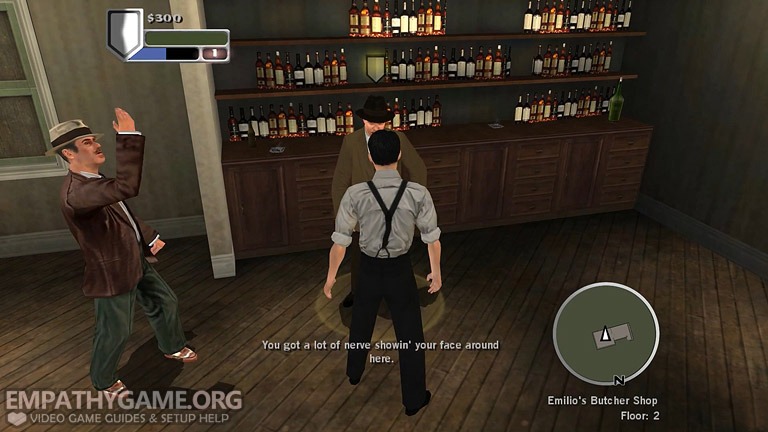
The custom protagonist begins as an outsider to the Corleone family and gradually becomes part of its machinery, working around familiar events while building a criminal empire of his own. Shooting, driving, AI and mission design all show their mid-2000s origins, and the open world repeats itself more than its size initially suggests. Yet the central fantasy remains unusually coherent: intimidation creates income, income creates power, and power changes how aggressively the city can be taken apart. For players who value territory systems and Mafia role-playing more than polished modern gunplay, that structure still gives The Godfather a distinct identity.
Extortion Makes Every Storefront a Small Negotiation
Extortion is the game’s defining mechanic because taking a business is not simply a capture animation. Each owner has a pressure meter with a point at which they will submit and a higher breaking point where intimidation goes too far. Smashing property, drawing a weapon, grabbing the owner or threatening people nearby can all increase pressure, but the profitable approach is not always the most violent one. Individual owners have particular weaknesses, so discovering which form of intimidation frightens someone most can raise the payout more efficiently than indiscriminate brutality.
That gives a routine activity more texture than the map icon suggests. The player is encouraged to read the room, test reactions and stop at the right moment rather than treating every merchant as another enemy with a health bar. Later progression can also make less violent negotiations easier, so rising through the criminal hierarchy changes more than combat statistics. The fantasy is not simply that the protagonist becomes harder to kill; he becomes somebody whose reputation can do part of the work for him.
Many businesses also conceal rackets, turning a street-level shakedown into a layered takeover. Warehouses, transport hubs and family compounds escalate the same idea into larger assaults against the Tattaglias, Straccis, Cuneos and Barzinis. The system works because these activities are economically connected: property produces income, stronger holdings weaken rival influence, and money can be redirected into safer movement around the city or better weapons. It feels less like clearing unrelated side activities and more like building an organisation one block at a time.
The weakness is repetition. Storefronts, back rooms and hostile compounds recycle architecture heavily, and the same intimidation patterns become easier to solve once their rules are understood. The city partly compensates by letting many interiors connect directly to the street without a loading transition, which gives the empire a pleasing physical continuity. Walking from pavement to shop floor to back-room racket makes each property feel embedded in the city even when the room itself looks suspiciously familiar.
BlackHand Combat Is Crude, Physical and Surprisingly Expressive
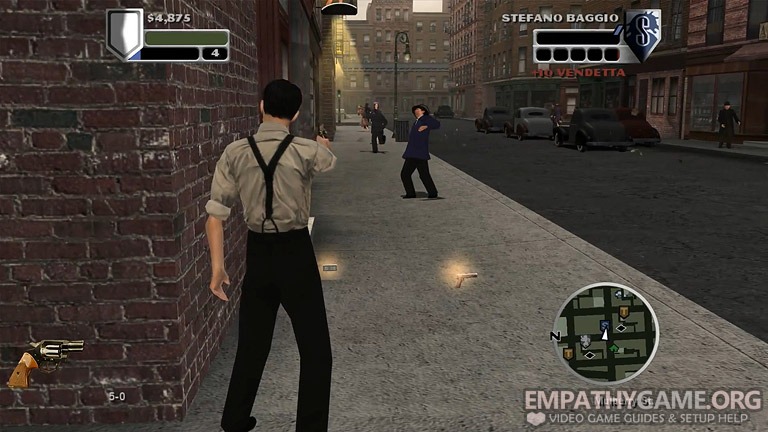
The BlackHand melee system gives violence a tactile quality that standard lock-on shooting cannot match. Enemies can be grabbed, punched, shoved into walls, choked, thrown or finished with environmental attacks. That matters because intimidation and combat share the same physical language: the actions used to pressure a shopkeeper are also the actions used when a negotiation becomes a fight. The result is a sandbox where close-range violence feels like part of the criminal role rather than a separate brawling minigame.
Gunplay is simpler but has useful layers. Lock-on targeting keeps firefights manageable, cover provides basic protection, and free aim allows more deliberate shots. Weapons range from revolvers and shotguns to tommy guns, Molotov cocktails and dynamite, while black-market dealers sell upgrades that noticeably increase lethality. Execution Styles add another reason to vary tactics by rewarding specific finishing methods with Respect. They can become checklist-like for completionists, but they also stop the combat system from collapsing entirely into repeated center-mass shooting.
The sandbox occasionally rewards uglier improvisation. A car is not only transport; it can be used to thin guards outside a warehouse or compound before the shooting starts. These possibilities are small rather than evidence of a deep systemic simulation, but they make the rough open world more flexible than its mission scripting first implies.
Its age remains difficult to ignore. Movement is stiff, animation transitions can feel heavy, and enemy AI alternates between sensible use of cover and baffling exposure. Driving is responsive enough to support chases and escapes but lacks the nuance that would make simply cruising the city a major pleasure. The combat is therefore carried less by mechanical precision than by the freedom to combine guns, grapples, executions, vehicles and scenery in ways that suit the moment.
Territory Feels Powerful, but the Mob War Is Less Strategic Than It Sounds
Taking rival property creates one of the game’s strongest long-term rewards: the map increasingly reflects Corleone control, weekly income rises, and previously dangerous areas become part of the protagonist’s expanding network. That visible growth gives optional content a purpose beyond completion percentage. A warehouse matters because it belongs to a rival family; a business matters because it generates money; a compound matters because destroying it represents a major step in breaking a family’s hold on the city.
The strategic illusion has limits. Vendetta can escalate into a mob war, making rival soldiers openly hostile and putting Corleone-owned businesses at risk of bombing. Losing income temporarily gives retaliation some bite, but the system never becomes a true territorial tug-of-war in which conquered properties are constantly captured back and forth. Ending a mob war is also relatively mechanical: the conflict can be settled by striking a rival business or bribing an FBI agent. The result is satisfying conquest without much defensive strategy once a property has been claimed.
That imbalance helps explain why the empire-building loop is more compelling in its first half than its last. Early on, every new business changes the player’s finances and sense of reach. Later, the map contains more familiar interiors, stronger weapons reduce resistance, and the challenge shifts from discovering how the systems work to methodically finishing them. The fantasy of domination keeps growing while the moment-to-moment decisions become less surprising.
The Film Story Works Best as a Parallel Criminal Career
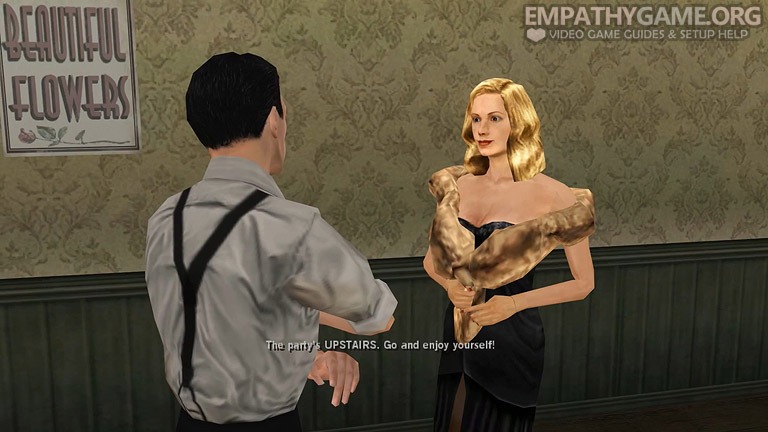
The narrative avoids the obvious mistake of asking the player to replace Michael Corleone. Instead, the created mobster moves alongside the film’s story, working for figures such as Luca Brasi, Sonny Corleone and Tom Hagen while appearing around events involving Don Vito and the family’s struggle for survival. The setup is contrived at times—one previously unknown soldier seems to be standing just outside an improbable number of famous moments—but it gives the campaign room to borrow the film’s dramatic weight without stripping the player of an identity.
That side-door structure also suits the gameplay. The protagonist can participate in familiar operations, then leave the story behind for hours to extort businesses, rob banks, perform contract hits or dismantle rival holdings without making the film narrative feel completely derailed. The movie provides a spine; the criminal sandbox supplies the personal career built around it.
Presentation does much of the remaining work. James Caan, Robert Duvall and Marlon Brando contributed voice performances, while period cars, suits, interiors and recognizable Corleone locations give the licensed material a specificity that a generic gangster city would lack. The film score adds immediate identity, although the limited musical rotation becomes conspicuous during long stretches of driving. Without a varied in-car radio, the same dramatic themes can return often enough that music written to make scenes feel important begins to lose some of its force.
New York is convincing as a stage for Mafia business rather than as a living-city simulation. Little Italy, Brooklyn, Midtown, Hell’s Kitchen and New Jersey create scale and geographic variety, but pedestrians and traffic are comparatively simple and architecture repeats aggressively. The world is most believable when the player is using it—crossing a district to collect money, fleeing police, entering a racket or preparing an assault—not when standing still and inspecting its everyday life.
Respect Ties Character Growth to the Empire
Respect functions as experience, earned through story missions, extortion, combat, hits and other criminal work. Level gains provide points for Fighting, Shooting, Health, Speed and Street Smarts, while money pays for weapon upgrades, bribes and safehouses. The two progression tracks reinforce each other well: one improves the protagonist directly, the other expands the practical advantages of wealth and territory.
The system is broad enough to make advancement visible without becoming a deep role-playing build system. Shooting and Health have obvious combat value, Fighting strengthens the physical side of encounters, and Street Smarts influences negotiation and criminal pressure. But there are no radically different character archetypes waiting at the end of the tree. The player becomes a more capable version of the same mobster rather than transforming into a specialist who plays by entirely different rules.
Optional content benefits from being tied into that climb. Contract hits, bank robberies, businesses, rackets, warehouses, compounds, safehouses and hidden film reels feed Respect, money, completion or family status. Finishing the main story therefore does not automatically feel like finishing the criminal career. There is still a meaningful distinction between completing the film-shaped campaign and dominating the systems surrounding it.
Completion Is Stronger Than Replayability
The Godfather gives a first playthrough plenty of reasons to keep working after the next story marker. The pleasure comes from accumulation: another safehouse, another weapon tier, another neighborhood made profitable, another family pushed closer to collapse. Completionists have a particularly clear path because the game constantly converts side activity into visible ownership, Respect or rank.
A second full campaign is harder to justify. There are no branching factions, major narrative choices or substantially different builds, and the same property layouts become more noticeable when the discovery phase is gone. Replaying can still be entertaining for someone who wants to experiment with extortion methods, pursue different Execution Styles or attack compounds with less conventional tactics, but the underlying route through the empire changes little.
That makes the game better at sustaining one long criminal ascent than repeatedly reinventing it. Its systems are most satisfying while the player is still learning how intimidation, money, vendetta, weapon upgrades and territorial control fit together. Once the entire machine is understood and the city is largely conquered, repetition becomes harder to disguise.
Final Verdict
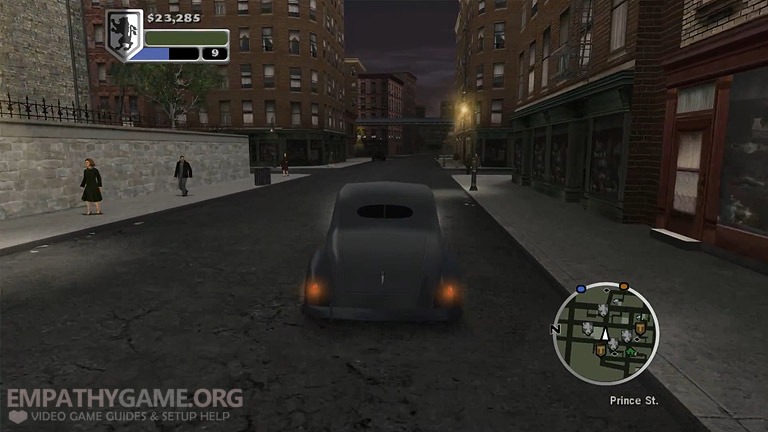
The Godfather succeeds because its licensed setting is tied to mechanics rather than used only as decoration. Extortion, rackets, Respect, family rank and territorial control all point toward the same fantasy: beginning as a disposable street enforcer and ending as somebody with money, weapons and influence spread across the city. The BlackHand system gives confrontations a physical personality, while the film’s cast, locations and music make that ascent feel recognizably Corleone without forcing the player to impersonate Michael.
The same systems eventually expose the game’s limits. Recycled interiors turn expansion into routine, mob wars threaten income more than they create genuine territorial strategy, AI is inconsistent, and neither driving nor shooting has the fluidity of a modern open-world action game. Progression makes the protagonist stronger but does not support dramatically different builds, so a completed empire leaves relatively little unexplored for a second run.
Those weaknesses matter less for players who enjoy the process of taking ownership of a map. The strongest memory is not a single gunfight or chase but the chain linking intimidation, income, upgrades and conquest. That makes The Godfather a rough, repetitive crime sandbox with one unusually strong idea at its center: organized crime itself is the progression system, and almost every worthwhile activity feeds the climb.
The Godfather Pros & Cons
- Pro: Extortion, rackets, warehouses, compounds, and rival-family territory give the open world a stronger organized-crime progression loop than a simple sequence of story missions
- Pro: Custom character progression lets the player rise from an unknown associate toward control of New York while intersecting naturally with familiar Corleone characters and events
- Pro: Close-range intimidation and melee combat give confrontations a physical identity distinct from the gunplay-heavy structure of many other open-world crime games
- Pro: Driving, contract hits, businesses, collectibles, story missions, and family warfare provide a substantial amount of optional activity beyond the main campaign
- Pro: The native PC release benefits from higher-resolution presentation than the original PS2 version, supports USB gamepads, and now has useful community compatibility and modding projects
- Con: Business extortion and territorial takeovers can become repetitive once the same basic activities begin appearing across many properties
- Con: Mouse-and-keyboard controls are awkward compared with a gamepad, and movement, aiming, driving, and animations clearly reflect mid-2000s design conventions
- Con: The Windows version does not contain every addition associated with the later Xbox 360, Wii, and PS3 versions
- Con: Lack of a current official PC purchase option, legacy SafeDisc DRM, and old video/display technology make legitimate modern-Windows setup much less straightforward than the original hardware requirements imply
The Godfather PC System Requirements
EA’s surviving game page does not provide a modern PC requirements sheet. The specifications below come from preserved documentation for the original 2006 Windows edition; these are historical hardware requirements, not a promise of compatibility with Windows 10 or Windows 11.
LEGACY MINIMUM:
OS: Windows 2000
CPU: Intel Pentium 4 1.4 GHz or AMD Athlon 1.4 GHz
RAM: 256 MB
GPU: Nvidia GeForce 3, ATI Radeon 8500, or Intel GMA 900 series
VRAM: 64 MB
DirectX: DirectX 9.0c compatible
Storage: 5 GB
Additional: Nvidia GeForce 4 MX is not supported
LEGACY RECOMMENDED:
OS: Windows XP
CPU: Intel Pentium 4 2.4 GHz or AMD Athlon 2.4 GHz
RAM: 512 MB
GPU: Nvidia GeForce 6000 series or ATI Radeon 9700
VRAM: 128 MB
Additional PC Performance & Setup Notes
Modern Windows and retail DRM: The game’s 32-bit engine and legacy video code generally matter more than its modest hardware demands. Original disc installations use SafeDisc, which may fail on modern Windows even when the game is legally owned. The compatibility patches below do not provide game files, activation rights, or a DRM workaround.
Startup crash and movie playback — SilentPatchGF: The original DirectDraw hardware-overlay movie player can crash when launching on newer Windows versions. Download SilentPatchGF from its author’s GitHub Releases page and extract the patch archive into the main installation folder containing godfather.exe, keeping the archive’s folder structure. The project replaces the obsolete movie-player behavior, improves portability and resolution detection, and allows the movie aspect ratio and frame-rate cap to be configured through SilentPatchGF.ini. Check compatibility with your particular executable and back up the installation first. SilentPatch does not fix SafeDisc activation.
Proper 16:9 widescreen — ThirteenAG’s fix: The original PC presentation needs a community fix for correct widescreen proportions rather than simple 4:3 stretching. Download The Godfather Widescreen Fix from the creator’s GitHub release; extract its files into the folder containing godfather.exe, preserving the included scripts folder. The creator also instructs users to install SilentPatchGF into that same game directory. After launching the game, select a 16:9 resolution in its display settings. The fix’s configuration is scripts/TheGodfather.WidescreenFix.ini, where PreferWidescreenResolutions = 1 is the supplied setting. It corrects resolution, widescreen field of view and HUD scaling. Back up the original game files and remove the added patch files if necessary to revert; different game builds can still need troubleshooting.
Frame rate: The unmodified PC game is limited to 30 FPS. SilentPatchGF exposes a configurable cap; 60 FPS is a sensible upper experiment, while higher uncapped rates can affect game speed. Do not treat it as a guaranteed stable 60 FPS remaster.
Controls: The Windows release supports USB gamepads. Dual-analog controls are generally more natural for BlackHand grapples and driving than the original mouse-and-keyboard layout, although a modern controller may require additional mapping or configuration.
Official Trailer
Frequently Asked Questions
Do I need to watch The Godfather movie before playing?
No. The campaign provides enough context to follow the Corleone family’s conflict, although knowing the original film makes its characters, locations, and recreated scenes more meaningful.
Do you play as Michael Corleone?
No. You create a male mobster using the MobFace system and build his criminal career alongside Michael, Sonny, Tom Hagen, Luca Brasi, and Don Vito. Appearance customization and Respect-based skill upgrades are separate systems.
How does business extortion work?
An owner has a pressure level at which they agree to pay and a breaking point at which intimidation goes too far. Threatening, grabbing, or damaging property can raise pressure; learning the owner’s weakness helps you demand more without losing the deal.
What is the difference between a business and a racket?
An extorted business pays protection income, while some premises conceal a separate illegal racket that can generate more money. Warehouses, transport hubs, and family compounds are larger targets that undermine rival control across the city.
What is the difference between Respect and family rank?
Respect is earned through crime and missions, unlocking points for Fighting, Shooting, Health, Speed, and Street Smarts. Family rank reflects your rising position inside the Corleone organisation and is tied more closely to story progress and territorial dominance.
How do you become Don of New York City?
The story’s final mission is not enough on its own. You must also expand Corleone control by taking over rival businesses, rackets, warehouses and compounds and meeting the game’s broader progression requirements.
Can you keep playing after the main story?
Yes. You can continue taking territory, finishing contract hits, buying safehouses and collecting film reels after the campaign’s main missions.
How do you save and what are safehouses for?
Use the bed at a safehouse to save manually, usually between missions. Owning more safehouses provides useful save points and places to recover or prepare before major confrontations.
What are Execution Styles?
They are particular finishing methods involving weapons, grabs or environmental situations. Completing different styles earns Respect and contributes to the completion-focused side of the game.
What do the 100 film reels unlock?
They award Respect and unlock clips from the original film in the game’s film archive. They are optional collectibles rather than requirements for completing the main story.
Does the Windows PC version have co-op, online multiplayer, LAN or split-screen?
No. The original Windows release is single-player only and has no co-op or multiplayer modes.
Will The Godfather work on Windows 10 or Windows 11?
It may, but the original video playback technology and retail SafeDisc protection can each prevent launching. SilentPatchGF fixes the movie-related startup issue; it does not remove DRM or guarantee that every retail executable will work.
Can the PC version use a modern controller?
It supports gamepads, but controllers released long after the game may require mapping adjustments. Its dual-analog combat design generally makes a properly configured gamepad preferable to the original keyboard-and-mouse controls.
Can you play in true widescreen and at 60 FPS?
Yes, unofficial fixes can help. ThirteenAG’s Widescreen Fix adjusts aspect ratio, HUD and field of view; SilentPatchGF offers an adjustable FPS cap. Follow the installation steps in the PC setup section, and avoid assuming that very high frame rates are safe.
Does the Windows version include Blackhand Edition or The Don’s Edition content?
No. The Wii Blackhand Edition and PS3 The Don’s Edition are separate console versions with additional or changed features. There is no official Windows upgrade, remaster or Definitive Edition that adds all their content to the original PC game.
Can you play The Godfather on Steam Deck?
Valve lists the historical Steam edition as Unsupported. A Steam licence held from earlier years is not the same thing as a supported Deck version or an option to buy a new copy today.
Did the film actors return for the game?
Yes. Marlon Brando, James Caan and Robert Duvall contributed voice performances, while Al Pacino did not voice or lend his likeness to the game’s Michael Corleone.
Still have questions? Check the r/MafiaGame community or The Godfather Steam Discussions for gameplay questions and historical PC-version discussions.
Sources & References
Important historical, storefront and PC compatibility details were verified against the following sources:
- Electronic Arts — original The Godfather launch announcement — original Windows release, developer, cast and film-license context
- SteamDB — The Godfather App 24820 — historical Steam edition, ownership context, reviews and Steam Deck metadata
- PCGamingWiki — The Godfather: The Game — preserved requirements, SafeDisc, video and widescreen compatibility
- GOG Dreamlist — The Godfather — preservation-request listing rather than a purchasable GOG release
- SilentPatchGF — author’s releases — movie-renderer repair and frame-rate configuration
- ThirteenAG — The Godfather Widescreen Fix — verified widescreen patch and installation route
- GameSpot — original The Godfather PC review — original PC rating, control scheme, and presentation comparison
Similar Games Like The Godfather
- Scarface: The World Is Yours
- GTA Vice City Stories
- Mafia II
- GTA Liberty City Stories
- GTA Vice City
- Sleeping Dogs: Definitive Edition

Found something worth playing through DecideGame?
DecideGame.com is an independent gaming project run by Editor Zero. If this guide helped you discover a game, solve a problem, or find useful information, you can support DecideGame.com and help keep new and updated game guides coming.
DecideGame — PC Game Guides, Reviews & Setup Help