
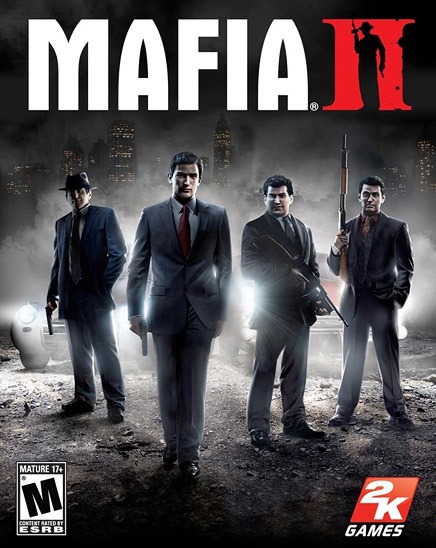
📅 Game released: 2010
Mafia II follows Vito Scaletta and Joe Barbaro through a cinematic crime in 1940s–1950s Empire Bay, mixing period driving, cover-based shootouts, and a tightly scripted campaign. This PC guide compares the original Classic version with Definitive Edition, explains official Steam, Epic Games Store, and GOG purchase and download options, DLC and ownership differences, Steam Deck support, system requirements, and practical setup advice.
 By Editor Zero — independently researched, edited, and maintained.
Last updated: 5 November 2026
Last reviewed: 5 November 2026
Table of Contents
- Quick Facts
- Official PC Stores, Download & Installation
- Mafia II Review
- Pros & Cons
- PC System Requirements
- Frequently Asked Questions
- Similar Games
Mafia II Quick Facts
- Game: Mafia II (2010) / Mafia II (Classic) / Mafia II: Director’s Cut / Mafia II: Definitive Edition (2020 remaster)
- Developer: 2K Czech (original); Hangar 13 and D3T (Definitive Edition)
- Publisher: 2K Games (2K); Feral Interactive published the original macOS port
- Genre: Action-Adventure, Open World, Third-Person Shooter
- Release: August 24, 2010 (original Windows PC, PS3, Xbox 360; North America); August 27, 2010 (Europe); May 19, 2020 (Definitive Edition, Windows PC)
- Platforms: Original: Windows PC, PS3, Xbox 360, macOS; Definitive Edition: Windows PC, PS4, Xbox One
- DLC / Expansions: Joe’s Adventures, Jimmy’s Vendetta, The Betrayal of Jimmy; Greaser, Renegade, Vegas, and War Hero bonus packs (all included in Definitive Edition)
- Modes: Single-player story campaign and separate single-player DLC; no official multiplayer or co-op
- Steam Deck: Unsupported — Mafia II (Classic); Playable — Mafia II: Definitive Edition (Valve Steam ratings)
- Engine: Illusion Engine (original 2010 PC release)
- Community: Classic Steam Discussions, Definitive Edition Steam Discussions, Mafia subreddit
- PC modding: Unofficial mods for Mafia II (Classic) and Definitive Edition; mods and tools are version-specific, with no official Steam Workshop integration
- Metacritic score: 77/100 (original Windows PC, 46 critic reviews)
- IGN score: 7/10 (original Mafia II review)
- GameSpot score: 8.5/10 (original Mafia II review)
- Steam user reception: Very Positive overall — Mafia II (Classic); Mostly Positive overall — Definitive Edition
Official PC Stores, Download & Installation
👇 Compare the official PC editions and bundled ownership options before purchasing, downloading, or installing Mafia II; the 2010 Classic and 2020 Definitive Edition are different games in your PC library.
- Two PC versions: The original 2010 Mafia II (Classic) is the PC release developed by 2K Czech. Mafia II: Definitive Edition is a 2020 visual-and-audio remaster, not a remake with a rewritten campaign or redesigned open world.
- Steam purchase: Steam’s Mafia II: Definitive Edition purchase package includes both Mafia II (Classic) and Mafia II: Definitive Edition as separate library entries. The Classic listing is not normally a separate new-purchase checkout; check the package contents before buying.
- Existing Steam owners: 2K granted Definitive Edition to eligible original Mafia II Steam owners. Before paying again, inspect your Steam Library for both entries. 2K also documents transfer of original Classic saves to Definitive Edition on Steam PC; back up your saves first.
- Epic Games Store: Epic sells Mafia II: Definitive Edition for Windows PC. Its listing does not grant the Steam version or the separate Classic Steam library entry. An Epic account and launcher are needed for its normal store installation.
- GOG version: GOG sells Mafia II: Definitive Edition as a DRM-free Windows release with an optional GOG Galaxy client and offline installation. The bundled original Mafia II (Classic) is listed among the GOG package entitlements; verify the included library items for your account and region before checkout.
- Story DLC: Definitive Edition includes The Betrayal of Jimmy, Jimmy’s Vendetta, and Joe’s Adventures, plus the Greaser, Renegade, Vegas, and War Hero vehicle/outfit packs. Bonus packs unlock through story progress. Older Classic purchases may have different DLC entitlements, so check what you already own.
- Bundles and bonuses: Mafia: Trilogy combines Mafia: Definitive Edition, Mafia II: Definitive Edition, and Mafia III: Definitive Edition. Steam also lists broader Mafia bundles; compare your existing library to avoid paying twice. Cross-game cosmetic rewards and 2K Account bonuses are optional extras, not extra story expansions.
- Installation and offline play: Install the edition you own using the corresponding Steam, Epic, or GOG library. Original Steam retail activation used Steamworks; GOG explicitly offers offline play without DRM or a mandatory Galaxy launcher. Account-dependent cloud services and optional rewards can require internet access.
- Save files and mods: Classic and Definitive Edition use distinct PC installations and save locations. Save migration officially documented by 2K applies to Steam PC; do not assume cross-store or console save transfer. Install only modifications made for your exact edition, and back up game files and saves before changes.
- Steam Deck: Valve labels Classic Unsupported and Definitive Edition Playable. Definitive Edition may require manually opening the on-screen keyboard or switching the active controller; this rating applies to the Steam release, not a promise of identical results from other stores.
 Buy Mafia II: Definitive Edition and Classic on Steam
 Buy Mafia II: Definitive Edition on Epic Games Store
 Buy Mafia II: Definitive Edition on GOG
 View Mafia II: Definitive Edition at the Official 2K Store

Mafia II Review
A richly observed gangster story whose convincing city allows surprisingly little freedom.
Mafia II looks as though it should give Vito Scaletta an entire criminal city to make his own. Empire Bay has busy streets, shops, police patrols and cars worth stealing, yet the story rarely allows him to decide what kind of gangster he wants to become. Instead, it follows a young man drawn from small-time hustles into an organisation whose promises of wealth and security come with increasingly uncomfortable obligations.
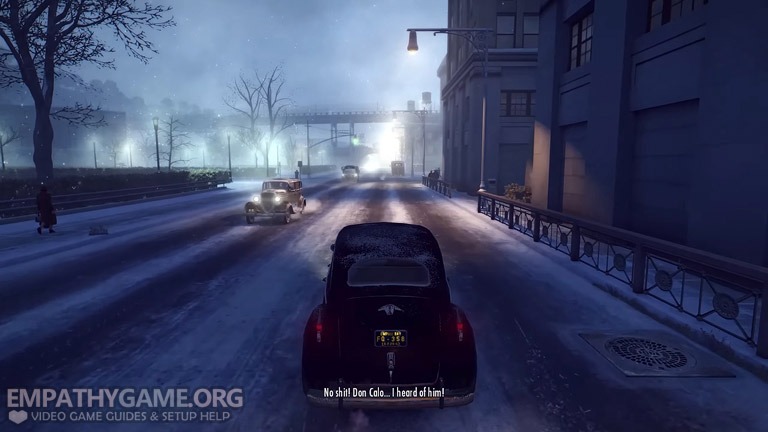
That difference in purpose is important. A routine drive with Joe Barbaro can reveal as much about their friendship as the gunfight waiting at the destination. The snowy streets and later neon-lit avenues are not simply attractive backdrops; they show the changing world Vito hopes to rise within. The problem is that the more convincing Empire Bay becomes as a place, the more noticeable its limits become as a game. Mafia II works best when approached as a carefully directed crime drama, with an open world built to support it rather than replace it.
Empire Bay Feels Alive, Even When It Has Little for You to Do
There is an unusual pleasure in how seriously Empire Bay treats ordinary behaviour. Cars stop at intersections, pedestrians use crossings, and neighbourhood shops have interiors that look like places people might actually visit. Much of this is background detail, but it gives Vito’s criminal activity a setting that appears to exist before he arrives and continues after he leaves.
The police are especially good at sustaining that illusion. Driving too fast past a patrol can earn a fine rather than an immediate chase. A more serious offence may lead to pursuit, while certain encounters can be resolved by paying or bribing an officer. Police recognition is also more specific than a simple wanted meter: Vito himself and the vehicle he drives can attract attention independently, making a change of clothes different from changing a car’s number plates. The simulation even allows civilians to draw police scrutiny through traffic incidents. Empire Bay’s law enforcement does not appear to be watching Vito alone.
These details make a trip across town more interesting, but they raise expectations the rest of the city cannot meet. Diners, clothing shops, garages and gun stores have practical uses, while occasional trouble with the police can produce an unscripted detour. Beyond that, there are few substantial side stories or criminal activities to pursue. Vito cannot assemble his own crew or gradually take over neighbourhoods. The city reacts convincingly to small actions without offering much control over larger ones. That gap between everyday simulation and meaningful freedom is one of Mafia II‘s defining compromises.
Small Criminal Jobs Give the Campaign Its Shape
The early chapters understand that a gangster’s life should not consist entirely of dramatic shootouts. Vito moves crates at the docks, steals cars and sells contraband cigarettes. The work can seem deliberately unimpressive, particularly beside Joe’s enthusiasm for quick money. It also gives the violence a context. These are not two men starting at the top of a criminal organisation; they are looking for ways to stop worrying about tomorrow’s bills.
The gas-ration-stamp robbery at the Office of Price Administration is a good example of how the missions can reward attention. Reaching the safe is only part of the job. Investigating the building reveals a basement switch that can disable the alarm before the safe is opened, changing how the theft concludes. It is a modest interaction, but a satisfying one: the room layout matters because looking beyond the immediate objective can prevent a police response.
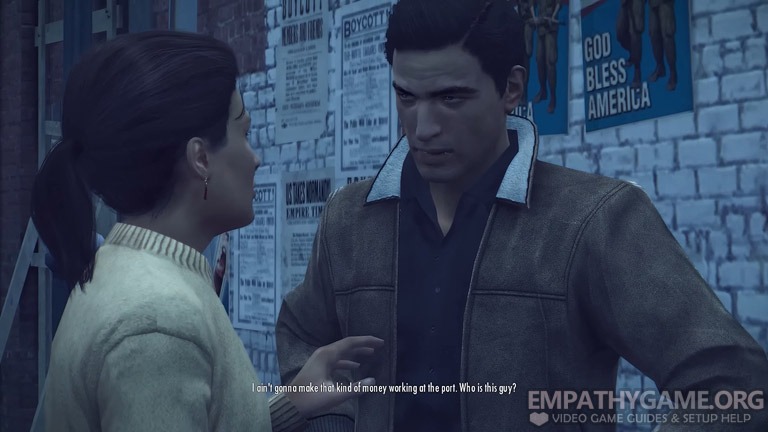
It also shows what the campaign might have offered more often. There are brief opportunities to use stealth or prepare intelligently, but they seldom develop into a flexible approach to completing jobs. Most missions still move Vito through prescribed scenes, conversations and confrontations. Sometimes the ordinary tasks make the next disaster feel earned; sometimes they are simply errands that delay it. The distinction matters because the same deliberate pace that makes the opening believable can become tiring once missions rely on driving across the map to trigger a single scripted moment.
Driving Makes the Changing Decades Tangible
Driving carries much of Mafia II‘s atmosphere. The older cars feel heavy and reluctant, and winter roads encourage careful braking rather than reckless cornering. As the story moves into the 1950s, quicker vehicles, brighter signs and different music make Empire Bay feel noticeably changed. The passage of time comes through the steering wheel as well as the cutscenes.
Normal and Simulation handling give those journeys different moods. Normal makes everyday traffic and chases more forgiving. Simulation puts more emphasis on traction, speed and the consequences of entering a bend too aggressively. The speed limiter is another small but clever feature. It is sometimes easier to obey the law and enjoy the drive than to risk turning a simple delivery into an unnecessary police pursuit.
Cars also provide a little room for ownership and expression. Favourite models can be stored in a garage, repainted and modified. These options make choosing a vehicle more personal, although the campaign rarely gives Vito a reason to experiment beyond preference or a specific job’s demands.
What makes the repeated travel memorable is often the company. Joe’s conversations turn the car into an extension of the story, while the radio moves between period pop, jazz, rhythm and blues, and rock-and-roll. A familiar journey through a quiet snowy neighbourhood has a different character from the same route lined with brighter advertisements and newer cars. It is easy to appreciate why the game spends so much time on the road. It is harder to defend every compulsory return home or lengthy trip with little dialogue or incident. When the drive contributes neither atmosphere nor character, the distance starts to feel like padding.
Gunfights Have Weight, but Cover Cannot Solve Everything
Combat is at its best when it preserves the physical, messy quality of the setting. Pistols, shotguns, the Thompson submachine gun and M1 Garand each have a distinctive pace. Gunfire is loud, glass breaks and pieces of the environment splinter around Vito. A room that looked orderly before a confrontation can end up full of shattered furniture and broken windows. The destruction does not make the encounters highly tactical, but it gives bullets a convincing presence.
Underneath that presentation sits a conventional cover shooter. The reliable approach is to find protection, wait for enemies to expose themselves and fire accurately. This makes many encounters immediately understandable, yet opponents too often settle into predictable positions. Vito can also feel awkward when trying to leave cover, reverse direction or react inside a cramped room. As the later campaign sends larger groups of gunmen against him, those limitations become more apparent.
The warehouse confrontation at the docks is interesting because it briefly challenges the usual routine. Incendiary bottles thrown into the area make some cover positions unsafe, forcing Vito to relocate while enemies continue firing. Simply hiding behind the nearest crates is no longer enough. It creates a sharper kind of pressure, but also exposes how uncomfortable the cover controls can become when movement is suddenly urgent. The encounter is both a welcome change of pace and a reminder that the shooting system is better suited to controlled exchanges than rapid improvisation.
Survival has a small connection to life outside combat, too. Particularly on Hard difficulty, waiting in cover does not restore all of Vito’s missing health. Eating food or drinking a soft drink can bring it back further, giving diners and occasional food pickups a purpose beyond decoration. It is a minor mechanic, but one that makes stopping somewhere ordinary feel relevant to the next dangerous job.
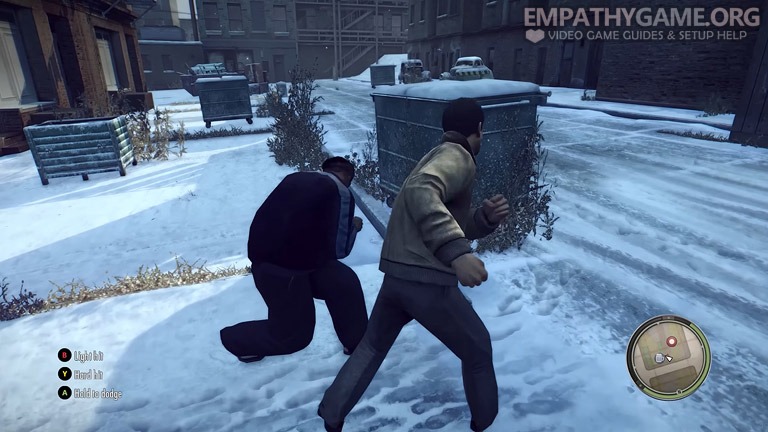
Fistfights provide another change of rhythm through punches, blocks and counters. They work for the situations the story gives them, without offering the depth of a separate fighting system. Stealth is similarly occasional. Neither mechanic transforms the game, but both help prevent the campaign from becoming uninterrupted gunfire.
Vito and Joe Make the Crime Story Worth Following
Vito comes home from military service to find that his family’s financial problems have not disappeared. Joe already knows people who can offer money much faster than ordinary work, and their friendship makes the temptation understandable. Vito tends to think before speaking; Joe is louder, more spontaneous and often certain the next scheme will be the one that finally pays off. Their personalities make even uneventful drives worth listening to.
As their contacts expand, the cost of those opportunities becomes clearer. Henry Tomasino and the Clemente, Falcone and Vinci families introduce competing loyalties, arrangements and expectations. Every favour creates the possibility of another obligation. The writing is most convincing when a casual conversation suggests what cannot safely be said aloud. It is less convincing when supporting characters fall back on familiar gangster stereotypes, or when slurs and narrow roles for women add crudeness without much character insight.
One of the strongest narrative choices is to remove the city altogether for a while. In the prison chapter, driving and roaming give way to corridors, chores, rules and fistfights. The restrictions are sometimes deliberately tedious, but they serve a purpose: Vito has lost control over even the ordinary decisions the open world once allowed him. When he returns to Empire Bay, the changed fashions, cars and sounds communicate that life continued while he was absent. The time jump gains weight because the player has experienced the confinement rather than merely heard about it.
The setting often carries emotional meaning more naturally than the plot explains it. Snow, restrained wartime streets, lively later neighbourhoods, period interiors and the radio’s changing music give each part of the story a distinct mood. Strong voice performances make Vito and Joe sound familiar with one another rather than like characters delivering exposition. Not every chapter earns its dramatic turn, and the later focus on violence leaves less room for the quieter exchanges that establish the friendship. Still, those earlier moments give the consequences something to rest on.
Money and Progression Promise More Choice Than They Deliver
There are no experience points, skill trees or specialised character builds. Vito’s standing changes mainly because the story moves forward. New associates lead to better-paying work, different homes, more powerful weapons and access to newer vehicles. Money covers clothes, food, repairs and purchases, but it never develops into an economy in which Vito can meaningfully invest in his future.
The family-debt objective exposes this limitation particularly clearly. Having enough cash from other activities does not necessarily satisfy the task; the required story job still has to be completed. The game allows Vito to earn money, but it does not always let that money determine what he can do next. This is not an accidental contradiction. It is a direct consequence of treating progression as a written drama rather than a simulation of a criminal career.
The same applies to the larger narrative. Vito cannot decide which family to support, negotiate a different path through the chapters or build towards an alternative ending. Following one story allows the developers to control its timing and character relationships, but it leaves little reason to replay the campaign in search of different consequences.
Chapter selection makes returning to particular missions straightforward, and different difficulty settings can alter how carefully confrontations must be approached. Collectibles offer another reason to look beyond the obvious route. Wanted posters reward searching the city, while Playboy magazines encourage exploring interiors that the objectives might otherwise hurry past. These are pleasant distractions, but they reveal more of the existing world rather than adding new possibilities to it.
The Extra Campaigns Change the Pace, Not the City’s Possibilities
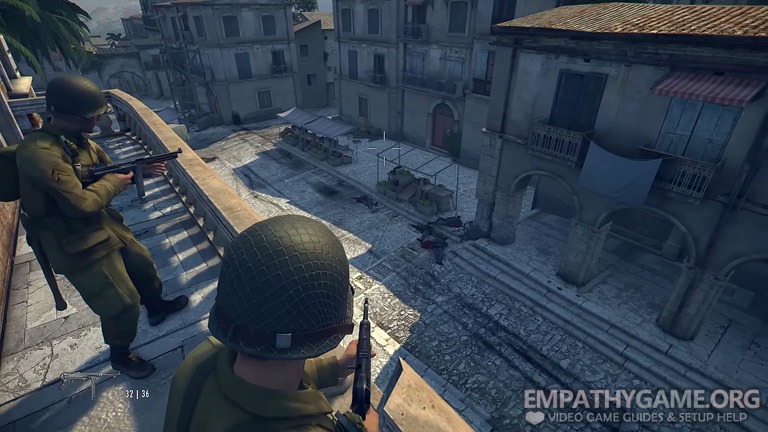
The DLC gives Empire Bay more jobs, though not necessarily more of what makes the main campaign distinctive. Joe’s Adventures offers another perspective on events surrounding Vito’s story and includes some more narrative-driven moments. Much of its structure, like The Betrayal of Jimmy and Jimmy’s Vendetta, favours separate action assignments, driving challenges and high scores rather than the slower development of relationships.
The frequent timers change the experience more than the extra objectives initially suggest. In the main story, taking a leisurely drive or stopping to enjoy the city can reinforce the setting. In a timed DLC mission, the same detour becomes a mistake. A traffic collision or unexpected police response may be amusing during ordinary exploration, yet frustrating when every second affects the result. The missions encourage efficiency in a world whose atmosphere is often best appreciated without rushing.
Score chasing provides its own replay incentive, especially for anyone who enjoys repeated attempts at cleaner, faster runs. But the additional campaigns do not turn Empire Bay into a deeper sandbox, and their shorter jobs rarely reproduce the friendship and narrative build-up that make Vito’s chapters memorable.
Final Verdict
Mafia II‘s greatest strength is how convincingly it connects ordinary life with criminal ambition. Vito’s early errands, Joe’s humour, the heavy cars on snowy roads and the gradual transformation of Empire Bay make the story feel rooted in a particular place and period. The prison chapter shows how effectively gameplay restrictions can support that story, while a few carefully designed missions reward more attention than the straightforward shooting initially suggests.
Its weaknesses come from the same commitment to a fixed narrative. The city seems capable of supporting richer activities than it offers, money has little influence over progression, and combat eventually settles into a familiar cycle of waiting behind cover. The long journeys are enjoyable when conversation or atmosphere gives them purpose, much less so when they simply delay the next objective. The DLC adds action but does not solve those underlying limitations.
Someone looking for branching loyalties, a criminal business to manage or a city that responds to long-term decisions will find Empire Bay restrictive. Someone who prefers a focused gangster drama, believable period detail and a convincing central friendship has much more reason to appreciate it. Mafia II is not especially interested in giving Vito freedom. The important distinction is that the story often makes his lack of freedom meaningful, even when the game itself occasionally makes it frustrating.
Mafia II Pros & Cons
- Pro: Vito and Joe’s crime story is carried by strong character writing, voice performances, and a convincing period setting.
- Pro: Empire Bay’s cars, neighborhoods, traffic, weather, and radio music make ordinary drives feel connected to the story.
- Pro: Cover-based gunfights, vehicle pursuits, and the police recognition system give the linear campaign varied set pieces.
- Pro: Definitive Edition brings the main game and three story DLCs into one remastered package; Steam also supplies Classic.
- Pro: The original PC version has modest historical system requirements and an active unofficial modding community.
- Con: The attractive open city has relatively few meaningful side activities compared with more sandbox-focused crime games.
- Con: Repetitive drives, occasional busywork, and some conventional cover-shooting sections interrupt the strongest story moments.
- Con: Classic can need DirectX 9/PhysX troubleshooting on modern systems, and Valve rates it Unsupported on Steam Deck.
- Con: Definitive Edition needs substantially more disk space and has drawn complaints about remaster bugs and visual inconsistencies.
Mafia II PC System Requirements
The primary requirements below are 2K’s published specifications for the original 2010 Mafia II (Classic). They describe the Windows systems supported at launch, not a guarantee of compatibility with Windows 10 or 11. The 2020 Definitive Edition has a separate, significantly heavier PC specification.
OFFICIAL WINDOWS PC REQUIREMENTS — MAFIA II (CLASSIC, 2010):
MINIMUM:
OS: Windows XP (SP2 or later), Windows Vista, or Windows 7 (original published support)
CPU: Intel Pentium D 3.0 GHz or AMD Athlon 64 X2 3600+ (dual-core), or better
RAM: 1.5 GB
GPU: NVIDIA GeForce 8600 or ATI Radeon HD 2600 Pro, or better
DirectX: DirectX 9.0c
Storage: 8 GB available
Sound Card: DirectX 9.0c-compatible
Controls: Keyboard and mouse or Windows-compatible gamepad
RECOMMENDED:
OS: Windows XP (SP2 or later), Windows Vista, or Windows 7 (original published support)
CPU: 2.4 GHz quad-core processor
RAM: 2 GB
GPU: NVIDIA GeForce 9800 GTX or ATI Radeon HD 3870, or better
DirectX: DirectX 9.0c
Storage: 10 GB available
Sound Card: DirectX 9.0c-compatible
Source: 2K’s original Mafia II PC requirements. Enhanced APEX PhysX effects were subject to separate, much higher GPU recommendations and are not covered by the minimum values above.
Mafia II: Definitive Edition — Separate Official PC Requirements
MINIMUM:
OS: Windows 8.1 64-bit (2K’s published specification; storefront launcher support may require a newer OS)
CPU: Intel Core i5-2500K or AMD FX-8120
RAM: 6 GB
GPU: NVIDIA GeForce GTX 660 2 GB or AMD Radeon HD 7870 2 GB
Storage: 50 GB available
RECOMMENDED:
OS: Windows 8.1 64-bit (2K’s published specification; check the store’s current OS support)
CPU: Intel Core i7-3770 or AMD FX-8350 (4.0 GHz)
RAM: 8 GB
GPU: NVIDIA GeForce GTX 780 4 GB or AMD Radeon R9 290X 4 GB
Storage: 50 GB available
Source: 2K’s Definitive Edition requirements. GOG lists Windows 10 64-bit as its supported OS, while the Steam client also requires a modern Windows version. These launch-era requirement tiers should not be read as current Windows support guarantees.
Additional PC Performance and Setup Notes
Classic on modern Windows: Install the original version through your legitimate game library and test it before modifying files. Its DirectX 9 and NVIDIA APEX PhysX components can cause trouble on some newer PCs. If frame pacing, crashes, or visual effects behave strangely, try turning off APEX PhysX in the game’s video options, use a conventional 60 FPS limit if high frame rates cause abnormal timing, and verify the installed files through your store client. These are troubleshooting options, not universal requirements.
Display and save care: The original PC version already supports ordinary widescreen resolutions, so a generic 16:9 patch is not needed. Unofficial ultrawide/FOV changes, texture packs, and community fixes require the correct Classic or Definitive Edition files. Read the Mafia II (Classic) PCGamingWiki guide or the Definitive Edition technical page for edition-specific issues; make backups before replacing files.
Official Trailer
Note: This official 2K launch trailer presents Mafia II: Definitive Edition and its remastered 1940s–1950s Empire Bay presentation. The written guide compares that remaster with the original 2010 PC game and explains the practical differences between editions.
Frequently Asked Questions
Can you free roam in Mafia II after completing the story?
Not through a dedicated post-story Free Ride mode. After finishing the campaign, you can replay earlier chapters and explore Empire Bay during sections without urgent objectives. Joe’s Adventures and the two Jimmy DLCs also offer more freedom to drive around the city between their separate missions.
How long is Mafia II, and how many chapters does it have?
Mafia II has 15 main story chapters, with a typical playthrough taking approximately 10–15 hours. Exploring Empire Bay, searching for collectibles, replaying missions, and completing the three DLC campaigns can extend that considerably.
Can you replay chapters in Mafia II without starting a new game?
Yes. The chapter-selection option in the Story menu lets you return to previously completed chapters, including missions containing missed collectibles. Replaying a chapter can replace your active story checkpoint, so backing up your save files beforehand is sensible if you want to preserve your current progress.
Does Mafia II have manual saving?
No. Mafia II saves automatically at designated story checkpoints rather than allowing unrestricted manual saves or quicksaves. If you quit during a mission, you normally resume from the most recent checkpoint rather than the exact position where you stopped.
Can you collect missed Playboy magazines and wanted posters later?
Yes, but the two collectible types work differently. Playboy magazines often appear inside locations accessible only during specific story chapters, so you may need to replay those chapters. Wanted posters are distributed around Empire Bay and can generally be collected while exploring the city during suitable chapters. Check Extras > Collectibles from the main menu to review your collection.
What is the difference between Normal and Simulation driving in Mafia II?
Normal driving uses steering and braking assistance, making cars easier to control during pursuits and ordinary travel. Simulation removes those assists and gives vehicles more demanding, period-inspired handling, especially when cornering at speed or driving on slippery roads. Players who find car chases frustrating can switch to Normal without changing the main combat difficulty.
How do you lose the police and clear a wanted status in Mafia II?
First, escape the pursuing officers and break their line of sight. If the police recognize Vito’s appearance, changing clothes can help; if they recognize his vehicle, changing its license plates at a Body Shop can remove that identification. For ordinary traffic violations, paying the fine may prevent a more serious pursuit, while the car’s speed limiter helps avoid speeding offenses.
Can you customize cars and store them in Mafia II?
Yes. Body Shops let you repair cars, change paint and wheels, replace license plates, and purchase available performance upgrades. You can also store acquired vehicles in the garages attached to Vito’s residences. Garage access and vehicle availability still depend on the chapter and story situation.
Does Mafia II have fast travel or a Skip Drive option?
No. Unlike Mafia: Definitive Edition, Mafia II does not provide a built-in Skip Drive feature for automatically completing journeys to mission destinations. Driving through Empire Bay is part of the campaign, although you can use map waypoints and faster vehicles to make longer trips easier.
What is the difference between Joe’s Adventures and the Jimmy DLC campaigns?
Joe’s Adventures follows Joe Barbaro during events that overlap the main story, combining narrative missions with arcade-style objectives around Empire Bay. The Betrayal of Jimmy and Jimmy’s Vendetta follow a separate hired gun named Jimmy and emphasize timed jobs, action, scores, and replayability rather than Vito’s cinematic storyline. All three are separate single-player campaigns.
Do you need to play the first Mafia before Mafia II?
No. Mafia II tells a largely self-contained story centered on Vito Scaletta, Joe Barbaro, and the criminal organizations of Empire Bay. Playing the first Mafia helps you recognize certain connections and references, but it is not necessary to understand Vito’s main story.
Does Mafia II have multiple endings or story choices?
No. The main campaign follows a fixed storyline with one ending, regardless of how you approach gunfights, driving, or optional exploration. You can replay chapters and approach encounters differently, but there is no branching narrative system that changes Vito’s ultimate outcome.
Does Mafia II have multiplayer, co-op, split-screen, or LAN?
No. Both Mafia II (Classic) and Mafia II: Definitive Edition are officially single-player experiences, including their story DLC. Neither version includes official online multiplayer, campaign co-op, split-screen, local multiplayer, LAN play, or cross-play.
Still have questions? Check the Mafia Reddit community, Mafia II (Classic) Steam Discussions, or 2K’s official Mafia: Trilogy FAQ for additional gameplay, edition, and PC support information.
Sources & References
Key factual and technical information in this guide was checked against relevant official and community sources, including:
- 2K Mafia: Trilogy FAQ — Classic and Definitive Edition ownership, DLC, Steam save transfer, and bundle contents
- Steam — Mafia II (Classic) — the original PC listing, ownership package, Steam Deck rating, and user reception
- Steam — Mafia II: Definitive Edition — the remaster’s current store listing, version identity, rating, and package contents
- GOG — Mafia II: Definitive Edition — DRM-free Windows purchase and offline-installation information
- 2K — Mafia II PC System Requirements — the original 2010 minimum, recommended, and optional PhysX specifications
- 2K — Definitive Edition PC Requirements — the remaster’s separate CPU, GPU, memory, operating-system, and storage specifications
- PCGamingWiki — Mafia II — original PC engine, version distinction, widescreen support, and edition-specific compatibility considerations
Similar Games Like Mafia II
- The Godfather
- GTA Liberty City Stories
- GTA 4
- Scarface: The World Is Yours
- GTA 3
- Sleeping Dogs: Definitive Edition




Found something worth playing through DecideGame?
DecideGame.com is an independent gaming project run by Editor Zero. If this guide helped you discover a game, solve a problem, or find useful information, you can support DecideGame.com and help keep new and updated game guides coming.
DecideGame — PC Game Guides, Reviews & Setup Help