
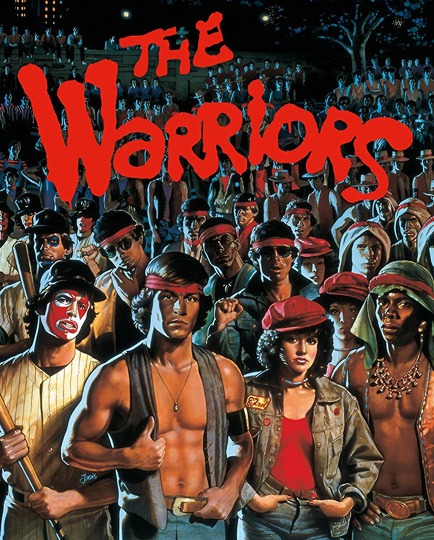
📅 Game released: 2005
The Warriors is Rockstar’s 1979 New York gang brawler, following a Coney Island crew through territory fights, street missions, and a desperate journey home. There is no official Windows game download; this guide explains the original PS2 and PSP versions, how to play an owned copy on PC with PCSX2 or PPSSPP, two-player options, emulator system requirements, and practical graphics and controller setup.
 By Editor Zero — independently researched, edited, and maintained.
Last updated: 6 November 2026
Last reviewed: 6 November 2026
Table of Contents
- Quick Facts
- Official PC Stores, Download & Installation
- The Warriors Review
- Pros & Cons
- PC System Requirements
- Frequently Asked Questions
- Similar Games
The Warriors Quick Facts
- Game: The Warriors (2005); original PS2/Xbox release, later PSP port and PlayStation rereleases
- Developer: Rockstar Toronto (original); Rockstar Leeds (PSP adaptation)
- Publisher: Rockstar Games
- Genre: Brawler / Beat ’em Up, Action-Adventure, Multiplayer
- Release: October 17, 2005 (original North American PS2/Xbox release); PSP port in 2007; no native Windows PC release
- Platforms: PS2, Xbox, PSP, PS3 (PS2 Classics), PS4 (PS2 emulation conversion; PS5 access via backward compatibility)
- Modes: Single-player story and Rumble Mode; two-player local story co-op and Rumble modes on PS2; PSP ad-hoc multiplayer
- Recommended PC emulation: PS2 version through PCSX2; PSP version through PPSSPP as an alternative
- Steam Deck: Not available on Steam; any emulator setup is separate from a Valve game compatibility rating
- Engine: Not officially confirmed in the verified publisher material
- Community: The Warriors Game community, PCSX2 game compatibility wiki
- PC modding: No official native-PC mod tools; emulators provide configuration and version-dependent community patches
- Metacritic score: 84/100 (PS2); 85/100 (Xbox); 81/100 (PSP)
- IGN score: 8.7/10 (original PS2 release)
- GameSpot score: 8.6/10 (original PS2/Xbox release)
Official PC Store Status, Download & Installation
👇 The Warriors has no native Windows edition. The options below distinguish legitimate console ownership from the two emulator routes available to PC players with their own game copies.
- Official Windows status: Rockstar has not released The Warriors for Windows through Steam, Epic Games Store, GOG, Microsoft Store, or the Rockstar Games Launcher. A site advertising a ready-made native Windows edition is not offering an official PC release.
- Best console version for PC: Choose the original PS2 edition with PCSX2 for the most faithful, practical desktop experience. It preserves the full original campaign, the two-analog-stick console layout, local two-player story co-op, and Rumble Mode. PCSX2’s game wiki lists the North American PS2 release as Playable; this classification is not a promise of perfect results on every PC.
- Why not PSP first? The PSP edition through PPSSPP contains essentially the same core game and is a reasonable alternative for owners of that version, particularly on lighter hardware. Its controls were adapted to a handheld with one analog stick and fewer shoulder buttons. PSP multiplayer uses ad-hoc wireless rather than the PS2 version’s simple second-controller local co-op.
- Other console editions: Rockstar also released the original game on Xbox and a PSP adaptation; the PS2 version later appeared through PS3 Classics and an official PS4 conversion. The official PS4 PlayStation Store listing is a console purchase, not a Windows license or PC installer. Region-specific availability can vary. Sony’s listing warns of possible errors when running the PS4 conversion on PS5.
- PS2 game backup: PCSX2 accepts a disc image created from a PS2 game disc you own. Follow PCSX2’s official disc-copying guide, which explains using a PC optical drive and tools such as Media Preservation Frontend to create a personal backup. Keep the original game media and check the relevant local copying rules.
- PS2 BIOS requirement: PCSX2 also needs proprietary PS2 system BIOS files, obtained from a PlayStation 2 console you own. The emulator does not ship with Sony’s BIOS. Use PCSX2’s official BIOS-dumping instructions rather than third-party BIOS archives.
- Install and launch with PCSX2: Get the emulator from its official download page. Complete first-time setup using your own BIOS dump, add the folder containing your PS2 game backup to the game list, configure a controller, and launch The Warriors. Start with the emulator’s normal defaults before changing graphics options or enabling optional patches.
- PSP game backup: PPSSPP does not contain The Warriors. A PSP UMD copy can be backed up to an ISO using your own PSP with custom firmware, as described in PPSSPP’s official UMD-dumping guide. For a digital PSP copy already owned and stored on a real PSP, PPSSPP also documents copying the relevant game files. Local copyright and backup rules still apply.
- Install and launch with PPSSPP: Get the official Windows version, then open your own PSP backup through the Games browser or File > Load. Set your gamepad mapping and test the original resolution before increasing the rendering scale. Unlike PCSX2, PPSSPP does not need a PS2 BIOS.
- Finding game images: If you independently search for a PS2 or PSP ISO or another game image, checking its source, your rights to use it, and compliance with applicable law is your responsibility. A search result or download link is not evidence of authorization. This guide recommends legally obtained game copies and does not supply, endorse, or link to third-party copyrighted game images.
- Saving and two-player setup: In PCSX2, configure separate controller inputs for player one and player two, with an emulated memory card for saves. The original PS2 game allows the second player to join the story using the second controller’s Start button. For ordinary solo play, one controller is enough. Backup your emulator save data before changing substantial settings.
 Download PCSX2 from the Official Website (PS2 Emulator)
Download PPSSPP from the Official Website (PSP Emulator)
 View The Warriors on Rockstar Games

The Warriors Review
A ferocious street brawler whose real strength is making a gang feel like a crew.
A bottle shatters against a shopfront, one Warrior pins a rival to the pavement, and a fight that began with two men has somehow swallowed half the street. That is The Warriors at its best. Rockstar Toronto takes the 1979 film’s grim vision of New York gang territory and builds a third-person beat-’em-up where numbers, improvised weapons, and the people fighting beside you matter as much as your own fists.
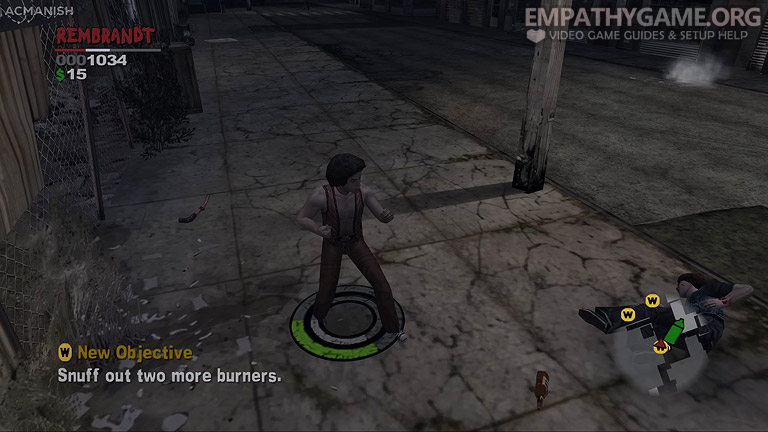
Its appeal is not the freedom of a vast crime sandbox or the precision of a technical fighting game. Missions follow defined routes, and the controls can struggle when too many people converge on the same spot. Yet there is something unusually convincing about belonging to this crew. Street errands establish what the Warriors are fighting for, while simple orders make their survival partly your responsibility. The film connection gives the game its setting, but the way its systems bring a gang together is what makes it worth revisiting.
The Prequel Gives the Gang More Than a Famous Night
Instead of beginning with Cyrus’s meeting and the desperate journey back to Coney Island, the campaign first shows how the Warriors establish their name. Rembrandt, a young graffiti artist, provides the entry point as he earns his vest. Later missions move between Cleon, Swan, Ajax, and other members, with the Destroyers becoming an especially persistent threat. Switching perspectives does more than share the action around. It lets the group develop through the people who make it up, rather than treating everyone outside the leader as a supporting extra.
Rockstar does not try to make these men admirable. They mug strangers, intimidate shopkeepers, vandalise property, and answer challenges with violence. Their loyalty is more interesting precisely because it exists alongside that behaviour. Cleon’s authority, Swan’s comparatively measured attitude, and Ajax’s appetite for confrontation do not always pull in the same direction. Rembrandt cannot rely on the physical presence of the larger fighters, but the gang needs what he can do with a spray can. The matching vests gradually come to represent distinct personalities rather than interchangeable bodies.
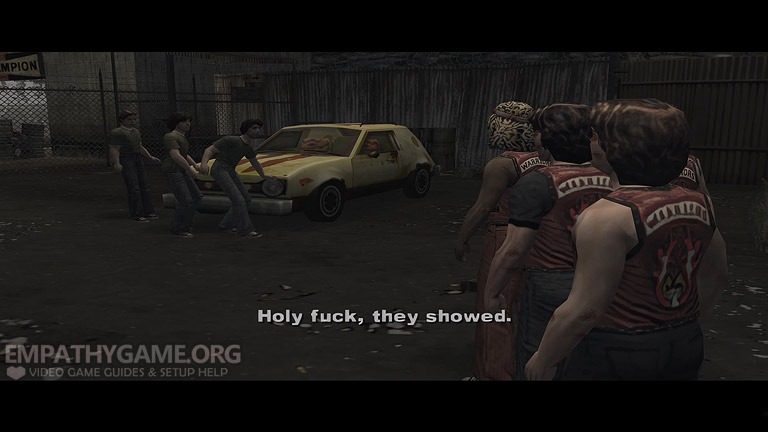
The optional flashbacks are particularly good at showing relationships that the film had little room to explore. Swan and Cowboy’s king-of-the-hill contest, for example, involves holding a junk pile and throwing challengers away rather than simply beating everyone unconscious. The objective is an enjoyable variation, but their familiar banter and Swan’s concern for Cowboy leave the stronger impression. The friendship feels as though it predates the scene, which is exactly what a story about an established crew needs.
By the time the campaign reaches the events of the film, its famous confrontation has more at stake. The irony is that the original prequel material is often more enjoyable to play. Some later chapters lean on shorter, more tightly scripted encounters, with less room for the street activities that made earlier missions interesting. Recognising a scene is satisfying, but recognition cannot replace a substantial objective.
Combat Is Simple Until the Whole Street Joins In
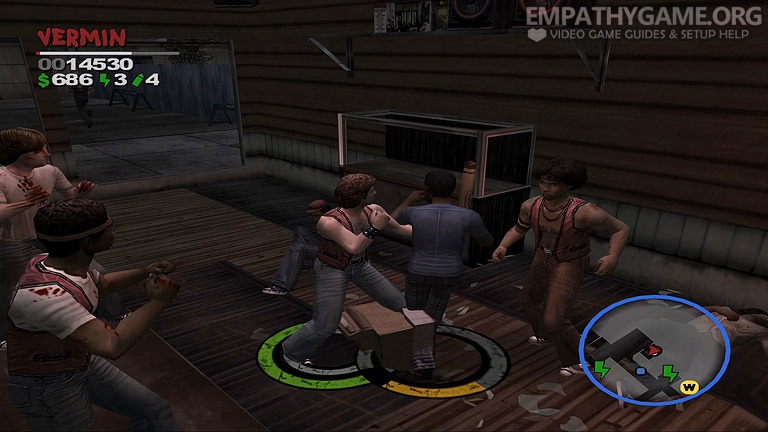
Strip away the setting and the fighting system is straightforward: light and heavy strikes, grabs, throws, ground attacks, and a limited selection of combinations. Against a single rival, it rarely asks for much beyond knowing when to hit and when to grapple. Add several enemies, loose weapons, and objects that can be smashed, and the same moves become considerably more engaging.
A thrown opponent might strike a wall or shop window. A bottle can interrupt someone charging into the fight, while a bat changes how dangerous an otherwise ordinary rival becomes. Meanwhile, teammates are busy with their own opponents instead of waiting for instructions. That movement gives each encounter a slightly different shape. Should the player finish the man already on the ground, remove the armed threat approaching from the side, or help a Warrior who is losing his fight? None is a complicated action on its own. Having to choose while several fights unfold together is where the system earns its depth.
Hardcore Soldier difficulty makes those priorities harder to ignore. Being cut off from the crew is dangerous, especially when a group includes enemies carrying knives or bats. Clearing an armed opponent first can be worth more than landing several extra blows on an unarmed one. Rage Mode offers a brief opportunity to regain control, but using it against an easy target wastes the chance to escape a much worse situation moments later. The higher difficulty is most interesting when it changes these decisions, not simply when enemies take longer to fall.
Flash complicates the calculation in a useful way. A dose restores health, but it may also be needed to revive a fallen companion. Spending the last one to survive the immediate fight can leave the crew vulnerable in the next. The problem is that an awkward target lock, a mistimed grab, and an enemy attacking from outside the camera’s view can turn a manageable encounter into sudden punishment. The game thrives on disorder, though its controls do not always distinguish satisfying danger from avoidable frustration.
War Chief Orders Make Numbers Matter
What separates The Warriors from many other 3D brawlers is the responsibility it gives the player for the people nearby. War Chief commands can bring the crew together, send them after enemies, make them defend a position, hold their ground, scatter, or wreck the surrounding environment. There is no elaborate tactics interface, and these are broad instructions rather than precise plans. Still, they make the gang feel present in a way that a collection of AI-controlled companions rarely does.
In a crowded fight, Wreck ‘Em All can relieve pressure by drawing teammates into the action, while Watch My Back is useful when the player needs some breathing space. When police arrive, Let’s Go or Scatter may be the better answer. Officers are not merely tougher enemies: an arrested Warrior becomes a new problem, requiring someone to risk getting close enough to remove his handcuffs. The best response is not necessarily to win every fight. Sometimes it is to recognise that the crew has more to lose by staying.
The AI generally follows the intention, though companions can become occupied with rivals or struggle to disengage. That imperfection is tolerable because the system never promises complete control. Orders influence a messy street fight rather than turning it into a carefully rehearsed squad manoeuvre. When it works, keeping the gang together feels as important as the player’s own combat skill.
Different Warriors Have Different Weak Spots
The differences between characters go further than their fighting animations. Warriors vary in physical attributes and practical skills such as tagging, picking locks, stealing, mugging, and dealing with handcuffs. These are not RPG classes, and switching characters does not completely change the combat system. The distinctions become noticeable when a mission asks for something other than another knockout.
Rembrandt, for instance, is a more forgiving graffiti tagger than Ajax. Tagging involves tracing a shape with a spray cursor, so poor control can turn what looks like a quick piece of vandalism into an unnecessarily fiddly task. Ajax’s strength is more obvious once fists start flying. In a rescue, differences in how comfortably Warriors remove handcuffs can matter just as much as their ability to fight off the police. That is a small but effective way to make the gang’s individual strengths visible through play.
Unfortunately, the campaign often decides which Warrior must handle an objective. A timed Coney Island mission involving arrested dealers illustrates the problem: being assigned someone less capable at uncuffing can make repeated attempts feel more frustrating than challenging. Specialisation gives characters personality, but fixed selection sometimes prevents the player from making use of it intelligently.
Street Missions Keep the Brawling From Going Stale
Rockstar avoids relying entirely on waves of gang members. Chapters involve collecting protection money, raiding shops, stealing car radios, covering rival graffiti, tracking targets, and fleeing through streets or across rooftops. None of these activities would sustain an entire game by itself. Together, they establish neighbourhoods as places the Warriors exploit, defend, and occasionally have to escape.
Payin’ the Cost is a good example of how an objective can change the tension without introducing a new combat system. After collecting protection money, the gang has to defend several Coney Island businesses from the Destroyers. Running between threatened shops while their condition deteriorates creates a different problem from defeating every enemy in one location. Protecting the territory actually means something when the damage continues elsewhere while the player is occupied.
The Hi-Hats provide a different sort of variety. Their theatrical appearance makes a confrontation feel distinct before the first punch lands, much as the Baseball Furies later do through their own unsettling visual identity. These gangs help give different districts their personality. By contrast, stealth never feels as comfortable as direct fighting or escape. Quiet takedowns are awkward, chases can become battles with the camera, and automatic targeting occasionally insists on the wrong enemy at the worst moment. The mission variety is welcome, but it cannot fully disguise those control problems.
Coney Island Makes Progression Worth Returning For
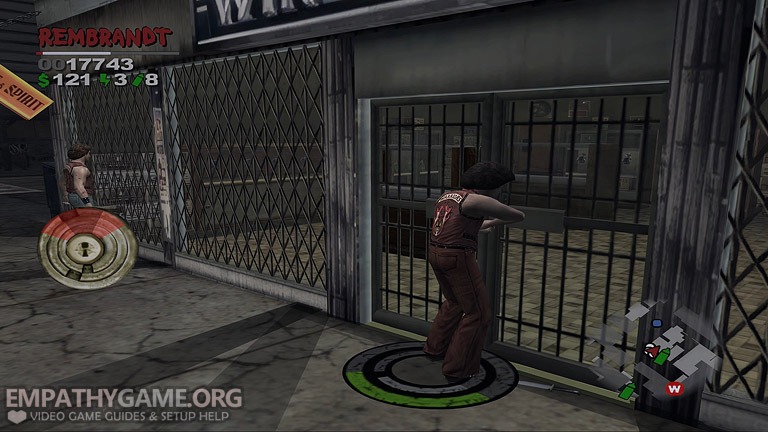
Back at the hangout, workouts improve fitness and stamina while local side missions offer rewards that carry into the campaign. The calmer structure is welcome after a series of fights, but the more interesting detail is that these activities are useful rather than merely decorative. Coney Island is not just where the Warriors live. Spending time there can change how prepared they are when they leave again.
Completing the third turf-invasion challenge, for example, unlocks a permanent brass-knuckles damage bonus. Because that reward can arrive before the later campaign chapters, optional neighbourhood work has a practical value beyond collecting everything after the story. That makes progression feel connected to the gang’s territory, even without a large equipment system or skill tree.
The trade-off is that better fitness, stamina, and combat bonuses strengthen abilities the player already understands rather than introducing many new ones. Long chases become more manageable and punches more effective, but the same grabs, strikes, and decisions about crowd control remain central throughout. The upgrades make the crew tougher; they do not reinvent how it fights.
Co-op Adds Company, Not Equal Authority
Two-player story co-op sounds almost inevitable for a game built around gang loyalty, and it gives the combat a different energy. One player can occupy several enemies while the other helps an ally, picks up a weapon, or pursues the objective. The view divides when partners move apart, allowing them to operate independently at the expense of an occasionally distracting camera. It works best as shared street chaos, not as a carefully balanced cooperative puzzle.
There is also an important asymmetry. Player 1 controls the War Chief commands, while Player 2 cannot direct the remaining AI Warriors. If the leader falls and cannot be revived, an objective requiring squad orders may become impossible for the second player to complete alone. Protecting the leader therefore matters for reasons beyond friendship or combat efficiency. The restriction is frustrating when it blocks progress, but it also exposes how central command authority is to the game’s design.
New York Has More Character Than Its Models
Close-up faces, repeated animations, and blunt environmental geometry reveal the game’s age quickly. Yet the city is more convincing as an atmosphere than as a collection of detailed objects. Graffiti-covered walls, fluorescent storefronts, dirty subway platforms, cramped alleys, and battered clothing all belong to the same hostile world. The districts do not need photorealism to feel as though different crews have left their mark on them.
That sense of place owes as much to sound and character design as to scenery. The Baseball Furies and face-painted Hi-Hats would look almost comical in a more realistic crime story, but here their exaggerated styles suit the film’s strange version of New York. Returning actors connect the dialogue to familiar characters, while Barry De Vorzon’s music and period selections reinforce the setting. The shouting, shattering glass, and dull impact of a bat often do more to sell a street encounter than the character models could. Even when a location is visually simple, it seldom feels polite or safe.
Revisiting the Streets
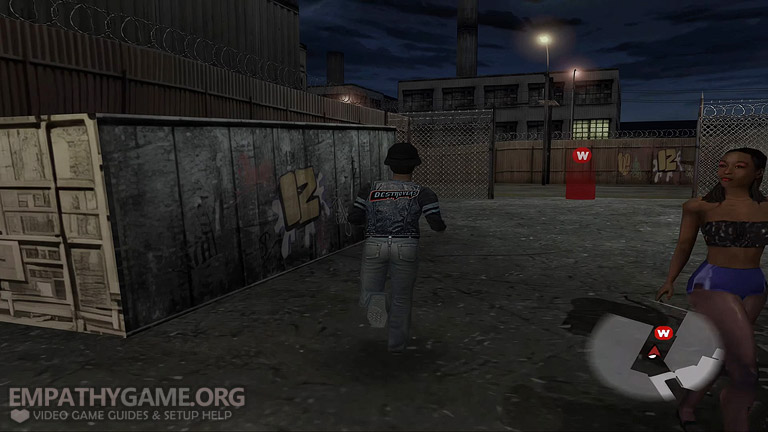
Completed missions can be replayed for missed graffiti, optional objectives, and improved scores. The flashbacks are worth seeking out for their character stories, while Rumble Mode offers additional arenas, fighters, and objective-based diversions. The unlockable Armies of the Night takes Swan and Ajax into a side-scrolling arcade brawler, giving the whole package an affectionate connection to the genre’s roots. Hardcore Soldier adds a reason to reconsider the tactics that worked on an easier run.
Replayability has a clear ceiling. Rumble fights still rely on the familiar moves, missed collectibles can feel like chores, and repeating a chapter makes its rigid scripting or awkward targeting easier to notice. Playing with a second person changes the rhythm more noticeably than chasing a perfect score. The appeal is returning to a crew and a setting that make familiar scraps entertaining, not discovering an entirely new combat system after the credits.
Final Verdict
The strongest achievement of The Warriors is how convincingly its separate pieces support the same idea. The prequel makes the gang worth understanding, flashbacks reveal friendships beneath the tough exterior, and War Chief orders turn that loyalty into something the player must actively maintain. Even small details, from a Warrior’s talent for graffiti to the rewards earned around Coney Island, help distinguish the crew from a set of identical fighters in leather vests.
It is not a polished fighting game. The move set has limits, stealth is clumsy, the camera and targeting can make crowded encounters needlessly difficult, and the later film-based missions are not always as inventive as the original chapters. Co-op is entertaining but grants unequal authority. These weaknesses matter most to players looking for precise controls, elaborate progression, or the freedom of a true open-world crime game.
What remains appealing is harder to find elsewhere: fights that feel like conflicts between whole gangs, companions whose presence changes decisions, and a vividly hostile New York that never relies entirely on graphical detail. Its rough edges can certainly get in the way, but they do not erase the care put into the world and the relationships at its centre. The Warriors is at its most memorable when victory means getting the crew through the night, not merely being the last fighter standing.
The Warriors Pros & Cons
- Pro: Weighty crowd brawling with grapples, improvised weapons, crew commands, and varied fighting styles.
- Pro: The pre-film missions expand the Warriors’ history and capture the gritty 1979 New York setting.
- Pro: Local two-player PS2 campaign co-op and Rumble Mode make revisiting missions worthwhile.
- Pro: PCSX2 provides a well-established way to run an owned PS2 copy with modern controller mapping and improved rendering resolution.
- Con: No native Windows version or normal official PC store purchase.
- Con: Camera behavior, occasional mission difficulty spikes, and repeated street fights show the game’s age.
- Con: PS2 emulation requires a separately dumped console BIOS and game media; compatibility and performance vary by setup.
- Con: The PSP port trades the console’s second analog stick and straightforward local co-op for handheld controls and ad-hoc multiplayer.
The Warriors PC System Requirements
No official native Windows PC requirements exist because Rockstar did not release The Warriors for Windows. The figures below are the PCSX2 emulator’s published Windows host requirements, not specifications issued for The Warriors itself. Hardware needs can vary by game, chosen internal resolution, and emulator settings.
PCSX2 MINIMUM HOST REQUIREMENTS:
OS: Windows 10, version 22H2 or supported LTSC, 64-bit
CPU: x86-64 with SSE4.1; at least two physical cores with simultaneous multithreading; single-thread PassMark score of 1,500 or higher
RAM: 8 GB
GPU: Vulkan 1.1, Direct3D 11 Feature Level 10.0, or OpenGL 3.3 with required extensions; PassMark G3D score of 600 or higher
Storage: Space for PCSX2, your own PS2 BIOS dump, memory-card data, and a backup of the game disc; no official game-specific Windows storage figure
PCSX2 MODERATE / COMFORTABLE HOST TIER:
OS: Windows 11, 64-bit
CPU: x86-64 with AVX2; four physical cores; single-thread PassMark score of 2,000 or higher
RAM: 16 GB
GPU: Vulkan 1.3, Direct3D 12, or OpenGL 4.6; PassMark G3D score of 6,000 or higher; 4 GB VRAM
Storage: As above, plus room for saves and optional emulator enhancements
These are general emulator tiers published by PCSX2, not a tested The Warriors benchmark. A PC meeting the moderate tier should be a stronger starting point for increasing internal resolution, but a guaranteed frame rate cannot be inferred from the list.
PPSSPP Requirements for the PSP Version
PPSSPP’s developers describe the emulator as efficient on a broad range of Windows, macOS, and Linux computers and do not publish a single fixed CPU/GPU specification for The Warriors. In practice, start with PPSSPP’s default settings, make sure graphics drivers are current, and increase the PSP rendering resolution only after checking smooth gameplay. See the official PPSSPP introduction and setup documentation for the applicable installation and control options.
Additional PC Performance and Setup Notes
Rendering and aspect ratio: In PCSX2, start with the default graphics renderer and native PS2 resolution. Increase internal resolution gradually rather than assuming that a higher output size automatically improves the original textures. The game comes from the 4:3 / early-widescreen console era, and forcing a 16:9 display aspect without a suitable game correction may stretch the picture rather than reveal more horizontal detail.
Widescreen correction: PCSX2 maintains officially distributed community game patches, including patches for The Warriors, alongside documentation of how its widescreen patches are recognized. With an up-to-date PCSX2 build, select The Warriors in the game list, open its Properties and check the available Patches options. If a compatible Widescreen 16:9 correction is shown for your exact disc revision, enable it and set the graphics aspect ratio to 16:9; then compare the image and interface against the original. If no matching patch appears or the view/HUD looks wrong, disable the correction and use faithful 4:3 rather than stretching the image. No manual patch file should be assumed compatible across every region and revision.
Controller and co-op: A dual-analog gamepad is recommended for PCSX2. Map the two physical controllers separately for local co-op, and keep the game running at its intended speed before trying experimental frame-rate patches. Fast-forward, aggressive speed adjustments, or unofficial high-FPS patches can change timing or introduce problems in some titles.
Compatibility: PCSX2’s The Warriors wiki marks the North American PS2 release as Playable, but its individual test reports were recorded on older emulator builds. If you encounter unusual rendering, timing, or sound behavior, return to default settings first and check the title-specific compatibility record. PPSSPP’s user-submitted PSP compatibility reports are useful for comparisons but do not guarantee an identical result across PCs and game revisions.
Official Trailer
Note: This archived official PS2-era gameplay trailer, published by IGN, introduces the game’s street fights and 1979 New York style. The written guide above covers the separate question of modern PC emulation and legitimate game ownership.
Frequently Asked Questions
Do you need to watch The Warriors movie before playing the game?
No. The game tells a self-contained story, with much of its campaign taking place before the events of the 1979 film. It explores how the Warriors formed, their rivalry with the Destroyers, and their rise in Coney Island before eventually reaching the movie’s famous gang meeting and journey home. Watching the film adds familiarity with the characters but is not necessary.
Is The Warriors an open-world game like Grand Theft Auto?
Not exactly. The Warriors uses a mission-based structure with the gang’s Coney Island hangout serving as its main hub. You can explore the surrounding turf, complete optional activities, and interact with the environment, but there is no unrestricted, continuous New York City map comparable to GTA.
Can you play as different Warriors, including Swan and Ajax?
Yes. Story missions place you in control of different gang members, including Swan, Ajax, Cleon, Rembrandt, and others, depending on the chapter. Each has different physical attributes and fighting strengths, although the campaign usually determines which character you control rather than offering unrestricted character selection.
Can two people play The Warriors story campaign together?
Yes. The original PS2 version supports local two-player campaign co-op, allowing a second player to join during gameplay using another controller. This also works through PCSX2 when two controllers are configured correctly. The game’s separate Rumble Mode offers additional two-player competitive and cooperative activities.
Does The Warriors use split-screen during co-op?
Yes. The console version features a dynamic camera that can show both players together when they are nearby and split the screen when they move too far apart. This allows the two players to fight or explore different parts of an area, although frequent camera transitions can sometimes make crowded battles harder to follow.
Does The Warriors support online co-op, LAN, or cross-play?
The original PS2 and Xbox releases do not include native internet multiplayer or cross-play. Their co-op is local, while the PSP adaptation supports ad-hoc wireless multiplayer between compatible PSP systems. PCSX2’s local controller emulation does not itself add official online multiplayer to the game.
What is Flash, and how do you heal or revive a Warrior?
Flash is the game’s health-restoring consumable. You can obtain it from dealers, certain locations, and pickups, then use it to restore your character’s health or revive an incapacitated teammate. On the original PS2 controls, D-pad Right heals your character, while D-pad Left revives a nearby fallen Warrior. Carrying Flash is especially important because a teammate cannot rescue you without an available dose.
How does Rage Mode work in The Warriors?
Fighting enemies and performing certain aggressive actions fill your Rage meter. Once it is sufficiently charged, you can activate Rage Mode to temporarily deal stronger attacks and become resistant to ordinary incoming damage. It is particularly useful against powerful opponents and large groups, so saving it for a difficult confrontation can be more effective than immediately activating it.
How do War Chief commands work?
War Chief commands let you direct AI-controlled gang members during missions. Orders such as Follow Me, Watch My Back, Wreck ‘Em All, Scatter, and Mayhem help coordinate attacks, protect your position, escape trouble, or cause destruction. Using the right order can make a crowded encounter easier than trying to defeat every enemy alone.
What should you do when the police chase you?
Escaping is often safer than fighting, especially when officers arrive in large numbers. Use rooftops, fences, corners, and dark hiding places to break pursuit rather than staying in the street. If a Warrior gets handcuffed, another gang member may be able to free them, but letting several teammates get arrested can quickly turn a manageable mission into a failure.
Can you permanently improve your Warriors through training?
Yes. The Warriors’ Coney Island hangout contains four workout stations, including exercises such as push-ups, sit-ups, chin-ups, and punching-bag training. Completing their challenges improves your gang members’ fitness, with important stamina benefits at higher workout levels. These upgrades make sustained sprinting and demanding combat moves easier to manage.
What are Coney Island bonus missions, and are they worth completing?
Coney Island bonus missions are optional challenges that become available as the story progresses. They are marked by purple mission icons around the gang’s home territory and can reward useful abilities, equipment improvements, or other gameplay benefits. Completing them before difficult later chapters is worthwhile because some rewards provide practical advantages during combat and exploration.
What are the Flashback missions in The Warriors?
Flashbacks are five additional story chapters that reveal important events from the gang’s earlier history, including how certain members joined the Warriors. They unlock gradually through campaign progression and are not required simply to finish the main storyline. Completing them also contributes to overall completion and helps unlock additional content.
Can you replay missions to collect missed graffiti tags and complete bonus objectives?
Yes. Completed chapters can be replayed from the New York City map inside the Warriors’ hangout. This lets you return for missed graffiti tags, unfinished optional objectives, and higher mission scores without restarting the campaign. Improving those results also unlocks additional characters, arenas, and activities for Rumble Mode.
How do you unlock more characters, arenas, and modes in Rumble Mode?
Rumble Mode is accessed through the pinball machine in the Warriors’ hangout. Additional fighters, gangs, arenas, and challenges become available by progressing through the story, completing bonus objectives, and reaching chapter high scores. Modes such as King of the Hill, War Party, and Burner Battle provide different objectives beyond ordinary one-on-one fights.
What is Armies of the Night, and how do you unlock it?
Armies of the Night is a bonus side-scrolling beat ’em up inspired by classic arcade fighting games, featuring Swan and Ajax in a separate rescue adventure. In the original PS2 version, complete the 18 main story chapters and all five Flashback missions to make the arcade game playable from the machine in the hangout. It is separate from the regular Rumble Mode.
What is Unleash the Fury difficulty?
Unleash the Fury is an unlockable challenge setting that makes the campaign considerably harder and changes the Warriors’ appearance to resemble the Baseball Furies. To unlock it, complete the story and Flashback chapters on Hardcore Soldier difficulty. It is designed for returning players who want a more demanding second run rather than a different storyline.
How long does it take to finish The Warriors?
A normal story playthrough takes roughly 12–20 hours, depending on difficulty, mission retries, and how much optional content you complete along the way. Finishing the Flashbacks, Coney Island challenges, workouts, high-score objectives, and additional modes can extend the experience considerably.
Still have questions? Check the The Warriors Game Reddit community, official Rockstar Games support, or PCSX2’s The Warriors compatibility wiki for additional gameplay discussions, platform information, and PC emulation help.
Sources & References
Key factual and technical information in this guide was checked against relevant official and community sources, including:
- Rockstar Games — The Warriors — official release date, developer credits, setting, and console platform history.
- PlayStation Store — The Warriors (PS4) — official console rerelease, two-player support, and PS5 compatibility warning.
- PCSX2 Wiki — The Warriors — PS2 disc identification and community-maintained game compatibility reports.
- PCSX2 — System Requirements — official minimum and moderate PC emulator hardware tiers.
- PCSX2 — Officially Distributed Patches Repository — patches bundled with the emulator, including game-specific enhancement work.
- PPSSPP — Dumping UMD Games — official PSP ownership-based game backup procedure.
Similar Games Like The Warriors
- Def Jam: Fight for NY
- Sleeping Dogs: Definitive Edition
- Yakuza 0 Director’s Cut
- Bully: Scholarship Edition
- Yakuza Kiwami
- GTA San Andreas
Found something worth playing through DecideGame?
DecideGame.com is an independent gaming project run by Editor Zero. If this guide helped you discover a game, solve a problem, or find useful information, you can support DecideGame.com and help keep new and updated game guides coming.
DecideGame — PC Game Guides, Reviews & Setup Help