
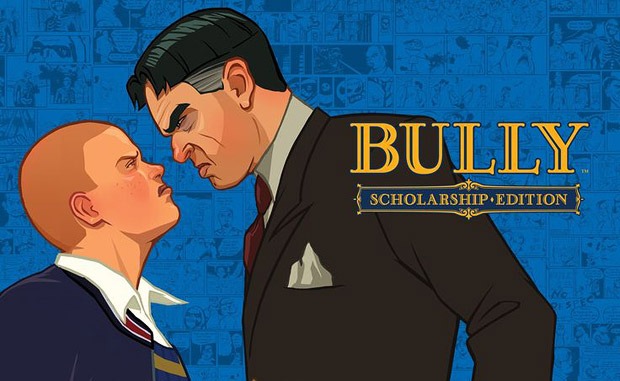
📅 Game released: 2008
Bully: Scholarship Edition follows rebellious teenager Jimmy Hopkins through Bullworth Academy, where classes, clique rivalries, pranks, and an explorable town turn school life into a distinctive Rockstar open-world adventure. This PC guide covers official Steam and Rockstar download and installation options, GTA+ access, system requirements, controller setup, and practical Windows stability and widescreen fixes.
 By Editor Zero — independently researched, edited, and maintained.
Last updated: 15 November 2026
Last reviewed: 15 November 2026
Table of Contents
- Quick Facts
- Official PC Stores, Download & Installation
- Bully: Scholarship Edition Review
- Pros & Cons
- PC System Requirements
- Frequently Asked Questions
- Similar Games
Bully: Scholarship Edition Quick Facts
- Game: Bully: Scholarship Edition / Bully SE; enhanced edition of Bully (also originally known as Canis Canem Edit in Europe)
- Developer: Rockstar Vancouver; Windows version by Rockstar New England (formerly Mad Doc Software)
- Publisher: Rockstar Games
- Genre: Action-Adventure, Open World, Brawler / Beat ’em Up
- Release: March 4, 2008 (Xbox 360 and Wii, North America); Windows PC: October 21, 2008
- Platforms: Windows PC, Xbox 360, Wii
- Edition content: Eight additional missions, Biology, Geography, Math and Music classes, additional clothing and collectibles, and presentation improvements over the original Bully
- Modes: Single-player on Windows PC; two-player competitive minigames were included in the console versions but not the PC port
- GTA+: Included in Rockstar’s GTA+ Games Library for eligible subscribers; membership access is separate from permanent ownership
- Steam Deck: Playable; Valve identifies display-resolution and possible performance limitations, and external controllers may need manual selection
- Engine: Gamebryo (Scholarship Edition); the original PlayStation 2 Bully used RenderWare
- Community: Steam Discussions, Bully Reddit Community
- PC modding: Unofficial community mods are available through Nexus Mods, SilentPatch, and the Bully Widescreen Fix; no official Steam Workshop or Rockstar modding toolkit is listed
- Metacritic score: 72/100 on Windows PC
- IGN score: 7.8/10 (Windows PC); 8.7/10 (Xbox 360 Scholarship Edition)
- GameSpot score: 6/10 for the Windows PC version
- Steam user reception: Very Positive overall
Official PC Stores, Download & Installation
👇 Compare the official Steam and Rockstar Games Launcher options below before purchasing, downloading, or installing Bully: Scholarship Edition on Windows PC.
- Official PC availability: Bully: Scholarship Edition is sold as a native Windows game through Steam and the Rockstar Store. There is no need to obtain console game files or use an emulator to play the official PC edition.
- Steam version: Purchase the game through Steam, then install it from your Steam Library. Steam lists single-player gameplay, Family Sharing, partial controller support, and a Rockstar Games account requirement. The Steam purchase is a separate entitlement from a direct Rockstar Store purchase.
- Rockstar Games Launcher: A direct purchase through the Rockstar Store provides access through the Rockstar Games Launcher. Install the official launcher, sign in to the Rockstar Games account holding the entitlement, and download the game from its library.
- GTA+ membership: Rockstar also lists Bully: Scholarship Edition in its GTA+ Games Library. Eligible PC subscribers can access the included game through the Rockstar ecosystem while their membership and the relevant catalogue entitlement remain active. This is not a permanent game purchase, and catalogue availability can change.
- Original versus Scholarship Edition: The original 2006 PlayStation 2 game is a different release. Scholarship Edition contains the expanded campaign, extra classes, additional activities, and improved presentation. The later mobile Anniversary Edition is another distinct product and does not provide Windows ownership.
- Multiplayer differences: The Xbox 360 and Wii versions contain additional competitive two-player minigames, but the official Windows PC version is single-player only. Purchasing the Steam or Rockstar PC edition does not provide native online multiplayer, split-screen, or campaign co-op.
- Account and activation: Rockstar’s PC support documentation describes account authentication, online activation, and possible periodic entitlement verification. Do not assume that an installation is permanently independent of the store or its account services; connectivity may be needed even though the main campaign is not an online multiplayer game.
- Steam Deck and controllers: Steam marks the game Playable rather than Verified. The PC version was designed around keyboard and mouse or Xbox 360-style controller inputs; modern controller compatibility can depend on input mapping and the device being used.
- Mods and store selection: Both legitimate PC editions can be used as a starting point for compatible community improvements, but mods must match the installed executable and game files. Steam and Rockstar ownership do not automatically transfer between storefronts. Back up saves and original files before modifying either installation.
 Buy Bully: Scholarship Edition on Steam
 Buy Bully: Scholarship Edition on Rockstar Store

Bully: Scholarship Edition Review
A brilliantly observed schoolyard sandbox whose personality outlasts its clumsy fights and controls.
Rockstar’s open worlds usually encourage trouble on a grand scale. Bully: Scholarship Edition makes the stakes smaller and, in some ways, more interesting: being late to English, getting caught sneaking through a dormitory, or offending the wrong student can disrupt an ordinary afternoon. Jimmy Hopkins arrives at Bullworth Academy with a disciplinary record and little interest in following the rules. The game then gives him a timetable, a collection of hostile social groups, and a surprisingly busy town in which to decide which rules are worth breaking.
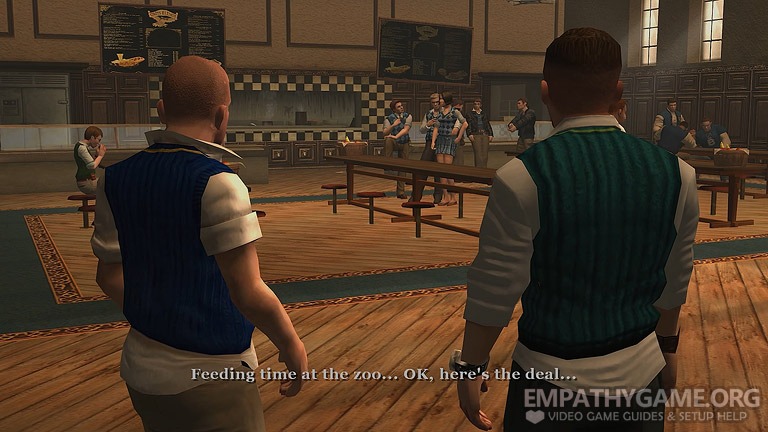
What makes Bullworth convincing is not the size of its map or sophistication of any one activity. It is the overlap between school routines, petty rivalries, favors, practical jokes, and the unpredictable business of simply walking to the next destination. There is room to pursue the story, finish homework-like minigames, or forget both while looking for trouble. The fantasy is mischievous rather than criminal, and its best jokes arise from treating teenage disputes with the seriousness usually reserved for gang warfare.
That identity survives some substantial roughness. Fistfights eventually become too easy, mission targeting can be unreliable, and movement depends on awkward inputs that longer sessions expose. This is not a particularly refined action game or a deep social simulation. It is a characterful, tightly themed adventure, and the pleasures of inhabiting Bullworth often make its mechanical shortcomings easier to forgive.
School Hours Give the Open World Its Rhythm
Two scheduled classes divide most school days. The bell can interrupt a trip across campus, while prefects make truancy more than a decorative rule. After hours, restrictions change again: staying out late draws unwanted attention, and Jimmy cannot roam indefinitely without eventually needing sleep. These simple pressures transform a modest map into a place with obligations. Crossing the quad is different when a lesson is about to begin and a prefect is watching the corridor.
The clock works because it makes decisions that would be trivial elsewhere feel briefly consequential. Should Jimmy stop for a nearby mission, attend the class that will improve an ability, or risk a shortcut through a restricted area? Skipping the lesson is rarely disastrous, but it can create an amusing chase and force a detour. At its worst, an appealing distraction ends just as another obligation starts, so the schedule interrupts exploration instead of enriching it.
Authority also has a more peculiar relationship with convenience than the rulebook suggests. Being caught usually means being escorted away or potentially facing detention. Depending on where and when Jimmy is apprehended, though, the resulting relocation can also shorten a long journey back toward school. This does not make getting busted harmless, particularly during missions, but it shows how Bullworth’s disciplinary system can double as an unexpected travel mechanic once its rules become familiar.
Classes Are Miniature Games with Uneven Rewards
The lessons themselves are playful substitutes for schoolwork. English asks for words assembled from a set of letters; Chemistry turns mixing ingredients into a sequence of timed inputs; Gym alternates between wrestling instruction and dodgeball. Scholarship Edition adds Biology dissections, Geography questions, Math exercises, and Music rhythm challenges. Their short format fits the game: no single lesson has to carry a whole evening of play, and the familiar subjects reinforce the fiction that Jimmy is still supposed to be getting an education.
The best subjects also make a difference outside the classroom. English improves Jimmy’s ability to talk his way out of trouble, Chemistry helps maintain a supply of prank ammunition, and Gym expands his fighting moves. Shop unlocks better bicycles, Art improves the health benefits of kissing, and Photography eventually opens up the Yearbook activity. Geography provides a particularly practical payoff by revealing the locations of certain collectibles on the map as lessons are completed. That turns a classroom diversion into a useful exploration tool rather than an isolated score challenge.
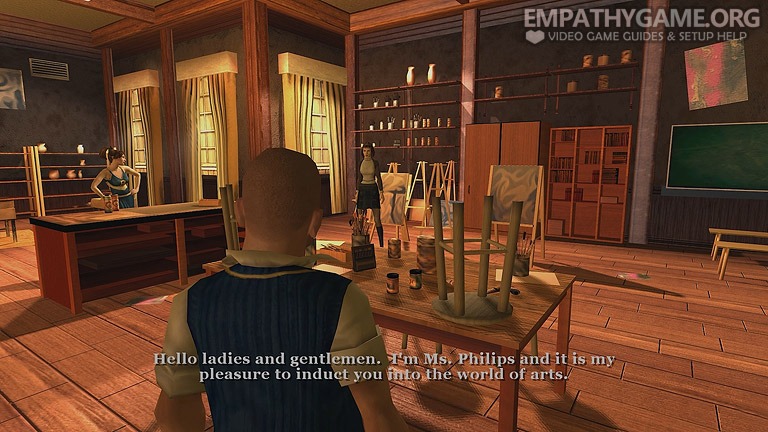
Not every course earns that investment equally. Biology’s precise toolwork and Music’s timing demands can feel fussy, especially when their rewards are mainly cosmetic. Five levels per subject create a pleasing sense of progress, but repeating a format after its novelty fades can make compulsory-looking schoolwork feel suspiciously like actual schoolwork. Once a subject is fully completed, the freedom to ignore further lessons is a welcome reward in itself.
Missions Work Best as Schoolyard Set Pieces
The main campaign organizes much of its conflict around Bullworth’s social factions: Bullies, Nerds, Preppies, Greasers, Jocks, and, beyond the school’s immediate hierarchy, Townies. Each group has its own hangouts, anxieties, and exaggerated idea of respect. Rather than conquering districts through a conventional territory system, Jimmy undertakes missions that gradually change his position among them. It gives the story momentum, even if the relationships are more scripted than genuinely negotiable.
The Candidate captures the game’s strengths with almost no spectacle by Rockstar standards. Earnest is trying to deliver an election speech, and Jimmy must defend him from disruptive Jocks using a scoped slingshot. The weapon, the location, and the petty political stakes fit together perfectly. It is a protective shooting mission, but the objective feels like a specific episode from Bullworth rather than a standard combat assignment with school uniforms added.
The missions are less effective when they demand exact handling from systems built for broad slapstick. Aiming can shift awkwardly between targets, scripted chases offer little room to recover from a mistake, and some objectives repeat too much setup after failure. The game is funniest when chaos unfolds naturally, not when it insists on one fragile sequence.
Scrappy Combat and Small Social Reactions
Hand-to-hand fighting begins with straightforward punches, blocks, and grapples, then grows through Gym lessons and training with a veteran living near an abandoned school bus. Jimmy can use environmental opportunities and improvised weapons, from stink bombs and firecrackers to the slingshot and spud gun. There is satisfying comic brutality in embarrassing an overconfident opponent or escaping several attackers, particularly early on when being surrounded feels dangerous.
Once more powerful combinations become available, ordinary students struggle to pose the same threat. Lock-on targeting does not always select the opponent Jimmy needs to handle, and a crowded fight can degenerate into button presses rather than a meaningful contest of timing. Some larger encounters briefly restore the pressure, but the underlying combat lacks the depth to remain compelling on its own. Fortunately, fighting is only one expression of Jimmy’s relationship with the world.
One of Bully’s most distinctive pleasures lies in its tiny social provocations. Jumping into another student, for instance, can trigger irritation, warnings, shoving, or even a fight if Jimmy keeps at it. Reactions vary with the character and circumstances, rather than following a perfectly predictable threshold. It is a small detail, yet it changes how seemingly harmless movement feels: the students are not merely decorations waiting for a formal mission or fistfight to activate them.
Jimmy can also greet, taunt, apologize to, or interact more warmly with other students. These encounters support a little spontaneous role-playing. A Yearbook photograph, for example, can become more engaging when Jimmy approaches a student socially before taking the picture rather than treating each face as another collectible to tick off. Such gestures are not evidence of a deep relationship simulator, but they lend life to errands that would otherwise be entirely mechanical.
The limits of this system are visible too. A teacher who is sympathetic to Jimmy in a story sequence may respond with a surprisingly hostile stock line when addressed during free roam. Mr. Galloway and Ms. Philips are especially noticeable examples of that disconnect. Bullworth’s characters have strong scripted personalities, but everyday dialogue cannot always maintain those personalities when the player approaches them outside a mission.
A Compact Town Packed with Good Distractions
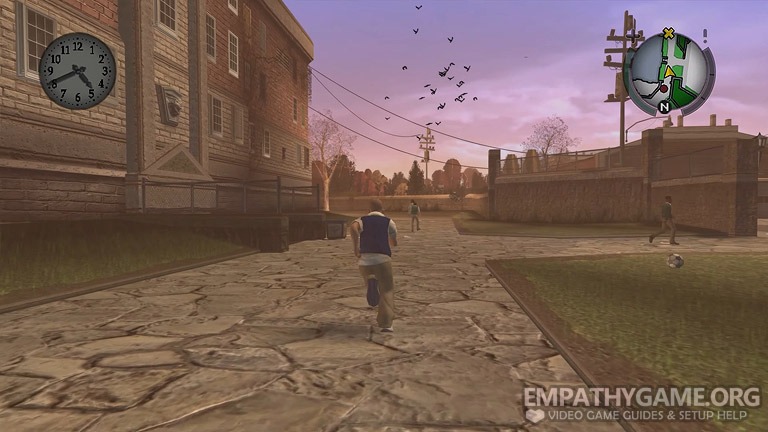
Exploration expands beyond the academy into shopping streets, residential neighborhoods, the rougher corners of New Coventry, and the carnival. These places are small enough to learn without relying constantly on the map. Bicycles and Jimmy’s skateboard are central to the experience, making an errand across town feel like a short ride rather than an expedition. Street corners, alleys, ramps, and shortcuts make travel a diversion; paper deliveries, lawn mowing, arcades, and carnival attractions fill the time between missions.
Movement has an old-fashioned irritation, however: holding the run input produces ordinary running, while maximum sprinting requires repeated tapping. That difference is manageable in a brief chase but wearing over longer journeys, and cycling can demand similar repetitive input. Loose turning and occasional camera problems add friction to some timed activities. The game invites constant movement but does not always make moving comfortable.
Optional bicycle races are a good example of Bullworth’s eccentric freedom. An appropriately positioned moped can be brought into a race instead of relying on the standard bicycle, trading greater speed for less forgiving handling. The choice can help on straights and become a liability around tight bends. That small equipment decision is more interesting than a simple upgrade ladder, and it helps a familiar racing activity feel like part of a larger sandbox.
Jimmy and His Rivals Give Bullworth Its Personality
Jimmy’s arrival as an unwanted new pupil gives the satire a useful viewpoint. He is rude, impulsive, and entirely capable of making trouble for its own sake, but he also recognizes cruelty and hypocrisy when he sees them. That contradiction matters. A protagonist who behaved like a spotless defender of the weak would not fit a school built around petty aggression; one who delighted only in tormenting others would be much harder to spend time with.
Gary Smith’s manipulative streak gives the loose sequence of clique disputes a thread of purpose, while Pete Kowalski offers a more vulnerable counterweight to Jimmy’s temper. The rivalry works because Bullworth’s hierarchy is already absurdly unstable. The Preppies boast of privilege and boxing skill, the Greasers protect their territory, and teachers frequently appear more compromised than their pupils. The writing understands how enormous a minor humiliation can feel to the people trapped inside a school social order.
Visually, Bullworth depends more on silhouette, color, and place than on fine detail. Dim school corridors, Halloween decorations, winter streets, and the glow of the carnival establish moods the polygon counts never could. Shawn Lee’s eccentric score and the cast’s lively voice performances give even mundane journeys a slightly conspiratorial energy. Seasons matter especially because the campaign moves through them rather than cycling back freely: an autumn prank or snowy walk has a distinct place in Jimmy’s school year.
Progression Is Satisfying, but the School Year Only Moves Forward
Skills and privileges accumulate through classes, the veteran’s transistor-based fighting lessons, races, collectible hunts, and story milestones. New areas open, Jimmy’s options broaden, and shifting clique respect changes the tone of some encounters. There is no build system or durable choice between rival factions, though. The arc is about gradually mastering Bullworth’s established routines rather than designing a unique version of Jimmy.
For completion-minded players, the Yearbook, rubber bands, G&G cards, garden gnomes, bike races, and other optional pursuits make the world worth revisiting. The ending opens a period of free roaming in which much unfinished side content can still be tackled. That is generous as a playground, but it does not restore every earlier moment. Specific seasonal atmospheres disappear as the chapters advance, and completed story missions cannot simply be selected again from a replay menu.
That limitation is worth considering long before the credits. Keeping separate saves near chapter boundaries is the practical way to revisit Halloween, the winter chapter, or favorite confrontations without starting the campaign from scratch. It is not a particularly elegant solution, but it protects experiences that the world otherwise leaves behind. A second run offers no divergent story, but it does reward greater familiarity with Bullworth’s rules.
Final Verdict
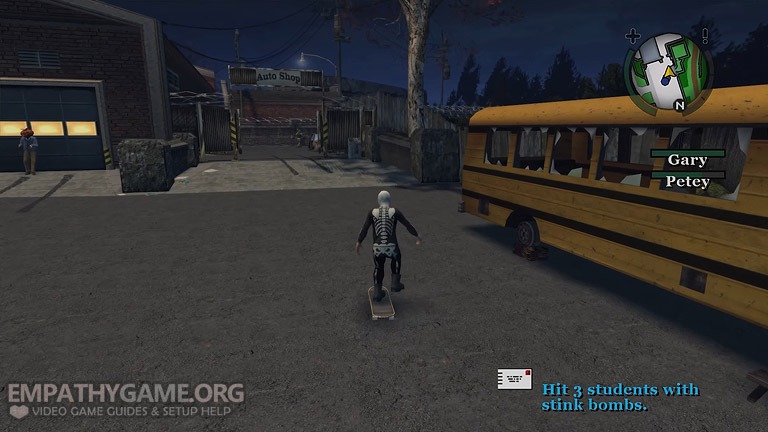
Bully: Scholarship Edition remains distinctive because its systems speak the same language. A school timetable gives the day structure; classes provide small but relevant rewards; prefects turn misbehavior into an inconvenience; cliques make the map socially meaningful; and dozens of trivial diversions become convincing ways for a teenager to waste an afternoon. It is rarely the most polished version of any individual activity. The achievement is how comfortably those activities belong together.
The weaknesses are real. Combat outgrows its challenge before the story ends, aiming and movement can spoil carefully scripted missions, and some minigames demand more repetition than their rewards justify. Its memorable characters occasionally collide with generic ambient dialogue, and the absence of direct mission replay makes the changing school year less convenient to revisit than it should be. Those limitations matter most to anyone looking for precise modern action or a genuinely dynamic social simulation.
For players who enjoy compact open worlds, eccentric characters, and freedom expressed through small everyday decisions, Bullworth offers something few other Rockstar settings attempt. Its best moments are not grand victories but the unpredictable journey between a lesson, an argument, a side job, and a prank that went further than expected. The controls have aged; the personality has not.
Bully: Scholarship Edition Pros & Cons
- Pro: Distinctive school-based open world where classes, disciplinary rules, clique rivalries, and a daily schedule give exploration an identity beyond conventional crime games
- Pro: Memorable characters and satirical dialogue surrounding Jimmy Hopkins, Bullworth’s faculty, and the Nerds, Jocks, Greasers, Preppies, and Townies
- Pro: Expanded Scholarship Edition activities, including four additional school subjects, extra missions, unlockable clothing, bicycles, skateboarding, carnival games, and side jobs
- Pro: Compact world rewards curiosity without requiring the large travel distances associated with later Rockstar open-world games
- Pro: Official Steam and Rockstar PC ownership options, GTA+ access, and an established community of compatibility fixes and modifications
- Con: Older Windows port is vulnerable to crashes, inconsistent frame pacing, and compatibility problems without appropriate fixes
- Con: Default 30 FPS behavior, limited PC-specific polish, and awkward keyboard/mouse controls compared with more modern action-adventures
- Con: Fighting, targeting, and some mission structures can feel repetitive or imprecise, particularly after Jimmy unlocks stronger moves
- Con: Windows version omits the two-player competitive minigames present in the Xbox 360 and Wii editions
Bully: Scholarship Edition PC System Requirements
OFFICIAL WINDOWS PC REQUIREMENTS:
MINIMUM:
OS: Windows 10 64-bit (Rockstar’s published support specification)
CPU: Intel Pentium 4 at 3 GHz or higher / AMD Athlon 3000+
RAM: 1 GB
GPU: NVIDIA GeForce 6800 / 7300 or better; ATI Radeon X1300 or better; DirectX 9.0c Shader Model 3.0 support required
DirectX: DirectX 9.0c
Storage: 4.7 GB available space
Sound Card: DirectX 9-compatible
Input: Keyboard and mouse or Xbox 360-compatible controller
Internet: Required for applicable Rockstar account authentication, activation, and entitlement verification
Additional Notes: Rockstar lists supporting software such as DirectX and Microsoft Visual C++ components; some modern or older graphics configurations may require compatibility troubleshooting.
RECOMMENDED:
Rockstar does not publish a separate modern recommended hardware tier for Bully: Scholarship Edition. The specifications above are the official minimum, not a guarantee of trouble-free behavior on every Windows 10 or Windows 11 configuration.
Additional PC Performance and Setup Notes
Windows 10 and Windows 11 stability:
Bully: Scholarship Edition is a native Windows game, but its original PC technology can behave unpredictably on newer systems. Crashes during loading, classroom activities, extended sessions, or transitions between areas are documented legacy problems. Hardware substantially exceeding the minimum requirements does not necessarily prevent them.
Start with a clean installation from Steam or Rockstar and confirm the game launches before adding unofficial modifications. Rockstar maintains an official Bully PC compatibility patch and support instructions addressing historical streaming, lockup, and memory-related crashes. Modern digital installations generally include the official fixes already; the standalone patch is primarily relevant to older retail installations. Avoid reinstalling it over an already updated Steam or Rockstar copy without verifying compatibility.
SilentPatch for Bully:
One of the most useful community-maintained improvements is SilentPatchBully by Silent. This unofficial patch addresses several memory-management errors, resource leaks, crashes, and frame-pacing problems. It is particularly relevant for players who experience instability despite using a properly updated official installation.
To install it, open the original author’s page, follow its Download link, and obtain the Bully-specific SilentPatch archive. Find the folder containing the game’s executable: in Steam, right-click the game and choose Manage > Browse local files; in Rockstar Games Launcher, open the installed game’s settings and choose its installation folder. Back up the original directory and extract the archive contents into that game folder, preserving the included file structure. Launch the game normally through its official store or launcher.
SilentPatch is an unofficial beta project rather than a Rockstar-supported update. Introduce one modification at a time, retain the original files, and consult the author’s installation instructions if other ASI-based modifications are present.
Frame-rate limitations:
The Windows version normally operates with a 30 FPS cap. SilentPatch improves the precision of this limit and exposes an optional frame-rate setting in SilentPatchBully.ini. Higher frame rates can affect mission scripts, physics, timing, and minigames, so 30 FPS is the safest baseline for a complete playthrough. Test higher settings cautiously rather than assuming that an uncapped frame rate will be harmless. Enable the game’s V-Sync option when using SilentPatch’s frame limiter to help avoid uneven frame pacing.
Widescreen and ultrawide support:
The PC release supports ordinary widescreen resolutions, so a separate modification is not generally necessary for a standard 16:9 display. Ultrawide monitors can encounter incorrect HUD placement, field-of-view behavior, or missing resolution choices.
For 21:9 and other ultrawide formats, use the Bully: Scholarship Edition Widescreen Fix by ThirteenAG. Its project release page provides the relevant archive and instructions. Download the Bully-specific package, back up the game directory, and extract the included files beside the game’s executable, preserving the archive’s folder structure. Start the game and select your display resolution in its graphics settings. The fix also provides configurable field-of-view behavior through its included INI file.
This unofficial fix improves ultrawide rendering, HUD proportions, and FOV handling, but does not fully correct prerecorded video scaling. Follow the project’s notes for the specific release and check compatibility with other installed fixes before combining them.
Controller and keyboard setup:
An Xbox-style controller is generally the more comfortable option because the game was designed around console movement and interaction. Steam lists partial controller support, not comprehensive modern gamepad integration. If input mapping behaves unexpectedly, test the default layout first, then use Steam Input or an appropriate controller configuration rather than installing several overlapping input utilities. Keyboard and mouse are supported, but camera movement and menu interactions reflect the age of the port.
Save-game location and backups:
On Windows, the game’s normal save folder is under %USERPROFILE%\Documents\Bully Scholarship Edition\. Open that location in File Explorer and copy the save files to a separate backup before experimenting with scripts, overhaul mods, or reinstalls. Native Steam Cloud synchronization is not listed for this game, so manual backups are particularly useful when moving to another PC.
Unofficial mods:
The Bully: Scholarship Edition Nexus Mods page contains visual replacements, clothing and character modifications, gameplay changes, quality-of-life tools, and community projects. These are separate from official Rockstar updates. Check each mod’s requirements, supported game version, dependencies, and potential conflicts. Use a clean working installation as a fallback and avoid treating mod-specific performance claims as guarantees for every PC.
Official Trailer
Note: Rockstar’s official PC-availability trailer introduces Bullworth Academy, Jimmy Hopkins, schoolyard conflict, pranks, and the game’s distinctive setting. The written guide above covers current official PC ownership, installation, hardware, and compatibility details not explained in the trailer.
Frequently Asked Questions
How long does it take to beat Bully: Scholarship Edition?
The main story usually takes around 15–20 hours, depending on how often you attend classes and explore Bullworth. Completing side missions, races, collectibles, and other optional activities can extend a playthrough to roughly 25–35 hours or more.
Can you keep playing after the story, and is there New Game Plus?
Yes. After the campaign, Jimmy enters Chapter 6, Endless Summer, where you can continue exploring Bullworth, finish remaining classes and side activities, and work toward 100% completion. The storyline has one fixed ending and no official New Game Plus that carries upgrades or rewards into a new campaign.
Are there any missable missions in Bully: Scholarship Edition?
Yes. The optional Halloween mission The Big Prank is a notable missable mission because it must be completed during its specific story window. Missing it does not prevent 100% completion, but players who want to experience every available mission should complete it when it appears.
Do you have to attend classes, and can you retry failed lessons?
You do not need to pass every class to finish the story, but lessons unlock useful abilities, items, and other rewards. A failed class can be retried when it returns to the timetable; earlier passed levels and their rewards remain intact. Completing all five levels in the ten subjects is important for 100% completion.
Which classes should beginners prioritize?
Chemistry unlocks prank items, English strengthens Jimmy’s ability to apologize, Art improves kissing-related health bonuses, and Gym teaches fighting moves. Shop helps with transportation. Geography is especially useful when hunting collectibles because its lessons reveal the locations of rubber bands, G&G cards, transistors, and garden gnomes on the map.
What happens if Jimmy skips classes or breaks curfew?
Skipping scheduled classes puts Jimmy in a truancy state, allowing prefects to stop him and send him back to school. Staying outside after the nighttime curfew also attracts attention from school authorities. If Jimmy remains awake until approximately 2 AM, he passes out and wakes up the following morning, potentially losing money or possessions.
When can you explore Bullworth Town outside the academy?
The surrounding town becomes accessible as the story progresses into Chapter 2. Additional neighborhoods and activities open during later chapters, giving Jimmy access to new shops, missions, races, characters, and collectibles. You cannot freely explore the entire map from the beginning.
How do you unlock more fighting moves?
Jimmy learns additional fighting techniques by completing Gym classes and training with the homeless veteran who lives near the abandoned school bus. The veteran teaches special moves in exchange for transistors found around Bullworth, so collecting all six transistors is useful for improving Jimmy’s combat abilities.
Can Jimmy drive cars in Bully: Scholarship Edition?
Jimmy cannot freely steal and drive ordinary cars like a Grand Theft Auto protagonist. Instead, transportation focuses on skateboards, bicycles, scooters, and unlockable go-karts. These vehicles suit Bullworth’s smaller streets and school grounds, while skateboarding provides a convenient way to move around without constantly searching for a vehicle.
Can Jimmy date or kiss other students?
Yes. Jimmy can develop romantic interactions with certain students, including selected male and female characters. Gifts such as flowers or chocolates help initiate some interactions, while completing Art classes improves the health bonus associated with kissing and eventually removes the normal gift requirement for certain characters.
How do you save your game on PC?
Use one of the save books found at designated save locations, including Jimmy’s dorm room and the principal’s office. Additional save locations become available through progression and unlocked hideouts. Save manually after important missions and activities, particularly on PC, because an unexpected crash can otherwise cost you unsaved progress.
How do you complete the school yearbook?
Passing Photography 2 unlocks the Yearbook feature. Jimmy can then use his camera to photograph the required Bullworth students and gradually fill their entries. Completing the Yearbook rewards the Black Ninja Outfit and contributes to overall completion.
What is required for 100% completion?
Reaching 100% involves much more than completing the campaign. Important objectives include passing all ten classes, finishing required missions and errands, completing races and activities, collecting 75 rubber bands and 40 G&G cards, finding six transistors, destroying 25 garden gnomes, and completing other school and town challenges. Check the in-game completion percentage and activity records to identify unfinished objectives.
Does Bully: Scholarship Edition have Steam achievements?
No. The official Windows Steam release does not include Steam achievements, even though the Xbox 360 version has its own achievement system. You can still reach 100% completion inside the PC game, but completing those objectives will not unlock Steam profile achievements.
Can you play Bully: Scholarship Edition with friends on PC?
Not through the official Windows edition. The PC release is single-player and does not include native online co-op, split-screen, LAN multiplayer, or the two-player competitive minigames from the Xbox 360 and Wii versions. Unofficial multiplayer projects should not be confused with Rockstar-supported online functionality.
Does Bully: Scholarship Edition work on Windows 11?
It can run on Windows 11, but reliable operation is not guaranteed on every system. The original Windows port has documented stability problems, and some players experience crashes even on hardware far exceeding the official minimum specifications. Starting with a clean installation and following the compatibility guidance in this article is preferable to installing multiple unrelated fixes at once.
Can you change the keyboard and mouse controls?
Yes. Start the game, select Story, press Escape, and open the Controls menu to adjust the available bindings. The default layout uses WASD for movement, Left Shift for melee attacks, Left Alt for sprinting, and R for interactions. A compatible controller is another option for players who find the original keyboard layout uncomfortable.
Does Bully: Scholarship Edition work on Steam Deck?
Yes, but Valve rates it Playable rather than Verified. The game can run through SteamOS, although its native display resolution is not fully supported and some performance or external-controller limitations may appear. The Deck’s default controller layout is functional, making handheld play possible without an officially remastered version.
Does the Steam version include the original soundtrack?
Yes. Steam lists the complete original soundtrack with 26 tracks as part of the game installation. After installing the game, open its local files and look for the folder named Bully Original Soundtrack to access the included music files.
Still have questions?
Check the Bully Reddit community, Bully: Scholarship Edition Steam Discussions, or Rockstar Games Support for additional gameplay help, technical troubleshooting, and community discussion.
Sources & References
Key factual and technical information in this guide was checked against relevant official and community sources, including:
- Bully: Scholarship Edition on Steam — official Windows release details, Steam features, account requirements, hardware specifications, Steam Deck rating, and user reception
- Rockstar Games Official Store — Rockstar Games Launcher purchase availability, GTA+ library access, and publisher product information
- Rockstar Support — Bully PC System Requirements — publisher specifications, account and activation conditions, and PC software dependencies
- PCGamingWiki — Bully: Scholarship Edition — Windows compatibility, technical limitations, game engine, PC-only feature differences, and save-file locations
- Silent’s Blog — SilentPatchBully — the patch author’s documented crash fixes, memory-management improvements, frame pacing, and configuration guidance
- ThirteenAG — Bully Widescreen Fix — the original project release, ultrawide display fixes, field-of-view changes, and installation instructions
Similar Games Like Bully: Scholarship Edition
- The Warriors
- GTA San Andreas
- Yakuza 0 Director’s Cut
- Yakuza Kiwami
- Tony Hawk’s Underground
- The Simpsons: Hit & Run






Found something worth playing through DecideGame?
DecideGame.com is an independent gaming project run by Editor Zero. If this guide helped you discover a game, solve a problem, or find useful information, you can support DecideGame.com and help keep new and updated game guides coming.
DecideGame — PC Game Guides, Reviews & Setup Help