
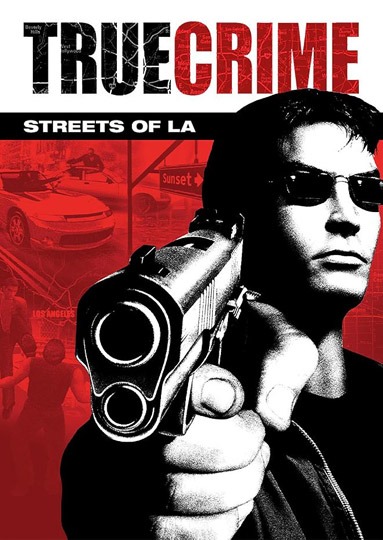
📅 Game released: 2003
Use this updated 2026 True Crime: Streets of LA PC guide to check official download availability and retail-disc ownership, review system requirements and Windows 10/11 compatibility, install the community widescreen fix, and understand the original game’s multiplayer limitations, controls, and setup before returning to Los Angeles.
 By Editor Zero — independently researched, edited, and maintained.
Last updated: 20 October 2026
Last reviewed: 20 October 2026
Table of Contents
- Quick Summary
- Quick Facts
- Official PC Stores, Download & Installation
- True Crime: Streets of LA Review
- Pros & Cons
- PC System Requirements
- Frequently Asked Questions
- Similar Games
True Crime: Streets of LA Quick Summary
✔ Open-world action-adventure following Nick Kang, a suspended LAPD officer recruited into the Elite Operations Division to investigate Chinese Triad and Russian Mafia activity while pursuing questions surrounding his father’s past.
✔ Combines driving through a recreation of Los Angeles with third-person shooting, martial arts, stealth, random street crimes, police investigations, vehicle pursuits, and optional training challenges.
✔ Similar to GTA San Andreas through its California-inspired urban sandbox, driving, shooting, gang conflicts, free roaming, side activities, and character progression, but True Crime places the player on the law-enforcement side of the conflict.
✔ The Good Cop/Bad Cop system influences Nick’s standing, while certain failed or completed missions lead to different story branches and endings rather than always producing a conventional game-over screen.
✔ The native Windows PC version added multiplayer modes, additional soundtrack tracks, and unlockable characters, but the original GameSpy online service is discontinued and no modern authorized digital PC purchase listing was verified.
✔ Existing owners of the original PC release should account for legacy copy protection, older control conventions, and compatibility issues. ThirteenAG’s unofficial widescreen fix provides corrected resolution, aspect ratio, and field of view for modern displays.
True Crime: Streets of LA Quick Facts
Official PC Store Status, Download & Installation
👇 Use the notes below to check True Crime: Streets of LA’s official Windows PC availability, understand retail-disc ownership and installation limitations, and avoid confusing historical releases or community fixes with authorized game purchases.
- Official PC availability: True Crime: Streets of LA received a native Windows PC release published by Activision. However, no authorized digital purchase listing was verified on Steam, GOG, Epic Games Store, Microsoft Store, or a current Activision PC storefront. The existence of the historical Windows version does not mean that a new official digital download remains available.
- Original retail edition: The Windows version was distributed on physical PC media. An existing legitimate retail copy is the relevant ownership route for this guide. Physical copies may sometimes be found through collectors or secondhand markets, but an authentic disc and packaging do not guarantee that the game will run on a modern PC.
- Original PC improvements: Activision’s Windows release added extra weapons, additional unlockable characters, higher-detail PC presentation, multiplayer functionality, and 32 additional soundtrack tracks featuring rock artists alongside the original hip-hop selection. These are historical features of the PC edition, not separately sold modern DLC.
- Legacy copy protection: The original retail Windows release used SafeDisc protection. This legacy technology is incompatible with normal operation on modern Windows installations, including Windows 10 and 11. Installing the game from an authentic disc and successfully launching its protected executable are separate compatibility issues. This guide does not recommend circumventing DRM or obtaining modified game executables.
- Retail installation: Owners can consult the instructions supplied with their original PC edition and use the authentic installation media. Older installers may encounter permission, display, or compatibility issues on recent Windows versions. Back up existing save files before reinstalling or changing configurations, and do not assume that compatibility mode alone resolves SafeDisc restrictions.
- Modern display setup: The original PC version does not provide correct modern widescreen presentation out of the box. After establishing a working legitimate installation, use ThirteenAG’s True Crime Streets of LA Widescreen Fix to correct widescreen resolution, aspect ratio, and field of view. Detailed setup instructions appear in the System Requirements section.
- Controls: The Windows port provides keyboard and mouse controls, but its original input behavior reflects early PC-console conversions. Controller integration should not be assumed to work like a modern XInput game. Community control-mapping tools may help in some configurations, but compatibility and button assignments require individual testing.
- Multiplayer limitations: The PC release originally supported up to four players through GameSpy or LAN, including Street Racing, The Beat, Dojo Master, Battle Master, and Police Chase. GameSpy’s original hosted services have shut down. Historical LAN support does not establish that a working modern multiplayer session is guaranteed, and no official replacement service was verified.
- Alternative platform editions: True Crime: Streets of LA also appeared on PS2, Xbox, GameCube, and the original PowerPC-era Mac platform. These are distinct releases, not Steam keys or Windows licenses. Console ownership does not grant a native Windows digital version, and the old Mac edition should not be mistaken for a modern macOS application.

True Crime: Streets of LA Review
An inventive police sandbox whose branching cases outshine its unruly combat.
In most open-world crime games, hearing a police siren means somebody is coming to stop you. In True Crime: Streets of LA, Nick Kang is the officer answering the call, although his methods sometimes make that distinction difficult to maintain. Luxoflux’s Los Angeles thriller mixes car pursuits, street arrests, twin-pistol shootouts, martial arts and undercover work, with a conduct rating that asks whether Nick is enforcing the law or merely imposing his will.
That premise gives the game something more interesting than a reversed GTA power fantasy. A suspect can be arrested rather than killed, random disturbances can finance useful training, and a failed objective may send the investigation down a different route instead of demanding an immediate restart. The city is enormous and the ambition unmistakable. Unfortunately, stiff handling, unwieldy camera work and shallow enemy behaviour make several of its most imaginative ideas more enjoyable to consider than to execute. The strongest appeal is to players who value an eccentric crime adventure with consequences and variety over seamless action.
The Badge Gives Free Roaming a Purpose
Los Angeles is more than the space between story markers. During untimed drives, dispatch reports muggings, fights and stolen cars, inviting Nick to interrupt an investigation and intervene. Stopping a robbery or arresting somebody after a street fight earns reward points. Wandering consequently has a recognizable purpose beyond sightseeing or looking for trouble.
The Good Cop/Bad Cop meter judges the response as well as the result. Flashing a badge or firing a warning shot may prompt surrender; disabling an armed suspect and handcuffing them rewards restraint. Frisking pedestrians can uncover drugs or concealed weapons, although challenging an armed stranger may provoke a confrontation. These small interactions make police work unpredictable within an otherwise simple sandbox.
The system is hardly a consistent ethical simulation: some aggressive arrests are rewarded, while other actions attract disproportionate penalties. But it has consequences beyond a coloured score. Commit enough misconduct and civil unrest brings hostile civilians, gang attacks and eventually police or SWAT retaliation. Nick can become the target of the kind of pursuit he normally initiates. That reversal is more memorable than the meter itself.
Repeated dispatches eventually expose the limitations. Street crimes recycle familiar scenarios, and pedestrians rarely behave convincingly enough to sustain the illusion. Free roaming works best in selective bursts between episodes, not as an indefinitely absorbing police career.
Shooting Works Best When Nick Slows Down
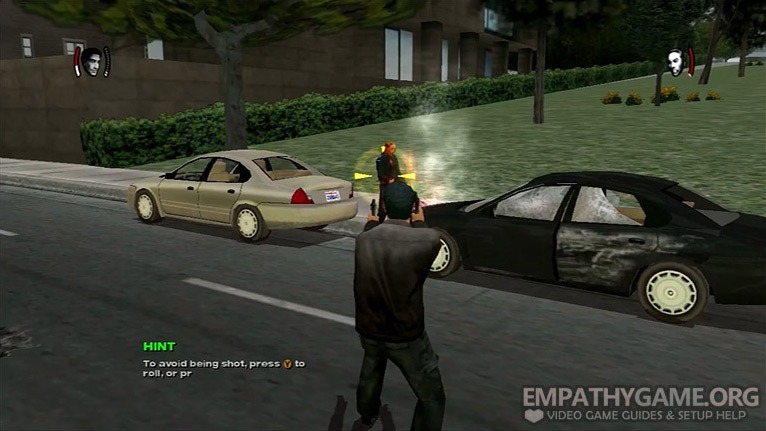
Nick looks most stylish diving sideways with both pistols blazing, but often fights more effectively by taking time to aim. Quick lock-on shooting and ample ammunition for his standard handguns make many encounters a matter of repeated fire. Fallen enemies offer stronger weapons, yet ordinary shootouts rarely demand much planning.
Precision targeting is more interesting. Holding the firing input briefly shifts into closer, slowed aiming, allowing deliberate shots rather than relying entirely on lock-on. With the relevant upgrade, targeting a limb can neutralize a suspect without killing them; against a fleeing car, carefully placed shots can disable tires. These choices connect gunplay to Nick’s police rating more meaningfully than the cinematic diving does.
Unfortunately, that hold-to-aim transition can cost precious reaction time while enemies continue firing. Target movement and finicky control make a planned non-lethal shot harder than the premise suggests. Slow-motion dives are entertaining to watch but frequently less practical than simple rapid fire, especially against predictable opponents.
Occasionally, the level design asks more. A distant sniper encourages careful use of cover and precision, while a crowded ambush rewards movement and opportunistically grabbing dropped firearms. Such situations reveal a more thoughtful shooting system beneath the spectacle. Too many encounters fail to draw it out.
Martial Arts Has More Rhythm Than Its Camera Suggests
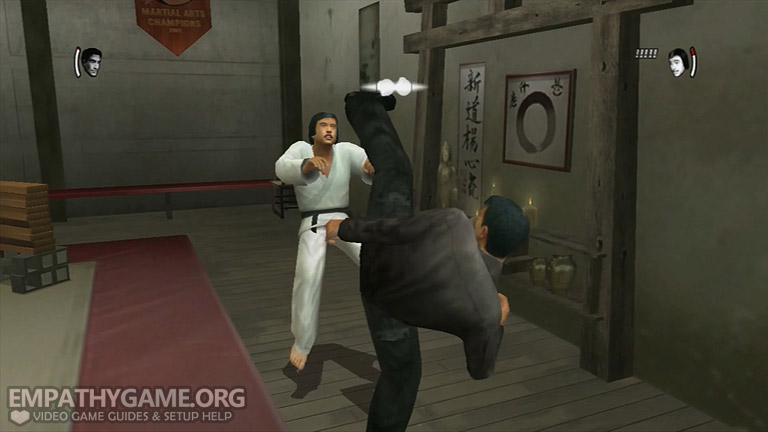
Hand-to-hand combat appears to be an exchange of punches, kicks, blocks and grapples, but its defining mechanic is easy to miss. Exclamation-point markers beside an opponent’s health bar represent stamina worn down by successful blows. Empty them and the opponent briefly staggers, creating an opening for a powerful finishing combination. Knowing when to set up the finisher makes fights more satisfying than simply mashing attacks.
An early confrontation with a Triad thug introduces that rhythm: varied strikes break his resistance, then a timed combination delivers an exaggerated martial-arts flourish. Training unlocks more finishers and grappling moves, while environmental throws can make a crowded bar or workshop more entertaining than an empty arena.
The camera struggles when opponents crowd Nick against walls or furniture, and switching between fighting, movement and shooting modes is not always graceful. Although blocking and stamina management matter, repetitive attack sequences can still overpower many enemies. The result swings between entertaining choreography and brawls that continue longer than their tactical ideas justify.
Stealth is similarly uneven. Guard patrols, quiet takedowns and hazards such as noisy broken glass produce short infiltration puzzles, but detection often feels rigid and choices are limited. These sequences provide variety without developing the tension of a dedicated stealth game.
Driving Makes Los Angeles Both a Playground and an Obstacle
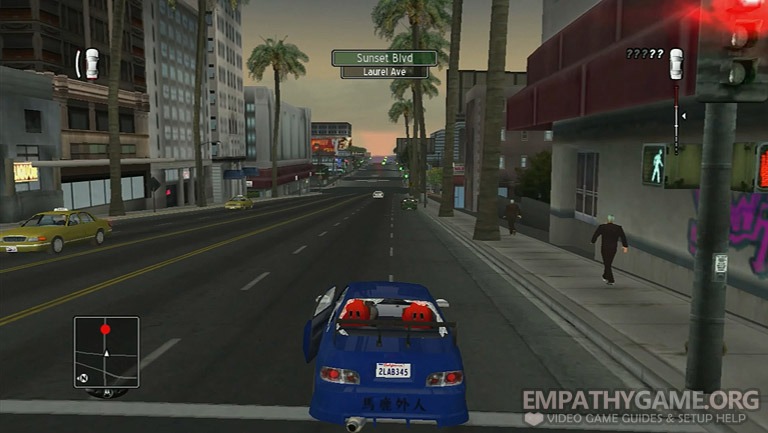
The recreation of Los Angeles remains one of the game’s defining achievements. Wide avenues, recognizable freeway junctions, the Convention Center and the then-named Staples Center make the urban sprawl feel more specific than a generic fictional city. Traffic and roadside activity are sparse, but the street network gives cross-town pursuits a persuasive sense of scale.
Vehicle missions vary their demands. Chases reward speed and well-placed gunfire; surveillance instead requires restraint. Following Chong’s limousine, for example, means balancing the suspicion indicator against the risk of dropping too far behind. Monitoring that distance through traffic feels more like detective work than racing to another marker.
The handling does not always support these ideas. Cars steer stiffly, traffic AI makes strange decisions, and commandeering a vehicle includes a conspicuously slow exit animation for its original driver. That delay is irritating when a suspect is already escaping. Vehicles are numerous, but changing one mid-pursuit is far less immediate than the freedom initially suggests.
Choice of car can also carry into subsequent objectives. Arriving at a tight timed drive in something slow may turn an otherwise reasonable mission into an ordeal, sometimes forcing a replay of earlier content. Preparing a faster vehicle is useful, but that consequence is poorly communicated. The city rewards improvisation until a mission unexpectedly demands advance planning.
Mission Failure Can Change the Case
The campaign’s boldest structural decision is not treating every failure as a dead end. Episodes alternate driving, shootouts, brawls and occasional stealth. Missing some objectives changes a later scene, while others open alternative missions or entire branches. Not every failure leads somewhere interesting, but the case can continue without pretending Nick always succeeds.
An early drive to the Red Lantern bar demonstrates the idea. Arrive in time and Nick confronts a suspect inside; miss the deadline and he encounters the aftermath and must chase a lead that escaped. Failure changes what the detective finds rather than simply resetting a clock. It is a memorable way to make an ordinary timed drive part of the storytelling.
The trade-off is uneven value between routes. Accepting failure can mean losing useful scenes or arriving at a shorter, less satisfying branch, so players who want the fullest investigation may choose to retry. Meanwhile, many objectives remain conventional: reach a destination, follow a car, defeat a group. Branching improves the campaign more than it transforms individual missions.
Stealth exposes the gap between story reactivity and gameplay flexibility. Being spotted while infiltrating a warehouse can end an objective rather than trigger an improvisational escape. The plot sometimes adapts, but the encounters themselves are largely scripted. This is a branching action thriller, not a fully reactive detective simulation.
Nick’s Police Thriller Sometimes Forgets Its Own Rules
Nick Kang is a combative detective recruited into the LAPD’s Elite Operations Division despite his troublesome record. A case involving Chinese Triads and Russian organized crime intersects with questions about his missing father. Brother Cary makes those unanswered questions personal; partner Rosie provides a needed counterweight to Nick’s swagger.
The setup has the makings of a gleefully excessive Hong Kong-inspired police movie: suspicious informants, gangland encounters, sudden betrayals and an investigator who seems incapable of entering a room quietly. It also has dialogue that mistakes constant wisecracks for personality. Nick’s confidence can be amusing, but his hostility often overwhelms scenes that need genuine tension. Rosie is most effective when allowed to push back against him.
The bigger problem is tonal. Without spoiling the encounters, the organized-crime investigation veers abruptly into supernatural spectacle, then returns to comparatively ordinary police business. The detour may delight anyone receptive to cult-action absurdity, but it weakens the suspense surrounding Nick’s family mystery. Once the story seems capable of anything, its grounded conspiracies feel less consequential.
Different mission outcomes and conduct can reveal alternative scenes and three broad endings. That gives replaying the investigation more purpose than a simple sequence of different arrests, though Nick’s personality and central family conflict remain largely fixed. The branches supply authored variations rather than true freedom to shape the detective.
Street Patrols Feed a Useful, Occasionally Fussy Upgrade Loop
Progression grows naturally out of police work. Street crimes earn reward points, which accumulate into badges used to enter challenges at 24/7 training facilities. Shooting ranges improve weapon skills, dojos teach martial-arts techniques, and driving tests unlock manoeuvres and vehicles. Patrol work between story objectives can therefore leave Nick better equipped for the next difficult encounter.
The connection is particularly satisfying when a few extra arrests fund the precision-aim improvement needed to subdue suspects reliably, or a new fighting combination makes a difficult opponent manageable. Training gives the enormous map practical value: detouring to stop crime is preparation, not merely distraction.
But a badge pays for an attempt, not an automatic upgrade. Fail a challenge and the reward points spent earning access may feel wasted, particularly when replenishing them means another round of familiar dispatch incidents. Completing an episode’s objectives cleanly can also unlock Bonus Cruisin’ rewards, encouraging revisits to missions that were merely passed rather than mastered.
Collecting thirty hidden Dogg Bones for Snoop Dogg’s patrol mode supplies a fittingly eccentric side goal. Between these extras and the alternate story paths, there is genuine replay value. Yet the crimes themselves lack enough variation to make endless post-campaign patrolling compelling. The city works better as the backdrop for an investigation than as a permanent playground.
The Soundtrack and Cast Do Much of the World-Building
The presentation often achieves what the mechanics cannot. West Coast hip-hop from artists including Snoop Dogg and Westside Connection gives a distinctive mood to ordinary driving, while the recognizable street grid and sunlit skyline make even unremarkable trips feel grounded in Los Angeles. The additional rock selection in the Windows release adds variety, but it rarely suits the city as effortlessly as the hip-hop tracks.
Russell Wong gives Nick energy even when his dialogue strains for attitude, and a cast that includes Christopher Walken, Gary Oldman, Michelle Rodriguez and Ron Perlman helps sell the broad crime-film tone. That vocal confidence is not always matched by the animation. Character movements can look stiff, interiors feel plain beside the large outdoor map, and the camera struggles hardest in precisely the crowded encounters that should feel cinematic. The game’s strongest atmospheric assets are its voices, music and sense of place, not fine visual detail.
Final Verdict
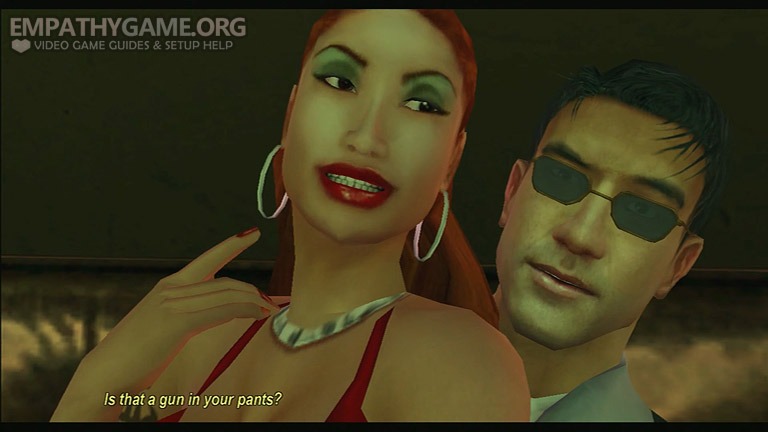
True Crime: Streets of LA is a fascinating example of an open-world game whose best ideas are not always its most polished actions. Taking the side of the police gives familiar chases and gunfights a different purpose, especially when a warning shot, an arrest or a deliberately non-lethal hit changes Nick’s standing. The civil-unrest response to serious misconduct adds a wonderfully reckless consequence, while branching episodes allow some mistakes to become part of the story rather than an invitation to reload.
Just as often, the game undermines those ideas. Precision aiming can be too slow for a hectic shootout, the martial-arts system hides worthwhile finishers behind uncertain camera work, and a poorly chosen car can spoil a mission before it really begins. Repeated dispatch incidents, basic stealth and the story’s wild tonal detour prevent its ambition from becoming a consistently satisfying police adventure. The performances, soundtrack and recognizable Los Angeles streets help smooth over some of that roughness, not eliminate it.
Players drawn to branching crime stories, eccentric early open worlds and experimental mixes of driving, policing and combat will find an adventure with a character all its own. Those who prize responsive controls, convincing artificial intelligence or a tightly disciplined detective narrative may see the seams almost immediately. True Crime is worth remembering not because it perfected the police sandbox, but because it made that sandbox feel genuinely different.
True Crime: Streets of LA Pros & Cons
True Crime: Streets of LA PC System Requirements
Historical requirements: True Crime: Streets of LA was released for Windows PCs in 2004. Activision’s original publisher-hosted system-requirement sheet could not be independently verified, but the following historical specifications are documented by PCGamingWiki. These describe period hardware expectations rather than confirmed compatibility with Windows 10 or Windows 11.
HISTORICAL WINDOWS PC REQUIREMENTS:
MINIMUM:
OS: Windows 98
CPU: Intel Pentium III
RAM: 128 MB
GPU: DirectX 9.0b-compatible graphics card with 32 MB VRAM
DirectX: DirectX 9.0b compatibility
Storage: Approximately 3.3 GB
RECOMMENDED:
CPU: Intel Pentium 4, 1.5 GHz
RAM: 256 MB
The archived recommended specifications do not provide a sufficiently verified, separate complete set of GPU, operating system, and storage values. Those fields have not been invented or inferred from modern hardware.
Additional PC Performance and Setup Notes
Modern Windows compatibility: The low historical hardware requirements should not be interpreted as a guarantee that the retail game will start on a modern PC. Its 32-bit-era software design, SafeDisc protection, Direct3D 8 rendering, and older audio and input systems create more important obstacles than raw CPU or GPU performance. A modern PC greatly exceeding the listed specifications may still encounter startup or gameplay problems. No universally reliable Windows 10/11 configuration was verified.
Widescreen support: The original Windows release lacks correct native modern widescreen rendering. Simply selecting or forcing a 16:9 resolution can produce incorrect proportions or field of view rather than a properly adjusted image. ThirteenAG’s True Crime Streets of LA Widescreen Fix is an established community solution that adjusts resolution, aspect ratio, and field of view without relying on a stretched 4:3 image.
How to install and configure the widescreen fix:
- Begin with a legitimate, working installation of the Windows PC game. The widescreen fix does not solve legacy retail DRM restrictions or supply game files.
- Open the official ThirteenAG release page and obtain the TrueCrimeStreetsofLA.WidescreenFix.zip release archive.
- Back up the game’s original installation folder or relevant configuration files before adding the modification.
- Extract the contents of the archive into the main True Crime: Streets of LA installation directory, where the game’s executable is located. Preserve the archive’s folder structure.
- Open
scripts/TrueCrimeStreetsofLA.WidescreenFix.iniin a plain-text editor. Under[MAIN], setResXandResYto the desired display resolution. For example, useResX = 1920andResY = 1080for a 1920 × 1080 display. - Save the INI file and launch the game normally. Check that the 3D world has the correct aspect ratio and that the field of view is no longer incorrectly cropped or stretched.
The author lists compatibility with the Windows game executable generally, rather than requiring one named retail revision. The fix specifically addresses resolution, aspect ratio, and field of view; it does not promise correction of every HUD, menu, pre-rendered video, graphics, audio, or gameplay issue. To reverse the modification, restore the backed-up game files and remove only the files introduced by the widescreen-fix archive. Avoid deleting unrelated original game files.
Configuration and save files: PCGamingWiki identifies TrueCrime.ini in the main installation folder as the Windows configuration file and the Saves subfolder as the save-data location. Back up these files before reinstalling the game, changing graphics wrappers, testing community modifications, or troubleshooting startup problems.
Graphics compatibility: The Windows version uses Direct3D 8. Community technical documentation records possible texture-rendering problems on modern systems. A graphics compatibility wrapper such as WineD3D may help in some configurations, but it is not an official Activision update or a guaranteed solution. Use the True Crime: Streets of LA PCGamingWiki page to review documented technical workarounds for the original Windows release rather than mixing fixes intended for True Crime: New York City.
Audio issues: Reports documented by PCGamingWiki include popping, distorted audio, low-quality playback, and missing sounds on some setups. DirectSound compatibility wrappers may help individual installations but are not confirmed universal fixes. The original soundtrack and voice work are important parts of the experience, so verify audio behavior before committing to a lengthy playthrough.
Controller considerations: The PC version predates modern standardized Windows controller support. Keyboard and mouse input is available, but mapping a contemporary gamepad may require additional configuration. The game’s original control scheme, especially aiming, camera movement, and fighting inputs, should not be expected to behave like a modern third-person action game.
Steam Deck and handheld PCs: There is no official Steam edition or Valve Steam Deck compatibility rating for True Crime: Streets of LA. A historical Windows retail build should not be assumed to work on SteamOS through Proton, and the compatibility obstacles affecting the Windows executable remain relevant. No officially supported handheld configuration has been established for this release.
Video Trailer
Frequently Asked Questions
Is True Crime: Streets of LA worth playing in 2026?
Yes, particularly if you enjoy classic open-world crime games with police investigations, martial arts, driving, and decisions that affect the story. Its branching missions and Good Cop/Bad Cop system remain distinctive, although dated controls and compatibility problems with the original Windows release make it less approachable than modern alternatives.
What happens if you fail a mission in True Crime: Streets of LA?
Failure does not always mean restarting. Certain failed objectives trigger alternate missions, change subsequent events, or redirect Nick Kang toward another storyline branch. This makes failure part of the narrative design, although some missions simply result in a less favorable outcome or a return to crime patrol.
How many endings does True Crime: Streets of LA have?
There are three main ending paths, commonly described as Good, Average, and Bad. The outcome depends on important mission successes or failures and the route taken through the branching storyline, with Nick’s police conduct also influencing progression. Completing all three paths unlocks an additional bonus movie.
Can you replay missions to unlock different story paths?
Yes. The episode selection system allows you to revisit previously reached missions and pursue alternate outcomes without starting an entirely new game. Replaying failed objectives and exploring the alternate episode branches is the practical way to experience the different endings and collect missed completion rewards.
Can you free roam after completing True Crime: Streets of LA?
Not through a separate, unrestricted post-campaign free-roam mode. You can return to untimed driving missions through episode selection and explore Los Angeles while responding to street crimes. The unlockable Dogg Patrol mode also allows free exploration, but each patrol session has a one-hour time limit.
How does the Good Cop/Bad Cop system work?
Nick’s conduct determines his Good Cop or Bad Cop rating. Arresting suspects, resolving crimes without unnecessary violence, and using non-lethal takedowns improve his standing, while harming civilians and using excessive force lower it. A severely negative rating can also provoke hostility from civilians and law enforcement, beyond its influence on story progression.
Can you arrest criminals instead of killing them?
Yes. Suspects can surrender after Nick displays his badge or fires a warning shot, while melee takedowns and precise neutralizing shots offer other ways to subdue them. The Aim Assistance shooting upgrade makes targeting arms or legs easier, and handcuffing incapacitated suspects provides additional rewards.
How do you earn badges and unlock upgrades?
Nick earns reward points by completing missions and resolving street crimes, with every 100 points converted into one badge or shield. Spending a badge allows an attempt at a challenge inside a 24/7 training facility, where successful completion unlocks a shooting, fighting, or driving ability. Failing the challenge means another badge is needed to retry.
Where are the 24/7 training facilities on the PC map?
Training locations appear as blue or cyan icons on the mini-map when you approach them. Crosshair icons represent shooting ranges, barbell icons indicate martial-arts training, and car icons identify driving courses. Many facilities can be found around downtown Los Angeles, with others scattered across the city.
Which upgrades should beginners prioritize?
Shooting and fighting upgrades generally provide the most immediate benefit. Aim Assistance helps with non-lethal arrests and vehicle targeting, while martial-arts improvements make tougher hand-to-hand encounters easier. Driving upgrades become particularly useful for demanding pursuits and timed missions, but upgrading every category immediately is unnecessary.
What is Bonus Cruisin’ in True Crime: Streets of LA?
Bonus Cruisin’ is a special reward stage unlocked by successfully completing every mission in an eligible episode. It provides opportunities to earn better firearms, additional grappling moves, or faster vehicles through dedicated bonus challenges. Missing an episode objective can prevent access until the necessary missions are successfully replayed.
How do you save your progress while exploring Los Angeles?
Visit one of the parking garages marked on the city map during an appropriate driving or patrol section. These locations allow progress to be saved and also restore Nick’s condition and his vehicle. They are especially useful before lengthy street-crime sessions or attempts to earn additional upgrades.
How do you heal Nick Kang or repair a damaged vehicle?
Health clinics restore Nick’s health, while repair stations restore damaged cars, normally using reward points. Their locations are identified by medical-cross and fuel-pump symbols. Parking garages provide another useful option because entering one can restore both Nick and his vehicle without the usual repair or treatment cost.
Do you need to complete every random street crime?
No. Random crimes during untimed driving and patrol sequences are optional, so you can ignore an incident and continue toward your story objective. However, responding to robberies, fights, car thefts, and other disturbances is one of the best ways to earn points and badges for training upgrades.
How do you avoid failing vehicle-tailing missions?
Maintain a moderate distance from the target vehicle while watching the suspicion indicator and mini-map. Driving too close causes suspicion to rise, while falling too far behind risks losing the target entirely. Avoid sudden acceleration when the suspect slows in traffic, and keep enough space to respond to unexpected turns.
How do stealth missions work in True Crime: Streets of LA?
Stealth missions require Nick to move through guarded areas without remaining detected. Watch patrol routes, use nearby objects for cover, and approach enemies from behind; non-lethal knockouts preserve a better police rating than lethal takedowns. Tranquilizer ammunition is limited, and noisy surfaces such as broken glass can alert nearby guards.
How do you unlock Snoop Dogg in True Crime: Streets of LA?
Collect all 30 golden Dogg Bones hidden around Los Angeles to unlock Dogg Patrol. After collecting the first bone, the remaining locations become visible on the city map. The unlocked mode lets you control Snoop Dogg, drive his customized lowrider, and respond to street crimes during a timed 60-minute patrol rather than replacing Nick in the main story.
Does the PC version support Xbox or PlayStation controllers?
The original Windows port was designed around keyboard and mouse controls and does not provide native modern XInput controller support. Third-party input-mapping software may allow a contemporary gamepad to emulate keyboard and mouse commands, but the results depend on the setup and do not provide the same integration as a modern PC release.
Is True Crime: Streets of LA available on Steam or GOG?
No verified official Steam or GOG digital edition is available for purchase. The game received a native Windows retail release, so it should not be confused with a console-only title, but an old retail copy does not automatically provide a modern digital license. The Official PC Stores section above explains the ownership and installation limitations.
Does True Crime: Streets of LA work on Windows 10 or Windows 11?
The original Windows release is not reliably compatible with modern Windows systems, primarily because of its legacy SafeDisc protection and older software components. The community widescreen fix can improve display presentation after the game is running, but it does not resolve every startup, audio, or input problem. Compatibility cannot be guaranteed across different installations.
Does True Crime: Streets of LA support co-op or split-screen?
No. The story campaign is single-player, and the original game does not offer local split-screen or cooperative campaign play. The Windows edition added competitive multiplayer activities for separate networked computers, which should not be confused with two people playing together on one screen.
Can you still play True Crime: Streets of LA multiplayer on PC?
The original PC version included five modes—Street Racing, The Beat, Dojo Master, Battle Master, and Police Chase—for up to four players through GameSpy or LAN. The GameSpy online service has shut down, so original online matchmaking is unavailable. LAN was a separate feature, but successfully using it on modern computers is not guaranteed and no official replacement online service was verified.
Is True Crime: New York City a sequel, and is Sleeping Dogs connected?
True Crime: New York City is the follow-up to Streets of LA, with a different protagonist, Marcus Reed, and a new setting. Sleeping Dogs has a development connection because it originated from the cancelled True Crime: Hong Kong project, but it was released as a separate game with its own characters and story, not as a direct narrative sequel to Nick Kang’s adventure.
Still have questions? Check the True Crime: Streets of LA GameFAQs community for gameplay questions and discussions, or the PCGamingWiki technical guide for Windows compatibility information, configuration details, and documented community fixes.
Sources & References
Key factual and technical information in this guide was checked against relevant official and community sources, including:
- Activision — Original True Crime: Streets of L.A. Launch Announcement — confirms the original console release, publisher, game identity, and launch-era reception.
- Activision — True Crime for PC Ships to Retail — verifies the native Windows release, publisher-described PC features, additional soundtrack tracks, multiplayer modes, and player limits.
- PCGamingWiki — True Crime: Streets of LA — documents the historical PC requirements, SafeDisc compatibility limitation, save-file locations, graphics API, widescreen support, multiplayer technology, and reported technical issues.
- ThirteenAG — True Crime Streets of LA Widescreen Fix — the original community-fix release providing the widescreen plugin, installation directions, corrected aspect ratio, and field-of-view support.
- Metacritic — True Crime: Streets of LA PC Critic Reviews — verifies the Windows PC aggregate score and historical professional-review reception, including the applicable IGN review.
- PC Gamer — GameSpy Multiplayer Service Shutdown — documents the discontinuation of the original hosted multiplayer infrastructure used by the game’s historical Windows online mode.
Similar Games Like True Crime: Streets of LA

Found something worth playing through DecideGame?
DecideGame.com is an independent gaming project run by Editor Zero. If this guide helped you discover a game, solve a problem, or find useful information, you can support DecideGame.com and help keep new and updated game guides coming.
DecideGame — PC Game Guides, Reviews & Setup Help