
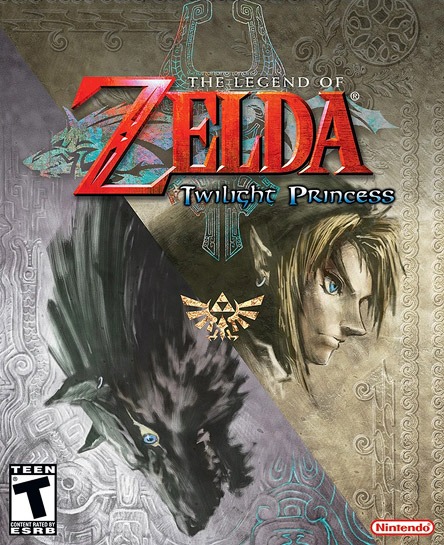
📅 Game released: 2006
The Legend of Zelda: Twilight Princess has no official Windows download, but its darker journey through Hyrule can be experienced on PC through emulation using a lawfully prepared game backup. This guide compares Link and Midna’s original GameCube and Wii adventure with the improved Wii U HD release, recommends Cemu and Dolphin, and explains game ownership, emulator system requirements, controls, and setup.
 By Editor Zero — independently researched, edited, and maintained.
Last updated: 11 November 2026
Last reviewed: 11 November 2026
Table of Contents
- Quick Facts
- Official PC Stores, Download & Installation
- The Legend of Zelda: Twilight Princess Review
- Pros & Cons
- PC System Requirements
- Frequently Asked Questions
- Similar Games
The Legend of Zelda: Twilight Princess Quick Facts
- Game: The Legend of Zelda: Twilight Princess (GameCube / Wii); The Legend of Zelda: Twilight Princess HD (Wii U remaster)
- Developer: Nintendo EAD (original); Tantalus Media with Nintendo (HD remaster)
- Publisher: Nintendo
- Genre: Action-Adventure, Puzzle-Solving, Fantasy
- Release: November 19, 2006 (Wii, North America); December 11, 2006 (GameCube, North America); March 4, 2016 (Twilight Princess HD, Wii U); no native Windows release
- Platforms: GameCube, Wii; Wii U (Twilight Princess HD)
- Modes: Single-player adventure; no co-op or competitive multiplayer
- Best PC emulation options: Cemu for the Wii U HD remaster (best overall presentation); Dolphin for the original GameCube release (simpler classic setup)
- HD additions: Improved visuals, Hero Mode, streamlined Twilight collection and inventory, Ghost Lantern, and optional Wolf Link amiibo Cave of Shadows challenge
- Steam Deck: Not available on Steam; any emulator-based setup is unofficial and has no Valve game-specific compatibility rating
- Engine: Nintendo’s proprietary game technology; a specific official engine name has not been verified
- Community & support: r/zelda, Cemu game compatibility wiki, Dolphin GameCube compatibility wiki
- PC modding: No official Windows mod support; emulator-side graphics settings, controller mappings, and community enhancements depend on the original game version
- Metacritic score: 96/100 (GameCube); 95/100 (Wii); 86/100 (Wii U HD)
- IGN score: 9.5/10 (original GameCube / Wii); 8.6/10 (Wii U HD)
- Steam user reception: Not available on Steam
Official PC Store Status, Download & Installation
👇 Twilight Princess has no official Windows purchase or game download. The options below explain how legitimate owners can choose between Wii U HD emulation with Cemu and original GameCube or Wii emulation with Dolphin.
- Official Windows status: Nintendo released the original game for GameCube and Wii and the HD remaster for Wii U. There is no verified native Windows edition on Steam, Epic Games Store, GOG, or Microsoft Store; installing an emulator does not give you the game.
- Best overall version: For readers who own Twilight Princess HD, the Wii U remaster through Cemu is the strongest presentation-focused option. It has native 16:9 HD visuals, cleaner textures, a normal controller layout, Hero Mode, and several useful gameplay refinements. Cemu’s game wiki rates its compatibility as Perfect, although individual setups can still encounter graphical quirks.
- Best original version: For a straightforward, classic experience, choose the GameCube edition through Dolphin. It uses ordinary button controls, supports manual camera control, and is rated Perfect on Dolphin’s game wiki. Unlike the Wii U route, it does not require Wii U game dumping or Wii U-specific files.
- Wii edition difference: Dolphin also supports the Wii release, which has native 16:9 output and was designed around Wii Remote and Nunchuk motion input. Its Hyrule is horizontally mirrored compared with the GameCube version. It is a valid choice for those who own the Wii disc and want that control style, but is usually less convenient for a standard PC gamepad than the GameCube edition.
- Original versus HD: The GameCube edition originally displays in 4:3; Dolphin can render it at higher internal resolutions, while widescreen patches need care because some effects may behave incorrectly. The HD remaster is a separate Wii U game, not merely a higher-resolution Dolphin setting, and its native design remains 30 FPS rather than an officially supported 60 FPS mode.
- Official ownership: Nintendo ended new purchases on the Wii U eShop, while Nintendo support still documents redownloading previously purchased Wii U games. Physical GameCube, Wii, and Wii U discs may be obtainable secondhand. A purchased disc is not a downloadable Windows license, and you should check local law before making any personal backup.
- Wii U HD game backup: Cemu does not contain copyrighted Nintendo games. For an owned Wii U copy, use your Wii U console and follow the Cemu Guide’s Dumpling instructions to copy the disc or eligible installed game data to your computer. Cemu’s documented install route normally uses the resulting game folders and
meta.xml; the Wii U version is not simply a GameCube ISO. - Cemu game installation: Download Cemu from its official releases page, complete initial setup, and choose File > Install game title, update or DLC for a compatible personal dump. Select the dump’s
meta/meta.xmlas shown in the official Cemu setup guide. Configure a compatible controller before starting the game. - GameCube or Wii backup: Dolphin supports owned disc backups in formats including
.isoand.rvz. Its official FAQ explains dumping compatible GameCube or Wii discs using suitable original Nintendo hardware and software such as CleanRip. A normal PC optical drive generally cannot read these discs directly. - Dolphin setup: Get Dolphin from the official download page, add the folder containing your own game backup to its game list, map a controller under Controllers, and launch the GameCube or Wii entry. Keep default compatibility settings initially, then raise internal resolution gradually if performance allows.
- Game-file safety: This guide does not provide game ISO files, Wii U game images, decryption keys, ROM archives, or third-party game-file links. If you independently search for a game file, you are responsible for verifying its legal provenance and security; an unauthorized download is not made lawful simply by owning a console or another edition of the game. Prefer a permitted backup created from a copy you own.
- Save and content limits: GameCube, Wii, and Wii U HD save files are not interchangeable without separate conversion procedures. The HD version’s Cave of Shadows is tied to Wolf Link amiibo functionality; its presence in the game does not mean the bonus is automatically accessible through a typical PC controller setup.
 Download Cemu from the Official Project (Wii U HD)
Download Dolphin from the Official Project (GameCube / Wii)
 View Twilight Princess HD on Nintendo’s Official Website

The Legend of Zelda: Twilight Princess Review
A darker journey through Hyrule, remembered for its remarkable dungeons and uneven rhythm.
In The Legend of Zelda: Twilight Princess, an obstacle rarely remains as permanent as it first appears. A wall becomes a path once Link has the right equipment; a familiar village feels different when he returns as a wolf. Nintendo builds on those shifts with intricate dungeons, swordplay, horseback travel and a melancholy story. Between them, a slow opening, sparse overworld and undemanding bosses interrupt the momentum. Yet the best locations have puzzles inseparable from their identities. What matters here is not reaching every destination immediately, but remembering an impossible route and eventually understanding why it was there. It favours players who enjoy understanding a designed place over roaming freely.
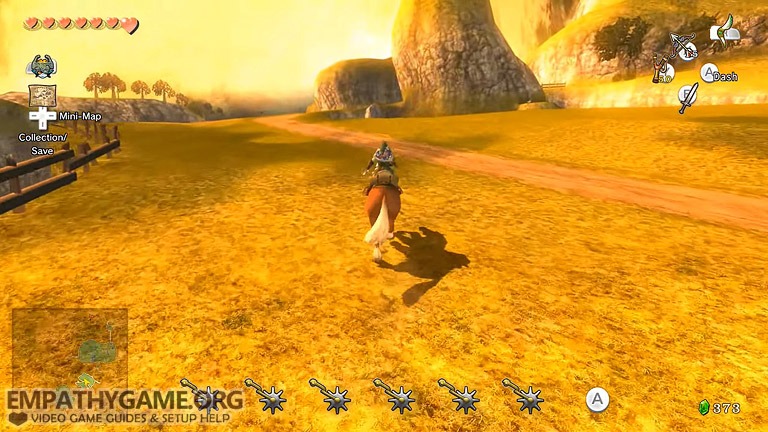
A Slow Departure That Establishes What Is at Stake
Before Link becomes Hyrule’s defender, he is a ranch hand in Ordon Village, herding goats, running errands and learning to ride Epona. The routine makes Ordon believable but keeps the adventure on a tight leash. The chores establish a gentle rhythm before that peaceful life is disrupted, although returning players may find them less charming. The complexity comes much later.
When the children are taken and Twilight reaches beyond Ordon, the danger feels personal. Link is not protecting an abstract kingdom; he knows the people who might be lost. That carries more weight than an immediate call to save Hyrule. But fewer errands could have achieved the same result. The opening works better as storytelling than gameplay.
Hyrule Field opens into long roads, bridges and distant landmarks. But size is not discovery. There are secrets, yet much of it is space between better locations. Equipment and story progression dictate the route. Riding through the landscape can still be calming, particularly when music and distant architecture suggest a world larger than the next objective. The scenery evokes grandeur even when exploration feels thin.
Dungeons Are the Adventure’s Strongest Argument
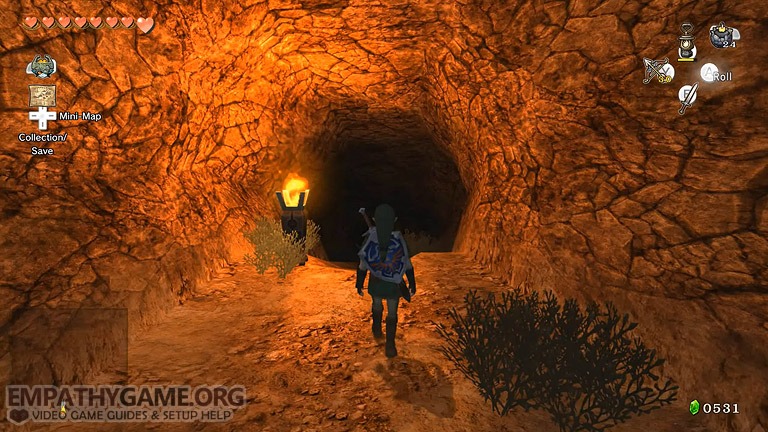
In the dungeons, that controlled structure becomes a strength. Items change their surroundings rather than merely opening doors. In Goron Mines, the Iron Boots stop Link from moving freely until magnetic walls turn their weight into a way of walking across ceilings. Lakebed Temple goes further: redirecting water changes routes through several rooms, and progress depends on understanding how the building works as a whole. Solving it feels like understanding the space rather than guessing a designer’s intention.
Arbiter’s Grounds moves from a haunted prison to fast Spinner rides along rails and timed jumps. Its climactic encounter makes that sudden change in movement memorable. Yet the Spinner has little purpose outside prepared tracks. A remarkable invention quickly becomes unused equipment.
Snowpeak Ruins makes its puzzles feel part of a living place. Link explores a frozen mansion rather than another formal temple, searching for ingredients while Yeto prepares soup for the sick Yeta. The Ball and Chain smashes ice and swings chandeliers, but the domestic setting gives the puzzles character. These rooms seem inhabited, not simply designed to hold obstacles.
The City in the Sky tests spatial awareness. Its Double Clawshots allow Link to hang from one target and look for another across open space. An impassable room makes sense from above. The discovery is excellent, although awkward camera adjustments can make execution feel clumsier than the puzzle itself.
The Dominion Rod’s moving-statue puzzles reveal the same trade-off: an inventive tool rarely used outside its designated spaces. Twilight Princess prefers elaborate, authored situations over the freedom to combine abilities almost anywhere. That restricts overworld experimentation but helps explain the dungeons’ coherence. Their ideas belong to particular places. That produces memorable set pieces, although it sometimes makes progress feel like a succession of bespoke solutions rather than an expanding set of possibilities.
Swordplay Has Variety, but Danger Is Uneven
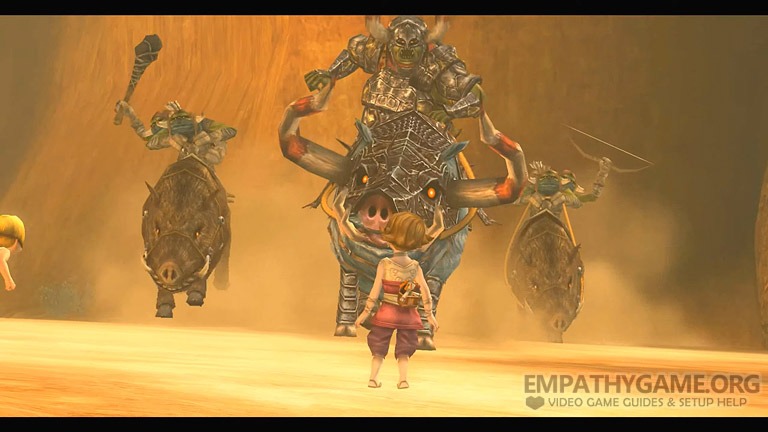
Link has more options than early enemies require. Lock-on targeting, shield actions and the optional Hidden Skills introduce techniques such as the Back Slice, Helm Splitter and Mortal Draw. Against armoured foes, positioning matters more than repeated strikes. Mounted fighting adds timing, since the wrong approach wastes an opening.
The campaign rarely demands these techniques. Common enemies leave room to recover, and the largest bosses are frequently exercises in recognising the correct item or weak point. The spectacle is exciting, but the trick rarely requires perfect execution. Accessibility comes at the expense of genuine danger. The frustration is not that bosses are puzzles; it is that their imposing presentation rarely matches the decisions required to survive.
The Cave of Ordeals offers a sharper test. Its 50 floors turn health, arrows and bombs into resources that must last, and the Magic Armor is no free escape because it consumes Rupees while protecting Link. On floor 49, three Darknuts demand spacing and learned techniques. The combat can be demanding; the main story seldom asks it to be.
Wolf Link Changes How Hyrule Is Understood
Wolf Link’s biggest change is perception, not combat. Scents, spirits and otherwise hidden paths become visible through his senses, while Midna helps him reach places human Link cannot. Familiar regions gain different rules. People also respond differently to an animal than to armed Link. That creates small opportunities for characterisation which ordinary dialogue might not have supplied.
Coro, the lantern-oil seller in Faron Woods, is a lovely example. Rather than reacting with the fear shown by many residents, he treats Wolf Link as a woodland creature and stays surprisingly calm. It barely affects progression, yet suggests Coro’s comfort with the forest. This makes wolf form more than a scent-tracking tool.
Combat in wolf form is comparatively limited. Bites, leaps and Midna’s energy field work well enough against Shadow Beasts, especially when groups must be defeated together to prevent them reviving. The pattern soon becomes routine. Tears of Light searches are more frustrating. Tracking Shadow Insects repeatedly interrupts the excitement of reaching a new province. The HD remaster reduces the work, not the interruption.
Horseback Action Is Sometimes a Puzzle in Disguise
Telma and Prince Ralis’s carriage escort gives Epona a more demanding purpose. Link rides alongside the wagon, fights attacking horsemen and uses the Gale Boomerang to put out flames. The action encourages attention to whatever looks most urgent. Flames on the carriage and riders at its side are visually obvious problems; the most important one is less obvious.
But a bomb-carrying Kargarok can redirect the carriage onto the same loop again and again. Defeating riders and extinguishing fires cannot prevent that loop. The apparent action test is really about priorities. Once its rule is recognised, the escort becomes manageable. Until then, the repeated route can feel unfair, exposing how poorly communicated rules undermine an otherwise clever encounter.
Midna Gives the Darkness Its Human Meaning
Midna gives the darkness its emotional purpose. At first, she treats Link as a convenient means of getting what she wants, covering her guarded intentions with sarcasm. Her concern grows gradually. With Link silent, her decisions and expressions carry the relationship. Their developing trust connects the regional crises. It also changes how her earlier teasing reads once the player understands more about what she stands to lose.
Zelda and Zant frame the conflict; Midna gives it personal stakes. Not every supporting figure receives that attention. Some disappear from the narrative as soon as their local problem is solved, and the central plot occasionally loses momentum between important scenes. Link and Midna’s evolving trust keeps the larger story compelling. Their relationship develops through actions rather than lengthy explanations, which suits a silent protagonist.
Hyrule’s atmosphere depends on what changes when Twilight arrives. Its distorted light and uneasy sounds feel alien beside ordinary life in Ordon, Castle Town and Kakariko. The Sacred Grove offers a quieter mystery through its music and secluded setting, while the wider soundtrack moves naturally between warmth and unease. Character animations have aged, but those relationships between sound and place remain persuasive. The darkness matters because there is a recognisable world beyond it.
Side Quests Make Exploration More Than Collecting
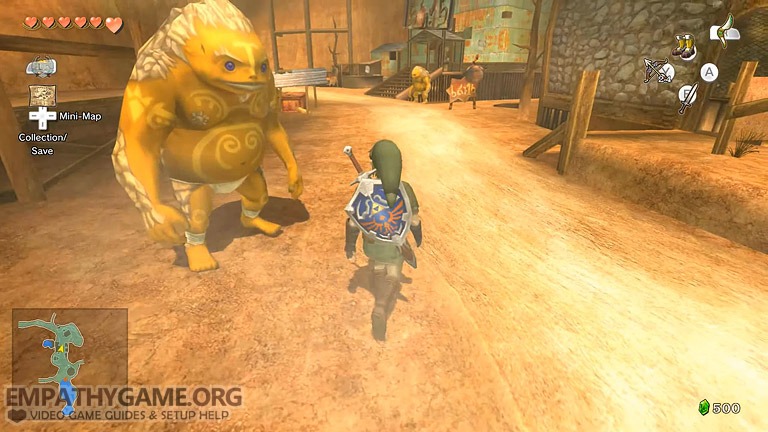
Progress means new tools, sword skills, hearts and regions, not levels or builds. Fishing, Golden Bugs, Poe Souls and Pieces of Heart reward detours unevenly. A chest full of Rupees is not exciting when Link has nowhere to put them. A quest that changes their value is more interesting. The stronger diversions have consequences that extend beyond the moment a reward appears on screen.
Malo Mart shows why. After repairing a bridge, Link can carry hot springwater across dangerous Hyrule Field, risking attacks and a barrel that loses its heat. Completing the delivery reduces a later Castle Town shop donation from 2,000 Rupees to 200, helping open a practical route to the expensive Magic Armor. Careful traversal changes the later economy. It makes the world feel more connected than a collectible checklist, because an optional challenge affects a later decision.
Castle Town’s STAR Game tests equipment mastery. This timed Clawshot challenge rewards planning a route through suspended orbs. A poor choice can leave Link hanging awkwardly, losing seconds while he drops, turns and lines up another shot. Double Clawshots smooth the route, though camera friction remains. Understanding an item and using it gracefully are different skills.
Original editions could also frustrate treasure hunters. With too little wallet space, a Rupee chest could close again and leave its money behind, making a discovered reward look unfinished. Twilight Princess HD leaves such chests open instead. It rewards thorough exploration instead of demanding backtracking. For players who like clearing every room, that small quality-of-life adjustment genuinely changes the experience.
Replayability Depends on What You Want to Revisit
A second journey offers no branching stories or different builds. Returning means revisiting favourite dungeons, finding missed secrets, collecting techniques or tackling the Cave of Ordeals with better preparation. Knowing the solutions cannot remove early errands or wolf searches. Some mystery fades once the dungeon mechanisms become familiar, but revisiting those distinctive places remains the attraction.
Hero Mode adds a curious choice. Its mirrored geography matches the Wii release, which can feel more natural to someone familiar with that version. Yet it doubles damage and removes ordinary heart drops. Familiar geography therefore comes with greater danger, even though the route itself remains unchanged. It is a meaningful trade-off for anyone who first learned Hyrule through the Wii version.
Final Verdict
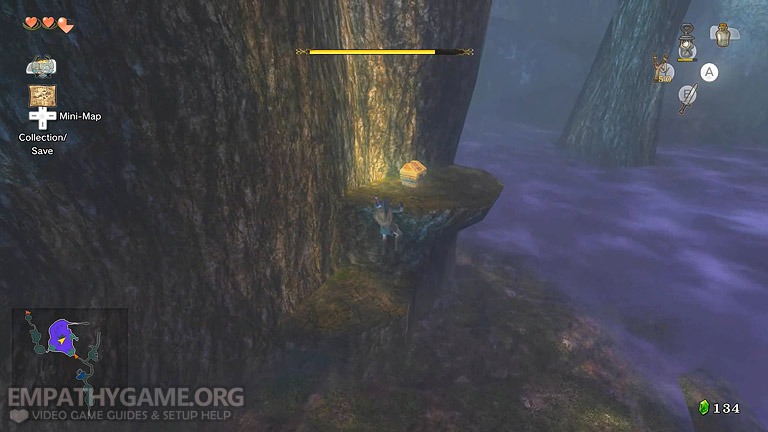
The Legend of Zelda: Twilight Princess is most convincing when an item changes how a place can be understood. Lakebed Temple’s water routes, Snowpeak’s inhabited mansion and the aerial puzzles of the City in the Sky justify its tightly directed structure, while Midna gives the journey an emotional centre. The cost is visible in the long opening, repetitive wolf searches, underused equipment and spectacular bosses that seldom test Link’s abilities. Hyrule Field promises more freedom than it delivers. For those who value thoughtful puzzles, distinctive settings and a melancholy fantasy story, these compromises are worth accepting. Players seeking immediate freedom, consistently difficult combat or a reactive overworld may find the adventure too controlled.
The Legend of Zelda: Twilight Princess Pros & Cons
- Pro: Memorable Hyrule dungeons mix intricate environmental puzzles, distinctive items, and creative boss encounters.
- Pro: Midna, Wolf Link, and the Twilight Realm give the adventure a personality beyond the usual Zelda rescue quest.
- Pro: Twilight Princess HD improves image clarity and several time-consuming mechanics without rewriting the original campaign.
- Pro: Cemu and Dolphin both offer well-documented PC options for owners of their respective Nintendo versions.
- Con: The lengthy opening and some recurring collection sequences can slow the journey before its best dungeons emerge.
- Con: Traditional combat can be forgiving, while the broad overworld offers less independent discovery than newer Zelda games.
- Con: No official Windows version exists; a lawful emulation route requires a suitable owned game and compatible dumping hardware.
- Con: The original GameCube picture is 4:3, HD remains designed for 30 FPS, and emulator enhancements can affect visual effects.
The Legend of Zelda: Twilight Princess PC System Requirements
Official Windows PC requirements: None. Nintendo has not released a native PC version of either the original Twilight Princess or Twilight Princess HD. The specifications below belong to the third-party emulators, not to a Nintendo PC game release or a measured benchmark for this particular title.
Cemu — Wii U Twilight Princess HD Emulator Requirements
Published Cemu desktop baseline:
OS: 64-bit Windows; Cemu also provides Linux and macOS builds (the official website lists Windows 7 x64 or newer; using a supported modern Windows version is preferable).
CPU: No fixed official Cemu minimum model published; the Cemu setup guide recommends roughly an AMD Ryzen 3 or Intel Core i5 class CPU for emulation.
RAM: 4 GB minimum; 8 GB or more recommended.
GPU / Graphics API: Graphics hardware supporting Vulkan 1.2 or OpenGL 4.5.
Controller: Modern USB/Bluetooth gamepad recommended; Cemu also emulates Wii U GamePad, Pro Controller, and some motion/touch inputs.
Storage: Sufficient room for the emulator, your personally created game dump, and save data; Nintendo lists approximately 5.4 GB for the original Wii U digital game package, not a complete Windows installation requirement.
Performance: The HD game is designed for 30 FPS. Higher rendering resolution requires more GPU capacity; Cemu’s compatibility page recommends starting from default game settings.
Dolphin — GameCube / Wii Emulator Requirements
Published Dolphin desktop baseline:
OS: Windows 10 version 1903 or later; supported macOS and Linux builds are also available.
CPU: SSE2-capable processor; Dolphin recommends a modern dual-core CPU around 3 GHz.
RAM: No fixed desktop RAM minimum specified in Dolphin’s published project requirements.
GPU / Graphics API: Direct3D 11.1- or OpenGL 3.3-capable graphics card as a baseline; Direct3D 11.1 or OpenGL 4.4 support recommended.
Controller: Standard gamepad recommended for the GameCube edition; Wii emulation may need additional Wii Remote/Nunchuk mapping or compatible real controller hardware.
Storage: Space for Dolphin, an owned GameCube/Wii game backup, memory-card/save data, and optional graphics assets; actual file size depends on dump format.
Performance: Original gameplay is designed around 30 FPS. Increase internal rendering resolution only after confirming stable normal-speed play.
Additional PC Performance & Setup Notes
- First Cemu launch: Select a supported graphics API, configure your controller, and install the game dump according to the Cemu installation guide. Try the defaults first. The game-specific compatibility page documents generally excellent playability while noting occasional effects that may not reproduce exactly.
- First Dolphin launch: Select Controllers > GameCube Controllers, map a standard gamepad, and use the game list to open a personally created
.isoor.rvzbackup. You do not need a PlayStation-style separate BIOS download for GameCube emulation. - Hyrule Field slowdown: Dolphin documents an optional Hyrule Field Speed Hack in the game’s Properties > Patches. It can help with field-related slowdown, but may reduce the accuracy of minimap shading; do not enable it without reason if performance is already acceptable.
- Widescreen and visual effects: The GameCube game was authored for 4:3. Dolphin’s generic widescreen hack can cause clipping or reflections to break, so use the game-specific compatibility recommendations if attempting 16:9. The Wii and Wii U HD editions support widescreen natively.
- Controller and saves: Start with familiar gamepad buttons for movement, camera, aiming, and items. Keep ordinary in-game saves and back up your emulator save directory before changing emulator builds, installing patches, or replacing texture assets.
- Frame-rate patches: Do not assume an optional 60 FPS modification is equivalent to normal game support. The original adventure and HD remaster were built around 30 FPS, and unofficial timing modifications can introduce broken animations, sequences, or puzzle behavior.
Official Trailer
Note: Nintendo’s official Twilight Princess HD game-features trailer shows the Wii U remaster’s presentation and gameplay additions. The guide above separately explains how the GameCube, Wii, and Wii U editions differ for PC emulation.
Frequently Asked Questions
Is The Legend of Zelda: Twilight Princess open world like Breath of the Wild?
Not in the same way. Twilight Princess has a large, interconnected Hyrule with horseback travel, optional activities, and hidden collectibles, but its main adventure follows a structured sequence of story objectives and dungeons. Unlike Breath of the Wild, you cannot freely tackle most major dungeons in any order.
Do I need to play Ocarina of Time before Twilight Princess?
No. Twilight Princess tells a complete story with its own Link, supporting characters, and central conflict. It has connections to Ocarina of Time within the Zelda timeline, but understanding those references is not necessary to follow the adventure.
When can Link freely transform between human and wolf form?
Free transformation becomes available after Link obtains the Master Sword and gains control of the Shadow Crystal. Before that point, transformations are largely determined by the story and Twilight-covered areas. Once unlocked, Midna can change Link’s form in suitable locations, although she will refuse when nearby witnesses could see the transformation.
What can Wolf Link do that human Link cannot?
Wolf Link can follow scent trails, detect hidden enemies and spirits using his senses, dig through certain passages, and reach otherwise inaccessible places with Midna’s assistance. He also has distinct combat abilities, including a charged energy-field attack useful against groups of enemies. However, Wolf Link cannot use Link’s normal weapons and dungeon items.
Why do Shadow Beasts keep reviving each other?
When a group of Shadow Beasts is defeated one at a time, the last surviving beast can revive its fallen companions. The solution is to defeat the final two simultaneously, usually by trapping them inside Midna’s charged energy field while playing as Wolf Link. Human Link’s Spin Attack can also eliminate multiple nearby beasts together.
How are the Tears of Light quests different in Twilight Princess HD?
The original GameCube and Wii releases require 16 Tears of Light in each of the three affected provinces, while the Wii U HD remaster reduces that requirement to 12 per province. Wolf Link must use his senses to discover the hidden Shadow Insects carrying the tears. Recovering them restores light to the affected region and advances the story.
How do you unlock all seven Hidden Skills in Twilight Princess?
The first technique, Ending Blow, is taught during the main adventure. The remaining six are optional sword techniques learned by finding Howling Stones as Wolf Link, repeating their melodies, and then visiting the Golden Wolf’s marked location as human Link. Skills are taught in a fixed order, including Shield Attack, Back Slice, Helm Splitter, Mortal Draw, Jump Strike, and Great Spin.
Can you leave a dungeon and return without losing your progress?
Yes. In many dungeons, the character Ooccoo lets Link warp outside, while Ooccoo Jr. allows him to return to the room where the warp was established. This is especially helpful when running low on healing items or taking a break, since simply saving and reloading inside a dungeon generally returns Link to its entrance rather than his exact previous location.
What should you do with Golden Bugs in Twilight Princess?
Collect Golden Bugs and give them to Agitha in Hyrule Castle Town. There are 24 bugs in total, consisting of male and female examples of 12 species. Agitha rewards Link with Rupees and larger wallets, making this side quest particularly useful before purchasing expensive equipment such as the Magic Armor.
How do you find all 60 Poe Souls, and what does the Ghost Lantern do?
Poe Souls are collected by defeating hidden ghosts as Wolf Link. Outdoor Poes generally appear only at night, while those inside dungeons and enclosed areas are not restricted in the same way. In Twilight Princess HD, Jovani rewards Link with the Ghost Lantern after 20 Poe Souls; it glows when a Poe is nearby, making the search for the remaining spirits easier.
How many Pieces of Heart are there in Twilight Princess?
There are 45 Pieces of Heart scattered across Hyrule, including rewards from dungeons, exploration, puzzles, and optional activities. Unlike some earlier Zelda games, five pieces are needed to create one additional Heart Container. Together with the starting hearts and boss rewards, Link can reach a maximum of 20 hearts.
What does Hero Mode change in Twilight Princess HD?
Hero Mode makes Link take twice the normal damage, removes ordinary heart drops, and mirrors Hyrule’s layout to match the orientation of the original Wii version. It is available when creating a new adventure rather than requiring the campaign to be completed first. The selected difficulty cannot be switched within that same playthrough, so Normal Mode is generally the more forgiving starting choice.
What is the difference between the Cave of Ordeals and the Cave of Shadows?
The Cave of Ordeals is a 50-floor optional combat challenge available in the original game and the HD remaster, rewarding progress with access to fairies and eventually Great Fairy’s Tears. The Cave of Shadows is a separate 40-floor challenge exclusive to Twilight Princess HD, played entirely as Wolf Link and accessed using the Wolf Link amiibo. Neither cave is required to finish the main story.
What does the Magic Armor do, and why does it consume Rupees?
The Magic Armor protects Link from ordinary damage while he has Rupees, but continuously consumes his money while equipped. Once his wallet becomes empty, the armor loses its protection and becomes extremely heavy, restricting movement. It is most useful for difficult combat encounters when Link has enough Rupees to sustain its cost.
Can you keep exploring after beating Twilight Princess, and is there New Game Plus?
There is no separate post-game world after the final ending. You can reload a save from before the final confrontation to continue collecting items and completing optional activities. There is also no conventional New Game Plus that carries equipment and upgrades into a fresh adventure; Twilight Princess HD instead offers Hero Mode as a separate challenge option.
How long does it take to finish The Legend of Zelda: Twilight Princess?
A typical main-story playthrough takes roughly 30–40 hours, depending on puzzle-solving speed and exploration. Completing additional quests, collecting Heart Pieces and Poe Souls, and attempting the optional combat caves can extend the adventure to approximately 50–60 hours or longer.
Does Twilight Princess support multiplayer, co-op, or split-screen?
No. Every official version of The Legend of Zelda: Twilight Princess is a single-player adventure without co-op, competitive multiplayer, or split-screen. Running the GameCube, Wii, or Wii U version through an emulator does not add those features to the original game.
Can you play Twilight Princess on PC with a keyboard and mouse instead of a controller?
Yes, emulators such as Dolphin and Cemu support configurable keyboard inputs, and certain mouse functions can be mapped or emulated. However, Twilight Princess was designed around console controllers, so mouse movement does not automatically behave like native PC camera aiming. A conventional gamepad generally provides the more comfortable experience, especially for movement, combat, and item use.
Still have questions? Check the Twilight Princess Reddit community for gameplay discussion, the Dolphin Emulator forums for GameCube and Wii emulation help, or the official Cemu FAQ for Wii U emulator configuration and troubleshooting.
Sources & References
Game history, availability, emulation setup, and version differences were checked against these Nintendo and emulator-project resources:
- Nintendo — Twilight Princess HD — official Wii U platform, remaster features, and game information.
- Nintendo Support — Wii U eShop discontinuation — new-purchase closure and re-download rules for existing owners.
- Cemu — Official Emulator Website — Wii U emulator availability, graphics APIs, and system requirements.
- Cemu Guide — Dumping Games — using an owned Wii U console and game copy to prepare local files.
- Cemu Wiki — Twilight Princess HD — game-specific compatibility, original frame-rate behavior, and configuration notes.
- Dolphin Wiki — Twilight Princess (GameCube) — GameCube controls, aspect ratio, compatibility, and Hyrule Field options.
- Dolphin — Official FAQ — GameCube/Wii game-backup formats and legitimate disc-copy guidance.
Similar Games Like The Legend of Zelda: Twilight Princess
- The Legend of Zelda: The Wind Waker
- The Legend of Zelda: Breath of the Wild
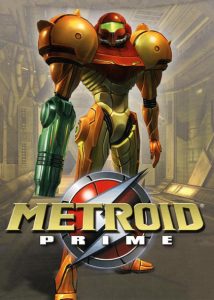
- Metroid Prime
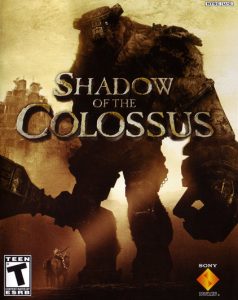
- Shadow of the Colossus
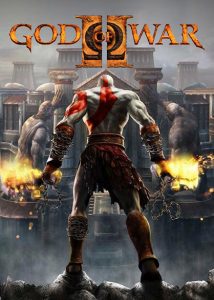
- God of War II
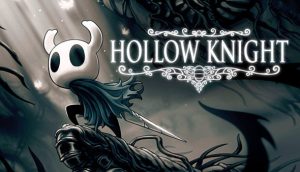
- Hollow Knight
Found something worth playing through DecideGame?
DecideGame.com is an independent gaming project run by Editor Zero. If this guide helped you discover a game, solve a problem, or find useful information, you can support DecideGame.com and help keep new and updated game guides coming.
DecideGame — PC Game Guides, Reviews & Setup Help