
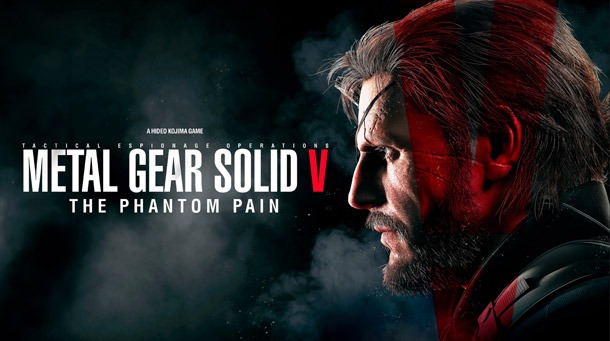
📅 Game released: 2015
Metal Gear Solid V: The Phantom Pain is an open-world stealth-action game in which Venom Snake rebuilds Diamond Dogs, recruits soldiers, and infiltrates enemy positions across Afghanistan and Central Africa. This PC guide covers official Steam purchase, download and installation options, The Definitive Experience and Ground Zeroes bonuses, Metal Gear Online and FOB features, system requirements, Steam Deck support, and mods.
 By Editor Zero — independently researched, edited, and maintained.
Last updated: 12 November 2026
Last reviewed: 12 November 2026
Table of Contents
- Quick Facts
- Official PC Stores, Download & Installation
- Metal Gear Solid V: The Phantom Pain Review
- Pros & Cons
- PC System Requirements
- Frequently Asked Questions
- Similar Games
Metal Gear Solid V: The Phantom Pain Quick Facts
- Game: Metal Gear Solid V: The Phantom Pain / Metal Gear Solid V: The Definitive Experience
- Developer: Kojima Productions
- Publisher: Konami
- Genre: Stealth Action, Tactical Espionage, Open World, Action-Adventure
- Release: September 1, 2015
- Platforms: Windows PC, PS3, PS4, Xbox 360, Xbox One
- Definitive Experience: The Phantom Pain, Ground Zeroes, seven Phantom Pain outfit/tack DLC items, Cloaked in Silence, and four Metal Gear Online appeal packs
- Campaign: Single-player; the story can be completed offline
- Online: Metal Gear Online and FOB Online on Steam PC; no cross-platform matchmaking; PS3 and Xbox 360 online services ended
- Steam Deck: Playable; Valve notes manual keyboard input, first-time internet setup, and possible external-controller switching
- Engine: Fox Engine
- Community: Metal Gear Solid Reddit, Steam Discussions
- PC modding: Nexus Mods, Infinite Heaven, SnakeBite Mod Manager, gameplay modules, visual changes, model replacements, and quality-of-life tools
- Metacritic score: 91/100 on PC
- IGN score: 10/10 for the original multiplatform release
- Steam user reception: Very Positive overall
Official PC Stores, Download & Installation
👇 Compare official Steam purchase, download, and installation options for The Phantom Pain and The Definitive Experience before buying either package.
- Steam: The Phantom Pain is sold for Windows PC through Steam, with achievements, Steam Cloud, controller support, single-player, Metal Gear Online, and Family Sharing.
- Definitive Experience: Steam lists 14 included game/DLC items: The Phantom Pain, Ground Zeroes, five character outfit DLCs, two D-Horse tack DLCs, the Cloaked in Silence Metal Gear Online expansion, and four MGO appeal packs.
- Standalone edition: The Phantom Pain alone includes its complete story and base Metal Gear Online mode, but does not automatically include Ground Zeroes or all the listed Definitive Experience DLC.
- Duplicate-purchase check: Ground Zeroes is also sold separately. If you already own either game or selected DLC, review your Steam library and the package contents before purchasing the bundle.
- Steam bonus video: The standalone Phantom Pain Steam purchase also lists access to Metal Gear Solid Legacy, a supplementary series video rather than an additional game campaign.
- Installation: Purchase or redeem the game on Steam, install it from your Library, let Steam complete updates and first-time setup, and use Steam’s file-verification option if an installation fails or becomes corrupted.
- Ground Zeroes save bonuses: Konami documents a one-way bonus import from Ground Zeroes on the same Steam account. Upload eligible data from Ground Zeroes, then choose DOWNLOAD MGSV:GZ SAVE DATA from The Phantom Pain’s title menu while online; this does not replace or merge the main campaign saves.
- Metal Gear Online: The competitive mode remains supported on Steam PC, PS4 and Xbox One without campaign co-op or cross-platform matchmaking. PS3 and Xbox 360 online services ended in 2022, although those versions can still be played offline. Actual multiplayer rooms depend on other players.
- FOB Online: Forward Operating Bases add asynchronous online infiltration and defense, separate from the competitive Metal Gear Online mode. FOB missions and certain connected features are unavailable offline.
- Offline and optional purchases: Konami confirms the full story can be completed offline. Steam lists Denuvo Anti-Tamper and in-app purchases, but optional MB Coins are not required to complete the story or access FOB gameplay.
- Steam Deck: Valve rates the game Playable. First-time setup requires internet, some text entry calls for the on-screen keyboard, and an external controller may need to be selected manually.
- PC mods: Community projects such as Infinite Heaven and SnakeBite are unofficial. Back up saves, use version-compatible mods, and restore clean files before diagnosing crashes, broken missions, or online problems.
 Buy Metal Gear Solid V: The Phantom Pain on Steam
Buy The Definitive Experience on Steam

Metal Gear Solid V: The Phantom Pain Review
A remarkably flexible stealth sandbox where preparation and improvisation are equally rewarding.
A successful infiltration in Metal Gear Solid V: The Phantom Pain can begin with twenty minutes of careful scouting and end with a desperate sprint through a sandstorm. That contrast defines Kojima Productions’ open-world approach to tactical espionage. Rather than guiding Snake along a predetermined stealth route, it gives him an objective, hostile terrain and enough equipment to solve the problem several ways. Guards can be avoided, interrogated, incapacitated, recruited or fought outright. Better still, the game remains interesting when an elegant plan collapses. Its immense freedom is real, although the systems that reward patient, non-lethal play sometimes work against the variety they promise.

A Story of War, Revenge, and Identity
Venom Snake awakens from a lengthy coma to find his former organization destroyed. Rebuilding a fighting force as Diamond Dogs gives the campaign an immediate purpose, while the pursuit of those responsible draws him into conflicts involving Skull Face, language, parasites and the aftermath of war. Revenge is the obvious motive, but questions of identity, loyalty and what soldiers inherit from earlier conflicts give the story its more unsettling character.
The delivery is deliberately different from older Metal Gear games. Mission briefings and cassette tapes carry substantial information that previous entries might have placed in extended codec exchanges or cutscenes. Listening to conversations about Miller, Mother Base or the parasites while crossing an empty Afghan road can create an unusual sense of distance from the events being described. The fragmented approach suits a protagonist surrounded by uncertainty, yet it also weakens dramatic momentum. Important relationships sometimes develop through recordings while the player is busy doing something else.
The rescue of Kazuhira Miller establishes the tone particularly well. With limited equipment, Snake must locate an injured ally inside hostile territory and then escape with him. The objective is straightforward, but the need to move another person safely changes how every patrol and open stretch of ground is assessed. It makes the war feel personal without requiring a long speech.
For a more concentrated survival-stealth story, Metal Gear Solid Delta: Snake Eater makes an illuminating contrast. Metal Gear Solid 4: Guns of the Patriots leans much further into cinematic narrative closure. The Phantom Pain gives its mechanics more room to breathe, but its quieter storytelling and uneven later structure may disappoint anyone primarily invested in the series’ elaborate drama.

Open-Ended Missions and Tactical Freedom
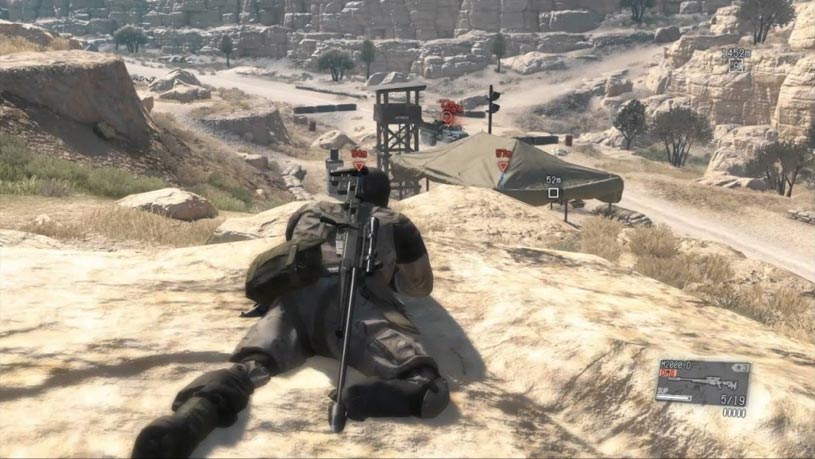
The best missions begin before Snake enters the compound. From a ridge, binoculars reveal patrols, communications equipment, possible prisoners and routes obscured at ground level. The decision might be to enter at night, disable a radio, interrogate an isolated guard and reach a target without anybody noticing. Alternatively, a sniper rifle, a vehicle and an aggressive extraction plan may accomplish the same objective. Neither route is scripted as the only sensible answer.
Reflex Mode provides a brief opportunity to recover when a guard notices Snake, but a missed shot can still set off escalating searches, reinforcements and mortar fire. Prisoner extractions are especially effective because reaching the captive is only half the problem. Carrying someone through a watched road or arranging a safe helicopter pickup forces the player to reconsider a route that seemed secure while travelling alone. These are situations in which the openness creates genuine tactical choices rather than simply longer distances between objectives.
Small interactions can produce surprising solutions. Players have even reported using a smoke canister inside a moving jeep to carry concealment through the Skull Face mission at OKB Zero. That is an unusual, situational discovery rather than a dependable tactic, but it reflects a broader quality: gadgets and vehicles sometimes combine in ways the mission instructions never suggest. Even ordinary positioning matters. Snake’s extra-low prone stealth stance can reduce visibility at close range, making stillness a meaningful alternative when crawling away would draw attention.
Enemy adaptation adds consequences to preferred habits. Frequent headshots bring more helmets; repeated night attacks encourage better nighttime equipment. That resistance is valuable, although stronger tools can eventually neutralize much of it. Compared with the controlled corridors of Tom Clancy’s Splinter Cell: Chaos Theory, this is a broader, less meticulously paced kind of stealth. Hitman World of Assassination offers similarly flexible objectives through disguises and civilian routines rather than military reconnaissance.
Combat, Stealth, and Exploration
Movement and shooting give that freedom a convincing foundation. Snake moves smoothly between crouching, crawling, sprinting, diving and close-quarters combat. CQC is particularly useful for turning an exposed encounter into an opportunity: grab a guard, extract intelligence, move him out of sight and prevent the next patrol from finding him. When stealth fails, assault rifles, shotguns, explosives and support fire make combat viable, but helicopters and coordinated soldiers can rapidly turn confidence into a retreat.
There is a less obvious limitation in the apparent freedom to fight lethally. A tranquilizer pistol is useful not merely because it is quiet, but because unconscious enemies remain recruitable. Mission bonuses and the Demon Points system add further reasons to avoid killing. The result can be a familiar pattern of tranquilizing guards even after an elaborate selection of lethal weapons becomes available. Players who deliberately abandon that routine may discover a livelier combat sandbox, although they sacrifice some recruitment efficiency and the satisfaction of a clean operation. The game encourages experimentation and quietly rewards restraint at the same time.
Afghanistan and Central Africa also function differently from quest-filled RPG worlds. Their roads, cliffs, guardposts, villages, waterways and landing zones exist largely to create tactical possibilities. A rocky hill can be a surveillance point, sniper perch or escape route depending on the equipment carried. The drawback is that stretches between strongholds often contain little reason to explore beyond resource collection and repeated encounters. It is a spacious battlefield, not a densely inhabited adventure world.
Mother Base and Strategic Management
Mother Base makes almost every infiltration part of a longer project. Soldiers extracted with the Fulton system join departments such as Combat, R&D, Base Development, Support, Intel and Medical. Higher-quality staff improve research, support options and the organization’s capacity. An enemy with impressive R&D skills is therefore more than an obstacle. Discovering that recruit can redirect a mission toward capturing and extracting someone who would otherwise be ignored.
The Fulton balloon initially looks like a ridiculous military invention, especially when it carries away animals, vehicles or cargo containers. Yet its connection to progression is carefully thought through. Resources help finance development, specialists expand research possibilities and improvements feed back into Snake’s next mission. Upgraded extraction equipment, suppressors, prosthetic-arm functions and buddy capabilities can alter what an infiltration team is able to attempt.
Weapon development also has more depth than a straightforward ladder of increasingly powerful guns. After completing the Legendary Gunsmith Side Ops, compatible parts unlocked through researching one firearm can be applied to another. Developing a lethal sniper rifle with a suppressor, for example, may provide a component for a tranquilizer rifle. This creates a satisfying reason to invest in equipment outside a favorite loadout. The limitation is the amount of menu work and resource management involved; the most interesting customization options are not immediately visible to someone focused only on completing story missions.
There is also a useful distinction between a successful mission and a productive one. A first visit may involve slowly searching every building, extracting staff and recovering materials. A later S-rank attempt often benefits from ignoring most of that work and finishing the objective quickly. The rating is not necessarily a judgment of how intelligently a player built Diamond Dogs. Both approaches have value, but the game rarely explains that difference as clearly as its systems eventually reveal it.
Buddies, Tools, and Unique Mechanics
The companions change more than travelling speed. D-Horse makes open terrain manageable and can serve as a distraction. Quiet can scout and provide covering fire from a distance. D-Walker brings mobile firepower, while D-Dog automatically identifies nearby enemies, prisoners and other points of interest. Each nudges Snake toward a different approach, and choosing between them can matter as much as choosing a weapon.
D-Dog also exposes an interesting trade-off. His automatic marking is wonderfully convenient, but it can remove the uncertainty that makes a guarded outpost tense. Once every soldier is revealed before Snake enters the perimeter, the challenge shifts from discovering danger to methodically eliminating it. Leaving D-Dog behind occasionally makes reconnaissance more demanding and restores some of the suspense of the early missions. More information is not always the same as a more enjoyable stealth experience.
The cardboard box remains a typically strange Metal Gear idea that earns its place mechanically. It can conceal Snake, manipulate enemy attention and enable travel between delivery points. Weather adds equally practical unpredictability. A sandstorm can hide an approach or disrupt an escape, while changes in light make a familiar guardpost behave differently. These details contribute to a world where preparation helps but cannot account for everything.
Presentation, Atmosphere, and World Design
The Fox Engine’s responsiveness is essential to the game’s appeal. Smooth transitions between stances, precise aiming and quick recovery from movement allow a failed infiltration to become a firefight without a sudden struggle against the controls. Afghanistan’s rocky exposure and Soviet outposts contrast with Central Africa’s vegetation, rivers and industrial sites. The landscapes are visually distinct, although their quieter expanses can feel empty outside assigned objectives.
Sound completes a more complicated atmosphere. Helicopter rotors, distant conversations, radio chatter and cassette music make the battlefield feel inhabited even when little is happening nearby. Travelling alone after a mission can be strangely peaceful; the next encounter may be absurd or brutal. Cassette tapes reinforce that isolation, but they also ask players to divide attention between narrative detail and the audio cues that make stealth effective. It is an evocative presentation with a genuine cost to how the story is absorbed.
Replayability and Long-Term Value
Mission replay is where the design’s possibilities become clearest. A lengthy first infiltration can later turn into a short, precise operation once patrols, shortcuts and landing zones are understood. Optional objectives, specialist recruitment, no-kill challenges and equipment experiments give familiar spaces new purposes. What changes is not always the map, but the question the player is asking of it.
The late campaign handles that strength less elegantly. Some story missions return with predefined restrictions such as Total Stealth, Subsistence or Extreme. Those variants can force a fresh approach, yet restricting them to selected repeats makes the reuse feel more imposed than it needs to. A broader choice of modifiers across missions would have turned repetition into more consistent player-directed challenge.
FOB infiltration adds another kind of tactical puzzle. The defender’s security choices can change which familiar tools are useful. Smoke can disrupt some lethal-defense guards, for instance, while gas masks on non-lethal personnel can undermine that approach; elevated snipers make even a well-concealed route risky. It is an interesting extension of the campaign’s lesson that an effective tactic depends on what the enemy is prepared for. Helldivers 2 shares the pleasure of preparing equipment for unpredictable objectives, although its cooperative combat is far louder and more immediate.
Final Verdict
Metal Gear Solid V: The Phantom Pain succeeds most convincingly when the player is making decisions the game has not explicitly suggested. Excellent movement, flexible objectives, reactive enemies, recruitment and gear development create missions that remain interesting after the route is familiar. Few stealth games connect the small act of incapacitating one guard so effectively to a much larger strategic project.
It is not without contradictions. Non-lethal incentives can narrow weapon choices, stronger reconnaissance can dilute tension, large stretches of terrain feel underused and the later campaign repeats material while leaving some story threads unsatisfying. Players looking for tightly staged drama may prefer an earlier Metal Gear series entry. Those who enjoy investigating systems, refining a plan and adapting when it falls apart will find a remarkably durable stealth-action sandbox. Its greatest accomplishment is making a mission feel like a set of possibilities rather than a script.
Metal Gear Solid V: The Phantom Pain Pros & Cons
- Pro: Exceptional stealth sandbox with scouting, CQC, Fulton extraction, buddies, Reflex Mode, enemy adaptation, vehicles, and many viable mission approaches
- Pro: Responsive movement and strong systemic AI make failed plans easy to improvise around instead of forcing constant reloads
- Pro: Mother Base, staff recruitment, R&D, GMP, resources, buddy upgrades, FOBs, and mission ranks create a deep long-term progression loop
- Pro: The Definitive Experience conveniently combines Ground Zeroes, The Phantom Pain, and the bundle’s listed cosmetic/equipment and Metal Gear Online DLC
- Pro: Strong PC performance for its visual quality, modest official requirements, Steam Deck Playable status, and an active modding ecosystem
- Con: Story delivery is fragmented compared with the more cinematic structure of earlier Metal Gear entries
- Con: Chapter 2 reuses several missions and can make the later campaign feel padded or incomplete
- Con: Open-world travel can become repetitive between objectives even though the individual mission spaces are excellent
- Con: Online activity depends on platform population and service availability, with no broad cross-platform matchmaking
Metal Gear Solid V: The Phantom Pain PC System Requirements
MINIMUM:
OS: Windows 7 64-bit / Windows 8 64-bit / Windows 10 64-bit
CPU: Intel Core i5-4460 @ 3.40 GHz or better; quad-core or better
RAM: 4 GB
GPU: NVIDIA GeForce GTX 650 with 2 GB VRAM or better; DirectX 11 card required
DirectX: Version 11
Storage: 28 GB available space
Sound Card: DirectX 9.0c-compatible sound card
RECOMMENDED:
OS: Windows 7 64-bit / Windows 8 64-bit / Windows 10 64-bit
CPU: Intel Core i7-4790 @ 3.60 GHz or better; quad-core or better
RAM: 8 GB
GPU: NVIDIA GeForce GTX 760 or better; DirectX 11 graphics card required
DirectX: Version 11
Storage: 28 GB available space
Sound Card: DirectX 9.0c-compatible sound card with 5.1 surround support
Additional PC Performance and Setup Notes
- These are the official Steam-listed requirements. Windows 11 is not part of the original published requirement table, so treat it as a modern compatibility scenario rather than rewriting the official specification.
- If the game hangs at startup or on a loading screen, try temporarily disabling third-party overlays, including NVIDIA Share/GeForce overlays, before testing again; this is troubleshooting advice, not a guaranteed fix.
- For crashes, missing assets, or unexplained mission problems, verify Steam files and test an unmodified configuration before reinstalling the complete game.
- When modding, keep backup saves and restore clean
00.dat/01.datgame data or use Steam file verification before changing mod frameworks or diagnosing broken missions. - Infinite Heaven depends on community tools including SnakeBite Mod Manager and IHHook. Check each mod’s requirements and compatibility instead of mixing unrelated packages blindly.
- Steam Deck is rated Playable: Valve says the default graphics configuration performs well and all functionality is accessible with the default controller setup, but manual keyboard entry and controller-order adjustments can still be required.
Official Trailer
Note: Konami’s official launch trailer presents Venom Snake, Diamond Dogs, open-world infiltration, combat, companions, vehicles, and the game’s themes of war and revenge, while the written guide adds Steam packages, online features, system requirements, Steam Deck support, mods, and setup guidance.
Frequently Asked Questions
Should I play Ground Zeroes before The Phantom Pain?
Yes, particularly if you care about the story. Ground Zeroes is the direct prologue and establishes the attack that shapes Venom Snake’s journey. It is a separate, shorter game, not the first mission automatically included in a standalone Phantom Pain purchase.
Can I transfer Ground Zeroes progress into The Phantom Pain?
You can import eligible bonuses, not the full Ground Zeroes campaign progress. On Steam, use the same account, select UPLOAD MGSV:GZ SAVE DATA in Ground Zeroes, then DOWNLOAD MGSV:GZ SAVE DATA in The Phantom Pain’s title menu while connected online. Bonuses can include the Ground Zeroes Sneaking Suit and certain extracted recruits, some of which unlock later in the story.
Does The Definitive Experience combine both games into one campaign?
No. Ground Zeroes and The Phantom Pain remain separate games with distinct missions and progression. The Definitive Experience is a purchasing package that includes both plus its listed DLC, not a remake or unified campaign.
Do I need to play older Metal Gear games first?
Not to enjoy the stealth systems. The story is easier to follow if you know Big Boss’s background from Peace Walker and Metal Gear Solid Delta: Snake Eater, which retells his earlier origin story.
Can I finish missions without killing enemies?
Many missions support non-lethal approaches using tranquilizer weapons, CQC, distractions, stun equipment, and Fulton extraction. Scripted encounters may limit your choices, so a completely non-lethal run of every situation is not guaranteed.
How do I improve my mission rank?
Plan a direct route, scout enemies before entering, avoid unnecessary alerts and restarts, and finish objectives efficiently. S-rank attempts benefit from learning each mission’s layout, but some equipment and approaches can restrict the rank you can earn.
How does enemy adaptation work?
Repeated tactics can encourage enemy countermeasures. Frequent headshots may lead to more helmets, and habitual nighttime operations may increase flashlights and other nighttime defenses. Varying your approach and using Diamond Dogs’ support operations can help manage these responses.
Which buddy should I use first?
D-Dog is a strong stealth companion because he marks nearby threats and useful targets. D-Horse helps with travel, Quiet offers ranged reconnaissance and cover, and D-Walker favors heavier equipment. Their usefulness depends on the mission and your preferred approach.
Can Quiet permanently leave my team?
A late-game storyline can make her temporarily unavailable as a buddy. The game includes a way to regain access through repeated completion of the relevant replayable mission under specific conditions.
Can I replay missions and keep improving Mother Base?
Yes. Previously completed missions can be replayed for rankings, optional objectives, staff recruitment, and experimentation with equipment and routes. Side Ops and development projects also provide longer-term goals, though they can become repetitive.
Can I save manually or create multiple save slots?
The standard game relies on automatic saves and checkpoints rather than freely selectable manual save slots. Watch for the save indicator before quitting, and back up your existing save data before experimenting with mods or major configuration changes.
Does The Phantom Pain support campaign co-op or split-screen?
No. The story campaign is single-player. Metal Gear Online offers separate competitive multiplayer, while FOBs provide online base infiltration and defense; neither turns the story into co-op.
Is Metal Gear Online available on PC, and is crossplay supported?
Konami lists Metal Gear Online for Steam PC, PS4, and Xbox One, without matchmaking across different gaming systems. The PS3 and Xbox 360 online services have ended; their single-player campaigns remain playable offline. Actual Steam PC matches still depend on available players.
What is the difference between Metal Gear Online and FOB missions?
Metal Gear Online consists of competitive multiplayer matches. FOBs instead extend Mother Base management into online infiltration, defense, resources, and staff risks. You can complete the story without participating in either system.
Can I complete The Phantom Pain offline without paying for MB Coins?
Yes. Konami confirms that the main story can be finished offline and that optional microtransactions are not necessary for story completion. Metal Gear Online, FOB missions, and some connected functions require an online connection.
Does The Phantom Pain work on Windows 11?
Steam’s original official requirements list Windows 7, 8, and 10 rather than Windows 11. The game can run on modern Windows systems, but that should not be mistaken for a separate published Windows 11 support guarantee; driver, overlay, and mod conflicts remain possible.
Does Metal Gear Solid V work on Steam Deck?
Valve rates The Phantom Pain Playable, not Verified. The default controls and graphics configuration are usable, while first-time internet setup, keyboard entry, and switching an external controller may require manual input.
How can I fix crashes or loading-screen freezes on PC?
Let Steam finish updating, verify the game’s installed files, and retry without mods or overlays. If the game stalls during startup, test with screen-recording or NVIDIA overlays disabled, then check for conflicting mod files before reinstalling everything.
Can The Phantom Pain be modded, and should I start with Infinite Heaven?
Yes. Nexus Mods hosts unofficial visual, gameplay, interface, and sandbox projects. SnakeBite is used for many compatible packages, while Infinite Heaven changes numerous mission and world behaviors. A clean first playthrough is advisable if you want the intended progression and story triggers.
Still have questions? Check the Konami Metal Gear Online support page, Steam Discussions, and the Metal Gear Solid Reddit community.
Sources & References
Key PC purchase, edition, compatibility, online-service, and save-transfer details were checked against these official and established references:
- Steam — The Phantom Pain — Windows edition, official requirements, DRM, Steam Deck rating, and overall user reception
- Steam — The Definitive Experience — the complete 14-item game and DLC package
- Konami Support — The Phantom Pain Online — MGO platform support, old-console shutdowns, and matchmaking limits
- Konami Support — Metal Gear Solid V Save Data — saving behavior and Ground Zeroes bonus import
- Konami FAQ — Offline campaign — story availability without online access and FOB limitations
- Metacritic — PC critic reviews — version-specific PC critic score
Similar Games Like Metal Gear Solid V: The Phantom Pain
- Metal Gear Solid V: Ground Zeroes
- Metal Gear Solid: Peace Walker
- Metal Gear Solid Delta: Snake Eater
- Tom Clancy’s Splinter Cell: Chaos Theory
- Hitman World of Assassination
- Watch Dogs





Found something worth playing through DecideGame?
DecideGame.com is an independent gaming project run by Editor Zero. If this guide helped you discover a game, solve a problem, or find useful information, you can support DecideGame.com and help keep new and updated game guides coming.
DecideGame — PC Game Guides, Reviews & Setup Help