
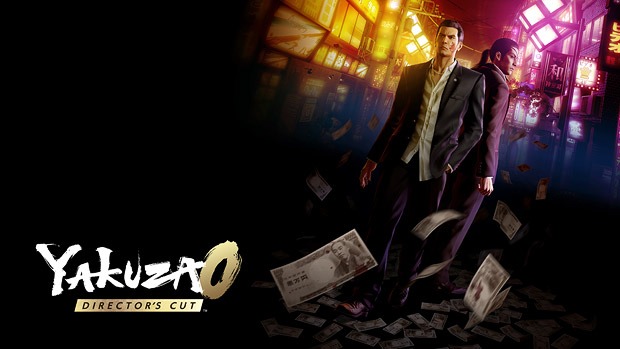
📅 Game released: 2025
Yakuza 0 Director’s Cut follows Kazuma Kiryu and Goro Majima through a 1988 crime drama filled with street brawls, business management, and eccentric side stories. This PC guide compares the official Steam download and installation with the separate DRM-free original on GOG, and explains the new cutscenes, voiceovers, Red Light Raid co-op, system requirements, Steam Deck support, mods, and practical setup choices.
 By Editor Zero — independently researched, edited, and maintained.
Last updated: 12 November 2026
Last reviewed: 12 November 2026
Table of Contents
- Quick Facts
- Official PC Stores, Download & Installation
- Yakuza 0 Director’s Cut Review
- Pros & Cons
- PC System Requirements
- Frequently Asked Questions
- Similar Games
Yakuza 0 Director’s Cut Quick Facts
- Game: Yakuza 0 Director’s Cut; the original Yakuza 0 remains a separate PC product
- Developer: Ryu Ga Gotoku Studio (RGG Studio)
- Publisher: SEGA
- Genre: Action-Adventure, Brawler / Beat ’em Up, hub-based Open World, Crime Drama
- Release: Director’s Cut: June 5, 2025 (Nintendo Switch 2); Windows PC: December 9, 2025 (SEGA’s regional date). Original Yakuza 0: March 12, 2015 (Japan); original Windows PC: August 1, 2018
- Platforms: Director’s Cut: Windows PC, Nintendo Switch 2, PS5, Xbox Series X|S; original: Windows PC, PS3, PS4, Xbox One
- Voices: Japanese, English, and Chinese (Director’s Cut)
- Subtitles: English, Japanese, French, Italian, German, Spanish (Spain and Latin America), Brazilian Portuguese, Russian, Korean, Simplified Chinese, and Traditional Chinese (Steam Director’s Cut)
- Modes: Single-player campaign; optional Red Light Raid online co-op for up to four players
- Steam Deck: Verified for Director’s Cut on Steam
- Engine: Not officially confirmed for Director’s Cut
- Community: Steam Discussions, r/yakuzagames, official SEGA game site
- PC modding: Original-game mods on Nexus Mods; check each mod’s supported build, since original Steam, GOG, and Director’s Cut files are not automatically interchangeable
- Metacritic score: 85/100 (Director’s Cut, Nintendo Switch 2; no separate PC Metascore verified)
- IGN score: N/A / Not scored for Director’s Cut
- Steam user reception: Very Positive overall (Director’s Cut; checked November 2026)
Official PC Stores, Download & Installation
👇 Steam sells Yakuza 0 Director’s Cut for Windows PC, while GOG offers the separate original Yakuza 0. Compare the differences before buying, downloading, or installing either edition.
- Director’s Cut on Steam: This is the official Windows PC edition for new Director’s Cut buyers. Steam provides the game download, updates, achievements, Steam Cloud, controller support, and access to the optional Red Light Raid mode.
- Original-owner upgrade: Eligible accounts that already purchased the original Yakuza 0 on Steam can see a discounted Director’s Cut purchase option when signed in. Confirm eligibility and regional pricing on Steam rather than assuming every old licence qualifies.
- Original saves: SEGA does not provide an official save transfer from original Yakuza 0 to Director’s Cut. Expect to begin again in the new edition; make backups before attempting any unofficial save conversion.
- Original Steam ownership: The previous Steam edition is no longer sold to new buyers, but accounts that already own it can retain and download their original copy.
- GOG original: GOG sells the original Yakuza 0, not Director’s Cut. It is DRM-free, has a fully offline installer, and does not require GOG Galaxy. Its older build has different requirements and does not include Director’s Cut additions.
- New content: Director’s Cut adds more than 25 minutes of cutscenes, English and Chinese voiceovers alongside Japanese, expanded text languages, and the song Bubble absent from the original Western release.
- Red Light Raid: This separate online co-op mode offers six wave-based challenge missions and 60 playable fighters. Up to four people can cooperate; it is not local split-screen and is not necessary to finish the story.
- Steam Deck and controller: Valve rates Director’s Cut Verified for Steam Deck, with controller-friendly defaults and legible interface text. A gamepad is recommended for combat, Heat Actions, and minigames; check Steam Input if controls are duplicated.
- Mods and version differences: Original-game modifications should not be copied directly into Director’s Cut. Even original Steam and GOG versions can differ in executable and mod-manager compatibility; check the mod author’s instructions, then back up files and saves.
- Installation requirements: For the Steam Director’s Cut, SEGA lists 64-bit Windows 11, DirectX 12, 95 GB available storage, and a CPU supporting AVX and SSE4.2. Allow extra free space for installation and updates.
 Buy Yakuza 0 Director’s Cut on Steam
 Buy the Original Yakuza 0 on GOG
 View Yakuza 0 Director’s Cut on the Official SEGA Website

Yakuza 0 Director’s Cut Review
A fierce crime drama where loyalty, absurdity and street fights belong together.
Yakuza 0 Director’s Cut opens the door to a world where cash flies out of beaten enemies, businessmen spend money like confetti, and almost every neon-lit alley leads to either an underworld conspiracy or something completely ridiculous. Japan’s late-1980s economic bubble is more than scenery here: money shapes the combat, the businesses and the ambitions driving the story. It is an unusually welcoming starting point for the series because no previous knowledge is required, yet its two heroes are still far from becoming the men returning fans recognise.
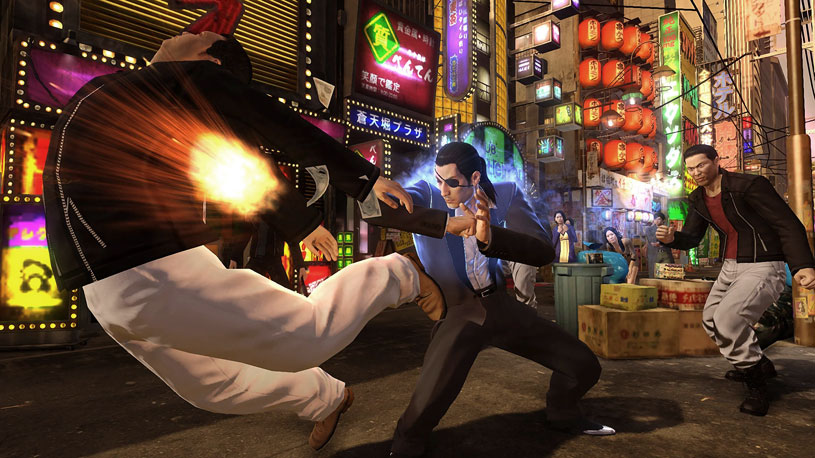
The shifts in tone are just as important as the central conspiracy. One scene may centre on a yakuza meeting where every pause feels dangerous; the next can involve helping a nervous child recover a stolen video game or singing karaoke with complete dramatic commitment. The comedy never feels like an apology for the darker story. It gives Kiryu, Majima and the people around them lives beyond the underworld’s immediate demands.
Two Protagonists, Two Kinds of Pressure
Kazuma Kiryu begins as a young yakuza framed for a murder he did not commit. His Kamurocho chapters revolve around loyalty, reputation, family hierarchy, and the Empty Lot, a tiny piece of land that becomes central to a much larger power struggle. This is not yet the unshakable figure seen in later games. Kiryu is rougher, more uncertain, and learning how far his personal code can survive inside an organisation that expects obedience.
Goro Majima’s introduction is even more revealing. Rather than the wild personality many players know from later entries, he appears as a polished cabaret manager living under strict surveillance. His manners and smile are professional because they have to be. Beneath that control is a man desperate to escape punishment and return to the world that expelled him.
Switching between the two protagonists could have made both stories frustratingly fragmented. Instead, the interruptions usually sharpen their differences. Kiryu’s chapters deal with street politics and increasingly public danger, while Majima’s feel private and suffocating. The game often changes perspective at an uncomfortable moment, leaving one problem unresolved while the other grows. Eventually, the parallel stories make each character’s struggle more revealing.
The antagonists make those pressures personal. Kuze’s refusal to stay defeated, Awano’s comfortable decadence, Shibusawa’s colder ambition and Sagawa’s quiet control of Majima represent different ways of wielding power. They can be cruel, loyal, pathetic and oddly principled, sometimes in the same chapter. That inconsistency matters: the underworld feels like a web of people defending their status and relationships, not an army of interchangeable villains.
A routine debt collection widens into a struggle over land and leadership. Majima’s cabaret job initially looks glamorous, then reveals just how little freedom he has. These ordinary tasks expose larger systems of control, letting the cities explain the conspiracy instead of relying entirely on long speeches.
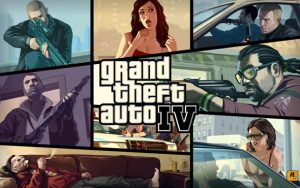
Players drawn to character-focused crime stories in detailed urban environments may also appreciate GTA 4. Its open world is much larger and its shooting and driving dominate play, but both stories care about loyalty, pressure, and people discovering that the criminal life they entered is not the freedom they imagined.
Street Combat Is About Momentum, Not Just Stronger Moves
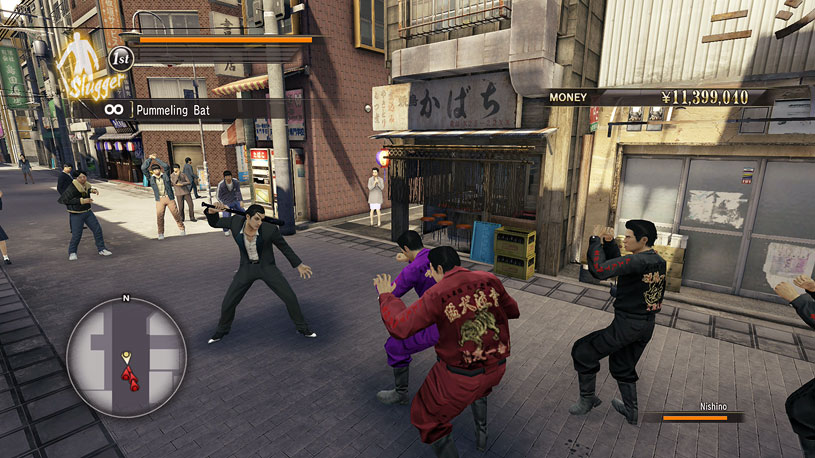
The central loop is easy to understand: explore, advance the story, get dragged into fights, earn money, improve your abilities and become distracted by something else. Combat is close-range and deliberately excessive. Bicycles, traffic cones, signs, walls and counters are not merely background decoration; the right position can turn them into weapons or brutal Heat Actions.
Kiryu and Majima each use three standard styles plus an unlockable fourth. Kiryu’s Brawler is the dependable all-rounder; Rush emphasises speed and evasive movement; Beast turns nearby objects and enemy bodies into crowd-control tools. Majima’s Thug is direct and flexible, Slugger gives his bat reach and power, while Breaker transforms a street fight into spinning, breakdance-driven chaos.
The best style often depends more on the room than on the upgrade screen. Beast thrives in a cramped alley full of objects, while Rush gives Kiryu room to evade a fast boss. Breaker can scatter a loose group, but Slugger’s reach offers more control against an opponent who keeps closing in. The decision is interesting because no single stance solves every encounter. Switching early feels more purposeful than stubbornly forcing a favourite style through a bad matchup.
A street encounter beside a parked bicycle can change character in seconds: Kiryu uses it to knock down a group, switches to Rush when a quicker opponent recovers, then ends the exchange beside a wall with a Heat Action. The mechanics are arcade-like, but the surroundings make the violence feel improvised rather than restricted to an invisible arena.
Random encounters do become repetitive during longer walks, and bosses can punish anyone arriving without recovery items or suitable upgrades. There is another, less obvious source of difficulty: the Charismatic Photo equipment item increases enemy aggression. Equipping it without understanding that effect can make ordinary groups feel unfairly relentless. This is a small but telling weakness in how clearly the game communicates its systems.
Heat complicates that rhythm in a useful way. Building the gauge into its higher gears also speeds up ordinary attacks, while spending it on a spectacular finisher can leave subsequent combinations feeling slower. In other words, a Heat Action costs more than the meter visible on screen. Repeating the same finisher against one tough opponent also yields diminishing damage, giving players a practical reason to learn different situational moves. Against a crowd, an environmental action may clear space; against a boss, preserving speed and varying finishers may be more effective. Combat is not a technical fighting game, but its difficulty spikes expose the limits of relying on one combo without learning to dodge, block or manage Heat.
Money, Businesses & Long-Term Progression
Money replaces traditional experience points, fitting a story set at the height of the bubble economy. Cash from fights, substories, minigames and businesses pays for health, damage, defensive skills, Heat Actions and style-specific techniques. Spending a windfall on immediate strength is tempting, but putting money into a business may eventually finance many more upgrades. The economy ties combat progression to the city’s wider distractions.
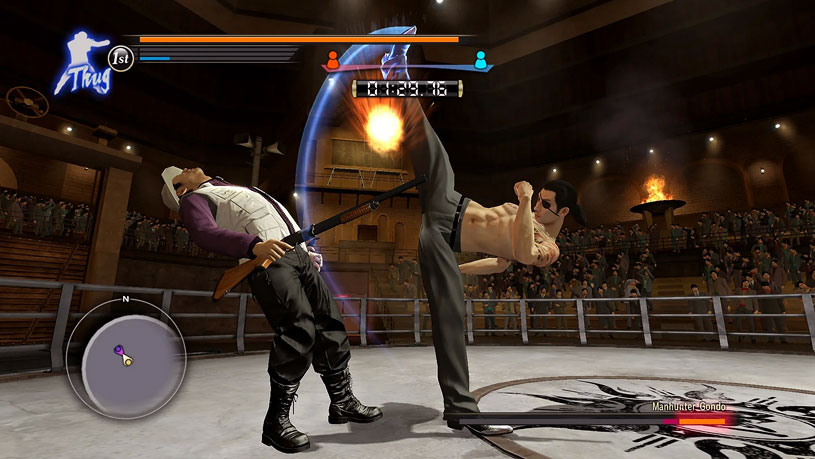
Kiryu’s Real Estate Royale involves buying properties, assigning staff and challenging rival billionaires for control of Kamurocho. Its collection timers create a less satisfying rhythm, though. Pursue the business alongside the campaign and collections repeatedly pull you back to the office; postpone it until later and the same timers can leave you waiting for income. Majima’s Cabaret Club Czar is more immediate: recruit and train hostesses, match them to customers, respond to requests and keep the room profitable while rival clubs apply pressure.
Cabaret management sounds like a minor diversion until its rhythm takes hold. Matching a hostess to the right guest, catching a table signal, resolving trouble and rotating tired staff require continuous decisions rather than waiting on a clock. That contrast helps explain why the two businesses can inspire very different reactions. Both unlock their protagonists’ secret fighting styles, making the lengthy side stories matter beyond a completion percentage.
Mr. Shakedown makes all that money feel vulnerable. Losing to him can cost a fortune, but learning his slow, punishing attacks creates a chance to recover it and eventually earn more. His presence changes how a wealthy Kiryu or Majima crosses the street: having the funds to buy an upgrade does not necessarily mean having the skills to protect them.
Small Cities with Almost No Wasted Space
Kamurocho and Sotenbori are not huge open worlds, yet they feel busier than many maps several times their size. Restaurants, bars, arcades, gambling rooms, karaoke, disco, bowling, darts, telephone clubs, Pocket Circuit racing, shops, and side stories sit within a few minutes of one another. A walk to the next mission can easily become an hour of distractions.
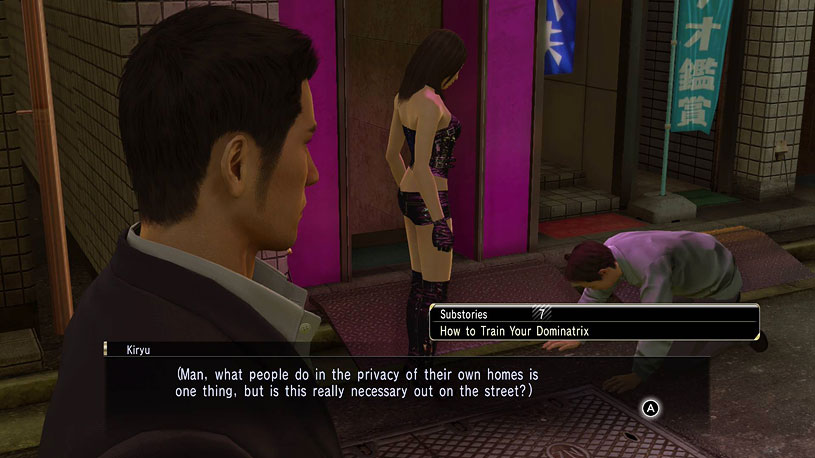
Substories are the real connective tissue. A normal request can spiral into a chaotic film shoot, an awkward lesson in confidence, a scam, or a surprisingly sincere friendship. These stories show people outside the criminal hierarchy: children, performers, lonely regulars, opportunists, workers, dreamers, and complete fools. The main plot makes the districts dangerous; the substories make them worth caring about.
The activities vary enormously in depth. Pocket Circuit has enough parts, rivals and track decisions to resemble a small game of its own, whereas restaurants mostly restore health and fill a menu. Karaoke feels comparatively intuitive; disco is trickier because its moving prompts demand precise timing while extra steps raise the score. Following the music by ear does not always feel as natural as watching the visual cues, and even a supposedly easier dance chart may not suit everyone’s sense of rhythm. Mahjong and gambling expect familiarity with their rules, while arcade cabinets preserve older SEGA games. Not every diversion will appeal, but there is usually another kind of play nearby.
That density also gives the comedy better timing. A ridiculous encounter is rarely more than a street away from a serious chapter, yet the shift does not erase the drama. Kiryu’s absolute sincerity makes absurd situations funnier, while Majima’s controlled public persona becomes increasingly difficult to maintain around Sotenbori’s eccentrics.
For a broader crime sandbox with vehicles, firearms, and three playable leads, GTA 5 provides a different scale of freedom. Yakuza 0 trades that geographic size for denser interiors, deeper brawling, longer character scenes, and side activities that feel tied to two specific neighbourhoods.
What the Director’s Cut Changes
The additional cutscenes provide more than 25 minutes of newly recorded material around major characters. Some scenes offer welcome context; others make explicit what the original trusted viewers to infer. That difference matters more than the running time. Director’s Cut remains a coherent first introduction to the story, but those who value its original pauses and ambiguities may reasonably prefer the earlier presentation.
Japanese performances remain available alongside new English and Chinese voiceovers. The wider subtitle options make the dialogue accessible to more audiences, although language choice is ultimately about how someone wants to hear Kiryu and Majima, not about changing the game beneath their performances.
Red Light Raid is a lively extra rather than the centre of the package. Its roster of 60 characters and six escalating missions turns familiar faces into playable fighters in raids for up to four players, with upgrades funded separately from the campaign. Solo play is possible with CPU teammates, so the mode is not dependent on matchmaking. Yet the harder raids expose differences between fighters: a forceful option such as Shibusawa or Breaker Majima may push through waves more reliably than a less effective pick, and the final challenges can still be punishing without human coordination.
The pressure is not only about enemy numbers. Raids carry remaining health and time into later stages, so inefficient early fights can turn into a problem several waves later. That gives character choice and teamwork genuine consequences, although it also makes repeating a limited set of arenas feel grind-heavy. As a celebration of the cast it works, particularly with friends; as an alternative to the campaign’s evolving story and environments, it has much less to offer.
Replayability & Final Verdict
The story itself can occupy dozens of hours, while businesses, substories, minigames, secret styles, collectibles and completion challenges can take the total well beyond one hundred. Premium Adventure lets the single-player world continue after the ending, so the last chapters need not become an anxious rush to finish every diversion. A second visit can also reveal how carefully the early dialogue prepares relationships whose importance is only clear much later.
The appeal still comes with compromises. Long dialogue stretches can slow an already elaborate plot, recurring street fights interrupt leisurely exploration, and some activities demand more patience than they ultimately reward. Real Estate Royale’s timers and Red Light Raid’s tougher solo challenges add friction in different ways. None ruins the larger experience, but both expose how unevenly the many systems have been tuned.
What stays with Yakuza 0 Director’s Cut is how naturally its contradictions fit together. Kiryu and Majima live under different kinds of control; the combat rewards improvisation even when its street interruptions become tiring; the cities make space for both cruelty and ridiculous kindness. It is a strong first Yakuza for players who enjoy character-driven drama and busy, intimate urban spaces. Those wanting uninterrupted exploration, restrained storytelling or highly balanced side modes may be less convinced. Director’s Cut offers more ways to experience a remarkable campaign, but the original’s particular pacing remains a defensible preference.
Yakuza 0 Director’s Cut Pros & Cons
- Pro: Exceptional dual-protagonist crime story, memorable performances, and strong emotional payoffs
- Pro: Distinct fighting styles, business activities, and progression for Kiryu and Majima
- Pro: Dense city hubs rich in substories, karaoke, arcades, restaurants, and eccentric distractions
- Pro: Director’s Cut adds new scenes, more voice and text languages, and optional online co-op
- Pro: Steam Deck verification and a separately available DRM-free original provide useful PC options
- Con: Additional cutscenes can weaken some of the original narrative’s deliberate ambiguity
- Con: Original saves do not officially transfer, and old mods may not support the new build
- Con: Red Light Raid has less variety than the campaign and relies on an online connection
- Con: Long dialogue stretches, repeated street fights, and steep Windows 11/95 GB requirements may deter some players
Yakuza 0 Director’s Cut PC System Requirements
OFFICIAL WINDOWS PC REQUIREMENTS
MINIMUM — 1080p / 30 FPS / Low:
OS: Windows 11, 64-bit
CPU: Intel Core i3-8100 at 3.6 GHz or AMD Ryzen 3 2300X at 3.5 GHz
RAM: 8 GB
GPU: NVIDIA GeForce GTX 960 4 GB, AMD Radeon RX 460 4 GB, or Intel Arc A380 6 GB
DirectX: Version 12
Network: Broadband internet connection
Storage: 95 GB available space
Additional notes: CPU must support AVX and SSE4.2 instruction sets.
RECOMMENDED — 1080p / 60 FPS / High:
OS: Windows 11, 64-bit
CPU: Intel Core i5-8600K at 3.6 GHz or AMD Ryzen 5 2500X at 3.6 GHz
RAM: 16 GB
GPU: NVIDIA GeForce GTX 1070 8 GB, AMD Radeon RX Vega 56 8 GB, or Intel Arc A750 8 GB
DirectX: Version 12
Network: Broadband internet connection
Storage: 95 GB available space
Additional notes: CPU must support AVX and SSE4.2 instruction sets.
Original Version, Steam Deck & Practical Setup Notes
- The GOG product is the original 2018 Yakuza 0. It is DRM-free, uses a much smaller installation, has lower hardware requirements, and does not include Director’s Cut scenes, dubs, localization additions, or Red Light Raid.
- Director’s Cut is Steam Deck Verified. Begin with Valve’s default configuration and reduce the framerate or graphics load only if battery life matters more than maximum smoothness.
- A controller is recommended. If inputs are duplicated or missing, disconnect unused devices, test wired mode, and compare Steam Input enabled versus disabled for the specific gamepad.
- If the game stutters, cap the framerate, test V-Sync, close overlays, update the graphics driver, and reduce resolution or demanding effects one change at a time.
- If crashes begin after modding, remove version-incompatible files, verify the Steam installation, and test an unmodified save backup before reinstalling.
- Confirm that Steam Cloud has completed synchronization before moving between desktop and Steam Deck or deleting local save data.
Yakuza 0 Director’s Cut Official Overview Trailer
This official SEGA trailer presents the 1988 setting, Kiryu and Majima, combat, city activities, additional scenes, voice options, and Red Light Raid.
Frequently Asked Questions
What does Yakuza 0 Director’s Cut add to the original?
It keeps the original Kiryu and Majima campaign and adds more than 25 minutes of story scenes, English and Chinese dubs, broader subtitle support, the song Bubble, and the optional Red Light Raid online co-op mode. It is an expanded edition, not a complete remake.
Should I buy Director’s Cut on Steam or the original on GOG?
Choose Steam for the Director’s Cut additions, multiplayer, and Valve’s Steam Deck verification. Choose GOG for the separate DRM-free original with its original scene pacing, smaller installation, and optional offline installers; check individual mods for GOG compatibility.
Can existing Yakuza 0 owners upgrade to Director’s Cut?
Eligible owners of the original digital Steam version can purchase a discounted Director’s Cut licence. The offer depends on the account and region, so verify the specific purchase option displayed in Steam.
Do original Yakuza 0 save files and achievements transfer?
SEGA does not support transferring original save data to Director’s Cut, and the new edition has its own Steam achievements. Unofficial community tools may exist, but they are not an official migration route and should only be attempted after making backups.
Does Director’s Cut have co-op, split-screen, or campaign multiplayer?
The main story is single-player. Red Light Raid is a separate online co-op mode for up to four players, with six combat challenges and 60 selectable characters; there is no campaign co-op or local split-screen mode.
Can I play the main story offline?
The story campaign is single-player and does not require joining Red Light Raid. Steam installation and initial platform setup can require an internet connection, and online raids, downloads, and cloud syncing require connectivity.
Which audio and subtitle languages are on the PC edition?
The Steam edition offers Japanese, English, and Chinese audio. Its text options also include French, Italian, German, Russian, Brazilian Portuguese, Korean, both Chinese scripts, and regional Spanish options. Confirm the language table on Steam for a particular combination of audio and subtitles.
Is Yakuza 0 a good starting point, and should it come before Kiwami?
Yes. The 1988 prequel introduces Kiryu, Majima, Nishiki, and the major factions without requiring earlier series knowledge. Playing it before Yakuza Kiwami gives several later relationships and character moments more context.
How long is Yakuza 0 Director’s Cut?
A story-focused run often takes roughly 30–40 hours. The two businesses, substories, minigames, collectibles, and completion challenges can stretch a thorough run beyond 100 hours, depending on playstyle.
How do I unlock Kiryu’s and Majima’s secret fighting styles?
Complete Kiryu’s Real Estate Royale storyline for his hidden style and Majima’s Cabaret Club Czar storyline for his. Both activities also generate income and unlock more abilities along the way.
Can I finish substories after the final chapter?
Most remaining substories and side activities can be completed in Premium Adventure after finishing the main story, although some must first be unlocked through chapter or activity conditions. Keeping separate manual saves before major story milestones is sensible.
Why does combat suddenly become so difficult sometimes?
Fighting-style matchups, unused upgrades, and healing supplies matter, especially against bosses and Mr. Shakedown. Also check your equipped items: the Charismatic Photo can make enemies unusually aggressive.
Do mods made for the original Yakuza 0 work with Director’s Cut?
Do not assume so. Executables and data can differ between the original Steam release, the GOG build, and Director’s Cut; install only a mod confirmed for the specific edition and back up saves first.
Does Director’s Cut officially support Windows 10 and Steam Deck?
Steam’s published minimum Windows operating system is 64-bit Windows 11, so Windows 10 is not an officially supported configuration. Valve classifies Director’s Cut as Steam Deck Verified.
What should I try if the game stutters or my controller does not work?
First test an unmodified installation and current graphics drivers. For stutter, compare a sensible frame-rate cap and V-Sync; for controller issues, check duplicate input devices and try the appropriate Steam Input setting. Verify Steam files if problems followed a mod or update.
What mature content is in the game?
Expect strong violence, organized-crime themes, gambling, nightlife businesses, sexual references, alcohol, and mature humour. Check the relevant regional age rating before purchasing for a younger player.
Still have questions? Check the Yakuza community on Reddit, Steam Discussions, or the official SEGA support centre.
Sources & References
Key edition, storefront, language, multiplayer, ownership, and PC technical facts were checked against these sources:
- SEGA — official Yakuza 0 Director’s Cut website — primary product, release, combat, and Red Light Raid details.
- SEGA — Director’s Cut overview announcement — new cutscene duration and six multiplayer challenges.
- Steam — Yakuza 0 Director’s Cut — official PC edition, system requirements, languages, features, and user reception.
- GOG — original Yakuza 0 — the distinct DRM-free original, offline installers, and separate PC requirements.
- SEGA — existing-owner offers and product changes — upgrade eligibility, original Steam ownership, and save incompatibility.
- Metacritic — Yakuza 0 Director’s Cut — platform-specific aggregate rating; 85/100 refers to Nintendo Switch 2.
- PCGamingWiki — Yakuza 0 Director’s Cut — edition-specific mod and save-data context for PC users.
Similar Games Like Yakuza 0 Director’s Cut

Found something worth playing through DecideGame?
DecideGame.com is an independent gaming project run by Editor Zero. If this guide helped you discover a game, solve a problem, or find useful information, you can support DecideGame.com and help keep new and updated game guides coming.
DecideGame — PC Game Guides, Reviews & Setup Help