
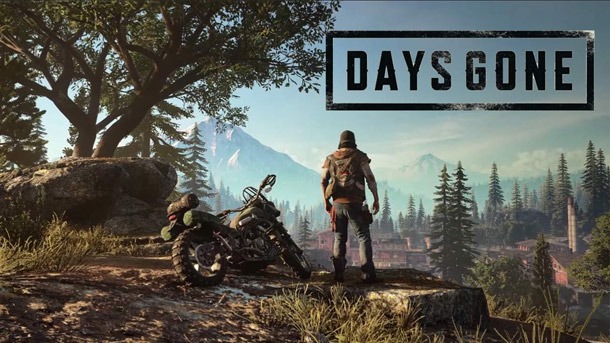
📅 Game released: 2019
Days Gone follows biker Deacon St. John through post-pandemic Oregon, where fuel, scavenging, and huge Freaker hordes make every journey a survival decision. This PC guide compares official Steam, Epic Games Store, and GOG download and installation options, explains Broken Road DLC versus free base-game upgrades, and covers system requirements, Steam Deck support, and practical setup tips.
 By Editor Zero — independently researched, edited, and maintained.
Last updated: 10 November 2026
Last reviewed: 10 November 2026
Table of Contents
- Quick Facts
- Official PC Stores, Download & Installation
- Days Gone Review
- Pros & Cons
- PC System Requirements
- Frequently Asked Questions
- Similar Games
Days Gone Quick Facts
- Game: Days Gone; optional Broken Road DLC on PC
- Developer: Bend Studio
- Publisher: PlayStation Publishing LLC (PC)
- Genre: Action-Adventure, Open World, Survival, Survival Horror, Zombie Games, Third-Person Shooter
- Release: April 26, 2019 (PS4); Windows PC: May 18, 2021
- Platforms: PS4, Windows PC; PS5 (Days Gone Remastered, separate edition)
- PC DLC: Broken Road adds Horde Assault, Permadeath, Speedrun, and Enhanced Photo Mode; the base game receives separate free improvements
- Modes: Single-player campaign, New Game Plus, Survival Mode, and Challenge Mode; no co-op or multiplayer
- Steam Deck: Verified
- Engine: Unreal Engine 4
- Community: Days Gone Reddit, Steam Discussions, official PlayStation page
- PC modding: Unofficial Nexus Mods; back up saves and check version compatibility
- Metacritic score: 76/100 (PC)
- IGN score: 6.5/10 (original game review, PS4)
- OpenCritic average: 72/100 (original game, multiplatform)
- Steam user reception: Very Positive overall
Official PC Stores, Download & Installation
👇 Compare official PC stores below to purchase, download, and install Days Gone, and check which Broken Road features require a separate purchase.
- Base-game stores: The Windows version is sold through Steam, Epic Games Store, and GOG. Buy from the storefront where you want to own and update the game.
- Steam: Includes achievements, Steam Cloud, controller configuration, and Steam Deck integration; Steam also offers a bundle containing the game and Broken Road DLC.
- Epic Games Store: Sells the base game and Broken Road DLC separately, with cloud-save support listed for the PC release.
- GOG: Offers a DRM-free base game with offline installers and optional GOG Galaxy features. Broken Road is available as a separate GOG add-on.
- Paid Broken Road DLC: Requires the base game on the same PC storefront and adds Horde Assault, Permadeath, Speedrun, and Enhanced Photo Mode. It does not add another story campaign.
- Free base-game enhancements: Bend Studio separately made graphical improvements, additional accessibility options, and DualSense haptic support available to base PC owners. These features do not require buying Broken Road; UI narration is not supported for Broken Road on PC.
- DualSense connection: Use a wired DualSense controller to access the full range of the game’s supported controller features.
- Bundle and ownership check: Steam offers a base-game and Broken Road bundle. If you already own Days Gone, compare the standalone add-on before purchasing, and confirm DLC ownership in the same store as the base game.
- PC display and controls: The PC version supports 21:9 ultrawide, unlocked framerate, adjustable field of view, graphics settings, mouse and keyboard, and controllers.
- Steam Deck: Valve rates Days Gone Verified. A sensible framerate cap and lower settings can help in demanding open-world scenes.
- Clean installation: Install through your selected storefront, keep sufficient free disk space, and prefer SSD storage. If troubleshooting crashes, verify game files and temporarily remove unofficial mods.
 View Days Gone – Broken Road DLC on Steam
 Buy Days Gone on Epic Games Store
 View Days Gone – Broken Road DLC on GOG

Days Gone Review
A lonely survival road story where preparation matters more than firepower.
Days Gone initially looks familiar: a biker crossing ruined highways, abandoned settlements, infected creatures, and survivor camps that need another job done. Its more distinctive character emerges from how those pieces interfere with one another. An easy ride becomes a fuel problem. A quiet scavenging stop becomes a desperate escape. Eventually, the enormous Freaker hordes transform places that once seemed safe into landscapes that have to be studied before they can be survived.
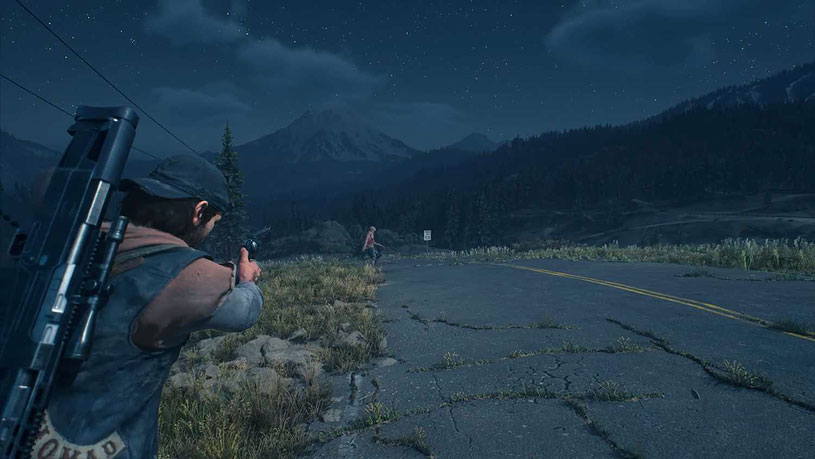
There is an appealing tension between freedom and dependence here. Deacon St. John can roam across Oregon, yet his motorcycle, ammunition, stamina, and relationship with the camps constantly shape how far he can safely go. The game is less convincing when its lengthy campaign falls back on routine errands, but at its best, the survival systems make a fairly conventional open world feel personal and unpredictable.
Story & Characters
Deacon is a former outlaw biker who has survived the outbreak without finding much peace afterward. His grief over Sarah, loyalty to Boozer, and uneasy dealings with camp leaders give him more to carry than weapons and supplies. He is irritable, stubborn, and occasionally difficult to like, muttering during rides or snapping over the radio. Those rough edges make sense for a man who has learned to keep moving rather than confront everything he has lost.
The writing is strongest when it concentrates on relationships instead of explaining the fate of the world. Deacon trying to help an injured Boozer, returning to places connected with Sarah, or deciding how much to trust another survivor says more about him than a dramatic speech would. His abrasive reactions can become repetitive, and the campaign sometimes stretches a conversation across too many objectives, but its quieter moments give the story a human center.
That lonely road-story quality makes Days Gone an interesting companion to Death Stranding 2: On the Beach. Both connect travel through damaged landscapes with personal loss, although they express that connection differently. Sam’s journeys emphasize rebuilding links between people; Deacon’s rides often feel like attempts to avoid admitting how much he still needs them. Neither game’s empty spaces are simply there to separate missions.
The larger plot takes considerable time to gather momentum, and some emotional beats are weakened by the amount of work required between them. More interestingly, the structure can leave the player unsure when a main storyline will continue. Yellow missions sometimes disappear until another radio call arrives after travel or an unrelated activity. The intended breathing room can feel like a broken rhythm when there is no clear reason to wait.
The Motorcycle Is Your Lifeline

Many open-world games treat a vehicle as a way to shorten travel. In Days Gone, the motorcycle is closer to a second survival system. It carries Deacon’s ammunition reserves, provides the quickest escape from a bad encounter, and must be repaired and refueled. The difference is felt most clearly when a simple detour goes wrong. Running short of fuel in an exposed area turns an otherwise manageable stretch of road into a search for supplies and a safe route back.
That dependence creates small, believable habits. Parking the bike toward an escape route makes more sense than leaving it wherever the mission marker happens to be. Watching the tank before entering a remote area matters, and stopping to scavenge gas is sometimes worth the risk of attracting attention. The bike also connects Deacon’s identity to the mechanics: improving something he clearly cares about gives the upgrade system a stronger purpose than another collection of vehicle statistics.
Larger tanks, engine improvements, tires, frames, and visual customization gradually make travel easier. The resulting shift is satisfying because it changes behavior, not just numbers. A route that once demanded careful fuel planning can eventually be crossed with confidence. There is a cost to that progression, though. As the bike becomes more reliable and ammunition storage grows, some of the vulnerability that defines the opening hours inevitably fades.
Combat, Stealth & Survival Systems
The main loop connects scavenging, camp jobs, enemy encounters, crafting, and equipment upgrades. Deacon begins with limited ammunition and stamina, so fighting several Freakers at once can be more dangerous than the same encounter later in the campaign. Shooting is useful, but noise draws attention; melee avoids ammunition costs but puts him within grabbing distance; traps are powerful only when there is time and space to prepare them. The best encounters reward a sensible plan without guaranteeing that it survives first contact.
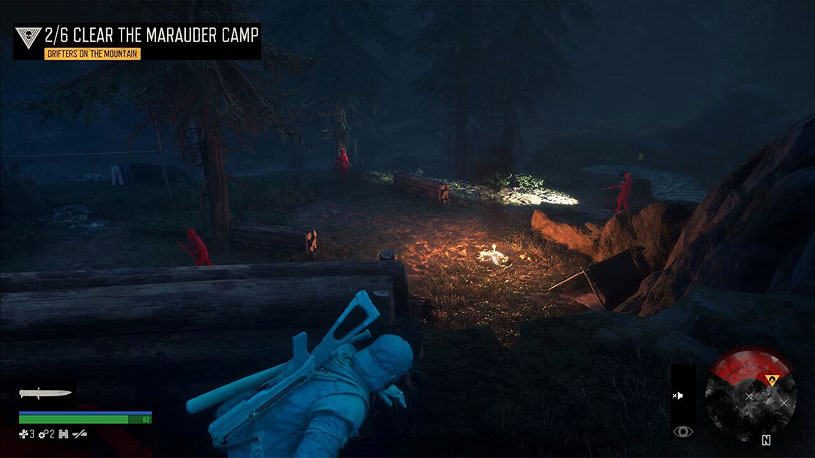
Stealth gives the player room to think. Tall grass, thrown rocks, suppressed shots, and silent takedowns help Deacon reduce a camp before an alarm spreads. Crossbows add another layer, especially with specialist bolts. Residue bolts can turn a human enemy against nearby targets, but the resulting aggression is not a reliable alliance with Deacon. If the affected enemy notices him, the distraction may become another threat. That uncertainty keeps the weapon interesting without making it an effortless solution.
The crossbow also reveals how Days Gone measures resources. Craftable ammunition sounds cheaper than bullets, yet gathering cedar saplings, scrap, and ingredients for special bolts creates its own routine. Once saddlebags hold more firearm ammunition, ordinary guns can be less troublesome to maintain. The choice becomes one of convenience and tactics rather than a simple ranking of the most efficient weapon. Crossbow range still offers a clear advantage when burning Crier nests: incendiary bolts can ignite them from farther away than a thrown Molotov, reducing exposure to the infected birds’ diving attacks.
Melee progression contains subtler trade-offs. The Bull Rush skill can stun a normal human enemy or Swarmer during a sprinting attack, making it useful for isolating a threat before it becomes a prolonged fight. Pairing that kind of aggressive approach with the indestructible boot knife can save both ammunition and the repair materials used by crafted melee weapons. It is not a substitute for crowd control, but it gives small encounters a different rhythm from simply firing until everything stops moving.
Human factions help vary the pressure. Marauder camps demand positioning and attention to gunfire, while ambushes can interrupt a ride before Deacon even reaches an objective. Rippers are more distinctive because their beliefs alter how encounters unfold. They revere Freakers and refuse to fight them, so drawing infected enemies toward a Ripper position can turn the group’s own ideology into a weakness. It is a rare moment when enemy behavior says something about a faction that dialogue alone could not communicate.
Those tactical options do not completely hide the repetition of clearing camps and defeating familiar enemies. Gunfights sometimes become straightforward once weapons and skills improve, and encounters can lose tension when the answer is simply to bring more firepower. Players who enjoy scouting and improvisation will find more variety by experimenting with the environment than by treating every objective as another shooting gallery.
Those who enjoy hostile regions, outpost assaults, and the ability to change plans mid-fight may also appreciate Far Cry 5. It pursues a more explosive sandbox with companions and vehicles, while Days Gone makes retreat, resource use, and the journey between fights more central to its identity.
Horde Mechanics
The Freaker hordes are where the game becomes something more than a story-driven scavenging adventure. A horde is not simply a large number of enemies with individual health bars. It is a moving threat that changes how space can be used. A road, cave entrance, or industrial yard that looks harmless while empty becomes dangerous once hundreds of bodies begin closing the distance.
Good preparation has a visible payoff. Explosive barrels, narrow passages, fences, traps, attractors, and Molotovs let Deacon shape the pursuit before opening fire. An attractor can concentrate a group for an explosion, while a planned route through a choke point buys just enough time to regain distance. Stamina matters as much as damage. A missed turn or an obstacle that catches Deacon for a second can undo several minutes of careful planning.
The sawmill horde captures the design at its most convincing. Its size initially encourages retreat, yet the surrounding structures and obstacles invite a more deliberate approach. Learning where to run, when to turn, and when to spend explosives gradually changes an apparently impossible fight into a demanding spatial puzzle. Later weapons can make hordes easier, but they do not entirely replace the satisfaction of understanding the terrain.
A World That Feels Dangerous
The Pacific Northwest setting contributes more than attractive scenery. Forest roads, rain-soaked camps, snowy ridges, tunnels, and lakes create long stretches in which visibility and distance matter. The world can feel almost peaceful from the motorcycle, particularly when there is nothing ahead but trees and a winding road. Then an animal attack, roadside ambush, or group of wandering Freakers interrupts that calm. The contrast gives ordinary travel a mood that mission markers alone could never provide.
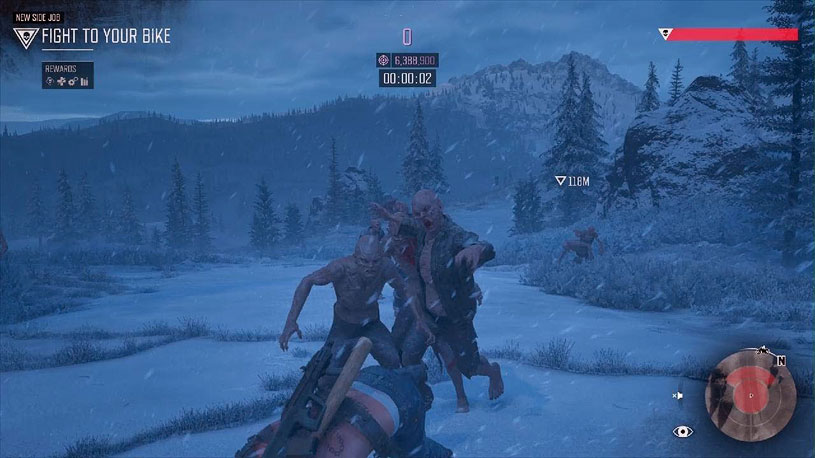
Day and night also influence the feeling of safety. Freakers are generally more active outside their daytime shelters after dark, while fog, rain, and snow can make it harder to assess a road before committing to it. NERO checkpoints turn a small oversight into a memorable consequence: restoring power without disabling every speaker can announce Deacon’s location to nearby infected. That is a more interesting form of danger than a scripted enemy suddenly appearing because the mission requires it.
The survival atmosphere does have an interface trade-off. Survival difficulty strips away much of the persistent HUD, including the minimap, and temporarily recalling information through Survival Vision can interrupt ordinary navigation. The quieter screen may help the wilderness feel less like a series of icons, but repeatedly checking the route while riding is not necessarily more immersive. It is a useful example of a design choice that deepens one part of the experience while adding friction to another.
Scavenging remains worthwhile because found materials feed directly into repairs, explosives, healing, and crafting. NERO injectors improve health, stamina, or focus; clearing camps makes nearby travel safer; destroying infestations gradually changes how routes can be approached. For a different kind of journey through a broken world, Metro Exodus offers similarly strong atmosphere and resource tension, though its more directed structure leaves less room for Deacon’s free-form detours.
Progression, Camps & Replayability
Progression comes from several connected sources rather than one leveling bar. Skill points improve melee, ranged combat, and survival abilities. NERO injectors strengthen Deacon’s basic capacities. Camp trust opens access to better weapons, supplies, and motorcycle parts, with different settlements offering different priorities. Turning in a bounty or completing a job therefore has an immediate practical meaning, even when the mission itself is not especially inventive.
The weakness is how unevenly these systems develop. Early on, resource management forces careful choices; later, superior guns, larger ammunition reserves, and upgraded stamina can make standard encounters feel far less threatening. That change is enjoyable as a measure of progress, yet it exposes how much of the challenge depended on Deacon being underprepared. Hordes remain the best test of his expanded abilities because they demand more than simply owning powerful equipment.
There is substantial room to replay encounters differently. Stealth and special bolts favor patience, firearms reward confident movement, and explosives become particularly satisfying when a location offers several ways to manipulate a crowd. New Game Plus allows a return with developed equipment and abilities. The separate Challenge Mode adds another wrinkle: its earned patches grant lasting bonuses that also apply in the campaign, so two runs on the same difficulty can feel different depending on which challenge rewards have already been earned. The mode is more relevant to long-term progression than its arcade-style format initially suggests.
The main obstacle to replaying everything is the campaign’s length and its repeated mission patterns. Long stretches between significant story developments can be especially frustrating when a new objective depends on an incoming radio call. There is plenty to do, but not every task deserves the same attention. Choosing which camps, hordes, and side activities to pursue is often more rewarding than treating completion of the entire map as the goal.
Final Thoughts
Days Gone asks for patience, sometimes more than it should. Its opening is slow, many jobs follow familiar patterns, and the progression that makes Deacon more capable can also make ordinary threats less interesting. The story occasionally loses its momentum between its strongest character moments. These are substantial weaknesses in a campaign that already demands a long commitment.
What makes the game worth that commitment is the connection between its systems. The motorcycle turns travel into a responsibility, the wilderness makes small mistakes consequential, and the hordes reward preparation in a way few conventional open-world encounters manage. Even the best upgrades matter because they change what Deacon can reasonably risk. For players drawn to lonely landscapes, grounded character relationships, and survival action that rewards attention rather than constant aggression, Days Gone offers a distinctive journey. Anyone wanting a tightly paced story or consistently varied missions may find the road too long.
Days Gone Pros & Cons
- Pro: Large Freaker hordes turn combat into tense, improvised survival puzzles
- Pro: Fuel, repairs, motorcycle upgrades, and camp trust make travel and progression meaningful
- Pro: Deacon, Sarah, and Boozer anchor an unusually personal post-apocalyptic road story
- Pro: Stealth, traps, explosives, and gunplay encourage varied approaches to encounters
- Pro: Ultrawide support, unlocked framerate, Steam Deck verification, and optional Broken Road challenge modes broaden PC play
- Con: The opening hours and several mission chains are slow or repetitive
- Con: Story pacing and radio dialogue are inconsistent
- Con: Broken Road adds replay challenges, not a new narrative chapter
Days Gone PC System Requirements
Official Windows PC requirements for the base game:
MINIMUM:
OS: Windows 10 64-bit
CPU: Intel Core i5-2500K at 3.3 GHz or AMD FX-6300 at 3.5 GHz
RAM: 8 GB
GPU: NVIDIA GeForce GTX 780 (3 GB) or AMD Radeon R9 290 (4 GB)
DirectX: Version 11
Storage: 70 GB available space
Drive: SSD recommended, not required
Additional: 16 GB RAM is also recommended for a smoother experience
RECOMMENDED:
OS: Windows 10 64-bit
CPU: Intel Core i7-4770K at 3.5 GHz or AMD Ryzen 5 1500X at 3.5 GHz
RAM: 16 GB
GPU: NVIDIA GeForce GTX 1060 (6 GB) or AMD Radeon RX 580 (8 GB)
DirectX: Version 11
Storage: 70 GB available space
Drive: SSD recommended
Additional PC Performance and Setup Notes
Install on an SSD when possible. If frame pacing feels uneven, test a stable framerate cap and lower expensive settings such as shadows, foliage, or level of detail one at a time. Keep graphics drivers current and verify game files before changing several variables simultaneously.
When crashes begin after modding, remove incompatible mods, restore original files, and test with an unmodified save backup. These are general troubleshooting steps, not guaranteed fixes for every PC configuration.
Days Gone Official PC Launch Trailer
This official trailer presents the base PC game. Broken Road is an optional replay-focused DLC and does not add a new story campaign.
Frequently Asked Questions
Is Days Gone Remastered available on PC?
The separately titled Days Gone Remastered is the PS5 release. Windows players have the native PC version, with Broken Road offered separately for additional challenge modes.
What does the paid Broken Road DLC add, and which upgrades are free?
Broken Road adds Horde Assault, Permadeath, Speedrun, and Enhanced Photo Mode. It does not add a new story campaign. Base-game PC owners receive separate graphical, accessibility, and wired DualSense haptic improvements without buying the DLC. UI narration is not supported for Broken Road on PC.
How is Horde Assault different from the original Challenge Mode?
The base game’s Challenge Mode provides individual score-based tasks. Broken Road’s Horde Assault is a separate survival-arcade mode with escalating enemy pressure, score targets, and progression rewards. It is best approached after learning the campaign’s combat tools.
Can I play Days Gone offline, and is the GOG version DRM-free?
Yes. Days Gone is a single-player game without a server-dependent campaign. GOG provides a DRM-free copy and offline installers that do not require GOG Galaxy to launch; Steam and Epic installations use their respective clients and offline-mode arrangements. Downloading and cloud-save syncing still require a connection.
Does Days Gone have multiplayer or co-op?
No. The campaign, New Game Plus, the original Challenge Mode, and the Broken Road additions are all designed for one player.
Is Days Gone Steam Deck Verified?
Yes. Valve lists the Steam version as Verified. Adjusting graphics settings or applying a consistent framerate cap may still help during demanding open-world and horde scenes.
How long does Days Gone take to finish?
A main-story playthrough typically takes roughly 35–45 hours. Camp jobs, collectibles, and optional hordes can extend a thorough run well beyond 60 hours; the total depends on how much of Oregon you explore.
Does Days Gone have New Game Plus?
Yes. You can restart the story with many previously unlocked skills, weapons, NERO upgrades, and motorcycle improvements. Not every consumable or collected item carries over.
Which difficulty should I choose for my first playthrough?
Normal is a sensible starting point, while Easy makes the narrative and exploration more forgiving. Hard and Survival options demand more caution with enemy awareness, positioning, and resources.
When should I start fighting Freaker hordes?
Begin with a smaller horde after improving stamina and obtaining reliable weapons, attractors, and explosives. Observe its route and identify narrow passages, obstacles, and an escape path before engaging.
Which motorcycle upgrades should I buy first?
Fuel capacity is particularly helpful early because it reduces risky refueling detours. Engine, durability, tires, and saddlebags become increasingly useful depending on whether travel range, handling, or carrying ammunition limits you most.
Why should I disable the speakers at NERO checkpoints?
Powering a NERO generator can reactivate connected speakers, attracting nearby Freakers. Follow the cables and disable speakers before restoring power to keep the area manageable.
What are NERO injectors used for?
NERO injectors permanently increase one of Deacon’s health, stamina, or focus attributes. Stamina helps with sustained movement and horde escapes, while focus assists precise ranged shooting.
Should I use a controller or keyboard and mouse on PC?
Both are supported. A controller can feel comfortable for riding, while mouse aiming may suit precision shooting. A wired DualSense is needed for the full supported DualSense feature set.
Can I install unofficial Days Gone mods?
Yes. Community-made mods are available, but compatibility varies and game updates can break them. Read each mod’s instructions, back up saves, and remove mods when isolating technical issues.
How can I reduce PC stutter or crashes?
Use an SSD when possible, verify game files, and try a stable framerate cap. Adjust demanding graphics options one at a time and temporarily disable unofficial mods or overlays to isolate problems. These steps are troubleshooting measures, not guaranteed fixes.
Is Days Gone suitable for children?
Days Gone is intended for mature audiences and contains intense violence, blood and gore, strong language, disturbing infected enemies, and other adult themes.
Still have questions? Check the Days Gone community on Reddit, Steam Discussions, or the official PlayStation page.
Sources & References
Key factual and PC-specific information in this guide was checked against:
- Bend Studio — Days Gone and Broken Road DLC update — confirms the free base-game improvements versus paid DLC modes.
- PlayStation Blog — accessibility features — clarifies PC accessibility limitations and wired DualSense behavior.
- Steam — Days Gone — verifies PC requirements, included modes, official features, and overall user reception.
- Epic Games Store — Broken Road DLC — details Horde Assault, Permadeath, Speedrun, and the add-on’s PC availability.
- GOG — Days Gone — documents its DRM-free ownership model and optional DLC.
- Metacritic — Days Gone PC reviews — verifies the PC-version critic aggregate.
Similar Games Like Days Gone
- Dying Light
- Fallout 4
- Far Cry New Dawn
- Metro Exodus
- Red Dead Redemption 2
- Death Stranding 2: On the Beach




Found something worth playing through DecideGame?
DecideGame.com is an independent gaming project run by Editor Zero. If this guide helped you discover a game, solve a problem, or find useful information, you can support DecideGame.com and help keep new and updated game guides coming.
DecideGame — PC Game Guides, Reviews & Setup Help