

📅 Game released: 2023
Resident Evil 4 Remake rebuilds Leon S. Kennedy’s rescue mission as a tense third-person action-horror adventure shaped by crowd control, knife parries, and scarce resources. This PC guide compares official Steam purchase, download, and installation options, Standard and Gold Editions, Separate Ways, system requirements, Steam Deck support, and practical performance and modding advice.
 By Editor Zero — independently researched, edited, and maintained.
Last updated: 7 November 2026
Last reviewed: 7 November 2026
Table of Contents
- Quick Facts
- Official PC Stores, Download & Installation
- Resident Evil 4 Remake Review
- Pros & Cons
- PC System Requirements
- Frequently Asked Questions
- Similar Games
Resident Evil 4 Remake Quick Facts
- Game: Resident Evil 4 / Resident Evil 4 Gold Edition
- Developer: CAPCOM Co., Ltd.
- Publisher: CAPCOM Co., Ltd.
- Genre: Survival Horror, Horror, Third-Person Shooter, Action-Adventure
- Release: March 24, 2023
- Platforms: Windows PC, macOS, iPhone, iPad, PS4, PS5, Xbox Series X|S
- PC editions: Standard Edition and Gold Edition; Gold Edition bundles the base game, Separate Ways, and the Extra DLC Pack
- Steam Deck: Verified; first-time setup requires an active internet connection, while single-player does not require a continuous connection after setup
- VR: PS VR2 Mode is available on PS5; the Windows PC version does not include official native VR support
- Engine: RE Engine
- Community: Official Resident Evil 4 Website, Steam Discussions, Reddit Resident Evil
- PC modding: Nexus Mods for Resident Evil 4 Remake hosts REFramework, Fluffy Mod Manager packages, visual changes, character swaps, camera tools, reshades, interface tweaks, and other unofficial mods; there are no official modding tools or Steam Workshop support
- Metacritic score: 91/100 on PC
- IGN score: 10/10
- Steam user reception: Overwhelmingly Positive overall
Official PC Stores, Download & Installation
👇 Compare the official Steam purchase, download, installation, edition, DLC, and setup options below before installing Resident Evil 4 Remake on Windows PC.
- Windows PC availability: Resident Evil 4 Remake is officially sold for Windows PC through Steam.
- Standard Edition: The base purchase includes Leon S. Kennedy’s complete main campaign. Separate Ways and the Extra DLC Pack are separate add-ons unless you choose Gold Edition.
- Gold Edition: Gold Edition bundles Resident Evil 4, Separate Ways, and the Extra DLC Pack. Steam warns that included items can also be purchased separately, so check existing ownership before buying another bundle or add-on.
- Separate Ways: The paid story expansion follows Ada Wong through a parallel campaign with its own routes, encounters, bosses, and grappling-hook traversal.
- Extra DLC Pack: The pack adds Leon and Ashley costumes, Leon filters and accessories, the Sentinel Nine and Skull Shaker weapons, Treasure Map: Expansion, and the original-version soundtrack swap.
- The Mercenaries: The score-attack combat mode is a free Steam add-on that requires the base game and focuses on timed enemy waves, character-specific abilities, and high scores.
- Chainsaw Demo: Steam still offers the separate Chainsaw Demo, which lets players test the opening village section before purchasing the full game.
- Optional upgrade tickets: Weapon-exclusive upgrade tickets are separate convenience add-ons and are not required to finish the main campaign, Separate Ways, or The Mercenaries.
- Steam features: The Steam version supports achievements, trading cards, Steam Cloud, Family Sharing, HDR, and full controller support.
- Offline single-player: Steam Deck compatibility metadata says first-time setup requires an active internet connection, but the single-player game does not require a continuous internet connection after setup.
- Steam Deck: Valve rates the game Verified, including readable interface text, matching controller icons, and a default graphics configuration considered suitable for Steam Deck.
- Multiplayer: Resident Evil 4 Remake is single-player; the campaign, Separate Ways, and The Mercenaries do not add campaign co-op, PvP, cross-play, or online progression.
- VR: The official PS VR2 Mode belongs to the PS5 version. Buying the Windows PC version does not provide official native PC VR support.

 Visit the Official Resident Evil 4 Website

Resident Evil 4 Remake Review
A tense action-horror remake that rewards quick decisions, careful resources, and repeat mastery.
Resident Evil 4 Remake understands that preserving a classic does not mean treating every part of it as untouchable. Leon S. Kennedy still enters a remote Spanish village to rescue Ashley Graham, but Capcom has rebuilt the journey around more aggressive enemies, sharper controls, knife parries, and a darker atmosphere. The original’s strange mixture of horror and confident action survives, only now Leon’s abilities and the dangers surrounding him feel more closely matched.
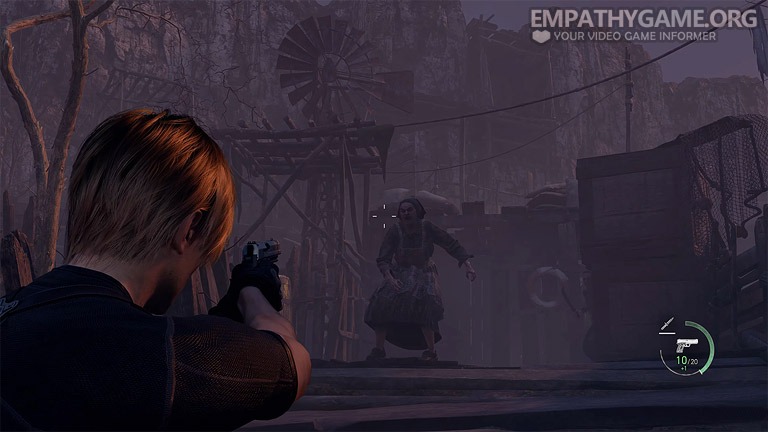
This is not the slower, locked-room survival horror of the Spencer Mansion. Here, the fear comes from losing control of a fight that seemed manageable seconds earlier. One Ganado is rarely a problem. Add several more, a thrown hatchet, a parasite mutation, a bear trap, and a chainsaw revving somewhere behind Leon, and an ordinary courtyard becomes a panic puzzle. What makes the remake stand out is that even when these situations become familiar, they remain satisfying to solve.
Combat Is Built Around Pressure, Not Pure Power
Leon can move while aiming, crouch, parry, quick-turn, and follow staggered enemies with melee attacks. That extra freedom might have weakened the horror if the Ganados behaved like simple targets. Instead, they flank, grab, throw tools, attack from awkward angles, and sometimes mutate after taking damage. Good aim helps, but awareness of the space around Leon matters just as much.
The opening village square makes this clear immediately. Houses provide temporary shelter, rooftops create distance, and narrow paths offer escape routes until enemies approach from another direction. Shooting a villager in the leg can create an opening for a kick and save ammunition. Staying in one place too long, however, usually makes the situation worse. The encounter teaches a useful lesson without spelling it out: survival depends on knowing when to fight, when to move, and when to leave an enemy alone.
The knife parry is the remake’s smartest mechanical addition because it makes Leon more capable without giving him a free defense. Deflecting a dangerous strike feels excellent, especially when an enemy suddenly closes the gap. Yet parries, stealth kills, finishing attacks, and emergency escapes all consume knife durability. Repairing the blade costs money that might otherwise improve a firearm. That small economic consequence makes defense part of the same resource-management problem as ammunition and healing.
Restraint can be more valuable than aggression. Rushing toward a staggered Ganado for a roundhouse kick may expose Leon to another enemy’s grab. A flash grenade can deal with exposed Plaga more efficiently than several bullets. Professional difficulty makes parry timing stricter, but the underlying lesson remains the same: reacting quickly is useful only when the decision itself makes sense.
Enemy variety supports that thinking. Shield-bearing zealots make penetration and flanking worthwhile; Garradors punish careless noise; Regeneradors turn the Biosensor Scope into a test of precise aiming; and Novistadors encourage constant attention to the surroundings. These enemies are memorable not simply because they look different, but because they interrupt habits that worked elsewhere.
Encounters and Bosses Leave Room for Improvisation
The strongest set pieces are carefully arranged without feeling like there is only one acceptable solution. During the cabin defense with Luis, windows, ladders, barricades, and limited space demand constant reassessment. Luis helps, but he cannot keep every entrance safe. The castle’s Water Hall creates another kind of pressure by making Leon protect Ashley while managing cultists at different elevations. Both encounters are demanding because choosing the most urgent threat matters more than shooting the nearest one.
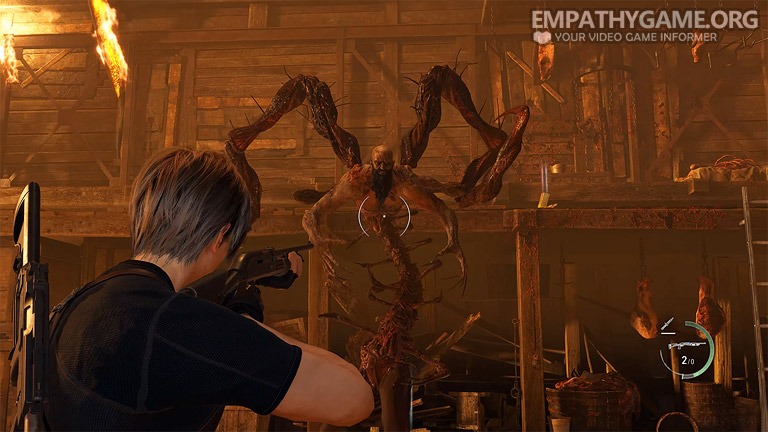
Bosses generally build on that principle. Bitores Méndez changes the meaning of safe positioning as his burning arena develops. The Verdugo encounter is interesting partly because surviving is a legitimate alternative to killing it, with liquid nitrogen offering brief opportunities to retaliate. Krauser brings knife timing and spacing into a personal confrontation with Leon. The fights succeed when their spectacle grows from a mechanical challenge rather than replacing it.
The island is a less convincing final stretch. Regeneradors create some of its most frightening scenes, but armored enemies, turrets, and sustained firefights gradually push the balance toward conventional shooting. The remake is most distinctive when narrow village streets or unsettling castle chambers make Leon feel surrounded. Compared with Resident Evil Village, which moves between contrasting horror attractions, this adventure has a tighter combat identity, even if its last chapters sometimes overuse that strength.
The Merchant Makes Exploration and Equipment Matter
The Merchant ties exploration to combat in a way that feels immediately useful. Treasures, gemstones, spinels, upgrade costs, repairs, and attaché case expansions all compete for attention. Finding an ornate treasure is satisfying, but deciding whether to sell it immediately or wait for the right gemstone combination is more interesting. Extra money later may be worth less than the shotgun improvement Leon needs before the next difficult encounter.
The attaché case turns those decisions into a physical puzzle. Carrying a shotgun takes space; fitting a powerful handgun with its stock takes more. An extra grenade feels reassuring until it prevents Leon from picking up ammunition or healing supplies. Inventory management is enjoyable because it changes what can be brought into a fight, not merely how neat the storage grid looks.
Merchant requests give optional exploration a reason to exist without becoming a separate grind. Blue medallions, special targets, and other tasks provide spinels for useful rewards. Most encourage the player to examine locations already along the main route. The main frustration is how easily a point of no return can make an unfinished request or missed treasure inaccessible. Completion-focused runs sometimes demand more caution about chapter transitions than the game clearly communicates.

Weapon Choices Are About More Than Damage
The arsenal works because weapons have meaningful practical differences. The Punisher’s penetration gives it value against lined-up enemies and wooden shields, especially in the castle, while laser-sight compatibility supports careful aiming. The Red9 delivers impressive handgun damage but becomes a bulky commitment with its stock and cannot use that laser sight. Neither is simply the better choice; their advantages depend on what else Leon is carrying and how the player prefers to fight.
The Riot Gun rewards accurate shotgun blasts, the Stingray handles distant weak points, and magnums offer powerful damage at an ammunition cost that discourages everyday use. Even the awkward Bolt Thrower has a place for patient play thanks to recoverable bolts and attachable mines. Exclusive upgrades do not all feel equally imaginative, but the wider system preserves an appealing question throughout the campaign: does another upgrade actually improve the way this particular loadout works?
The Characters Gain Weight, Even When Some Lose Their Strangeness
Leon’s dry humor is still there, but his confidence now feels connected to the training and trauma that followed Raccoon City. That link with Resident Evil 2 Remake makes him more convincing than an action hero who appears to have left every earlier experience behind. He can handle terrible situations without seeming entirely untouched by them.
Ashley receives the most valuable rewrite. Her fear and growing trust in Leon are more believable, while removing her separate health bar makes escort sections less like maintaining a second inventory of healing supplies. She can still be incapacitated or carried away, so protecting her remains demanding. The difference is that the pressure comes from managing enemies and positioning rather than repeatedly tending an escort meter.
Luis combines charm with clearer regret, offering welcome warmth in a grim campaign. Krauser’s rivalry with Leon carries a stronger personal edge, giving their encounters dramatic weight alongside their mechanical demands. Ada remains deliberately distant, but her role makes more sense when the story is considered from another angle. These changes generally support a more coherent emotional tone.

Something is lost in the process, however. Méndez remains an effective physical threat, but Saddler and especially Salazar are less theatrically memorable than their original counterparts. The remake’s seriousness gives the story more consistency while reducing some of the eccentric personality that made the older game so peculiar. Whether that is an improvement depends partly on what a player valued about the original.
Puzzles and Atmosphere Serve Different Purposes
Most puzzles ask for observation rather than sustained deduction. Symbols, locks, environmental clues, and rotating pieces break up the fighting and encourage closer attention to the village and castle, but few are memorable challenges in themselves. That simplicity helps maintain momentum, although some puzzles feel like interruptions rather than discoveries. Ashley’s playable sequence is more successful because removing Leon’s combat tools changes the rules of survival and makes familiar surroundings threatening for different reasons.
Anyone who prefers the direct, compact pace of Resident Evil 3 Remake may find Leon’s longer adventure tiring in places. Its advantage is that the extra time creates space for exploration and meaningful equipment choices, rather than only extending the route between encounters.
The RE Engine’s visual detail is impressive, but art direction and sound do even more for the horror. Damp village streets feel cold and rotten, the castle combines grandeur with ritualistic menace, and the island takes on a harsher industrial character. Cultist chanting beyond a doorway, footsteps approaching from the wrong direction, and the unmistakable sound of a chainsaw can create tension before a threat appears. Minor presentation oddities, such as weapons looking awkwardly attached to Leon’s back, stand out largely because the rest of the world is so carefully constructed.
Replayability Comes From Learning, Not Just Unlocking
Although the campaign is mostly linear, returning to it changes the experience. A first run is full of uncertainty; a later one becomes a test of how efficiently Leon can move, fight, and invest resources. New Game Plus, stronger route knowledge, different weapons, and higher difficulty settings provide reasons to approach familiar locations differently. Hardcore and Professional reward increasingly deliberate timing and resource planning, while completion ranks encourage an entirely different relationship with the campaign’s length.
That length is also a limitation. Replaying the entire island after the village and castle can feel less inviting than revisiting a favorite encounter. Collectibles and points of no return may complicate completion attempts too. The game is at its best on repeat runs when there is a clear purpose, whether that means trying an unfamiliar weapon, improving a rank, or simply taking a more confident route through difficult fights.
The Mercenaries strips the combat down to timed arenas, character abilities, combo management, and score chasing. Its appeal confirms how well the fighting works independently of the story. Separate Ways offers another perspective through Ada’s grappling hook, distinct routes, and parallel events, making her adventure more than a shorter version of Leon’s. Players who especially enjoy mastering repeatable encounters and upgrading an arsenal may also appreciate Resident Evil 5, although its cooperative action sacrifices much of this remake’s isolation and fear.
Final Verdict
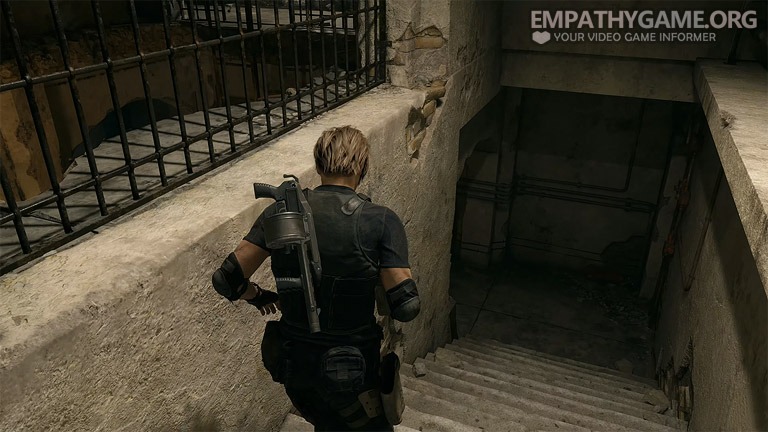
Resident Evil 4 Remake is a thoughtful modernization because its improvements work together. More responsive movement would mean little without enemies that challenge it. Knife parries would remove tension without durability costs. Exploration would feel optional in the wrong way if the Merchant did not make its rewards useful. The remake succeeds by connecting these systems until even a familiar encounter presents worthwhile decisions.
It is not equally strong everywhere. The puzzles are modest, the island relies too heavily on direct firefights, and some rewritten villains have lost a little of their original personality. A lengthy campaign also asks for more commitment than its individual combat encounters sometimes need.
What stays with the player is the change from uncertain survival to deliberate mastery. Learning when to move, which threats to prioritize, and how to make limited resources count becomes genuinely enjoyable without erasing the danger. Those who prefer slower, puzzle-led survival horror may find a better fit elsewhere in the series. For anyone drawn to precise action under constant pressure, though, Leon’s rebuilt journey is exceptionally rewarding.
Resident Evil 4 Remake Pros & Cons
- Pro: Excellent modernization of a survival-horror classic, with stronger aiming, movement, parries, knife decisions, enemy pressure, and expanded character moments
- Pro: Village, castle, island, merchant routes, treasure hunts, side requests, boss fights, and set pieces create one of the most varied action-horror campaigns in the series
- Pro: Gold Edition combines the base campaign with Separate Ways and the Extra DLC Pack in one straightforward package
- Pro: Separate Ways gives Ada Wong a strong parallel campaign with new routes, gadgets, bosses, story context, and extra replay value
- Pro: Steam Deck Verified support, RE Engine performance, ray tracing, AMD FSR, HDR, cloud saves, and a large Nexus Mods scene make the PC version flexible
- Con: Players who prefer the slower survival horror of Resident Evil 2 Remake or Resident Evil 7 may find this entry more action-heavy
- Con: Some paid DLC items, especially weapon upgrade tickets, can feel unnecessary or too convenience-focused
- Con: Ray tracing and high texture settings can cause VRAM pressure, stutter, or uneven frame pacing on weaker GPUs
- Con: Unofficial mods, REFramework, and Fluffy Mod Manager packages may break after updates and should be disabled first when troubleshooting
Resident Evil 4 Remake PC System Requirements
OFFICIAL WINDOWS PC REQUIREMENTS:
MINIMUM — 1080p / Approximately 45 FPS with Performance-Prioritized Settings:
OS: Windows 10, 64-bit
CPU: AMD Ryzen 3 1200 / Intel Core i5-7500
RAM: 8 GB
GPU: AMD Radeon RX 560 4 GB / NVIDIA GeForce GTX 1050 Ti 4 GB
DirectX: Version 12
Internet: Broadband internet connection
Additional: Estimated performance is approximately 1080p at 45 FPS with performance-prioritized settings; frame rates may drop during graphically intensive scenes. AMD Radeon RX 6700 XT or NVIDIA GeForce RTX 2060 is required for ray tracing at this tier.
RECOMMENDED — 1080p / Approximately 60 FPS:
OS: Windows 10 or Windows 11, 64-bit
CPU: AMD Ryzen 5 3600 / Intel Core i7-8700
RAM: 16 GB
GPU: AMD Radeon RX 5700 / NVIDIA GeForce GTX 1070
DirectX: Version 12
Internet: Broadband internet connection
Additional: Estimated performance is approximately 1080p at 60 FPS; frame rates may drop during graphically intensive scenes. AMD Radeon RX 6700 XT or NVIDIA GeForce RTX 2070 is the listed ray-tracing tier for the recommended target.
Storage note: Steam’s published system-requirements block does not publish a fixed storage-space figure for the 2023 remake. Installation size can change with language files and owned DLC, so check the Steam install prompt and keep additional free space available rather than relying on an older fixed number.
Additional PC Performance and Setup Notes
- Ray tracing: It is optional and can be one of the first settings to reduce when targeting a steadier frame rate on mid-range or handheld hardware.
- Graphics options: Resident Evil 4 supports ray tracing, HDR, AMD FidelityFX Super Resolution, detailed texture settings, shadow options, ambient occlusion, volumetric lighting, screen-space reflections, and hair strands.
- VRAM: Keep texture and graphics-memory settings within the capacity of the installed GPU. Excessive VRAM pressure can contribute to hitching, unstable frame pacing, texture problems, or crashes.
- Area-to-area performance: Test more than one location when tuning settings because the village, castle, island, bosses, and larger combat encounters can place different loads on the system.
- Steam Deck: Start with Valve’s default Verified configuration before increasing textures, ray tracing, or frame-rate targets.
- Crashes or failed launches: Update graphics drivers, verify Steam files, disable conflicting overlays, and test the game without REFramework, Fluffy Mod Manager packages, or other unofficial modifications.
- Mods and saves: Back up important saves before installing gameplay, camera, weapon, character, framework, or other substantial mods, and restore clean files when troubleshooting compatibility.
Video Trailer
Frequently Asked Questions
Which Resident Evil 4 Remake edition includes Separate Ways?
Standard Edition includes Leon’s complete campaign. Gold Edition includes the base game, Ada Wong’s Separate Ways story expansion, and the Extra DLC Pack. Standard Edition owners can purchase the expansion and the bonus pack separately, so check your existing DLC before buying another bundle.
Are The Mercenaries and the Chainsaw Demo available on PC?
Yes. The Mercenaries is a free Steam add-on for owners of the base game, offering single-player score-attack challenges. The Chainsaw Demo is a separate, free-to-try Steam demo of the opening village section; it does not require purchasing the full game.
Is Resident Evil 4 Remake included with PC Game Pass?
A Windows PC Game Pass catalogue entitlement is not confirmed for the 2023 remake. Steam is the verified Windows PC purchase and download route; check the Xbox app’s live catalogue before subscribing specifically for this game.
Does Resident Evil 4 Remake have co-op, multiplayer, or cross-play?
No. Leon’s campaign, Separate Ways, and The Mercenaries are all single-player. There is no campaign co-op, local split-screen, competitive multiplayer, or cross-play.
Should I play Resident Evil 2 Remake or the original Resident Evil 4 first?
Neither is required. This remake tells a self-contained rescue story, although Resident Evil 2 Remake adds background for Leon and the Raccoon City disaster. The 2005 Resident Evil 4 is worth comparing if you are interested in its different tone, controls, pacing, and encounters.
Is Resident Evil 4 Remake more action or survival horror?
It combines both, but it is more combat-focused than slower entries such as Resident Evil 2 Remake. Large enemy groups, tight ammunition decisions, frightening encounters with Regeneradors, and occasional puzzles sustain the horror while Leon’s movement, weapon upgrades, and parries favor active defense.
Is Resident Evil 4 Remake open world?
No. It is a chapter-based adventure with connected spaces, optional Merchant requests, treasures, and some backtracking. Certain chapter transitions permanently close off earlier areas, so explore before advancing if you want to collect everything.
How long does Resident Evil 4 Remake and Separate Ways take?
Leon’s main campaign commonly takes around 15–20 hours on an initial run, depending on difficulty and exploration. Separate Ways typically adds roughly four to six hours. Ranking attempts, unlocks, New Game Plus, and The Mercenaries can extend play considerably.
Does Resident Evil 4 Remake have New Game Plus?
Yes. After finishing the main campaign, completed save data can start New Game Plus with many weapons, upgrades, money, treasures, and carried items retained. Story-specific keys and progression items reset. There is no unrestricted free-roam mode after the ending.
Which difficulty should a first-time player choose?
Assisted is the gentlest starting point, especially if you want to prioritize the story. Standard offers a balanced first run; Hardcore suits experienced action-horror players. Professional puts greater pressure on resources and requires tighter knife-parry timing.
How does knife parrying work?
A correctly timed knife action deflects many enemy strikes and thrown weapons. Parrying consumes knife durability, as do stealth takedowns and other defensive uses. Keep an eye on durability and repair Leon’s combat knife at the Merchant rather than treating it as unlimited protection.
Which weapons are worth upgrading first?
A reliable handgun, shotgun, and rifle are sensible first-run foundations: they cover ordinary enemies, crowd control, and distant weak points. Choose upgrades around ammunition availability, inventory space, and your aim rather than chasing damage alone. Magnums are powerful but their ammunition is scarce.
Should I sell treasures immediately or combine them with gemstones?
Check whether a treasure has gemstone slots before selling it. Matching valuable gemstones to the item can increase its sale price substantially. Merchant requests also award Spinels that can be exchanged for rewards, giving careful exploration a practical advantage.
How does protecting Ashley work in the remake?
Ashley no longer has the original game’s separate health bar, but enemies can still incapacitate, grab, or carry her away. Clear threats near her, use the available spacing commands, and intervene quickly when an enemy starts an abduction.
Can I play Resident Evil 4 Remake in VR on Windows PC?
Not through an official native PC VR mode. Capcom’s official VR Mode is for the PS5 version with PlayStation VR2, so purchasing the Steam version does not include the same feature.
Is the game Steam Deck Verified, and can I play offline?
Yes. Valve lists Resident Evil 4 as Steam Deck Verified. Steam’s compatibility information indicates that first-time setup requires an internet connection, but the single-player game does not require a continuous connection afterward. Downloads, updates, and Steam Cloud synchronization still use the internet.
What should I try if Resident Evil 4 Remake stutters or crashes?
Check current graphics drivers, verify the installed files in Steam, and reduce ray tracing, textures, or other settings that strain VRAM. Disable overlays, experimental overclocks, REFramework, reshades, and other unofficial mods while diagnosing the issue. Capcom also maintains an official Steam troubleshooting guide.
Can I use controllers and unofficial mods on PC?
Yes. Steam lists full controller support, and the Windows version also accepts keyboard and mouse. Unofficial modifications are available through Nexus Mods, including REFramework-related tools and visual or interface changes. Back up important saves and confirm each mod supports your installed game build.
Still have questions? Check the Resident Evil community on Reddit, the Steam Discussions, or the official Resident Evil 4 support page.
Sources & References
Key factual and technical information in this guide was checked against relevant official and community sources, including:
- Resident Evil 4 on Steam — Windows PC availability, Gold Edition contents, Chainsaw Demo access, Steam features, system requirements, and Steam user reception
- Resident Evil 4 Configuration on SteamDB — Steam Deck Verified metadata, first-time internet requirement, single-player offline status, release metadata, and RE Engine identification
- Resident Evil Portal Lineup — Capcom’s official platform and product lineup for the 2023 remake and Gold Edition
- Resident Evil 4 on PlayStation — PS4, PS5, and PS VR2 availability
- Resident Evil 4 PC Critic Reviews on Metacritic — PC Metascore verification
- GameSpot Resident Evil 4 Review Roundup — verification of IGN’s 10/10 review score
Similar Games Like Resident Evil 4 Remake
- Resident Evil 2 Remake
- Resident Evil Village
- Resident Evil 3 Remake
- Resident Evil Requiem
- Days Gone
- Tomb Raider (2013)






Found something worth playing through DecideGame?
DecideGame.com is an independent gaming project run by Editor Zero. If this guide helped you discover a game, solve a problem, or find useful information, you can support DecideGame.com and help keep new and updated game guides coming.
DecideGame — PC Game Guides, Reviews & Setup Help