

📅 Game released: 2021
Resident Evil Village follows Ethan Winters into a hostile European village where first-person survival horror mixes exploration, puzzles, resource management, and increasingly intense combat. This PC guide compares official Steam and Microsoft/Xbox download and installation options, Standard and Gold Editions, Winters’ Expansion, Game Pass, Steam Deck support, system requirements, and practical setup advice.
 By Editor Zero — independently researched, edited, and maintained.
Last updated: 15 November 2026
Last reviewed: 15 November 2026
Table of Contents
- Quick Facts
- Official PC Stores, Download & Installation
- Resident Evil Village Review
- Pros & Cons
- PC System Requirements
- Frequently Asked Questions
- Similar Games
Resident Evil Village Quick Facts
- Game: Resident Evil Village / Gold Edition
- Developer: CAPCOM Co., Ltd.
- Publisher: CAPCOM Co., Ltd.
- Genre: Survival Horror, Horror, First Person Shooter (FPS), Action-Adventure
- Release: May 7, 2021 (original Windows PC and console release); Microsoft/Xbox Windows edition: January 20, 2026
- Platforms: Windows PC, macOS, PS4, PS5, Xbox One, Xbox Series X|S, Nintendo Switch (cloud version), Nintendo Switch 2, iPhone, iPad
- Xbox Play Anywhere: Supported by the Microsoft digital version across compatible Xbox consoles and Windows PC
- Steam Deck: Verified; Valve’s compatibility metadata reports functional default controls, matching controller icons, legible text, suitable default graphics behavior, and first-time internet setup
- Engine: RE Engine
- Community: Official Resident Evil Village Website, Steam Discussions, Reddit Resident Evil Village
- PC modding: Nexus Mods for Resident Evil Village hosts unofficial utilities, character and model replacements, interface changes, visual modifications, weapons, and other community-made mods; no official mod tools or Steam Workshop support are listed
- Metacritic score: 83/100 on PC
- IGN score: 8/10
- Steam user reception: Overwhelmingly Positive overall
Official PC Stores, Download & Installation
👇 Compare the official Steam and Microsoft/Xbox PC options below before purchasing, downloading, installing, or choosing an edition of Resident Evil Village.
- PC availability: Resident Evil Village is officially sold for Windows PC through Steam and Microsoft/Xbox Store.
- Microsoft PC release: The Microsoft/Xbox Windows version became available on January 20, 2026 and supports PC alongside Xbox One and Xbox Series X|S.
- Standard Edition: The base purchase includes Ethan Winters’ complete main campaign and the original Mercenaries mode.
- Gold Edition: Gold Edition bundles the base game, Winters’ Expansion, and Trauma Pack.
- Winters’ Expansion: The expansion adds Third Person Mode for the main campaign, Shadows of Rose, and The Mercenaries Additional Orders with Chris Redfield, Karl Heisenberg, and Lady Dimitrescu as additional playable characters.
- Trauma Pack: The pack adds Resident Evil 7-themed bonus items including Samurai Edge – AW Model-01, a Mr. Everywhere weapon charm, music and visual extras, and immediate Village of Shadows access; that difficulty can also be unlocked through normal progression.
- Duplicate purchases: Base-game owners can purchase Winters’ Expansion and Trauma Pack separately. The Extra Content Shop All Access Voucher and Street Wolf Outfit are optional add-ons and are not required for the main story or Winters’ Expansion.
- Game Pass: The Xbox listing shows the base game as included with Game Pass tiers that cover PC and supported Xbox access. Winters’ Expansion, Trauma Pack, and other paid add-ons are separate unless the chosen entitlement explicitly includes them.
- Xbox Play Anywhere: The Microsoft digital version supports Xbox Play Anywhere, so one eligible digital purchase can be used across supported Xbox consoles and Windows PCs under the same Microsoft account; Steam purchases do not grant the Microsoft copy.
- Steam features: Steam lists single-player support, Steam achievements, trading cards, Steam Cloud, HDR, Family Sharing, and controller support without a separate mandatory Capcom launcher.
- DRM and setup: Denuvo Anti-Tamper is no longer part of the Steam build. Steam still requires acceptance of the Resident Evil Village EULA, while Valve’s Steam Deck metadata notes that first-time setup needs an internet connection but single-player does not require a permanent connection afterward.
- Steam Deck: Valve rates Resident Evil Village as Verified, with functional default controls, appropriate controller icons, legible interface text, and default graphics settings that meet Deck compatibility requirements.
- Multiplayer status: Resident Evil Village itself has no campaign co-op or active competitive multiplayer. Resident Evil Re:Verse was the separate multiplayer component, and its service has permanently ended.
- Official VR: The official Resident Evil Village VR Mode is for the PS5 version with PlayStation VR2; there is no official Windows PC VR mode.
 Buy Resident Evil Village on Steam
 Buy Resident Evil Village Gold Edition on Microsoft / Xbox Store
 Visit the Official Resident Evil Village Website

Resident Evil Village Review
A restless horror adventure where exploration thrives even as growing firepower weakens the fear.
Resident Evil Village is at its most interesting when it changes what Ethan Winters can rely on. Castle corridors reward careful searching, another house takes his weapons away, and a sprawling factory eventually tests how much action the series can absorb before the horror begins to fade. Between these extremes sits the village itself, a place that reveals more of its secrets each time Ethan returns.
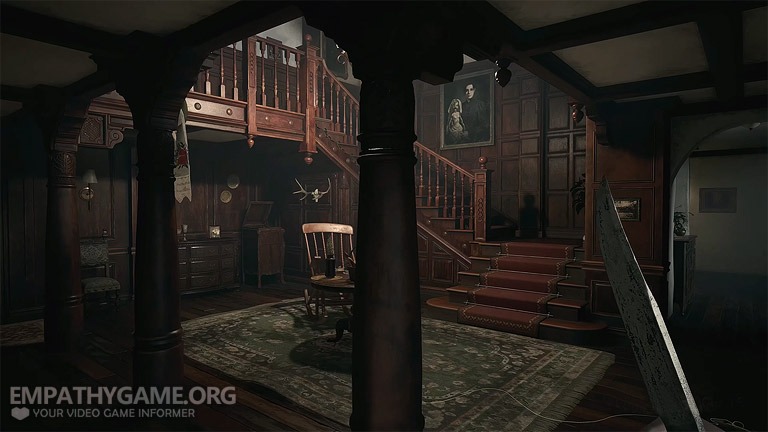
Compared with Resident Evil 7, Ethan moves more confidently and has more ways to fight back. Crafting, the Duke’s shop, weapon upgrades, and a useful defensive shove make combat less desperate, though aggressive lycans can still punish poor positioning. The greater variety makes Village consistently engaging without making it consistently frightening. Its most rewarding moments come when a small discovery changes what the player can do next, not when the game simply throws more enemies into the room.
The Village Becomes More Rewarding After Every Return
The village is not just a path between four powerful rulers. At first, ruined houses, locked gates, sealed wells, and raised drawbridges seem to be scenery or dead ends. Later, the Iron Insignia Key opens marked entrances, the Well Wheel makes abandoned wells worth revisiting, and the crank reveals routes toward isolated buildings and the river. This progression gives the map a memory: a blocked route noticed an hour earlier can become the most tempting detour after a major chapter.
Its red-and-blue room indicators make searching less arbitrary. A red room still contains something worth finding; a blue one has been cleared. That feedback matters when ammunition and treasure can influence the next encounter or weapon upgrade. It also encourages thorough exploration before leaving a major area that cannot be revisited. Treasure photographs and markers offer clues rather than a checklist of effortless pickups, sometimes leading to small puzzles or optional fights with stronger creatures.
The hub is more guided and segmented than the police station in Resident Evil 2 Remake, but its strength is different. Returning to familiar streets with new tools gradually turns a hostile, confusing place into one the player understands. That sense of ownership is more satisfying than the village’s relatively modest size might suggest. It also changes the feeling of returning from a boss fight: rather than merely walking toward the next objective, Ethan has several unfinished questions scattered around familiar streets.
Combat Gives Ethan Better Ways to Create Space
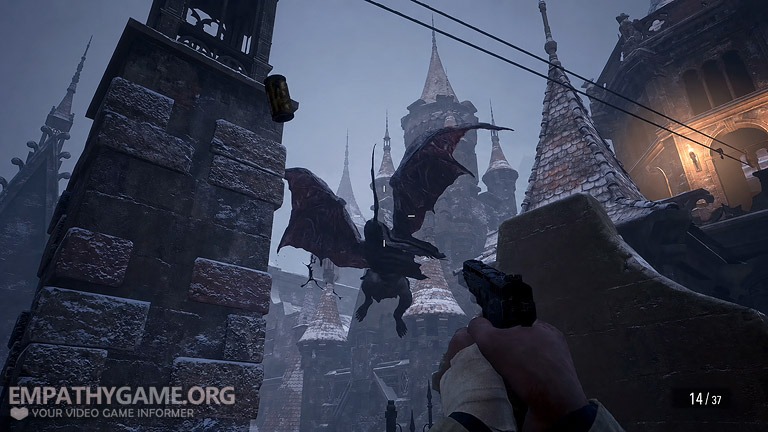
The opening lycan siege establishes the difference between possessing a gun and controlling a fight. Lycans scale roofs, break through barricades, and approach from different elevations. Ethan is not equipped to kill everything comfortably, so moving between buildings and recognizing when to retreat matter as much as shooting accurately. Standing still in a seemingly safe doorway is rarely a lasting solution.
Weapons respond well, but tougher enemies can absorb an uncomfortable number of ordinary body shots. Headshots, stagger opportunities, shotgun blasts at close range, and environmental explosives help conserve ammunition. Village is more action-oriented than its predecessor, yet wasted bullets still have consequences. The irritation starts when that pressure stops feeling tactical and an armored or industrial enemy seems to exist mainly to consume another magazine.
The improved guard is one of the smartest additions. Ethan can reduce damage with a block, then shove an attacker backward to create room for a shot, a heal, or an escape through a doorway. That small piece of crowd control is especially useful because he lacks Leon’s sweeping melee attacks. The satisfying decision is sometimes to block instead of firing the last hurried round. Crafting and the Duke provide ways to recover from mistakes, but money spent replenishing supplies is money unavailable for lasting upgrades. Combat and the economy remain connected even when the campaign becomes generous. This is what stops the larger arsenal from turning every encounter into a simple shooting gallery, at least until Ethan is sufficiently equipped to overpower most ordinary threats.
Every Major Region Tries a Different Form of Horror

Castle Dimitrescu provides the clearest traditional Resident Evil rhythm. Ethan explores decorated rooms, dungeons, courtyards, and rooftops while collecting masks and opening routes through the building. The daughters create localized threats, and Lady Dimitrescu’s patrols complicate backtracking. She is not constantly chasing Ethan, which arguably makes the uncertainty more effective: a familiar corridor can be routine one moment and unsafe the next.
House Beneviento succeeds by refusing to compete with the castle’s scale. Without the reassuring weight of a weapon, its confined basement, household details, restrained puzzles, and pursuit sequence turn ordinary doors and hiding places into sources of tension. It is arguably Village’s strongest individual horror sequence because the player cannot solve its central problem with a better shotgun.
Moreau’s reservoir is a shorter, simpler change of pace built around flooded structures, exposed platforms, machinery, and environmental danger. Its ruler receives less development, but the decaying landscape gives his domain an identity of its own. Heisenberg’s Factory goes further in the opposite direction: furnaces, assembly lines, armored mechanical enemies, elevators, and layered corridors replace folk horror with industrial combat. Its atmosphere is convincing, and armored targets reward attention to exposed weak spots rather than indiscriminate firing. The problem is duration. By the later floors, repeated fights leave less space for the uncertainty and close observation that made the castle and village compelling. The familiar Resident Evil turn toward laboratory explanations and large-scale spectacle arrives, but here it feels especially far removed from the campaign’s earlier folk-horror identity.
The Duke Makes Treasure Hunting Meaningful
The Duke turns optional exploration into a practical choice rather than a completion exercise. Lei from defeated enemies and valuables can buy inventory space, recipes, supplies, and weapon improvements. Some treasures are worth substantially more after their missing components have been found, so selling an incomplete object immediately trades a larger future reward for quick cash. That is a small decision, but it encourages players to read descriptions and think beyond the next purchase.
Hunting gives another reason to inspect less obvious corners. Fish, poultry, and meat can be prepared into meals granting permanent improvements to health, movement, or guarding effectiveness. These benefits are not as immediately exciting as increasing a shotgun’s damage, yet they become valuable on harder difficulties because they improve Ethan rather than a weapon he might later replace.
The Duke himself also contributes to the atmosphere. His relaxed manner makes the shop feel safe without making him entirely reassuring. In a story full of extravagant villains, that oddly calm presence fits better than an ordinary merchant menu would.
Weapon Upgrades Hide a Restrictive Arsenal
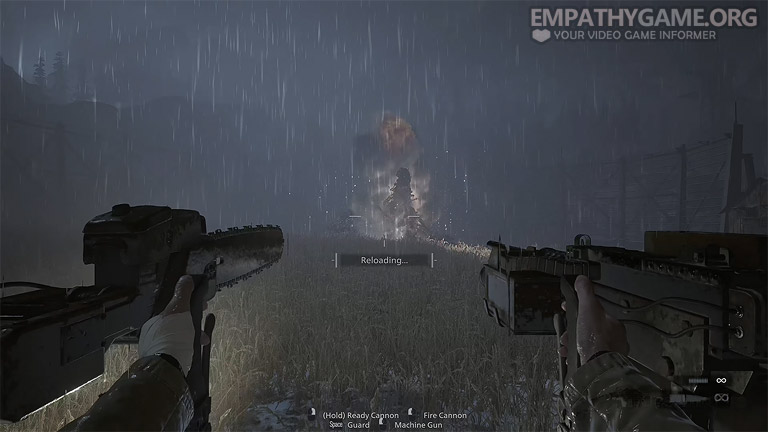
Village offers plenty of numbers to improve: damage, reload speed, ammunition capacity, rate of fire, and weapon attachments. Fully developed firearms feel powerful, but the choices are narrower than the upgrade screen implies. A later handgun or shotgun often has a stronger upgrade ceiling than the one Ethan has already invested in. Selling an old firearm returns some Lei, yet the result still feels like climbing an equipment ladder rather than choosing a preferred fighting style.
The sniper rifle has a distinct purpose against distant targets, flying creatures, and exposed weak points, but there is no competing rifle with a different specialization. Resident Evil 4 offered more reason to keep a seemingly weaker gun for its handling or exclusive upgrade. In Village, a sensible first run usually means buying improvements that solve immediate problems while avoiding excessive investment before the next weapon arrives. New Game Plus makes fully upgraded equipment easier to pursue, but it does not create much build variety. The distinction matters because the merchant is an excellent reason to search for treasure, yet a less convincing reason to experiment with two different weapons that ultimately serve the same purpose.
Strong Performances Carry an Uneven Story

Village begins with Chris Redfield violently disrupting Ethan and Mia’s fragile family life. Ethan’s search for Rose then leads into the mysteries surrounding Mother Miranda and four very different rulers. That personal motivation gives the campaign urgency even when its mythology becomes difficult to follow. Much of the explanation is held until the closing stretch, leaving several striking characters with less development than their designs seem to promise.
The performances do important work. Ethan is more vocal than in Resident Evil 7, and his frightened questions, anger, exhaustion, and stubborn determination make the journey feel more personal despite blunt dialogue. Lady Dimitrescu’s composure gives way to rage; Heisenberg’s humor barely conceals resentment; Moreau is grotesque but pitiable. Donna Beneviento is memorable partly because the environment does more talking than she does. Mother Miranda, by comparison, often feels more important to the plot than immediately engaging as a character.
The series has always mixed genuine horror with absurd spectacle, so the extravagant villains are not automatically a problem. What jars is the speed of the transitions. Scenes asking the player to feel Ethan’s suffering can sit uncomfortably close to moments treating his injuries as another outrageous action beat. The acting often holds these shifts together better than the writing. In the quieter stretches, Ethan’s determination feels believable because his goal never changes. The more heavily the plot leans on elaborate explanations, the less room those simple human stakes have to breathe.
Third Person Mode Broadens the Experience
Winters’ Expansion lets Ethan’s campaign be played in Third Person Mode. Seeing more of the space around him makes enemy positioning and defensive reactions easier to judge, and it gives players who dislike a first-person viewpoint another way into the adventure. Some encounters and cinematics still reveal the campaign’s first-person origins, however. The wider camera does not make Village feel like Resident Evil 2 Remake.
That distinction helps explain its place beside Resident Evil Requiem, which builds viewpoint choice more directly into its playable stories. In Village, first person remains especially effective when a narrow corridor is meant to feel oppressive. Third person offers greater awareness, with a corresponding loss of some intimacy and uncertainty.
Replayability Exposes Both Its Strengths and Its Scripts
New Game Plus carries over weapons, upgrades, ammunition, Lei, and permanent meal benefits. The Extra Content Shop opens additional firearms, infinite ammunition options, and galleries, while Village of Shadows makes the stronger carried equipment genuinely useful. The relatively compact campaign also suits faster completions, minimal-healing attempts, restricted crafting, knife-focused runs, and collectible cleanup. What begins as discovery can become a satisfying exercise in planning routes and spending efficiently.
Repetition exposes the scripted side of the design, especially in House Beneviento. Its basement is frightening when the threat and puzzle solutions are unknown. Once the pursuit triggers are familiar, that same unavoidable sequence becomes a pause in a run otherwise shaped by combat choices and inventory decisions. Weapon replacements similarly discourage radically different late-game approaches. Village encourages replaying, but not always improvising. The best second runs often involve remembering exactly which optional detours justify their time, a very different pleasure from the uncertainty of that first trip.
The Mercenaries offers a better outlet for players who want concentrated action. Maintaining kill combinations, learning enemy placement, and making quick upgrade decisions create a different tempo from the story. Additional Orders adds stages and playable Chris Redfield, Heisenberg, and Lady Dimitrescu, whose abilities provide more meaningful variety than simply swapping Ethan’s gun.
Shadows of Rose supplies a shorter third-person epilogue with Rose’s own powers and altered environments. Its more linear design cannot reproduce the pleasure of repeatedly reopening the village, but it has a separate identity. Alongside Third Person Mode and the expanded Mercenaries selection, it broadens the experience without disguising the original campaign’s limitations.
Final Verdict

Resident Evil Village is strongest when its systems pull in different directions. The village invites patient exploration, the Duke makes detours useful, and Ethan’s stronger defensive options keep aggressive encounters manageable without making them harmless. Castle Dimitrescu and House Beneviento achieve different kinds of tension, which is exactly why their contrast works.
That variety comes at a cost. The factory stretches combat beyond its most interesting point, tougher enemies can feel needlessly durable, and weapon progression promises more choice than it delivers. The story is uneven despite committed performances. Yet these flaws do not erase the pleasure of learning the village, revisiting it with new tools, and returning with a better understanding of the campaign’s risks.
Players who want the sustained vulnerability of Resident Evil 7 may find Village too well armed, while those who enjoy specializing in a particular weapon may dislike its upgrade ladder. For anyone drawn to atmospheric exploration, sharply contrasting horror locations, and increasingly confident repeat runs, it offers a distinctive balance of dread and action.
Resident Evil Village Pros & Cons
- Pro: Castle Dimitrescu, House Beneviento, the reservoir, factory, village, and surrounding paths create varied horror environments with distinct pacing and atmosphere
- Pro: Gunplay, blocking, crafting, weapon upgrades, treasure hunting, inventory management, exploration, puzzles, and enemy encounters form a satisfying survival-horror loop
- Pro: Gold Edition adds a useful third-person campaign option, a substantial Rose story chapter, expanded Mercenaries characters, and the Trauma Pack
- Pro: Steam Deck Verified support, approachable requirements, Xbox Play Anywhere, Game Pass access, HDR, ray tracing, and flexible PC settings broaden the ways to play
- Pro: Removal of Steam Denuvo and a large Nexus Mods community offer fewer DRM restrictions and more room for visual, camera, interface, and character customization
- Con: The stronger focus on weapons, upgrades, enemy groups, and spectacle makes parts of the campaign less frightening than Resident Evil 7
- Con: Some regions and major villains receive less development than Castle Dimitrescu and the central village
- Con: Shadows of Rose is much shorter than the base campaign and can feel more linear than Ethan’s interconnected exploration
- Con: Ray tracing can reduce performance sharply, while unofficial REFramework and model mods may break after game updates
Resident Evil Village PC System Requirements
OFFICIAL WINDOWS PC REQUIREMENTS:
MINIMUM — 1080p / Approximately 60 FPS with Performance-Prioritized Settings:
OS: Windows 10, 64-bit
CPU: Intel Core i5-7500 / AMD Ryzen 3 1200
RAM: 8 GB
GPU: NVIDIA GeForce GTX 1050 Ti 4 GB / AMD Radeon RX 560 4 GB
DirectX: Version 12
Additional Notes: Estimated performance is approximately 1080p at 60 FPS with performance-prioritized settings; frame rates may drop during graphically intensive scenes. For ray tracing, Steam lists NVIDIA GeForce RTX 2060 or AMD Radeon RX 6700 XT as the minimum GPU tier.
RECOMMENDED — 1080p / Approximately 60 FPS:
OS: Windows 10 or Windows 11, 64-bit
CPU: Intel Core i7-8700 / AMD Ryzen 5 3600
RAM: 16 GB
GPU: NVIDIA GeForce GTX 1070 / AMD Radeon RX 5700
DirectX: Version 12
Additional Notes: Estimated performance is approximately 1080p at 60 FPS; frame rates may drop during graphically intensive scenes. For ray tracing at the recommended tier, Steam lists NVIDIA GeForce RTX 2070 or AMD Radeon RX 6700 XT.
Additional PC Performance and Setup Notes
- Ray tracing: Disable ray tracing first when GPU performance or VRAM pressure is the main problem; its cost can be substantial compared with the visual difference during normal play.
- HDR: Steam lists HDR support for the Windows version, provided the display and Windows HDR configuration are compatible.
- VRAM: Cards with 4 GB VRAM should use conservative texture-pool and image-quality settings to reduce memory pressure, stutter, and delayed texture loading.
- Troubleshooting: Capcom recommends checking the official requirements, updating graphics drivers and Windows, and testing graphics and power settings when the game fails to launch or performs poorly.
- File verification: Verify the installation through the official storefront before reinstalling when crashes, missing assets, or loading problems appear.
- Mods: Temporarily disable REFramework, Fluffy Mod Manager packages, model replacements, overlays, and other unofficial modifications when diagnosing crashes or unusual behavior.
- Backups: Back up important saves before changing storefront versions or installing major gameplay, inventory, character, camera, or framework mods.
Video Review
Note: IGN’s review demonstrates the village, Castle Dimitrescu, combat, exploration, monsters, bosses, puzzles, and action-heavy survival-horror structure, while the written guide adds Gold Edition, Winters’ Expansion, Game Pass, Xbox Play Anywhere, Steam Deck, DRM, requirements, modding, and Re:Verse shutdown information.
Frequently Asked Questions
Should I play Resident Evil 7 before Resident Evil Village?
It is strongly recommended because Village directly continues Ethan and Mia Winters’ story and builds on the Baker incident, the Mold, Chris Redfield’s involvement, and several revelations from Resident Evil 7. Village can still be understood on its own, but important moments have more context after Resident Evil 7.
Is Resident Evil Village open world?
No. It is a structured survival-horror adventure built around a central village hub connected to several major regions. New keys, tools, and story progression open additional paths, treasures, buildings, and optional encounters when Ethan returns to the hub.
Which edition of Resident Evil Village should I buy?
Gold Edition is the all-in-one package because it includes the base game, Winters’ Expansion, and Trauma Pack. Standard Edition is sufficient if you only want Ethan’s base campaign and original Mercenaries mode, and existing Standard Edition owners can add Winters’ Expansion separately.
What is included in Winters’ Expansion?
Winters’ Expansion includes Third Person Mode for Ethan’s main campaign, the Shadows of Rose story, and The Mercenaries Additional Orders. Additional Orders adds Chris Redfield, Karl Heisenberg, and Lady Dimitrescu as playable Mercenaries characters along with extra content for the mode.
Can the Resident Evil Village campaign be played in third person?
Yes, after installing Winters’ Expansion or owning Gold Edition. Third Person Mode covers Ethan’s main campaign, although cinematics and some presentation choices still reflect the original first-person design.
What is Shadows of Rose?
Shadows of Rose is the story included with Winters’ Expansion. It follows Rosemary Winters sixteen years after the main campaign and is designed for third-person play.
How does New Game Plus work?
After completing the campaign, a completed save can begin another run with carried weapons, upgrades, ammunition, Lei, and permanent cooking bonuses. Story-specific progression items reset, while the Extra Content Shop and higher-difficulty goals provide additional reasons to replay.
What difficulty settings are available?
Resident Evil Village includes Casual, Standard, Hardcore, and Village of Shadows. Village of Shadows can be unlocked through normal campaign progression, while the Trauma Pack can provide earlier access.
What are useful beginner tips?
Block often, search rooms until they turn blue on the map, keep combinable treasures until all pieces are found, expand inventory space, and avoid wasting ammunition when an enemy can be bypassed safely. Separate manual saves before major areas are also useful because some locations and collectibles become inaccessible after story progress.
Does Resident Evil Village have co-op or multiplayer?
The main campaign, Shadows of Rose, and Mercenaries are single-player. The separate Resident Evil Re:Verse multiplayer service has ended, so Resident Evil Village no longer has an active official competitive multiplayer component.
Can Resident Evil Re:Verse still be played?
No. Capcom ended the Resident Evil Re:Verse service and removed the application and related DLC from normal availability. Its shutdown does not affect the Resident Evil Village single-player campaign, Mercenaries, or Winters’ Expansion.
Can Resident Evil Village be played in VR?
The official VR Mode is available for the PS5 version and requires PlayStation VR2. Capcom does not provide an official Windows PC VR mode for Resident Evil Village.
Is Resident Evil Village on Game Pass?
Yes. Xbox lists the base game with PC Game Pass and eligible console Game Pass plans. Winters’ Expansion and Trauma Pack are separate purchases unless another owned bundle explicitly includes them; catalogue availability can change.
Does Resident Evil Village support Xbox Play Anywhere?
Yes. An eligible Microsoft digital purchase works across supported Xbox consoles and Windows PCs under the same Microsoft account. A Steam purchase does not provide the Microsoft/Xbox version.
Why does Resident Evil Village crash or stutter on PC?
Possible causes include outdated graphics drivers, damaged game files, overlays, unstable overclocks, aggressive graphics or VRAM settings, and conflicting unofficial mods. Capcom’s Steam troubleshooting guidance recommends checking the requirements, updating Windows and GPU drivers, testing graphics and power settings, and isolating software conflicts before reinstalling.
Is Resident Evil Village Steam Deck Verified?
Yes. Valve rates it Verified for the default controller layout, readable text, suitable controller icons, and default graphics behavior. First-time setup needs internet; an external controller may require selecting it manually on Steam Deck.
Does the Steam version still use Denuvo?
No. Denuvo Anti-Tamper is no longer part of the Steam build. The Steam release still requires acceptance of Capcom’s Resident Evil Village EULA and normal Steam ownership or authentication.
Does Resident Evil Village support mods?
Yes, through unofficial community tools and files. Nexus Mods hosts utilities such as mod managers and frameworks alongside character, interface, visual, weapon, and other modifications. Back up saves and disable outdated mods when troubleshooting because game or framework changes can break compatibility.
Still have questions?
Check the Resident Evil Village Reddit community, Steam Discussions, or the official Capcom support section.
Sources & References
Store listings, compatibility information, official platform records, and support guidance used for this article:
- Steam — Resident Evil Village — Windows availability, Gold Edition contents, features, user reception, and official system requirements.
- Microsoft / Xbox — Resident Evil Village — PC availability, Game Pass listing, Xbox Play Anywhere, editions, and platform capabilities.
- SteamDB — Resident Evil Village app metadata — Steam Deck compatibility metadata, release metadata, and RE Engine identification.
- Capcom Support — Resident Evil Village — official troubleshooting, manuals, and platform support resources.
- Resident Evil Portal — Re:Verse end-of-service notice — permanent multiplayer-service closure and download/purchase status.
- Nintendo — Resident Evil Village Gold Edition for Nintendo Switch 2 — native Switch 2 release and Gold Edition platform information.
Similar Games Like Resident Evil Village
- Resident Evil 7: Biohazard
- Resident Evil 4 Remake
- Resident Evil 2 Remake
- Resident Evil 9: Requiem
- Silent Hill f
- Haunting Ground






Found something worth playing through DecideGame?
DecideGame.com is an independent gaming project run by Editor Zero. If this guide helped you discover a game, solve a problem, or find useful information, you can support DecideGame.com and help keep new and updated game guides coming.
DecideGame — PC Game Guides, Reviews & Setup Help