
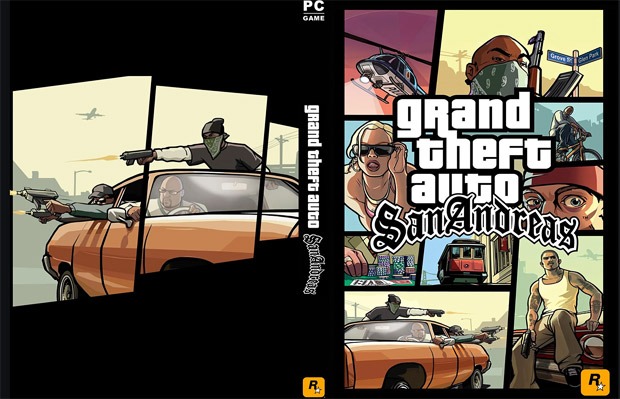
📅 Game released: 2004
Grand Theft Auto: San Andreas follows Carl “CJ” Johnson through gang conflict, family loyalties, and a sprawling 1990s crime sandbox spanning three cities and the countryside between them. This PC guide compares official download and installation options for the classic Trilogy and Definitive Edition, explains their differences for mods and controls, and covers system requirements, Steam Deck support, and practical setup advice.
 By Editor Zero — independently researched, edited, and maintained.
Last updated: 7 November 2026
Last reviewed: 7 November 2026
Table of Contents
- Quick Facts
- Official PC Stores, Download & Installation
- Grand Theft Auto: San Andreas Review
- Pros & Cons
- PC System Requirements
- Frequently Asked Questions
- Similar Games
Grand Theft Auto: San Andreas Quick Facts
- Game: Grand Theft Auto: San Andreas / Grand Theft Auto: San Andreas – The Definitive Edition / Grand Theft Auto: The Trilogy
- Developer: Rockstar North for the original game; Rockstar Games, adapted by Grove Street Games, for the Definitive Edition
- Publisher: Rockstar Games
- Genre: Action-Adventure, Open World, Sandbox, Third-Person Shooter
- Release: October 26, 2004; Windows PC: June 7, 2005
- Platforms: Original/classic releases: PS2, Windows PC, Xbox, macOS, PS3, Xbox 360, PS4, Xbox One, iOS, Android, Windows Phone, Fire OS; Definitive Edition: Windows PC, PS5, PS4, Xbox Series X|S, Xbox One, Nintendo Switch, iOS, Android
- Steam Deck: Playable for the Steam Definitive Edition; first-time setup requires an active internet connection, and launcher interaction or non-Steam-Deck controller icons may require extra attention
- VR: No released official VR version; the announced Meta Quest project remains on hold indefinitely
- Engine: RenderWare for the original game; Unreal Engine for the Definitive Edition presentation
- Modes: Single-player on the official current PC releases; no official campaign co-op, cross-play, or current Rockstar-hosted San Andreas multiplayer mode
- Community: Steam Discussions, San Andreas Reddit Community, GTAForums San Andreas
- PC modding: Nexus Mods for GTA San Andreas and GTAForums host classic-version fixes, visual upgrades, CLEO/ASI tools, interface changes, vehicles, total conversions, and separate Definitive Edition modifications; check the exact game version before installing anything
- Metacritic score: 93/100 on Windows PC for the original San Andreas release
- IGN score: 9.3/10 for the original Windows PC release
- PC Gamer score: 94% for the original Windows PC release
- Steam user reception: Original/classic Steam app: Very Positive overall (no longer sold to new customers); Definitive Edition: Very Positive overall
Official PC Stores, Download & Installation
👇 Compare the official PC options below before purchasing, downloading, installing, or choosing between classic Grand Theft Auto: San Andreas and the Definitive Edition.
- PC versions: New buyers mainly have two official routes: the modern Definitive Edition and Rockstar’s older Grand Theft Auto: The Trilogy package containing the classic PC releases of GTA III, Vice City, and San Andreas.
- Steam: Steam sells Grand Theft Auto: San Andreas – The Definitive Edition as a standalone game. It uses Steam alongside Rockstar account and launcher components and includes achievements and full controller support.
- Epic Games Store: Epic lists San Andreas – The Definitive Edition, but its product page states that the game is purchasable only as part of Grand Theft Auto: The Trilogy – The Definitive Edition.
- Rockstar Definitive Edition: Rockstar Store sells Grand Theft Auto: The Trilogy – The Definitive Edition for Rockstar Games Launcher, bundling the remastered versions of GTA III, Vice City, and San Andreas.
- Rockstar classic Trilogy: Rockstar Store also sells Grand Theft Auto: The Trilogy with the older PC versions of GTA III, Vice City, and San Andreas. This is the official route for the older PC presentation, although some established legacy mods require specific classic executable versions and may not run on the Launcher build unchanged.
- Legacy Steam ownership: The original standalone Steam app is retired and cannot normally be purchased by new customers. Existing owners can continue using the copy already attached to their Steam libraries.
- GTA+: Rockstar and Steam list the Definitive Edition collection as included with GTA+. Treat the subscription as an access option rather than permanent ownership and check the membership terms before subscribing specifically for San Andreas.
- Launcher & activation: Rockstar account registration, Rockstar Games Launcher components, initial activation, periodic entitlement verification, and supporting software may be required depending on the store and edition.
- Offline campaign: Steam compatibility metadata indicates that the Definitive Edition needs an internet connection for first-time setup but not for continuous single-player use afterward. Cloud synchronization and periodic account verification can still require internet access.
- Mod compatibility: Classic RenderWare mods and Definitive Edition mods are separate ecosystems. CLEO, ASI, widescreen, SilentPatch-style, vehicle, radio, and total-conversion mods designed for a classic build should not be assumed to work with the remaster.
- Steam Deck: Valve rates the Steam Definitive Edition as Playable. Default performance is acceptable, but first-time setup needs internet and the launcher can require touchscreen or virtual-keyboard interaction while some controller icons do not match Steam Deck.
- Other PC stores: No official GOG or DRM-free Windows release was verified. Use the official stores above or an existing legitimate library copy rather than unofficial acquisition sources.
 Buy Grand Theft Auto: San Andreas – The Definitive Edition on Steam
 View Grand Theft Auto: San Andreas – The Definitive Edition on Epic Games Store
 Buy Grand Theft Auto: The Trilogy – The Definitive Edition on Rockstar Store
Buy Grand Theft Auto: The Trilogy Classic on Rockstar Store

Grand Theft Auto: San Andreas Review
A sprawling crime epic whose sense of progression, character, and everyday freedom still outweighs dated controls, restrictive missions, and an overextended campaign.
Grand Theft Auto: San Andreas remains one of Rockstar’s most ambitious open-world games because its size is tied to a constant feeling of growth. Carl “CJ” Johnson returns to Los Santos with little money, damaged family relationships, and a neighborhood losing influence. By the end of the journey, he has crossed an entire state, learned new skills, built businesses, formed alliances, and returned home with far more power than he had when he arrived.
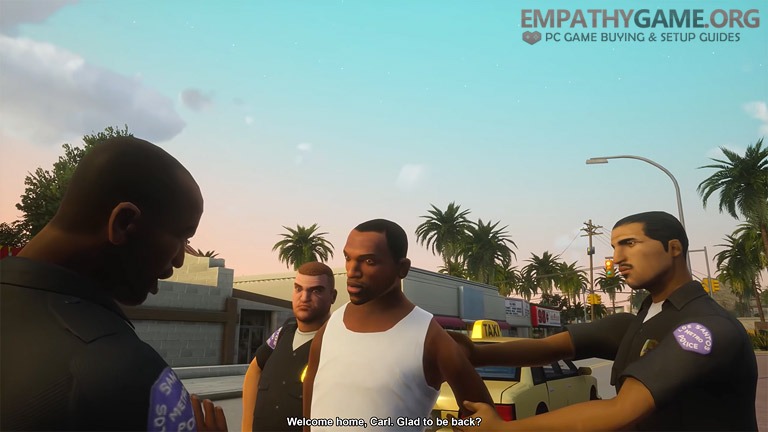
That progression is mechanical as well as narrative. CJ gains stamina, muscle, weapon skill, money, properties, vehicles, respect, clothing, relationships, and access to new regions. Gym training, food, gambling, car modification, dating, and side jobs make him feel like someone living in San Andreas rather than an avatar moving between mission markers.
The game has also aged visibly. Shooting can be clumsy, vehicle handling takes adjustment, motorcycles punish small mistakes, several missions are restrictive, and classic checkpoint design can turn failure into a long restart. Players without nostalgia may need patience before the old controls stop dominating the experience, but the reward is an unusually personal open world with strong narrative momentum and enormous mechanical variety.
Progression Is the Real Reason San Andreas Still Matters
The campaign begins on a deliberately small scale. CJ returns to Grove Street, reconnects with Sweet, Ryder, Big Smoke, and Kendl, and finds his old neighborhood weakened by rival gangs and internal problems. Early missions focus on family, street reputation, clothing, weapons, gang territory, lowriders, and the immediate fight to rebuild Grove Street Families.
Then the game keeps expanding. CJ is pushed into the countryside, becomes involved with Catalina and The Truth, rebuilds himself in San Fierro with Cesar, learns to fly in the desert, works for Mike Toreno, enters Las Venturas, helps Woozie’s casino operation, and eventually returns to Los Santos. Each region changes not only the scenery but CJ’s place in the world. A character who begins by defending a few streets eventually operates businesses, flies aircraft, plans major robberies, and moves between several criminal circles.
That arc gives San Andreas a memory of where the player started. Money and equipment matter, but the stronger reward is seeing the map, activities, skills, and relationships widen alongside CJ. The campaign is uneven, yet few open-world games connect geographical expansion and character progression so clearly.
CJ Gives the Sandbox a Human Center
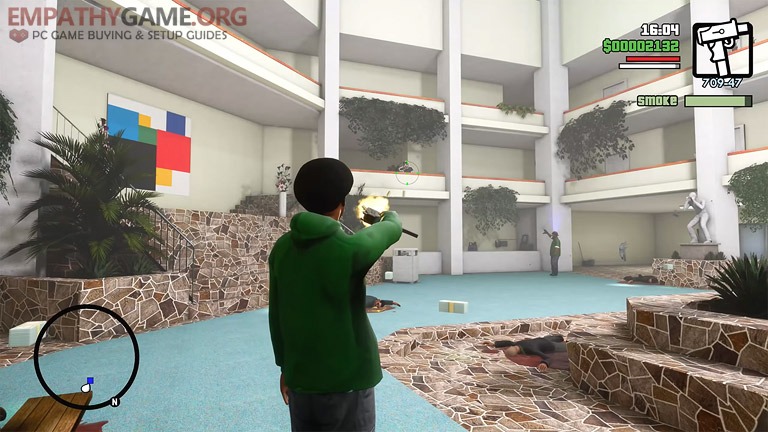
Claude in GTA III is intentionally silent, while Tommy Vercetti in GTA Vice City has ambition and a strong personality. CJ feels more rounded than either of them. He has family loyalties, insecurities, frustrations, contradictions, and enough humor to remain believable even when the missions become absurd.
His relationships give the road trip structure emotional weight. Sweet represents the life CJ left behind, Kendl pushes beyond Grove Street’s limits, Cesar becomes a dependable ally, and Tenpenny keeps pressure on CJ from the opening scene onward. Big Smoke and Ryder matter because their connection to Grove Street makes later events personal rather than merely another criminal plot twist.
Later Rockstar protagonists became more psychologically detailed, particularly as GTA 4 moved toward heavier character drama. San Andreas takes a different approach: CJ has a defined voice and story, but the player still shapes his body, clothes, skills, vehicles, properties, and habits. That balance between authored protagonist and player-directed identity remains one of the game’s strongest ideas.
The State Feels Like a Journey, Not One Oversized City
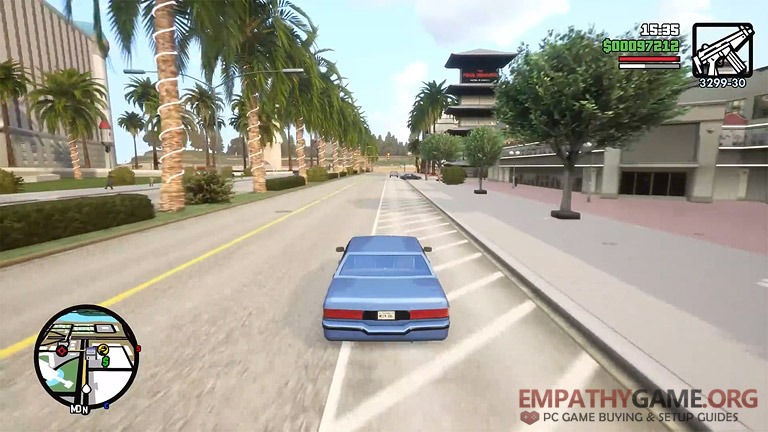
Los Santos, San Fierro, and Las Venturas are not interchangeable districts. Los Santos is built around neighborhood identity, gang conflict, freeways, lowriders, industrial edges, and early-1990s West Coast atmosphere. San Fierro is hillier, foggier, more compact, and shaped by garages, docks, Chinatown influence, and counterculture characters. Las Venturas shifts toward casinos, desert highways, aircraft, heists, and larger criminal operations.
The countryside and desert give distance meaning. Farms, forests, small towns, mountains, highways, military areas, and open desert separate the cities instead of turning the state into one continuous urban mass. Cars, motorcycles, trucks, boats, bicycles, planes, and helicopters therefore feel useful in different ways.
The geography also supports the story. Leaving Los Santos feels like exile, San Fierro feels like rebuilding, the desert becomes a period of training and manipulation, and Las Venturas represents wealth and influence. Returning to Los Santos works because the player has travelled far enough for home to feel different.
The World Encourages Life Between Missions
San Andreas is often at its best when the player ignores the next mission marker. CJ can visit gyms, gamble, modify cars, learn fighting styles, buy clothes, enter restaurants, take side jobs, search for collectibles, recruit gang members, date, or simply explore. Taxi work, paramedic and firefighter missions, vigilante activity, trucking, burglary, quarry jobs, valet work, courier routes, races, stadium events, schools, exports, gang wars, and property missions give the state a surprisingly dense routine.
Not every activity is deep, but the overlap matters. A player can leave for one objective and spend an hour elsewhere because a vehicle, shop, side mission, or unfamiliar road becomes more interesting. That ability to become distracted is a large part of the game’s immersion, and San Andreas still offers an unusual number of ways to inhabit its world rather than merely cross it.
Stats Give the Sandbox a Light RPG Identity
CJ’s stamina, muscle, fat, lung capacity, weapon skills, driving, cycling, and flying improve through use or training. Eating changes weight, exercise changes muscle and stamina, repeated weapon use improves proficiency, and gyms teach different melee styles. Clothing, tattoos, hairstyles, vehicles, and physical condition also affect presentation and sex appeal.
These are simple systems individually, but together they create ownership. One player may finish with a muscular CJ who has excellent weapon skills and expensive clothes; another may build driving and flying first, ignore the gym, and spend money on cars and properties. The results are not deep role-playing simulation, yet they make progression visible in ways later GTA games often reduced or removed.
That expectation for a world where the protagonist can meaningfully develop is one reason discussion around newer entries such as GTA 6 often returns to San Andreas. Its systems are old, but the idea that everyday actions should change the character still feels unusually ambitious.
Mission Variety Is Huge, but Freedom Is Often an Illusion
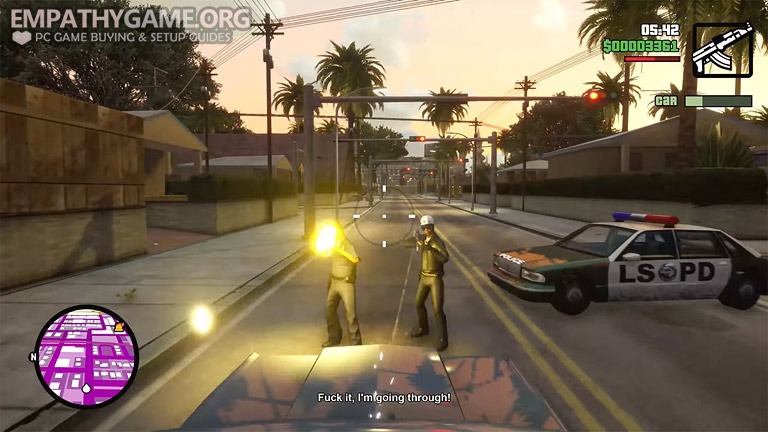
The campaign moves through gang warfare, drive-bys, robberies, races, stealth, lowrider competitions, train chases, construction-site destruction, rural theft, tanker driving, remote-control vehicles, casino preparation, military infiltration, flight training, underwater sequences, and large late-game assaults. Context changes often enough that the story rarely feels mechanically static for long.
The contradiction is that missions are far less free than the world around them. Scripts may demand a particular route, vehicle, timing, weapon, or sequence, and leaving the intended area can trigger failure. Losing an NPC, destroying the wrong vehicle, missing a checkpoint, or approaching an objective in an unexpected way may force a restart even when the player has a perfectly sensible alternative.
This tension became a familiar Rockstar design trait: the sandbox promises improvisation while many missions expect obedience. San Andreas sometimes gives room for creative combat or vehicle choices, but its mission variety is much stronger than its mission flexibility.
Driving Still Holds the Open World Together
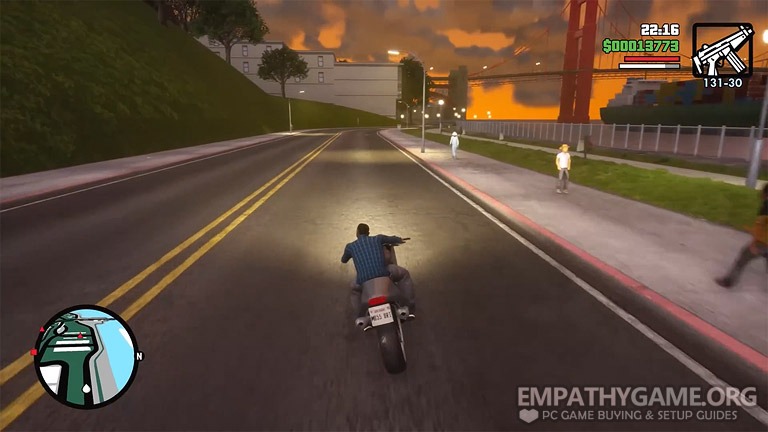
Driving is the everyday mechanic that best survives the game’s age. The handling is arcade-heavy and can feel slippery, but each region changes how vehicles are used. Los Santos favors quick turns, freeway escapes, and neighborhood shortcuts; San Fierro’s hills make speed harder to control; the countryside encourages long drives and off-road routes; the desert makes fast cars, motorcycles, and aircraft especially useful.
Vehicle variety strengthens that relationship with the map. Lowriders, sports cars, trucks, tractors, bicycles, motorcycles, boats, planes, helicopters, trains, and specialist vehicles all make familiar roads behave differently. Selected cars can also be customized with paint, wheels, hydraulics, nitrous, body parts, and audio equipment, giving players reasons to care about a vehicle beyond getting from one marker to another.
The radio, weather, changing scenery, traffic, and constant possibility of distraction make travel part of the experience rather than dead time. Even when mission controls show their age, simply driving from one city to another can still produce some of the game’s most memorable unscripted moments.
The Controls and Difficulty Expose the Game’s Age
Newcomers may find the classic version rougher than its reputation suggests. Lock-on shooting works, but target switching, crowd control, camera placement, animation timing, and movement lack modern smoothness. Mouse aiming gives PC players more precision, yet firefights can still become awkward when enemies are spread across several elevations or when the player is trying to fight the camera as well as the opposition.
Some missions amplify those problems through long restarts or unusual mechanics. Flight school is the clearest progression wall because the story eventually demands competence with aircraft whether the player enjoys aviation or not. Small control errors can ruin an otherwise good test, and repeating precision tasks feels very different from the loose freedom of exploring the open world.
Difficulty is partly mechanical archaeology. San Andreas asks the player to learn old assumptions about targeting, checkpoints, vehicles, cameras, and mission scripting. Once those assumptions become familiar, much of the frustration recedes, although several missions remain famous for good reason.
Story, Radio, and Atmosphere Give Every Region an Identity
The story begins with grief, neighborhood decline, family conflict, and corrupt police pressure, then expands into betrayal, exile, business, government manipulation, organized crime, the music industry, casinos, and civic unrest. Frank Tenpenny provides a constant threat, while Cesar, Woozie, The Truth, Toreno, Catalina, Kendl, Sweet, Big Smoke, and Ryder keep each stage of the road trip connected to recognizable personalities.
The radio is just as important as the cast. Licensed music, DJs, advertisements, talk shows, news, pedestrians, and incidental dialogue anchor the world in an exaggerated early-1990s culture. Long drives become more cinematic because the game keeps talking even when CJ is not on a mission. Music licensing changes across releases mean the exact soundtrack can vary, but the broader radio design remains one of San Andreas’ defining strengths.
The campaign eventually becomes too long for its own good. Aircraft tasks, casino operations, government work, music-industry missions, long travel, and repeated failures can drain momentum before the final return to Los Santos restores the story’s emotional focus. The scale is impressive; the pacing is not always disciplined enough to support it.
The Definitive Edition Improves Approachability, Not the Original Design
The Definitive Edition makes San Andreas easier to approach through modern aiming, GTA V-style controls, checkpoints, achievements, higher-resolution assets, increased draw distance, and Classic Lighting. Those changes reduce some barriers, particularly for players accustomed to contemporary controllers and presentation.
They do not redesign the underlying campaign. Missions remain heavily scripted, the story is still long, flight school still requires patience, and character movement, enemy logic, and objective structure are rooted in the original game. The remastered visual direction is also divisive: cleaner assets and greater visibility improve readability, while some character models, effects, weather, and environmental details can feel less cohesive than the classic presentation.
The choice therefore depends on priorities rather than one version replacing the other. The Definitive Edition is the more convenient modern entry point. Classic San Andreas preserves the original look and the broadest established mod ecosystem. Both still succeed or fail on the same core design: CJ, the state, progression, mission variety, and the freedom between objectives.
Replayability Comes From More Than Completion Percentages
San Andreas has an enormous formal completion list, but replay value comes from more than reaching 100%. One run may focus on story momentum; another may improve CJ’s stats early, complete useful vehicle missions, capture territory, collect weapons, modify cars, pursue relationships, or explore properties and side activities that were ignored before.
Knowledge changes the experience. Returning players know which activities grant useful benefits, where reliable weapons can be found, when regions unlock, and which missions deserve preparation. Different body stats, weapon skills, vehicles, clothes, properties, and challenge goals give another playthrough a slightly different character without requiring a completely different story.
Final Verdict
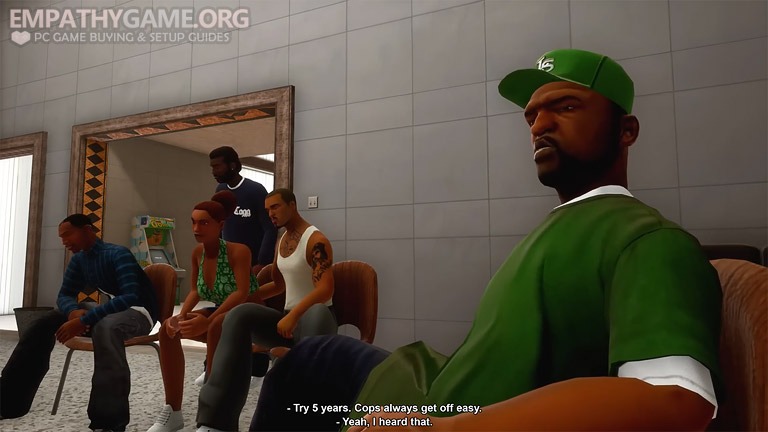
Grand Theft Auto: San Andreas remains one of the most charismatic and ambitious open-world crime games of its era. Its three cities, countryside, desert, radio stations, vehicles, side activities, gang system, character statistics, businesses, and enormous campaign create scale that still feels meaningful. More importantly, CJ’s growth gives that scale a human center.
The weaknesses are equally real. Shooting is dated, cars and motorcycles take adjustment, missions can be restrictive, old checkpoint design is harsh, flight school can become a progression wall, and the campaign loses momentum during its later chapters. Players without nostalgia may find the opening hours less welcoming than the game’s reputation suggests.
But players who adapt can still see why San Andreas inspires such loyalty. CJ returns home with almost nothing and gradually gains skills, relationships, businesses, wealth, influence, and access to an entire state before coming back to reclaim what he lost. The technology belongs to another era, but the belief that an open world should let the player live, improve, wander, and become distracted remains remarkably durable.
Grand Theft Auto: San Andreas Pros & Cons
- Pro: Three distinctive cities plus countryside and desert create a road-trip structure that still feels unusually large and varied
- Pro: CJ’s story, family relationships, gang conflict, corrupt police pressure, radio, satire, and supporting cast give the game a strong identity
- Pro: Character stats, gang territory, vehicles, businesses, side activities, customization, and exploration make progression feel broad and personal
- Pro: Definitive Edition offers a more approachable modern control scheme, while the classic PC version retains the strongest legacy-mod ecosystem
- Pro: Huge replay value through side activities, 100% goals, alternate habits, challenge runs, vehicles, collectibles, and character development
- Con: Shooting, camera behavior, vehicle handling, animation timing, and classic checkpoint design can feel dated
- Con: Restrictive missions, flight school, long travel, and an oversized campaign can become exhausting
- Con: Current PC ownership is split across classic and Definitive Edition products, with launcher and account requirements that can confuse new buyers
- Con: Classic and Definitive Edition mods are not interchangeable, and the remaster’s visual direction remains divisive
Grand Theft Auto: San Andreas PC System Requirements
Important: Grand Theft Auto: San Andreas has materially different classic and Definitive Edition PC builds. Use the requirements for the edition you actually own rather than mixing the two.
Original / Classic Windows PC Version
MINIMUM:
OS: Windows 10 64-bit
CPU: 1 GHz Intel Pentium / AMD Athlon
RAM: 256 MB
GPU: 64 MB DirectX 9-compatible card, GeForce 3 or better
DirectX: DirectX 9
Storage: 4.7 GB available space
Input: Keyboard and mouse
Internet / account: Rockstar lists internet access for activation and periodic entitlement verification on supported digital installations
RECOMMENDED:
OS: Windows 10 64-bit
CPU: Intel Pentium 4 / AMD Athlon XP
RAM: 384 MB
GPU: 128 MB NVIDIA GeForce 6 or better
Storage: 4.7 GB available space
Input: Keyboard and mouse
Grand Theft Auto: San Andreas – The Definitive Edition
MINIMUM:
OS: Windows 10 64-bit
CPU: Intel Core i5-6600K / AMD FX-6300
RAM: 8 GB
GPU: NVIDIA GeForce GTX 760 2 GB / AMD Radeon R9 280 3 GB
Storage: 19 GB for standalone San Andreas on Steam; Rockstar’s separate Definitive Edition requirements page lists 45 GB (allow additional space for updates)
Sound Card: DirectX-compatible
Internet / account: Internet connection and Rockstar Games account/launcher components are required for activation and periodic entitlement checks
RECOMMENDED:
OS: Windows 10 64-bit
CPU: Intel Core i7-2700K / AMD Ryzen 5 2600
RAM: 16 GB
GPU: NVIDIA GeForce GTX 970 4 GB / AMD Radeon RX 570 4 GB
Storage: 19 GB for standalone San Andreas on Steam; Rockstar’s separate Definitive Edition requirements page lists 45 GB (allow additional space for updates)
Sound Card: DirectX-compatible
Additional PC Performance and Setup Notes
- The classic PC game is highly version-sensitive. Its original frame limiter and timing assumptions affect physics, animations, swimming, vehicles, and some mission behavior, so forcing an uncapped frame rate can create problems.
- Classic 16:9 widescreen fix: The original game can stretch the image or crop its field of view in widescreen mode. For the compatible classic v1.0 US executable, use ThirteenAG’s GTA San Andreas Widescreen Fix (official GitHub release). Back up the installation, download the release ZIP, and extract its contents to the folder containing
gta-sa.exe, preserving the included folder structure. Choose a 16:9 resolution in the game’s Advanced Display Options; if necessary, adjust the includedGTASA.WidescreenFix.inito refine HUD and cutscene presentation. Confirm the executable version before installing: the author lists v1.0 US support, and recent Steam/Rockstar classic builds may require a separate compatibility solution. Do not apply this classic-game fix to the Definitive Edition. - Keep a clean backup before installing CLEO, ASI loaders, widescreen tools, texture packs, radio changes, vehicle packs, or total conversions. Save compatibility can differ between classic builds and large mod setups.
- Definitive Edition mods use a separate Unreal Engine-based file structure. Do not install classic San Andreas mod packs into the remaster unless the author explicitly supports that edition.
- For the Definitive Edition, verify files through Steam, Epic Games Store, or Rockstar Games Launcher before reinstalling when crashes, missing assets, or launch problems appear.
- Steam Deck remains Playable rather than Verified for the Steam Definitive Edition: first-time setup needs internet, launcher interaction can need touch or keyboard input, and some controller glyphs may not match the device.
Official Trailer
Frequently Asked Questions
What is the difference between classic GTA San Andreas and The Definitive Edition?
The classic PC version uses the original RenderWare presentation and has the broadest legacy-mod ecosystem. The Definitive Edition adds GTA V-style controls and targeting, checkpoints, achievements, higher-resolution assets, longer draw distances, interface changes, and Classic Lighting.
Can I still buy the original GTA San Andreas on Steam?
No normal new purchase is offered for the retired original Steam app. Existing owners can still use their library copy. New buyers should compare the Steam Definitive Edition with Rockstar’s separately sold classic Trilogy package.
Is GTA San Andreas included with GTA+ on PC?
Rockstar lists the Definitive Edition Trilogy as included with GTA+. The Steam listing also advertises GTA+ access, subject to membership terms. A subscription does not provide permanent ownership; verify your store and territory before subscribing.
Can GTA San Andreas be played offline on PC?
The Steam Definitive Edition needs an internet connection for first-time setup but not continuous connectivity to play its single-player campaign afterward. Rockstar account activation, periodic entitlement checks, and cloud synchronization may still require internet access.
Does every version have the same radio music?
No. Music licensing has changed across releases, so different San Andreas versions do not necessarily contain identical licensed tracks. Players returning for a particular song should check the track list for the edition they plan to use.
What is Classic Lighting in the Definitive Edition?
Classic Lighting changes the sky and atmosphere to resemble the original trilogy more closely while retaining the remaster’s other visual and control changes. It is now part of the stable Definitive Edition feature set rather than something players need to install separately.
What beginner tips help most?
Keep several manual save slots, carry armor, and save before demanding missions. Train useful skills gradually, learn safehouse locations, and avoid saving your only playthrough after experimenting with cheats or major mods.
How does gang territory work?
Once gang wars are unlocked, CJ can attack rival gang members inside colored territory and survive several waves to capture the zone for Grove Street Families. The system changes the map and street presence but becomes repetitive if many areas are taken in one session.
How do CJ’s stats, muscle, weight, and weapon skills work?
Running, swimming, driving, cycling, flying, weapon use, eating, and exercise can change CJ’s abilities or body. Weapon proficiency improves through use, while gyms, food, stamina, muscle, and fat create a light RPG-style progression layer.
Why is flight school difficult?
Flight school expects precise control of pitch, roll, speed, landing, and camera positioning and is tied to story progression. Small corrections and repeated practice are usually more effective than holding full input through every turn.
Can CJ buy houses, businesses, and customize vehicles?
Yes. Safehouses provide save points and garages, selected assets can generate income after their mission chains, and compatible vehicles can be modified at garages with options such as paint, wheels, hydraulics, nitrous, body parts, and audio equipment.
How does saving work, and are cheat codes safe?
The classic game relies heavily on manual safehouse saves, while the Definitive Edition also uses autosave and mission checkpoints. Keep multiple manual slots. Cheats can alter game systems, interfere with missions or achievements, and create persistent problems if you save afterward.
Does GTA San Andreas have mods on PC?
Yes. The classic PC release has a large modding scene for fixes, widescreen, interface changes, cars, scripts, and total conversions. Check build compatibility and back up game files and saves before installing modifications.
Are classic mods compatible with the Definitive Edition?
Generally no. Classic CLEO, ASI, Mod Loader, SilentPatch-style, vehicle, and total-conversion mods target the RenderWare builds; the Definitive Edition uses a different Unreal Engine-based structure and needs mods made specifically for it.
Why can classic GTA San Andreas behave strangely at high frame rates or widescreen resolutions?
The original PC game has timing assumptions that can affect physics, animations, and some missions when the frame rate is forced far beyond its intended range. Its built-in widescreen display can also stretch or crop the picture; the classic-version widescreen fix and installation steps are linked in Additional PC Performance and Setup Notes above.
Is GTA San Andreas good on Steam Deck?
Valve rates the Steam Definitive Edition Playable, not Verified. First-time setup requires internet access, and the Rockstar launcher may need touchscreen or virtual-keyboard interaction; some controller icons may not match Steam Deck.
Does GTA San Andreas have official multiplayer, co-op, LAN, or cross-play?
The officially available Windows PC versions are single-player and do not include campaign co-op or Rockstar-hosted San Andreas multiplayer. Community multiplayer projects are separate, unofficial experiences; there is no official PC cross-play feature.
Does the Definitive Edition have achievements?
Yes. The Steam Definitive Edition includes achievements covering story progress, side activities, collectibles, skills, vehicle missions, wanted-level challenges, and completion goals.
Still have questions? Check the Rockstar San Andreas support hub, Steam Discussions, and GTAForums San Andreas.
Sources & References
Key factual and technical information in this guide was checked against relevant official and community sources, including:
- Rockstar Games — Grand Theft Auto: San Andreas — original release date, developer, platform history, and game overview
- Rockstar Support — Grand Theft Auto: San Andreas PC system requirements — official classic Windows requirements and account/activation notes
- Rockstar Support — San Andreas Definitive Edition PC system requirements — Rockstar’s published 45 GB storage requirement, distinct from the Steam standalone listing
- Rockstar Store — Grand Theft Auto: The Trilogy – The Definitive Edition — edition contents, PC requirements, Rockstar Launcher access, and GTA+ availability
- Steam — Grand Theft Auto: San Andreas – The Definitive Edition — standalone Steam listing, features, requirements, achievements, and store status
- PCGamingWiki — Grand Theft Auto: San Andreas — classic PC frame-rate, widescreen, input, and compatibility information
- Metacritic — Grand Theft Auto: San Andreas PC critic reviews — original Windows PC Metascore
Similar Games Like Grand Theft Auto: San Andreas
- GTA 5
- GTA Vice City
- GTA 4
- Scarface: The World Is Yours
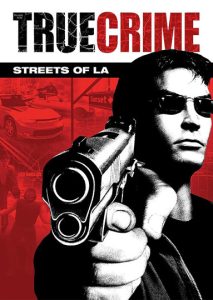
- True Crime: Streets of LA
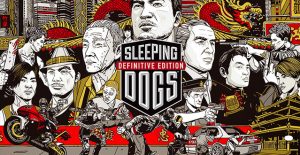
- Sleeping Dogs: Definitive Edition



Found something worth playing through DecideGame?
DecideGame.com is an independent gaming project run by Editor Zero. If this guide helped you discover a game, solve a problem, or find useful information, you can support DecideGame.com and help keep new and updated game guides coming.
DecideGame — PC Game Guides, Reviews & Setup Help