
📅 Game released: 2015
Resident Evil Revelations 2 follows Claire Redfield, Moira Burton, Barry Burton, and Natalia Korda through an episodic island survival-horror mystery, with unequal partner abilities shaping combat and exploration. This PC guide compares Steam Episode One and Deluxe Edition, explains official download and installation options, campaign and Raid Mode co-op, Steam Deck support, and system requirements.
 By Editor Zero — independently researched, edited, and maintained.
Last updated: 15 November 2026
Last reviewed: 15 November 2026
Table of Contents
- Quick Facts
- Official PC Stores, Download & Installation
- Resident Evil Revelations 2 Review
- Pros & Cons
- PC System Requirements
- Frequently Asked Questions
- Similar Games
Resident Evil Revelations 2 Quick Facts
- Game: Resident Evil Revelations 2 / Biohazard Revelations 2 / Deluxe Edition
- Developer: Capcom
- Publisher: Capcom
- Genre: Survival Horror, Third-Person Shooter, Action-Adventure, Zombie Games
- Release: February 24, 2015 (Episode One; Steam-listed release date); Episodes 2–4 followed in March 2015
- Platforms: Windows PC, PS3, PS4, PS Vita, Xbox 360, Xbox One, Nintendo Switch
- Story content: Four main episodes; Extra Episode: The Struggle and Extra Episode: Little Miss
- Campaign co-op: Local shared/split-screen co-op and Steam Remote Play Together; no native online campaign lobby
- Raid Mode: Solo, local co-op and native online co-op; 200+ missions, character skills and equipment progression
- Steam Deck: Playable; manual native-resolution selection or external-controller order adjustment may be needed
- Engine: MT Framework
- Community: Steam Discussions, Resident Evil Reddit Community
- PC modding: Nexus Mods hosts unofficial fixes and visual/gameplay modifications; no official Steam Workshop integration
- Metacritic score: 74/100 (PC)
- IGN score: 7/10 (2015 complete-game review, multiplatform)
- Steam user reception: Mostly Positive overall
Official PC Stores, Download & Installation
👇 Compare the official Steam Episode One and Deluxe Edition options before purchasing, downloading, or installing Resident Evil Revelations 2 and its additional content.
- Official PC availability: The native Windows version is sold on Steam. Install and manage the game through the Steam client and the Steam account that owns the relevant episodes.
- Episode One: Steam offers Episode One: Penal Colony separately. It includes the opening Claire/Barry scenarios and associated Raid content, not Episodes 2–4 or the complete story.
- Deluxe Edition: Steam lists a 22-item package combining the base game, Episodes 2–4, both extra story episodes, four costumes, Raid characters HUNK and Albert Wesker, the Throwback Map Pack, and Weapon, Parts, and Album storage expansions. This is the simplest complete package for a new buyer.
- Extra story episodes: The Struggle follows Moira and Little Miss follows Natalia. Neither is required to complete the four-episode main campaign; play them afterward for additional context.
- Duplicate DLC check: The separately sold Costume Pack overlaps with costumes included in Deluxe Edition. Check owned content before buying individual episodes, characters, costumes, or storage upgrades.
- Campaign co-op: Two players can share the local campaign in split-screen. Steam Remote Play Together can stream that local session to a friend, but it is not native online campaign matchmaking.
- Raid Mode co-op: The separate combat-focused Raid Mode supports solo play, local split-screen and native online co-op. Its characters, equipment and skills progress separately from the main campaign.
- Steam features: Steam lists achievements, Cloud saves, leaderboards, trading cards, Family Sharing, full controller support and Remote Play options. Steam Cloud does not provide cross-platform saves with console editions.
- Steam Deck: Valve rates the game Playable, not Verified. The Deck’s native resolution may require manual selection, and an attached external controller may need to be assigned the active controller slot.
- Resident Evil.NET: Linking a CAPCOM ID with RE.NET is optional for normal campaign play; supported linked features include play-data tracking and Raid-related services.
- Unofficial mods: Back up saves and modified files before using third-party mods. Restore clean Steam files when troubleshooting crashes, input issues, missing assets, or unusual Raid Mode behavior.
 Buy Resident Evil Revelations 2 on Steam
View Resident Evil Revelations 2 DLC on Steam

Resident Evil Revelations 2 Review
Unequal partnerships give this rough-edged horror sequel a distinctive identity.
Resident Evil Revelations 2 leaves the Queen Zenobia behind for a remote prison island, but its most important change is not the setting. It divides survival between people who cannot solve the same problems. Claire Redfield and Barry Burton handle firearms; Moira Burton searches with a flashlight and crowbar, while Natalia Korda senses threats that Barry cannot easily identify. Together, these pairs create a more interesting question than which gun to use: who should be in control when danger appears?
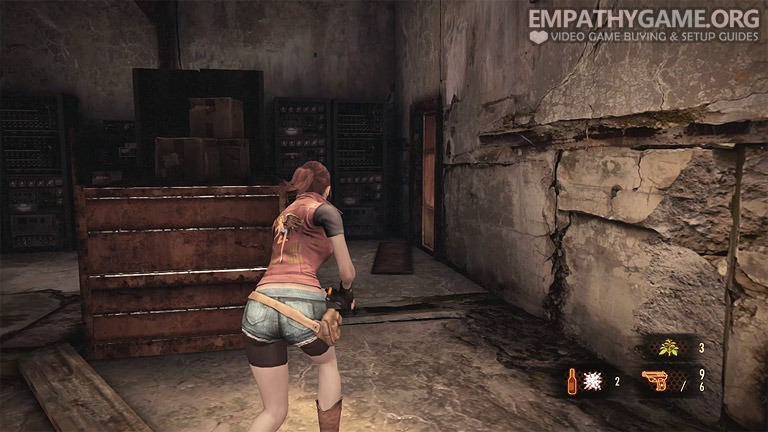
The answer changes from room to room. Switching characters can uncover supplies, expose a hidden weak point or make a dangerous encounter manageable without wasting ammunition. It is an unusually practical form of cooperation, particularly in solo play. The cost is a less cohesive world than the original Revelations, uneven chapters and a stronger action bias. The island may not become a place players know as intimately as the Zenobia, but the partnerships give its individual encounters a reason to be remembered.
Two Characters Make One Complete Toolkit
Claire and Barry carry most of the firepower, upgrade their weapons and handle direct combat. Moira and Natalia are not weaker versions of those characters. They provide information and opportunities the armed survivor lacks. Moira’s flashlight reveals hidden objects and can disorient certain enemies, creating time for Claire to land a useful shot. Her crowbar handles close-range attacks and some environmental interactions, but cannot substitute for a firearm in every fight.
Natalia changes the rhythm even more. She detects nearby creatures and reveals the concealed vulnerable point inside a Revenant’s assembled body. Without that information, Barry may spend precious rounds hitting the wrong section. Invisible Glasps make the partnership’s logic especially clear: Natalia can locate the otherwise unseen danger, but Barry must still act on her warning. Knowledge is useful only if the player can convert it into a safe position and an accurate shot.
In solo play, frequent switching feels like controlling one survivor with two sets of abilities. This is more involved than escorting an AI companion through corridors, although the AI can still behave awkwardly when left to handle a difficult encounter. The best moments ask for a decision about timing rather than just a button press. Stay with Natalia long enough to read the threat, or switch to Barry before it gets close enough to attack?
Smoother Combat Comes With a Stronger Action Bias
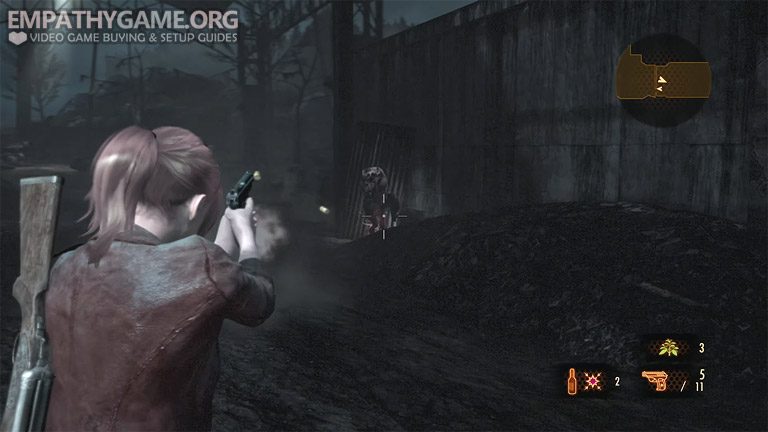
Movement is more accommodating than in the first Revelations. Wider rooms and outdoor areas allow Claire and Barry to retreat and reposition instead of depending so heavily on awkward dodge timing. The Afflicted pressure that freedom by closing distance quickly. Combat is more fluid, even if gunfire lacks the impact and enemy reactions of the series’ stronger action entries.
This shifts the balance toward the action of Resident Evil 5 rather than the tightly connected exploration of Resident Evil 2 Remake. Removing the Genesis scanner also helps the pace: searching with Moira or Natalia feels more immediate than repeatedly sweeping walls through a separate device. Yet checking every corner can still become routine, and the broader spaces rarely offer the same pleasure of gradually mastering one intricate building.
Resource pressure has a less elegant edge, too. A checkpoint can preserve a nearly exhausted inventory or dangerous health state, leaving a difficult encounter to be retried from a poor position rather than a comfortable reset. That makes earlier ammunition decisions matter, but it can also turn failure into frustration when the player has little room to recover. The distinction matters: a demanding enemy is one kind of challenge; repeatedly facing it with almost no resources is another.
Asymmetric Co-Op Is Clever but Deliberately Unequal
With two people, the campaign’s cleverness becomes a question of expectations. One player shoots while the other reveals items, blinds threats, assists with melee attacks or navigates environmental obstacles. When mechanisms separate the pair or a hidden enemy must be identified before it can be fought, both roles contribute to a shared solution. Cooperation comes from exchanging abilities, not simply doubling the firepower.
That division can also feel unfair. Claire and Barry perform the traditional Resident Evil fantasy of carrying weapons and confronting monsters. Moira can contribute directly with her crowbar, but Natalia often spends longer observing and signalling danger while Barry gets the satisfying shot. This is not automatically bad design. Two players who enjoy different responsibilities may find it refreshing. Two players expecting equal action, as in Resident Evil 5, may find the second role restrictive. The campaign works best when that inequality is understood rather than discovered after choosing characters.
The Island Is Creepy Without Becoming Iconic
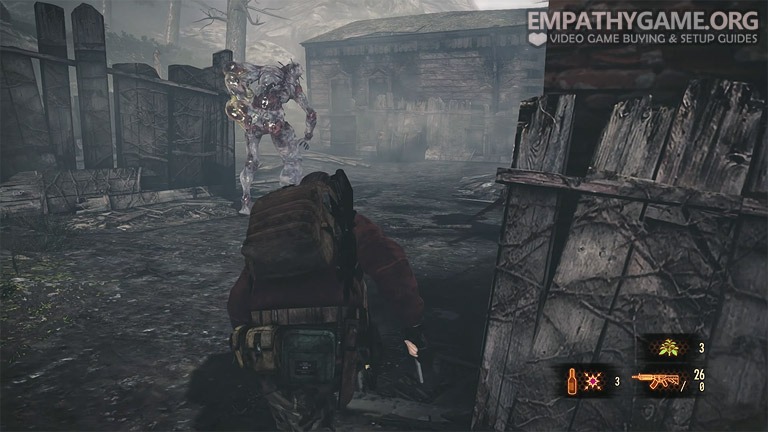
Prisons, villages, forests, tunnels and industrial ruins give the island a filthy, oppressive texture. Its rusted machinery and makeshift detention spaces suggest a place designed to contain suffering rather than welcome visitors. The horror often comes from discovering what these spaces were used for. Still, they lack the architectural coherence of the Queen Zenobia, whose decks gradually became a navigable whole. Here, individual rooms can feel disturbing without making the island itself easy to picture.
The two timelines partly justify that fragmented layout. Claire and Moira cross the island first; Barry and Natalia arrive months later, sometimes confronting the consequences of decisions made in the earlier journey. A familiar location can acquire new meaning when its condition has changed. The drawback is that a second visit can also expose reused geometry and reduce the pleasure of discovery.
Chapter pacing makes the repetition harder to ignore. Claire’s final scenario is unusually brief, while stretches of Barry’s later route linger through traversal after the narrative has begun pushing toward its conclusion. The episodic endings provide effective suspense, but the two halves of an episode do not always feel equally developed. The result is a setting whose strongest impressions come from particular scenes and discoveries rather than from a consistently memorable journey through space.
Barry and Moira Give the Story Its Strongest Payoff
Claire and Moira awaken in a detention facility after TerraSave is attacked, wearing bracelets linked to the Overseer’s experiments. Months later, Barry arrives searching for his daughter and meets Natalia. The conspiracy delivers the expected bioweapons, cruelty and dramatic revelations, but the Burton family gives these familiar Resident Evil ingredients a more personal purpose.
Moira initially seems defined by profanity, anger and a refusal to handle guns. As the reasons for her hostility toward Barry emerge, those traits become less like exaggerated writing and more like the behaviour of someone carrying unresolved family trauma. Barry’s determination to find her gives his chapters an urgency that another routine anti-bioterror mission might not have. Their contrasting language even produces some welcome humor: Barry’s guarded, almost old-fashioned restraint sits awkwardly beside Moira’s blunt reactions.
There is also a stranger layer beneath the family drama. References to Franz Kafka frame the Overseer’s interest in fear, transformation and identity, giving the island’s experiments a thematic thread beyond the usual science-gone-wrong explanation. The literary material does not make every line of dialogue sophisticated, but it gives the villain’s worldview a recognizable obsession and helps distinguish this story from a conventional bioweapon outbreak.
Claire is the composed veteran beside the less experienced Moira, a continuation of the capable survivor familiar from Resident Evil Code: Veronica X HD. The campaign also has an alternate finale determined by an easily overlooked action during a late Claire scenario. Its significance fits the character arc, yet the game communicates the consequence poorly. A choice with such emotional weight deserves to feel like a decision, not an ordinary prompt whose meaning becomes clear much later.
Campaign Progression Rewards Using Both Partners
Persistent BP upgrades give character skills a purpose beyond a single episode. Better evasive options, recovery and support abilities can make switching characters feel increasingly useful, while workbench parts improve a modest selection of firearms without turning the story into a loot chase. The improvement is deliberately small-scale: a better gun helps, but reading an enemy correctly may still save more ammunition than dealing extra damage.
That balance explains why Revelations 2 is more interesting than its shooting alone suggests. A well-timed flashlight stun or Natalia’s warning can change an encounter before the first bullet is fired. It also exposes a weakness: when a room offers little for the support character to discover or manipulate, the partnership briefly becomes an obligation rather than an advantage.
Raid Mode Is Where the Systems Become a Hobby
Raid Mode trades much of the horror for a compact action-progression loop. Characters gain levels and skills, weapons arrive as loot, parts alter their properties and hundreds of stages invite repeated runs. The campaign asks whether a shot is worth spending. Raid Mode asks what kind of character and equipment combination makes that shot efficient in the first place.
Its tactical variety is more interesting than raw damage numbers suggest. A HUNK build might alternate an assault rifle with a pistol to reduce reload interruptions, save a magnum for tougher enemies and use smoke against shielded opponents to create an opening for a backstab. That is a specific combat rhythm, not merely a list of upgrades. Skills, elemental effects, weapon masteries and enemy modifiers give players reasons to adjust how they approach a room.
Customization has an unexpectedly harsh restriction. Unlike campaign parts, equipment installed on a Raid weapon cannot simply be taken off and reused. Recovering those parts means destroying the weapon; keeping the weapon means sacrificing the parts if they must be replaced. This barely matters when guns are disposable, but it becomes a serious consideration with rare, high-level finds. A system that encourages tinkering can make its most invested players reluctant to experiment.
The long-term reward structure has a similar contradiction. High-level missions encourage farming and optimization, yet the rarest level-100 weapons are not always needed to clear difficult Code Red stages. For a well-developed character or an effective co-op pair, the hardest available goals may be achievable before the most desirable drops arrive. In that situation, collecting better equipment becomes its own objective instead of preparation for a necessary new challenge. Players who enjoy perfecting a build may welcome that; those who want every upgrade to unlock a fresh test of skill may lose motivation.
Even with that grind, Raid Mode has a personality distinct from the campaign. Both co-op participants bring combat-ready characters instead of dividing armed and support roles, and repeat runs reward technical familiarity as well as equipment strength. It can occupy far more time than the story, although its recycled environments and short stages are less appealing to anyone who came primarily for suspense and exploration.
Alternate Modes and Side Stories Change the Rules
Countdown Mode converts familiar routes into time-management problems: an optional search for ammunition must justify the seconds it takes. Invisible Mode hides enemies and makes learned routes uncertain again, shifting attention toward sound, memory and the support partner’s awareness. Neither supplies a new campaign, but both find worthwhile challenges inside familiar rooms.
The two extra episodes experiment more radically. The Struggle gives Moira a ration system tied to hunting and survival across encounters. Escaping one difficult defence with depleted reserves can leave the next section considerably harder, creating endurance pressure beyond ordinary ammunition management. Little Miss follows Natalia through stealth-focused sections, using her darker counterpart to scout while the vulnerable Natalia avoids detection. That change fits its unsettling premise, but strict detection failure and relatively simple stealth interactions can feel restrictive compared with the main campaign’s freedom to improvise after a mistake.
These additions are best understood as alternative uses of Revelations 2’s existing tools, not substitutes for the four-episode story. They broaden its replay appeal while making its limits clearer: the partnership systems thrive when information leads to several possible responses, and feel thinner when the rules allow only one.
Final Verdict
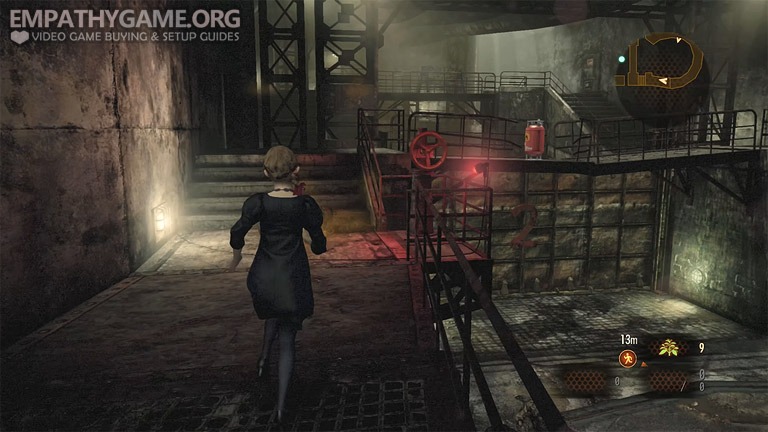
Resident Evil Revelations 2 works best as a game about cooperation under unequal conditions. Moira’s flashlight and Natalia’s perception make familiar survival-horror problems more interesting because information can be as valuable as ammunition. Barry and Moira give the otherwise familiar conspiracy genuine emotional weight, and the strongest encounters make switching characters feel like a deliberate strategy rather than an escort mechanic.
Its rough edges are difficult to miss. Reused environments weaken the island’s identity, chapter pacing falters, some checkpoint situations punish mistakes harshly and campaign co-op does not give both players equal freedom. Raid Mode adds surprising depth, but its irreversible equipment decisions and late-game loot grind will not appeal to everyone.
Players who want a seamless classic Resident Evil labyrinth or two equally armed co-op characters may prefer other entries. Those interested in unusual partner mechanics, a character-driven story and combat systems with a long life beyond the credits will find a distinctive sequel. The presentation is modest, but the better ideas deserve more attention than its uneven execution sometimes allows.
Resident Evil Revelations 2 Pros & Cons
- Pro: Claire/Moira and Barry/Natalia have meaningfully different abilities, making character switching part of exploration, combat, stealth, puzzle solving, and resource conservation
- Pro: Four intersecting episodes create effective cliffhangers and let the same island be explored from different characters and points in time
- Pro: Raid Mode provides substantial replay value through more than 200 stages, character progression, skills, weapons, custom parts, medals, difficulty tiers, and online co-op
- Pro: Steam Deluxe Edition collects the complete main campaign, two additional story episodes, HUNK, Wesker, Throwback maps, costumes, and storage expansions into one package
- Pro: Modest PC requirements and Steam Deck Playable support make the game accessible on a wide range of PCs and supported Steam Deck setups
- Con: The campaign has no native online co-op despite being designed around two-character teams; online cooperative play is native only in Raid Mode
- Con: Some environments, textures, animations, enemy encounters, and recycled Raid Mode stages reveal the game’s lower-budget 2015 production
- Con: Partner AI can occasionally make solo play more awkward than manually switching between characters
- Con: The original episodic purchase structure remains visible on Steam, creating unnecessary confusion between Episode One, individual episodes, DLC, the Costume Pack, and the comprehensive Deluxe Edition
Resident Evil Revelations 2 PC System Requirements
OFFICIAL WINDOWS PC REQUIREMENTS:
MINIMUM:
OS: Windows 10
CPU: Intel Core 2 Duo E6700 / AMD Athlon X2 2.8 GHz
RAM: 2 GB
GPU: NVIDIA GeForce 8800 GTS / AMD Radeon HD 3850
DirectX: Version 9.0c
Storage: 23 GB available space
Network: Broadband internet connection
Sound Card: DirectSound support with DirectX 9.0c
Additional Notes: Mouse and keyboard supported; Xbox 360 Controller for Windows recommended by the official requirements
RECOMMENDED:
OS: Windows 10
CPU: Intel Core 2 Quad 2.7 GHz / AMD Phenom II X4 3.0 GHz
RAM: 4 GB
GPU: NVIDIA GeForce GTX 560 / AMD Radeon HD 6950
DirectX: Version 9.0c
Storage: 23 GB available space
Network: Broadband internet connection
Sound Card: DirectSound support with DirectX 9.0c
Additional Notes: Mouse and keyboard supported; Xbox 360 Controller for Windows recommended by the official requirements
Additional PC Performance and Setup Notes
- These are Capcom’s published Steam specifications, not a guarantee of flawless performance on every modern PC. The requirements originate with a DirectX 9-era game and should be read as published compatibility guidance.
- Steam lists Windows 10 in its official specifications. Windows 11 is not expressly named in that requirements table; if the game fails to start, begin with a clean installation, Windows/driver updates and removal of overlays or conflicting mods.
- Valve rates the game Steam Deck Playable. Select the Deck’s native display resolution manually if the game does not choose it automatically.
- When a USB or Bluetooth controller is ignored on Steam Deck or SteamOS, change the active controller order through Steam’s Quick Access Menu.
- If video or cutscene playback misbehaves on a SteamOS setup, test a current stable SteamOS/Proton build before applying unofficial fixes. Compatibility reports may differ between builds.
- Steam Cloud is available. Keep a separate save backup before editing saves or installing unofficial mods, and restore clean game files before troubleshooting unusual behavior.
- Nexus Mods hosts community-made input fixes, visual replacements and other modifications. Capcom does not list official mod tools or Steam Workshop support for this PC release.
Official Trailer
Note: PlayStation’s official Resident Evil Revelations 2 launch trailer highlights Claire Redfield, Barry Burton, Moira, Natalia, the prison-island setting, Afflicted enemies, character teamwork, and survival-horror combat, while this written guide adds current Steam Deluxe Edition details, campaign and Raid Mode co-op differences, Steam Deck status, requirements, mods, and PC setup guidance.
Frequently Asked Questions
Do I need to play the first Resident Evil Revelations before Revelations 2? No. The first Resident Evil Revelations follows a separate Queen Zenobia and T-Abyss story. Revelations 2 can be understood independently, although familiarity with Claire and Barry adds context.
Where does Resident Evil Revelations 2 fit in the series timeline? Its main events take place in 2011, between Resident Evil 5 and Resident Evil 6. Claire works with Terra Save; Barry arrives later to look for Moira.
How long is the main campaign? The four main episodes commonly take around 10–12 hours on a first run, depending on difficulty and exploration. Extra episodes, alternate modes, collectibles and Raid Mode can extend playtime substantially.
Does Episode One include the entire story? No. Episode One: Penal Colony is only the opening part. You need Episodes 2–4 to finish the main campaign. Steam’s Deluxe Edition collects the numbered episodes and the major extra content in one package.
Should I play The Struggle and Little Miss before the main story? Play both after completing Episodes 1–4. The Struggle follows Moira, and Little Miss focuses on Natalia; the side stories are optional but make more sense after the main revelations.
Can I play the campaign alone? Yes. Solo play lets you switch between the combat character, Claire or Barry, and the support partner, Moira or Natalia. The AI controls the character you are not using.
Can two PC players play the campaign together online? The campaign has local shared/split-screen co-op but no native online campaign lobby. Steam Remote Play Together can stream that local session to a second player over the internet; only the host needs to own the game for a supported Remote Play Together session.
Does Resident Evil Revelations 2 have native online co-op? Yes, but only in Raid Mode, not the story campaign. Raid Mode also supports solo play and local co-op; the campaign remains local shared/split-screen or Remote Play Together.
Does the game support cross-play or cross-save? No general cross-platform matchmaking or shared campaign/Raid save progression is documented between Steam and consoles. Steam Cloud syncs eligible saves between devices using the same Steam account, which is not cross-save to another platform.
Which difficulty should a first-time player choose? Normal is a reasonable starting point because it maintains some resource pressure without expecting memorized routes. Survival and No Escape are more suitable after learning enemy placement and partner abilities.
How do campaign skills and weapon upgrades work? Campaign BP pays for persistent character skills, while custom weapon parts are installed at workbenches to adjust firearms. Focus upgrades on abilities and weapons you regularly use rather than spreading resources across everything.
Does Resident Evil Revelations 2 have different endings? Yes. A choice in Claire’s Episode 3 changes Barry’s final episode. Spoiler warning: during the concluding Neil sequence, switch to Moira and let her take the gun for the more complete ending. Replaying the relevant Claire episode lets you change the outcome without restarting the entire campaign.
What are Countdown Mode and Invisible Mode? They are unlockable variations of the main episodes. Countdown Mode adds a time limit, while Invisible Mode conceals enemies and makes route knowledge and partner awareness more important.
What collectibles require the support characters? Tower Emblems, Kafka Drawings and Insect Larvae are hidden through the campaign. Some are easiest to spot or interact with using Moira’s flashlight or Natalia’s abilities, so explore with both characters before leaving an area.
What is Raid Mode, and how much content does it have? Raid Mode is a separate combat-focused progression mode with more than 200 missions across the complete episode set. It features unlockable characters, skills, weapon parts, difficulty tiers and medals; additional Throwback stages are sold as DLC and included in Deluxe Edition.
What do Raid Mode medals and character skills do? Medals reward objectives and restrictions beyond simply finishing a stage, such as avoiding healing. Each Raid character can level up, specialize through active/passive skills and use customized weapons, making repeat attempts useful even after clearing the campaign.
Do I need a CAPCOM ID or Resident Evil.NET account? No CAPCOM ID is required for ordinary Steam campaign play. A linked CAPCOM ID is optional for the separate Resident Evil.NET features, such as game-data records and supported Raid item transfers.
Can I use mods on PC? There is no official Capcom mod toolkit or Steam Workshop for this release. Unofficial modifications are available through sites such as Nexus Mods, but back up files and saves before changing input, visuals or Raid-related data.
What should I check if the PC game will not launch or stutters? Start with Steam’s Verify Integrity of Game Files tool, update graphics drivers, remove overlays and test without mods. Steam officially lists Windows 10; Windows 11 behavior and specific driver issues can vary, so do not rely on random replacement DLLs or unverified executables.
Is Resident Evil Revelations 2 playable on Steam Deck? Valve rates it Playable rather than Verified. Select the native screen resolution manually if necessary; when an external controller does not respond, adjust controller order using Steam’s Quick Access Menu.
Still have questions? Check the Resident Evil community on Reddit, official Revelations 2 RE.NET support, and Resident Evil Revelations 2 Steam Discussions.
Sources & References
Key PC availability, co-op, compatibility and review details were checked against the following sources:
- Resident Evil Revelations 2 on Steam — official Windows storefront, Deluxe Edition contents, features, system requirements and user reception.
- Capcom: Raid Mode rundown — episode structure, Raid Mode mission count, characters and online co-op plans.
- Capcom Resident Evil.NET support — optional CAPCOM ID linking, play-data features and Raid item transfers.
- SteamDB: game information — Valve’s detailed Steam Deck Playable assessment and controller/resolution caveats.
- Metacritic PC reviews — the platform-specific 74/100 aggregate.
- IGN: Resident Evil Revelations 2 review — Lucy O’Brien’s 7/10 complete-game verdict.
Similar Games Like Resident Evil Revelations 2
- Resident Evil Revelations
- Resident Evil 5
- Resident Evil 6
- Resident Evil 2 Remake
- Left 4 Dead 2
- Dying Light




Found something worth playing through DecideGame?
DecideGame.com is an independent gaming project run by Editor Zero. If this guide helped you discover a game, solve a problem, or find useful information, you can support DecideGame.com and help keep new and updated game guides coming.
DecideGame — PC Game Guides, Reviews & Setup Help