
📅 Game released: 2012
Resident Evil Revelations sends Jill Valentine aboard the Queen Zenobia for a survival-horror mystery built around tense exploration, the Genesis scanner, and episodic combat. This PC guide covers official Steam purchase and download options, the demo, Raid Mode co-op, DLC, system requirements, Steam Deck support, and practical setup advice.
 By Editor Zero — independently researched, edited, and maintained.
Last updated: 15 November 2026
Last reviewed: 15 November 2026
Table of Contents
- Quick Facts
- Official PC Stores, Download & Installation
- Resident Evil Revelations Review
- Pros & Cons
- PC System Requirements
- Frequently Asked Questions
- Similar Games
Resident Evil Revelations Quick Facts
- Game: Resident Evil Revelations / Resident Evil: Revelations / Biohazard Revelations
- Developer: Capcom
- Publisher: Capcom
- Genre: Survival Horror, Third-Person Shooter, Action-Adventure
- Release: January 26, 2012 (Nintendo 3DS, Japan); Windows PC: May 20, 2013 (Steam)
- Platforms: Nintendo 3DS, Windows PC, PS3, PS4, Xbox 360, Xbox One, Wii U, Nintendo Switch
- Steam DLC: Seven optional Raid Mode character, weapon, and custom-part products; no separate story expansion
- Steam Deck: Verified
- Engine: MT Framework (MT Framework Mobile on Nintendo 3DS)
- Campaign: Single-player
- Raid Mode: Single-player or two-player online co-op
- Community: Steam Discussions, Resident Evil Reddit Community
- PC modding: Nexus Mods hosts unofficial visual, interface, model, audio, and gameplay changes; no Steam Workshop listing
- Metacritic score: 77/100 (PC)
- IGN score: 7.5/10 (PC HD release)
- Steam user reception: Very Positive overall (all languages); English-language reviews: Mostly Positive
Official PC Stores, Download & Installation
👇 Compare the official Steam purchase, demo, download, installation, and optional DLC choices before setting up Resident Evil Revelations on PC.
- Official Windows store: Resident Evil Revelations is sold through Steam. The native Windows HD edition includes the full single-player campaign, Infernal difficulty, and Raid Mode.
- Download and installation: Purchase the game in Steam, open your Library, select Resident Evil Revelations and choose Install. Steam handles the download and updates; the official PC requirements are listed below.
- Official demo: Steam offers a downloadable Resident Evil Revelations demo for trying the PC release before purchasing.
- Campaign and co-op: The campaign is single-player only. Two-player online co-op belongs to the separate Raid Mode; the Windows version does not include local split-screen campaign co-op.
- Base-game features: The HD edition includes enhanced visuals and lighting, new enemy content, playable Raid Mode characters including HUNK, Steam achievements, Steam Cloud, and full controller support.
- Optional DLC: Seven Steam products are listed: Lady HUNK, Rachael Ooze, Resistance Set, Enhancement Set, Jill’s Samurai Edge, Parker’s Government Handgun, and Jessica’s G18. These add Raid characters or equipment/custom parts, not a new campaign.
- Duplicate-purchase check: The DLC is not required to complete the story or the standard Raid Mode progression. Review the contents of any owned packs before buying individual add-ons.
- Account and online features: Steam lists a Resident Evil Revelations EULA but does not specify a mandatory separate Capcom launcher or Capcom account to start the game. A linked Resident Evil.NET account is optional for supported online statistics and events; internet access is needed for online Raid Mode and connected services.
- Steam Deck: Valve marks the game Verified, reporting functional default controls, appropriate controller icons, readable text, and suitable performance with the default graphics settings.
- Mod compatibility: Steam Workshop is not listed; mods are unofficial. Back up saves and return to unmodified files before playing online if you have installed gameplay-changing modifications.
 Buy Resident Evil Revelations on Steam
View Resident Evil Revelations DLC on Steam

Resident Evil Revelations Review
The Queen Zenobia delivers the survival horror this uneven adventure keeps interrupting.
Resident Evil Revelations is most convincing when the Queen Zenobia stops feeling like a collection of rooms and becomes a place worth learning. Jill Valentine and Parker Luciani board the abandoned cruise ship searching for Chris Redfield, but the investigation gradually becomes an exercise in navigating locked cabins, stairwells, promenades and machinery spaces. Shortcuts change familiar routes, ammunition makes every unnecessary fight questionable, and the lurching Ooze can turn a narrow passage into a problem worth avoiding.
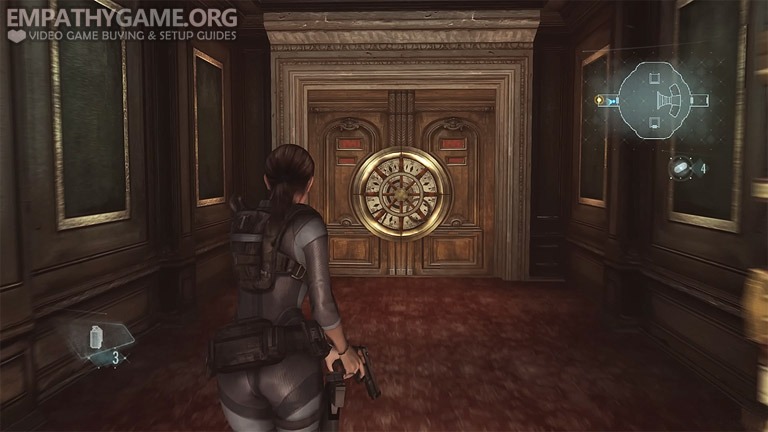
Then the game switches characters, changes location or launches another noisy action sequence. Some interruptions develop the story; others arrive just as the ship has become absorbing. Revelations sits awkwardly between older survival horror and the action-led approach of Resident Evil 5. Yet its ship design, Genesis scanner, weapon customisation and substantial Raid Mode make that divided identity interesting rather than merely frustrating.
The Queen Zenobia Rewards Learning Its Geography
Passenger cabins and luxurious public rooms initially suggest a fairly ordinary haunted cruise ship. The layout becomes more engaging as Jill opens routes to the promenade, casino, bridge and lower mechanical decks. A corridor leading nowhere early on may become a useful shortcut later. Backtracking is therefore not simply revisiting old scenery; it gradually replaces uncertainty with an understanding of how the vessel fits together.
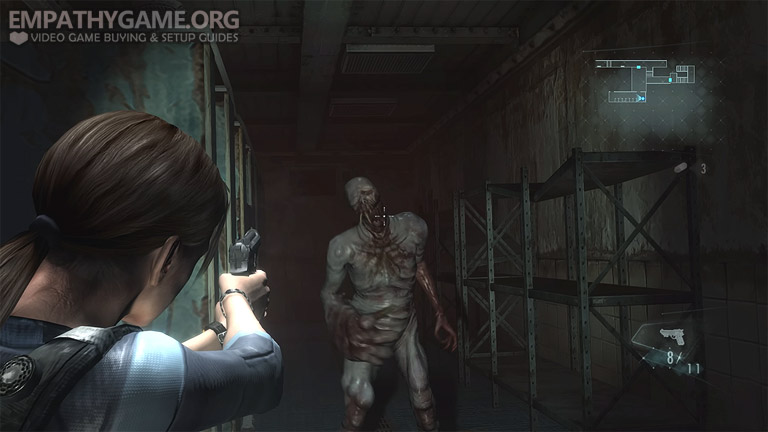
That knowledge never guarantees safety. Ooze creatures stretch and lurch in ways that make their reach difficult to judge, especially with the camera close behind Jill. Returning through a narrow corridor presents a practical choice: spend ammunition clearing it, risk dodging past a creature, or leave an obstacle that may still be there when the route matters again. This is where Revelations approaches classic survival horror without giving up modern over-the-shoulder aiming.
Unfortunately, its puzzles do not always respect the same curiosity. When a newly collected object has an obvious destination, companion dialogue can spell out the next step before the player has a chance to connect the clues. Occasionally those reminders repeat. It is a small irritation, but revealing the answer feels particularly unnecessary in a game whose best exploration depends on remembering locations and making discoveries independently.
Genesis Turns Searching Into a Risk
The Genesis scanner makes apparently empty rooms worth another look. It exposes hidden ammunition and supplies, while analysing infected creatures builds progress towards a Green Herb. That changes how Jill searches: a plain wall might conceal something useful, and an enemy is no longer just a target. It is also a potential source of recovery.
More importantly, the scanner creates a genuine trade-off under pressure. Analysing a living creature from close range can generate more progress than scanning its remains, but it requires standing near the very thing Jill should be keeping away from. Those extra moments spent looking through Genesis can be worth a future herb or can end in an avoidable hit. It is a more interesting decision than simply collecting objects highlighted by special vision.
Hidden ammunition adds a quieter loadout decision. Some Genesis-discovered pickups respond to the weapon types Jill carries, so changing her equipped guns can influence what ammunition those searches provide. It is a useful connection between exploration and preparation, even if the rules are not explained clearly.
There is a cost. Once it becomes clear that everyday corners and furniture can hide supplies, careful play starts to resemble a routine sweep of every room. What begins as investigation risks becoming housework. Genesis is strongest when danger makes the choice to scan meaningful, not when an empty cabin merely has to be checked from every angle.
Combat Rewards Accuracy More Than Flashy Melee
Revelations allows movement while aiming, unlike the more stationary gunplay of Resident Evil 4 and 5, but it never quite becomes a fluid third-person shooter. Tight interiors leave little room to circle enemies, and a camera that helps create claustrophobia can also obscure a creature’s attack. The dodge is especially demanding because it relies on timing an incoming strike rather than freely rolling away whenever positioning goes wrong.
Learning enemy tells makes that awkward system more dependable. A well-timed evasion preserves both ammunition and healing supplies, creating an interesting contrast with Resident Evil 3 Remake, where dodging is much more prominent and clearly communicated. Revelations offers less immediate feedback, yet mastering its evasions changes how threatening previously troublesome corridors feel.
Charged melee attacks are less universally useful. Enemies usually need to be staggered first, which can mean spending bullets to earn an opportunity that another aimed shot might resolve more safely. The communications officer is a particularly revealing encounter: targeting its vulnerable head and using shock grenades can create openings, but Parker’s supporting attacks can sometimes interrupt a stagger just as a charged melee strike becomes possible. An ally meant to make the fight easier can briefly disrupt the player’s plan instead.
Weapon custom parts offer more reliable experimentation. Increased damage, capacity or stopping power can alter how a favourite firearm fits a particular corridor or enemy. Tightening a shotgun’s spread, for example, gives it a useful role beyond emergency point-blank defence. Later encounters with Rachael add another layer to ammunition management: after the necessary first fight, some return appearances can be avoided, while defeating her again can yield optional parts. A dangerous recurring enemy becomes a calculation about whether the potential reward is worth the bullets and healing it might cost.
The Campaign Keeps Interrupting Its Own Best Idea
Revelations presents its conspiracy like a serialized television thriller, complete with recaps and cliffhangers. The missing agents, Terragrigia disaster, competing organisations and shifting loyalties provide constant movement, although more twists do not necessarily make the mystery more compelling. Jill’s relatively serious approach gives the story a welcome centre, and Parker makes a capable companion when he is not complicating combat.
Other characters lean harder into exaggerated banter and action-movie humour. The tonal difference is difficult to ignore when a tense stretch aboard the Zenobia gives way to a noisy mission elsewhere. The problem is not that horror and action cannot coexist; individual chapters often handle one or the other adequately. It is that the transition repeatedly sacrifices the quiet attention the ship has spent time earning.
That interruption becomes more conspicuous near the climax. Early flashbacks help establish the disaster and the relationships among the agents. Later, an extended Parker-and-Jessica detour can feel like a brake applied just as the present-day plot is converging. The ship’s corridors build tension through familiarity and anticipation. Every abrupt departure asks the campaign to rebuild it again.
The Handheld Origins Are Structural, Not Just Visual
The enhanced PC presentation gives the Zenobia’s metallic corridors, decorative interiors and dim lighting room to work. Environmental sounds and the contrast between abandoned luxury and infected machinery remain effective, even when character animation or secondary locations look considerably simpler.
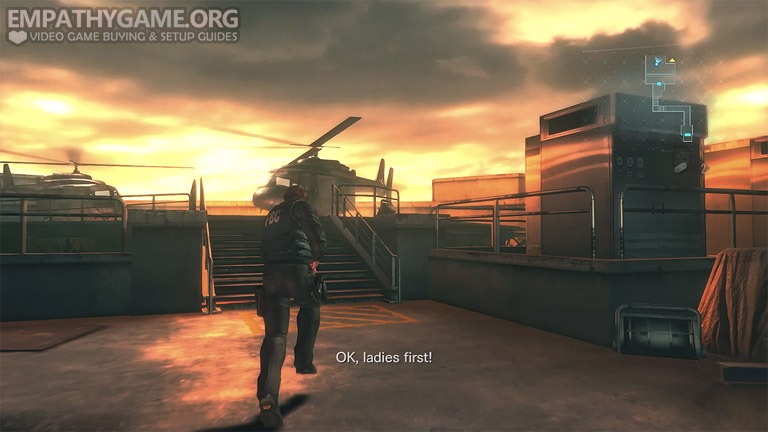
Its Nintendo 3DS origins are nevertheless built into the pacing. Episodes are short, objectives arrive in convenient segments, and some action scenarios resemble self-contained bursts rather than pieces of an uninterrupted journey. That is not all bad. A weaker idea rarely lingers for too long, and the brisk format makes progress easy to recognise. The trade-off is uneven atmosphere: the same game that encourages careful route planning can abruptly behave like an arcade shooter designed for a brief handheld session. Better lighting cannot change that underlying structure.
Infernal Makes Familiar Routes Dangerous Again
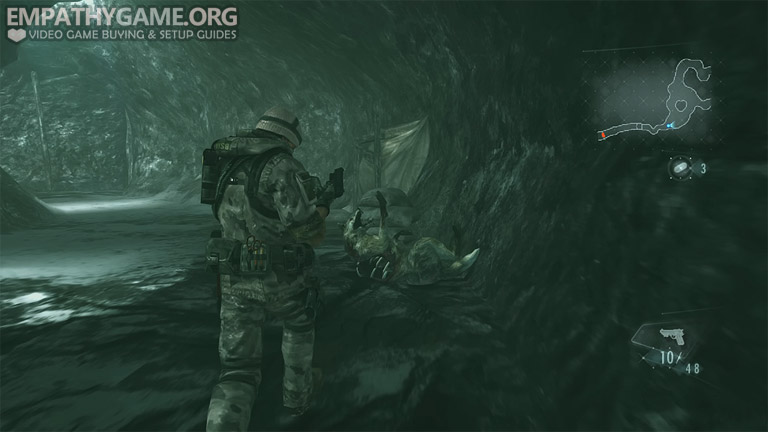
Infernal difficulty makes a return to the campaign worthwhile for reasons beyond increased enemy durability. It changes enemy and item placements, undermining the assumptions developed during a Normal run. Jill may know exactly where a stairwell leads, but the creature waiting beyond it or the supplies expected nearby can be different. Familiarity with the ship still helps; familiarity with its dangers no longer provides the same reassurance.
That is a particularly good fit for a game about learning geography. Remixed encounters make navigation and resource planning matter again without pretending the player has forgotten the map. Carried-over campaign weapons and parts can soften the challenge, so Infernal is not a complete return to first-playthrough vulnerability. Its appeal lies in discovering which established habits still work once the game changes what those routes contain.
Raid Mode Becomes a Different Kind of Resident Evil
Raid Mode stops trying to reconcile horror with action. It reshapes campaign locations into combat stages with enemy health indicators, character levels, equipment rewards and a separate progression loop. A shotgun is no longer just something to preserve for an uncertain future encounter. It is an item to compare by level, slots, damage and installed parts, then replace when a better version appears.
Its equipment system has more depth than those numbers initially suggest. Different weapon categories perform differently against specific enemies, with some elite variants demanding their own approach. Carrying three guns that all look powerful is not necessarily as effective as bringing a varied loadout that covers different resistances. Lowering a character’s effective level to pursue a stage bonus can also penalise higher-level weapons, so a sudden loss of damage may reflect the relationship between levels rather than a poor gun. Understanding these rules can matter as much as collecting rarer equipment.
Later stages reward knowledge that no stat increase can entirely replace. Trinity bonuses combine a low-level clear, defeating every enemy and taking no damage. The challenge becomes learning enemy spawn points, identifying safe positions and choosing the right grenade before a dangerous wave arrives. Repeating a stage can therefore feel less like grinding and more like rehearsing an encounter until its sequence makes sense. Ghost Ship extends those decisions into a large endgame test of route knowledge, ammunition reserves and a coherent loadout.
Online co-op gives this combat-first design another purpose. Partners can divide attention between threats and cover difficult encounters without turning the story campaign into a shared experience. The mode also treats ordinary supplies generously: picking up ammunition or a herb does not deprive the other participant of the corresponding pickup, and weapon or part cases count for both. That lets cooperation revolve more around surviving fights than competing over loot. Solo runs, meanwhile, offer the satisfaction of solving each stage through equipment choices and careful execution.
The drawback is repetition. Players who come to Resident Evil for narrative exploration may finish the campaign and find little reason to revisit its rooms as combat arenas. For anyone drawn to better weapons, custom parts and demanding stage bonuses, Raid Mode can easily outlast the story. The two halves reveal the game’s identity problem in an unexpected way: the campaign keeps interrupting its best horror ideas with action, while Raid Mode simply commits to action and becomes more coherent as a result.
That division also provides a useful bridge to Resident Evil Revelations 2. Its prisons, settlements and industrial environments replace the Zenobia, and its paired protagonists approach cooperation differently, but the sequel likewise separates an episodic story from a progression-driven Raid Mode. Both appeal most to players willing to enjoy those contrasting rhythms on their own terms.
Final Verdict
Resident Evil Revelations is strongest when it allows Jill to explore the Queen Zenobia without interruption. Learning the ship’s shortcuts gives backtracking purpose, the Ooze make familiar corridors uncertain, and Genesis adds a useful temptation to take risks for supplies. Timed dodges and custom parts provide more combat depth than the game’s awkward introductions might suggest.
It is less successful at protecting that atmosphere. Abrupt character switches, uneven humour, action diversions and late flashbacks repeatedly pull attention away from the setting that makes the campaign distinctive. The compact 3DS structure remains visible beneath the PC version’s cleaner presentation, and the exploration sometimes provides too much guidance.
Still, Infernal cleverly reshuffles the danger within familiar spaces, while Raid Mode turns the combat into a separate game of equipment choices, enemy knowledge and repeatable challenges. Players who want one sustained survival-horror adventure may find Revelations frustratingly divided. Those who enjoy mapping an enclosed setting and also appreciate the completely different satisfaction of refining a combat build will find both sides worth investigating. Its strongest ideas are not always allowed to coexist, but each gives this unusual entry a reason to be remembered.
Resident Evil Revelations Pros & Cons
- Pro: Queen Zenobia’s tight corridors, dark cabins, flooded areas, machinery spaces, and abandoned luxury interiors provide one of the series’ strongest enclosed horror settings
- Pro: Jill Valentine’s campaign blends careful exploration and resource management with modern third-person aiming without becoming as relentlessly action-focused as some surrounding Resident Evil entries
- Pro: Raid Mode offers substantial replay value through solo or online co-op stages, character progression, weapons, custom parts, loot hunting, and increasingly difficult enemy combinations
- Pro: Infernal difficulty changes enemy and item placement instead of merely increasing damage values, giving experienced players a meaningfully altered campaign
- Pro: Lightweight hardware requirements and a Steam Deck Verified rating make the PC edition unusually accessible on modern desktops, laptops, and handheld hardware
- Con: Frequent character and location changes can interrupt the stronger atmosphere created during Jill’s Queen Zenobia sections
- Con: Enemy variety and companion AI are noticeably more limited than in later Resident Evil games
- Con: The game’s Nintendo 3DS origins remain visible in some environments, animations, level layouts, and episodic presentation despite the HD improvements
- Con: Seven separate small DLC products make the optional content structure feel unnecessarily fragmented, especially because none adds another story campaign
Resident Evil Revelations PC System Requirements
Official Windows PC requirements (Steam):
MINIMUM:
OS: Windows 10
CPU: Intel Core 2 Duo 2.4 GHz or better / AMD Athlon X2 2.8 GHz or better
RAM: 2 GB
GPU: NVIDIA GeForce 8800 GTS or better / ATI Radeon HD 3850 or better
DirectX: Version 9.0c
Storage: 8 GB available space
Internet: Broadband internet connection
Sound Card: DirectSound-compatible sound device with DirectX 9.0c or better
RECOMMENDED:
OS: Windows 10
CPU: Intel Core 2 Quad 2.7 GHz or better / AMD Phenom II X4 3.0 GHz or better
RAM: 4 GB
GPU: NVIDIA GeForce GTX 560 or better / ATI Radeon HD 6950 or better
DirectX: Version 9.0c
Storage: 8 GB available space
Internet: Broadband internet connection
Sound Card: DirectSound-compatible sound device with DirectX 9.0c or better
Additional PC Performance and Setup Notes
- The current Steam requirements are unusually light for modern hardware, but they are specifications for a 2013 DirectX 9-era PC release and do not include official modern frame-rate or resolution targets.
- Steam Deck is officially Verified. Valve reports that the default controller configuration works, interface text is readable, controller icons are displayed correctly, and the default graphics configuration performs well.
- Keep Steam Cloud synchronization enabled when moving between PCs or Steam Deck, but maintain a manual backup before experimenting with save files or unofficial modifications.
- If the game fails to launch correctly on a modern Windows installation, first update Steam, verify the installed files, restore unmodified game files, and check that DirectX-related dependencies have not been damaged before reinstalling the entire game.
- Nexus Mods hosts unofficial model, texture, visual, UI, audio, utility, and weapon modifications. There are no official Capcom mod tools or Steam Workshop integration listed for Resident Evil Revelations.
- Back up saves and changed files before modding, and remove gameplay-altering modifications before entering online Raid Mode to avoid disrupting other players and complicating online troubleshooting.
Official Trailer
Note: Capcom’s Resident Evil Revelations launch trailer highlights Jill Valentine, Chris Redfield, the Queen Zenobia, infected Ooze enemies, survival-horror exploration, action sequences, and the expanded HD release, while the written guide adds current Steam access, DLC, Raid Mode, Steam Deck, requirements, mods, and PC setup guidance.
Frequently Asked Questions
Where does Resident Evil Revelations fit in the story, and do I need earlier games?
It takes place between Resident Evil 4 and Resident Evil 5, during the BSAA’s early years. Knowing Jill and Chris adds context, but the Queen Zenobia and T-Abyss story can be followed on its own.
Is Resident Evil Revelations open world, and how long is the campaign?
No. The story has 12 episodes, with interconnected exploration aboard the Queen Zenobia and more linear missions elsewhere. A first playthrough often takes roughly 8–12 hours; Raid Mode can extend the experience substantially.
How is the PC version different from the Nintendo 3DS original?
The Windows release is the enhanced HD edition, with improved visuals and lighting, Infernal difficulty, the Wall Blister enemy, and expanded Raid Mode content. It retains the original episodic campaign design rather than remaking the game from scratch.
What difficulty should beginners choose, and what changes in Infernal?
Normal is a sensible first choice for learning navigation, scanning, and dodge timing; Casual is gentler for story-focused play. Infernal is more demanding and changes some enemy and item placements, making familiar rooms less predictable.
Does Resident Evil Revelations have New Game Plus?
Yes. A completed campaign can be replayed with retained equipment and progress such as weapons and custom parts, making later difficulty runs more manageable than a completely fresh start.
What does Genesis reveal, and how many hidden handprints are there?
The Genesis scanner finds concealed supplies and 30 hidden handprints, and scanning infected enemies fills a meter that can reward a Green Herb. Some handprints are in areas that cannot easily be revisited, so thorough scanning matters for completionists.
Why can the dodge feel inconsistent?
Dodges depend on timing an incoming attack rather than triggering a free dodge roll at any moment. Different Ooze attacks have different tells, so watching enemy movement is more reliable than repeatedly tapping the dodge input.
Is the story campaign co-op, or is multiplayer only in Raid Mode?
The campaign is single-player. Raid Mode is a separate mission-and-loot mode that supports solo play or two-player online co-op on PC.
Can Raid Mode be finished solo, and how do more stages unlock?
Raid Mode is playable alone, although later Abyss and Ghost Ship challenges demand stronger equipment and much more route knowledge. Progressing through the campaign unlocks more of the Raid stage selection.
Does Raid Mode offer split-screen, LAN, or crossplay?
The Steam edition has no same-PC split-screen or dedicated LAN mode. Its co-op is online and does not provide cross-platform matchmaking with console editions; partners should use compatible versions on the same platform ecosystem.
Can you still play Resident Evil Revelations Raid Mode online?
Steam lists co-op support, and Capcom’s Resident Evil.NET continues to publish Revelations Raid events. Random matchmaking may be quiet, so arranging a co-op partner through Steam Discussions is useful for specific stages and bonuses.
Is a CAPCOM ID or Resident Evil.NET account required for the Steam game?
No separate Capcom account is listed as a requirement for launching the Steam edition or playing standard Raid Mode. Account linking and data upload are relevant to optional Resident Evil.NET statistics, events, and supported rewards.
What are Chasm, Trench, and Abyss in Raid Mode?
They are successive Raid Mode difficulty tiers. Chasm is the starting progression route, Trench raises the challenge, and Abyss puts much greater pressure on weapons, custom parts, and stage knowledge.
How do Trinity Bonuses work in Raid Mode?
A Trinity Bonus requires all three conditions in the same run: eliminate every enemy, take no damage, and complete the stage at or below its recommended level. Certain valuable custom parts are tied to these difficult clean-clear goals.
What is Ghost Ship, and what is the Raid Mode level cap?
Ghost Ship is a large endgame Raid stage built around the Queen Zenobia, demanding substantial preparation and rewarding advanced loot hunting. The level cap is 50, but weapons, parts, and routing still matter once that level is reached.
Should new Raid Mode players spend Battle Points on weapons immediately?
Spend BP selectively early on. Higher-level stages yield stronger drops, so an expensive early purchase can become obsolete quickly; reserve points for equipment or supplies that solve a specific problem.
Are any DLC packs or extra characters required to complete Raid Mode?
No. The base game has the complete campaign and standard Raid Mode, including regular HUNK. Lady HUNK and Rachael Ooze are optional character DLC; the other packs provide equipment or custom parts rather than required progression.
Does the game support unofficial mods or Steam Workshop?
Nexus Mods hosts community-made modifications, but Capcom does not list official modding tools or Steam Workshop integration for this release. Keep save backups and avoid gameplay-altering modifications during online sessions.
Does Resident Evil Revelations work with controllers and Windows 11?
Steam lists full controller support and Windows 10 as the published operating-system requirement, not a separate Windows 11 guarantee. Mouse-and-keyboard control is also available; for launch problems on newer systems, check clean game files and Steam updates before trying unofficial fixes.
What distinguishes Resident Evil Revelations from Revelations 2?
They tell different stories. Revelations follows Jill and Chris through the Queen Zenobia incident, while Resident Evil Revelations 2 centers on Claire Redfield and Barry Burton. Their co-op and campaign structures differ, so do not assume Revelations 2’s local multiplayer features apply to the first game.
Still have questions? Check the Resident Evil Reddit community, Capcom’s Resident Evil Revelations support FAQ, and Steam Discussions.
Sources & References
Key release, store, gameplay, technical and reception details in this guide were checked against:
- Steam — Resident Evil Revelations — official Windows release, demo, supported features, PC requirements, and Steam Deck status.
- Steam — Resident Evil Revelations DLC — seven optional Raid characters, weapons and equipment products.
- Nintendo — Resident Evil Revelations for Nintendo 3DS — original platform, early-release history, story setup, and MT Framework Mobile reference.
- Metacritic — Resident Evil Revelations PC reviews — the 77/100 PC Metascore and IGN’s PC HD review.
- Capcom — Resident Evil Revelations RE.NET support — account linking, optional online-event participation, and Raid data upload.
- Nexus Mods — Resident Evil Revelations — community-made PC modifications.
Similar Games Like Resident Evil Revelations
- Resident Evil Revelations 2
- Resident Evil 2 Remake
- Resident Evil 3 Remake
- Silent Hill f
- Silent Hill 2 (2001)
- Haunting Ground






Found something worth playing through DecideGame?
DecideGame.com is an independent gaming project run by Editor Zero. If this guide helped you discover a game, solve a problem, or find useful information, you can support DecideGame.com and help keep new and updated game guides coming.
DecideGame — PC Game Guides, Reviews & Setup Help