
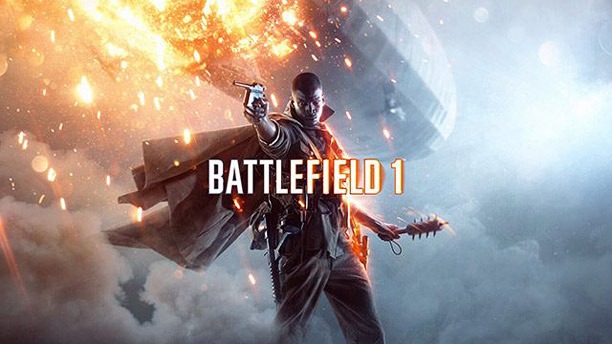
Use this updated 2026 Battlefield 1 PC guide to compare official Revolution Edition purchase and download options, EA Play access and Premium Pass content, and check system requirements, EA Javelin Anticheat, Steam Deck support, multiplayer, and setup.
 By Editor Zero — independently researched, edited, and maintained.
Last updated: 19 October 2026
Last reviewed: 19 October 2026
Table of Contents
- Quick Summary
- Quick Facts
- Official PC Stores, Download & Installation
- Battlefield 1 Review
- Pros & Cons
- PC System Requirements
- Frequently Asked Questions
- Similar Games
Battlefield 1 Quick Summary
✔ World War I first-person shooter combining a short anthology-style War Stories campaign with DICE’s large-scale objective-based multiplayer
✔ Multiplayer supports up to 64 players and mixes infantry classes, tanks, armored cars, biplanes, cavalry, naval combat, destructible environments, dynamic weather, and huge Behemoth vehicles
✔ Similar to Battlefield V through historical combat, class-based squad play, large objective maps, tanks, aircraft, destruction, and combined-arms multiplayer
✔ Operations links multiple maps into attacking-versus-defending campaigns, while Conquest, Rush, Frontlines, Domination, Team Deathmatch, War Pigeons, and other modes provide different scales of combat
✔ Revolution Edition is the most complete straightforward package, combining the base game with Premium Pass access to They Shall Not Pass, In the Name of the Tsar, Turning Tides, and Apocalypse
✔ PC players still need EA account and launcher integration even when buying through Steam or Epic, while EA Javelin Anticheat makes SteamOS and normal Steam Deck play officially unsupported
Battlefield 1 Quick Facts
Official PC Stores, Download & Installation
👇 Compare verified Steam, Epic Games Store, EA Store, and EA Play options before purchasing, downloading, or installing Battlefield 1 Revolution on Windows PC.
- Steam: The Steam listing includes Battlefield 1 Revolution, combining the base game, Premium Pass, four main expansions, and the Red Baron, Lawrence of Arabia, and Hellfighter packs.
- Epic Games Store: Epic sells Battlefield 1 Revolution with the same four Premium Pass expansions and themed bonus packs. It requires an Epic Games account linked to an EA Account.
- EA Store: EA’s own storefront lists Standard and Revolution editions. Standard is the base game; Revolution is the more complete package if you want the expansion maps and content. Check your existing EA library before purchasing again.
- Premium Pass: The four expansions are They Shall Not Pass, In the Name of the Tsar, Turning Tides, and Apocalypse. They add maps, factions, weapons, vehicles, and multiplayer activities. Owners of the base game should compare separately owned DLC against the Revolution bundle to avoid unnecessary duplicate purchases.
- EA Play: Battlefield 1 Revolution is offered through EA Play on supported PC storefronts. Verify the included edition and catalog before subscribing; subscription access is different from permanent ownership.
- PC Game Pass: PC Game Pass and Game Pass Ultimate include EA Play for PC. EA games are normally installed and authenticated through the EA app after linking your Xbox/Microsoft and EA accounts; the Xbox listing is an access route, not an Xbox Play Anywhere entitlement for a separate console purchase.
- EA Account and launcher: Steam and Epic versions require an EA Account, EA online activation, and EA app installation/background use. Link the correct account from the beginning because digital entitlements are account-specific.
- EA Javelin Anticheat: The PC release uses EA’s kernel-level anti-cheat on supported 64-bit Windows systems. Use EA’s official troubleshooting tools when it blocks startup rather than modifying or bypassing the protection.
- Multiplayer platforms: PC players using Steam, Epic, or EA app access participate in the PC ecosystem. PlayStation and Xbox players cannot join PC matches, and PC ownership does not grant a console copy or shared console progression.
- Steam Deck and mods: Steam marks Battlefield 1 Unsupported on Steam Deck because the anti-cheat/multiplayer service is not supported on SteamOS. Unofficial Frosty/Nexus modifications can conflict with Javelin; preserve a clean installation for protected online play. A Windows handheld must meet the normal Windows and anti-cheat requirements.
 Buy Battlefield 1 Revolution on Steam
 Buy Battlefield 1 Revolution on Epic Games Store
 Buy Battlefield 1 through the official EA Store
 Access Battlefield 1 Revolution with PC Game Pass / EA Play

Battlefield 1 Review
Operations gives Battlefield’s combined-arms chaos a sense of purpose, while exceptional atmosphere and range-driven gunplay outweigh brutal chokepoints and a divisive approach to sniping.
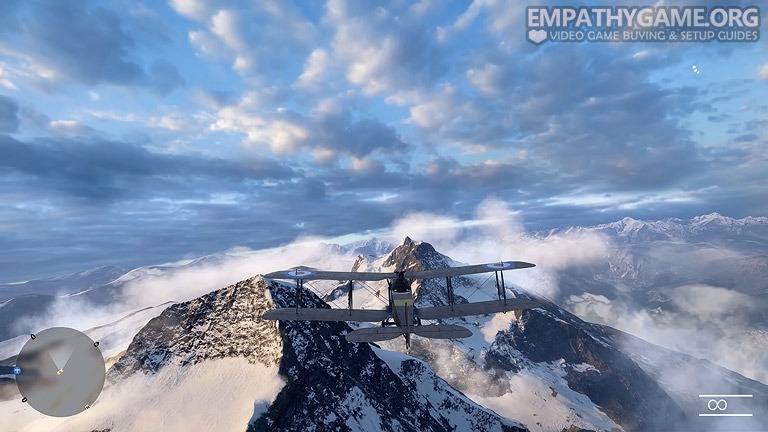
Battlefield 1 takes the machinery of a large-scale Battlefield match and gives it an unusually strong sense of place. Tanks crawl through mud and ruined streets, biplanes circle above mountain positions, cavalry cuts across open ground and infantry disappears into smoke beneath artillery fire. Like Battlefield 4, it remains a fast-moving, squad-oriented shooter built around capturing objectives and combining infantry with vehicles, but its World War I setting changes the rhythm and presentation without reducing the action to slow trench warfare.
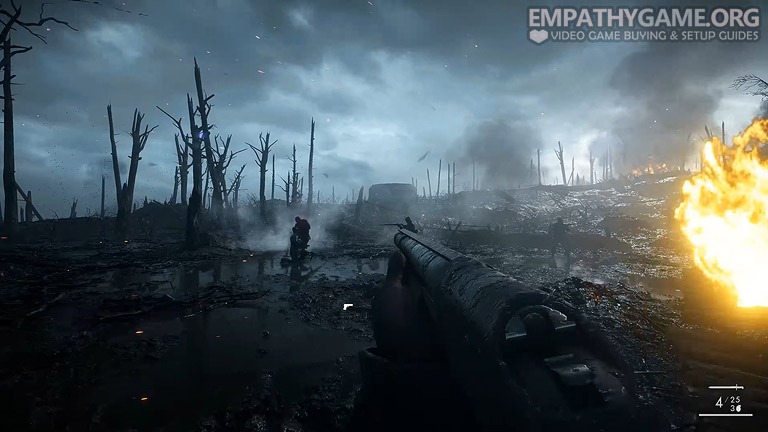
Its greatest achievement is Operations. Instead of distributing attention across several equally available flags, Operations turns the map into a moving frontline. Attackers seize sectors, defenders retreat and the struggle can continue across another battlefield, giving victories and failures a geographical consequence that ordinary multiplayer rounds rarely communicate as strongly. Combined with contextual narration, battle introductions and extraordinary sound design, it makes a match feel like part of a larger offensive rather than an isolated scoreboard.
The spectacle sometimes works against the game. A sector crowded with dozens of soldiers can deteriorate into grenades, explosives and repeated frontal attacks. Strong pilots or tank crews can punish teams that refuse to counter them, while the weapon system strongly favors fighting within each gun’s intended range. Battlefield 1 is at its best when those limitations create decisions rather than frustration. When they do, few Battlefield entries connect atmosphere, teamwork and large-scale momentum so effectively.
Operations Turns Objectives Into a Moving Frontline
Operations is the clearest expression of Battlefield 1’s identity. Attackers must capture every objective within a sector before defenders are forced to fall back and establish another line. If the attackers break an entire map, the offensive can continue onto the next battlefield.
Monte Grappa demonstrates why the structure works. Fighting can move from exposed Alpine slopes toward trenches, bunkers and passages cut into the mountain. A force that looked dominant across open ground may suddenly stall once the defensive line contracts around harder cover. Defenders who lose a position cannot simply shift attention to another unrelated flag; they must retreat, regroup and stop the advance farther back.
Kaiserschlacht creates another strong transition as open fields and ruined villages eventually give way to denser fighting around Amiens. Vehicle support that mattered enormously during one stage may become less useful when infantry begins contesting tighter streets and buildings. That changing pressure gives Operations a stronger sense of progression than a normal collection of separate rounds.
The weakness appears when the frontline becomes too concentrated. A fortified entrance or narrow approach can attract most of the server, filling it with grenades, gas, explosives and continuous suppressive fire. Flanking remains possible, but some sectors become exercises in repeatedly forcing the same defensive position. Those moments are exhausting rather than tactical, even if finally breaking through can feel enormously satisfying.
Conquest Gives the Sandbox More Room to Breathe
Conquest is the better choice when freedom matters more than a directed battle. Multiple flags spread both teams across larger areas, creating opportunities to bypass the main fight, capture an exposed objective, hunt vehicles or attack from a direction the enemy was not watching.
Sinai Desert is an excellent example. Villages, dunes, cliffs and long sightlines support tanks, aircraft, cavalry and Scouts at the same time. Then a sandstorm can dramatically reduce visibility, undermining long-range positions and making aircraft awareness much more difficult. The physical terrain stays the same while the information available to everyone changes.
Ballroom Blitz produces a different rhythm. Open grounds surround a large château where courtyards, corridors and elevated positions compress infantry combat. Tanks can still push surprisingly deep into the complex, but gates and restricted approaches make their routes more predictable than on completely open terrain.
Destruction strengthens the sense that these maps are spaces rather than static arenas. Walls disappear, firing positions collapse and cover that looked reliable earlier may no longer exist after prolonged shelling. Battlefield 1 does not allow every structure to be demolished completely, but enough of the environment changes to prevent every engagement from following the same geometry.
Gunplay Rewards Range Awareness and Controlled Fire
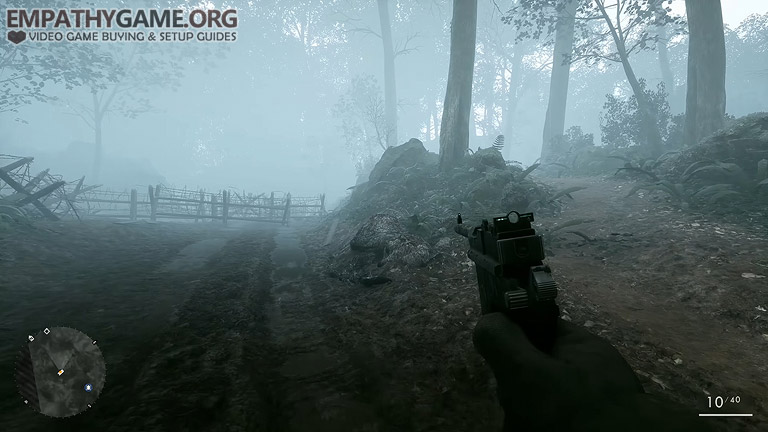
Battlefield 1’s weapons are divided into clear engagement niches. Assault submachine guns and shotguns dominate close fighting. Medic self-loading rifles provide controlled medium-range pressure. Support light machine guns reward sustained fire and defensive positioning. Scout rifles excel across longer sightlines. Each class can survive outside its ideal distance, but deliberately fighting at the wrong range gives the opponent an advantage.
The accuracy system is more nuanced than the common complaint that shots simply deviate at random. Battlefield 1 does use weapon spread alongside recoil, but movement, sustained fire and firing cadence influence how accurately a weapon behaves. Allowing the gun to recover between shots can substantially improve consistency.
A Medic rifle shows this clearly. At medium range, carefully spaced shots can repeatedly pressure an exposed opponent. Firing as quickly as the trigger allows expands dispersion and wastes much of the rifle’s accuracy advantage. An SMG creates the opposite problem: rapid fire is devastating nearby, but trying to maintain the same burst against a distant target asks too much from its recoil and spread characteristics.
This system gives the arsenal genuine identity. It also creates frustrating encounters when a fight begins at precisely the wrong distance for the selected weapon. Battlefield 1 generally expects positioning, movement and restraint to compensate rather than allowing one versatile gun to solve every situation.
Scout Rifles Make Distance Part of Weapon Choice
The Scout class pushes range specialization further through the sweet-spot system. Many bolt-action rifles have a particular distance window in which a body shot can inflict enough damage to kill a full-health opponent. Because those ranges differ between rifles, choosing a weapon partly means choosing where on the battlefield you intend to fight.
Bullet velocity, drag and drop further distinguish the rifles, while iron-sight variants can be surprisingly effective for aggressive Scouts who need clearer peripheral vision rather than high magnification. The result is a class where two superficially similar rifles can encourage noticeably different positioning.
The sweet spot is also one of Battlefield 1’s more questionable balance choices. Being killed instantly by a body shot can feel excessive when the Scout’s positioning rather than headshot precision provided much of the advantage. On open sectors crowded with infantry, repeated one-shot kills become particularly frustrating.
The Gewehr M.95 demonstrates that the class can work without the mechanic. It lacks the conventional sweet-spot one-hit body-shot range and instead emphasizes reliable damage and fast follow-up shots through its straight-pull action. That produces a more consistent rhythm: hit, cycle, adjust and fire again rather than waiting for the target to enter a preferred damage window.
Classes Solve Battlefield Problems, Not Just Gunfights
The four core classes remain simple but strongly differentiated. Assault combines close-range weapons with anti-vehicle explosives. Medic uses self-loading rifles while healing and reviving teammates. Support supplies ammunition and brings light machine guns suited to prolonged fire. Scout handles long-range engagements, reconnaissance and spotting.
The important part is that their gadgets respond to battlefield problems. A tank dominating an approach is a reason to switch to Assault. A defensive position running out of ammunition gives Support an immediate purpose. A Medic working just behind an attacking group can turn several apparent deaths into a continuing push instead of another trip to the deployment screen.
Anti-tank mines show how equipment becomes more useful once map knowledge improves. Dropping mines directly beside a popular objective is obvious, and experienced tank drivers have every reason to watch for them. Placing explosives along routes armor naturally has to cross is more effective. Monte Grappa’s restricted passages and Ballroom Blitz’s gates create locations where vehicle movement becomes easier to anticipate.
That lesson applies across every class: good teamwork often means thinking about what the objective will need next rather than simply choosing whichever weapon produces the easiest immediate kill.
Vehicles and Behemoths Reward Teams That Exploit Them
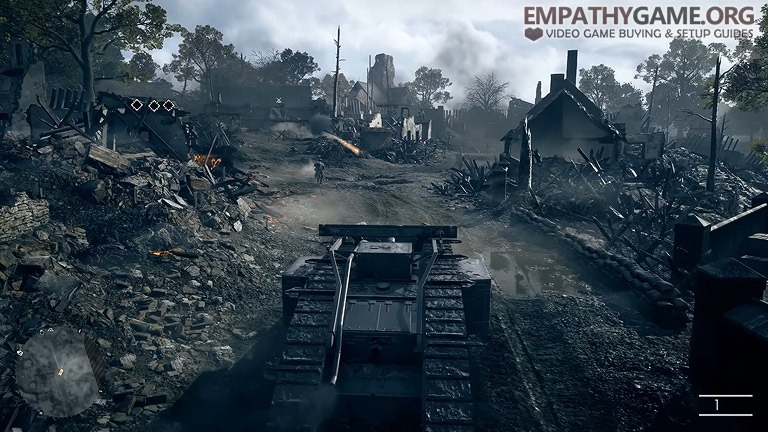
World War I hardware changes Battlefield’s flavor without reducing its combined-arms variety. Heavy tanks force infantry out of exposed positions, lighter vehicles provide mobility, attack planes pressure troops and armor from above, fighters contest the air and cavalry can move rapidly between objectives while remaining dangerous to isolated soldiers.
Deploying directly into a tank or aircraft also creates a specialized Tanker or Pilot class. Surviving the destruction of a vehicle therefore does not leave the crew with the equipment of a fully prepared Assault or Medic. Much of their battlefield power belongs to the machine itself.
Elite Class pickups such as the Sentry, Flame Trooper and Tank Hunter create temporary infantry power spikes. Their limited availability keeps them from replacing the standard class system, and they work best when ordinary teammates exploit the pressure they create.
Behemoths apply that principle on a much larger scale. The Airship, Armored Train and Dreadnought can appear for a struggling team, introducing enormous mobile weapons platforms that immediately redirect attention. Aircraft may divert toward an Airship, infantry begins targeting its weapon positions and previously secure objectives suddenly face heavy fire.
They are spectacular but not automatic comeback systems. A team that abandons the objectives to occupy or admire its Behemoth can continue losing. Their real value is disruption: they create an opportunity for ordinary soldiers to regain ground.
War Stories Work Better as Vignettes Than a Traditional Campaign
The single-player campaign avoids forcing one protagonist through every battlefield role. After the introductory “Storm of Steel,” five main War Stories follow different characters and military experiences, allowing the campaign to move between tanks, aircraft, infantry, stealth and cavalry without pretending one soldier mastered everything.
“Through Mud and Blood” demonstrates the approach particularly well. Danny Edwards joins the British crew of the Mark V tank Bess, and the missions alternate between operating the vehicle and leaving its protection when circumstances demand it. The crew’s reliance on Bess gives mechanical damage and separation from the tank more meaning than a conventional vehicle tutorial would provide.
“Friends in High Places” similarly turns learning aerial combat into part of Clyde Blackburn’s story rather than an isolated training exercise. These episodes are short, but tying mechanics to specific characters gives the campaign more personality than a collection of disconnected tutorials.
“Storm of Steel” remains the strongest thematic moment. Control passes between soldiers as they die, immediately presenting the battle as something larger than a single heroic protagonist. The rest of the campaign becomes more conventionally cinematic, but that opening establishes the anthology’s perspective effectively.
The format also limits character development. Just as a relationship or protagonist becomes interesting, the episode often ends and the campaign moves elsewhere. Battlefield 1 gains variety and multiple perspectives but sacrifices the deeper arcs possible in one sustained narrative.
Atmosphere Makes Ordinary Objectives Feel Important
Battlefield 1’s strongest presentation work happens during normal play rather than scripted scenes. Rifle reports crack across open terrain, machine guns produce a mechanical roar, incoming artillery announces itself moments before impact and soldiers shout through smoke while whistles signal another charge.
Weather changes gameplay as well as appearance. Fog shortens sightlines, Sinai’s sandstorm can almost erase distant targets and smoke or dust around an objective makes silhouettes difficult to distinguish. Combined with destruction and changing light, familiar locations can feel substantially different from one phase of a battle to another.
The game takes significant liberties with World War I in order to preserve Battlefield’s pace. Automatic weapons appear far more frequently than historical battlefield proportions would suggest, vehicles are readily available and soldiers move like characters in a mainstream action shooter rather than a military simulation. The result is romanticized and compressed rather than strictly authentic.
What it preserves exceptionally well is a sense of physical conflict. Mud, fire, machinery, collapsing structures, uniforms, distant aircraft and layered sound create a coherent atmosphere even while dozens of unrelated systems compete for attention.
Progression Adds Goals Without Replacing the Match
Persistent class ranks and weapon unlocks give Battlefield 1 more long-term structure than the earliest entries in the series. Spending time with Assault, Medic, Support or Scout gradually expands the equipment available to that role, encouraging players to learn more than one style.
Expansion weapons add Weapon Assignments that require specific feats with particular classes, gadgets or guns. At their best, these challenges encourage experimentation with equipment that might otherwise be ignored. At their worst, the assignment itself becomes more important than helping the team, pushing players toward oddly specific behavior simply to satisfy an unlock condition.
Service Assignments and Specializations add further goals, but the stronger source of replayability remains the interaction between maps, modes, classes and vehicles. Frontlines creates a tug-of-war around a shifting objective, while War Pigeons reduces the scale and produces frantic fights over carrying and releasing a messenger pigeon.
The four major expansions deepen that variety with additional armies, battlefields, weapons, vehicles and modes. Their real value is not simply providing more items to unlock; it is giving Battlefield 1’s established systems more situations in which to collide.
Final Verdict
Battlefield 1 succeeds because its World War I setting changes more than the scenery. Operations converts familiar objective fighting into a moving offensive, map geography determines which classes and vehicles become valuable, and the weapon system rewards players who understand range, movement and firing cadence. The four main classes remain immediately readable while giving squads genuine reasons to heal, resupply, spot and destroy armor rather than simply chase kills.
Its greatest strengths occasionally become its weaknesses. Concentrating an entire battle around one sector can create extraordinary charges through smoke and artillery, but it can also produce miserable explosive chokepoints. Scout sweet spots make rifles unusually distinctive while sometimes rewarding body shots too generously. Behemoths can shake up a losing battle without compensating for a team that still refuses to capture objectives.
The War Stories complement multiplayer with short character-focused episodes that give tanks, aircraft and infantry mechanics emotional context, although the anthology rarely stays with one protagonist long enough for deep development. Above everything else, the visual and sound direction gives even an ordinary push toward a flag unusual dramatic weight.
Battlefield 1 is best suited to players who want large-scale objective warfare with strong class identities, combined arms and enough structure to make a chaotic 64-player battle feel like a genuine advance and retreat. It is not a World War I simulation, nor Battlefield at its most restrained. It is a dramatic interpretation of the conflict built around momentum, teamwork and spectacle—and Operations remains the clearest expression of what makes it distinctive.
Battlefield 1 Pros & Cons
Battlefield 1 PC System Requirements
OFFICIAL WINDOWS PC REQUIREMENTS:
MINIMUM:
OS: 64-bit Windows 10
CPU: AMD FX-6350 / Intel Core i5-6600K
RAM: 8 GB
GPU: AMD Radeon HD 7850 2 GB / NVIDIA GeForce GTX 660 2 GB
DirectX: DirectX 11-compatible graphics card or equivalent
Storage: 50 GB available space
Network: Broadband internet connection; EA lists 512 Kbps or faster for online connectivity
RECOMMENDED:
OS: 64-bit Windows 10 or later
CPU: AMD FX 8350 Wraith / Intel Core i7-4790 or equivalent
RAM: 16 GB
GPU: AMD Radeon RX 480 4 GB / NVIDIA GeForce GTX 1060 3 GB
DirectX: DirectX 11.1-compatible graphics card or equivalent
Storage: 50 GB available space
Network: Broadband internet connection; EA lists 512 Kbps or faster for online connectivity
Additional PC Performance and Setup Notes
- EA Javelin Anticheat requires a supported, updated 64-bit Windows installation. Older Windows versions and SteamOS/Linux are not supported; consult EA’s official anticheat troubleshooting guide for the applicable system checks.
- The game’s original hardware requirements are modest by modern standards, but large multiplayer matches can still place more load on the CPU than quiet sections of the War Stories campaign.
- If Battlefield 1 fails to launch from Steam or Epic, verify that the correct EA Account is linked, the EA app is installed and signed in, and both storefront and EA app recognize the same game entitlement.
- For EA Javelin Anticheat errors, repair or reinstall the anti-cheat through EA’s official troubleshooting process rather than attempting to disable, remove, or bypass it.
- Verify game files through Steam, Epic Games Store, or the EA app before performing a complete reinstall when crashes, missing files, failed updates, or launch loops appear.
- Keep graphics drivers updated and test DirectX 11 when diagnosing instability related to DirectX 12, overlays, injectors, ReShade configurations, or unofficial Frosty modifications.
- Back up important local settings before installing unofficial mods, and restore clean game files before returning to EA-protected multiplayer.
Official Trailer
Note: EA’s official reveal trailer introduces Battlefield 1’s World War I setting, cavalry, tanks, aircraft, infantry combat, and enormous combined-arms battles, while the written guide adds Revolution Edition, Premium Pass, EA Play, storefront, launcher, anti-cheat, Steam Deck, requirements, and modding guidance.
Frequently Asked Questions
Is Battlefield 1 worth playing in 2026?
Yes, especially if you enjoy atmospheric, objective-focused multiplayer with tanks, aircraft, infantry squads, and large changing frontlines. Operations and the historical setting remain its main attractions, although new players should expect experienced opponents and occasional lopsided matches.
Can you play Battlefield 1’s campaign without playing multiplayer?
Yes. War Stories is a separate single-player anthology. It provides a self-contained way to experience the game, although its short episodes are not a replacement for the breadth of the online modes.
Do Battlefield 1 War Stories have to be played in order?
No. After the opening sequence, the main War Stories can largely be approached independently. Starting with Through Mud and Blood is a useful introduction to vehicles, while Friends in High Places emphasizes aircraft.
How historically accurate is Battlefield 1?
It draws on real World War I fronts, equipment, armies, and experiences, but it deliberately exaggerates the frequency of automatic weapons, vehicles, and fast-moving combat. Treat it as a historically inspired action game rather than a simulation.
Does Battlefield 1 have co-op, split-screen, or an offline LAN mode?
No. War Stories is for one player, and the game has no cooperative campaign, local split-screen option, or traditional independent LAN multiplayer. Online matches require separate players and internet access.
Which Battlefield 1 multiplayer mode should a beginner try first?
Conquest is a good introduction because you can choose among several objectives and learn to move with a squad. Operations is more directed and cinematic but can concentrate heavy fire around narrow sectors. Team Deathmatch offers practice with weapons without teaching the full vehicle-and-objective sandbox.
How does Operations differ from Conquest?
Operations gives attackers a series of sectors to capture while defenders fall back between lines; an offensive may continue onto another map. Conquest spreads the contest across multiple flags that both teams can capture and retake, encouraging freer movement around the map.
Are Battlefield 1’s official multiplayer servers still available?
Battlefield 1 has not been subject to a general permanent multiplayer-service shutdown. Finding a populated server depends on platform, region, game mode, and time of day; a working online service does not guarantee that every playlist has active matches.
Why does Quickmatch sometimes put me into an empty server?
Quickmatch can select a sparsely populated lobby. Open the Server Browser, reset restrictive filters, and choose your preferred region, mode, and available-slot settings. Do not restrict results to empty servers or one special playlist when looking for a busy match.
Can you join custom Battlefield 1 servers?
Yes. Use the in-game Server Browser to find community or rented servers with particular maps, modes, rotations, and rules. Server visibility and available choices depend on which servers are online and how their owners configure them.
Does Battlefield 1 have multiplayer bots?
No. Standard Conquest, Operations, and other online multiplayer modes are designed around human participants; there is no built-in offline bot-match replacement for empty online servers.
Can Steam, Epic Games Store, and EA app players play Battlefield 1 together?
Yes. These launchers access the PC multiplayer environment, though each storefront has its own purchase entitlement and the game requires EA account integration. This does not extend to PlayStation or Xbox players.
Does Battlefield 1 support cross-play or cross-progression with consoles?
No. PC, PlayStation, and Xbox multiplayer are separate. Do not expect ranks, weapon unlocks, or other progress from one platform family to transfer automatically to another.
Does Revolution Edition unlock all Battlefield 1 weapons immediately?
No. Revolution grants access to the base game and Premium Pass expansion content, but some expansion weapons still require Weapon Assignments or other in-game unlock conditions before you can equip them.
Should I buy Premium Pass if I already own Battlefield 1?
Only if you need the expansions and the separate offer makes sense compared with Revolution. Check which expansions are already attached to your EA account or storefront entitlement before buying an additional pass or bundle.
Which Battlefield 1 class is easiest for a new player?
Medic and Support are practical starting choices. Healing, reviving, or resupplying allies helps the squad even when you are learning the maps and aiming. Assault is useful when enemy armor becomes a problem; Scout rewards a stronger understanding of sightlines and rifle ranges.
What are Service Assignments and Specializations?
Service Assignments are sets of gameplay objectives, some of which unlock Specializations. Specializations provide passive abilities that modify aspects of survival or class play. Progress may require using specific gadgets, weapons, or class actions.
Can you play Battlefield 1 offline?
The War Stories campaign is the single-player part of the game, but PC launchers require EA authentication and online activation, particularly during initial setup. Offline access to a previously installed campaign can depend on your launcher session and account state; multiplayer always requires an internet connection.
Does Battlefield 1 support controllers on PC?
Yes. The Steam listing includes full controller support, with Xbox controllers specifically recognized. Mouse and keyboard also work for PC play; controller mapping and prompts may vary by connected device.
Can Battlefield 1 run on Windows 11?
Yes, on a supported and properly updated Windows 11 PC that meets the game’s hardware, EA app, and EA Javelin Anticheat requirements. If the game refuses to start, check EA’s official anticheat diagnostics before trying unrelated modifications.
Does Battlefield 1 work on Steam Deck?
Valve labels it Unsupported because the EA Javelin Anticheat service is incompatible with SteamOS/Linux. This is primarily a platform/anti-cheat limitation, not simply a question of graphics performance.
Can Battlefield 1 be modded safely on PC?
Unofficial visual and interface modifications exist, but DICE does not provide a supported mod SDK or Steam Workshop for this game. Keep backups, assess individual mods carefully, and return to a clean installation before using EA-protected online multiplayer; mods may conflict with anti-cheat rules or startup checks.
Still have questions? Check the Battlefield 1 Reddit community, Steam Discussions, or official EA Help for more player advice and troubleshooting.
Sources & References
Key store, technical, and content information was checked against these official and established references:
- EA Store — Battlefield 1 — current EA PC editions and official Windows system requirements.
- Steam — Battlefield 1 — PC availability, EA app/anticheat requirements, Steam Deck rating, and overall user reception.
- Epic Games Store — Battlefield 1 Revolution — edition contents, EA account linking, and official PC access.
- Xbox — Battlefield 1 Revolution — PC Game Pass and EA Play availability information.
- EA Help — Javelin Anticheat — anti-cheat installation and troubleshooting guidance.
- PCGamingWiki — Battlefield 1 — Frostbite 3 and relevant Windows/PC compatibility cross-checks.
Similar Games Like Battlefield 1

Found something worth playing through DecideGame?
DecideGame.com is an independent gaming project run by Editor Zero. If this guide helped you discover a game, solve a problem, or find useful information, you can support DecideGame.com and help keep new and updated game guides coming.
DecideGame — PC Game Guides, Reviews & Setup Help