

📅 Game released: 2006
Prey (2006) is a story-driven sci-fi shooter in which Tommy fights through a living alien Sphere using portals, shifting gravity, wall-walking and spiritual abilities. This PC guide explains official download availability, installing a legitimately owned Steam or boxed copy, original system requirements, widescreen and save-file setup, Steam Deck support, and legacy multiplayer limitations.
 By Editor Zero — independently researched, edited, and maintained.
Last updated: 14 November 2026
Last reviewed: 14 November 2026
Table of Contents
- Quick Facts
- Official PC Stores, Download & Installation
- Prey (2006) Review
- Pros & Cons
- PC System Requirements
- Frequently Asked Questions
- Similar Games
Prey (2006) Quick Facts
- Game: Prey (2006) / original Standard and Limited Collector’s Edition PC releases
- Developer: Human Head Studios
- Publisher: 2K Games; created and produced by 3D Realms
- Genre: First Person Shooter (FPS), Sci-Fi, Puzzle-Solving
- Release: July 11, 2006 (North America); July 14, 2006 (Europe) — Windows PC and Xbox 360
- Platforms: Windows PC, Xbox 360, macOS, Linux
- Modes: Single-player campaign; competitive network multiplayer for up to eight players
- Steam Deck: Verified for legacy Steam App 3970; available to accounts that already own it
- Engine: id Tech 4, modified for portals, gravity changes and wall-walking
- Community: Prey Steam Discussions, Prey on ModDB
- PC modding: Prey mods on ModDB cover interface fixes, textures, models, visual changes, custom levels and gameplay projects
- Metacritic score: 83/100 (PC)
- IGN score: 9/10 (original 2006 game)
- GameSpot score: 7.5/10 (original 2006 game)
- Steam user reception: Very Positive overall; the legacy Steam release is no longer sold to new buyers
Official PC Store Status, Download & Installation
👇 Use the verified ownership and installation notes below to understand how Prey (2006) can still be accessed legitimately on Windows PC.
- Official PC availability: The original Windows game is no longer sold through a normal verified official digital PC storefront. Its legacy Steam listing has been removed from sale; GOG lists Prey (2006) on its Dreamlist, not as a product available to purchase. Do not confuse it with Arkane’s separate Prey (2017), which is sold digitally.
- Existing Steam owners: If Steam App 3970 is already attached to your account, find Prey in your Steam Library and use Install to download the owned Windows release. You can also use the Prey Steam Support page. The supported Steam client requires a modern Windows installation; the original game specifications below are historical.
- Original boxed copies: Genuine PC CD/DVD editions remain legacy ownership options, but check that discs are usable and that any required serial key is valid and has not already been redeemed. Original keys may work for Steam activation if they have not been claimed; the original Linux porter documents that possibility. Do not assume a secondhand key is unused, transferable or guaranteed to activate.
- Retail disc protection: Some original boxed Windows installations used SecuROM disc checking. The developer-issued final standalone PC update removed that check; a publisher-uploaded copy of the official retail update is archived on GameFront. It is intended for a legitimately installed retail copy, not for the Steam version. Avoid cracked executables, third-party key generators and unknown repacks.
- Edition history: The original Windows release had a Standard Edition and a Limited Collector’s Edition containing physical extras. There is no verified official modern Complete, Deluxe, remastered or PC subscription package of this 2006 game.
- Xbox ownership: Microsoft lists the original Prey for Xbox consoles through backward compatibility. That console purchase does not grant a Windows PC license or Xbox Play Anywhere entitlement; the separate 2017 Prey product pages refer to Arkane’s game.
- Steam Deck: Valve’s legacy Steam compatibility record rates App 3970 Verified, with functional default controls and acceptable default graphics. This applies to existing Steam owners and does not restore a Steam purchase option for new buyers.
- Network play and mods: The original multiplayer master-server discovery is not a dependable normal service; LAN, direct-IP and community replacements may still support sessions. Community widescreen and other mods are unofficial, so keep a clean backup of game data and saves before modifying a legitimate installation.
No official Windows PC purchase button is shown because the original Prey (2006) is not normally sold through a verified official PC storefront.

Prey (2006) Review
Prey bends space with confidence, but its firefights rarely keep up.
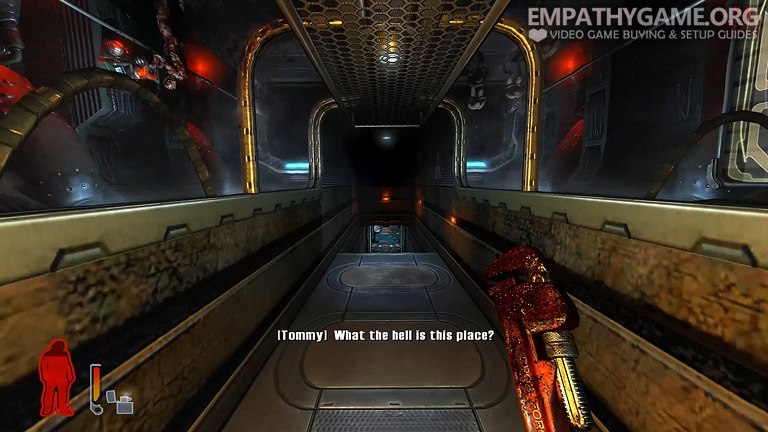
Prey (2006) does something that most first-person shooters never ask of the player: distrust the shape of a room. A doorway can open into a place that should not fit behind it. A wall may become the route forward, while an enemy overhead is standing on what he considers the floor. Human Head Studios builds the Sphere around those shifts in perspective, giving its alien setting a character that comes as much from how it behaves as from how it looks.
The game built around those ideas is surprisingly conventional. Tommy follows a largely linear route, solves manageable environmental puzzles, fights groups of alien creatures and gradually gains weapons and spiritual abilities. The shooting works, but enemy behavior rarely demands much tactical adaptation. Spirit Walk offers a clever second way to move through the world, yet is often used as a straightforward puzzle solution. Death Walk, meanwhile, makes failure unusually forgiving.
That contrast is the reason Prey remains interesting. Its strongest memories are less about difficult battles or character progression than about entering a room and needing a moment to understand where everything is. Anyone who enjoys tightly directed FPS campaigns with unusual ideas will find plenty to appreciate, even if the combat systems never become quite as inventive as the spaces surrounding them.
The Sphere Makes Space Feel Unreliable
The real achievement is level design. Portals are not just disguised loading doors. They are visible connections between locations, so Tommy can look or fire through an opening before walking across it. Early on, a small planetoid sits inside a room. Passing through a nearby portal places Tommy on its surface, with the room he just occupied suddenly appearing vast and distant. It is a simple demonstration, but an effective one: the Sphere has no obligation to respect ordinary scale.
Gravity manipulation develops that same uncertainty in another direction. Magnetic walkways take Tommy along walls and ceilings; elsewhere, gravity controls turn an entirely different surface into the floor. In the better encounters, these systems change more than the view. A Hunter might fire from an apparent ceiling while Tommy follows a walkway at another angle, forcing the player to work out the enemy’s position before returning fire. A room can contain several competing ideas of what “upright” means.
What makes these moments satisfying is not usually their difficulty. It is the brief adjustment in how a familiar space has to be read. A normal shooter trains players to scan doorways, corners and horizontal sightlines. Prey asks them to reconsider all three, sometimes in the same encounter. The underlying action can be simple, but the route through it feels unusual.
There are limits. Some wall paths amount to linear corridors turned sideways, and certain portals eventually feel like elaborate doors. Most puzzles place the required interaction close enough that the solution is recognizable rather than demanding. Even so, miniature planetary surfaces, inverted chambers, shuttle areas and impossible transitions arrive frequently enough to keep the Sphere from settling into a predictable sequence of dark metallic hallways.
Spirit Walk Is Clever but Too Often a Key for a Lock
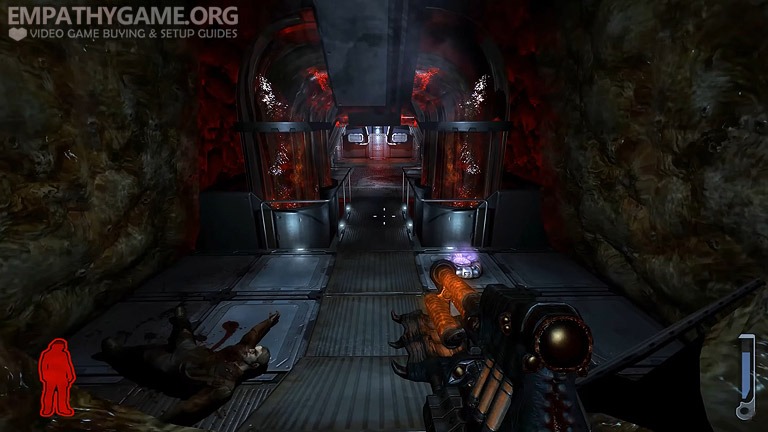
Spirit Walk initially feels like the natural companion to the game’s portal and gravity tricks. Tommy leaves his physical body behind and can pass through certain barriers, follow spirit-only routes, operate specific controls and attack with the Spirit Bow. Because his body remains where he left it, the ability introduces an intriguing possibility: movement and vulnerability no longer have to occupy the same place.
Yet much of the campaign treats it as a fixed answer to a familiar obstacle. A force field blocks the path, Tommy separates from his body, reaches the other side and activates a switch. The first examples are rewarding because they change what a barrier means. After several repetitions, the process becomes easy to recognize before the puzzle has properly begun. The mechanic still looks distinctive, but recognizing the designated Spirit Walk moment is not the same as being encouraged to experiment.
Combat exposes the missed potential more clearly. Spirit form can fight, but encounters seldom require the player to alternate between physical positioning and spirit movement under pressure. A battle that involved scouting beyond a barrier, protecting Tommy’s exposed body and changing attack angles could have linked Spirit Walk to the Sphere’s stronger spatial ideas. Instead, spiritual puzzles and ordinary gunfights tend to remain separate activities. It is a good concept that the level design rarely pushes beyond its safest uses.
Weapons Look More Alien Than They Play
The weapons are convincing parts of the Sphere before a shot is even fired. Living crawler creatures become explosives when their legs are pulled away. The Leech Gun draws energy from sources in the environment, changing its attacks according to what it absorbs. Much of the arsenal resembles organic equipment rather than metal firearms, which fits a ship where machinery and flesh seem to share the same anatomy.
The Leech Gun is the most interesting example because the room influences what the weapon can do. Different energy sources enable plasma, freezing or electrical attacks, giving one tool several possible roles. That interaction makes the surrounding architecture relevant to combat resources, rather than leaving every weapon decision inside the inventory.
But the distinction between appearance and function becomes harder to ignore as the campaign continues. Beneath the unsettling designs are recognizable FPS roles: rapid fire, close-range damage, explosives and precision attacks. Most encounters still revolve around selecting a suitable weapon, moving to avoid damage and wearing enemies down. Hunters may take cover, throw grenades and attack from awkward positions, but they rarely use the Sphere’s spatial rules with the ingenuity of its designers.
There is something revealing about a fight in which Tommy stands upside down on a living walkway and fires through a portal, only for the most effective tactic to be clearing targets in the usual way. The image is strange; the decision is familiar. Prey often makes combat more interesting to look at than to work through. Its weapons have personality, but the enemies do not consistently give that personality enough to do.
Death Walk Keeps Momentum but Removes Fear of Failure
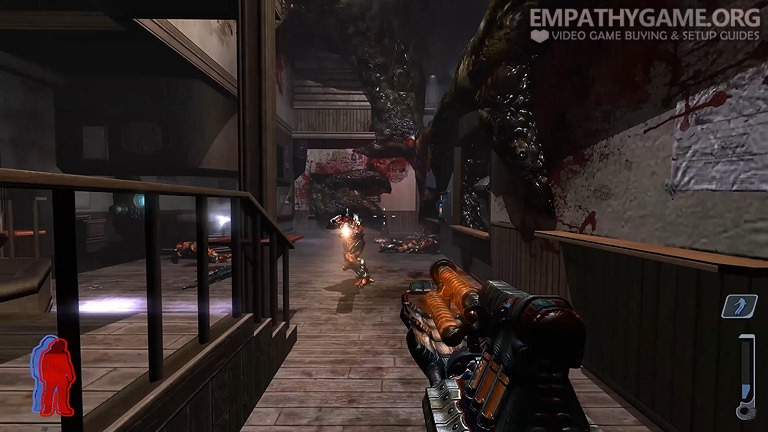
Death Walk is perhaps the clearest example of Prey choosing an imaginative solution that comes with a significant gameplay cost. Once the ability is introduced, losing all health does not lead to the usual game-over screen. Tommy enters a spirit arena, shoots red and blue wraiths to recover health and spirit energy, then returns near the place he fell. It is brief, fits the supernatural side of the story and feels far more connected to this world than loading a checkpoint would.
The problem is what happens to combat tension once the player understands the bargain. A dangerous room no longer threatens much lost progress. Poor positioning or careless weapon choices may cause a short interruption, but often do not require a different plan. Tommy can return to a fight and continue damaging whatever survived. When mistakes have such limited consequences, the incentive to study an encounter becomes weaker.
That matters particularly because the rest of the campaign is rarely demanding enough to compensate. Enemy groups are mostly manageable, supplies support steady forward movement, and puzzles usually reward noticing the intended interaction rather than prolonged experimentation. Death Walk does more than prevent frustration; it removes pressure from a combat system that could have used more of it. Cherokee difficulty increases the challenge on a repeat run, but does not fundamentally change how resurrection softens failure.
There is another way to value the system, though. It gives the campaign a pace that conventional checkpoint punishment might have disrupted. The player does not repeatedly replay an ordinary firefight just to reach the next gravity trick or disturbing scene. For someone drawn primarily to the Sphere’s imagination, that continuity can be welcome. For someone seeking tense battles where each mistake matters, it is a genuine weakness. Prey creates much of its unease through what the player sees, not through the possibility of having to survive a difficult encounter.
A Personal Story Gives the Alien Spectacle a Center
The opening in Jen’s bar matters more than it first appears. Before the abduction, Tommy is already in conflict with the life he knows. He wants to leave the reservation, while Jen has her own reasons not to follow the future he imagines. His grandfather Enisi represents a spiritual tradition Tommy resists. By the time the three are taken aboard the Sphere, the alien threat has interrupted a personal argument rather than simply providing an excuse to start shooting.
Tommy’s immediate motivation is clear: find Jen and survive. What gives that rescue story additional weight is the uncomfortable relationship between his beliefs and the powers he needs. Spirit Walk and the Land of the Ancients are not random abilities attached to an otherwise unrelated protagonist. They confront Tommy with the very part of his identity he has tried to reject. The writing can be blunt about this conflict, and some dialogue explains feelings that the events already communicate, but it gives Tommy more definition than the nearly anonymous leads of many shooters from the period.
The setting carries much of the atmosphere without relying on dialogue. Human bodies pass through grotesque processing machinery, doors contract like living tissue, and industrial corridors appear to have grown rather than been assembled. It is hard to separate the Sphere’s visual design from its level design because both make familiar things behave incorrectly. A doorway is an organ as much as an entrance; a corridor might also be a ceiling.
The Land of the Ancients provides an important contrast to that oppressive interior. Radio broadcasts and traces of human media also interrupt the alien environment, briefly reminding the player of an ordinary world that still exists somewhere beyond it. Those details prevent the horror from becoming one continuous texture. The Sphere feels disturbing not merely because it contains violence, but because it seems capable of absorbing people, machines and places into the same living structure.
A Short Campaign Works in Its Favor
The compact campaign is a sensible match for ideas that depend partly on surprise. Portals, gravity shifts, Spirit Walk, shuttles and strange weapons appear in close succession, giving the journey momentum even when an individual mechanic is not explored to its fullest. It feels more like a deliberately staged action ride than a shooter interested in expansive exploration, loot collection or long-term character growth. That narrower focus is a strength here.
It also limits what a second run can offer. There are no branching character builds, alternative quest paths or major choices that reshape the journey. Cherokee difficulty provides a clearer challenge for returning players, but the fixed sequence means that a known portal cannot produce quite the same surprise twice. The original competitive multiplayer includes Deathmatch and Team Deathmatch, using unusual sightlines and gravity to complicate familiar arena combat, though it is not the main reason to remember the package.
Replaying the campaign is therefore more about appreciating its construction than discovering a new approach to progression. With the initial shock gone, the careful placement of a portal or the way a gravity room introduces its rules can become easier to notice. That is a different kind of replay value, and a modest one, but the short runtime helps. The game moves on before its most striking tricks have been stretched into routine.
Final Verdict
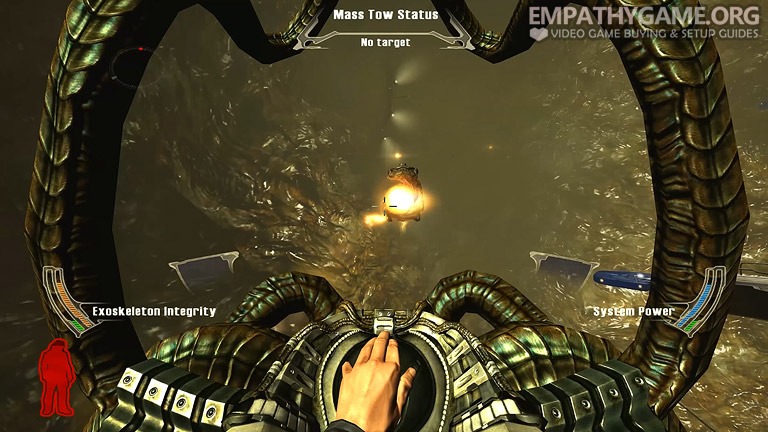
Prey (2006) is more imaginative about where a firefight happens than about how that firefight works. Its visible portals, shifting gravity, miniature worlds and living architecture make the Sphere an unusually memorable place to navigate. Spirit Walk and the alien arsenal add to that identity, while Tommy’s conflict over family and tradition gives the rescue story something personal beneath the spectacle.
Its weaknesses are closely connected to those strengths. Spirit Walk is rarely allowed to develop beyond familiar puzzle patterns. The weapons look stranger than their tactical roles, and enemy behavior cannot always make use of the extraordinary spaces around it. Death Walk keeps the journey moving, but makes it difficult for combat to feel as threatening as the setting suggests.
Still, the campaign benefits from its restraint. Rather than stretching its ideas into a much larger adventure, it keeps presenting new ways to see and traverse the Sphere. Players seeking difficult gunfights, flexible progression or open-ended exploration may find the experience too directed and forgiving. Those who enjoy focused single-player FPS design, unsettling sci-fi settings and levels built around genuine spatial surprises will find a game whose best ideas remain worth examining. Not every mechanic reaches its potential, but their combination gives Prey a character that ordinary shooting alone could never have provided.
Prey (2006) Pros & Cons
- Pro: Portals, shifting gravity, wall paths and spirit abilities give the campaign a distinctive FPS identity
- Pro: The Sphere blends biomechanical horror with spatial puzzles, alien technology and memorable set pieces
- Pro: Tommy’s rescue mission gives the strange science-fiction spectacle a clear personal focus
- Pro: Low original PC requirements and a Verified Steam Deck record help legitimate owners revisit the game
- Pro: Community widescreen HUD improvements, visual projects and custom levels extend PC customization
- Con: Familiar enemy tactics and the forgiving Death Walk system reduce the tension of firefights
- Con: The original Windows game has no normal verified official digital PC purchase route for new buyers
- Con: Legacy multiplayer discovery can require direct-IP connections or unofficial community solutions
- Con: Some widescreen HUD elements stretch, high-frame-rate changes need care, and saves lack native Steam Cloud syncing
Prey (2006) PC System Requirements
These are the original Windows PC release specifications, not newly published requirements for Windows 10 or Windows 11.
OFFICIAL ORIGINAL WINDOWS PC REQUIREMENTS:
MINIMUM:
OS: Microsoft Windows 2000 or Windows XP with the latest service pack
CPU: Intel Pentium 4 2.0 GHz / AMD Athlon XP 2000+
RAM: 512 MB
GPU: DirectX 9.0c-compatible 64 MB graphics card with manufacturer drivers
DirectX: DirectX 9.0c
Storage: 2.2 GB of uncompressed free space
Sound Card: DirectX 9.0c-compatible 16-bit sound card
RECOMMENDED:
OS: Windows 2000 / Windows XP (no separate higher OS tier published)
CPU: Intel Pentium 4 2.5 GHz / AMD Athlon XP 2500+
RAM: 1 GB
GPU: ATI Radeon X800 series or higher
DirectX: DirectX 9.0c
Storage: 2.2 GB of uncompressed free space
Network: Broadband internet connection or LAN for multiplayer
Sound Card: Creative Sound Blaster X-Fi series
Additional PC Performance and Setup Notes
- Modern Windows: The game was designed for Windows 2000/XP, so these original requirements are a historical reference rather than a guarantee of trouble-free operation on Windows 10 or 11. Steam’s current client requires a supported modern 64-bit Windows system; older DirectX components or compatibility adjustments may be needed on some PCs.
- 16:9 and custom resolutions: Native 16:9 support was added to the original PC game, but some modern resolutions are absent from the menu. First select 16:9 in the game’s video options. If 1920×1080 is missing, close the game and back up
preyconfig.cfgfrom the installation’sbasefolder (Steam owners can use Manage > Browse local files). Then setseta r_customWidth "1920",seta r_customHeight "1080",seta r_mode "-1", andseta r_aspectRatio "1". Save the file and restart the game. Replace the width and height with your display’s resolution when appropriate; see the Widescreen Gaming Forum’s Prey instructions for additional aspect ratios. If settings are changed in-game afterward, recheck the configuration. - Stretched widescreen HUD: Custom resolution alone may not correctly proportion menus, crosshairs and scopes. For a 16:9 HUD adjustment, the creator’s Widescreen HUD for Prey (2006) supplies optional
.pk4files. Read the included instructions and extract the desired files into the game’sbasefolder; the logo file is optional. A separate 16:10 update has different packaging. These are community mods, not official game updates; back up files and remove the added mod files to revert. - Ultrawide displays: At 21:9 and similar ratios, the picture or HUD can stretch even with custom resolution values. A separate community ultrawide fix exists, but modified DLLs are unofficial, version-dependent and should be treated cautiously. A conventional 16:9 output is a safer fallback if the fix is unsuitable.
- Frame-rate behavior: The original id Tech 4 build normally limits the simulation to about 62.5 FPS. Removing the limit by changing engine timing variables can make gameplay run too fast. Keep the default cap unless using a well-understood, compatible community solution, and back up settings before experimentation.
- Local saves: Native Steam Cloud syncing is not listed for this edition. On Windows, check
%USERPROFILE%\Documents\My Games\PREY\base\or%USERPROFILE%\Saved Games\HumanHeadStudios\Prey\for local save data. Back up the actual folder used by your installation before reinstalling, moving computers or adding mods;preyconfig.cfgis stored in the game installation’sbasefolder.
Official Trailer
Note: This archival upload preserves the official E3 2006 trailer, showing the Sphere, portals, gravity shifts, wall-walking, Spirit Walk, alien weapons, and biomechanical environments, while the written guide adds present-day PC availability, setup, Steam Deck, multiplayer, requirements, and modding guidance.
Frequently Asked Questions
Is Prey (2006) the same game as Prey (2017)?
No. Human Head Studios’ 2006 shooter follows Tommy inside the alien Sphere. Arkane Studios’ 2017 game takes place aboard Talos I, has different characters and mechanics, and is neither a remake nor a direct continuation of the original story.
Can you still buy Prey (2006) on PC?
There is no normal verified official Windows PC storefront selling the original game. Steam’s 2006 listing is no longer sold, and GOG has a Dreamlist entry rather than a purchase page. The separate Prey (2017) is not a substitute PC edition of this game.
Can existing Steam owners still install Prey (2006)?
Yes. Owners who already have the original Prey registered to their Steam account can normally install it from their Library using legacy App 3970. Steam retains a support page for the original game.
Does Prey (2006) run on Windows 10 and Windows 11?
It can run on modern Windows systems, but this is an older Windows 2000/XP-era game rather than a modern officially supported port. Some installations need legacy DirectX components, custom display settings or compatibility troubleshooting; results can vary by hardware and version.
Is Prey (2006) Steam Deck Verified?
Yes. Valve rates the original Steam App 3970 Verified for Steam Deck, including default controls, readable interface text and suitable default graphics. That rating is relevant to existing Steam owners and does not mean the game is on sale again.
Can I use a controller with Prey (2006) on PC?
Steam Input and community controller layouts can help. The older Windows interface was primarily designed around keyboard and mouse, so controller prompts and setup may be less convenient than in a modern shooter.
Is Prey (2006) open world or a horror game?
It is a linear first-person shooter, not an open-world game. Its alien-abduction premise, human-harvesting machinery and disturbing biomechanical environments introduce substantial horror imagery, but the main gameplay is action and environmental puzzle-solving rather than survival-horror resource management.
How long does Prey (2006) take to finish?
A typical first campaign run takes roughly 8–12 hours, depending on pacing, difficulty and puzzle-solving. Cherokee difficulty offers a harder replay, but there are no branching builds or long-term character progression systems.
How does Spirit Walk work?
Tommy temporarily leaves his body to cross certain barriers, reach otherwise inaccessible controls, solve puzzles and fight with the Spirit Bow. His physical body stays behind, so positioning matters even though many puzzles clearly signal where the ability should be used.
What happens when Tommy dies?
After Death Walk becomes available, death sends Tommy into a spirit arena where he can recover health and spirit energy by shooting wraiths. He then returns to the level rather than simply reloading the last checkpoint, making combat unusually forgiving.
Does Prey (2006) have New Game Plus or harder difficulty?
It has no traditional New Game Plus carrying over upgrades or weapons. Completing the campaign unlocks the harder Cherokee difficulty, while the mission order and story remain largely fixed.
Does Prey (2006) support multiplayer, co-op or split-screen?
The original PC game includes competitive Deathmatch and Team Deathmatch for up to eight players. The story is single-player only, and there is no campaign co-op or split-screen mode.
Can Prey (2006) multiplayer still work over LAN or direct IP?
LAN and direct-IP connections can remain useful. The original public master-server system is no longer a dependable modern matchmaking service, so community-supported discovery or configuration may be needed. A workable connection depends on the players’ installations and network setup.
Where are Prey (2006) saves, and does it support Steam Cloud?
The original Steam version does not list native Steam Cloud synchronization. Windows saves can be found under Documents\My Games\PREY\base or Saved Games\HumanHeadStudios\Prey, depending on the installation. Back up the folder that your copy actually uses.
Does Prey (2006) support widescreen and 4K?
Many widescreen resolutions work, but some need manual values in preyconfig.cfg. The original HUD can stretch, especially at unusual ratios; the Additional PC Performance and Setup Notes above include the exact settings and links to optional interface fixes. Compatibility depends on the display and game build.
Can Prey (2006) run above 60 FPS?
The unmodified game is normally capped near 62.5 FPS. Forcing the cap off without separating rendering from engine timing can speed up the simulation, so simply raising the limit is not equivalent to enabling a modern high-refresh-rate mode.
Can Prey (2006) be modded?
Yes. ModDB hosts Prey mods including widescreen interface changes, high-resolution assets, custom levels and gameplay experiments. Mods are unofficial, may be sensitive to the installed build, and should be used only after backing up relevant files.
Was Prey 2 ever released?
No. The proposed sequel to Human Head Studios’ original Prey was cancelled. Prey (2017) is a separate Arkane Studios game rather than the completed version of that cancelled sequel.
Still have questions? Check the Prey Steam Discussions, Prey community on ModDB, or Steam Support for Prey for additional discussion and technical help.
Sources & References
Key release, ownership, review and PC-compatibility details were verified against these publisher, platform and specialist references:
- Take-Two / 2K original launch announcement — North American and European launch dates, PC/Xbox editions, developer and original game features.
- SteamDB: original Prey (App 3970) — legacy Steam metadata, Steam Deck compatibility and Steam reception.
- GOG Dreamlist: Prey (2006) — the game’s requested rather than purchasable status on GOG.
- Microsoft Xbox: original Prey — original console-game listing and supported Xbox families, separate from the 2017 game.
- PCGamingWiki: Prey (2006) — historical Windows requirements, native widescreen support, resolution configuration, FPS behavior and save locations.
- Widescreen Gaming Forum: Prey — specific custom-resolution configuration and remaining stretched HUD limitations.
Similar Games Like Prey (2006)
- Aliens versus Predator 2
- Metroid Prime
- The Chronicles of Riddick: Assault on Dark Athena
- Metro 2033 Redux
- Wolfenstein
- Portal 2





Found something worth playing through DecideGame?
DecideGame.com is an independent gaming project run by Editor Zero. If this guide helped you discover a game, solve a problem, or find useful information, you can support DecideGame.com and help keep new and updated game guides coming.
DecideGame — PC Game Guides, Reviews & Setup Help