
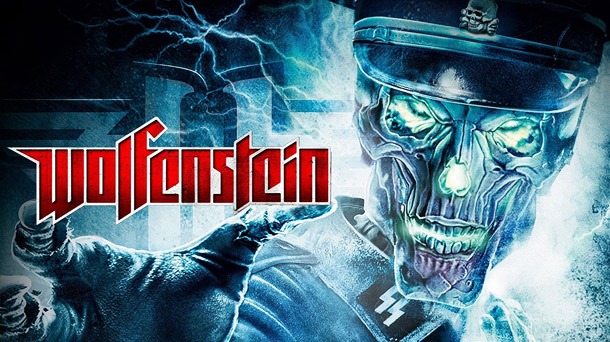
📅 Game released: 2009
Wolfenstein (2009) follows B.J. Blazkowicz through occupied Isenstadt, mixing World War II gunfights with occult enemies, the supernatural Veil, and upgradeable weapons. This PC guide explains official download availability, reinstalling an already owned Steam or retail copy, original system requirements, Windows compatibility, Steam Deck controls, mods, and legacy multiplayer.
 By Editor Zero — independently researched, edited, and maintained.
Last updated: 14 November 2026
Last reviewed: 14 November 2026
Table of Contents
- Quick Facts
- Official PC Stores, Download & Installation
- Wolfenstein (2009) Review
- Pros & Cons
- PC System Requirements
- Frequently Asked Questions
- Similar Games
Wolfenstein (2009) Quick Facts
- Game: Wolfenstein / Wolfenstein (2009)
- Developer: Raven Software
- Publisher: Activision
- Genre: First Person Shooter (FPS), Sci-Fi
- Release: August 18, 2009 (North America, including Windows PC); European retail release followed August 21, 2009
- Platforms: Windows PC, PS3, Xbox 360
- Steam Deck: Playable for existing Steam owners; some controls and text entry require manual input or a community layout
- Engine: Modified id Tech 4
- Modes: Single-player campaign; original competitive multiplayer for up to 12 players (Team Deathmatch, Objective and Stopwatch), now a legacy feature
- Community: Steam Discussions, Wolfenstein Reddit
- PC modding: Unofficial mods and fixes on Nexus Mods and ModDB; no Steam Workshop
- Metacritic score: 74/100 (Windows PC)
- IGN score: 7.3/10 (original 2009 release)
- GameSpot score: 7.5/10 (original 2009 release)
- Steam user reception: Very Positive overall (limited historical reviews); no longer sold to new buyers on Steam
Official PC Store Status, Download & Installation
👇 Use the notes below to understand the current official PC availability status for Wolfenstein (2009), reinstall a legitimately owned copy where supported, and avoid unsafe or unofficial acquisition options.
- Digital availability: Wolfenstein (2009) was removed from digital sale and is not presently available for normal new purchase through Steam, GOG, Microsoft Store, or another verified major official Windows storefront.
- Existing Steam owners: The original Steam application remains in Valve’s database, so accounts that already own the game can retain access to their licensed Steam copy even though the public store purchase option is gone.
- Retail DVD: Original Windows retail media provides a separate legitimate ownership route for people who already possess a genuine copy, but installation depends on old disc, key, DRM, and operating-system technology rather than a modern storefront entitlement.
- Retail DRM: The boxed PC release uses SecuROM. Modern Windows compatibility can therefore be less straightforward than with a contemporary DRM-free release, and this guide does not recommend bypassing or modifying copy protection.
- Steam keys: Do not assume an old retail CD key can be converted into a new Steam entitlement. The original boxed key system and Steam licensing are separate, and there is no verified official seller supplying new Steam copies.
- Campaign access: The single-player campaign does not depend on an always-online live service after a lawfully owned copy is correctly installed and functioning.
- Legacy multiplayer: The original PC multiplayer used separate account, key, server and anti-cheat infrastructure. The Steam app is marked as having no official servers, so expect no dependable official online service. Community-hosted attempts, if available, are unofficial and can require extra setup.
- Steam Deck: Valve rates the legacy Steam build Playable. Existing owners can run it through SteamOS, but some controller configuration and text entry may require touchscreen, virtual-keyboard, or community-layout input.
- Mod compatibility: Wolfenstein (2009) has no Steam Workshop. Widescreen adjustments, FOV changes, visual modifications, gameplay rebalancing, and other community fixes are normally installed manually, so back up configuration and save data before altering game files.

Wolfenstein (2009) Review
Occult powers and inventive weapons turn familiar wartime gunplay into something stranger, even if weak AI and uneven pacing hold it back.
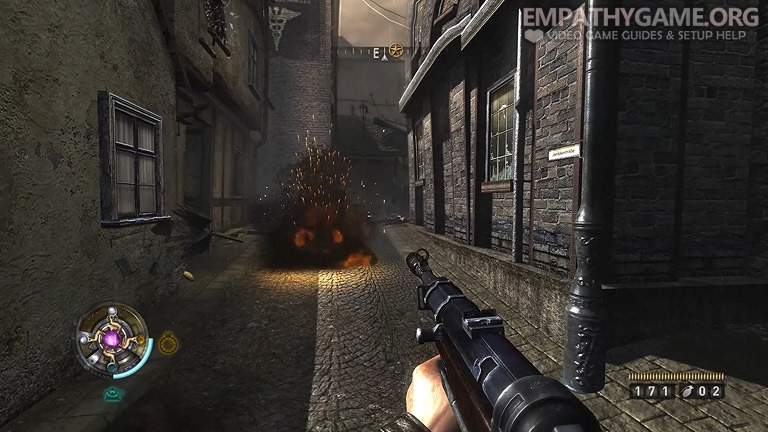
Wolfenstein is most interesting when it stops behaving like an ordinary World War II shooter. Raven Software starts with recognisable rifles, resistance safehouses and Nazi patrols, then gradually introduces dimensional energy, supernatural enemies, gravity-defying weapons and the Thule Medallion. The appeal is how that equipment changes familiar firefights. A dangerous room can become manageable by slowing time, exposing a hidden weakness or pushing forward behind a supernatural shield. Conventional gunplay remains the foundation, but those possibilities give this entry its personality.
The campaign falters between those moments. Isenstadt connects missions through a semi-open city, yet returning along familiar streets can feel more like travelling between objectives than exploring. Ordinary enemy behaviour rarely develops enough to challenge B.J.’s expanding toolkit, and the last stretch repeats ideas that made a stronger impression earlier. Still, for fans of secret-heavy PC shooters, upgrades and unapologetically absurd science fiction, there is a distinctive adventure here, provided they can accept its uneven rhythm.
Isenstadt Gives the Campaign Structure, Not True Freedom
Most missions begin and end in Isenstadt. B.J. travels between resistance contacts, Black Market vendors, faction hideouts, optional assignments and entrances to larger combat areas. This changes the campaign’s rhythm. Rather than appearing in a disconnected series of battlefields, the player keeps returning to an occupied city where the Kreisau Circle, Golden Dawn and Nazi operations seem to be competing within the same space. Even collecting an assignment reinforces that continuity.
But Isenstadt is not really an open world, and judging it as one makes its limitations obvious. The linear missions connect through a hub of patrols, rooftops, alleys, sewers and hidden supplies. It invites curiosity at first. After several returns, though, the same layout can make the journey to the next mission feel longer without making it more interesting. Its streets provide context, but they do not always provide enough new decisions.
What saves the exploration is its connection to combat. Gold, Intel and Tomes of Power are hidden away from the most direct routes, and finding them can contribute to stronger weapons or Veil abilities later. Checking a side room therefore has a purpose beyond clearing an icon or filling a collection. The hub succeeds when that discovery changes the next fight. It is less convincing when there is nothing left to find and the city becomes another corridor, only wider.
The Veil Changes How You Approach a Firefight
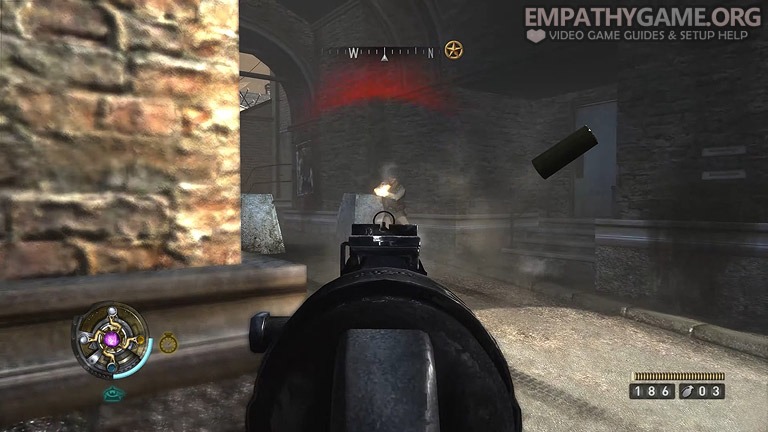
The Thule Medallion is the clearest reason Wolfenstein feels different from the military shooters it initially resembles. Entering the Veil alters the colour of the world, improves mobility, marks enemies and useful objects, and reveals passages or supernatural details that normal vision hides. At first, it can seem like a special viewing mode with a few exploration benefits. It gets more interesting once other Medallion powers arrive.
Mire is particularly effective because slowing time changes the decisions available in a crowded room. Instead of hurriedly trading shots with several soldiers, B.J. can line up deliberate headshots, move past an exposed position or deal with the most dangerous target before the others react. Shield encourages almost the opposite response: advance through incoming fire rather than wait for a safe opening. Empower pushes ordinary and exotic weapons further, eventually allowing shots to overcome protections that conventional gunfire cannot. Each power draws from the same Veil energy supply, so choosing when to activate one matters more than leaving everything switched on.
There is a more thoughtful side to the system than simply giving B.J. an advantage. Veil Sight exposes vulnerable components on Heavy Troopers, turning an intimidating armoured enemy into a problem of where to aim. Scribes complicate an encounter differently because their ability to protect nearby soldiers means the closest threat may not be the right first target. These encounters demand recognising the real threat before spending ammunition or Veil energy. The Medallion changes priorities, not just damage numbers.
Raven also finds room for playful physics. Blue Veil-energy containers can disturb gravity, lifting nearby enemies and debris into the air and leaving suspended targets open to gunfire or explosives. These interactions do not form a deep sandbox, but they show the game’s strongest instinct. Give an otherwise conventional firefight one unusual rule, and a room that might have been forgettable becomes worth remembering.
Weapons and Upgrades Make the Secrets Matter
The weapons follow a similar progression from historical familiarity into outright fantasy. The MP40, Kar 98 and MP43 establish a dependable starting arsenal. Later, the Particle Cannon burns through targets with concentrated energy, the Tesla Gun delivers electrical punishment, and the Leichenfaust 44 fires slow Veil-energy projectiles that can disintegrate enemies and disturb gravity near their impact. The flamethrower is more straightforward, but its short-range violence belongs comfortably alongside the stranger inventions.
The appeal is not that every weapon is equally practical. Some exotic options overlap, and dramatic effects do not always translate into a better answer for a given encounter. That makes the Black Market choices more interesting than they first appear. Money is limited, so improving a familiar rifle’s damage, recoil, reload behaviour, magazine capacity or sights can be a wiser investment than purchasing upgrades for every new weapon. A player who explores carefully has more freedom to experiment, but specialising in a few reliable favourites often produces the clearest benefit.
This is also why the collectibles work. Gold funds Black Market upgrades, while Intel and Tomes contribute to unlocking further improvements. A hidden item is not merely a record of thorough exploration; it becomes part of the next combat decision. Finding an overlooked room in Isenstadt can make a troublesome enemy easier to handle later. It is not an RPG-style build system, and the choices are not equally deep, but exploration has a practical consequence that many more linear shooters lack.
Enemy Variety Improves, but the AI Cannot Keep Up
The standard soldiers expose the weakest part of the design. They use cover, throw grenades and sometimes apply pressure through numbers, yet their responses are usually predictable. Once favourite weapons have been upgraded and Mire or Shield becomes familiar, many encounters with ordinary troops offer little resistance. The problem is not simply that B.J. grows powerful. It is that the opposition often keeps behaving as if he still has only a rifle and a narrow set of options.
Special enemies make a stronger case for the combat. Heavy Troopers reward weak-point targeting, Scribes make target selection important, and Veil Assassins can punish a player who focuses too narrowly on the soldiers ahead. The more grotesque supernatural creatures also interrupt the steady stream of military uniforms. Bosses such as Viktor Zetta and the Queen Geist are built around unusual threats and mechanics, even if their execution is inconsistent. They at least ask the player to think in the supernatural terms the rest of the campaign has been teaching.
Nearby encounters reveal that unevenness. A group of regular soldiers can fall quickly to an upgraded firearm and a well-timed power, only for a specialist or scripted confrontation to demand much more care. That can create memorable surprises, but not a consistently intelligent challenge. Wolfenstein works better as an inventive power fantasy with occasional sharp interruptions than as a tactical shooter whose enemies continually adapt to the player.
The Occult Setting Has More Personality Than the Story
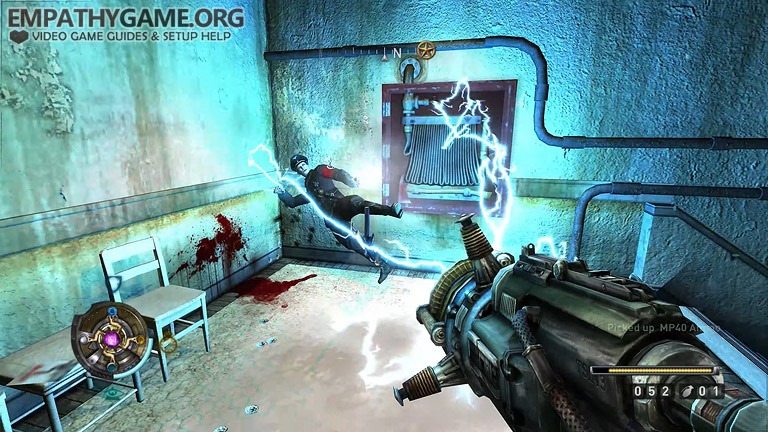
The story follows B.J. Blazkowicz into another confrontation with Nazi occult research, this time involving Isenstadt, the Veil and attempts to control Black Sun energy. It takes the pulp premise seriously enough to build a world around it, without pretending that archaeological digs, secret laboratories, dimensional machinery and monstrous experiments add up to a restrained war drama. That willingness to mix military fiction with the impossible suits a campaign whose best moments depend on the same contrast.
The characters are mostly there to support that journey. B.J. remains a direct, capable action hero, while Caroline Becker, the Golden Dawn, Hans Grosse and Wilhelm “Deathshead” Strasse help give the conflict its factions and direction. They anchor the missions, but their relationships lack enough depth to carry the story. The setting is easier to become invested in than the individual character arcs.
Atmosphere does more of the work. War-damaged streets lead into excavation sites, hospitals, factories, castles and spaces distorted by Veil energy. The locations make the occult threat feel as though it is spreading through an otherwise recognisable world. Switching into the Veil changes not only the colour and lighting but also which details deserve attention. Conventional gunfire sounds heavy and familiar, while electrical weapons and dimensional machinery introduce a different character to the soundscape. The contrast gives the environment a stronger identity than the dialogue alone could provide.
The Final Stretch Outlasts Its Best Surprises
The campaign has its best momentum when new abilities, enemy types and weapons arrive close enough together to alter the next encounter. A power that initially seems excessive can become useful against a particular threat, and a strange weapon can make a previously difficult fight look completely different. This steady discovery gives the earlier missions a sense of progress beyond simply moving closer to the ending.
The later stages struggle because the introductions eventually stop, but the familiar patterns continue. Travelling through Isenstadt again, clearing another group of regular soldiers or entering another heavily scripted battle does not necessarily reveal anything new about the systems. The problem is time spent repeating situations the player has solved. A tighter final act could have made the campaign’s inventive encounters stand out more.
Individual moments often surpass the journey connecting them. The first effective use of Mire, an enemy lifted into the air by disturbed gravity, or a specialist finally defeated through careful Veil targeting can leave a clear impression. Less memorable are the walks and standard shootouts between such scenes. The game contains enough good ideas to remain engaging, but not always enough variation to make every return to them feel necessary.
Replayability Depends on Enjoying the Systems
A second run offers room to search for missed Gold, Intel and Tomes, try different upgrade priorities, raise the difficulty or favour weapons that were neglected before. Completing the campaign also unlocks a cheat menu, including options for all weapons, Veil powers, extra money and the deliberately silly Pumpkin Heads effect. Those features offer a different reason to revisit the campaign from simply wanting to see the story again.
The cheats are especially interesting because they allow the normal progression to be bypassed. Starting with a developed arsenal shifts attention away from collecting resources and toward experimenting with powers and weapons from the beginning. That is not a carefully rebalanced New Game Plus mode, but it fits a shooter whose most enjoyable qualities emerge when its systems are pushed together.
Still, fixed missions, unchanged AI and increasingly powerful equipment limit the value of another run. Replayability rests mainly on the pleasure of combat, discovering missed secrets and trying different combinations. Anyone hoping for branching missions or substantially new narrative consequences will find little reason to repeat the campaign.
Final Verdict
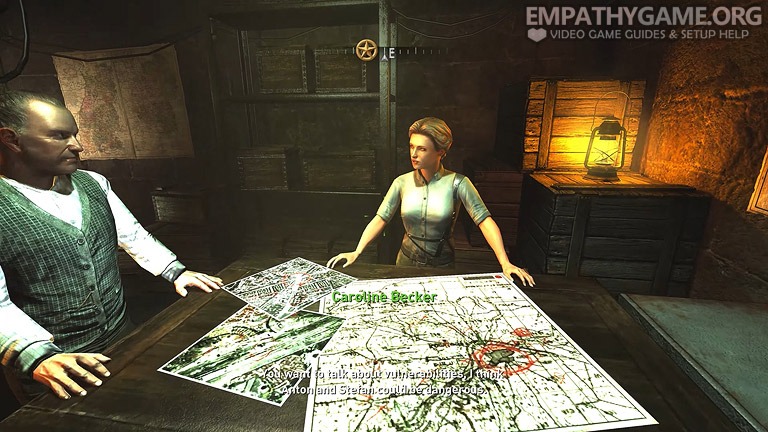
Wolfenstein is an uneven shooter built around an idea that still works: ordinary wartime combat becomes much more interesting when supernatural rules change the way a room can be approached. Mire, Shield, Empower and Veil Sight give purpose to the unusual weapons and enemies, while secrets and Black Market upgrades connect exploration directly to combat. The best encounters encourage the player to notice a vulnerability or opportunity rather than simply fire faster.
Its limitations become more obvious over a full campaign. Isenstadt is useful as a hub but rarely develops into a compelling open space, regular soldiers cannot match B.J.’s expanding powers, and the later missions repeat too much after the strongest surprises have passed. The story builds an appealing occult atmosphere without delivering equally strong character drama, while scripted encounters can be more inventive in concept than in execution.
What makes Raven Software’s game worthwhile is its willingness to be strange. Players who value secrets, escalating arsenals and experimental FPS combat are likely to forgive the uneven pacing. Those looking for consistently sharp enemy intelligence, sophisticated storytelling or a tightly designed tactical challenge may be less persuaded. At its best, though, Wolfenstein makes the unusual mechanics feel essential rather than decorative, and that is what separates it from a more conventional wartime shooter.
Wolfenstein (2009) Pros & Cons
- Pro: Punchy Raven Software gunplay combines familiar World War II firearms with Tesla weapons, heavy ordnance, and increasingly strange supernatural enemies
- Pro: Veil Sight, Mire, Shield, and Empower add a distinctive layer to firefights instead of leaving the campaign as another conventional historical shooter
- Pro: Isenstadt’s hub structure, optional missions, collectibles, weapon upgrades, and resistance factions give the campaign more exploration and progression than a purely corridor-based FPS
- Pro: Very modest original hardware requirements make raw GPU and CPU performance far less demanding than in modern shooters
- Pro: Community archives provide configuration guidance, widescreen and FOV adjustments, visual mods, and other unofficial ways to improve the PC experience
- Con: New PC buyers have no normal official digital storefront through which to purchase the game
- Con: Retail DVD ownership involves legacy SecuROM, old keys, optical-media requirements, and more compatibility friction than a modern rerelease
- Con: The original multiplayer infrastructure is effectively obsolete and should not be purchased or installed with expectations of normal modern matchmaking
- Con: Enemy AI, animation, interface design, scripted encounters, and some mission spaces show their age beside newer Wolfenstein and FPS releases
Wolfenstein (2009) PC System Requirements
Original Windows PC requirements (published for the 2009 release):
MINIMUM:
OS: Microsoft Windows XP or Windows Vista
CPU: Intel Pentium 4 3.2 GHz or AMD Athlon 64 3400+
RAM: 1 GB
GPU: 256 MB NVIDIA GeForce 6800 GT or ATI Radeon X800
DirectX: DirectX 9.0c
Storage: 8 GB available space, plus approximately 800 MB for the Windows swap file
Sound Card: 100% DirectX 9.0c-compatible sound card
Media: Microsoft Windows-compatible DVD-ROM drive for the original retail edition
Internet: Broadband connection was required for the original multiplayer features
RECOMMENDED:
Official recommended tier: A separate publisher-issued recommended specification could not be reliably verified. The documented historical requirement set above is the official baseline and should not be replaced with later third-party estimates presented as official specifications.
Additional PC Performance and Setup Notes
- The original requirements predate Windows 10 and Windows 11, so those newer operating systems were never part of Raven Software’s published launch specification.
- Raw performance is generally light by modern hardware standards, but old DRM, configuration files, controller behaviour, display scaling, and legacy middleware are more likely to cause trouble than CPU or GPU horsepower.
- PC configuration files can be used to adjust custom resolutions, ultrawide presentation, anti-aliasing, FOV, and other settings that are not fully exposed through the original menus.
- Mouse smoothing is enabled by default in the original configuration and can be adjusted through
wolf.cfgwhen a more direct mouse response is preferred. - Valve rates the existing Steam build Playable on Steam Deck and reports acceptable default graphics performance, although controller selection and text entry may still require manual input.
- Before installing unofficial graphics, FOV, gameplay, interface, or engine modifications, back up the local WolfSP configuration and save folders so the original state can be restored easily.
- If you own the original retail edition, preserve the original disc, documentation, key, and installer files rather than relying on third-party game archives or unofficial replacement executables.
Official Trailer
Note: This archived upload preserves the original Wolfenstein (2009) launch trailer, showing B.J. Blazkowicz, occult Nazi forces, supernatural Veil effects, conventional and experimental weapons, and Raven Software’s combat-heavy presentation; the written guide adds delisting, ownership, Steam Deck, requirements, mods, and modern-PC setup guidance.
Frequently Asked Questions
Can you still buy or download Wolfenstein (2009) on PC?
There is no normal official PC storefront selling new copies. If Wolfenstein is already licensed to your Steam account, check your Library for the owned download; a genuine original Windows retail DVD is a separate ownership route, although old activation and DRM may complicate installation. Do not assume an unused retail key can be redeemed on Steam.
Is Wolfenstein (2009) an open-world game?
No. Isenstadt is a semi-open hub with resistance contacts, Black Market vendors, secrets and optional missions, but most major campaign operations take place in linear levels.
How do the Veil powers work?
The Thule Medallion reveals hidden supernatural details and routes. Additional powers include Mire for slowing time, Shield for reducing incoming damage and Empower for enhancing attacks. Using them consumes Veil energy, so they work best when reserved for particular threats or obstacles.
What should I collect, and how do weapon upgrades work?
Hidden Gold funds Black Market purchases, while Intel and Tomes of Power unlock further weapon or Veil improvements and provide reasons to search beyond the main path. Focus on upgrades for weapons and powers you use regularly rather than assuming every upgrade is equally important.
Can completed missions be replayed, and is there New Game Plus?
Completed missions can be replayed from the Journal’s Objectives page, including with upgrades already acquired. That gives you a way to hunt missed secrets or revisit encounters, but it is not a separate, conventional New Game Plus campaign that automatically carries everything into a fresh story run.
How long does the Wolfenstein (2009) campaign take?
A focused main-story run often takes roughly 8–10 hours. Side missions, hidden items and upgrade hunting can extend the playthrough; the total varies with difficulty and exploration.
Do I need to play Return to Castle Wolfenstein before this game?
No. Wolfenstein (2009) follows B.J. Blazkowicz after earlier events, but explains its central conflict well enough on its own. The later Wolfenstein: The New Order also has its own narrative entry point, so neither is required reading for the other.
Does Wolfenstein (2009) work on Windows 10 or Windows 11?
Some legitimately owned copies run on modern Windows, but neither system was included in the original supported requirements. The retail DVD’s SecuROM protection can be a separate obstacle; Steam and retail installations should not be assumed to behave identically.
What should I try if the PC game will not start?
For an owned Steam installation, start by verifying installed files and temporarily disabling conflicting mods or overlays. If it still fails, consult the Wolfenstein PCGamingWiki compatibility notes, which document a startup problem on some high-core-count processors. Back up saves and configuration files before experimenting. Avoid unofficial replacement executables or DRM-bypass downloads.
Does the Windows version support a controller?
Legacy Xbox 360-era gamepad input is available, but a newer controller may need a Steam Input or community mapping. Mouse and keyboard are generally the simpler way to access the original PC menus and controls.
Can existing owners play Wolfenstein (2009) on Steam Deck?
Valve rates the Steam version Playable. Its default graphics settings perform adequately in Valve’s compatibility assessment, but some inputs may need a community layout, touchscreen interaction or manual virtual-keyboard activation.
Does the game support ultrawide monitors?
It supports conventional widescreen formats more readily than ultrawide layouts such as 21:9. Wider displays may require manual configuration or an unofficial adjustment, and the original interface was not designed for modern ultrawide monitors.
Are PC saves synchronized with Steam Cloud?
Do not rely on automatic Steam Cloud saving for this legacy release. Back up the local save directory before reinstalling or moving computers; Windows saves are normally located under %LOCALAPPDATA%\id Software\WolfSP\base\savegames\.
Does Wolfenstein (2009) have multiplayer, co-op or split-screen?
The original PC release includes competitive, class-based multiplayer for up to 12 people in Team Deathmatch, Objective and Stopwatch. The campaign is single-player only, with no campaign co-op or local split-screen option.
Does the PC multiplayer support LAN or crossplay?
The original multiplayer included LAN and dedicated-server functionality. It did not support cross-platform matches between Windows PC, PS3 and Xbox 360. Because the software is old, configuring LAN play can be more involved than on a supported modern shooter.
Are the original multiplayer servers still available?
The Steam app’s legacy metadata identifies no supported official servers. Do not expect the original online account and server system to work as a normal supported service; unofficial community arrangements, where they exist, have separate limitations.
Can Wolfenstein (2009) be modded?
Yes. Unofficial community projects cover settings, widescreen and field-of-view adjustments, visuals and gameplay. See Nexus Mods or ModDB, check a mod’s exact version requirements and back up game files first. There is no Steam Workshop integration.
Still have questions? Check the Wolfenstein Reddit community or Wolfenstein Steam Discussions for ongoing player advice and legacy troubleshooting.
Sources & References
Key game-history, ownership and technical details were checked against these official and established reference sources:
- Activision’s original Wolfenstein release announcement — Raven Software, release timing, platforms and story setting.
- SteamDB: Wolfenstein (App 10170) — historical Steam listing, unavailable purchase price, Steam Deck compatibility and legacy server metadata.
- SecuROM support: Wolfenstein — original retail disc and copy-protection context.
- PCGamingWiki: Wolfenstein — Windows requirements, configuration, save location, display and compatibility guidance.
- Metacritic: Wolfenstein (PC) — original PC critical-reception score and platform distinction.
- Steambase: Wolfenstein user reviews — historical Steam user-review category for the unavailable-to-buy original release.
Similar Games Like Wolfenstein (2009)
- Prey
- Call of Duty: World at War
- Aliens versus Predator 2
- DOOM: The Dark Ages
- The Chronicles of Riddick: Assault on Dark Athena
- Metro 2033 Redux



Found something worth playing through DecideGame?
DecideGame.com is an independent gaming project run by Editor Zero. If this guide helped you discover a game, solve a problem, or find useful information, you can support DecideGame.com and help keep new and updated game guides coming.
DecideGame — PC Game Guides, Reviews & Setup Help