
📅 Game released: 2014
Metro 2033 Redux rebuilds Artyom’s tense journey through post-apocalyptic Moscow with stealth, survival choices, and a story-driven first-person campaign. This PC guide compares official purchase and download options, explains the free Next-Gen upgrade and original 2010 edition, and covers system requirements, Steam Deck, Xbox Play Anywhere, and setup.
 By Editor Zero — independently researched, edited, and maintained.
Last updated: 12 November 2026
Last reviewed: 12 November 2026
Table of Contents
- Quick Facts
- Official PC Stores, Download & Installation
- Metro 2033 Redux Review
- Pros & Cons
- PC System Requirements
- Frequently Asked Questions
- Similar Games
Metro 2033 Redux Quick Facts
- Game: Metro 2033 Redux (2014 remaster; enhanced by the free Next-Gen upgrade)
- Developer: 4A Games
- Publisher: Deep Silver
- Genre: First Person Shooter (FPS), Survival Horror, Post-Apocalyptic, Stealth Action
- Release: August 25, 2014 (first release, including PC); free Next-Gen enhancement added later
- Source Material: Based on Dmitry Glukhovsky’s novel Metro 2033
- Original Version: The separate Metro 2033 (2010) PC game is available through GOG’s Preservation Program; it is not the Redux remaster
- Platforms: Windows PC, macOS, Linux/SteamOS, PS4, PS5, Xbox One, Xbox Series X|S, Nintendo Switch
- Next-Gen Enhancement: Free for most eligible Redux owners; modern PC graphics, sound, controller and quality-of-life improvements, plus native PS5 and Xbox Series X|S versions
- Xbox Play Anywhere: Available for the upgraded Microsoft / Xbox digital ecosystem, subject to the eligible store product
- Steam Deck: Verified by Valve; this rating predates the newer PC graphics upgrade, so settings and performance may differ
- Engine: 4A Engine
- Modes: Single-player campaign only; no co-op, PvP, or split-screen
- Play Styles: Survival and Spartan, with normal/harder and Ranger difficulty variants
- Community: Metro Discord, Steam Discussions, Metro Reddit
- PC modding: Nexus Mods offers unofficial graphics, configuration, FOV and other small changes; no major official mod-tool suite
- Metacritic score: 90/100 (original 2014 PC Redux release)
- IGN score: N/A / Not scored separately; IGN rated the two-game Metro Redux package
- OpenCritic average: 85/100 (original Redux release)
- Steam user reception: Very Positive overall
Official PC Stores, Download & Installation
👇 Compare the official Metro 2033 Redux PC editions, storefronts, free Next-Gen upgrade and original-version option before purchasing, downloading, or installing.
- PC availability: Metro 2033 Redux is sold for Windows through Steam, Epic Games Store, GOG and Microsoft / Xbox Store. The 2010 original is a separate product, not a Redux DLC or bonus.
- Free Next-Gen upgrade: A major free enhancement is available to most eligible Redux owners, improving texture detail, lighting, animation, audio and other features. Check the platform and version of your existing purchase; the publisher cautions that certain versions may not qualify.
- Updated PC graphics: The modern Windows builds support higher-resolution textures, uncapped frame rates (subject to hardware), 4A TSR, NVIDIA DLSS, AMD FSR, spatial audio and revised controller input. The upgrade does not add ray tracing.
- Steam: Offers the Windows version alongside native macOS and Linux/SteamOS builds, achievements, Steam Cloud, trading cards, Family Sharing and controller support. The current Windows build has higher published requirements; see the legacy-branch note below.
- Epic Games Store: Sells the Windows game through the Epic library and provides the Next-Gen enhancement. Achievements are supported; ownership remains separate from other stores.
- GOG: Sells a DRM-free Windows version, with offline installers and optional GOG Galaxy. Eligible Redux owners can access the Next-Gen upgrade; the pre-upgrade build can also be selected through the official legacy branch.
- Microsoft / Xbox: The upgraded digital ecosystem supports Xbox Play Anywhere between eligible Xbox and Windows PC purchases. Check the exact Microsoft product and entitlements before checkout; Xbox and Steam/GOG/Epic ownership are separate.
- Important Microsoft save warning: According to the official upgrade notes, saves from the earlier Microsoft Store release do not carry over to its upgraded version; a fresh game is recommended. Chapter selection is unlocked with default equipment as a fallback.
- Older-PC legacy builds: Steam and GOG provide a branch named
metro_2033_redux_legacyfor PCs that cannot meet the upgraded game’s requirements. This legacy build uses the older graphics features and specifications; it is not the separate 2010 game. - Standalone Redux: The standalone product includes the complete first campaign and has no separate major story DLC or season pass.
- Metro Redux collection: The two-game package contains Metro 2033 Redux and Metro: Last Light Redux; confirm the package and platform before purchasing.
- Metro Saga Bundle: Bundle content varies by storefront. A Microsoft PC listing includes Metro 2033 Redux, Last Light Redux, Metro Exodus, Exodus Enhanced Edition and Exodus add-ons; check the live package for overlaps with games you already own.
- Original 2010 release: GOG sells the original Metro 2033 as a distinct DRM-free purchase through its Preservation Program, with work to improve modern Windows and controller support. It does not replace Redux and is not included in standalone Redux ownership.
- Offline play and accounts: The core campaign is single-player. GOG offline installers do not need Galaxy to run, while store clients and an internet connection may be needed for downloads, updates, achievements or cloud services. Deep Silver account linking offers optional rewards, not a separate campaign mode.

 Buy Metro 2033 Redux on Epic Games Store
 Buy Metro 2033 Redux on Microsoft / Xbox Store
 Buy the Original Metro 2033 on GOG

Metro 2033 Redux Review
A claustrophobic survival shooter where ammunition is money, clean air is temporary, and the safest tunnel is never truly safe.
Metro 2033 Redux has rifles, mutants, stealth encounters, and warring factions, but its most effective weapon is pressure. Darkness makes corridors difficult to read. Gas-mask filters turn time above ground into a resource. Military-grade ammunition can save Artyom in a fight, yet firing it feels like spending part of his future. Even a cracked mask can become more urgent than the enemy standing in front of him.
Artyom grew up at Exhibition, one of the underground communities sheltering Moscow’s survivors after nuclear war. When the mysterious Dark Ones threaten his home, he carries a warning through stations divided by trade, ideology, and fear. What begins as a journey to stop a perceived threat gradually asks whether humanity understands what it wants to destroy. Redux makes that journey easier to control without turning the Metro into an ordinary modern shooter.
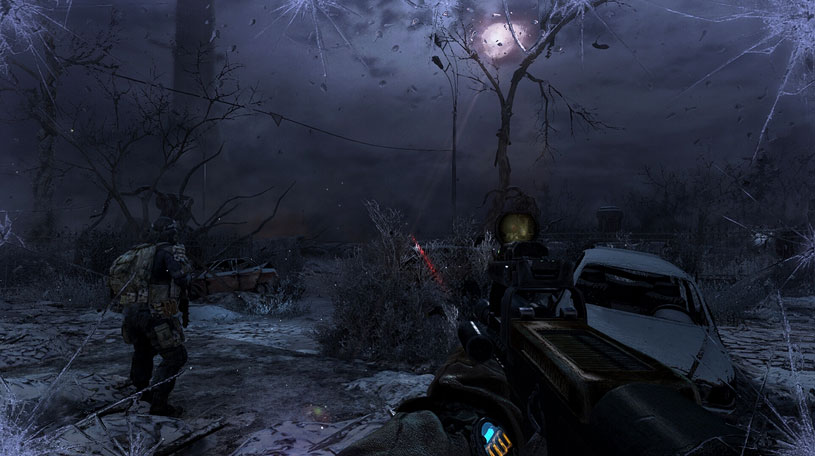
Reworked movement, aiming, lighting, equipment, and stealth help the original campaign communicate its ideas more clearly. Yet some roughness remains, and not every change preserves the mood of the 2010 version. That tension between greater accessibility and lost severity is part of what makes Redux worth evaluating on its own terms.
The Metro Is the Real Main Character
The stations give this world its identity. Exhibition feels like a vulnerable home. Market treats survival as commerce. Frontline exposes a political conflict that has survived the end of civilization. Elsewhere, tunnels open into refugee shelters, military checkpoints, and communities slowly losing their struggle against the dark.
These spaces are small but rarely feel empty. Children listen to stories, guards argue, traders advertise supplies, and families gather around weak light. Musicians play while nearby conversations reveal prejudices and worries that no mission objective needs to explain. Staying to listen often tells us more about Metro society than rushing to the next marker.
That density creates a different post-apocalyptic experience from Fallout 4. Fallout invites broad exploration and personal detours across an open wasteland; Metro compresses civilization into a few vulnerable pockets. One creates freedom through distance. The other makes travelling between two stations feel like a genuine expedition.
Ruined Moscow reverses the feeling of the tunnels. The streets appear more open, yet toxic air prevents casual exploration. Snow, shattered buildings, and distant creature calls suggest a city much larger than Artyom’s route. Hidden supplies tempt him away from safety while the filter timer insists that curiosity has a cost.
Survival Changes How You Think About Every Shot
Most shooters treat ammunition as permission to continue fighting. Metro makes it a decision. Ordinary cartridges keep weapons firing; clean military-grade rounds are both valuable currency and potent ammunition. Loading the expensive rounds can rescue a desperate encounter, but each shot also spends money that might have bought filters, medicine, or a weapon improvement later.
This changes how a room is approached. Firing blindly wastes supplies and announces Artyom’s position. Slipping past a patrol can be worth more than defeating it, while a quiet weapon with recoverable ammunition may be more useful than one with impressive stopping power. Even exploration feeds the economy in unusual ways: locked safes can contain valuable supplies, but the small red-lanyard keys needed to open them are easier to overlook than the safes themselves. Discovering a reward does not mean finding a way to claim it.
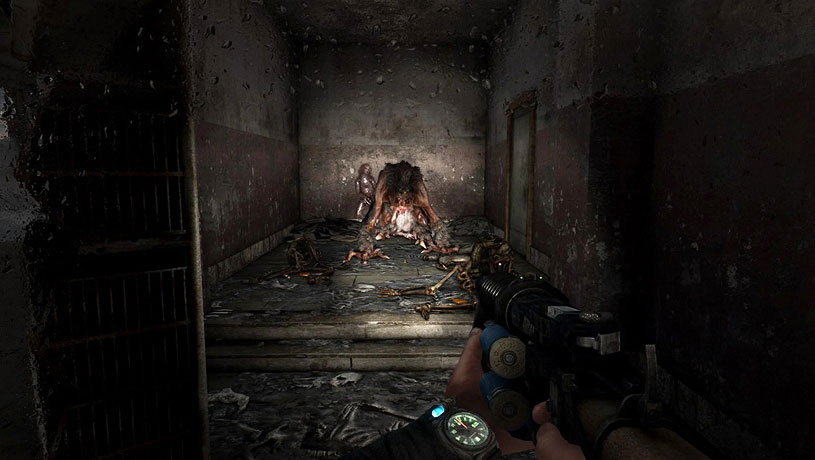
Mutants make these calculations harder under pressure. Nosalises rush through tight spaces, watchmen attack in groups, and librarians resist the instinct to shoot everything that moves. Staring down a librarian instead of attacking can be genuinely unnerving. Yet repeated confrontations can also expose a weakness in horror design: once the same response reliably makes a creature withdraw, anticipation may give way to routine.
The equipment keeps survival tangible. Artyom winds a charger to power his light, wipes a dirty mask, replaces filters by hand, and restores pressure to pneumatic weapons. Imagine searching one room too many on the surface, hearing the low-air warning, and then having a mutant damage the mask. The problem is no longer simply winning a firefight. It is deciding what can be abandoned before the air runs out.
Scarcity is not equally severe for every approach, however. A thorough, restrained run can accumulate a substantial stockpile, even on Survival Hardcore, so the campaign does not guarantee desperation from beginning to end. Its best tension comes when competing needs collide, not merely from keeping ammunition numbers low.
Stealth Is Valuable but Not Always Precise
Human encounters often reward patience more than firepower. Lights can be extinguished, suppressed shots avoid some attention, and a wrist indicator helps communicate visibility. Guards can be bypassed or subdued after their patrols separate. Listening to their conversations adds more than atmosphere; it can help reveal when a route is about to become safer.
Front Line shows the system at its most interesting. Rather than treating the Red Line and Nazi confrontation as a battlefield to clear, Artyom can work through a lower route, avoid or disarm traps, get behind hostile positions, and help prisoners. The safer-looking path still carries risk, but it changes the mission’s purpose from winning a firefight to navigating a hostile space thoughtfully.
Redux also makes darkness unusually powerful. In some situations, a guard can fail to notice Artyom at close range if he remains unlit, and suspicion can fade without escalating into a permanent alert. That forgiveness makes experimentation less punishing, though it can also make soldiers seem less observant than their tense surroundings suggest. Detection still has awkward edges around sound, bodies, and changing light. When stealth fails, it is not always obvious whether the mistake was yours or the game’s.
Survival, Spartan, and Ranger Change the Pressure
Survival and Spartan are not merely two labels for difficulty. Survival favors tighter resources and more deliberate actions, closer to the original game’s rhythm; Spartan makes combat more generous and action-oriented, drawing on Metro: Last Light. Standard difficulty settings then influence lethality and forgiveness, while Ranger variants strip away interface guidance and make small mistakes harder to recover from.
There is a trade-off beyond tougher enemies. Ranger limits the loadout to two weapons rather than three, adding commitment to each choice. That can deepen planning, but it can also encourage a safe shotgun-and-rifle combination instead of experimenting with specialist equipment. A demanding mode does not automatically create more interesting decisions if the cost of an unusual weapon feels too high.
Reduced prompts can also hide information a newcomer has not yet learned. Survival on a conventional difficulty gives those systems room to become familiar; Ranger is more convincing once the player recognizes the sounds, equipment behaviors, and chapter rules that replace on-screen reminders.
Humanity Between the Horrors
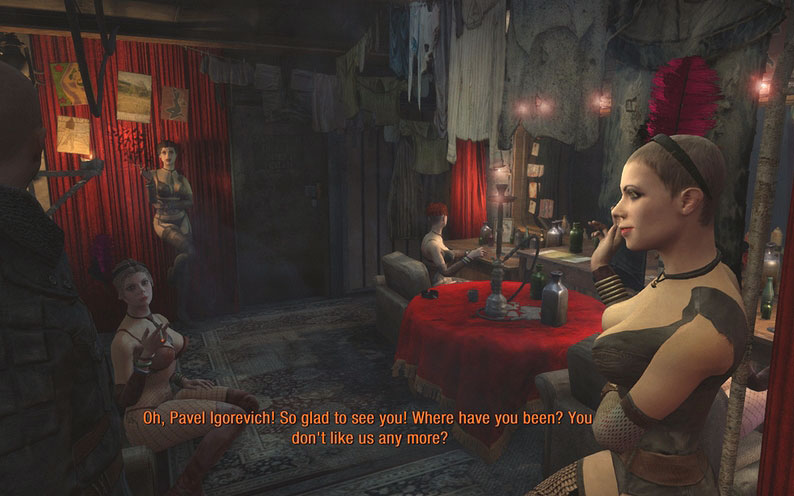
The campaign’s horror works because there are ordinary lives worth protecting. Artyom moves between homes, bars, markets, military positions, and temporary shelters where people have adapted to circumstances that should be unbearable. The quieter passages give the next dangerous tunnel a human reason to matter.
Kindness and attention can carry weight without appearing as conventional quests. Giving a cartridge to someone in need, hearing a conversation through, exploring an overlooked area, or choosing restraint can contribute to a hidden moral system. Its connection to the alternative ending suits a story about perception, although players trying deliberately to reach that ending may find the lack of feedback frustrating.
Supernatural episodes work best when they interrupt the Metro’s otherwise practical physical reality. Whispers, apparitions, and visions resist immediate explanation, reflecting a society unable to agree on what the Dark Ones represent. Players drawn to the first-person vulnerability of Resident Evil 7: Biohazard may recognize a similar use of sound, confined spaces, and incomplete knowledge. Resident Evil concentrates those feelings inside a hostile house; Metro spreads them across a fragile civilization.
Linear Chapters Use Pacing as a Weapon
Linearity is a strength when Metro uses it to control contrast. One chapter provides company and conversation; the next removes both. A cramped tunnel gives way to an exposed surface route, or a quiet infiltration is interrupted by frantic mutant defense. The campaign dictates the destination, but the best chapters leave room to choose how carefully to reach it.
That flexibility is uneven. Front Line’s alternative routes give way to Trolley Combat’s mounted-gun sequence, where aiming from a fixed position and limited control over damage or healing can feel restrictive. It is a particularly sharp contrast because the previous chapter allowed so much more initiative. Scripted companion movement and visible enemy-wave patterns create similar friction elsewhere.
Some wave encounters also work less like battles to finish than pressure to survive while advancing or completing an objective. Because the transition is not always clear, trying to eliminate every attacker can burn through supplies without making the space safer. This is where tight pacing becomes a drawback: the game sometimes knows exactly what it expects before the player understands the rule. Its strongest chapters communicate urgency without making initiative feel pointless.
Weapons Feel Built for a World Without Factories
The arsenal reinforces the setting through improvised construction. Kalash rifles, revolvers, shotguns, and pneumatic alternatives look repaired and adapted rather than manufactured as pristine rewards. Attachments give weapons practical roles, with less emphasis on numerical loot progression than on preparing for the next kind of danger.
A shotgun can stop a rushing mutant but is poorly suited to an undetected patrol. A suppressed revolver rewards deliberate shots. The Tihar provides quiet precision but needs its pressure maintained; the Helsing offers recoverable bolts at the cost of a slower rhythm. These differences are meaningful because the best weapon for one chapter may be an awkward companion in the next. Ranger’s smaller inventory makes that trade-off particularly noticeable.
Stations provide breathing room to reconsider the loadout before filters, cartridges, and useful modifications compete for the same money. The shooting itself remains heavy. Reloads take time, hit feedback is sometimes uneven, and stiff enemy reactions can obscure whether a shot landed as expected. Weight supports the survival mood, but it should not be confused with consistently precise combat.
Moral Points and Different Approaches Reward Replays
The campaign is compact enough that a second journey can be genuinely different in emphasis. One run may prioritize stealth and overheard conversations; another might experiment with weapons, push Ranger difficulty, or seek the less obvious ending. The world does not open into new branches, but attention reveals details that an objective-focused first playthrough can miss.
The obscure moral rules are appropriate to the themes without being ideal for completion-focused play. Missing a quiet interaction may matter more than winning an obvious firefight, yet the game rarely confirms why. Replaying with that knowledge can make apparently incidental encounters feel significant.
Fans of Dying Light may recognize a similar relationship between darkness and preparation. Dying Light uses parkour, crafting, and an open city to offer much more freedom; Metro uses a directed route to control when safety disappears. Redux remains a focused campaign, so replay value comes from interpreting familiar spaces differently rather than uncovering a sprawling progression system.
Redux Is More Playable, Not Identical to the Original
Calling Redux the definitive version is convenient but incomplete. The story, characters, chapters, and endings remain recognizable, while revised controls, stealth, customization, mask interaction, and play-style options make the campaign more approachable. For most newcomers, that clarity is an advantage.
It also changes the texture of survival. Lighting, resource placement, enemy responses, and weapon balance do not reproduce every detail of the original release. More forgiving stealth can make a dark corridor easier to cross, while repeated librarian encounters can feel less uncanny once their behavior becomes familiar. The rougher 2010 version is not automatically better, but its severity was part of its personality. Redux is best understood as a different interpretation of the same journey, not simply the same game with sharper graphics.
Final Verdict
Metro 2033 Redux is at its strongest when ordinary survival actions become difficult decisions. A cartridge can be money, a light needs power, and clean air expires. The underground communities make those constraints meaningful: beyond the next tunnel are people trying to build lives from what remains.
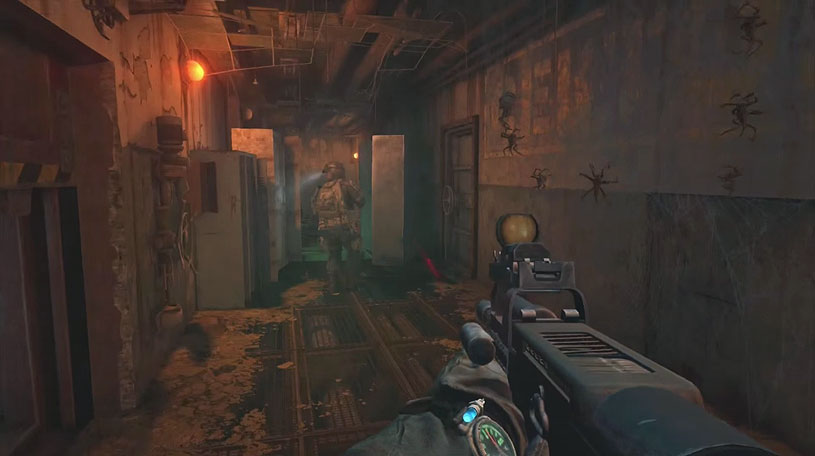
The game is not consistently elegant. Guard awareness can be too forgiving or strangely erratic; scripted sequences sometimes trade meaningful options for forced damage or unclear objectives. Resource scarcity can soften after careful accumulation, and the hidden moral system offers little explanation. Yet the stations, sound, surface expeditions, and overlapping equipment pressures create a stronger identity than most of those rough edges can erase.
For a deliberately opposite relationship with first-person combat, DOOM: The Dark Ages rewards aggressive confrontation where Metro encourages restraint. Both give weapons physical weight, but one turns danger into momentum while the other makes a dark corridor worth fearing. Players seeking a smooth combat sandbox may find Metro restrictive. Those drawn to tightly directed storytelling, uneasy exploration, and survival systems with consequences will find an unusually convincing beginning to the series.
Metro 2033 Redux Pros & Cons
- Pro: Claustrophobic stations, hostile surface ruins, supernatural events and sound design create an unusually convincing post-apocalyptic atmosphere
- Pro: Ammunition currency, filters, gas masks, power chargers, stealth and scavenging make survival part of ordinary movement
- Pro: Survival, Spartan, Ranger variants, alternative routes and hidden moral points give the campaign replay options
- Pro: Rebuilt controls and weapon customization make the original campaign easier to approach
- Pro: The free Next-Gen enhancement, multiple official PC stores, GOG offline installers and legacy-build option broaden PC access
- Con: Human AI, detection, hit reactions and some scripted combat sequences remain inconsistent or dated
- Con: The linear campaign and limited post-game structure will not suit players expecting an open wasteland or long RPG progression
- Con: Ranger Hardcore can hide important controls and information before a new player understands the systems
- Con: The new Windows build has higher hardware requirements; Microsoft Store upgrade saves do not carry over
- Con: Official mod support is limited, and substantial community-made campaign overhauls are uncommon
Metro 2033 Redux PC System Requirements
OFFICIAL WINDOWS PC REQUIREMENTS — UPGRADED REDUX BUILD: The requirements below are published for the enhanced Windows edition. The original 2014-era/legacy Redux build has lower requirements; it is a different build of Redux, not the 2010 original game.
MINIMUM:
OS: Windows 10 or Windows 11 (64-bit)
CPU: Intel Core i5-4690 / AMD Ryzen 3 1200 or better
RAM: 4 GB
GPU: NVIDIA GeForce GTX 750 Ti 2 GB / AMD Radeon R7 260X 2 GB or better
DirectX: Version 11
Storage: 20 GB available space
Additional: 64-bit operating system required
RECOMMENDED:
OS: Windows 10 or Windows 11 (64-bit)
CPU: Intel Core i5-8600 / AMD Ryzen 5 3600 or better
RAM: 8 GB
GPU: NVIDIA GeForce GTX 1660 6 GB / AMD Radeon RX 590 8 GB or better
DirectX: Version 11
Storage: 20 GB available space
Additional: 64-bit operating system required
Additional PC Performance and Setup Notes
- Old PC requirements: The original legacy Redux build was published with 64-bit Windows Vista/7/8, a 2.2 GHz dual-core CPU, 2 GB RAM, a DirectX 10 graphics card and 10 GB of space as minimum specifications. These are not the published minimum for the current enhanced Windows build.
- Rollback options: If the upgraded version is too demanding, Steam users can select the
metro_2033_redux_legacybeta branch in the game’s Properties > Betas menu. GOG also provides the named legacy branch through its version-management options. Back up saves before switching builds. - Graphics and upscaling: The enhanced PC edition supports 4A TSR, DLSS on compatible NVIDIA hardware, and FSR, plus improved textures, rendering and spatial audio. None guarantees a particular frame rate; start with the appropriate resolution and upscaling option for your GPU.
- SSAA: Supersampling remains a demanding option. Reducing SSAA can improve performance substantially; compare it against the newer upscaling choices before increasing other visual settings.
- Frame pacing: V-Sync, frame limits, the display refresh rate, overlays and modern graphics drivers can affect smoothness. Test one adjustment at a time to identify what helps.
- Crashes or launch failures: Verify installation files, update the graphics driver, disable problematic overlays, reverse unstable overclocks, and temporarily reset modified configuration files. If needed, use the verified legacy build instead of assuming an older GPU meets the enhanced requirements.
- Microsoft Store save migration: The publisher warns that earlier Microsoft Store saves do not carry into the upgraded game. New Game is recommended; upgraded chapter selection is available with default equipment. Make your own save backup before changing installations.
- Config and ultrawide changes: Back up
user.cfg, saves and other modified files before making FOV, ultrawide, intro-video or ReShade changes. Unofficial changes can affect menus, weapon placement, cutscenes or stability. - Steam Deck: Valve lists the game as Verified, but that assessment predates the new Windows renderer and its increased specifications. Test the appropriate graphics settings; if the enhanced build performs poorly, consider the publisher’s legacy branch where available.
- Store-specific ownership: GOG supplies DRM-free offline installers. Steam, Epic and Microsoft account libraries provide their own update, save and achievement services; progress or purchases should not be assumed to transfer across unrelated storefronts.
- Mods: Community modifications are unofficial and limited in scope. Restore clean files while troubleshooting and keep backups before applying configuration or graphics changes.
Official Trailer
Note: This official Metro Redux announcement trailer presents the rebuilt visuals, environments, combat, survival systems, and atmospheric differences across Metro 2033 Redux and Metro: Last Light Redux; this written guide focuses specifically on the first campaign.
Frequently Asked Questions
What does the free Next-Gen upgrade add to Metro 2033 Redux?
Eligible Redux owners receive enhancements to textures, lighting, environmental detail, sound, animation, controller support and PC rendering. Windows features include 4A TSR, DLSS and FSR upscaling; the upgrade does not add ray tracing or turn Redux into a new remake.
Do the upgraded PC requirements differ from the original Redux release?
Yes. The enhanced Windows version lists Windows 10/11, a DirectX 11 GPU, 4 GB RAM and 20 GB storage as minimum requirements. Steam and GOG provide metro_2033_redux_legacy if you need the lower-specification earlier Redux build.
Does Metro 2033 Redux support Xbox Play Anywhere?
Yes, the publisher and Xbox confirm Xbox Play Anywhere support with the upgraded Microsoft digital ecosystem. Check the exact eligible Xbox/Microsoft store product before purchasing; a Steam, Epic or GOG copy does not provide Microsoft ownership.
Will my old Microsoft Store saves transfer after the upgrade?
No. The official upgrade notes say saves from the earlier Microsoft Store version do not carry over; starting a new game is recommended. The updated version unlocks chapter selection with default equipment for players who want to revisit chapters.
Should I play Metro 2033 Redux or the original Metro 2033?
Redux is usually more approachable because of revised controls, stealth feedback, equipment handling and newer rendering. The separate original 2010 edition is available through GOG for players who specifically want its different balance, lighting and older design.
What is included in the Metro Redux collection?
The collection combines Metro 2033 Redux and Metro: Last Light Redux. It is separate from the original 2010 Metro 2033 release; check the platform and package contents if you already own one game.
Can I install and play the GOG version offline?
Yes. GOG offers a DRM-free Windows version with offline installers. GOG Galaxy is optional for installation management, updates and related features, while the installed single-player campaign does not require a live multiplayer connection.
What order should I play the Metro games?
For Artyom’s main story, start with Metro 2033 Redux, continue with Metro: Last Light Redux, then play Metro Exodus. The sequence helps later events and relationships make sense.
Is Metro 2033 Redux an open-world game?
No. It is a linear, chapter-based first-person shooter with optional stealth routes, side rooms, hidden supplies and brief areas to explore. Metro Exodus later moves toward much larger open regions.
How long does Metro 2033 Redux take to finish?
A first run often takes roughly 8–12 hours depending on exploration, stealth, difficulty and retries. Ranger settings, missed story details and the alternative ending make a second run worthwhile for some players.
What is the difference between Survival, Spartan and Ranger Mode?
Survival places more emphasis on limited resources, cautious progress and slower handling; Spartan favors a smoother action-oriented balance. Ranger variants make combat deadlier and reduce interface information, so learning the controls on Normal or Hardcore first is usually more comfortable.
Does Metro 2033 Redux have multiple endings?
Yes. A hidden moral-point system responds to attentive exploration, listening, compassion and restraint, contributing to a different ending. It is not a simple final dialogue choice, and the game gives limited direct feedback.
What are military-grade rounds, and should I fire them?
These high-quality cartridges are both currency and powerful ammunition. Ordinary rounds are usually better for routine fights because firing military-grade rounds spends money you might need for filters, medical supplies or equipment.
How do gas-mask filters and cracked visors work?
Filters provide a limited supply of breathable air in contaminated areas; carry spares and avoid excessive detours when time is running low. A mask can also crack from damage, and finding a replacement may become more urgent than defeating every enemy.
Can I avoid killing all human enemies?
Many human areas support sneaking past patrols, darkness, suppressed weapons and nonlethal takedowns. Some mutant or scripted encounters demand action, so the entire campaign is not built as a universal no-combat challenge.
Is Metro 2033 Redux Steam Deck Verified?
Yes. Valve lists Redux as Verified with functional default controls and readable text. The rating predates the later Windows graphics enhancement; performance and optimal settings may vary, and the older Redux branch remains an option where supported.
Does Metro 2033 Redux support controllers and ultrawide monitors?
PC controller support is official, and the enhanced edition adds improvements for newer Xbox and PlayStation controllers. Ultrawide resolutions may work, but some interface or weapon-view details may need attention; back up configuration files before unofficial changes.
How can I improve performance or resolve startup problems?
Confirm that your system meets the enhanced build’s requirements, lower SSAA, try an appropriate upscaler, and verify files if problems appear. Reset mods or altered configuration files and, on Steam or GOG, consider the official legacy branch for older hardware.
Does Metro 2033 Redux have PC mods?
Yes, but most available mods are modest visual presets, FOV/configuration adjustments, saves or interface changes rather than full new campaigns. Use Nexus Mods carefully and keep backups.
Still have questions? Check the official PLAION support centre, Metro 2033 Redux Steam Discussions, or Metro community on Reddit.
Sources & References
Key facts and practical PC guidance were checked against the following official and technical references:
- Deep Silver — Redux Next-Gen changes — official permanent PC feature changes, Xbox ecosystem support, upgraded hardware guidance, legacy branches and Microsoft save migration
- Steam — Metro 2033 Redux — original Redux release date, Windows minimum/recommended specifications, Steam Deck rating, Steam features and overall reception
- Xbox Wire — Next-Gen release and Microsoft PC listing — Xbox Play Anywhere confirmation, PC/handheld ownership and bundle contents
- GOG — Metro 2033 Redux and Deep Silver’s original-game preservation announcement — DRM-free access and the distinct 2010 release
- Metacritic — Metro 2033 Redux and Epic Games Store — original-release score, official Epic PC listing and OpenCritic aggregation
- PCGamingWiki — Metro 2033 Redux — PC display, SSAA, settings, legacy-branch and compatibility reference
Similar Games Like Metro 2033 Redux
- Metro Exodus
- S.T.A.L.K.E.R.: Shadow of Chernobyl
- Resident Evil 7: Biohazard
- Fallout 3
- Dying Light
- Resident Evil 8: Village



Found something worth playing through DecideGame?
DecideGame.com is an independent gaming project run by Editor Zero. If this guide helped you discover a game, solve a problem, or find useful information, you can support DecideGame.com and help keep new and updated game guides coming.
DecideGame — PC Game Guides, Reviews & Setup Help