
Use this updated 2026 Metal Gear Solid: Peace Walker PC guide to compare the standalone Steam release with Master Collection Vol. 2, follow official purchase and installation options, and check co-op, Mother Base, system requirements, Steam Deck support, mods, and other important PC setup details.
 By Editor Zero — independently researched, edited, and maintained.
Last updated: 17 September 2026
Last reviewed: 17 September 2026
Table of Contents
- Quick Summary
- Quick Facts
- Official PC Stores, Download & Installation
- Metal Gear Solid: Peace Walker Review
- Pros & Cons
- PC System Requirements
- Frequently Asked Questions
- Similar Games
Metal Gear Solid: Peace Walker Quick Summary
✔ Mission-based tactical espionage adventure set in 1974, following Big Boss as his private military organization becomes involved in a mysterious armed operation in Costa Rica
✔ Stealth missions connect directly to Fulton recruitment, Mother Base management, R&D, weapon development, staff assignment, vehicle capture, and a large collection of Extra Ops
✔ Similar to Metal Gear Solid V: The Phantom Pain through its mission structure, Fulton recovery, private-army development, Mother Base progression, gadgets, stealth and flexible combat
✔ The Master Collection Version is the game’s first official native Windows release and is based on the HD Collection version rather than the original PSP presentation
✔ Single-player missions are joined by online co-op and competitive multiplayer, with Konami listing online play for up to six players
✔ Buy the standalone Steam release if Peace Walker is all you need; Master Collection Vol. 2 is the stronger package for players who also want MGS4, Ghost Babel and the collection soundtrack
Metal Gear Solid: Peace Walker Quick Facts
Official PC Stores, Download & Installation
👇 Compare the official standalone Steam release and Master Collection Vol. 2 before purchasing, downloading, or installing Metal Gear Solid: Peace Walker on PC.
- Steam standalone: Metal Gear Solid: Peace Walker – Master Collection Version can be purchased separately on Steam, making it the simplest official PC option if you only want Peace Walker.
- Master Collection Vol. 2: The Steam collection includes Peace Walker alongside Metal Gear Solid 4: Guns of the Patriots, with Metal Gear: Ghost Babel and Metal Gear Solid: Digital Soundtrack Vol. 2 included as collection purchase bonuses.
- Included digital books: The standalone Peace Walker release includes a Screenplay Book containing in-game text and a Master Book covering characters and story information.
- Duplicate-purchase check: Peace Walker is already part of Master Collection Vol. 2, so do not purchase the standalone version as well unless you intentionally want separate Steam ownership entries.
- Vol. 1 save bonus: Save data from a title included in Metal Gear Solid: Master Collection Vol. 1 can unlock the Uniform: GOLD bonus in Peace Walker when the required save data is associated with the same account.
- Online play: The Steam version supports online co-op and online PvP. Konami states that Peace Walker supports online play for up to six players.
- Steam features: The PC release supports Steam achievements, Steam Cloud, trading cards, Family Sharing and full controller support.
- Steam Deck: Valve rates Peace Walker Verified, making the native PC release particularly suitable for players who want to preserve the original game’s portable mission-based feel.
- Regional version note: Steam warns that purchases made outside Japan cannot access the Japanese version of the game, so check the regional version details if that distinction matters to you.
- Other PC stores: Konami does not list an official Epic Games Store, GOG or Microsoft Store Windows release; the verified Windows PC version is distributed through Steam.
 Buy Metal Gear Solid: Peace Walker on Steam
Buy Metal Gear Solid: Master Collection Vol. 2 on Steam
 Visit the Official Metal Gear Solid: Master Collection Vol. 2 Website

Metal Gear Solid: Peace Walker Review
Compact stealth feeds an addictive Mother Base loop, even as repetitive machine battles reveal the limits of its portable design.
Metal Gear Solid: Peace Walker is smaller than the numbered console entries around it, but its ideas are anything but minor. Built around missions that can be completed in short bursts, it sends Big Boss through compact jungle paths, villages and military facilities before returning him to Mother Base, where captured soldiers become staff, new equipment enters development and the consequences of a ten-minute infiltration keep unfolding after the mission ends. It feels less like a compressed Metal Gear Solid 3 than a blueprint for the recruitment and base-building loop later expanded in Metal Gear Solid V.
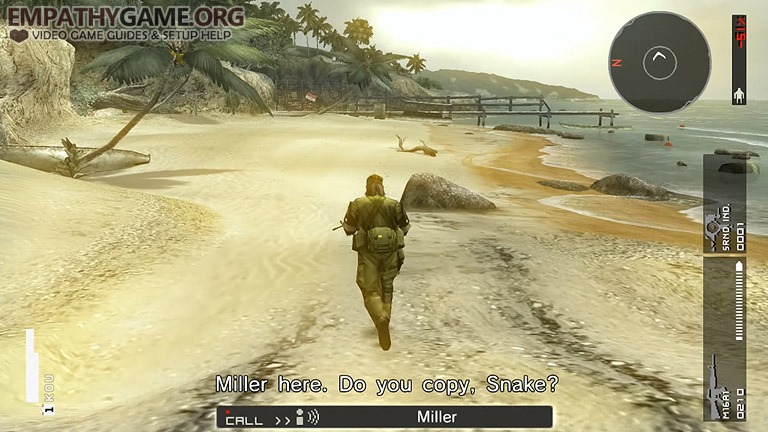
The trade-off is equally clear. Individual areas are small, guards can be easy to manipulate once their routes are learned, and the controls retain restrictions that betray the game’s portable origins. Its largest bosses also lean heavily on durability rather than the theatrical one-on-one encounters that define many other Metal Gear games. Yet Peace Walker keeps finding ways to make modest spaces matter. Fulton extraction changes the value of every guard, R&D gives optional missions a practical purpose, and co-op contains bespoke mechanics rather than functioning as simple drop-in assistance. Players who enjoy replaying missions, optimizing equipment and watching a base grow will find a surprisingly deep system beneath the compact presentation; those who mainly want a seamless cinematic campaign may find the stop-start rhythm and late repetition much harder to forgive.
Compact Missions Make Every Infiltration Purposeful
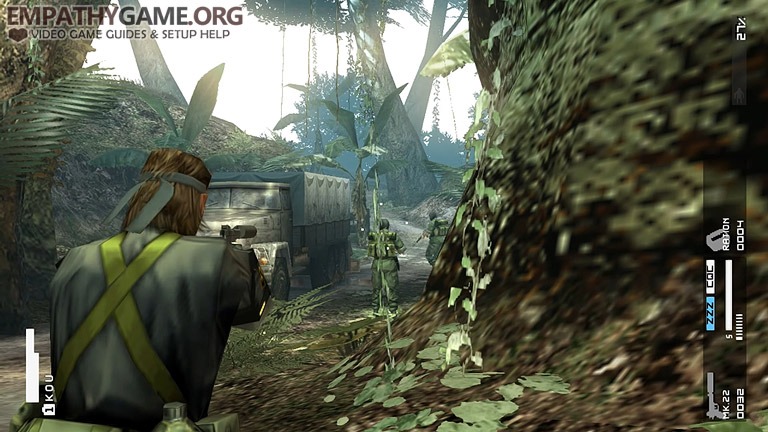
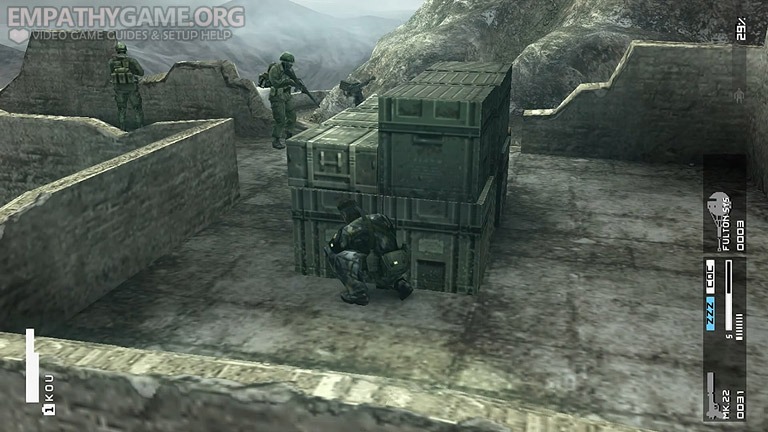
Peace Walker’s stealth works because its small maps create readable problems. Patrol routes are usually short, sightlines are easy to study and most areas contain only a handful of immediate threats. A cautious player can wait for one guard to turn, put another to sleep with a suppressed tranquilizer shot, then close the distance for CQC before an alert spreads. Running is louder than walking, while crouching lowers Snake’s profile and rewards patience over brute force.
The enemy design is not especially sophisticated, though. Once patrol patterns become familiar, ordinary soldiers can feel much less threatening than their equivalents in the denser console entries. The compact spaces make accurate suppressed shots extremely effective, and there are many situations where lining up a safe headshot is simpler than weaving through a patrol at close range. That can flatten the tension if efficiency becomes the only goal. It is more interesting when CQC chains, hold-ups and distractions replace the safest suppressed-shot routine.
Fulton Recovery is what transforms those encounters. A sleeping or unconscious guard is no longer merely an obstacle removed from the board; he can be extracted and converted into useful staff. That small change alters how a mission is read. Killing a troublesome soldier may be faster, but taking the time to neutralize and recover him can improve R&D, Intel, Medical, Mess Hall or Combat capability back at base. Stealth therefore has a strategic afterlife: a clean infiltration can strengthen the next operation before a new weapon is even selected.
Mother Base Turns Stealth Into Long-Term Progression
The relationship between fieldwork and Mother Base is Peace Walker’s defining success. Recruits are assigned to teams with different functions, GMP funds development, design documents expand the research tree, and completing Main Ops or Extra Ops advances projects already in development. Better staff unlock stronger equipment and improve support functions. The menu work is not decorative; it changes what Snake can bring into the field.
That creates a satisfying feedback loop because several rewards can arrive from the same mission. Extracting a talented engineer may raise the R&D level enough to qualify for a new project. A blueprint can reveal another development branch, while completing the mission advances research already underway. Short operations can therefore produce several kinds of progress at once.
The same dependency can become a source of friction. Important equipment is sometimes gated less by tactical accomplishment than by whether the relevant team has reached a sufficient level. A player who has been advancing the story while paying only casual attention to staff quality can arrive at a demanding boss with plenty of GMP but without the personnel needed to develop the most useful gear. The solution is usually to replay missions, Fulton better recruits and wait for development to advance. That makes Mother Base meaningful, but it also turns what initially feels like optional optimization into a progression requirement. Auto-assignment reduces the clerical work; it does not remove the need to keep recruiting.
Vehicle and AI Battles Expose the Weakest Combat
The machine battles are where the game’s scale and co-op ambitions collide most awkwardly with solo play. Pupa, Chrysalis, Cocoon and Peace Walker provide memorable mechanical designs and a change of pace from infiltration, but their large health pools can make the fights feel like ammunition management exercises. Fast-moving machines demand positioning and target tracking, but slower armored encounters can drag into sustained damage races.
Armored vehicles are more interesting when approached as capture puzzles instead of simple boss health bars. One route is to remove the escort soldiers—using Fulton Recovery if a non-lethal result is the goal—then force the commander to expose himself and incapacitate him, allowing the vehicle to be acquired intact. That interaction is pure Peace Walker: stealth and base progression meet inside what first appears to be a straightforward rocket-launcher battle. It also shows why the encounter design can frustrate. Getting the elegant capture is satisfying; reducing a tank or helicopter through repeated heavy-weapon volleys when the plan goes wrong is considerably less so.
AI-weapon battles have a similar dual identity. Repeating them can yield parts used in the construction of Metal Gear ZEKE, so they contribute to a larger long-term objective instead of existing as isolated bosses. The problem is that the reward structure encourages repetition without making the fights themselves equally rich on repeat attempts. Peace Walker is clever at giving grind a purpose, but it cannot always disguise the fact that it is still grind.
Co-Op Is More Than Extra Firepower
CO-OPS is one of the clearest examples of Peace Walker designing around its original constraints rather than merely shrinking a single-player Metal Gear. Partners do more than add damage to a boss. When players move close enough to enter CO-OP IN, their Life and Psyche resources are pooled and they can share weapons and items. Snake Formation lets a group move together under one leader, while Snake Sync can improve movement, recovery and camouflage. Downed partners can also be revived through CPR.
Those mechanics make cooperation feel unusually physical for a stealth game. Shared enemy tags help coordinate patrols, while equipment can be redistributed when one loadout suits the mission better. Even the deliberately silly Love Box fits the design philosophy: Peace Walker treats co-op as an excuse to invent interactions, not just to double the number of guns on screen.
The result is that some of the game’s roughest encounters make more sense with another player. Vehicle and AI battles become less attritional when ammunition, support and revival can be coordinated, while ordinary infiltrations gain a new challenge because two people must remain quiet without getting in each other’s way. Solo play remains viable, but co-op reveals that several systems were built with shared problem-solving in mind.
Big Boss’s Story Gives the Systems a Reason to Matter
Set in 1974, Peace Walker follows Big Boss and Kazuhira Miller as Militaires Sans Frontières is drawn into a covert military crisis in Costa Rica. The initial request grows into an argument about nuclear deterrence, military independence and the role of soldiers who no longer belong neatly to a nation, with Paz, Miller, Huey and Dr. Strangelove giving that conflict distinct personal angles.
The strongest emotional material remains tied to The Boss. Peace Walker understands that Big Boss did not simply finish Snake Eater and move on. Her sacrifice has become an unresolved idea he keeps trying to interpret, and the game uses that wound to examine why he is building an army outside conventional national authority. That gives the growth of Mother Base narrative weight: recruiting soldiers and expanding MSF are not just progression mechanics but visible steps in Big Boss’s attempt to define what a soldier should be.
The cast benefits from the mission-based structure more than the central plot sometimes does. Briefings and optional conversations give the cast room to become more than mission dispensers, and the dialogue shifts easily from nuclear theory to ridiculous side topics. Ashley Wood’s illustrated cutscenes reinforce that tonal flexibility. The trade-off is fragmentation. Story scenes arrive between discrete operations and menu visits, so dramatic momentum can dissipate when the next meaningful beat requires more side activity or base development.
Extra Ops Make the Game Broader—and Eventually More Repetitive
Extra Ops are where Peace Walker becomes stranger and more replayable. Some are alternate infiltrations, while others revolve around prisoners, target shooting, vehicle battles or unusual rules. Hidden Monster Hunter crossover missions push the game all the way into creature hunting, demonstrating how willing it is to treat its mission framework as a toy box. This variety helps because the core maps are reused heavily. The objective, loadout and reward often matter more than seeing a new location.
Mission ranks add another reason to revisit earlier operations. Better equipment can turn an old mission into a cleaner rank attempt or a hunt for a specific recruit, blueprint or component. There is no need for a conventional New Game Plus because the existing save already functions as a long-term progression hub: old missions stay relevant while Mother Base keeps accumulating resources, people and equipment.
The weakness becomes most obvious during the extended path toward the final story conclusion. Progress can require further operations, Mother Base development and repeated encounters after the campaign has already delivered what feels like a natural climax. Reusing bosses and familiar objectives works when several systems are advancing at once; it becomes much less satisfying when one specific unlock or story trigger is the only reason to continue. The game asks the player to enjoy repetition as a principle, and late in the campaign that principle is stretched too far.
Portable Controls Still Shape the Experience
Peace Walker’s controls are more capable than its small-map structure initially suggests. Crouch movement, rolling, CQC chains and manual aiming provide enough flexibility for stealth to remain expressive. Gunplay has a clean, direct feel, and CQC is especially satisfying when several enemies can be thrown or chained together in quick succession.
There are still hard limitations that no amount of familiarity completely hides. Snake can lie prone but cannot move while prone, which removes a basic stealth option available in many later third-person games. Areas are separated by frequent transitions, and movement near cover lacks the fluidity associated with newer Metal Gear entries. These restrictions rarely make an individual mission unplayable because the maps were built around them, but they reinforce the sense that every space has been carefully sized to suit a portable control scheme rather than a seamless stealth sandbox.
The presentation ages more gracefully than the geometry. Ashley Wood’s graphic-novel sequences remain distinctive, the soundtrack shifts confidently between military tension and series melodrama, and David Hayter gives Big Boss a familiar mixture of seriousness and oddball curiosity. Peace Walker may look structurally compact, but it rarely feels creatively small.
Final Verdict
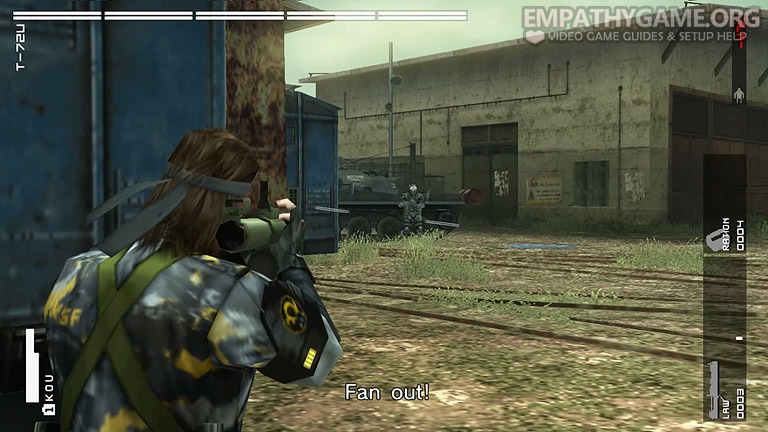
Metal Gear Solid: Peace Walker matters because its best systems reinforce one another. A guard subdued in a small stealth area can become a recruit; that recruit can raise a team level; the higher level can unlock better equipment; the equipment can make a harder Extra Op or boss easier; and the resulting mission can feed more people, blueprints, vehicles and parts back into Mother Base. Few games in the series connect moment-to-moment stealth and long-term progression this tightly.
Its limitations are just as structural. Regular soldiers are often easy to control once patrols are understood, prone movement is restricted, maps are compact and segmented, and too many machine battles substitute durability for the personality and tactical drama of Metal Gear’s best bosses. The extended late game also asks for enough repetition that the progression loop can begin to feel like an obligation rather than a reward.
Even so, the combination of Big Boss’s most important post-Snake Eater character development, unusually purposeful co-op and a Mother Base system that gives almost every mission a reason to exist makes Peace Walker far more ambitious than its portable origins suggest. It is best suited to players who enjoy stealth as part of a broader management and collection loop, especially those willing to replay missions and experiment with equipment. Players seeking a smooth, uninterrupted cinematic campaign may prefer other entries, but for anyone interested in the design ideas that eventually shaped Metal Gear Solid V, Peace Walker remains the crucial missing link.
Metal Gear Solid: Peace Walker Pros & Cons
Metal Gear Solid: Peace Walker PC System Requirements
OFFICIAL WINDOWS PC REQUIREMENTS:
MINIMUM:
OS: Windows 11, 64-bit
CPU: Intel Core i5-9600K
RAM: 16 GB
GPU: NVIDIA GeForce GTX 1650
DirectX: Version 12
Storage: 21 GB available space
Storage Type: SSD recommended
Network: Broadband Internet connection
RECOMMENDED:
OS: Windows 11, 64-bit
CPU: Intel Core i5-10500
RAM: 16 GB
GPU: NVIDIA GeForce GTX 970
DirectX: Version 12
Storage: 21 GB available space
Storage Type: SSD required
Network: Broadband Internet connection
Additional PC Performance and Setup Notes
- Valve rates the Steam release Verified for Steam Deck, with the default controller layout, interface text and graphics configuration passing its compatibility checks.
- Steam Cloud is supported, but making a separate local backup before installing unofficial mods or save-conversion utilities is still sensible.
- The official requirements list broadband internet because Peace Walker includes online co-op and competitive multiplayer. Valve’s Steam compatibility metadata does not flag internet access as required for normal single-player startup.
- The PC release is Unity-based and supports full controller input. Steam metadata also lists PlayStation controller compatibility and Steam Input support.
- Community modifications include ultrawide/FOV adjustments, HUD changes, technical fixes and save utilities. These are unofficial, can depend on the installed game build, and should be removed when troubleshooting unexplained problems.
- If the game behaves incorrectly after modifying files, restore a clean backup or use Steam’s file-verification feature before attempting a complete reinstall.
Official Trailer
Note: Konami’s official Master Collection Vol. 2 overview trailer shows Peace Walker alongside MGS4, Ghost Babel and the collection’s bonus material, while this written guide focuses specifically on the native Peace Walker PC release, Steam purchase choices, co-op, requirements, Steam Deck support and mods.
Frequently Asked Questions
Is Metal Gear Solid: Peace Walker worth playing in 2026?
Yes. Peace Walker is especially worthwhile for players interested in Big Boss, Mother Base management, Fulton recruitment, short replayable stealth missions, and co-op systems that later influenced Metal Gear Solid V. Its PSP-era mission structure and repeated vehicle battles can feel grind-heavy, but the Master Collection Version makes the game much easier to access on modern PC hardware.
Should I play Metal Gear Solid 3 before Peace Walker?
Preferably, yes. Peace Walker takes place after Metal Gear Solid 3 and builds directly on Big Boss’s relationship with The Boss, so several themes and character motivations carry more weight if you already know Snake Eater.
Do I need to play Metal Gear Solid: Portable Ops before Peace Walker?
No. Portable Ops sits between Metal Gear Solid 3 and Peace Walker chronologically, but Peace Walker can be understood without playing it and does not require Portable Ops knowledge to follow its central story.
How does Peace Walker connect to Metal Gear Solid V?
Peace Walker establishes Big Boss’s Militaires Sans Frontières, Mother Base, Kazuhira Miller, several important relationships, and the private-army systems that lead directly into Metal Gear Solid V: Ground Zeroes. Ground Zeroes is therefore the natural story continuation after finishing Peace Walker.
Is Metal Gear Solid: Peace Walker an open-world game?
No. Peace Walker is divided into individual Main Ops and Extra Ops selected from Mother Base, with each mission taking place in relatively compact areas. Its base management and mission-selection structure later became an important foundation for Metal Gear Solid V, but there is no seamless open world.
Can Peace Walker be completed entirely solo?
Yes. The main story can be completed by one player, and co-op is optional rather than mandatory. Some later vehicle battles and high-level Extra Ops are considerably easier with other players or stronger equipment, so solo players may need additional Mother Base development and mission replaying.
How does CO-OPS work in Peace Walker?
Eligible missions can be hosted for two to four players, with one player creating the session and the others joining through the CO-OPS search menu. Not every mission allows four participants; each operation displays its own maximum player count.
Does Peace Walker support split-screen or local co-op on PC?
No. The Steam version does not provide split-screen or couch co-op, and Konami lists the normal offline player count as one. The Switch versions have separate local communication support, but that feature does not apply to the PC release.
Does Peace Walker support LAN multiplayer on PC?
No dedicated LAN mode is documented for the Steam version. PC players use the game’s online host-and-search system for CO-OPS and VERSUS OPS rather than the original PSP-style local ad-hoc networking.
Does Metal Gear Solid: Peace Walker support crossplay?
No. Konami states that cross-platform play is not supported, so Steam players cannot normally join Peace Walker sessions hosted by PlayStation, Xbox, or Nintendo players.
Are Peace Walker’s official online multiplayer services available?
Yes. The Master Collection Version includes functioning online CO-OPS and VERSUS OPS. Match availability can still vary because finding an open lobby depends on your platform, search settings, region, connection quality, and how many other players are looking for the same activity.
What is VERSUS OPS in Peace Walker?
VERSUS OPS is Peace Walker’s competitive mode for up to six players. Its official modes include Deathmatch, Team Deathmatch, Capture Mission, and Base Mission, with hosts able to select maps, rules, equipment restrictions, and private-match passwords.
Does Peace Walker support cross-save between PC and consoles?
Konami does not advertise cross-platform save synchronization between Steam, PlayStation, Xbox, and Nintendo versions. Steam Cloud can synchronize the PC save between supported Steam installations using the same account, but that is separate from cross-platform progression.
How does Mother Base work in Peace Walker?
Mother Base grows as Big Boss recruits personnel and assigns them to teams such as Combat, R&D, Intel, Medical, and Mess Hall. Better staff improve the base, unlock development opportunities, strengthen support functions, and become increasingly important as the campaign moves into its later stages.
What should beginners prioritize at Mother Base?
Use Fulton Recovery frequently, assign recruits where their statistics are strongest, and keep the R&D and Intel teams developing instead of rushing through every story mission. It is also worth developing rocket launchers, supply equipment, healing items, and other heavy-combat tools because Peace Walker regularly interrupts stealth missions with armored vehicles and AI-weapon battles.
What does Fulton Recovery do in Peace Walker?
Fulton Recovery extracts unconscious or subdued enemies, prisoners, and certain other targets so useful personnel can join MSF. Recruiting broadly is one of the fastest ways to strengthen Mother Base because soldiers with good R&D, Intel, Medical, Mess Hall, or Combat statistics directly improve those teams.
How does weapon and equipment development work?
Blueprints and other design information unlock potential projects, while Mother Base staff levels and available GMP determine what R&D can actually develop. Completing missions advances development, so regularly checking the Develop menu is important rather than saving every project for much later.
What are Extra Ops in Peace Walker?
Extra Ops are optional missions covering stealth challenges, target practice, Fulton recovery, vehicle battles, boss rematches, unusual objectives, and special crossover content. They also provide useful soldiers, blueprints, equipment and progression, and some become important when advancing through Peace Walker’s extended final chapter.
What are Outer Ops?
Outer Ops let you assemble Combat Unit teams and send soldiers, vehicles, and eventually other military assets on automated missions away from the main playable operations. Successful deployments can provide rewards and experience, but damaged or defeated personnel and equipment make team composition worth considering.
Why are the tank and helicopter battles so difficult when playing solo?
Those encounters combine durable vehicles with waves of supporting soldiers and were designed to work with Peace Walker’s equipment progression and optional co-op. Developing stronger launchers and supply tools helps considerably, while players pursuing non-lethal captures can focus on removing the escort soldiers and forcing the vehicle commander to appear instead of simply destroying everything.
Does Peace Walker have difficulty settings?
There is no conventional Easy, Normal, or Hard selection covering the whole campaign. Individual missions instead receive skull ratings that indicate their intended difficulty, with later and optional operations becoming substantially more demanding than the early story missions.
Does Peace Walker have a true ending?
Yes. Finishing the first apparent climax does not complete every important story event; Chapter 5 continues through additional missions and Mother Base development. Reaching the final story conclusion involves progressing the Zadornov searches, developing Mother Base and Metal Gear ZEKE, and continuing to complete operations, so do not assume the story is finished when the first credits-like stopping point arrives.
Do I need to S-rank every mission to see the full ending?
No. S-ranking every operation is not required to reach Peace Walker’s full story conclusion. S ranks instead matter for completion goals and certain mission rewards, while the extended ending is tied to story, Mother Base and ZEKE progression.
Can I keep playing after finishing Peace Walker’s story?
Yes. Peace Walker is built around replaying Main Ops and Extra Ops while continuing to recruit personnel, develop equipment, improve Mother Base, pursue mission ranks and complete optional objectives. Finishing the story therefore does not make the rest of the save obsolete.
Does Peace Walker have New Game Plus?
Not in the conventional sense of starting a second campaign from the beginning under a separate New Game Plus mode. Instead, missions remain replayable from your existing save while Mother Base, developed equipment, recruited personnel and other progression continue to grow.
Does Peace Walker really have Monster Hunter missions?
Yes. Peace Walker contains hidden Monster Hunter crossover Extra Ops, including encounters inspired by monsters such as Rathalos. They are optional content and require a particular sequence involving Chico’s briefings and an Extra Ops mission before the crossover missions become available.
Is Metal Gear ZEKE just a story boss?
No. ZEKE is something the player gradually assembles at Mother Base using parts obtained from AI-weapon battles, and its development ties into both Outer Ops and the game’s later story progression. Building it is therefore more important than simply collecting parts for completion percentage.
Should I buy Peace Walker separately or get Master Collection Vol. 2?
Buy the standalone Steam version if Peace Walker is the only game you want. Master Collection Vol. 2 is the broader package because it also includes Metal Gear Solid 4: Guns of the Patriots plus collection bonuses such as Metal Gear: Ghost Babel and the Digital Soundtrack Vol. 2.
Can I transfer an old PSP, PS3, or Xbox 360 Peace Walker save to the PC Master Collection Version?
Konami documents save-data bonuses connected to Master Collection Vol. 1, but it does not provide a general official migration feature for importing an old PSP, PS3, or Xbox 360 Peace Walker save into the Steam version. Players moving from those older releases should therefore expect to begin a new official Master Collection save.
Does Metal Gear Solid: Peace Walker work on Steam Deck?
Yes. Valve currently rates the Master Collection Version Verified for Steam Deck, meaning its default controls, interface readability, startup behavior and default performance meet Valve’s compatibility criteria.
Can Metal Gear Solid: Peace Walker be modded on PC?
Yes, through unofficial community mods. Nexus Mods already hosts display, FOV, HUD, save and technical modifications for the Master Collection Version; there is no official Steam Workshop, so back up important saves and check each mod’s compatibility before combining modifications.
Still have questions? Check the Metal Gear Solid Reddit community, Peace Walker Steam Discussions, or official Konami Peace Walker online manual for additional help and community discussion.
Sources & References
Key factual and technical information in this guide was checked against relevant official and community sources, including:
- Steam — Metal Gear Solid: Peace Walker – Master Collection Version — official PC release date, purchase availability, system requirements, Steam features, included digital books and user-review category
- Konami — Metal Gear Solid: Master Collection Vol. 2 — collection contents, supported platforms, Ghost Babel and soundtrack bonuses, and Peace Walker online-play information
- SteamDB — Peace Walker app metadata — Steam Deck Verified status, Unity technology, controller metadata and SteamOS compatibility details
- Metacritic — original Metal Gear Solid: Peace Walker critic reviews — original PSP Metascore and the recorded IGN review score used for historical review context
- Nexus Mods — Metal Gear Solid: Peace Walker – Master Collection — current availability of unofficial PC fixes, display modifications, save utilities and other community mods
Similar Games Like Metal Gear Solid: Peace Walker
- Metal Gear Solid V: Ground Zeroes
- Metal Gear Solid V: The Phantom Pain
- Metal Gear Solid Delta: Snake Eater
- Tom Clancy’s Splinter Cell: Chaos Theory
- Hitman World of Assassination
- 007 First Light


Found something worth playing through DecideGame?
DecideGame.com is an independent gaming project run by Editor Zero. If this guide helped you discover a game, solve a problem, or find useful information, you can support DecideGame.com and help keep new and updated game guides coming.
DecideGame — PC Game Guides, Reviews & Setup Help