
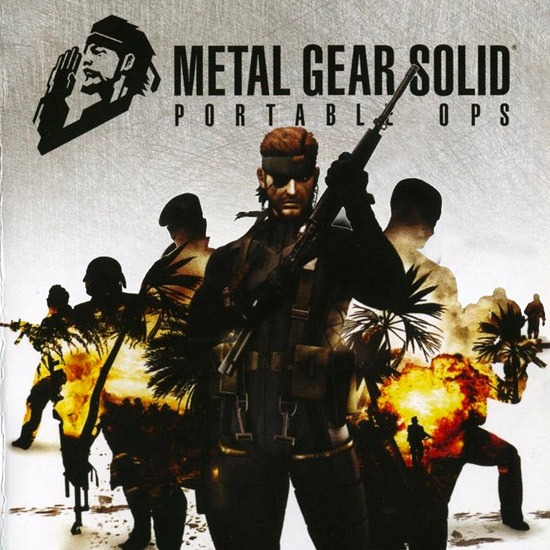
📅 Game released: 2006
Metal Gear Solid: Portable Ops is a PSP stealth-action game in which Big Boss recruits enemy soldiers and builds a squad during the 1970 San Hieronymo uprising. This PC guide explains the lack of an official Windows download, how to use PPSSPP with a lawfully created backup of your own PSP copy, controller and graphics setup, emulator system requirements, and the differences between Portable Ops, Portable Ops Plus, and modern Metal Gear collections.
 By Editor Zero — independently researched, edited, and maintained.
Last updated: 28 October 2026
Last reviewed: 28 October 2026
Table of Contents
- Quick Facts
- Official PC Stores, Download & Installation
- Metal Gear Solid: Portable Ops Review
- Pros & Cons
- PC System Requirements
- Frequently Asked Questions
- Similar Games
Metal Gear Solid: Portable Ops Quick Facts
Official PC Store Status, Download & Installation
👇 Metal Gear Solid: Portable Ops has no native Windows release or normal official PC download; use the notes below for its official platform status and the lawful PPSSPP setup route for a game copy you own.
- Native PC status: Konami’s official product page identifies Portable Ops as a PSP title, and there is no verified native Windows release or official PC storefront page for the game.
- Modern collection status: Metal Gear Solid: Master Collection Vol. 2 includes Metal Gear Solid 4, the HD Collection version of Peace Walker, and bonus Metal Gear: Ghost Babel, but Portable Ops is not included as a playable collection title.
- Best emulator: PPSSPP is the preferred PC option for this guide because it is an actively maintained PSP emulator with dedicated Windows builds, controller mapping, resolution scaling, multiple graphics backends, and documented save-data tools.
- Best version to emulate: Use the original PSP version of Metal Gear Solid: Portable Ops when you want the complete story campaign. There is no separate PS2, PS3, Xbox, or native PC version to emulate instead.
- Portable Ops Plus: Do not confuse the original game with Portable Ops Plus. Plus is a standalone follow-up focused on Infinity Mission and expanded multiplayer features rather than the original Big Boss story.
- Game copy required: PPSSPP does not include Portable Ops. Use a lawful backup of your own legally obtained PSP copy. PPSSPP provides official instructions for copying a UMD from your own PSP; that procedure requires a PSP with custom firmware. Check local rules on making personal backups. This guide does not provide copyrighted game files.
- Load the game: After installing PPSSPP, use its Games browser or File > Load option to open your legally created PSP game backup. PPSSPP’s official documentation explains supported PSP game-backup formats and ownership-based dumping.
- Controller setup: A modern gamepad is strongly recommended. PPSSPP allows PSP controls to be remapped to keyboard or gamepad inputs, making it possible to place the original D-pad camera functions on a right analog stick for a more comfortable PC setup.
- Graphics setup: Start with PPSSPP’s default settings, then raise rendering resolution to suit your display. Vulkan is the emulator’s recommended backend on capable hardware, while Direct3D 11 is a strong Windows alternative.
- Save backups: PPSSPP stores PSP-style save data inside its Memory Stick folder. Back up this folder before experimenting with community patches, texture replacements, or major emulator-setting changes.
 Get PPSSPP from the Official Website
 View Metal Gear Solid: Portable Ops on Konami

Metal Gear Solid: Portable Ops Review
An ambitious handheld Metal Gear that turns enemy soldiers into a strategy layer, even when its controls and repetition struggle to support the idea.
Metal Gear Solid: Portable Ops is most interesting when it stops behaving like a reduced version of a console Metal Gear and starts building its own identity. The familiar pieces are here—CQC, tranquilizer takedowns, first-person aiming, wall-hugging, alert phases and compact infiltration routes—but the real hook is what happens after a guard hits the floor. An enemy can become a future squad member, spy, medic or technician, turning stealth encounters into recruitment opportunities and gradually changing Big Boss from a lone operative into the leader of an improvised army.
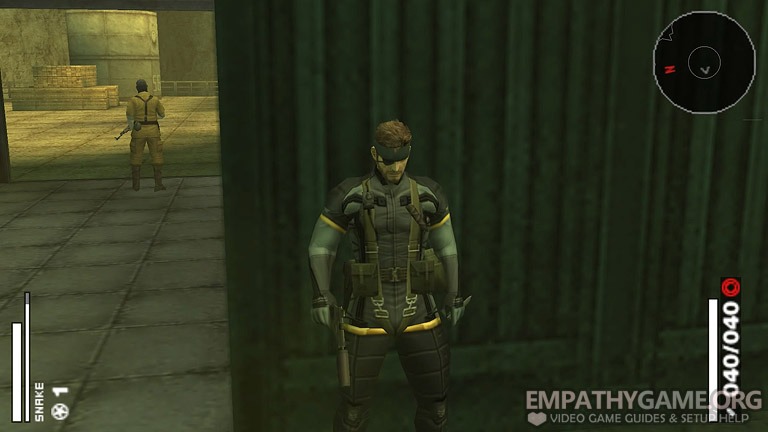
That idea gives Portable Ops a significance that its moment-to-moment play does not always match. Short missions suit a handheld structure, yet repeated trips through small facilities and the need to physically move unconscious recruits can make longer sessions feel mechanical. The PSP camera also asks too much of one analog nub and a D-pad. Even so, the combination of stealth, personnel management and character swapping creates a distinctive rhythm that later Big Boss games would refine rather than simply replace. Players most interested in the evolution of Metal Gear’s systems—and in the period when Big Boss begins learning how to lead soldiers rather than merely complete missions—will find the most to appreciate.
Recruitment Changes the Meaning of Stealth
Portable Ops’ best idea is simple: a guard is potentially more valuable unconscious than dead. Knocking an enemy out with CQC or tranquilizer fire preserves the possibility of bringing that soldier into Big Boss’s force, so non-lethal play gains a practical reward beyond maintaining a cleaner mission record. The result is a subtle change in how an area is read. A patrol is not only an obstacle between the player and the objective; it may contain the next useful rifle specialist, spy or support recruit.
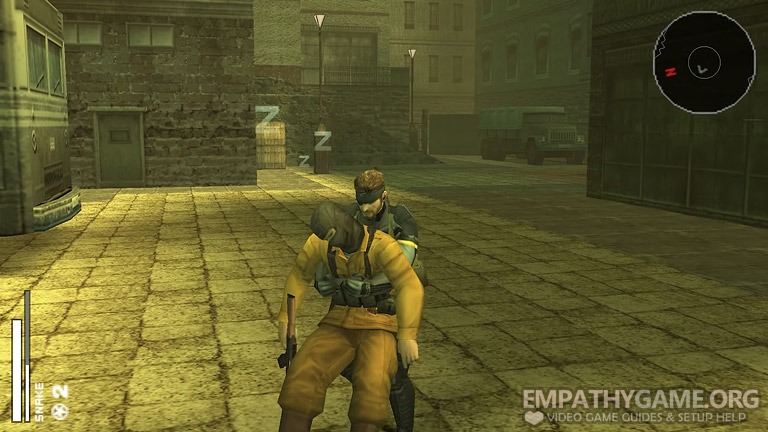
The friction comes after the takedown. Incapacitated soldiers generally need to be dragged to an extraction point or moved close enough to an appropriate teammate for recovery, turning a clean infiltration into a logistical problem. That process can be tedious, but it also forces more planning than the later, faster recruitment systems associated with the series. A player trying to collect several soldiers has to think about where the squad is positioned, how exposed the route back is and whether waking patrols will complicate the return trip. Recruitment therefore deepens stealth at the same time that it slows it down.
Captured soldiers also retain uniforms that can let them blend with matching enemy personnel. That creates one of the game’s more interesting micro-decisions: Big Boss is usually the stronger, more familiar choice, but a recruited guard may be able to cross part of a facility with far less resistance. The disguise is conditional rather than magical—suspicious behaviour can break the illusion—but it makes personnel selection matter before a mission even begins.
Squad Building Is More Interesting Than Most Individual Recruits
The management layer gives captured soldiers several possible jobs. Combat-capable recruits belong in Sneaking Units, while Spy, Medical and Technical personnel contribute intelligence, recovery and equipment support. The distinction sounds modest, yet it gives the roster a purpose beyond collecting higher statistics. A soldier with average combat ability may still be more valuable in a support role, and reorganising the team becomes a small strategic game between missions.
The Spy Unit is especially important because information gathering can reveal useful opportunities and help open the next step in an operation. That makes intelligence feel like part of progression rather than background flavour. Medical and Technical staff are less visible during a typical infiltration, but they reinforce the idea that Big Boss’s organisation succeeds because of the people behind the field team as well as the operatives carrying weapons.
The weakness is that many recruits are differentiated more by ratings, proficiencies, careers and uniforms than by truly distinct play styles. Swapping from one ordinary soldier to another rarely transforms the controls or the tactical vocabulary. The management screen can therefore feel more engaging than the characters themselves. Portable Ops has the skeleton of the later Mother Base concept, but not yet the personality, convenience or systemic breadth that would make every addition to the roster feel meaningful.
Compact Missions Fit a Handheld, but Repetition Arrives Quickly
The campaign is organised through a tactical map rather than one continuous journey. Missions send a member of the Sneaking Unit into relatively small areas to reach a destination, recover an item, rescue someone, gather intelligence or complete another focused objective. That structure works well in short bursts. It allows a complete infiltration, recruitment attempt or support task to fit into a limited play session without demanding the long uninterrupted stretches associated with earlier console entries.
The compromise is spatial depth. Many locations are compact enough that once patrols and routes are understood, an objective can be reached very quickly. In weaker missions, running directly toward the destination can be more efficient than carefully engaging with every guard, which undercuts the tension that stealth is supposed to create. Revisited spaces make this more noticeable: familiarity can turn infiltration into route memorisation rather than improvisation.
The strongest missions are therefore the ones that give the squad system a reason to matter. Choosing a uniformed recruit to pass through matching troops, placing teammates where recovered soldiers can be moved efficiently, or deploying spies until a useful lead appears creates a broader tactical problem than simply reaching the marker. When objectives do not exploit those systems, the small maps and repeated movement between familiar facilities expose the game’s portable constraints.
The PSP Control Scheme Is the Most Persistent Obstacle
Portable Ops adapts a freely adjustable third-person camera to hardware without a second analog stick. Movement sits on the analog nub while camera adjustment relies on the D-pad, creating an immediate ergonomic conflict: the same left thumb is effectively asked to handle locomotion and view control. Slower movement gives the player time to correct the view, but precision aiming, evasive movement and rapid camera changes never become as effortless as the design wants them to be.
This matters because Portable Ops still expects recognisable Metal Gear precision. The player can crawl, hug walls, use CQC, fire from first person and manipulate sightlines, yet the interface makes several of those actions more cumbersome than the underlying mechanics deserve. A slow infiltration can accommodate deliberate camera adjustments; a firefight or alert phase exposes the limitation much more sharply.
The sound-based radar is a smart response. Instead of simply revealing exact enemy positions, it communicates nearby movement in a less precise form, helping the player judge danger without eliminating the need to observe patrols. It suits the game’s compact spaces and gives stealth some information to work with when the camera itself is not always cooperative.
Big Boss Becoming a Commander Gives the Story Its Weight
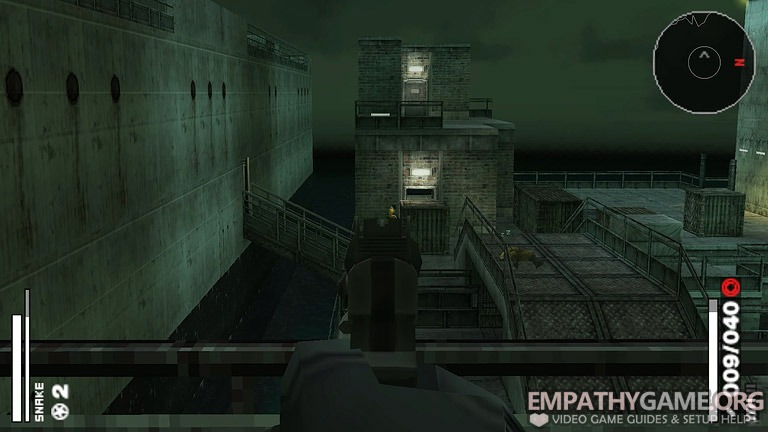
Set after Snake Eater, the San Hieronymo incident matters less because it fills a gap on a timeline than because it changes Big Boss’s role. He begins as a captured soldier dealing with a renegade FOX unit, then gradually becomes someone other soldiers choose to follow. Roy Campbell is central to that shift, helping turn survival into organisation, while Gene represents a more ideological vision of a nation built around soldiers.
The recruitment system strengthens that theme unusually well. The story says Big Boss is becoming a leader, but the game also makes the player build the force that gives his leadership meaning. Sorting personnel, relying on spies and medics, and choosing who enters the field gives mechanical form to an idea that could otherwise have remained confined to dialogue. The connection is not perfectly elegant—captured enemies require a conveniently game-like persuasion period before joining—but the broader alignment between narrative and systems is one of Portable Ops’ strongest achievements.
Gene, Cunningham, Elisa and Ursula, Python, Null and RAXA give the campaign the conspiratorial mixture of soldiers, secret projects and competing loyalties expected from Metal Gear. The character work is more memorable than the environments surrounding it. Portable Ops is at its best when the conflict feels personal: Big Boss facing soldiers with their own ambitions and histories carries more dramatic weight than another anonymous trip through a reused facility.
Bosses and Combat Feel More Traditional Than the Campaign Structure
Although the army-building framework is experimental, many confrontations feel closer to classic Metal Gear. Python and Null are defined as individual human opponents rather than interchangeable battlefield targets, while Metal Gear RAXA supplies the expected shift toward machinery and spectacle. These encounters break up the smaller infiltration objectives and give the campaign much-needed peaks.
The fights are not uniformly sophisticated. Several lean heavily on shooting and positioning rather than the elaborate environmental puzzles or layered gimmicks associated with the series’ most inventive bosses. Still, their personalities and direct exchanges with Big Boss help them register as characters rather than health bars. The game also rewards non-lethal thinking in ways that fit its broader recruitment philosophy, reinforcing the recurring idea that defeating an opponent does not always have to mean killing one.
Ashley Wood’s Cutscenes Turn Limitation Into Identity
Portable Ops cannot match the lavish real-time cinematics of the console entries, so major scenes instead use animated comic-style artwork associated with Ashley Wood. The rough linework, stark framing and limited motion give the story an identity that feels deliberate rather than merely reduced. Combined with voice acting in key scenes and a tense espionage score, the presentation preserves the dramatic exaggeration Metal Gear depends on without pretending the handheld can reproduce the scale of its console predecessors.
Outside those scenes, the compromise is clearer. Facilities are functional and often visually plain, and the tactical-map structure makes San Hieronymo feel like a collection of disconnected operational spaces rather than a place that physically unfolds around the player. Text-heavy radio exchanges also put more narrative weight on menus. The art direction succeeds because it embraces stylisation; the environments are less successful because their repetition reinforces the campaign’s structural repetition.
Replayability Depends on Enjoying the Roster
Portable Ops has more replay value than its straightforward objectives first suggest, but most of it comes from the personnel system. Recruiting stronger soldiers, finding useful specialties, reorganising squads and pursuing optional characters can turn the campaign into a collection exercise. The four-person Sneaking Unit also creates room to experiment with who enters the field and when to swap characters, even if ordinary recruits do not always play differently enough to make each combination feel unique.
The original multiplayer design extended that investment by allowing recruited soldiers to matter outside the campaign, while Cyber-Survival treated squads more like strategic assets. Those modes were conceptually important because they gave the roster another purpose: the soldiers collected in single-player were not isolated from the rest of the game. Even without treating multiplayer as the main attraction, that connection explains why building a strong army could become an end in itself.
For story-focused play, repetition is the limiting factor. Replaying small areas, dragging more bodies and sorting another wave of statistically similar recruits will only remain satisfying if the management loop itself is appealing. Portable Ops is not a game whose replayability comes from radically different narrative routes or transformative character builds; it comes from enjoying the process of assembling and refining the force.
Final Verdict
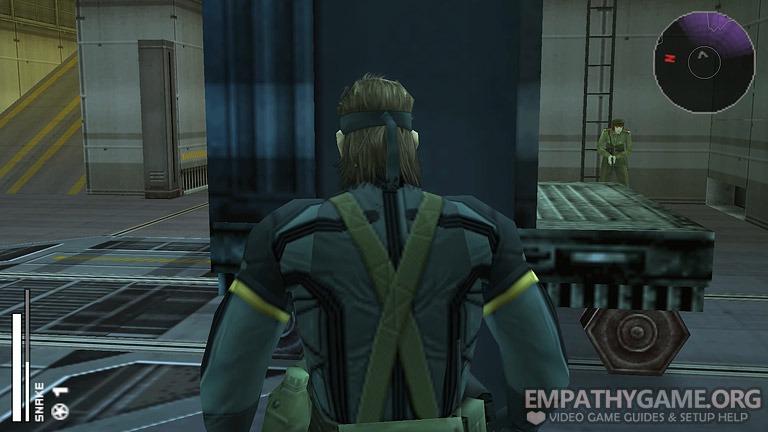
Metal Gear Solid: Portable Ops is a fascinating transitional game because its most important ideas are stronger than their first implementation. Recruiting enemies changes stealth by making restraint valuable, squad organisation gives captured soldiers a purpose beyond combat, and the tactical map reframes Big Boss as a commander responsible for more than his own equipment. Those systems connect unusually well with a story about soldiers choosing to follow him and help explain why the game remains significant within the evolution of the series.
The costs are equally clear. Compact missions can become trivial once routes are learned, repeated body extraction slows the campaign, many recruits feel statistically distinct rather than mechanically distinct, and the PSP camera scheme places a persistent barrier between the player and otherwise familiar Metal Gear actions. The fragmented environments also struggle to create the sense of place found in the strongest entries.
Yet Portable Ops has a personality that survives those limitations. Ashley Wood’s cutscenes, memorable human antagonists and the pleasure of turning a hostile base into a source of future allies give it more than historical curiosity value. It suits players who can tolerate handheld-era friction in exchange for seeing Metal Gear experiment with recruitment, personnel management and battlefield preparation before those concepts became central to later Big Boss games. As an action game it can feel awkward and repetitive; as a systems experiment, it is one of the series’ most revealing steps forward.
Metal Gear Solid: Portable Ops Pros & Cons
Metal Gear Solid: Portable Ops PC System Requirements
Official native PC requirements: None. Metal Gear Solid: Portable Ops has no native Windows release, so Konami has never published PC minimum or recommended specifications for the game.
PPSSPP OFFICIAL PC GUIDANCE:
OS: Windows Vista or later; PPSSPP recommends Windows 7 or newer in its PC FAQ
CPU: Any reasonably modern CPU should be sufficient for PPSSPP
GPU: A GPU capable of OpenGL 3.0 should be sufficient for PPSSPP
Graphics Backend: Vulkan is recommended where available; Direct3D 11 is a strong alternative on Windows
Graphics Drivers: Keep the latest available GPU drivers installed
Controller: Most Windows-compatible controllers are supported, and XInput controllers can auto-configure
Additional PC Performance and Setup Notes
- PPSSPP’s PC requirements are modest, but game-specific behavior can still vary. Start with default settings, keep graphics drivers up to date, and raise rendering resolution gradually to match your hardware and display.
- Portable Ops was designed around PSP controls. Use Settings > Controls > Control Mapping to place movement, camera, triggers, face buttons, Start, and Select where they feel natural on a modern pad.
- Start with normal game timing before experimenting with unofficial high-frame-rate patches. Community patches can introduce game-speed or cutscene problems on some emulator builds.
- Use PPSSPP’s Memory Stick folder for ordinary in-game save backups, and keep a clean copy before adding unofficial patches or replacement textures.
Official Trailer
Note: This archival IGN upload of a Konami Portable Ops trailer shows Big Boss, illustrated story scenes, PSP stealth action, squad recruitment, and combat, while the written guide adds PC-release status, PPSSPP setup, lawful game-backup guidance, controller mapping, and emulator requirements.
Frequently Asked Questions
Is Metal Gear Solid: Portable Ops available on PC or Steam?
No. There is no official Windows or Steam version of Metal Gear Solid: Portable Ops. PC players can instead emulate the original PSP release through PPSSPP using a lawful backup made from a game copy they own.
Is Metal Gear Solid: Portable Ops included in Metal Gear Solid: Master Collection Vol. 2?
No. Master Collection Vol. 2 includes Metal Gear Solid 4: Guns of the Patriots, the HD Collection version of Metal Gear Solid: Peace Walker, and Metal Gear: Ghost Babel as a collection bonus; Portable Ops is not included as a playable game.
What is the best emulator for Metal Gear Solid: Portable Ops on PC?
PPSSPP is the most practical choice because it is an actively maintained PSP emulator with official Windows builds, controller remapping, higher internal resolutions, multiple graphics backends, save management, and networking support. The emulator does not include Portable Ops, so you still need your own legally created PSP game backup.
Is Metal Gear Solid: Portable Ops canon?
Its status is best described with some qualification rather than a simple yes or no. Konami continues to document its events in official Metal Gear backstory material, while Hideo Kojima has described the main storyline as part of the Metal Gear saga but noted that some smaller details fall outside his main timeline.
Where does Portable Ops fit in the Metal Gear timeline?
The story takes place in 1970 after Metal Gear Solid 3: Snake Eater and before Metal Gear Solid: Peace Walker. It follows Big Boss through the San Hieronymo incident. You do not need to finish Portable Ops before Peace Walker, but it adds context to Big Boss’s transition from lone operative to leader of a military force.
What is the difference between Portable Ops and Portable Ops Plus?
The original Portable Ops contains the Big Boss story campaign. Portable Ops Plus is a separate PSP follow-up focused on the randomized Infinity Mission, a larger soldier roster, expanded character progression, and additional multiplayer content, so Plus should not replace the original game for a first story playthrough.
Is Portable Ops open world or mission-based?
It is mission-based. You choose locations from a strategic map, prepare a squad, infiltrate relatively compact areas, complete objectives, recruit personnel, manage your units, and then return to the briefing interface before the next operation.
How does recruiting soldiers work in Portable Ops?
Knock out or tranquilize an enemy soldier, then drag the body to an extraction point such as the truck or a suitable hidden teammate. Unlike Peace Walker and Metal Gear Solid V, there is no Fulton extraction. Captured enemies enter the Prisoners section first and must be persuaded to join before they can be assigned to Sneaking, Spy, Technical, or Medical Units.
What do the Sneaking, Spy, Technical, and Medical Units do?
Sneaking Units contain the characters you deploy into missions, while Spy Units gather intelligence and can help reveal locations and useful information. Technical personnel develop equipment, and Medical personnel improve recovery and treatment, so strong support staff can be just as useful as strong combat recruits.
What does the blue chameleon icon mean in Portable Ops?
It means a recruited character is successfully blending in with enemies who wear the same type of uniform. The disguise can be broken by suspicious behavior or by encountering personnel who do not recognize that uniform, and Big Boss himself cannot use this impersonation mechanic.
Can you play as soldiers other than Big Boss?
Yes. One of Portable Ops’ defining features is the ability to recruit soldiers with different statistics, weapon skills, careers, and uniforms and deploy them as members of your Sneaking Unit. Several familiar and special Metal Gear characters can also become available when their particular recruitment conditions are met.
What should beginners prioritize in Portable Ops?
Build a reliable field team, keep a non-lethal option available for recruitment, and assign personnel with strong Medical and Technical abilities to the correct support units. Deploying spies into available territories is also important because intelligence reports can reveal useful information and help advance certain objectives.
How can I make the Portable Ops controls better in PPSSPP?
Use PPSSPP’s Control Mapping menu to place the PSP’s movement and camera inputs on comfortable modern controller buttons and sticks. Mapping the original D-pad camera controls to a right analog stick can make exploration and combat substantially easier, although it remains an emulated PSP control scheme rather than native dual-stick support.
Can PPSSPP improve the graphics of Portable Ops?
Yes. PPSSPP can render the PSP game at a higher internal resolution than the original handheld, which produces a much cleaner image on modern monitors. Start with the emulator’s default settings and increase rendering resolution gradually rather than enabling every enhancement at once.
Should I use a 60 FPS patch for Portable Ops in PPSSPP?
Treat 60 FPS modifications as optional community tweaks rather than part of the normal setup. Portable Ops was designed around its original PSP timing, so unofficial frame-rate patches can introduce animation, timing, cutscene, or gameplay problems; test them separately and keep a clean configuration available.
Can I transfer an original PSP Portable Ops save to PPSSPP?
Yes, provided you can access your own PSP Memory Stick data. PPSSPP recreates the PSP Memory Stick structure, including the PSP/SAVEDATA directory, so compatible original save folders can be copied into the emulator’s Memory Stick location after making a backup.
Does Metal Gear Solid: Portable Ops have multiplayer or co-op?
The original PSP game has competitive Versus modes and Cyber-Survival, but no story co-op or split-screen. PSP Ad Hoc play uses separate systems, and PPSSPP can emulate compatible local or community multiplayer networking. The original Infrastructure modes do not equate to a modern official PC multiplayer service.
Are the original Portable Ops online servers still available?
Konami’s original PSP Infrastructure service is not an officially supported online route for Portable Ops. PPSSPP documents community-run Ad Hoc and Infrastructure networking options for supported PSP titles, but whether a particular Portable Ops mode works depends on the community service and configuration; do not treat that as restored Konami support.
Can Metal Gear Solid: Portable Ops be played on Steam Deck?
Yes through PSP emulation rather than through an official Steam release. PPSSPP provides a Linux version suitable for devices such as Steam Deck, but Portable Ops itself has no Valve Steam Deck rating because there is no native Steam edition.
Still have questions? Check the Metal Gear Solid Reddit community, PPSSPP Forums, or official PPSSPP documentation for additional help and community discussion.
Sources & References
Key factual and technical information in this guide was checked against relevant official and community sources, including:
- Konami — Metal Gear Solid: Portable Ops — original PSP platform, Japanese release information, story premise, and official product identification
- Konami — Metal Gear Solid: Master Collection Vol. 2 — collection lineup and confirmation that the playable titles are Metal Gear Solid 4, Peace Walker, and bonus Metal Gear: Ghost Babel rather than Portable Ops
- PPSSPP — Official Download Page — official Windows, Windows ARM64, macOS, Linux, and other emulator builds
- PPSSPP — Dumping UMD Games — steps for copying an owned PSP disc and supported ISO/CSO game-backup formats
- PPSSPP — Recommended Hardware — practical PC hardware expectations and controller support
- Metacritic — Metal Gear Solid: Portable Ops — North American release date, PSP platform, Metascore, and historical critic-score verification
Similar Games Like Metal Gear Solid: Portable Ops
- Metal Gear Solid: Peace Walker
- Metal Gear Solid Delta: Snake Eater
- Metal Gear Solid V: Ground Zeroes
- Metal Gear Solid V: The Phantom Pain
- Tom Clancy’s Splinter Cell: Chaos Theory
- Hitman World of Assassination
Found something worth playing through DecideGame?
DecideGame.com is an independent gaming project run by Editor Zero. If this guide helped you discover a game, solve a problem, or find useful information, you can support DecideGame.com and help keep new and updated game guides coming.
DecideGame — PC Game Guides, Reviews & Setup Help