
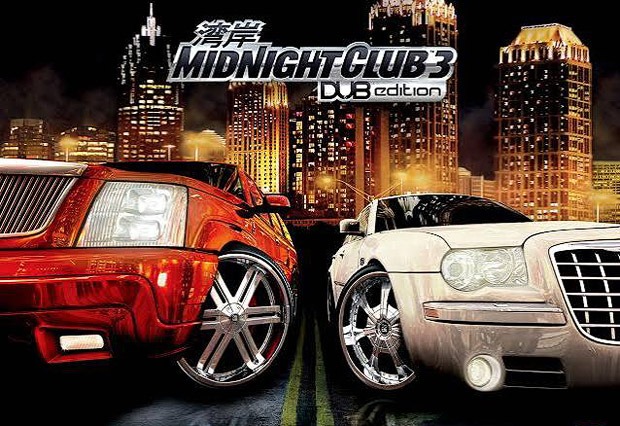
📅 Game released: 2005
Midnight Club 3: DUB Edition is a fast, open-city street racer built around vehicle customization, traffic, shortcuts and risky checkpoint routes. This PC guide explains its official download status, why the expanded DUB Edition Remix is the recommended PlayStation 2 version for PCSX2, how to use lawfully created game and BIOS backups, and what to know about emulator requirements, controller setup and compatibility.
 By Editor Zero — independently researched, edited, and maintained.
Last updated: 7 November 2026
Last reviewed: 7 November 2026
Table of Contents
- Quick Facts
- Official PC Stores, Download & Installation
- Midnight Club 3: DUB Edition Review
- Pros & Cons
- PC System Requirements
- Frequently Asked Questions
- Similar Games
Midnight Club 3: DUB Edition Quick Facts
- Game: Midnight Club 3: DUB Edition / Midnight Club 3: DUB Edition Remix
- Developer: Rockstar San Diego
- Publisher: Rockstar Games
- Genre: Racing, Open-World Racing
- Release: April 11, 2005 (original PS2/Xbox, North America); June 27, 2005 (PSP); March 13, 2006 (Remix PS2/Xbox); December 2012 (Remix PS3 PS2 Classics); no native Windows release
- Platforms: Original: PS2, Xbox, PSP; DUB Edition Remix: PS2, Xbox, PS3
- DUB Edition Remix: Retains the original game and adds Tokyo, 24 vehicles, additional music, races and battle maps
- Modes: Single-player career and Arcade Mode; PS2/Xbox two-player split-screen; original official online services discontinued
- Recommended PC route: PS2 DUB Edition Remix through PCSX2 with lawful disc and console BIOS backups
- Alternative emulators: Xbox version via xemu; original PSP version via PPSSPP
- Engine: Rockstar San Diego AGE (Game Engine), identified in the original and Remix PS2 credits
- Community: Midnight Club Reddit; PCSX2 Remix compatibility wiki
- PC modding: No native PC mod support; unofficial emulator-side widescreen, texture and other patches may depend on game region and build
- Metacritic score: 85/100 (Remix PS2); 87/100 (Remix Xbox)
- IGN score: 8.8/10 (DUB Edition Remix PS2)
- Steam user reception: Not available on Steam
Official PC Store Status, PCSX2 Emulation & Installation
👇 Midnight Club 3: DUB Edition has no official Windows download or PC storefront edition. The notes below explain the recommended PS2 Remix emulation route using a lawfully obtained game copy and BIOS dumped from a PS2 you own.
- Native PC status: Rockstar has not released Midnight Club 3: DUB Edition or DUB Edition Remix as a native Windows PC game, and there is no verified Steam, Epic Games Store, GOG or Rockstar Games Launcher edition to purchase and install.
- Best version to emulate: Choose Midnight Club 3: DUB Edition Remix for PlayStation 2 when possible. Rockstar’s expanded edition retains the original San Diego, Atlanta and Detroit content while adding Tokyo, 24 vehicles, more music, additional races and battle maps.
- Recommended emulator: PCSX2 is the recommended emulator for this guide. Its compatibility wiki classifies emulation of the PS2 Remix game on Windows as Playable, while PCSX2 provides modern controller support, hardware rendering, resolution scaling, save management and widescreen-patch support.
- Xbox alternative: The Xbox version of Remix can be used with xemu. xemu classifies Midnight Club 3 as playable with minor issues, but its compatibility page documents an unresolved bright-white headlight and texture-rendering problem affecting DUB Edition Remix, so it is not the first PC route recommended here.
- PSP alternative: The original PSP version can be played through PPSSPP, which is easy to configure and supports higher rendering resolutions and modern controllers. However, the PSP did not receive DUB Edition Remix, so this route lacks the expanded Tokyo content and other Remix additions.
- PS3 rerelease: DUB Edition Remix was also released digitally in 2012 as a PS2 Classic for PS3, as documented by PlayStation. That historical console release is not a Windows port or a PC purchase option, and this guide does not assume it remains available for new purchases.
- Owned game backup: PCSX2’s official disc-dumping documentation explains how to create a backup from your own physical PlayStation 2 game disc using a compatible optical drive. DecideGame.com does not provide or link to copyrighted game files, ROM archives or third-party copies; you are responsible for supplying your own lawful game backup and complying with applicable law.
- PlayStation 2 BIOS: PCSX2 requires proprietary PlayStation 2 BIOS files. Follow the emulator project’s official BIOS-dumping instructions to obtain them from your own PS2 console. PCSX2 does not include Sony’s BIOS and states that no open-source replacement is available.
- Initial PCSX2 setup: Install PCSX2, complete its first-run configuration, add the BIOS dumped from your own PS2, then add or open the backup made from your own DUB Edition Remix disc. Start with the emulator’s normal defaults before applying game-specific tweaks.
- Graphics and display: Use a hardware renderer supported by your GPU and increase internal rendering resolution gradually. Higher internal resolutions can make vehicle edges, road markings and city scenery considerably cleaner on a modern monitor, although they do not replace the game’s original textures or geometry.
- Controller setup: A modern Xbox, PlayStation or other Windows-compatible gamepad is strongly recommended because Midnight Club 3 was designed around analog console controls. Configure steering, acceleration, braking, nitrous and vehicle special abilities before changing more advanced emulator settings.
- Compatibility first: Keep a clean PCSX2 configuration and normal in-game saves before experimenting with widescreen patches, texture replacements or aggressive speed-related settings. If a specific graphical or performance problem appears, check the PCSX2 game wiki before applying older community workarounds.
 Get PCSX2 from the Official Website

Midnight Club 3: DUB Edition Review
Open-city racing, extravagant customization, and aggressive arcade handling make every shortcut matter, even when the difficulty plays dirty.
Midnight Club 3: DUB Edition understands that street racing becomes more exciting when the road is not treated as sacred. San Diego, Atlanta, and Detroit are not backdrops wrapped around fixed circuits. Their alleys, freeway exits, parking lots, ramps, medians, and narrow connecting streets are all potential racing lines, provided you can recognise them quickly enough. The fastest driver is often the one who knows when to ignore the obvious road. It gives learning a city nearly as much importance as buying a faster car, and makes repeating a race interesting for reasons beyond improving a lap time.
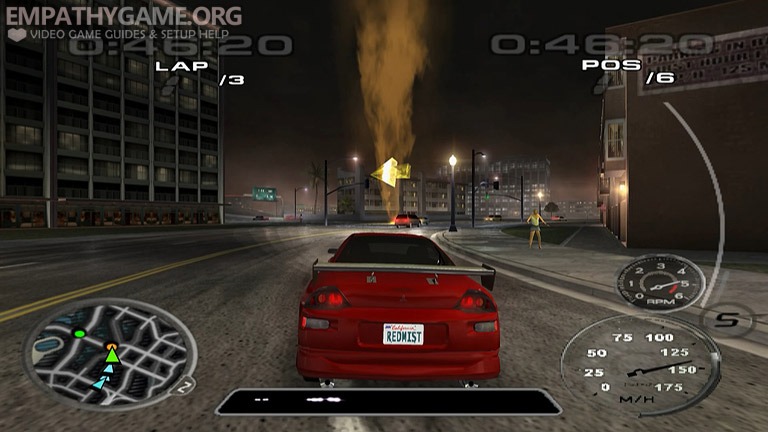
The vehicles suit that freedom. Tuners, muscle cars, exotics, SUVs, luxury cars, choppers, and sport bikes can be modified for speed and appearance, while nitrous, slipstream boosts, two-wheel driving, weight transfer, and special abilities take the handling far beyond realism. It is loud and excessive, but not consistently fair. A missed checkpoint can destroy an otherwise strong run, the changing level of competition is poorly explained, and Remix’s Tokyo races can be particularly demanding. Still, there is something satisfying about a racer where knowing an alley or rescuing a bad corner matters as much as the machine in the garage.
Open Routes Make Navigation the Real Racing Line
The main challenge is often deciding where to drive rather than how to take the next corner. Ordered checkpoint races identify the next marker but allow different ways of reaching it. Unordered events go further, letting the checkpoint sequence become a problem to solve. The minimap helps, but it cannot tell you whether a promising shortcut ends in an awkward turn or whether a wider boulevard will preserve enough speed to be quicker. In a powerful exotic, the longer route can sometimes be the smarter one.
This changes the value of simply driving around. Exploring before a difficult race is a useful way to learn the layout, not just a break from career events. An alley behind a building, a gap across a parking lot, or a ramp over an obstruction might later save several seconds. San Diego makes the idea approachable through relatively broad streets and coastal routes. Atlanta and Detroit reward greater confidence in crossing spaces that initially look like scenery rather than roads. One of the game’s best moments is recognising why a checkpoint was troublesome, then finding a route that makes the same section feel almost effortless.
Traffic complicates that knowledge. A vehicle crossing an intersection can ruin a perfect approach, but repeated attempts can also reveal hazards worth anticipating. Once an intersection becomes familiar, lifting off early or taking another lane starts to feel like a conscious decision instead of a reaction to bad luck. There is a trade-off here. The cities are exciting because the roads are unpredictable, yet some races become easier through memorisation rather than better driving. When a failed attempt reveals something genuinely useful, retrying feels worthwhile. When it only exposes another unexpected obstruction, frustration takes over.
Arcade Handling Rewards Aggression and Recovery
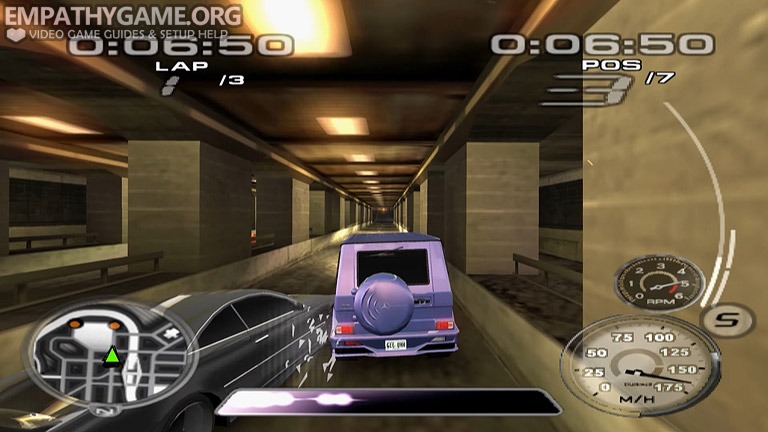
This is not a driving simulation, and its handling is more enjoyable when judged on those terms. Cars turn readily, handbrake slides are forgiving, and nitrous encourages taking chances rather than protecting every bit of grip. A crash can cost valuable time without necessarily ending the race. The important difference between vehicles is often how they cope with the city’s obstacles. A heavy SUV can force its way through traffic that would slow a tuner, while a sport bike can squeeze through narrow gaps but pays heavily for clipping a barrier or another vehicle.
The class abilities make those choices more interesting. Roar allows muscle cars and choppers to push surrounding traffic away, particularly useful when the fastest route suddenly fills with vehicles. Agro makes SUVs, trucks, and luxury vehicles more destructive in collisions, so driving straight through congestion becomes a viable strategy. Zone, available to tuners, sport bikes, and exotics, briefly slows the action and gives more time to react to a crowded intersection or a badly judged checkpoint approach. None makes a poor route good, but each affects how a driver can approach the same problem.
Slipstream Turbo adds a welcome twist to overtaking. Following a rival builds a separate boost, meaning second place can provide an advantage if the next straight offers room to use it. Together with nitrous, this creates a distinctive rhythm of chasing, accelerating, making a mistake, and sometimes recovering before the finish. The forgiving physics also have a cost. There is less satisfaction in mastering subtle grip changes or braking precision than in a technical racer. Midnight Club 3 rewards fast decisions, sensible boost use, knowledge of hazards, and understanding what each class can survive.
Customization Matters Most When It Changes the Race
The DUB influence extends well beyond a logo. Paint, rims, body kits, decals, tint, hydraulics, and other visual details can turn the garage into a project of its own. The variety of licensed vehicles makes this appealing because a tuned import, an old muscle car, an Escalade, and a sport bike each suggest a different kind of build. A new vehicle is not only a set of improved statistics. It is another opportunity to create something distinctive, which makes winning and spending money feel connected.
The performance side gives these choices consequences. Upgrading acceleration, top speed, and handling can keep an earlier favourite competitive, but club races and tournaments also require different vehicle categories. Spending heavily on appearances before improving a car’s performance can therefore leave it struggling when the competition becomes tougher. Prioritising upgrades is usually the more practical early decision. Later, prize vehicles and greater tournament earnings make experimentation easier. That gradual shift from making a car competitive to making it your own is an important part of the career’s appeal.
Career Progression Is Generous, but the Difficulty Can Be Opaque
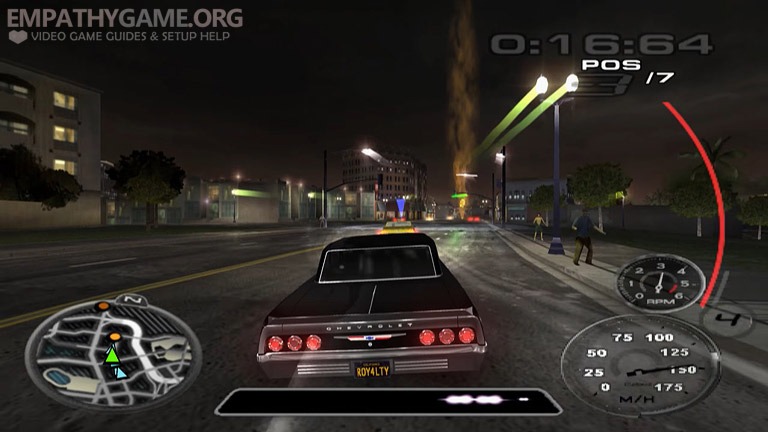
The career moves through a straightforward series of challenges: race local opponents, win tournaments, unlock performance upgrades and vehicle classes, then advance through the three American cities. Club events are especially useful because they prevent one fully upgraded favourite from becoming the answer to everything. Tuners, muscle cars, SUVs, luxury vehicles, choppers, and sport bikes all need attention at different points. Rather than simply collecting vehicles, the garage becomes a set of tools for different events. It also gives the handling differences more purpose than they would have in a career that allowed one car everywhere.
The opposition is harder to understand. Midnight Club 3 tracks a career skill rating, with continued wins able to raise the challenge and losses potentially reducing it. In principle, that should keep racing interesting even as the garage improves. In practice, the system provides little explanation. An event may feel noticeably harder after a run of success, yet it is difficult to know whether the real cause is stronger rivals, an unsuitable car, or an inefficient route. Difficulty is not the problem by itself. The uncertainty over what needs improving is.
That becomes especially noticeable when the checkpoint layout is demanding. Losing might mean the vehicle needs another upgrade, a shortcut has been missed, or a familiar intersection has caught the driver at the wrong moment. Sometimes several of those factors combine. The best races allow a failed attempt to teach a clear lesson, so the next run feels more deliberate. Others require enough repetition to discover an exact route and useful boost opportunities before the opposition starts to feel beatable. For an arcade racer built around freedom, that can be an uncomfortable shift toward trial and error.
Remix’s Tokyo Challenge Raises the Stakes
DUB Edition Remix adds Tokyo while retaining the original career. It works as a challenging extension of the three American cities rather than a replacement for them. The new events still favour open routes, speed, and traffic awareness, but they push the game’s uneven competitive logic further. In the Class C Asakusa Tournament, for example, a fully upgraded Nissan Skyline GT-R R34 can face low-end exotics including the Cadillac Cien, Lamborghini Diablo VT, and Gemballa models, despite the player’s own class restriction.
At first that seems to contradict the game’s vehicle-class system. Yet it also highlights why raw speed is not the whole story here. A well-upgraded Skyline can take tighter lines and handle dense streets more confidently, while a faster exotic may lose its advantage through wider turns or badly timed traffic encounters. Tokyo demands more careful choices about routes and vehicles, which can be genuinely rewarding once those choices become clear. The drawback is that the event rules do not always prepare the player for what is coming. Remix makes the strengths of Midnight Club 3 more pronounced, but also makes its less transparent difficulty harder to overlook.
Mid-2000s Car Culture Gives the Cities Their Personality
Midnight Club 3 has only a thin story, but the lack of a strong narrative does not leave the career without direction. Garage contacts, rival racers, clubs, and tournaments provide reasons to move forward. What changes most noticeably is the player’s collection of vehicles, from relatively modest early choices to more elaborate and expensive builds. In a way, the garage tells more of a story than the characters do.
The atmosphere carries much of the experience. Oversized rims, chrome, neon, hydraulics, aftermarket branding, and DUB’s magazine-inspired presentation capture a particular moment in mid-2000s car culture. It is excessive by design, and the game is more memorable for embracing that identity than it would have been by aiming for a timeless, neutral look. San Diego, Atlanta, and Detroit have different road shapes and racing rhythms, even if their characters rarely leave much impression. A favourite shortcut or troublesome intersection becomes more memorable than most of the thinly sketched rivals.
Music completes the picture. Hip-hop, rock, dancehall, and electronic tracks accompany engine noise, nitrous bursts, collisions, and crowded city streets. The result feels like a racing scene with its own personality rather than a collection of disconnected events. Some character animation and menu conventions clearly belong to an older generation, but the visual direction holds together because every part supports the same exaggerated style. Its age is visible without making the atmosphere feel confused or disposable.
Replayability Comes From Better Routes, Not a Different Story
The main career is only part of the available racing. Optional city events provide additional money, clubs reward maintaining several kinds of vehicle, hidden Rockstar logos give explorers something to find, and Arcade mode offers more ways to use the same environments. The route editor is particularly appropriate for Midnight Club 3 because it treats the streets as something to reinterpret rather than a collection of fixed courses. Local two-player Arcade racing also gives the garage another purpose beyond career progress.
Remix adds Tokyo Challenge, additional vehicles, music, races, and battle maps. Yet the strongest reason to replay is less about the amount of content than about how experience changes familiar events. The shortcut that seemed promising on a first attempt may prove too risky, while an unremarkable route can become the fastest choice in a different class. Traffic patterns and checkpoint approaches also become easier to read. A second run may follow the same progression, but the decisions behind it can be quite different. That makes replaying most appealing to people who enjoy mastering the cities and experimenting with vehicles, not those seeking a new story.
Final Verdict
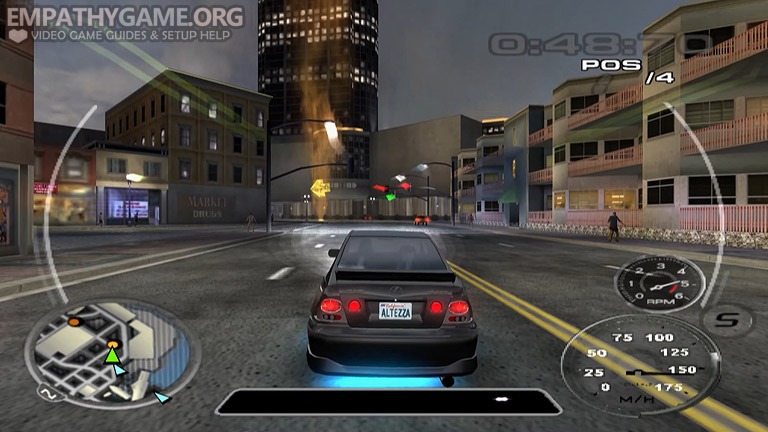
Midnight Club 3: DUB Edition remains distinctive because its main systems serve one idea remarkably well: build a car that reflects your style, learn the city, and find ways through traffic that a conventional racing line would never allow. Open checkpoints give navigation real importance, special abilities make classes useful for different reasons, and customization makes each stage of progress visible in the garage. Few racers make a shortcut feel as important as horsepower.
Not everything works as cleanly. Adaptive competition is poorly explained, some difficult routes only become clear after several failures, and traffic occasionally turns exciting improvisation into a memorisation exercise. The handling is designed for spectacle rather than fine precision, while Tokyo’s tougher events can expose the limits of the class system. Anyone who values consistent rules and technical driving above all else may find those compromises difficult to accept.
But for players who enjoy arcade speed, exploring alternative routes, collecting distinctive vehicles, and embracing the excess of tuner-era car culture, the imperfections are easier to forgive. Remix provides more demanding events and room for experimentation without losing the original career. Midnight Club 3 does not try to be a refined simulation. It is a racing playground built around momentum, memory, risk, and personal style. When those elements come together, even an ordinary intersection can become the most satisfying part of a race.
Midnight Club 3: DUB Edition Pros & Cons
- Pro: Fast, route-focused arcade racing makes city knowledge, shortcuts and improvisation matter instead of locking every event to a conventional circuit
- Pro: Extensive licensed-car, SUV, muscle-car and motorcycle selection combines visual customization with performance upgrades
- Pro: DUB Edition Remix is the most complete release, adding Tokyo, 24 vehicles, additional music, races and battle maps without removing the original three cities
- Pro: PCSX2 can present the PS2 version at substantially higher internal resolutions while providing modern controller configuration and emulator conveniences
- Pro: Strong combination of street-racing culture, vehicle customization, licensed music and open-city progression gives it a distinct identity among mid-2000s arcade racers
- Con: No native Windows release, official PC storefront installation, Steam features or Rockstar Launcher version exists
- Con: Legitimate PCSX2 setup is more involved than installing a normal PC game because it requires both a backup of an owned PS2 game disc and BIOS files dumped from an owned PlayStation 2
- Con: Original PS2-era loading, frame-rate behavior, textures and other engine limitations are not automatically removed by rendering the game at a higher resolution
- Con: Alternative versions involve compromises: xemu documents a visible graphics issue with the Xbox release, while the PSP version lacks the extra DUB Edition Remix content
Midnight Club 3: DUB Edition PC System Requirements
Rockstar has not published native Windows PC system requirements for Midnight Club 3: DUB Edition because the game has never received an official Windows release.
The specifications below are PCSX2’s general emulator requirements rather than Rockstar requirements for Midnight Club 3.
PCSX2 — Recommended PlayStation 2 Emulation Route
MINIMUM:
OS: Latest supported Windows 10 release
CPU: x86-64 processor with SSE4.1, PassMark single-thread rating of at least 1500, and two physical cores with SMT
RAM: 8 GB
GPU: Vulkan 1.1, Direct3D 11 or OpenGL 3.3 compatible GPU with a PassMark G3D Mark rating of at least 600
Additional Requirement: PlayStation 2 BIOS dumped from your own PS2 console
MODERATE / PRACTICAL TARGET:
OS: Windows 11
CPU: x86-64 processor with AVX2, PassMark single-thread rating of at least 2000, and four physical cores with or without SMT
RAM: 16 GB
GPU: Vulkan 1.3, Direct3D 12 or OpenGL 4.6 compatible GPU with a PassMark G3D Mark rating of at least 6000
VRAM: 4 GB
Additional Requirement: PlayStation 2 BIOS dumped from your own PS2 console
Additional PC Performance and Setup Notes
- PCSX2 notes that emulator requirements can vary considerably from one PlayStation 2 game to another, so meeting the minimum specification does not guarantee the same performance at every internal rendering resolution.
- Use the emulator’s normal settings first and confirm that races, menus, cutscenes and saves operate correctly before enabling extra patches or unusual timing changes.
- Widescreen presentation: The PCSX2 Remix compatibility page confirms a game-specific widescreen patch. After checking that your disc region and game version match the patch, open PCSX2, enable widescreen patches in the emulator settings, choose a 16:9 display aspect ratio, and restart the game. Increasing internal resolution alone only sharpens the image; it does not correct a stretched 4:3 view. Some HUD elements may remain imperfect, so disable the patch and return to 4:3 if the presentation causes trouble.
- A GPU meeting PCSX2’s moderate guidance provides much more headroom for increasing internal resolution above the original PlayStation 2 output.
- Keep current graphics drivers installed and test another supported renderer if a particular Vulkan or Direct3D configuration creates a driver-specific graphical problem.
- A controller is preferable to keyboard-only input because analog steering, triggers and rapid vehicle controls were designed around a console gamepad.
- Use ordinary in-game memory-card saves as your main progress record and keep backups before experimenting with community patches, replacement textures or major configuration changes.
Official Trailer
Note: This archival upload of Rockstar’s original Midnight Club 3: DUB Edition trailer shows its open-city street racing, licensed vehicles, customization and high-speed presentation. The written guide above adds the DUB Edition Remix differences, current PC-release status and modern PCSX2 emulation guidance.
Frequently Asked Questions
What is the difference between Midnight Club 3: DUB Edition and Remix?
DUB Edition Remix contains the original San Diego, Atlanta and Detroit career plus Tokyo Challenge, 24 additional vehicles, extra music, races and battle maps. For a new PS2 or Xbox playthrough, Remix offers the fuller content set.
Is there an official Midnight Club 3 PC download?
No. Rockstar has not released the original DUB Edition or Remix as a native Windows PC game. PCSX2 can run a lawfully backed-up PS2 copy, but downloading the emulator is not the same as obtaining a licensed PC game download.
Does Remix include the original career, and how does Tokyo Challenge work?
Yes. The original U.S. career is retained. Tokyo Challenge is a separate mode accessible from the main menu; you can enter it independently, although some class-restricted tournaments are easier to finish after unlocking suitable vehicles in the U.S. career.
Can an original DUB Edition save be transferred into Remix?
Yes, the PS2 Remix release supports importing a compatible original PS2 DUB Edition save. In PCSX2, the old save must be accessible on the emulated memory card used when starting Remix.
How do you unlock higher performance upgrades?
Higher upgrade levels become available by progressing through career events, defeating racers and completing key tournaments. Purchasing a faster car alone does not unlock every upgrade tier.
How do Roar, Agro and Zone work?
These are class-specific abilities earned through Career Mode. Muscle cars and choppers use Roar to scatter traffic; SUVs, trucks and most luxury sedans use Agro to force through collisions; tuners, sport bikes and exotics use Zone to slow the action for more precise steering. Certain individual models may be exceptions.
What is Slipstream Turbo?
Drafting closely behind an opponent builds a separate Slipstream Turbo meter. When charged, it supplies an overtaking boost that can be saved for a straight or a recovery after losing speed.
Should I replace my starting car immediately?
Not necessarily. Early cars can continue winning after upgrades, and learning shortcuts can be more valuable than an immediate purchase. Switch when another vehicle class suits your preferred handling or when a race requires a particular class.
Why do races stay difficult after upgrading a vehicle?
Open checkpoint routes reward navigation, traffic awareness and choosing an efficient path, not just top speed. Missing a shortcut or approaching a checkpoint from the wrong street can erase the advantage of stronger parts.
What do the hidden Rockstar logos unlock?
There are 36 logos across the original three U.S. cities. Finding 12 unlocks flag vinyls, 24 unlocks Rockstar license plates, and all 36 unlocks additional race-starter characters as motorcycle riders.
What counts toward 100% completion in DUB Edition Remix?
The required U.S. career racers, championship, tournaments and vehicle-club events must be finished, along with Tokyo Challenge. Collecting the 36 hidden Rockstar logos provides separate rewards and is not required for the main completion percentage.
Can you keep playing after becoming U.S. Champion?
Yes. Free roaming, optional events, unfinished club races, garage customization and cruising remain available. In Remix, Tokyo Challenge is also a separate progression path.
Does DUB Edition Remix have split-screen multiplayer?
Yes. The PS2 and Xbox editions support two-player local split-screen in Arcade Mode. For local play with a PS2 copy in PCSX2, configure two emulated controllers; this does not restore the original internet multiplayer.
Are the official Midnight Club 3 online servers still available?
No. The original Rockstar-supported online multiplayer and in-game leaderboards were discontinued during the legacy GameSpy service shutdown. Offline solo play and local multiplayer are separate from those closed online services.
Can you build custom race routes?
Yes. The route editor lets you place checkpoints in the unlocked city maps to create your own race courses, using the same streets and shortcuts as regular events. Remix adds Tokyo to the available environments.
Is the PSP version the same as DUB Edition Remix?
No. PSP received the original Midnight Club 3: DUB Edition, not the expanded Remix release. It therefore lacks the Tokyo Challenge and other Remix additions.
Does PCSX2 support widescreen and optional 60 FPS patches?
A game-specific widescreen patch exists for the PS2 Remix release; follow the version-sensitive settings advice in the PC System Requirements section. Unofficial higher-frame-rate patches are optional, more demanding and not part of the default setup. Verify normal game timing and stable saves before experimenting.
Can Midnight Club 3 run on Steam Deck?
It can be attempted through PCSX2 on Linux/Steam Deck rather than through an official Steam edition. No Steam Deck compatibility rating applies to Midnight Club 3 itself. Emulation requires your own lawful game backup and PS2 BIOS, and performance is not guaranteed.
Still have questions? Check the Midnight Club Reddit community, PCSX2 Forums, or the PCSX2 Remix compatibility page for more discussion and technical help.
Sources & References
Key release, platform, PC-emulation and review information was checked against these official and established references:
- Rockstar Games — Midnight Club 3: DUB Edition — original release date, developer and PS2/Xbox/PSP platforms.
- Take-Two / Rockstar — DUB Edition Remix announcement — added Tokyo city, 24 vehicles, music, events and battle maps.
- PlayStation.Blog — December 2012 Store update — historical PS3 PS2 Classics release of Remix.
- PCSX2 — System Requirements — minimum and moderate Windows host-computer specifications.
- PCSX2 — BIOS Dumping and Disc Dumping — obtaining required BIOS and owned-disc backup files through the emulator project’s documented methods.
- PCSX2 Wiki — Midnight Club 3: DUB Edition Remix — game compatibility, local multiplayer, save import and widescreen patch availability.
- xemu — Midnight Club 3 compatibility — Xbox emulation status and reported headlight-rendering issue.
- MobyGames — Remix PS2 credits — AGE game-engine credit corroborated with the original game credits.
- Metacritic — DUB Edition Remix — version-specific PS2 and Xbox critic scores.
Similar Games Like Midnight Club 3: DUB Edition
- Need for Speed Underground 2
- Need for Speed Carbon
- Need for Speed Most Wanted (2005)
- Need for Speed Heat
- Burnout Paradise
- Driver: San Francisco
Found something worth playing through DecideGame?
DecideGame.com is an independent gaming project run by Editor Zero. If this guide helped you discover a game, solve a problem, or find useful information, you can support DecideGame.com and help keep new and updated game guides coming.
DecideGame — PC Game Guides, Reviews & Setup Help