
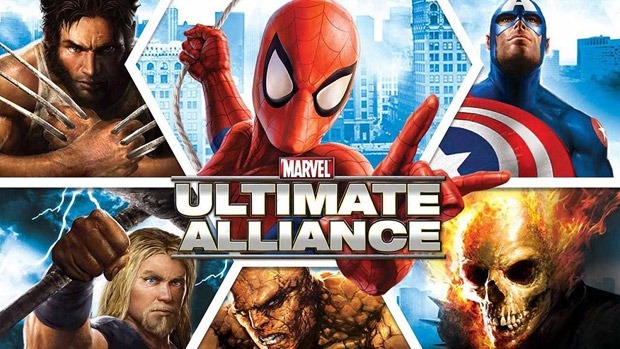
📅 Game released: 2006
Use this updated 2026 Marvel: Ultimate Alliance PC guide to check the 2016 rerelease’s official download status, Steam reinstallation guidance for existing owners, system requirements, Steam Deck support, co-op, mods, and the important differences from the original 2006 PC release.
 By Editor Zero — independently researched, edited, and maintained.
Last updated: 25 September 2026
Last reviewed: 25 September 2026
Table of Contents
- Quick Summary
- Quick Facts
- Official PC Stores, Download & Installation
- Marvel: Ultimate Alliance Review
- Pros & Cons
- PC System Requirements
- Frequently Asked Questions
- Similar Games
Marvel: Ultimate Alliance Quick Summary
✔ Superhero action RPG built around assembling a four-character Marvel team and switching between heroes while fighting, exploring, solving light puzzles, collecting gear, and developing powers
✔ Doctor Doom and the Masters of Evil drive a globe- and universe-spanning campaign featuring the Avengers, X-Men, Fantastic Four, Spider-Man, Marvel Knights, cosmic heroes, villains, and numerous famous locations
✔ The 2016 Windows version is a faithful modern-platform rerelease with performance, interface, graphics, controller, and platform improvements rather than a ground-up remake
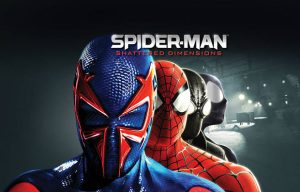
✔ Similar to Spider-Man: Shattered Dimensions through fast superhero combat, character-specific powers, Marvel villains, comic-book environments, and large boss encounters, although Ultimate Alliance adds party building and deeper RPG progression
✔ Local cooperative play lets several players control members of the same four-hero squad, while solo players can switch directly between characters and let the AI handle the others
✔ The 2016 Steam release is no longer offered for normal new purchase, while the original 2006 PC edition has different DRM, compatibility, and modding considerations
Marvel: Ultimate Alliance Quick Facts
Official PC Store Status, Download & Installation
👇 Use the notes below to understand the current official PC availability status for Marvel: Ultimate Alliance and avoid unsafe or unofficial acquisition options.
- Current PC purchase status: Marvel: Ultimate Alliance is no longer offered for normal new purchase through Steam, and no replacement official Windows storefront was found during verification.
- Existing Steam owners: The 2016 Windows app and Steam Support records remain active. If the game is already registered to your Steam account, use your Steam Library and normal Steam installation tools rather than obtaining replacement game files elsewhere.
- 2016 rerelease: This is the most relevant modern Windows version for ordinary PC ownership. It was built by Zoë Mode from Raven Software’s game and adds performance, interface, graphics, controller, achievement, and modern-platform improvements while preserving the original campaign and core design.
- 2006 PC version: The original Beenox Windows port is a separate release and does not provide Steam ownership of the 2016 version. Its retail SafeDisc 4 protection is incompatible with modern Windows installations such as Windows 10 and Windows 11.
- Steam DRM: The 2016 Windows release uses Steam DRM. It does not require a separate Activision launcher or a modern Activision account for the single-player campaign.
- Co-op: Steam records shared/split-screen and online cooperative functionality, and the updated PC build supports up to four controllers. Because this is an older unsupported release, players should not assume that every historical online function or matchmaking path will remain equally dependable indefinitely.
- Original online services: The 2006 PC version relied on legacy GameSpy-era online infrastructure, so its original native online service should not be treated as a current PC multiplayer route.
- Steam Deck: Valve rates the 2016 Steam build Playable. The default graphics configuration performs well, but some functions may require an alternate controller configuration and local multiplayer with external USB or Bluetooth controllers is not supported on Deck.
- Mod compatibility: The original 2006 PC release is the main target for the long-running community mod ecosystem. Do not assume a mod written for that edition will work with the differently packaged 2016 Steam build, and back up saves and modified files before experimenting.
 Marvel: Ultimate Alliance Steam Support for Existing Owners

Marvel: Ultimate Alliance Review
A huge Marvel roster and flexible team-building give simple brawling far more staying power than its basic combat suggests.
Marvel: Ultimate Alliance succeeds less because any single hero feels extraordinary and more because it constantly encourages the player to reconsider the whole squad. Raven Software takes the action-RPG structure of X-Men Legends—compact levels, repeated enemy groups, powers, equipment, light puzzles, bosses—and expands it into a crossover where Spider-Man, Thor, Wolverine, Doctor Strange, the Fantastic Four, and far stranger combinations can fight side by side. The immediate combat is approachable rather than technical, but the roster gives that simplicity room to breathe.
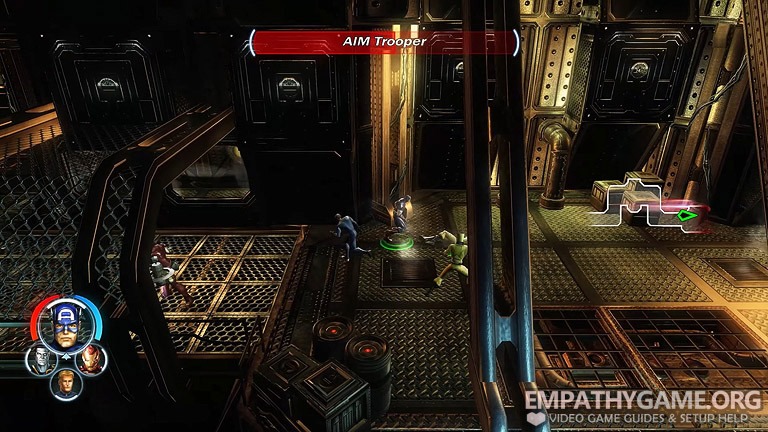
That distinction matters because the basic loop is undeniably repetitive. Most missions funnel the team through corridors and arenas, asking them to clear enemies, break scenery, collect upgrades, and move toward the next objective. Companion AI can be clumsy, the camera is not always graceful, and many encounters can be solved by leaning on a few reliable powers. Yet swapping heroes changes range, mobility, crowd control, buffs, defensive tools, and even small pieces of dialogue. The result is an action RPG whose long-term appeal comes from experimentation rather than mechanical precision. Players who enjoy building unusual superhero teams, tuning powers, and revisiting content with different lineups will find much more here than players seeking a demanding character-action game.
The Four-Hero Team Is the Real Combat System
The smartest decision in Marvel: Ultimate Alliance is allowing control to jump instantly between four active heroes. A difficult crowd can be approached through brute force with characters such as Wolverine or The Thing, softened from range by Captain America or Iron Man, or controlled through wider-area powers from heroes such as Storm or Human Torch. Flying characters also alter traversal in small but useful ways, while grounded heroes may rely on double jumps or environmental routes. The individual move sets are not equally deep, but the ability to combine them makes the squad more interesting than any one hero in isolation.
Named team bonuses add an immediate incentive to build comic-book lineups such as the Avengers, X-Men, Fantastic Four, or Marvel Knights, while the custom-team system adds a longer progression layer through reputation and unlockable team bonuses. More importantly, the game does not punish curiosity too harshly. Heroes outside the active squad continue to gain experience at a reduced rate, so bringing a neglected character into a later mission does not mean dragging a level-one liability through endgame enemies. That catch-up system supports one of the game’s best qualities: the roster is meant to be used, not merely collected.
There are also smaller rewards for choosing the “right” character for a scene. Certain bosses and NPCs react differently to specific heroes, such as Spider-Man drawing unique dialogue around Mysterio or Daredevil and Elektra changing encounters with familiar enemies. These exchanges do not alter the campaign mechanically, but they make roster experimentation feel acknowledged by the world. A second playthrough can therefore reveal details that a mechanically identical team would never hear.
The freedom is not absolute. A player can lead most fights with one favourite hero, but some puzzles require more than one character to operate switches or interact with the environment. That occasionally interrupts the fantasy of a strict solo-character run, yet it also reinforces the idea that Ultimate Alliance was designed around a functioning squad rather than four interchangeable health bars.
Simple Brawling Hides Useful Mechanical Texture
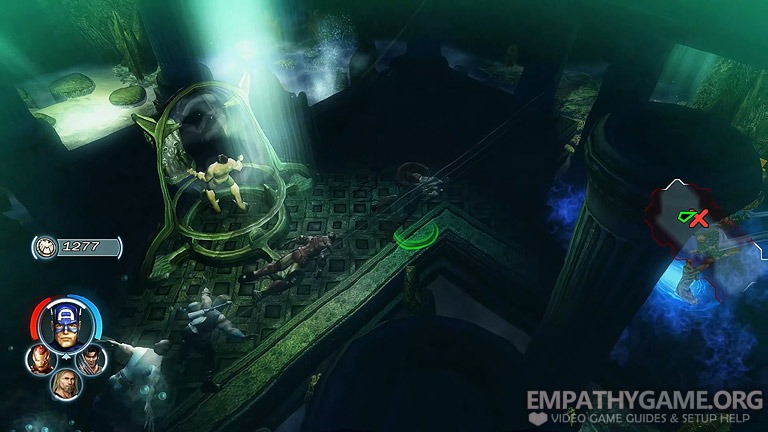
At first glance, combat is little more than light attacks, heavy attacks, throws, powers, and crowd-clearing Xtreme moves. The strongest heroes soon develop obvious bread-and-butter options, and ordinary enemies rarely demand elaborate combo knowledge. The game is therefore easy to describe as shallow, especially when another hallway fills with disposable A.I.M., Atlantean, Skrull, or demonic enemies.
There is more texture underneath that simplicity than the early hours communicate. Grabs can lead into character-specific smash attacks rather than merely throwing an opponent away. The Thing, for example, can repeatedly slam a grabbed enemy into the ground and clip nearby enemies with the impact, turning what looks like a novelty animation into situational crowd control. Disarms, knockbacks, pop-ups, destructible objects, and status effects add similar small decisions. None of them transforms the game into a technical brawler, but they reward players who move beyond spamming a favourite power.
Buffs create an even deeper layer because their interactions are not completely uniform. Some active bonuses can coexist while others replace one another, meaning a team built around complementary boosts can outperform four individually strong heroes who contribute little to each other. Human Torch’s Ring of Fire, for example, can function alongside offensive boosts from characters such as Deadpool or Captain America. The game barely teaches this level of synergy, so team construction becomes more interesting once power interactions start mattering as much as raw damage.
That poor communication is a recurring weakness. Certain buff powers share control assignments and are meant to be hot-swapped rather than mapped like ordinary attacks, but the interface explains this badly. It is possible to spend a long time assuming a power cannot be assigned properly when the game is actually expecting a different input method. Ultimate Alliance often contains more mechanical flexibility than its menus manage to communicate.
Mission Variety Comes From Marvel Spectacle, Not Level Complexity
The campaign moves through an unusually broad slice of Marvel mythology. The opening S.H.I.E.L.D. helicarrier quickly gives way to Atlantis, Stark Tower, Mandarin’s territory, Murderworld, Asgard, Mephisto’s Realm, the Shi’ar Empire, the Skrull homeworld, and Doctor Doom’s Latveria. Most of these areas remain structurally straightforward, but the constant shift in villains, scenery, hazards, and supporting characters prevents the adventure from feeling like one endlessly recycled dungeon.
Murderworld is a good example of the game’s strengths. Arcade’s carnival setting changes the visual language completely, mixing traps, clowns, bumper cars, fake scenery, and deliberately absurd threats. The objectives are still built from familiar combat and interaction systems, yet the presentation makes them memorable. Later cosmic sequences involving Galactus similarly lean on spectacle and objective-based set pieces rather than asking the player to simply empty another boss health bar.
Puzzles are more uneven. Some are brief interruptions that break up fighting without overstaying their welcome; others communicate their solution poorly or become awkward when AI teammates fail to position themselves sensibly. The best puzzles use the squad concept or a hero’s mobility naturally; the weaker ones rely on awkward companion positioning or poorly signposted interactions.
The Story Works Best as a Giant Comic-Book Crossover
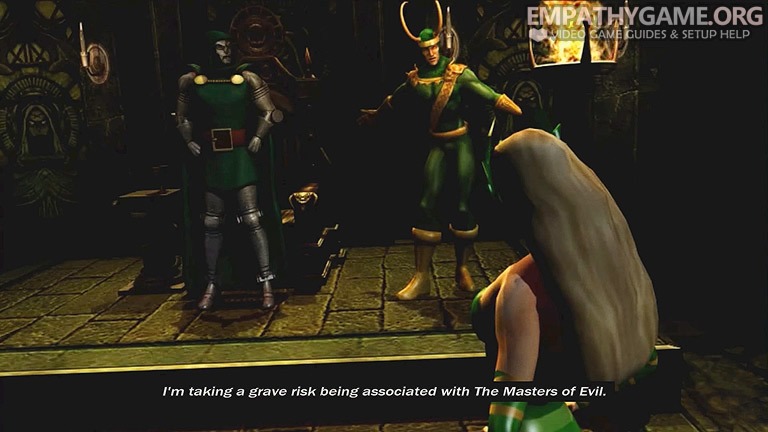
Doctor Doom’s alliance of villains gives Nick Fury a simple reason to assemble an enormous coalition of heroes, and the plot wisely treats that premise as an excuse to tour the Marvel universe. This is not a tightly focused character drama. It is a crossover event in video-game form, packed with cameos, villains, supernatural detours, cosmic threats, and unlikely partnerships.
That excess is part of the charm. Street-level characters can stand beside gods and cosmic beings without the script spending hours justifying the mismatch. Voice performances and dialogue sometimes have the broad theatrical quality of mid-2000s licensed games, and exposition can arrive in heavy blocks, but the tone suits the material. The campaign understands that much of the pleasure comes from seeing familiar corners of Marvel collide.
Optional decisions also affect some of the consequences shown at the end. They do not create radically different campaign branches, but they give rescues and secondary objectives a little more weight than a simple experience reward. Combined with roster-specific conversations, this makes the story slightly more responsive than its linear structure first suggests.
Progression Encourages Experimentation More Than Specialization
Character growth is flexible enough to support constant roster changes. Leveling provides power points, credits can buy additional points, equipment modifies statistics, and power allocations can be redistributed rather than locking a hero into a bad early build. Alternate costumes are particularly useful because they are not purely cosmetic: each outfit carries upgradeable traits that can favour health, energy, damage, critical chance, regeneration, or other bonuses.
Because inactive characters keep pace reasonably well, experimentation rarely requires grinding a forgotten hero from scratch. The larger decision is how much currency and equipment to invest in someone who may leave the active squad later. Character-specific gear makes favourites feel more distinctive, while general equipment can be shifted around as the roster changes. It is not a deep loot RPG, but team choice feels more meaningful than choosing four skins.
Hard difficulty and carried-over progression give a second run a stronger purpose. Once characters approach the level cap, ordinary leveling no longer supplies an endless stream of power points, so permanent pickups, purchased points, and Simulator rewards become more valuable. That creates an interesting late-game shift: early progression is about unlocking powers, while long-term progression becomes about refining a smaller group and squeezing more value from optional systems.
Simulator Missions Expose the Game’s Most Interesting Edges
Training Simulator discs are where Marvel: Ultimate Alliance often asks more of its mechanics than the main campaign. Medal targets reward speed, score efficiency, survival, and knowledge of a specific hero rather than simply reaching the end. Bronze, silver, and gold goals also feed back into progression through costume and stat rewards, giving completion-focused players a reason to understand characters they might otherwise ignore.
Mr. Fantastic’s Arcade-themed simulation illustrates the difference. His projectile-reflection buff can neutralize much of the incoming pressure, while the bumper-car section can be manipulated for score by taking advantage of repeatedly spawning clown enemies. Success there depends less on having the highest level than on understanding how the encounter is scripted and which tools the character already possesses. Other Simulator missions similarly reward reassigning power points, changing costumes, or approaching scoring rooms differently.
Chasing every medal can become repetitive, and some challenges are more demanding than elegant. Still, the Simulator gives the broad roster a practical purpose beyond campaign novelty.
Co-op Strengthens a Game Built Around Roles
Marvel: Ultimate Alliance naturally benefits from cooperative play because human partners solve one of the single-player campaign’s persistent weaknesses: companion AI. AI teammates are competent enough for ordinary combat but can waste powers, drift into hazards, or fail to exploit a useful role at the right moment. With other players controlling the squad, ranged damage, crowd control, melee pressure, and buffs can be coordinated deliberately instead of left to automation.
The design remains accessible rather than deeply tactical, but cooperation makes the roster’s differences easier to appreciate. One player can hold a boss’s attention with a durable melee character while another clears smaller enemies, supports the team with buffs, or attacks safely from range. Shared control simply makes the team fantasy more convincing.
Presentation Has Aged More Than the Personality
The game’s age is easiest to see in animation, camera behaviour, menu design, and the repeated corridor-and-arena construction of many levels. Attacks can feel stiff beside newer action RPGs, environmental interaction is limited, and the interface often buries useful systems behind layers of menus or weak explanations. The visual detail is modest even when the locations themselves are imaginative.
Art direction and character variety compensate for a great deal of that. Moving from Mephisto’s infernal realm to Asgard or the Skrull homeworld gives the campaign a strong comic-book travelogue quality, and the constant arrival of new allies and villains keeps the visual identity changing. The game does not need realistic animation to sell the pleasure of assembling improbable Marvel teams; it needs readable powers, recognizable characters, and enough spectacle to make each chapter feel like a new issue of a crossover event. On that level, it still works.
Final Verdict
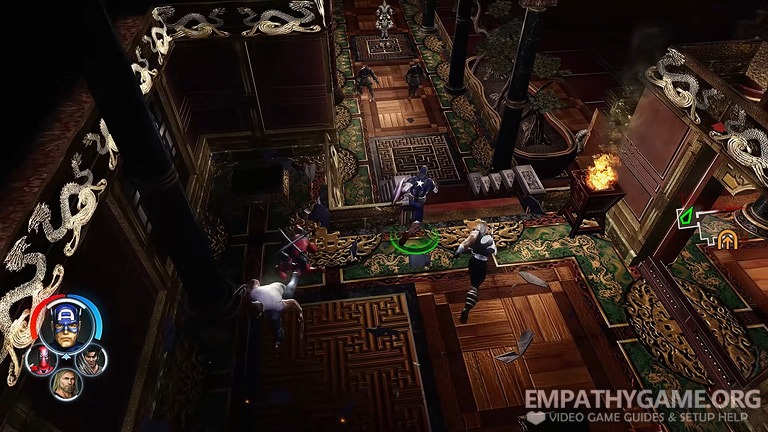
Marvel: Ultimate Alliance is not carried by sophisticated melee combat. Its ordinary encounters are repetitive, AI partners can be awkward, some puzzles are clumsy, and important mechanics are explained less clearly than they deserve. Anyone looking for precise modern action combat or highly reactive level design will feel those limitations quickly.
What keeps the game compelling is the way its systems support roster experimentation. Switching among four heroes, building comic-accurate or mechanically complementary teams, combining buffs, developing costumes, chasing character-specific gear, uncovering special dialogue, and taking different heroes into Simulator missions all give the same straightforward campaign new texture. Even small mechanics such as grab-smash attacks or selective buff stacking reward players who look beyond the obvious attacks.
The campaign also understands the appeal of a Marvel crossover better than many licensed games: it moves rapidly between heroes, villains, realms, and cosmic threats without pretending that every encounter needs narrative restraint. That breadth gives personality to an action-RPG structure that would otherwise wear thin. For Marvel fans who enjoy team building, light character progression, completion goals, and cooperative brawling, Ultimate Alliance remains a distinctive superhero RPG—not because its combat has aged flawlessly, but because very few games make assembling an absurd four-hero lineup feel this central to the adventure.
Marvel: Ultimate Alliance Pros & Cons
Marvel: Ultimate Alliance PC System Requirements
OFFICIAL 2016 WINDOWS PC REQUIREMENTS:
MINIMUM:
OS: Windows 7 SP2 64-bit
CPU: Intel / AMD Hyper-Threaded Dual Core CPU
RAM: 4 GB
GPU: NVIDIA GeForce GTS 450 / AMD Radeon HD 5670
DirectX: Version 11
Storage: 8 GB available space
Network: Broadband Internet connection
Sound Card: DirectX 11 Compatible
RECOMMENDED:
No separate official recommended hardware specification was published for the 2016 Windows rerelease.
Additional PC Performance and Setup Notes
- Modern Windows: Although the historical system-requirements page lists Windows 7 SP2, the current Steam client itself supports Windows 10 and newer. The 2016 release is therefore the more practical owned copy to maintain on a modern Steam installation.
- Installation size: Steam’s published requirement is 8 GB of available space. The current Steam depot data is smaller than that requirement, so keeping at least the full 8 GB available remains the safer installation target.
- Display support: The 2016 PC version supports widescreen and 4K resolutions and can run above 60 FPS, although it remains an older game with limited graphics configuration compared with modern PC releases.
- Steam Deck: Valve rates the game Playable and says its default graphics configuration performs well. Some controller functions may require configuration changes, and button prompts are not always Deck-specific.
- Local multiplayer on Deck: Valve specifically notes that external Bluetooth or USB controllers are not supported for local multiplayer on Steam Deck / SteamOS, making the handheld less suitable for four-player couch sessions.
- Original 2006 edition: Hardware demand is very low by modern standards, but the retail edition’s SafeDisc protection is incompatible with Windows 10 and Windows 11. This is a compatibility issue rather than a performance limitation.
- Mods and saves: Back up save and configuration folders before changing files. Mods made for the original 2006 PC build should not be assumed to work with the 2016 Steam rerelease.
Official Trailer
Note: This 2016 GameSpot trailer shows the rereleased version’s Marvel roster, environments, team combat, powers, and refreshed presentation, while the written guide adds PC availability, 2006-versus-2016 differences, system requirements, Steam Deck support, mod compatibility, and installation guidance.
Frequently Asked Questions
Is Marvel: Ultimate Alliance worth playing in 2026?
Yes. Its large Marvel roster, four-hero team building, straightforward action-RPG progression, local co-op, unlockable costumes, and comic-book mission structure still give it an identity that newer superhero games rarely copy directly. The main qualifications are its dated combat repetition, controller quirks on PC, and the lack of a normal official purchase option for new Windows players.
Is the 2016 Marvel: Ultimate Alliance version a remake or a remaster?
It is best treated as an enhanced rerelease or remaster rather than a remake. It preserves the original campaign, levels, combat, progression, and general presentation while updating the game for newer platforms with higher-resolution output and other technical improvements.
Should PC players use the 2016 version or the original 2006 version?
The 2016 Steam release is generally the more convenient version for an existing owner who simply wants to play on a modern PC. The 2006 Windows version is much more important for the long-running modding scene, but its old retail DRM and compatibility requirements make it less straightforward on modern Windows.
Can you still buy Marvel: Ultimate Alliance on PC?
There is no normal official Windows storefront purchase available for new buyers. Existing Steam owners can retain access through their library, but third-party listings should not be confused with a current first-party Steam sale.
Does the 2016 PC version include the old Xbox 360 DLC characters?
Yes. The updated roster includes Cyclops, Hawkeye, Hulk, Nightcrawler, Doctor Doom, Magneto, Sabretooth, and Venom, the eight characters that were originally associated with the Xbox 360 Heroes and Villains content.
Does the 2016 version contain every character from every version of Marvel: Ultimate Alliance?
No. It includes important former console-exclusive content such as Colossus, Moon Knight, and the eight Xbox 360 DLC characters, but it does not contain every PSP-exclusive character. Black Widow, Captain Marvel and Ronin are notable omissions from the standard 2016 roster.
How do you unlock characters in Marvel: Ultimate Alliance?
Several heroes are tied to specific objectives or collectibles: Doctor Strange joins after his rescue quest, Blade comes from the Murderworld claw challenge, Ghost Rider is rescued in Mephisto’s Realm, and Daredevil and Black Panther require their respective action figures. Nick Fury is a completion reward, while Silver Surfer is tied to earning the required medals across the Training Simulator missions.
Do you need a perfect team to finish Marvel: Ultimate Alliance?
No. The campaign allows a wide range of character combinations to succeed, so choosing heroes you enjoy is usually more useful than following one rigid meta team. Certain combinations do activate special team bonuses, however, which can improve attributes such as health, energy, damage, resistances, experience, or credit gain.
How do team bonuses work?
Specific combinations of Marvel characters form named teams such as the Avengers, Fantastic Four, X-Men, Marvel Knights, or other themed groups and grant an extra passive bonus. This rewards experimenting with comic-accurate or mechanically complementary lineups without making those teams mandatory.
Can you switch between heroes during gameplay?
Yes. In single-player you control one member of your four-hero squad at a time and can switch to another active teammate when needed. Changing which characters belong to the full squad is handled through S.H.I.E.L.D. access points rather than freely replacing the entire roster in the middle of combat.
What do alternate costumes do besides change appearance?
Costumes are not purely cosmetic. Different outfits can provide upgradeable stat bonuses, so a preferred costume can become part of a character build as well as changing the hero’s appearance.
How do you unlock alternate costumes?
Many costumes unlock by defeating enemies while directly controlling that hero, while the final costume for many standard characters is tied to earning at least a Bronze medal in their personal Simulator mission. Characters without a normal personal Simulator disc can use different unlock conditions, so not every hero follows exactly the same pattern.
What are Simulator Discs and are they worth completing?
Simulator Discs unlock optional comic-book-style challenges through the Training Simulator. Medal rewards can provide costume unlocks, permanent stat improvements and talent points, while completing the required Simulator challenges is also connected to unlocking Silver Surfer.
Can Simulator Discs be missed?
Yes. Some discs are located in areas that cannot always be revisited later, so completion-focused players should search carefully before permanently leaving major locations. Keeping multiple manual saves is useful if you want every Simulator mission and collectible without replaying most of the campaign.
Does Marvel: Ultimate Alliance have different endings?
Yes, although it does not branch into completely separate campaigns. Optional objectives and certain decisions affect the consequences shown during the ending, giving side activities more meaning than simply providing extra rewards.
Does Marvel: Ultimate Alliance have New Game Plus?
Yes. After completing the campaign, the game supports another playthrough using carried-over progression, making it useful for developing more characters, finishing unlocks, and tackling a higher difficulty.
What carries over into New Game Plus?
Character progression, unlocked heroes, upgraded costumes and much of your accumulated equipment can carry forward. Simulator Discs must be collected again in the new campaign, so New Game Plus does not simply preserve every collectible objective as already completed.
Should I sell unique equipment?
Be cautious. Marvel: Ultimate Alliance does not provide the kind of unlimited storage system found in some RPGs, and important unique equipment may not simply drop again after being sold. If an item appears character-specific or difficult to replace, keeping it is safer than selling it for a small amount of credits.
Does Marvel: Ultimate Alliance support local co-op on PC?
Yes. The 2016 PC release supports local cooperative play with multiple controllers and was updated to support as many as four controllers. Controller recognition can still be temperamental with some modern or third-party devices, so test every controller before beginning a long multiplayer session.
Does the 2016 Steam version have online co-op?
Yes, online multiplayer is part of the 2016 Steam release, with support for cooperative sessions and Steam-based invites. Because it is an old, delisted title without active modern support, local co-op is the more dependable option and online matchmaking should not be assumed to have a large active population.
Does Marvel: Ultimate Alliance support crossplay?
No documented cross-platform multiplayer system connects the 2016 PC release with PlayStation or Xbox players. Multiplayer should therefore be treated as platform-specific.
Why do some controllers have incorrect buttons in the PC version?
Controller mapping has been a recurring PC issue, particularly with some third-party, PlayStation-style, and newer controllers. The 2016 release received controller improvements, but modern Steam discussions still report cases involving swapped buttons, inactive triggers, or layouts that require Steam Input or a suitable community controller configuration.
Does Marvel: Ultimate Alliance work on Steam Deck?
Yes, for Steam accounts that already own the 2016 release. Valve rates it Playable and says the game performs adequately, but the default controller configuration does not expose every function cleanly and some button icons do not match the Deck; external Bluetooth or USB controllers are also not supported for local multiplayer under SteamOS.
Does Marvel: Ultimate Alliance work on Windows 10 and Windows 11?
The 2016 Steam version is the more practical choice for modern Windows systems, although controller or display quirks can still vary by configuration. The original 2006 retail PC version is significantly more troublesome because its SafeDisc copy protection is not supported normally by Windows 10 or Windows 11.
Can Marvel: Ultimate Alliance be modded on PC?
Yes, but version choice matters. The established MarvelMods ecosystem primarily targets the original 2006 English PC release and includes character, roster, interface, texture and content-restoration projects; many of those mods are not compatible with the 2016 Steam version, and there is no official Steam Workshop.
Can Marvel: Ultimate Alliance be played offline?
The single-player campaign in the 2016 Steam release does not require a continuous internet connection after normal Steam installation and authentication. Online multiplayer and Steam-dependent network features naturally require a connection.
Still have questions? Check the Marvel: Ultimate Alliance Steam Discussions, MarvelMods community, or Steam Support for Marvel: Ultimate Alliance for additional PC help and community discussion.
Sources & References
Key factual and technical information in this guide was checked against relevant official and community sources, including:
- Steam Support — Marvel: Ultimate Alliance — official Steam release information, PC features, developer/publisher details, and minimum Windows system requirements
- SteamDB — Marvel: Ultimate Alliance — Steam app metadata, release information, review data, Steam Deck compatibility, controller notes, and modern SteamOS behavior
- PCGamingWiki — Marvel: Ultimate Alliance (2016) — 2016 PC availability, Steam DRM, saves, controller support, display features, and technical differences
- PCGamingWiki — Marvel: Ultimate Alliance (2006) — original Windows release information, SafeDisc compatibility, configuration, saves, and legacy PC technical notes
- GameSpot — Marvel: Ultimate Alliance 2016 rerelease coverage — contemporary information about the rerelease’s performance, UI, graphics, modern-platform improvements, and local/online co-op
- Metacritic — Marvel: Ultimate Alliance — original release critic reception and Metascore
Similar Games Like Marvel: Ultimate Alliance
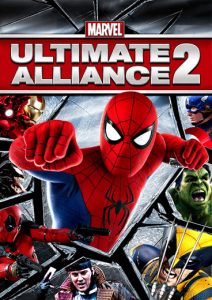
- Marvel: Ultimate Alliance 2
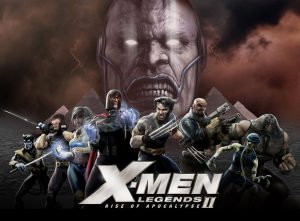
- X-Men Legends II: Rise of Apocalypse
- X-Men Origins: Wolverine
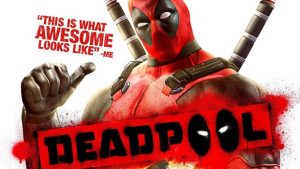
- Deadpool
- Spider-Man: Shattered Dimensions
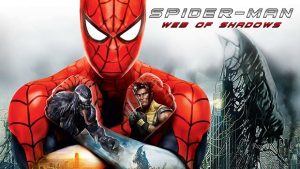
- Spider-Man: Web of Shadows

Found something worth playing through DecideGame?
DecideGame.com is an independent gaming project run by Editor Zero. If this guide helped you discover a game, solve a problem, or find useful information, you can support DecideGame.com and help keep new and updated game guides coming.
DecideGame — PC Game Guides, Reviews & Setup Help