
📅 Game released: 2010
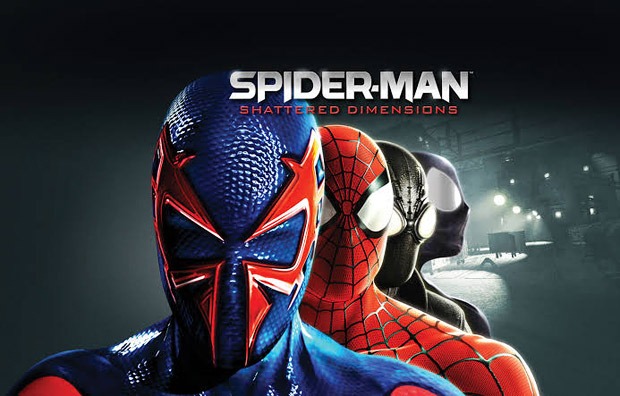
Spider-Man: Shattered Dimensions is a linear action-adventure that sends Amazing, Noir, 2099, and Ultimate Spider-Man through four comic-inspired worlds to recover fragments of a shattered mystical tablet. This PC guide explains official download availability for existing owners, retail-disc installation limitations, the original system requirements, modern Windows compatibility, and practical community display fixes.
 By Editor Zero — independently researched, edited, and maintained.
Last updated: 4 November 2026
Last reviewed: 4 November 2026
Table of Contents
- Quick Facts
- Official PC Stores, Download & Installation
- Spider-Man: Shattered Dimensions Review
- Pros & Cons
- PC System Requirements
- Frequently Asked Questions
- Similar Games
Spider-Man: Shattered Dimensions Quick Facts
- Game: Spider-Man: Shattered Dimensions
- Developer: Beenox (main versions); Griptonite Games (Nintendo DS)
- Publisher: Activision
- Genre: Action-Adventure, Brawler / Beat ’em Up, with stealth and platforming elements
- Release: September 7, 2010 (original console launch); Windows PC: November 24–26, 2010 (regional rollout); Steam: October 23, 2015
- Platforms: Windows PC, PS3, Xbox 360, Wii; Nintendo DS (separately developed version)
- Modes: Single-player; no co-op or online multiplayer
- Playable Spider-Men: Amazing Spider-Man, Spider-Man Noir, Spider-Man 2099, Ultimate Spider-Man
- PC bonus content: Cosmic Spider-Man costume content included with the Windows release
- Steam Deck: Unsupported in Valve compatibility metadata; historical Steam edition is no longer sold to new buyers
- Engine: Beenox Goliath Engine
- Community: Steam Discussions, Spider-Man Reddit, PCGamingWiki
- PC modding: Unofficial Nexus Mods projects and community compatibility fixes; no official tools or Steam Workshop
- Metacritic score: 68/100 (Windows PC)
- IGN score: 8/10 (original PS3/Xbox 360 review; not a separate PC review)
- GameSpot score: 7.5/10 (original multiplatform review)
- Steam user reception: Mixed overall; historical Steam version is no longer sold to new buyers
Official PC Store Status, Download & Installation
👇 Check the original Windows edition’s official purchase status and learn how legitimate existing owners can install it without relying on unofficial game-download sources.
- Current purchase status: Spider-Man: Shattered Dimensions is no longer sold through a verified official digital Windows storefront. There is no normal new-purchase option on its historical Steam listing.
- Steam release history: The game arrived on Steam in October 2015 under app 231990 and was later removed from digital sale. The app’s continued presence in SteamDB is not a current purchase listing.
- Existing Steam owners: If the title is already licensed to your Steam account, look for it in your Steam Library and use the normal install or re-download route. An existing library license is different from a new purchase entitlement.
- Retail Windows disc: Original physical PC copies exist. PCGamingWiki documents SecuROM v7.42.0004 on the retail edition; older activation and disc-based protections can cause trouble on newer operating systems even with a legitimate copy.
- Secondhand copies and keys: Before buying used media or a claimed unused key, check the platform, region, disc condition, activation requirements and whether the license has been redeemed. Third-party resellers are not verified official storefronts.
- Included costume content: The Windows edition includes the Cosmic Spider-Man costume content that was DLC on some console releases; there is no separate active PC DLC store to use for it.
- Subscriptions: No official PC Game Pass, EA Play, Ubisoft+, or comparable subscription access is verified for this historical Windows release.
- Setup and modifications: Begin with a clean licensed installation. Back up your game and save files before applying community compatibility fixes, and use the dedicated PC setup notes below for resolution and frame-rate problems.

Spider-Man: Shattered Dimensions Review
Four sharply styled Spider-Men give this linear brawler tremendous comic-book personality, even when its missions begin repeating the same tricks.
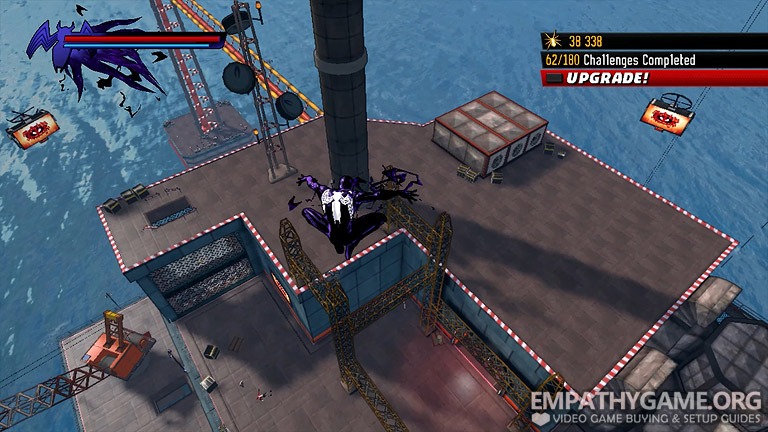
Spider-Man: Shattered Dimensions works best when treated as a playable comic-book anthology rather than an alternative to an open-world Spider-Man game. Instead of handing one Peter Parker a city to roam, Beenox builds the campaign around Amazing Spider-Man, Spider-Man Noir, Spider-Man 2099, and Ultimate Spider-Man, each pursuing fragments of the Tablet of Order and Chaos in a universe with its own art direction, villains, and mechanical emphasis. The result is unusually varied in presentation but much more focused in structure: stages are linear, combat-heavy, and usually built around a featured rogue.
That trade is both the game’s identity and its limitation. Moving from a smoky Noir rail yard to the neon drops of 2099 or the exaggerated comic-book color of Amazing keeps the campaign visually fresh, and the four Spider-Men have enough distinct abilities and personalities to stop the premise from feeling cosmetic. Yet most of the adventure is still a forward-moving beat ’em up. Platforming and exploration are light, web-swinging is functional rather than liberating, and several levels fall into the same chase-fight-rescue-rematch rhythm. Players looking for unrestricted traversal may find it confining; players who care more about villains, combat spectacle, unlockables, and Spider-Man’s many comic identities are much closer to the audience it serves.
Four Dimensions Share One Strong Brawling Core
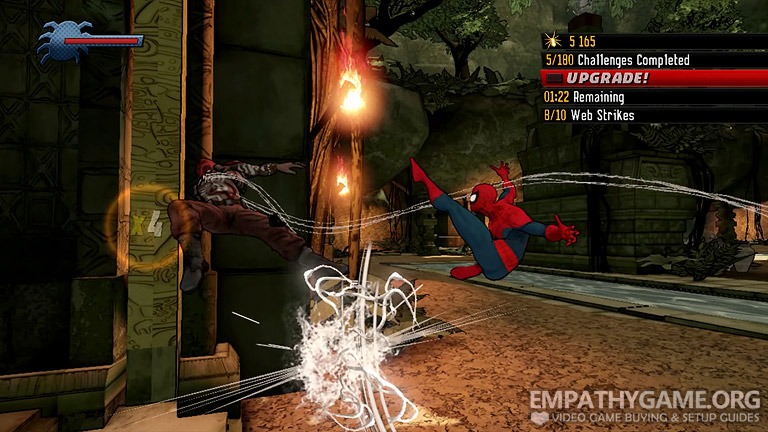
The common combat system is easy to understand but broad enough to stay entertaining for most of the campaign. Spider-Man can launch enemies, continue attacks in the air, evade, web-zip into targets, throw objects, use web-based crowd control, and string light and heavy attacks into increasingly elaborate sequences. Movement and combat overlap constantly, so a typical arena is less about standing toe-to-toe with one thug than bouncing between groups, knocking one enemy airborne, zipping to another, then using a wider attack before the crowd closes in.
Amazing Spider-Man expresses that system most playfully. His oversized web fists, hammers, and other constructs give familiar melee attacks a deliberately exaggerated comic-book quality. Ultimate Spider-Man is more aggressive: the symbiote suit extends attacks with tendrils, while Rage encourages short bursts of crowd-clearing pressure. Spider-Man 2099 feels faster and more vertical, with Accelerated Vision slowing the action around him and free-fall sequences turning Nueva York’s skyscrapers into obstacle courses rather than ordinary scenery.
The distinctions matter, but Amazing, Ultimate, and 2099 still spend much of their stages clearing groups in enclosed spaces, with many inputs and encounter rhythms shared. Switching dimensions rarely means relearning the game, but the promise of four radically different Spider-Men is mechanically stronger in concept than in every minute of play.
There is also a small but important difference between looking stylish and playing efficiently. Stage grading rewards varied combat rather than simply repeating one dependable attack string, so the upgrade system gives a practical reason to rotate through launches, aerial strings, web attacks, throws, and crowd moves. That helps the combat avoid becoming completely automatic, even when the enemy groups themselves begin to feel familiar.
Noir Changes the Rules Instead of Merely Changing the Effects
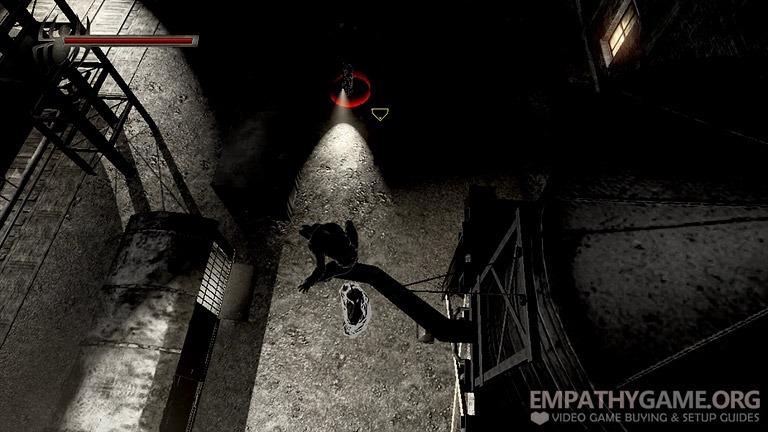
Spider-Man Noir is the dimension that most clearly alters how a room is read. Armed enemies make exposure dangerous, so shadows, perches, line of sight, and isolated targets matter more than combo length. Spider-Man can move above patrols, wait until a guard is separated, descend for a silent web takedown, then retreat into darkness before another enemy gets a clear view. The visual treatment reinforces the mechanic: the world is drained toward monochrome and harsh contrast, making pools of light and darkness part of the stage’s language rather than just its mood.
The Hammerhead level shows why this works. Gangsters carrying firearms turn spaces that would be ordinary brawling arenas in another dimension into small stealth puzzles. Charging into the middle of them is possible only when the situation allows it; a safer approach is to dismantle the group from above and keep changing position. The best Noir encounters therefore ask for a little planning instead of another flashy entrance.
The stealth is still simple. Patrol routes are readable, takedown options are limited, and waiting for a clean opening can slow the momentum after a fast Amazing or 2099 stage. It never develops into a deep stealth game, and later encounters can become more irritating than cerebral when detection and movement do not behave as cleanly as expected. Even so, Noir earns its place because it changes the player’s priorities. Of the four dimensions, it feels least like the same brawler wearing a different suit.
Villain-Centred Levels Are the Hook and the Repetition
Each major stage is built around a Spider-Man villain, and that decision gives the campaign a strong comic-issue structure. Kraven’s Amazing chapter turns the environment into a hunt through jungle arenas and traps. Hammerhead’s Noir world frames the conflict as a grim gangland pursuit. Hobgoblin’s 2099 appearance pushes the action into fast aerial chases, while Deadpool bends an Ultimate stage around his own self-aware spectacle. Rather than appearing only for a boss room at the end, the villain usually defines the tone and obstacles of the entire mission.
This is where Shattered Dimensions is most memorable. Bosses are not interchangeable health bars dropped into generic spaces; their personalities frequently reshape the level around them. The game also likes to escalate confrontations after a villain gains more power from a tablet fragment. A rematch can add new attacks or force a different response, and selected confrontations switch into first-person sequences where individual punches and dodges replace normal third-person combat. These moments are shallow mechanically, but they sell the comic-book fantasy of getting close enough to trade blows with an oversized rogue.
The same structure eventually becomes predictable. Too many chapters introduce the villain, interrupt the encounter, send Spider-Man through more henchmen or a rescue sequence, then bring the villain back in a stronger form. Once several missions follow that arc, surprise turns into expectation. The changing universes disguise the repetition, but they do not erase it.
Traversal can make the repetition more noticeable. Web-zipping is useful for crossing combat spaces and recovering height, yet wall-crawling and transitions around awkward geometry can feel less precise than Spider-Man’s animation suggests. Light platforming sometimes asks for accurate positioning from movement that prefers momentum. The game looks as though Spider-Man should flow over every surface, but occasionally the fastest route is slowed by the simple problem of getting him to cling to the wall or ledge you intended.
The Story Knows the Multiverse Is an Excuse for Character
The plot is deliberately uncomplicated. Mysterio’s interference shatters the Tablet of Order and Chaos, Madame Web recruits four Spider-Men to recover its fragments, and the campaign sends each hero after villains empowered by those pieces. It is enough to connect the dimensions without burying the game under exposition, which is the right decision for a structure built around self-contained villain episodes.
The real narrative value comes from contrast. Amazing is the bright, traditional wisecracker; Ultimate brings youthful sarcasm and the aggression of the black suit; 2099 has a futuristic edge; Noir turns Spider-Man into something closer to a lurking urban myth. None receives the depth of a separate story, but dialogue, enemies, color, architecture, and villain choice establish each universe quickly.
The voice cast strengthens those distinctions. Neil Patrick Harris, Josh Keaton, Dan Gilvezan, and Christopher Daniel Barnes had all voiced Spider-Man in earlier animated productions, and their performances give each version a recognizable cadence instead of treating the four heroes as palette swaps. Stan Lee’s narration leans into the feeling of turning pages through an oversized crossover event. Repeated combat quips can wear out their welcome, but the overall presentation understands that personality is as important to Spider-Man as acrobatics.
Progression Rewards Experimentation More Than Buildcraft
The Web of Destiny ties progression to challenges scattered across the campaign. Completing objectives opens higher upgrade tiers, while Spider Essence earned through combat, challenges, and pickups is spent on new moves, character improvements, and alternate suits. It is not a build system in the RPG sense; there are no radically different character archetypes to construct. Its purpose is to keep expanding the vocabulary of a combat system that could otherwise settle too quickly into a few reliable strings.
That works particularly well when a challenge pushes a move that has been ignored. A newly purchased crowd attack may seem optional until a later arena fills the screen with weaker enemies, while health and character upgrades provide a more straightforward safety net. Ultimate’s Rage and 2099’s Accelerated Vision also receive upgrades, giving those dimensions a little more identity as progression advances. The best effect is behavioral: completion goals encourage using more of each Spider-Man rather than treating every encounter as a race to the strongest combo.
Hidden Spiders, Spider Emblem totals, alternate costumes, and stage medals add another layer for completion-focused players. Medal chasing is especially smart because best results can be improved through repeat attempts instead of demanding one perfect run that excels at everything at once. A fast run can therefore pursue time while another attempt focuses on exploration or combat variety. That separates mastery into manageable goals and gives the linear stages a reason to be revisited.
Four Art Styles Carry More Weight Than the Technology
The strongest visual achievement is not raw detail but differentiation. Amazing resembles a bright moving comic panel with bold color and exaggerated effects. Ultimate pushes the inked, cel-shaded look in another direction. 2099 fills the screen with neon signage, traffic, impossible towers, and long vertical drops. Noir strips away much of that color for smoky streets, rail yards, industrial spaces, and heavy shadow.
The art direction supports the way each Spider-Man is meant to feel. 2099 needs scale because free-falling only works when the city seems bottomless; Noir needs hard contrast because darkness is both atmosphere and cover; Amazing’s broad web constructs fit a world that already looks illustrated. Changing that visual grammar helps repetitive level structure recover momentum.
Animation and control do not always match that confidence. Spider-Man looks agile while performing attacks, aerial recoveries, and contextual traversal, yet environmental navigation can be fussy. That mismatch is one reason the combat remains the more convincing part of the movement system. In an arena, web-zip and evasive mobility make Spider-Man feel quick. During light platforming or wall-crawling, the same character can suddenly feel less exact than the spectacle implies.
Replayability Comes From Mastery, Not a Different Campaign
There is no fundamentally different second campaign waiting after the story. Replay value instead comes from improving medals, finishing Web of Destiny challenges, collecting missed items, buying remaining upgrades and suits, and tackling stages at higher difficulty. Because the game is divided into discrete chapters, revisiting a favorite villain or dimension is easy; a player who mainly enjoys Noir’s stalking or 2099’s speed does not need to cross an open world just to reach that style again.
The four Spider-Men make repetition more tolerable than the mission templates suggest. Moving from Noir stealth to an Amazing brawl or 2099 dive refreshes the pace, but replaying levels exposes the shared structure more clearly. Once the surprise of a villain entrance or scripted sequence is gone, combat quality and completion goals must carry the return trip.
Final Verdict
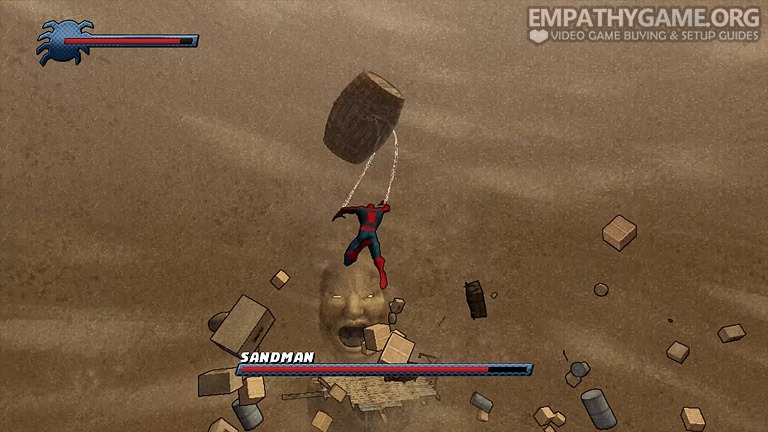
Spider-Man: Shattered Dimensions is at its best when it behaves like a shelf of Spider-Man comics thrown open at once. Four distinct interpretations of the hero, strong art direction, a memorable villain roster, energetic voice work, and a combat system built around acrobatic movement give the campaign a personality that survives its straightforward structure. Noir’s shadow-based encounters are the most convincing mechanical departure, while 2099’s vertical speed, Ultimate’s symbiote aggression, and Amazing’s oversized web attacks keep the shared brawling foundation from feeling identical.
Its weaknesses are just as consistent. Most stages move forward through fights rather than meaningful exploration, the boss-centred mission formula repeats itself, first-person punching is more spectacle than depth, and wall-crawling or light platforming can be less graceful than Spider-Man should feel. The four dimensions provide variety, but three of them cannot entirely escape the same beat ’em up skeleton.
That makes it a poor substitute for an open-world Spider-Man game but a strong choice for a different reason. Players who want free-form city swinging may feel boxed in; those who enjoy alternate universes, comic-book villains, unlockable suits, score chasing, and focused action stages will find much more to appreciate. Its systems are uneven, but the anthology idea is executed with enough style and character to give Shattered Dimensions a distinct identity rather than leaving it as another licensed superhero brawler.
Spider-Man: Shattered Dimensions Pros & Cons
- Pro: Four visually and mechanically distinct Spider-Man universes keep the campaign changing between traditional web combat, stealth, futuristic movement, and symbiote-powered brawling
- Pro: Strong comic-book identity through stylized art direction, Dan Slott’s multiverse story, a large villain roster, and four Spider-Man actors with earlier animated-series connections
- Pro: Focused linear levels allow bosses such as Kraven, Hammerhead, Deadpool, Vulture, and other dimension-specific villains to receive more elaborate themed encounters
- Pro: Web of Destiny challenges, upgrades, alternate costumes, collectibles, combat ranks, and difficulty options give the relatively focused campaign additional replay value
- Pro: Community fixes can address several legacy-PC limitations by improving modern resolutions, ultrawide presentation, FOV control, and frame-rate configuration
- Con: The Windows version is delisted, leaving no normal verified official purchase route for new PC buyers
- Con: Players expecting the unrestricted Manhattan exploration of Spider-Man: Web of Shadows or newer Spider-Man games may find the segmented mission structure restrictive
- Con: The old 32-bit DirectX 9 port can require extra compatibility work on modern systems, particularly with high-resolution displays and legacy components
- Con: Noir stealth sections and some repeated combat encounters can become more formulaic than the strongest boss stages
Spider-Man: Shattered Dimensions PC System Requirements
ORIGINAL WINDOWS PC REQUIREMENTS — ARCHIVAL:
The specifications below describe the original DirectX 9-era Windows release, not a modern Windows 10/11 compatibility guarantee. PCGamingWiki and archived release-era PC listings document the minimum hardware; a complete, verifiable official recommended CPU/GPU tier is not available, so none is invented.
MINIMUM:
OS: Windows XP SP3; Windows Vista SP2 and Windows 7 were also supported by the original release
CPU: Intel Core 2 Duo 2.6 GHz or AMD Athlon 64 X2 3800+
RAM: 1 GB on Windows XP; 2 GB on Windows Vista or Windows 7
GPU: 256 MB DirectX 9.0c-compatible graphics card with Shader Model 3.0 support; NVIDIA GeForce 7800 or ATI Radeon X1800-class hardware
DirectX: DirectX 9.0c
Storage: 14 GB available space
Sound Card: DirectX 9.0c-compatible sound device
Optical Drive: DVD-ROM drive for the original physical PC edition
Additional PC Performance and Setup Notes
- Modern Windows: The original requirements predate Windows 10 and 11. Correct hardware specifications alone do not guarantee that older display, input, DirectX, or retail-disc DRM components work without adjustment.
- Legacy DirectX: This is a 32-bit DirectX 9 game. Some systems may need legacy DirectX 9 components even when a later DirectX version is installed.
- High-resolution startup problem: PCGamingWiki documents a situation where the graphics menu offers an invalid 0×0 resolution or becomes stuck on an unsupported mode, sometimes preventing the game from reaching a usable display.
- Resolution and widescreen fix: Owners who need custom 16:9, 21:9 or higher display resolutions can use the community Spider-Man: Shattered Dimensions Fix download and instructions. This is an unofficial project, not an Activision or Beenox update; check compatibility with your specific retail or Steam build.
- Installing the fix: Back up any existing
d3d9.dllandd3d9.inifiles first. Download the fix from its project page and extract the suppliedd3d9.dll,d3d9.iniand[hotkey]keycodes.txtfiles into the game directory besidegame.exe. EditWidthandHeightind3d9.inifor your monitor; the fix calculates the aspect ratio automatically. Restart the game and check the displayed resolution and framing. To revert, remove the added files and restore backed-up originals. - FOV and frame rate: The same
d3d9.inican adjust FOV andFPSLimit. Start with the documented 60 FPS default; higher values can expose gameplay timing, streaming or stability issues. The FOV toggle exists because some scenes may not display correctly with a wider field of view. - Incorrect graphics settings: PCGamingWiki also describes an advanced registry reset under
HKEY_CURRENT_USER\SOFTWARE\Activision\Spider-Man (TM) SD\Settings\Display. Export a backup before changing theWidthorHeightvalue; changing one to a different value can prompt the game to fall back to 800×600 so graphics options can be reset. - Troubleshooting order: If a particular stage crashes, the game stutters, or a controller behaves unexpectedly, first reproduce the issue on an unmodified licensed installation. Add only one verified community fix at a time and back up the save folder before making changes.
- Retail DRM: The retail Windows edition is documented as using SecuROM, which can complicate installation or activation on newer operating systems. This guide does not link to DRM bypasses or unauthorized game files.
Official Trailer
Note: IGN’s original launch trailer highlights the four Spider-Man universes, their contrasting art styles, villains, combat, traversal, and multiverse premise, while the written guide adds the delisted PC-store status, ownership guidance, system requirements, modern Windows compatibility, community fixes, and modding notes.
Frequently Asked Questions
Is Spider-Man: Shattered Dimensions an open-world game?
No. Unlike Spider-Man: Web of Shadows and many newer Spider-Man games, Shattered Dimensions uses separate linear stages with combat, web traversal, scripted sequences, collectibles, and themed boss fights rather than a freely explorable Manhattan.
How are the four playable Spider-Men different?
Amazing Spider-Man uses acrobatic web attacks; Spider-Man Noir focuses on hiding and stealth takedowns; Spider-Man 2099 uses Accelerated Vision and high-speed free-fall sequences; and Ultimate Spider-Man uses symbiote tendrils and Rage to overwhelm enemy groups. Basic combat and traversal controls remain partly shared.
How do stealth takedowns work in Spider-Man Noir’s levels?
Darkness and elevated hiding places help Noir approach armed guards without being spotted. Isolate patrols, avoid lit areas, and move between perches to perform stealth takedowns instead of treating every room as a normal brawling encounter.
What are the Web of Destiny and Spider Essence?
The Web of Destiny tracks challenges and unlocks upgrade tiers. Spider Essence, earned through combat, exploration, challenges, and collectibles, is spent on moves, character improvements, and available bonus costumes.
Should beginners buy combat upgrades or costumes first?
New moves, health improvements, and useful combat abilities generally help more during early stages and demanding boss fights. Alternate costumes are optional rewards and can be purchased later as more Spider Essence becomes available.
Can you replay levels, earn better medals, and use New Game Plus?
You can replay completed stages to improve combat, time, and collectible results or recover missed Hidden Spiders and Spider Emblems. There is no conventional separate New Game Plus campaign, but unlocked upgrades remain useful on replayed levels in the same save.
How do you unlock alternate suits, and is Cosmic Spider-Man included on PC?
Many bonus costumes are unlocked through Web of Destiny challenges and purchased using Spider Essence. The Windows version also includes the Cosmic Spider-Man costume content associated with DLC on some console editions; no separate PC purchase is required.
Does Spider-Man: Shattered Dimensions have difficulty settings?
Yes. Easy, Normal, and Hard are available. Normal is a reasonable starting point; Hard puts greater pressure on dodging, combat upgrades, and boss tactics.
Why do some boss fights switch to first-person punches?
Certain bosses use scripted first-person fighting sequences with individual punch and dodge inputs. These are short encounter mechanics rather than a separate first-person campaign mode.
Does Spider-Man: Shattered Dimensions support multiplayer, co-op, or split-screen?
No. It is a single-player campaign with no online multiplayer, local co-op, split-screen, or LAN mode. The four playable Spider-Men are used in separate story stages, not simultaneously by multiple players.
Can existing Steam owners still download and reinstall the game?
The title is not available for new normal purchases on Steam. If a legitimate license remains on your account, check your Steam Library for the original installation and re-download option instead of seeking unofficial game files.
Will Spider-Man: Shattered Dimensions work on Windows 10 or Windows 11?
It may run, but its older DirectX 9 technology, display settings, and retail-disc DRM were not designed for those Windows versions. Outcomes vary, so a successful modern installation is not guaranteed; the PC setup section explains the main known compatibility considerations.
What should I check if the PC version crashes or will not start?
Start from a clean licensed copy, check legacy DirectX components, and test ordinary display settings without stacked mods. If the resolution menu is stuck on 0×0 or the title screen appears incorrectly on a high-resolution monitor, use the documented reset and community-fix instructions in the PC setup section.
Does the PC version support controllers?
Yes. The Windows version supports gamepads alongside keyboard and mouse controls. Modern controllers may require correct Windows or Steam Input mapping, especially if the device is not using a conventional Xbox-style layout.
Where are save files stored, and does the game have Steam Cloud?
The normal Windows save directory is %USERPROFILE%\Documents\Activision\Spider-Man (TM) SD\Save. Native Steam Cloud syncing is not documented for this game, so manually back up that folder before moving PCs or reinstalling Windows.
Can Shattered Dimensions use 4K, ultrawide, or more than 60 FPS?
The original Windows port can have problems with resolutions above 1080p, but the unofficial Spider-Man: Shattered Dimensions Fix supports custom widescreen and ultrawide resolutions, FOV changes, and frame-rate limits. Leave the frame-rate limit at 60 FPS initially; pushing it higher can create gameplay or stability issues.
Are Steam Workshop and official modding tools available?
No. PC modifications are unofficial; community projects appear on Nexus Mods and PCGamingWiki. Always check version compatibility and keep a clean copy of original files and saves.
Is Spider-Man: Shattered Dimensions Steam Deck Verified or Playable?
No. Valve’s historical compatibility metadata marks the delisted Steam version Unsupported. Owners may experiment with Proton, but a normal verified or playable Steam Deck experience is not promised.
Still have questions? Check the Spider-Man: Shattered Dimensions Steam Discussions, Spider-Man community on Reddit, or PCGamingWiki technical guide for other players’ experiences and additional setup information.
Sources & References
The sources below document the original game release, historical PC store status, technical behavior, compatibility options, and contemporary critical reception.
- Activision — original North American launch announcement: developer, publisher, release, and four-universe premise.
- Steam — October 2015 release announcement: original Steam arrival of the Windows edition.
- SteamDB — historical Steam app 231990: purchase status, review data, and Valve Steam Deck metadata.
- PCGamingWiki — Spider-Man: Shattered Dimensions: system requirements, DRM, save locations, display issues, and compatibility documentation.
- PCGamingWiki Community — Spider-Man: Shattered Dimensions Fix: original community download and configuration instructions.
- GameSpot — original critical review: gameplay analysis and its 7.5/10 review score.
Similar Games Like Spider-Man: Shattered Dimensions
- Spider-Man: Web of Shadows
- Ultimate Spider-Man
- Spider-Man 2
- Batman: Arkham City
- Deadpool
- X-Men Origins: Wolverine



Found something worth playing through DecideGame?
DecideGame.com is an independent gaming project run by Editor Zero. If this guide helped you discover a game, solve a problem, or find useful information, you can support DecideGame.com and help keep new and updated game guides coming.
DecideGame — PC Game Guides, Reviews & Setup Help