
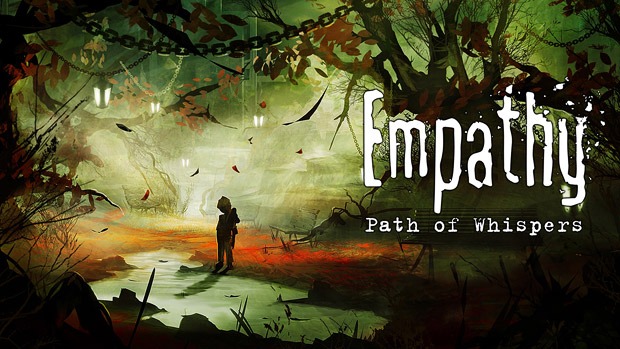
📅 Game released: 2017
Use this updated 2026 Empathy: Path of Whispers PC guide to compare official Steam purchase, download, and installation options, check system requirements and Steam Deck compatibility, and understand memory puzzles, Memento mode, controller support, soundtrack DLC, and practical setup guidance.
 By Editor Zero — independently researched, edited, and maintained.
Last updated: 9 October 2026
Last reviewed: 9 October 2026
Table of Contents
- Quick Summary
- Quick Facts
- Official PC Stores, Download & Installation
- Empathy: Path of Whispers Review
- Pros & Cons
- PC System Requirements
- Frequently Asked Questions
- Similar Games
Empathy: Path of Whispers Quick Summary
✔ First-person narrative exploration adventure set in a surreal, seemingly abandoned world where recovering memories and understanding the emotions of former inhabitants reveals the events behind a mysterious apocalypse
✔ Explore fragmented environments using the E-15P scanner to locate memory-bearing objects, synchronize their signals, reconstruct personal histories, solve environmental puzzles, and open new areas
✔ Similar to Death Stranding 2: On the Beach through its lonely post-apocalyptic landscapes, emotional storytelling, environmental mysteries, and emphasis on understanding a fractured world, although Empathy replaces action-heavy travel with slower puzzle exploration
✔ Standard gameplay includes repeated signal-matching interactions; the optional Memento mode removes the synchronization minigame for players who prefer to concentrate on discovering memories and following the story
✔ The game is officially available for Windows PC through Steam, with the original soundtrack offered separately as complimentary DLC; there are no verified native console, macOS, or Linux editions
✔ Best suited to players who enjoy atmospheric storytelling, quiet exploration, collecting documents, and piecing together fragmented narratives rather than combat, character builds, or fast-paced action
Empathy: Path of Whispers Quick Facts
Official PC Stores, Download & Installation
👇 Use the official Steam options below to purchase, download, or install Empathy: Path of Whispers, and check the soundtrack DLC, Memento mode, controller limitations, and Windows compatibility before playing.
- Official PC availability: Empathy: Path of Whispers is available as a native Windows PC game through Steam. A normal Steam purchase grants access to the complete original single-player adventure, including its existing gameplay modes and permanent improvements.
- Steam purchase and installation: Purchase the game through its official Steam store page, install the Steam client if necessary, sign in to the account that owns it, and select Install from your library. Steam handles the game download, installation, and available updates.
- Other PC stores: No separate current Epic Games Store, GOG, or Microsoft/Xbox PC listing was verified. Steam is the confirmed purchase and installation route used throughout this guide; do not assume that a listing on a third-party marketplace provides a separate DRM-free edition.
- Base game and bundles: The ordinary Steam edition contains the complete adventure. Steam also lists an Iceberg Adventure Pack bundle containing Empathy alongside Barrow Hill: Curse of the Ancient Circle, Barrow Hill: The Dark Path, and Inmates. Check the bundle contents and existing Steam ownership before buying overlapping products.
- Original soundtrack DLC: The separately listed Empathy: Path of Whispers – Original soundtrack contains 16 compositions by Nicolai Patricio. Steam offers it as complimentary DLC and states that the base game is required to use the content through its DLC system. The soundtrack is optional and is not a separate playable game or story expansion.
- Memento mode: Memento mode is included in the game rather than sold as DLC. It can be selected through the settings menu and allows players to experience the narrative without performing the repeated memory-synchronization minigame. Environmental exploration and story-related interactions remain central to progression.
- Steam features: The Steam release lists single-player support, 13 achievements, trading cards, and Steam Families sharing compatibility. Steam Cloud is not listed among the game’s advertised features, so do not assume automatic cloud backup is available.
- Controller compatibility: The game has partial controller support. Developer documentation explains that the game itself can be played with a controller, but some menu navigation requires a mouse. For the simplest PC experience, use a mouse and keyboard or keep mouse input available when using a gamepad.
- Steam Deck: Valve classifies Empathy: Path of Whispers as Unsupported for Steam Deck. This is a compatibility warning rather than proof that every possible Proton configuration fails, but buyers should not expect a verified handheld experience or guaranteed smooth operation.
- Windows and Steam client: The published minimum game requirements specify 64-bit Windows 7, 8, or 10; 32-bit Windows is not supported. Steam’s client requires Windows 10 or newer, making an up-to-date 64-bit Windows installation the practical choice. Windows 11 is not separately listed in the original game’s official requirements.
- Saving and backups: The game supports manual saves, multiple manual save slots, and rotating automatic saves. Save manually before leaving an area or experimenting with an uncertain interaction. Because Steam Cloud is not advertised, maintain your own backups of important save data when reinstalling Windows or moving to another PC.
 Buy Empathy: Path of Whispers on Steam
Get the Official Empathy: Path of Whispers Soundtrack on Steam
Empathy: Path of Whispers Review
A haunting memory mystery where evocative storytelling struggles against repetitive exploration.
Empathy: Path of Whispers builds its mystery around something more intimate than the disappearance of an entire population: the ordinary possessions people leave behind. A forgotten toy, a discarded tool, or a personal keepsake can preserve the emotions of its former owner, allowing an unnamed protagonist to reconstruct a world that has seemingly collapsed. There are no enemies to fight or resources to conserve. Understanding what happened requires following the traces of lives interrupted by catastrophe.
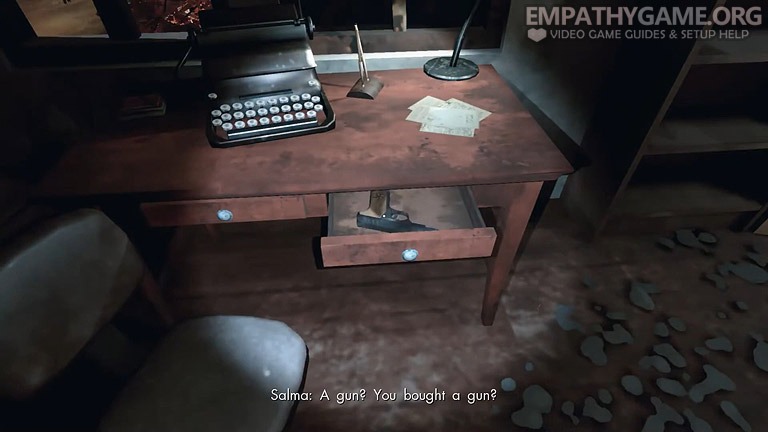
The idea gives this first-person adventure an unusually personal foundation. Its abandoned parks, isolated settlements, and industrial ruins are not merely locations to investigate; they become collections of unfinished human stories. The E-15P scanner connects those places to the people who once inhabited them, occasionally allowing their memories to influence the physical environment.
Unfortunately, the journey is considerably more repetitive than its premise suggests. Searching for memory objects, synchronizing signals, and revisiting previously explored locations account for much of the adventure. The strongest moments offer glimpses of a more inventive game, particularly when recovering a memory means briefly experiencing someone else’s actions. For patient players who appreciate fragmented storytelling and melancholy environments, there is an intriguing mystery here. Those expecting consistently engaging puzzles or satisfying exploration may find the process of uncovering it more exhausting than rewarding.
The E-15P Scanner Turns Memories Into a Repetitive Routine
Almost every important discovery begins with the E-15P. This handheld scanner detects objects carrying emotional memories and provides directional guidance toward their locations. Once an object is found, recovering its contents ordinarily involves adjusting three waveform properties—amplitude, frequency, and width—until the displayed signals align. Successful synchronization releases a fragment of dialogue or activates an associated memory sequence.
The first few interactions work surprisingly well. The device gives an otherwise quiet exploration game a recognizable mechanical identity, and tuning unfamiliar frequencies makes retrieving someone’s recollections feel more deliberate than simply pressing a button beside an audio log. There is a satisfying connection between the strange technology and the idea that emotions have become recoverable physical traces.
That novelty fades quickly. The waveform combinations change, but the underlying problem rarely develops. Once the controls become familiar, synchronization is less a test of understanding than a brief sequence of adjustments separating the player from another conversation. The scanner seldom asks for a new technique, and repeated success does not produce a growing sense of mastery. Instead, it becomes an obligation attached to the game’s most interesting reward: another piece of the story.
Memento mode substantially changes this relationship by removing the synchronization minigame. It allows memories to be discovered without repeatedly adjusting their signals, keeping the emphasis on exploration and narrative interpretation. For anyone primarily interested in the mystery, this can produce a noticeably smoother experience. The trade-off is revealing, though. Without waveform matching, the adventure becomes even more clearly a sequence of locating objects, listening to recollections, and finding the next destination. The scanner is a distinctive concept, but its interaction design cannot consistently sustain the amount of use demanded of it.
Exploration Rewards Curiosity but Repeatedly Retraces Old Ground
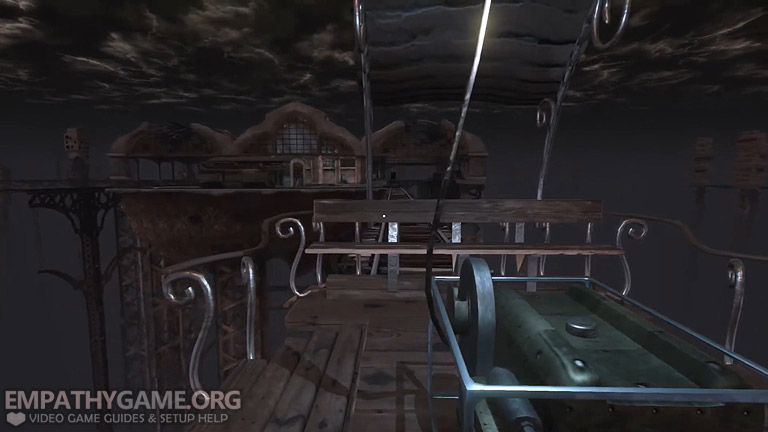
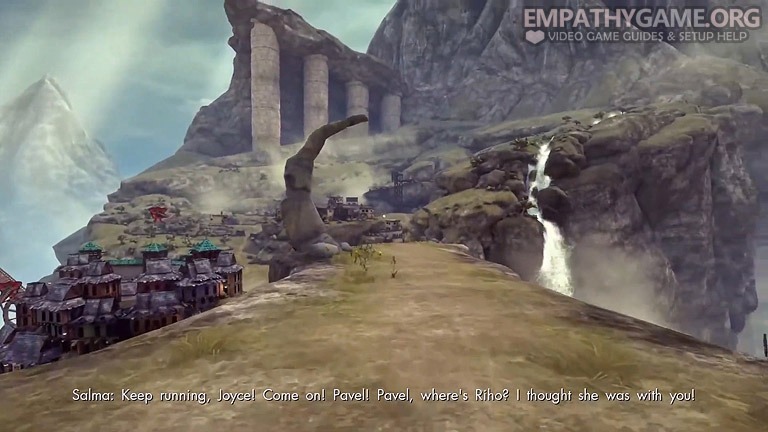
Empathy divides its adventure into five acts containing substantial, interconnected environments. Atlas Park establishes the game’s visual identity through wooded paths, quiet water, abandoned camps, and peculiar architecture. Eagleview later provides a striking change of scenery, placing an isolated settlement among imposing mountains and unusual stone formations. These are places designed to make the player wonder what happened before everything fell silent.
The scanner helps direct exploration without providing a conventional route to each objective. Its signal may indicate an object behind a wall, beneath the player’s position, or somewhere above an inaccessible ledge. Determining the correct approach sometimes involves examining the reading from several directions and reconsidering nearby paths. That uncertainty can encourage genuine spatial investigation, especially when an apparently distant target turns out to occupy another level of a familiar structure.
Unfortunately, the game’s progression repeatedly undermines this curiosity. Important memories become available in groups, with later discoveries revealing additional targets in areas that may already have been searched. Rather than allowing a thorough initial investigation to clear an entire location, the structure frequently sends the player back through the same streets, corridors, and open spaces. Exploration gradually becomes a matter of remembering where every route leads instead of discovering something unfamiliar.
There is also an important distinction between local freedom and the wider campaign structure. Backtracking within an accessible act is possible, but advancing into another major area effectively closes off the earlier one. That makes exploration strangely contradictory: the game repeatedly encourages returning to familiar places during an act, yet does not provide unrestricted access to previous chapters afterward. Missing an optional discovery can therefore carry more consequence than the relaxed pace initially implies.
Movement does little to relieve these longer journeys. Running and jumping provide basic mobility, but uneven terrain and awkward traversal make certain routes less comfortable than their visual design suggests. With little environmental danger or skill-based platforming, crossing the same territory rarely develops into an enjoyable challenge of its own. The strongest exploration moments come from noticing something meaningful in the scenery, not from the act of travelling between objectives.
Playable Memories Reveal the Adventure’s Untapped Potential
The most imaginative sequences temporarily move beyond collecting recordings and allow the player to inhabit another person’s recollection. These scenes use a distinctive fog-like presentation to separate remembered events from the surrounding world, turning fragments of the past into short playable situations.
One particularly effective example begins with a hammer and places the player in the memory of a disgruntled mechanic repairing a damaged bridge. Reconstructing the missing planks gives the remembered action a physical purpose, while the completed repair connects someone’s personal experience to a route through the environment. It demonstrates how the game’s central concept can become more than an explanation delivered through dialogue. Understanding another person’s actions directly contributes to moving forward.
Moments like this are regrettably short and tightly controlled. The memory typically has a prescribed sequence rather than several possible interpretations or solutions. Although experiencing another person’s perspective is thematically appropriate, these scenes rarely grant enough freedom to become substantial puzzles. They offer brief flashes of invention before returning to the scanner-driven routine.
Conventional environmental puzzles provide some additional variety. Locked passages, electrical systems, machinery, and collected inventory objects require the player to examine nearby clues and understand how different components connect. The train-station section, with its power-grid connections and machinery, offers a more involved change from ordinary memory hunting. Yet the challenge is often less about complicated reasoning than recognizing what the game expects and whether the necessary story conditions have been fulfilled.
Inventory design occasionally compounds that uncertainty. Objects can be collected before their purpose becomes apparent, leaving the player carrying items without an obvious destination. The journal preserves narrative discoveries rather than functioning as a comprehensive objective tracker, so consulting it does not always clarify what to do next. This approach respects the conventions of older adventure games, but Empathy’s combination of sprawling spaces, staged memory availability, and imprecise guidance can turn a reasonable mystery into unnecessary confusion.
Recurring Lives Give the Fragmented Story Its Emotional Weight
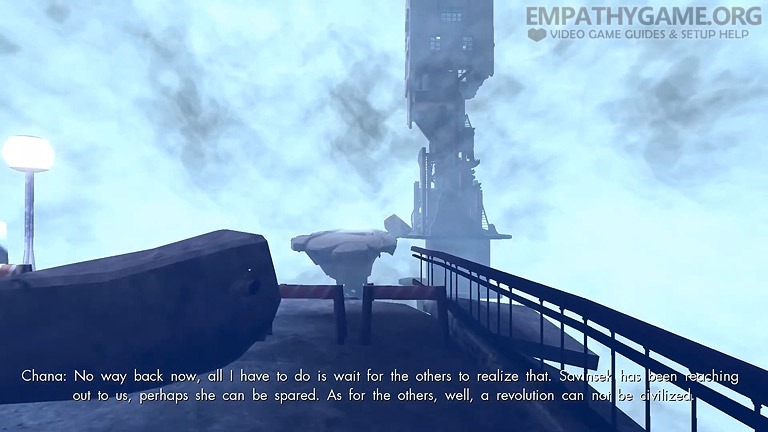
The narrative begins with an unexplained disaster and a disembodied guide directing the protagonist through a world where human presence survives mainly through voices. Each recovered memory reveals a partial account of events involving ordinary citizens, troubled relationships, social unrest, authorities, and conflicting beliefs. No single recollection explains the entire catastrophe. The history emerges gradually through connections between people and the decisions they made as circumstances deteriorated.
What makes this approach compelling is the way individual characters can reappear across memories from different moments in their lives. An early recording may reveal someone’s concerns or relationships, while another encountered much later offers a different perspective on their attempts to escape the unfolding crisis. Recognizing a familiar voice or connecting two previously separate events creates a continuity that isolated audio logs cannot achieve.
These recurring threads are where Empathy comes closest to fulfilling its title. Its best narrative discoveries are not necessarily those that explain the apocalypse, but those that reframe an ordinary person whose earlier actions seemed unimportant. A discarded object gains significance through the history attached to it, and a seemingly minor conversation may become more affecting once its circumstances are understood.
The difficulty lies in making those connections without losing track of the wider cast. New voices and events accumulate quickly, often with limited immediate context. Some individuals receive enough attention to become recognizable, while others appear so briefly that their significance is difficult to establish. Because memories are gathered through exploration rather than presented in a strictly chronological sequence, potentially meaningful revelations can arrive before the player has enough information to appreciate them.
The narrator provides a degree of continuity, although the guidance can feel ambiguous when the player needs practical direction rather than another mysterious remark. Dialogue and voice performances are similarly uneven. Some conversations communicate ordinary fear, regret, and desperation effectively; others sound stiff or deliver important exposition without much emotional conviction. The story’s themes are considerably more ambitious than its presentation consistently supports, leaving an intriguing narrative that occasionally becomes harder to understand than it needs to be.
Atmosphere Carries More Weight Than Visual Detail
The world’s strongest visual quality is its sense of displacement. Atlas Park combines recognizable natural surroundings with strange architecture and geography, while Eagleview uses dramatic elevation and distant mountain scenery to suggest a settlement detached from ordinary life. Later urban and industrial spaces introduce darker textures and more oppressive surroundings, giving the journey a changing visual character without abandoning its underlying loneliness.
These environments are most convincing when viewed as larger compositions. Silhouettes, lighting, unusual structures, and open landscapes create a dreamlike quality that suits a world constructed around imperfect memories. Close inspection is less consistently rewarding. Some interiors are sparsely furnished, repeated assets become noticeable, and certain spaces appear designed primarily to contain required objects rather than to convincingly represent places where people lived.
Nicolai Patricio’s soundtrack helps bridge that gap. Restrained piano melodies accompany the quieter stretches, while darker arrangements reinforce the unease surrounding particular locations and revelations. Silence also plays an important role, allowing the emptiness of abandoned environments to register without constant musical direction. The atmosphere does not depend on combat, sudden threats, or conventional horror. Its unease comes from occupying places that still suggest human activity despite the absence of the people who created them.
Optional Discoveries Reward Attention, but Completion Demands Planning
Campaign progression depends on recovering essential memories, completing environmental objectives, and unlocking access to subsequent areas. There are no character levels, combat upgrades, or equipment builds to develop. Progress is measured through new information and the changing accessibility of the world, with the journal providing a record of discoveries rather than a traditional progression system.
Optional mementos and documents give thorough explorers another reason to inspect their surroundings. Some are easy to overlook because they occupy ordinary pieces of scenery rather than prominent landmarks. A police badge concealed inside a pit toilet near the third act’s campsite is a good illustration: noticing such a small object requires a different kind of attention from following the scanner’s main signals. These details suggest that the environment has more to reveal than the critical path alone demands.
Completion is less satisfying when those discoveries are weighed against the campaign’s structure. Collecting everything requires carefully examining each act before moving forward, because the ability to backtrack through the current area does not guarantee access to earlier chapters. The distinction between essential memories, optional mementos, and collectible documents also means that reaching the ending is not the same as having uncovered every available account.
Replayability remains limited. The story follows a largely fixed sequence, puzzles have predetermined solutions, and revisiting an act rarely produces substantially different interactions. Memento mode can make a second journey less cumbersome, while unfinished collectibles provide motivation for completionists. Yet once the mystery has been assembled, there is little mechanical variation to make retracing the same locations feel genuinely new.
Final Verdict
Empathy: Path of Whispers is an ambitious narrative adventure whose most interesting ideas are not always supported by equally engaging gameplay. Its strongest achievement is giving an abandoned world a sense of human history. Objects become traces of relationships, recurring characters connect scattered memories, and occasional playable recollections allow the past to affect the player’s journey in tangible ways. Atlas Park, Eagleview, and the understated soundtrack provide a melancholy setting well suited to that approach.
The weaknesses are more structural than conceptual. Waveform synchronization becomes routine long before the story ends, while repeated journeys through familiar locations gradually erode the pleasure of exploration. Inventory puzzles and journal guidance can leave objectives unnecessarily obscure, and the short playable memory sequences rarely expand into the more inventive interactions they suggest. Memento mode removes one recurring obstacle, but it cannot give the wider adventure greater mechanical depth.
There is nevertheless something worthwhile beneath these frustrations. The most rewarding approach is to treat Empathy as a slow investigation into disconnected lives, paying attention to recurring voices, environmental details, and the personal consequences hidden within ordinary recollections. Players who enjoy atmospheric walking simulators, fragmented narratives, and collecting every last piece of a mystery may appreciate its unusual perspective. Those seeking intricate puzzles, responsive traversal, or steadily evolving gameplay will probably find its shortcomings difficult to ignore.
Ultimately, Empathy is more memorable for the world it imagines than for the activities required to understand it. Its central idea—recovering a lost society through the emotions its inhabitants left behind—deserves a more consistently inventive adventure. Even so, the quieter moments of discovery show why that idea remains compelling.
Empathy: Path of Whispers Pros & Cons
Empathy: Path of Whispers PC System Requirements
OFFICIAL WINDOWS PC REQUIREMENTS:
MINIMUM:
OS: Windows 7, Windows 8, or Windows 10 (64-bit only; 32-bit Windows not supported)
CPU: Intel Core 2 Quad Q8300 at 2.5 GHz or equivalent
RAM: 8 GB
GPU: Nvidia GeForce GTX 550 Ti, AMD Radeon HD 6950, or equivalent
DirectX: Version 11
Storage: 9 GB available space
Sound Card: DirectX-compatible audio device
Additional Notes: AMD CrossFire multi-GPU configurations may cause performance issues
RECOMMENDED:
Pixel Night and Iceberg Interactive do not publish a separate recommended hardware specification on the official Steam store page. The minimum configuration above is the verified published requirement, not a guarantee of a particular resolution, frame rate, or graphics preset.
Additional PC Performance and Setup Notes
- Modern Windows: The original requirements list Windows 7, 8, and 10, while the modern Steam client requires Windows 10 or newer. Windows 11 compatibility and performance are not separately guaranteed by the original specification. Start with current drivers and the game’s default settings.
- Graphics performance: The game uses Unreal Engine 4, and historical PC reviews reported uneven performance on some hardware. Begin with moderate settings if frame pacing is inconsistent, then adjust resolution and visual quality individually rather than assuming the relatively modest minimum GPU requirement guarantees smooth performance.
- Field of view and crosshair: The game includes an FOV setting and an option to hide the persistent crosshair until the pointer is over an interactive object. These can make exploration more comfortable and reduce unnecessary interface clutter.
- Scanner controls: The E-15P device is used to locate memory-bearing objects and match signal waveforms. Mouse input is particularly useful for adjusting its frequency-related controls. Memento mode can be enabled from settings when the synchronization interactions become repetitive.
- Controller and handheld input: Partial controller support means ordinary movement and gameplay can work with a gamepad while certain menus still need a mouse. Steam Deck is officially Unsupported, so desktop-PC controller behavior should not be mistaken for a verified SteamOS experience.
- Progress protection: Use the available manual save slots before lengthy exploration or important environmental interactions. If a puzzle appears stuck, first revisit its clues or load a recent manual save. Steam’s Verify Integrity of Game Files option can help restore missing or damaged installation files, although it does not guarantee recovery from every scripting or save problem.
- Unofficial modifications: No official modding SDK or Steam Workshop integration is documented. Back up personal saves and preserve an unmodified installation before experimenting with third-party changes, and do not assume compatibility between unrelated Unreal Engine modifications and this game.
Official Trailer
Note: This official Iceberg Interactive launch trailer introduces the game’s abandoned environments, surreal visual style, and memory-based storytelling premise. The written guide above adds verified PC purchasing information, system requirements, Memento mode details, Steam Deck limitations, and installation guidance.
Frequently Asked Questions
Is Empathy: Path of Whispers worth playing in 2026?
Yes, particularly if you enjoy atmospheric exploration and gradually uncovering a story through environmental clues, recorded memories, and abandoned locations. Its unusual approach to storytelling remains interesting, but frequent backtracking, uneven navigation, and limited puzzle variety make it better suited to patient narrative-adventure fans than players seeking action or demanding puzzles.
Is Empathy: Path of Whispers a horror game or a walking simulator?
It is primarily a first-person narrative exploration adventure, often described as a walking simulator. The abandoned environments and mysterious apocalypse create an unsettling atmosphere, but it is not a conventional survival-horror game built around fighting enemies, managing ammunition, or escaping monsters.
How long does Empathy: Path of Whispers take to complete?
A typical main-story playthrough takes approximately 4–5 hours, while exploring more thoroughly and collecting optional memories and documents can extend the experience to around 6–9 hours. Time varies considerably depending on how quickly you locate scanner targets and solve environmental puzzles.
Is Empathy: Path of Whispers open world or linear?
The adventure is divided into five acts containing interconnected environments that allow exploration and backtracking. Story progression follows a defined sequence, but players have considerable freedom to investigate locations and discover optional memories within the accessible area.
How does the E-15P scanner work in Empathy: Path of Whispers?
The E-15P is a handheld device used to detect objects containing traces of people’s memories and emotions. Its radar helps identify the direction of relevant objects, while its synchronization function allows you to recover memories that reveal story information and sometimes change the surrounding environment.
How do you solve the E-15P memory synchronization puzzles?
Aim the scanner at an active memory object and adjust your signal to match the displayed waveform. The puzzle involves matching properties such as amplitude, frequency, and wave width; make gradual adjustments to one property at a time until the signals align and the memory activates.
What does Memento mode change in Empathy: Path of Whispers?
Memento mode removes the repeated waveform-synchronization minigame, allowing you to focus on finding memories and experiencing the story. It is available through the game’s settings and does not remove the broader environmental exploration, narrative discoveries, or other puzzles.
Why does the E-15P scanner point toward an object I cannot reach?
The scanner indicates an object’s direction rather than providing a complete navigation route. The target may be behind a wall, above or below your position, or accessible through another passage; checking the signal from several locations and elevations can help you determine where it actually is.
How can I tell whether an object is interactive in Empathy: Path of Whispers?
Important interactive objects generally have a visible glow or show an outline when you aim at them. Memory-related objects may instead become detectable through the E-15P radar after the relevant story sequence is available, so not every object resembling an important item can immediately be collected or scanned.
Why do new memory locations appear in areas I have already explored?
Memory discoveries often unlock additional sets of objects and story events, so previously visited locations can become relevant again after progressing elsewhere. This staged structure is intentional and explains why repeatedly crossing familiar environments is a normal part of the adventure.
What is the journal used for in Empathy: Path of Whispers?
The journal records discovered story information and character memories, helping you reconstruct events and identify optional discoveries you may have missed. It is not a conventional quest log with complete instructions for every puzzle; the narrator’s dialogue and environmental clues often provide more useful directions for immediate progression.
Why do I have inventory items that I cannot use yet?
Some items can be discovered before reaching the location or story event where they become useful. This is intentional in the game’s relatively open level design, so continue following the available memories and investigate newly accessible areas rather than assuming every collected object must be used immediately.
Are all memories and mementos required to finish Empathy: Path of Whispers?
No. You need the memories associated with mandatory story progression, but additional optional mementos provide more background about the world’s inhabitants. Finding every optional memento is necessary for the I Remember Steam achievement, not simply for reaching the ending.
Can you return to previous acts to collect missed memories and documents?
You can backtrack within accessible areas, but should not rely on being able to revisit completed acts after moving forward in the story. If you want every collectible, investigate each act thoroughly and create a separate manual save before major transitions so you can return to an earlier point if necessary.
How do you unlock the I Remember and Down In Ink achievements?
I Remember requires discovering every optional memento, while Down In Ink requires collecting every document. These are separate collectible objectives, so completing all mandatory memories does not automatically satisfy either achievement; community guides provide act-by-act locations for players attempting full completion.
Why are my document or memento achievements not unlocking?
First compare your discoveries against an act-by-act collectible guide, because missing a single optional item can prevent completion. Some players have also reported inconsistent journal counters or achievements failing to register, so keep an earlier manual save available and check Steam Discussions for reports matching your specific situation rather than assuming every missing achievement is caused by a bug.
How do I fix the train-station power-grid puzzle if everything is green but nothing happens?
Some players have reported that the Act 2 power-grid puzzle can appear correctly connected without triggering the expected scene. A community-reported workaround is to disconnect every power-source connection and reconnect them in the correct arrangement; if that fails, try reloading a separate save or restarting the game before repeating the connections. This is not a guaranteed fix for every affected save.
Does Empathy: Path of Whispers support manual saves?
Yes. The game supports multiple manual save slots alongside automatic saves, and older saves can be loaded when available. Some early reviews describe the original automatic-save-only system, but that limitation was subsequently addressed; creating separate saves remains useful before complex puzzles or transitions between acts.
Where are Empathy: Path of Whispers save files stored on Windows?
Save files are normally located in %LOCALAPPDATA%\Empathy\Saved\SaveGames\. Paste that path into Windows File Explorer’s address bar to access the folder, and copy its contents to a safe location while the game is closed if you want a manual backup before reinstalling or changing PCs.
What languages and subtitles does Empathy: Path of Whispers support?
The Steam version provides English interface text, full voice audio, and subtitles. French, Italian, German, Spanish (Spain), and Russian are also supported for interface text and subtitles, but Steam does not list full voice localization for those languages.
Does Empathy: Path of Whispers have multiplayer or co-op?
No. It is a single-player adventure without official online co-op, local co-op, split-screen, LAN multiplayer, or competitive modes. There is no multiplayer campaign or cross-play functionality.
Does Empathy: Path of Whispers work on Steam Deck?
Valve classifies the game as Unsupported for Steam Deck, so reliable operation is not guaranteed. The classification does not necessarily mean it cannot launch under any configuration, but players should expect possible SteamOS or input compatibility issues rather than assuming it will work like a verified handheld title.
Still have questions? Check the Empathy: Path of Whispers Steam Discussions for gameplay problems and technical reports, or browse the Steam Community Guides for collectible maps, achievement walkthroughs, and solutions to difficult puzzles.
Sources & References
Key factual and technical information in this guide was checked against relevant official and community sources, including:
- Empathy: Path of Whispers — Official Steam Store — Developer, publisher, release date, Windows availability, game features, minimum system requirements, achievements, user reception, and available DLC.
- Empathy: Path of Whispers — Developer Announcements — Official explanations of Memento mode, manual save slots, controller improvements, FOV options, and permanent gameplay changes.
- Empathy: Path of Whispers – Original soundtrack — Official Steam listing confirming the separate soundtrack DLC, its composer, track contents, and base-game requirement.
- Empathy: Path of Whispers — SteamDB — Steam platform metadata, partial controller support, Unreal Engine technology detection, and Valve’s Steam Deck compatibility classification.
- Empathy: Path of Whispers — PCGamingWiki — PC release information, first-person adventure classification, Windows platform identification, and Unreal Engine 4 reference.
- Empathy: Path of Whispers — Metacritic PC Reviews — PC critic aggregate and published critical perspectives on the game’s exploration, narrative structure, puzzles, backtracking, and technical limitations.
Similar Games Like Empathy: Path of Whispers
- Portal 2
- Death Stranding 2: On the Beach
- Shadow of the Tomb Raider
- Metro Exodus
- Rise of the Tomb Raider
- Fallout 3





Found something worth playing through DecideGame?
DecideGame.com is an independent gaming project run by Editor Zero. If this guide helped you discover a game, solve a problem, or find useful information, you can support DecideGame.com and help keep new and updated game guides coming.
DecideGame — PC Game Guides, Reviews & Setup Help